 Скачать презентацию Chapter 8 Enterprise Business Systems Mc Graw-Hill Irwin Copyright
dcda675a54df98126de91b26048c1b48.ppt
- Количество слайдов: 40



Chapter 8 Enterprise Business Systems Mc. Graw-Hill/Irwin Copyright © 2011 by The Mc. Graw-Hill Companies, Inc. All rights reserved.
Learning Objectives • Identify and give examples to illustrate the following aspects of customer relationship management, enterprise resource management, and supply chain management systems: – Business processes supported – Customer and business value provided – Potential challenges and trends • Understand the importance of managing at the enterprise level to achieve maximum efficiencies and benefits. 8 -2
Managing at the Enterprise Level • Lessons from Geese – Importance of team work – Encourage passion and energy 8 -3
Customer Relationship Management (CRM) • Customer focused – Customer relationships – most valued asset – Find and retain most profitable customers possible • Company has – Single, complete view of every customer • Customers have – Single, complete view of the company • Integrates and automates customer-serving processes 8 -4
Contact and Account Management • Track relevant data about – Every past and planned contact with prospects and customers – Other business and life cycle events • Data captured from touchpoints – Telephone, fax, e-mail – Websites, retail stores, kiosks – Personal contact 8 -5
RWC 1: CRM Goes Mobile • Sales people – Autonomous and don’t play by rules – Ignore new processes unless direct benefit • More sales • Better time efficiency • Designing Mobile Applications – What are the common tasks – What are the priorities – What are the pain points – Less is more 8 -6
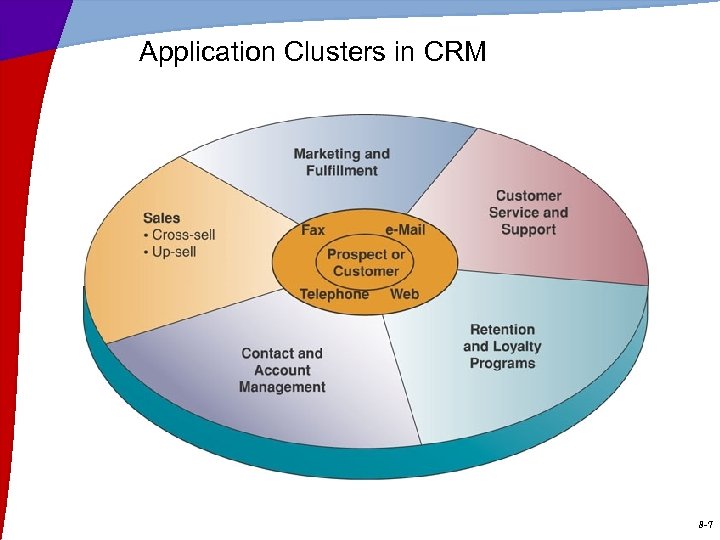
Application Clusters in CRM 8 -7
Sales • A CRM system provides: – Support and manage sales activities – Optimize cross-selling and up-selling – Method to check account status and history 8 -8
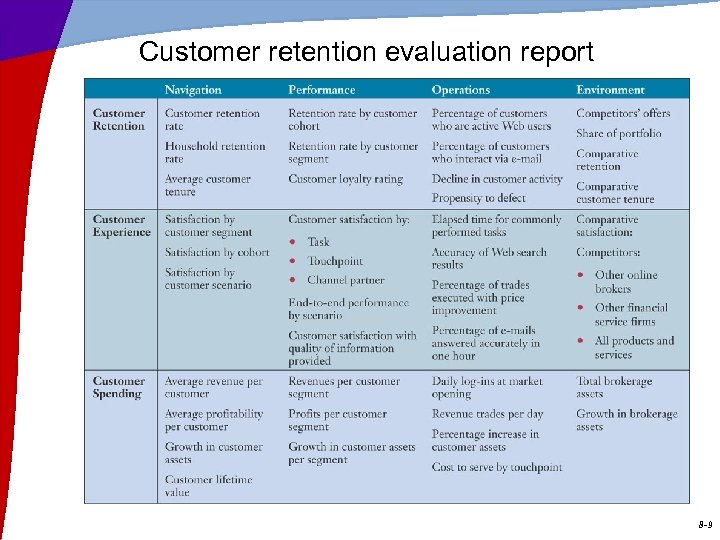
Customer retention evaluation report 8 -9
Marketing and Fulfillment • Automate direct marketing campaigns – Qualifying leads for targeted marketing – Scheduling and tracking mailings – Capturing and managing responses – Analyzing the business value of the campaign – Fulfilling responses and requests 8 -10
Customer Service and Support • Shared database – Requests for service are created, assigned, and managed – Call center software routes calls to agents – Help desk software provides service data and suggestions for solving problems • Personalized support information 8 -11
Retention and Loyalty Programs • Statistics – Costs 6 times more to sell to a new customer – Unhappy customer will tell 8 -10 others – Boosting customer retention by 5 percent can boost profits by 85 percent – Odds of selling: • Existing customer - 50 percent • New - 15 percent – 70 percent of customers will do business again if problems are quickly resolved. 8 -12
Retention and Loyalty Programs • Primary objective - enhancing and optimizing customer retention and loyalty – Identify, reward, and market to the most loyal and profitable customers – Evaluate targeted marketing and relationship programs 8 -13
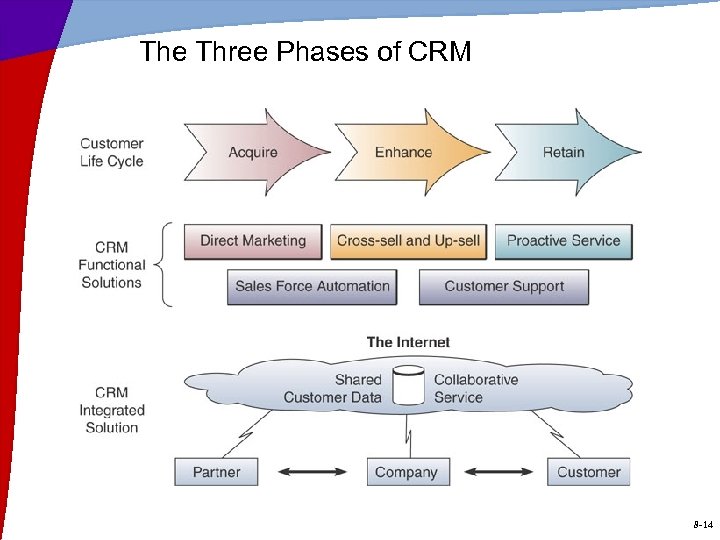
The Three Phases of CRM 8 -14
Benefits of CRM • Identify and target the best customers • Real-time customization and personalization of products and services • Track when and how a customer contacts the company • Provide a consistent customer experience • Provide superior service and support 8 -15
CRM Failures • Reasons for Failure – Lack of senior management sponsorship – Improper change management – Elongated projects that take on too much, too fast – Lack of or poor integration between CRM and core business systems – Lack of end-user incentives leading to poor user adoption rates – Lack of understanding and preparation -- # 1 – Not solving business process problems first – No participation on part of business stakeholders involved 8 -16
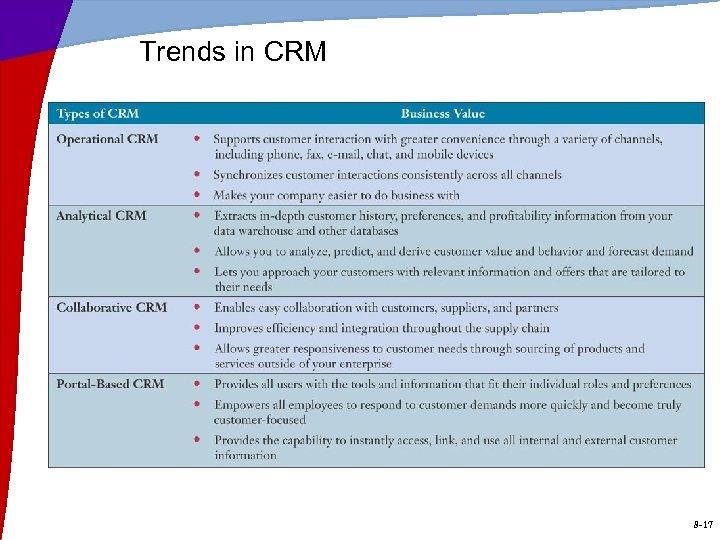
Trends in CRM 8 -17
What is ERP? • Cross-functional enterprise system – Integrated suite of software modules – Supports basic internal business processes • • • Manufacturing Logistics Distribution Accounting Finance Human resources – Facilitates information flows • Business • Supplier • Customer 8 -18
RWC 2: ERPs Get a Second Lease on Life • Old ERPs customized to fit individual needs • Upgrades can’t be applied without testing and modification • New ERPs have new features and capability • Some companies stay with old systems • Some companies buy new, but avoid customization 8 -19
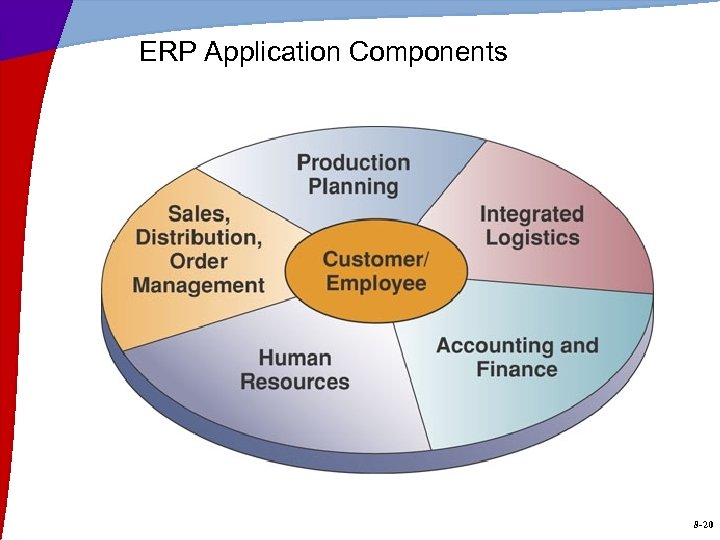
ERP Application Components 8 -20
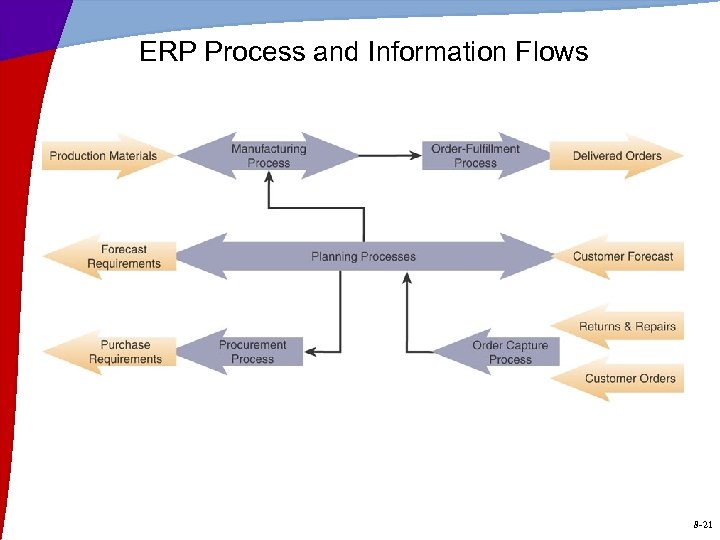
ERP Process and Information Flows 8 -21
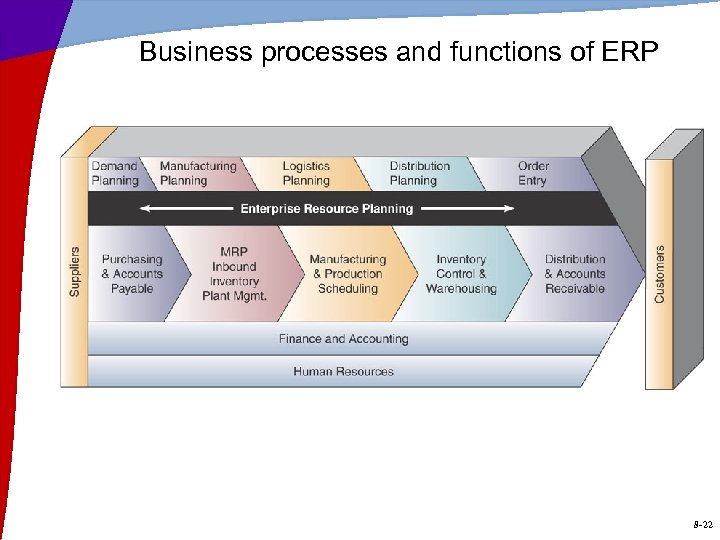
Business processes and functions of ERP 8 -22
ERP at Colgate • Needed to coordinate globally, act locally • Order-to-delivery time cut in half – Order acquisition and process • 7 days cut to 4 hours – Distribution • 4 days cut to 14 hours • Increased on-time deliveries • Domestic inventories dropped by 1/3 8 -23
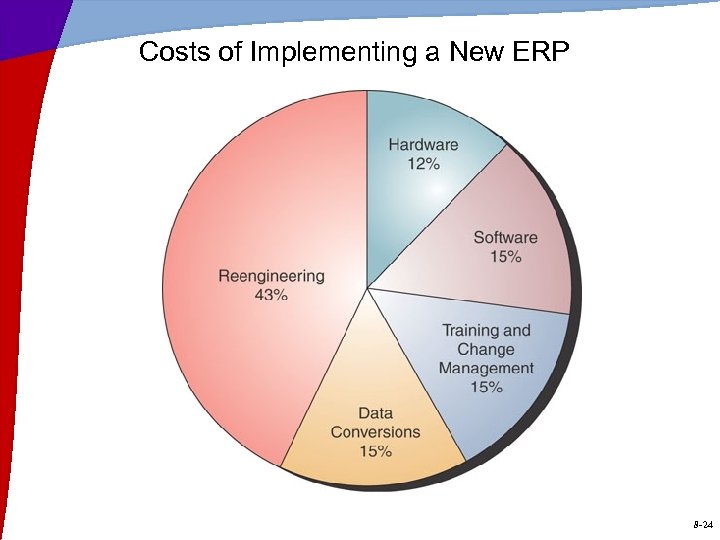
Costs of Implementing a New ERP 8 -24
Causes of ERP Failures • Most common causes of ERP failure – Under-estimating complexity • Planning, development, training – Failure to involve affected employees – Too much too fast – Insufficient training – Insufficient data conversion and testing – Over-reliance on ERP vendor or consultants 8 -25
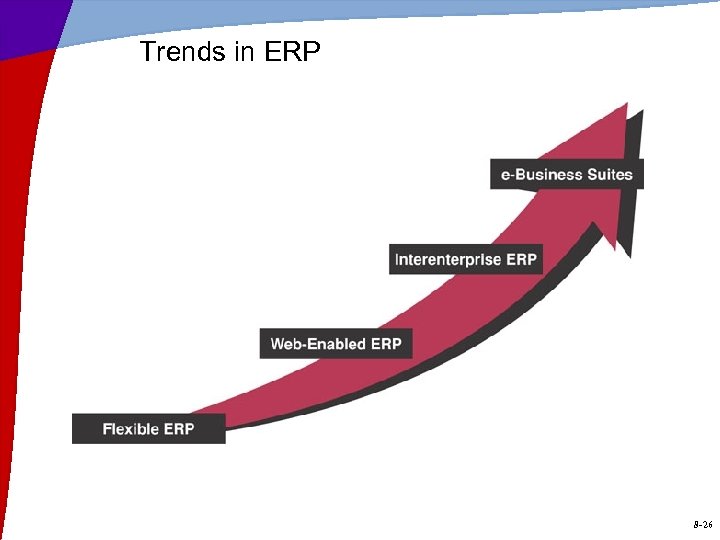
Trends in ERP 8 -26
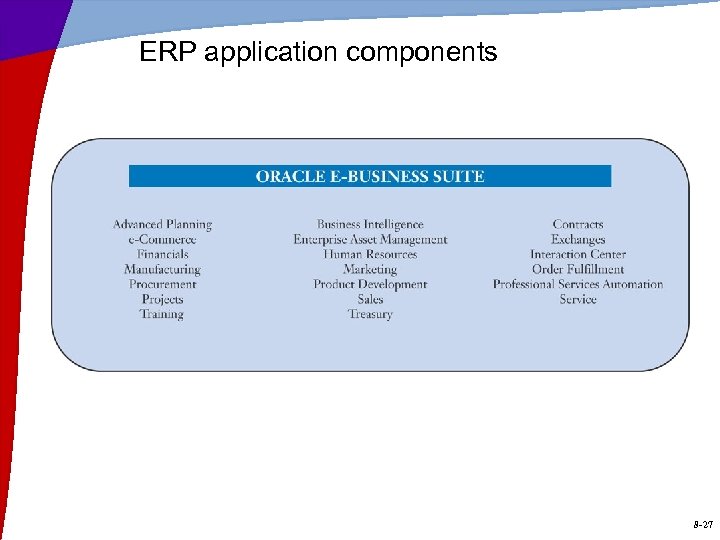
ERP application components 8 -27
Supply Chain Management (SCM) • Helps a company – – – Get the right products To the right place At the right time In the proper quantity At an acceptable cost • Goal of SCM is to efficiently… – – Forecast demand Control inventory Enhance relationships Receive feedback 8 -28
RWC 3: Supply Chains Adapt to Tough Times • Old push model uses best-guess forecasts – High inventory levels – Supply chain stops during down-turn • Key to survival in down-turn – Reduced inventory – Increased working capital • Pull system – Information to build inventory comes from supply chain partners – Inventory based on “demand signals” 8 -29
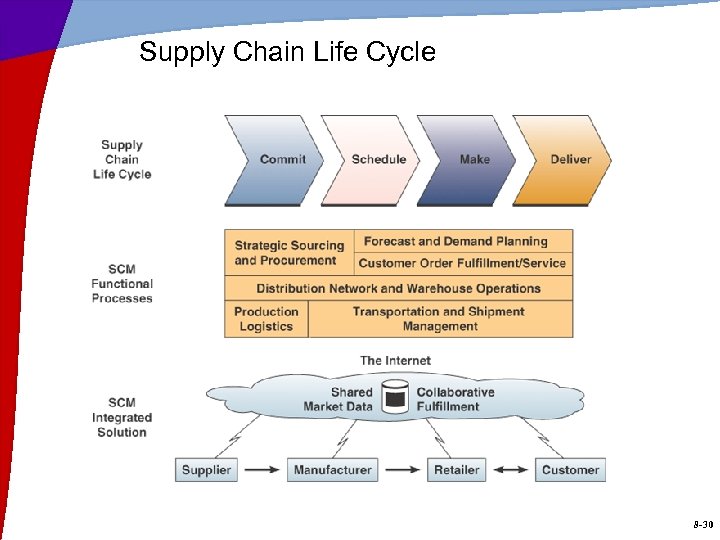
Supply Chain Life Cycle 8 -30
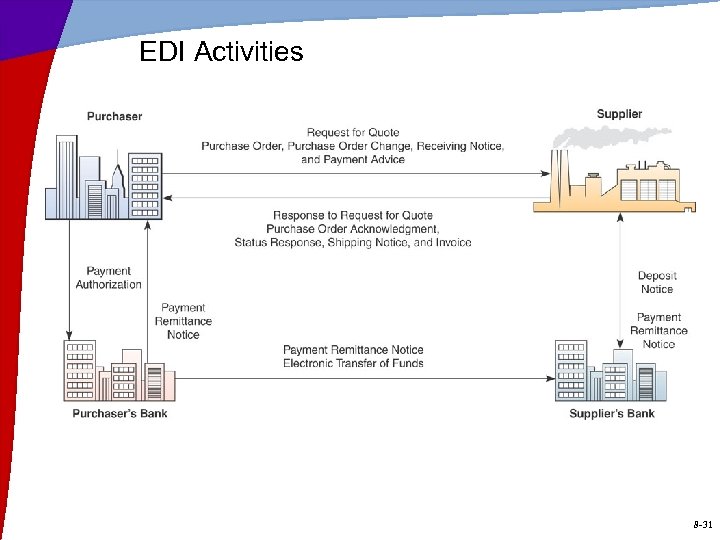
EDI Activities 8 -31
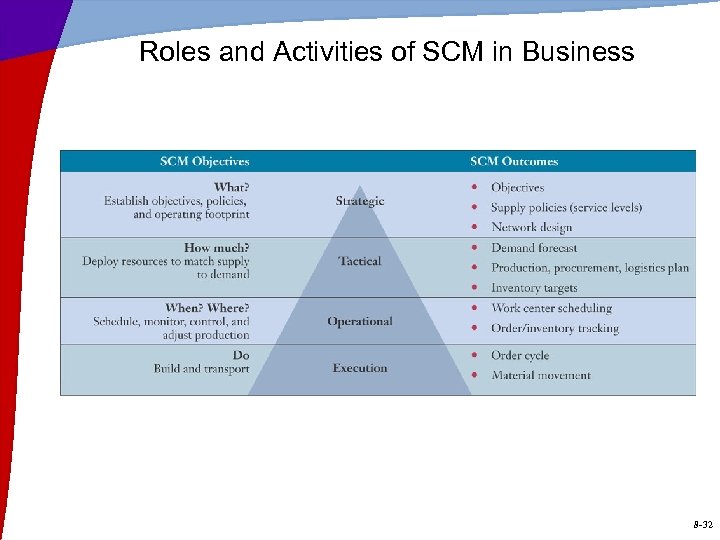
Roles and Activities of SCM in Business 8 -32
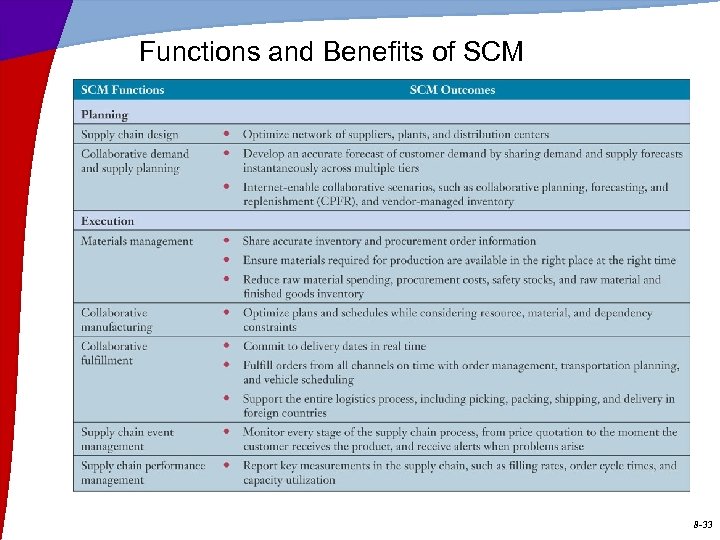
Functions and Benefits of SCM 8 -33
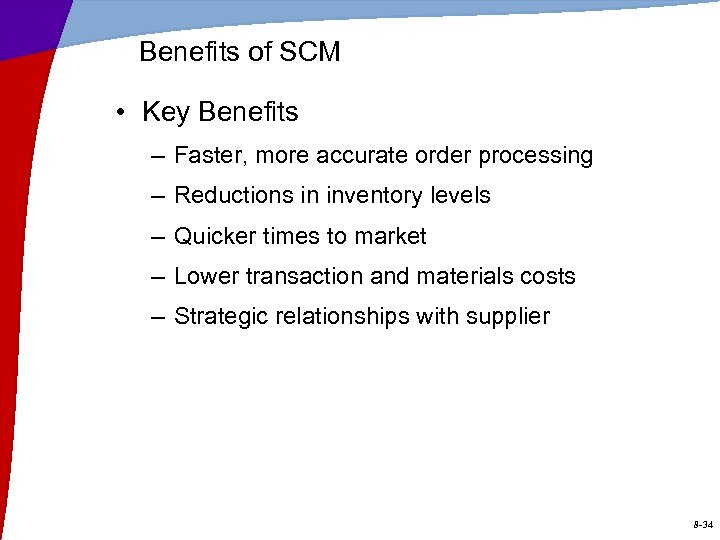
Benefits of SCM • Key Benefits – Faster, more accurate order processing – Reductions in inventory levels – Quicker times to market – Lower transaction and materials costs – Strategic relationships with supplier 8 -34
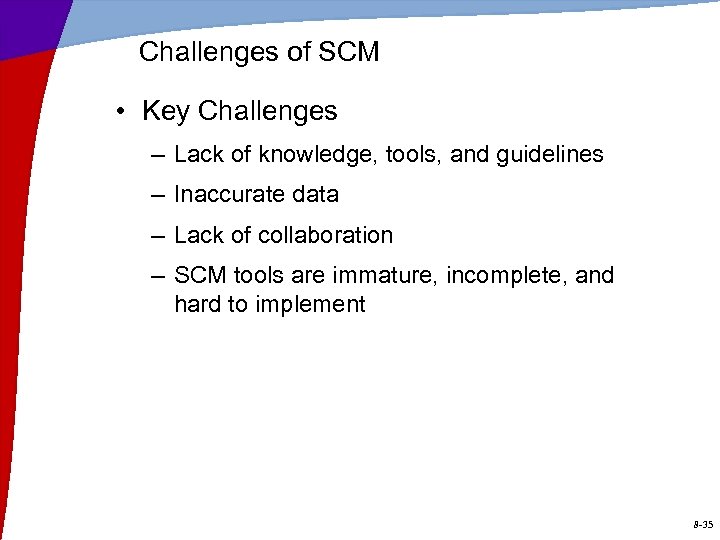
Challenges of SCM • Key Challenges – Lack of knowledge, tools, and guidelines – Inaccurate data – Lack of collaboration – SCM tools are immature, incomplete, and hard to implement 8 -35
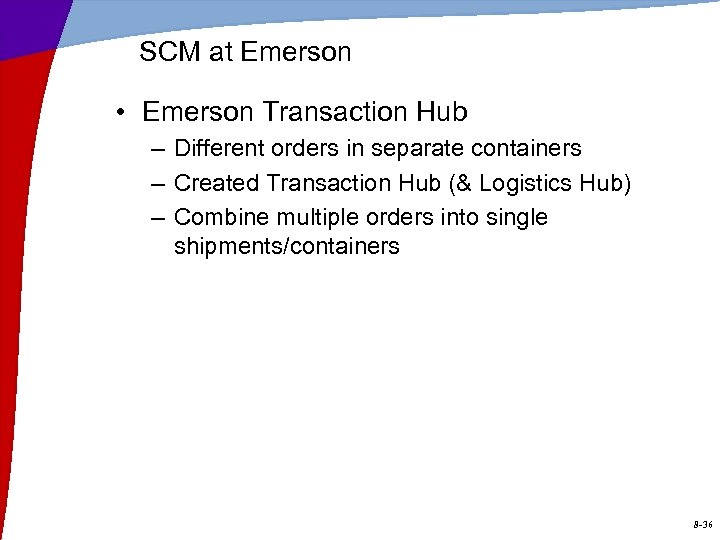
SCM at Emerson • Emerson Transaction Hub – Different orders in separate containers – Created Transaction Hub (& Logistics Hub) – Combine multiple orders into single shipments/containers 8 -36
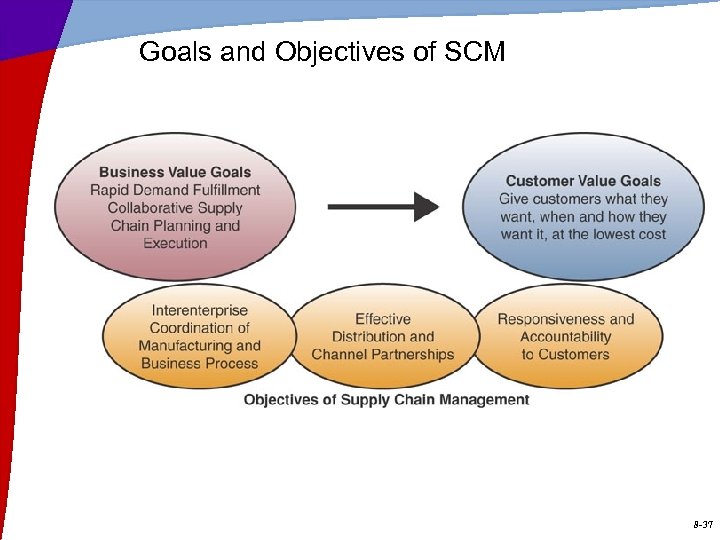
Goals and Objectives of SCM 8 -37
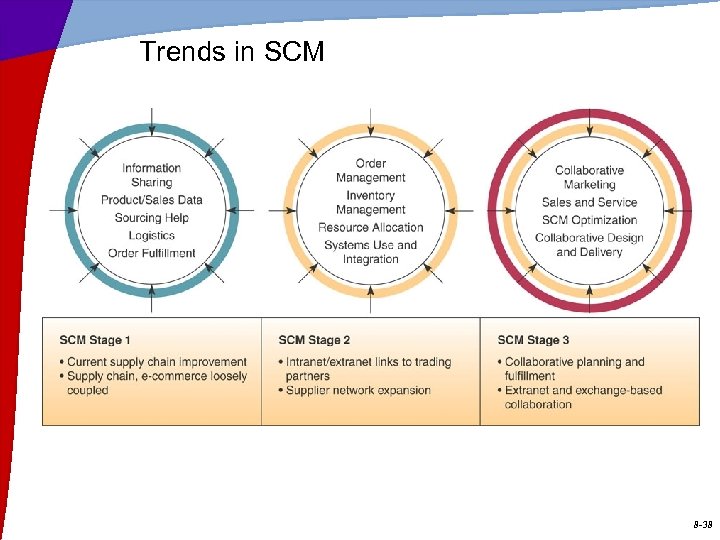
Trends in SCM 8 -38
Trends in SCM • CVS, Mc. Kesson – CVS leading drug retail chain – Mc. Kesson largest pharmaceutical distributor – Point-of-sale data – Agreed on service levels – Reduced replenishment time • Modern Plastics, Supply. Solution, Inc. – Upraded reactive system to proactive system 8 -39
RWC 4: The Secret to CRM is in the Data • CRM enables increased sales revenue • CRM provides more and better services to customers and prospects. • CRM – better earlier than later. • “Without accurate, complete, and comprehensive data, any CRM effort will be less than optimal. ” 8 -40
Скачать презентацию Chapter 8 Enterprise Business Systems Mc Graw-Hill Irwin Copyright
dcda675a54df98126de91b26048c1b48.ppt