


 Скачать презентацию CHAPTER 8 Designing and Managing Service Slide
e1a31fe8a54a4db094f943fef727d91f.ppt
- Количество слайдов: 33
 CHAPTER 8 Designing and Managing Service Slide © by Lovelock, Wirtz and Chew 2009 Processes Essentials of Services Marketing Chapter 1 - Page 1
 Overview of Chapter 8 § Flowcharting Service Delivery § Blueprinting Services to Create Valued Experiences and Productive Operations § Service Process Redesign § The Customer as Co-Producer § Self-Service Technologies Slide © by Lovelock, Wirtz and Chew 2009 Essentials of Services Marketing Chapter 1 - Page 2
 Flowcharting Service Delivery Slide © by Lovelock, Wirtz and Chew 2009 Essentials of Services Marketing Chapter 1 - Page 3
 Flowcharting Service Delivery Helps to Clarify Product Elements = Technique for displaying the nature and sequence of the different steps in delivery service to customers = Offers way to understand total customer service experience = Shows how nature of customer involvement with service organizations varies by type of service: è People processing è Possession processing è Mental Stimulus processing è Information processing Slide © by Lovelock, Wirtz and Chew 2009 Essentials of Services Marketing Chapter 1 - Page 4
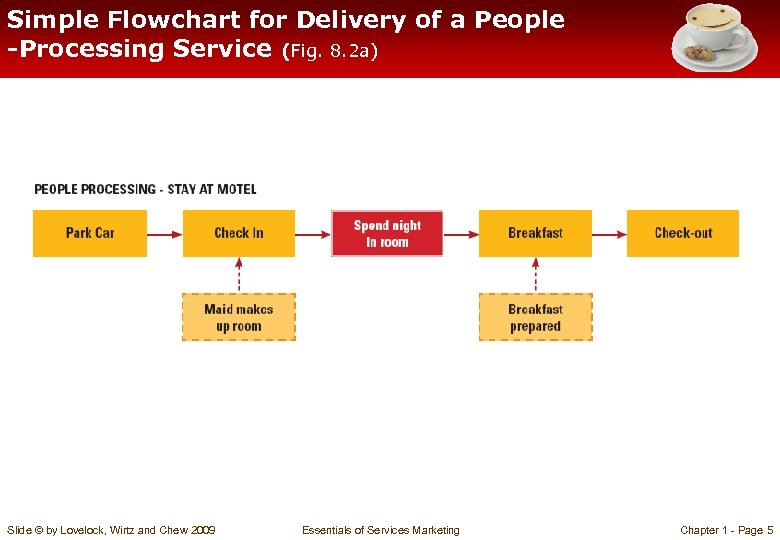 Simple Flowchart for Delivery of a People -Processing Service (Fig. 8. 2 a) Slide © by Lovelock, Wirtz and Chew 2009 Essentials of Services Marketing Chapter 1 - Page 5
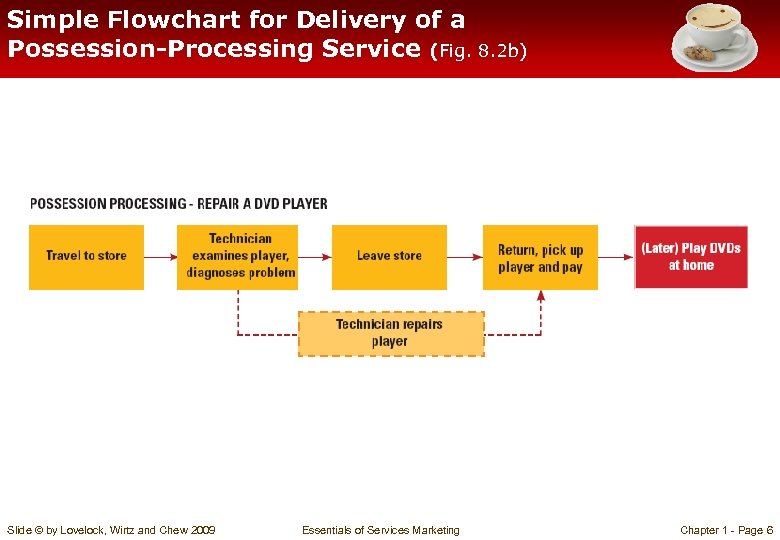 Simple Flowchart for Delivery of a Possession-Processing Service (Fig. 8. 2 b) Slide © by Lovelock, Wirtz and Chew 2009 Essentials of Services Marketing Chapter 1 - Page 6
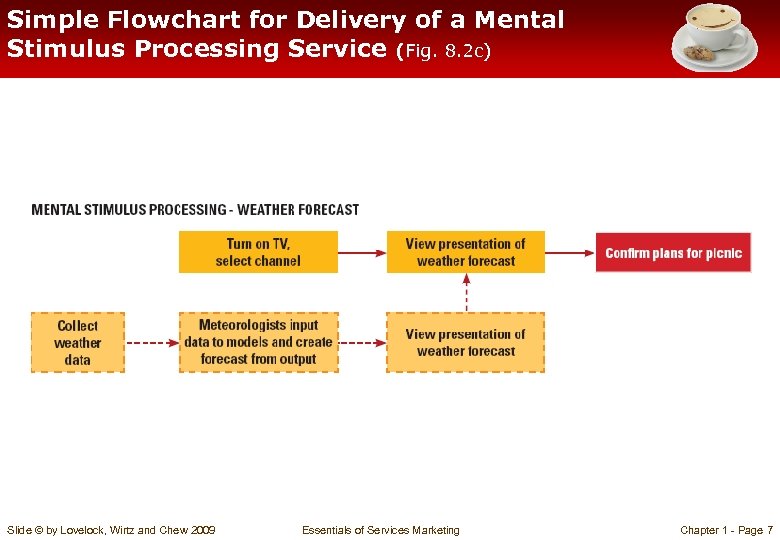 Simple Flowchart for Delivery of a Mental Stimulus Processing Service (Fig. 8. 2 c) Slide © by Lovelock, Wirtz and Chew 2009 Essentials of Services Marketing Chapter 1 - Page 7
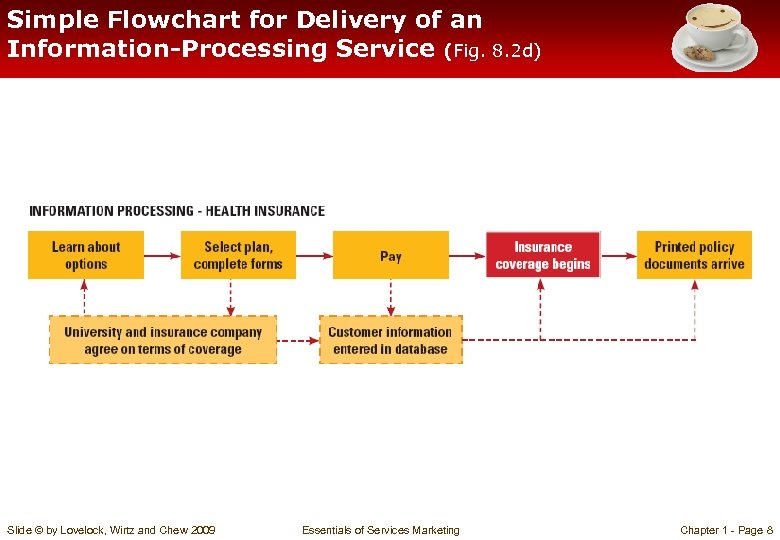 Simple Flowchart for Delivery of an Information-Processing Service (Fig. 8. 2 d) Slide © by Lovelock, Wirtz and Chew 2009 Essentials of Services Marketing Chapter 1 - Page 8
 Blueprinting Services to Create Valued Experiences and Productive Operations Slide © by Lovelock, Wirtz and Chew 2009 Essentials of Services Marketing Chapter 1 - Page 9
 Blueprinting Developing a Blueprint = Identify key activities in creating and delivering service = Define “big picture” before “drilling down” to obtain a higher level of detail Advantages of Blueprinting = Distinguish between “frontstage” and “backstage” = Clarify interactions between customers and staff, and support by backstage activities and systems = Identify potential fail points; take preventive measures; prepare contingency = Pinpoint stages in the process where customer commonly have to wait Slide © by Lovelock, Wirtz and Chew 2009 Essentials of Services Marketing Chapter 1 - Page 10
 Key Components of a Service Blueprint 1. Define standards for front-stage activities 2. Specify physical evidence 3. Identify main customer actions 4. Line of interaction (customers and front-stage personnel) 5. Frontstage actions by customer-contact personnel 6. Line of visibility (between front stage and backstage) 7. Backstage actions by customer contact personnel 8. Support processes involving other service personnel 9. Support processes involving IT - Identify fail points and risks of excessive waits - Set service standards and do failure-proofing Slide © by Lovelock, Wirtz and Chew 2009 Essentials of Services Marketing Chapter 1 - Page 11
 Blueprinting the Restaurant Experience: Act 1 (Fig. 8. 8) Slide © by Lovelock, Wirtz and Chew 2009 Essentials of Services Marketing Chapter 1 - Page 12
 Blueprinting The Restaurant Experience: A Three-Act Performance § Act 1: Introductory Scenes § Act 2: Delivery of Core Product Ø Cocktails, seating, order food and wine, wine service Ø Potential fail points: Menu information complete? Menu intelligible? Everything on the menu actually available? Ø Mistakes in transmitting information a common cause of quality failure – e. g. bad handwriting; poor verbal communication Ø Customers may not only evaluate quality of food and drink, but how promptly it is served, serving staff attitudes, or style of service § Act 3: The Drama Concludes Ø Remaining actions should move quickly and smoothly, with no surprises at the end Ø Customer expectations: accurate, intelligible and prompt bill, payment handled politely, guests are thanked for their patronage Slide © by Lovelock, Wirtz and Chew 2009 Essentials of Services Marketing Chapter 1 - Page 13
 Improving Reliability of Processes by Failure Proofing § Identify fail points § Analysis of reasons for failure often reveals opportunities for failure proofing to reduce/eliminate future risk of errors § Need fail-safe methods for both employees and customers § Have poka-yokes to ensure service staff do things correctly, as requested, or at the right speed § Customer poka-yokes focus on preparing the customer for: Ø The encounter Ø Understanding and anticipating their roles Ø Selecting the correct service or transaction § See Service Insights 8. 1 – Framework to prevent customer failures Slide © by Lovelock, Wirtz and Chew 2009 Essentials of Services Marketing Chapter 1 - Page 14
 Service Process Redesign Slide © by Lovelock, Wirtz and Chew 2009 Essentials of Services Marketing Chapter 1 - Page 15
 Why Redesign? (1) “Institutions are like steel beams—they tend to rust. What was once smooth and shiny and nice tends to become rusty. ” Mitchell T. Rabkin MD, formerly president of Boston’s Beth Israel Hospital Slide © by Lovelock, Wirtz and Chew 2009 Essentials of Services Marketing Chapter 1 - Page 16
 Why Redesign? (2) § Revitalizes process that has become outdated § Changes in external environment make existing practices obsolete and require redesign of underlying processes Ø Creation of brand-new processes to stay relevant § Rusting occurs internally Ø Natural deterioration of internal processes; creeping bureaucracy; evolution of spurious, unofficial standards Ø Symptoms: - Extensive information exchange - Data that is not useful - High ratio of checking or control activities to value-adding activities - Increased exception processing - Customer complaints about inconvenient and unnecessary procedures Slide © by Lovelock, Wirtz and Chew 2009 Essentials of Services Marketing Chapter 1 - Page 17
 Process Redesign: Approaches and Potential Benefits (1) § Eliminating non-value-adding steps Ø Simplify front-end and back-end processes with goal of focusing on benefit-producing part of service encounter Ø Get rid of non-value adding steps Ø Improve productivity and customer satisfaction § Shifting to self-service Ø Increase in productivity and service quality Ø Lower costs Ø Enhance technology reputation Ø Differentiates company Slide © by Lovelock, Wirtz and Chew 2009 Essentials of Services Marketing Chapter 1 - Page 18
 Process Redesign: Approaches and Potential Benefits (2) § Delivering direct service Ø Bring service to customers instead of bringing customers to service firm Ø Improve convenience for customers Ø Productivity can be improved if companies can eliminate expensive retail locations Ø Increase customer base § Bundling services Ø Involves grouping multiple services into one offer, focusing on a welldefined customer group Ø Often has a better fit to the needs of target segment Ø Increase productivity Ø Add value for customers through lower transaction costs Ø Customize service Ø Increase per capita service use Slide © by Lovelock, Wirtz and Chew 2009 Essentials of Services Marketing Chapter 1 - Page 19
 Process Redesign: Approaches and Potential Benefits (3) § Redesigning physical aspects of service processes Ø Focus on tangible elements of service process; include changes to facilities and equipment to improve service experience Ø Increase convenience Ø Enhance the satisfaction and productivity of frontline staff Ø Cultivate interest in customers Ø Differentiate company Slide © by Lovelock, Wirtz and Chew 2009 Essentials of Services Marketing Chapter 1 - Page 20
 The Customer as Co-producer Slide © by Lovelock, Wirtz and Chew 2009 Essentials of Services Marketing Chapter 1 - Page 21
 Levels of Customer Participation (1) § Customer Participation Ø Actions and resources supplied by customers during service production and/or delivery Ø Includes mental, physical, and even emotional inputs Slide © by Lovelock, Wirtz and Chew 2009 Essentials of Services Marketing Chapter 1 - Page 22
 Levels of Customer Participation (2) § 3 levels Ø Low – Employees and systems do all the work - Often involves standardized service - Medium – Customer helps firm create and deliver service - Provide needed information and instructions - Make some personal effort; share physical possessions Ø High – Customer works actively with provider to co-produce the service - Service cannot be created without customer’s active participation - Customer can jeopardize quality of service outcome (e. g. weight loss, marriage counseling) Slide © by Lovelock, Wirtz and Chew 2009 Essentials of Services Marketing Chapter 1 - Page 23
 Customers as Partial Employees § Customers can influence productivity and quality of service processes and outputs § Customers not only bring expectations and needs, they also need to have relevant service production competencies § Customers also need to be recruited as they are “partial employees”. Firms need to get those with the skills to do the tasks § For the relationship to last, both parties need to cooperate with each other Slide © by Lovelock, Wirtz and Chew 2009 Essentials of Services Marketing Chapter 1 - Page 24
 Self-Service Technologies Slide © by Lovelock, Wirtz and Chew 2009 Essentials of Services Marketing Chapter 1 - Page 25
 Self-Service Technologies (SSTs) § Ultimate form of customer involvement Ø Customers undertake specific activities using facilities or systems provided by service supplier Ø Customer’s time and effort replace those of employees - e. g. Internet-based services, ATMs, self-service gasoline pumps § Information-based services can easily be offered using SSTs Ø Used in both supplementary services and delivery of core product - e. g. e. Bay – no human auctioneer needed between sellers and buyers § Many companies seek to encourage customers to serve themselves using Internet-based self-service Ø Challenge: getting customers to try this technology Slide © by Lovelock, Wirtz and Chew 2009 Essentials of Services Marketing Chapter 1 - Page 26
 Psychological Factors Related to the use of SSTs § SSTs advantages Ø Time savings Ø Cost savings Ø Flexibility Ø Convenience of location Ø Greater control over service delivery Ø High perceived level of customization § SSTs disadvantages Ø Anxiety and stress experienced by customers who are uncomfortable with using them Ø Some service encounters as social experiences and prefer to deal with people Slide © by Lovelock, Wirtz and Chew 2009 Essentials of Services Marketing Chapter 1 - Page 27
 What Aspects Of SSTs Please Or Annoy Customers? (1) § People love SSTs when… Ø SST machines are conveniently located and accessible 24/7—often as close as nearest computer! Ø Obtaining detailed information and completing transactions can be done faster than through face-to-face or telephone contact Ø People in awe of what technology can do for them when it works well § People hate SSTs when… Ø SSTs fail – system is down, PIN numbers not accepted, etc Ø Poorly designed technologies that make service processes difficult to understand use Ø they mess up - forgetting passwords; failing to provide information as requested; simply hitting wrong buttons Slide © by Lovelock, Wirtz and Chew 2009 Essentials of Services Marketing Chapter 1 - Page 28
 What Aspects Of SSTs Please Or Annoy Customers? (2) § Key weakness of SSTs: Too few incorporate service recovery systems Ø Customers still forced to make telephone calls or personal visits Slide © by Lovelock, Wirtz and Chew 2009 Essentials of Services Marketing Chapter 1 - Page 29
 Putting SSTs to Test by Asking a Few Simple Questions § Does the SST work reliably? Ø § Is the SST better than interpersonal alternatives? Ø § Firms must ensure that SSTs are dependable and userfriendly Customers will stick to conventional methods if SST doesn’t create benefits for them If it fails, what systems are in place to recover? Ø Always provide systems, structures, and technologies that will enable prompt service recovery when things go wrong Slide © by Lovelock, Wirtz and Chew 2009 Essentials of Services Marketing Chapter 1 - Page 30
 Summary for Chapter 8 – Designing and Managing Service Processes (1) § Flowcharting helps clarify delivery elements. It also shows how nature of customer involvement with service organizations varies by type of service § Service blueprinting can be used to design a service and create a satisfying experience for customers. Key components of the blueprint include Ø Definition of standards for each front-stage activity Ø Physical and other evidence for front-stage activities Ø Principal customer actions Ø Line of interaction Ø Front-stage actions by customer-contact personnel Ø Line of visibility Ø Backstage actions by customer-contact personnel Ø Support processes involving other service personnel Ø Support processes involving information technology Slide © by Lovelock, Wirtz and Chew 2009 Essentials of Services Marketing Chapter 1 - Page 31
 Summary for Chapter 8 – Designing and Managing Service Processes (2) § Blueprinting a restaurant (or other service) can be a three-act performance Ø Prologue and introductory scenes Ø Delivery of the core product Ø Conclusion of the drama § Failure proofing can be designed into service processes to improve reliability § Service process redesign can be categorized into five kinds Ø Eliminating non-value-adding steps Ø Shifting to self-service Ø Delivering direct service Ø Bundling services Ø Redesigning the physical aspect of service processes Slide © by Lovelock, Wirtz and Chew 2009 Essentials of Services Marketing Chapter 1 - Page 32
 Summary for Chapter 8 – Designing and Managing Service Processes (3) § When the customer is a co-producer, issues to consider are Ø Levels of customer participation Ø Customers as partial employees § When deciding to use Self-service Technologies (SSTs), firms should consider Ø Psychological factors related to the use of SSTs Ø Aspects of SSTs that please or annoy customers Slide © by Lovelock, Wirtz and Chew 2009 Essentials of Services Marketing Chapter 1 - Page 33