


 Скачать презентацию Chapter 8 Costs 2006 Thomson Learning South-Western
88be9e1c152d9cf71af070473d245c75.ppt
- Количество слайдов: 50
 Chapter 8 Costs © 2006 Thomson Learning/South-Western
 Basic Concepts of Costs n n n 2 Opportunity cost: the cost of a good or service as measured by the alternative uses that are foregone by producing the good or service. Accounting cost: the concept that goods or services cost what was paid for them. Economic cost: the amount required to keep a resource in its present use; the amount that it would be worth in its next best alternative use.
 Labor Costs n n n 3 Like accountants, economists regard the payments to labor as an explicit cost. Labor services (worker-hours) are purchased at an hourly wage rate (w): The cost of hiring one worker for one hour. The wage rate is assumed to be the amount workers would receive in their next best alternative employment.
 Capital Costs n n n 4 Economists consider the cost of a machine to be the amount someone else would be willing to pay for its use. The cost of capital services (machinehours) is the rental rate (v) which is the cost of hiring one machine for one hour. This is an implicit cost if the machine is owned by the firm.
 Entrepreneurial Costs n n 5 Owners of the firm are entitled to the difference between revenue and costs which is generally called (accounting) profit. Economic profit is revenue minus all costs including these entrepreneurial costs.
 The Two-Input Case n The firm uses only two inputs: labor (L, measured in labor hours) and capital (K, measured in machine hours). n n 6 Entrepreneurial services are assumed to be included in the capital costs. Firms buy inputs in perfectly competitive markets so the firm faces horizontal supply curves at prevailing factor prices.
 Economic Profits and Cost Minimization n n 7 Total costs = TC = w. L + v. K. (8. 1) Assuming the firm produces only one output, total revenue equals the price of the product (P) times its total output [q = f(K, L) where f(K, L) is the firm’s production function].
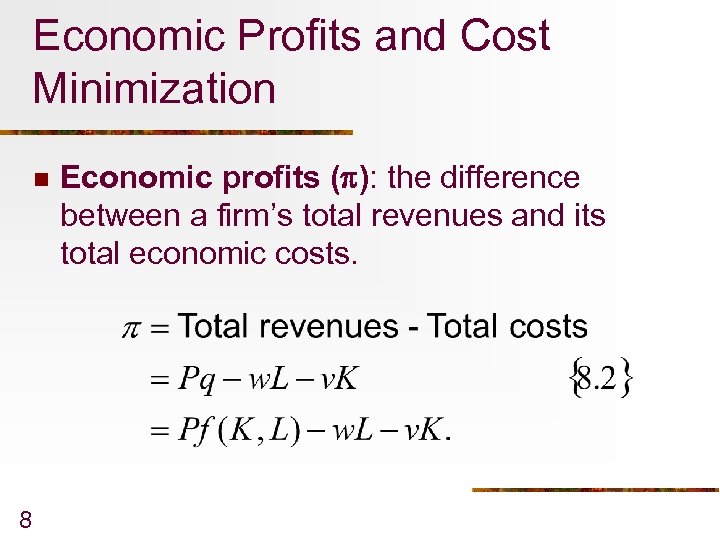 Economic Profits and Cost Minimization n 8 Economic profits ( ): the difference between a firm’s total revenues and its total economic costs.
 Graphic Presentation n n 9 The isoquant q 1 shows all combinations of K and L that are required to produce q 1. The slope of total costs, TC = w. L + v. K, is -w/v. Lines of equal cost will have the same slope so they will be parallel. Three equal total costs lines, labeled TC 1, TC 2, and TC 3 are shown in Figure 8 -1.
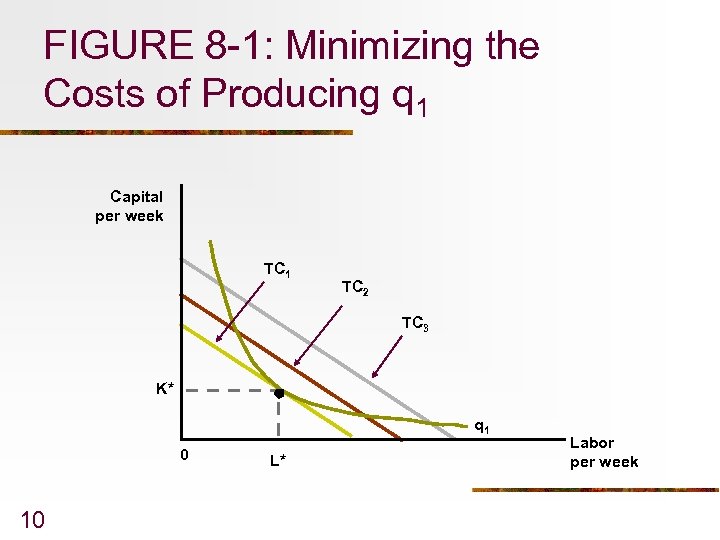 FIGURE 8 -1: Minimizing the Costs of Producing q 1 Capital per week TC 1 TC 2 TC 3 K* q 1 0 10 L* Labor per week
 Graphic Presentation n 11 The minimum total cost of producing q 1 is TC 1 (since it is closest to the origin). The cost-minimizing input combination is L*, K* which occurs where the total cost curve is tangent to the isoquant. At the point of tangency, the rate at which the firm can technically substitute L for K (the RTS) equals the market rate (w/v).
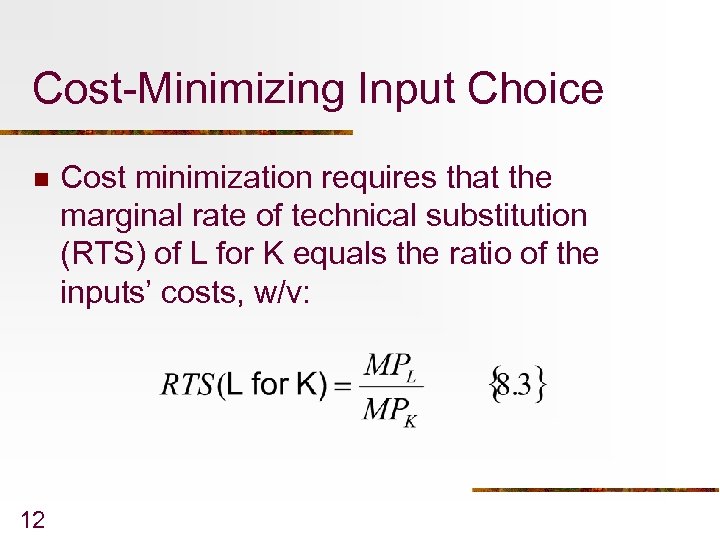 Cost-Minimizing Input Choice n 12 Cost minimization requires that the marginal rate of technical substitution (RTS) of L for K equals the ratio of the inputs’ costs, w/v:
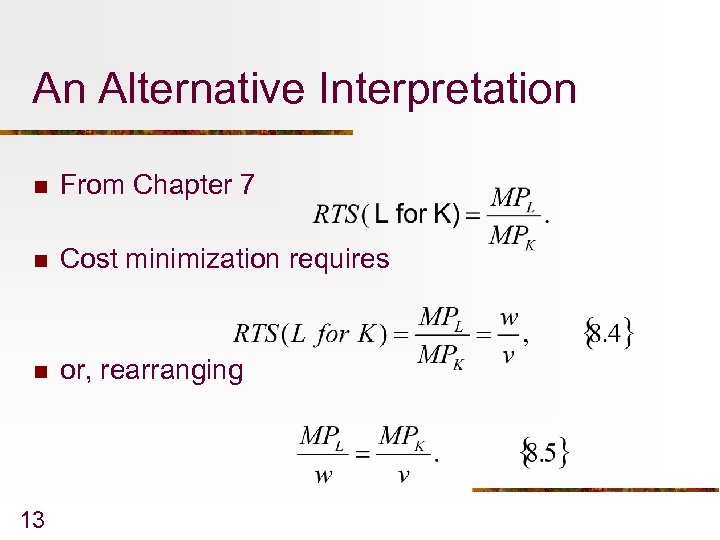 An Alternative Interpretation n From Chapter 7 n Cost minimization requires n or, rearranging 13
 The Firm’s Expansion Path n n n 14 A similar analysis could be performed for any output level (q). If input costs (w and v) remain constant, various cost-minimizing choices can be traces out as shown in Figure 8 -2. For example, output level q 1 is produced using K 1, L 1, and other cost-minimizing points are shown by the tangency between the total cost lines and the isoquants.
 The Firm’s Expansion Path n n 15 The firm’s expansion path is the set of cost-minimizing input combinations a firm will choose to produce various levels of output (when the prices of inputs are held constant). Although in Figure 8 -2, the expansion path is a straight line, that is not necessarily the case.
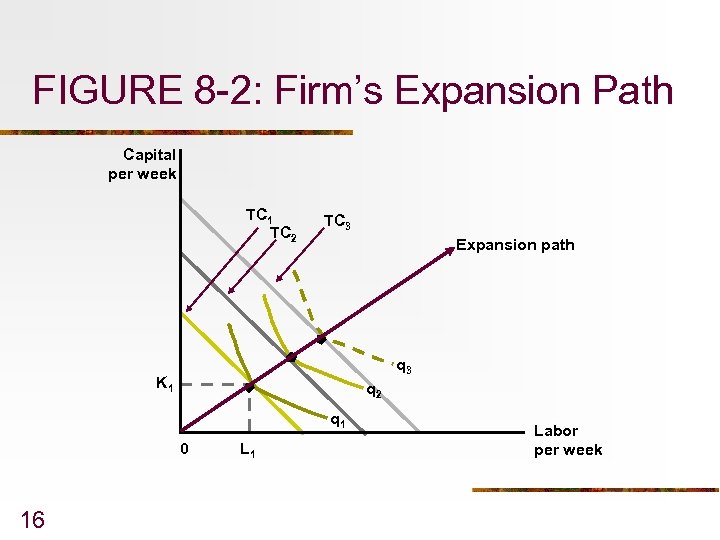 FIGURE 8 -2: Firm’s Expansion Path Capital per week TC 1 TC 2 TC 3 Expansion path q 3 K 1 q 2 q 1 0 16 L 1 Labor per week
 Cost Curves n n 17 Figure 8 -3 shows four possible shapes for cost curves. In Panel a, output and required input use is proportional which means doubling of output requires doubling of inputs. This is the case when the production function exhibits constant returns to scale.
 Cost Curves n n 18 Panels b and c reflect the cases of decreasing and increasing returns to scale, respectively. With decreasing returns to scale the cost curve is convex, while the it is concave with increasing returns to scale. Decreasing returns to scale indicate considerable cost advantages from large scale operations. Panel d reflects the case where there are increasing returns to scale followed by decreasing returns to scale.
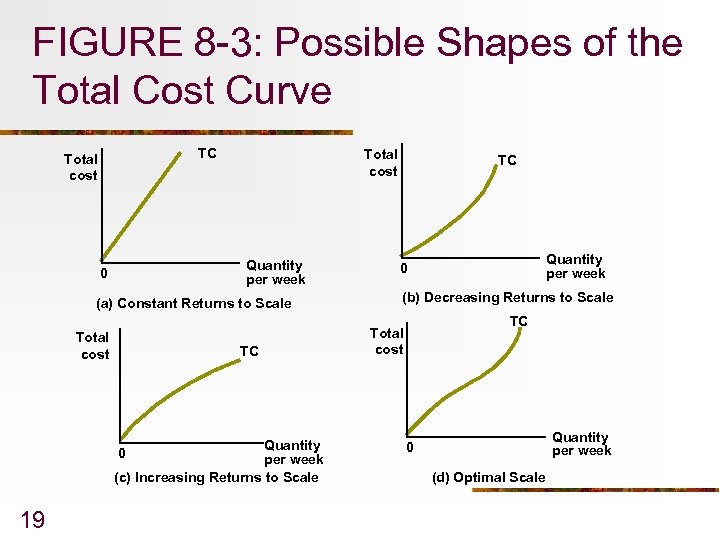 FIGURE 8 -3: Possible Shapes of the Total Cost Curve TC Total cost 0 Total cost Quantity per week (a) Constant Returns to Scale Total cost TC Quantity 0 per week (c) Increasing Returns to Scale 19 TC Quantity per week 0 (b) Decreasing Returns to Scale TC Total cost Quantity per week 0 (d) Optimal Scale
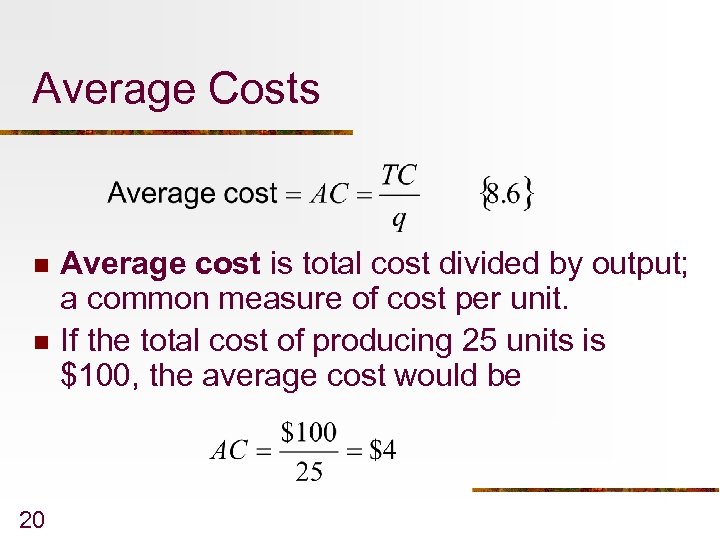 Average Costs n n 20 Average cost is total cost divided by output; a common measure of cost per unit. If the total cost of producing 25 units is $100, the average cost would be
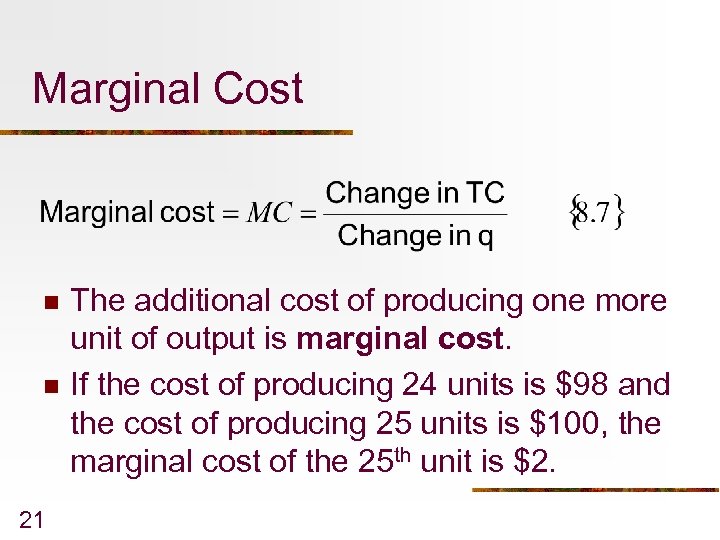 Marginal Cost n n 21 The additional cost of producing one more unit of output is marginal cost. If the cost of producing 24 units is $98 and the cost of producing 25 units is $100, the marginal cost of the 25 th unit is $2.
 Marginal Cost Curves n n 22 Marginal costs are reflected by the slope of the total cost curve. The constant returns to scale total cost curve shown in Panel a of Figure 8 -3 has a constant slope, so the marginal cost is constant as shown by the horizontal marginal cost curve in Panel a of Figure 8 -4.
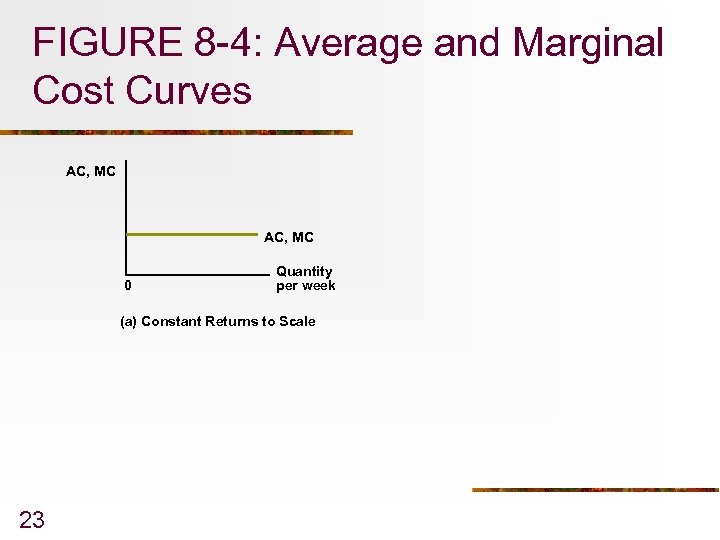 FIGURE 8 -4: Average and Marginal Cost Curves AC, MC 0 Quantity per week (a) Constant Returns to Scale 23
 Marginal Cost Curves n n 24 With decreasing returns to scale, the total cost curve is convex (Panel b of Figure 8 -3). This means that marginal costs are increasing which is shown by the positively sloped marginal cost curve in Panel b of Figure 8 -4.
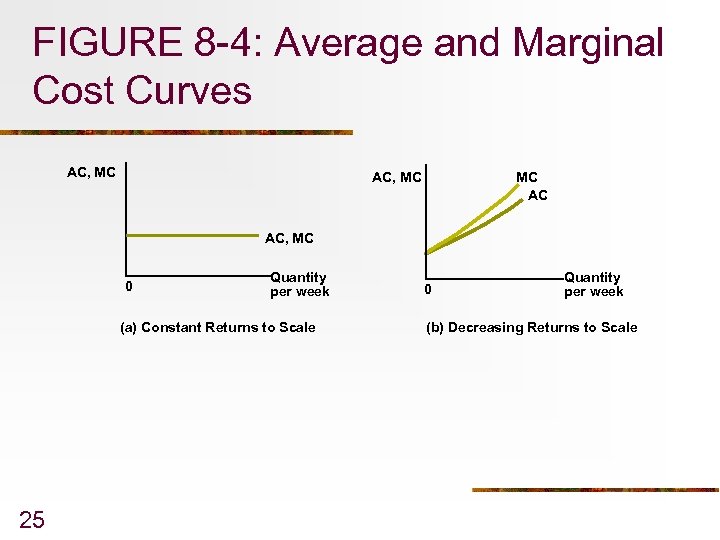 FIGURE 8 -4: Average and Marginal Cost Curves AC, MC MC AC AC, MC 0 Quantity per week (a) Constant Returns to Scale 25 0 Quantity per week (b) Decreasing Returns to Scale
 Marginal Cost Curves n n 26 Increasing returns to scale results in a concave total cost curve (Panel c of Figure 8 -3). This causes the marginal costs to decrease as output increases as shown in the negatively sloped marginal cost curve in Panel c of Figure 8 -4.
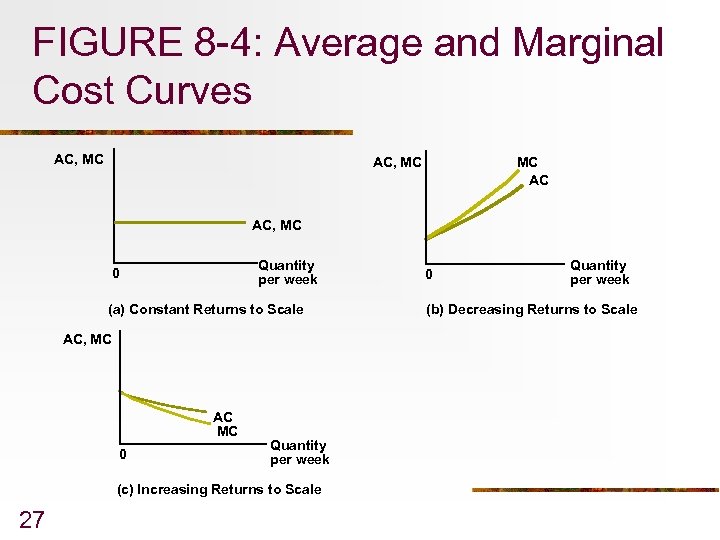 FIGURE 8 -4: Average and Marginal Cost Curves AC, MC MC AC AC, MC Quantity per week 0 (a) Constant Returns to Scale AC, MC AC MC 0 Quantity per week (c) Increasing Returns to Scale 27 0 Quantity per week (b) Decreasing Returns to Scale
 Marginal Cost Curves n n 28 When the total cost curve is first concave followed by convex as shown in Panel d of Figure 8 -3, marginal costs initially decrease but eventually increase. Thus, the marginal cost curve is first negatively sloped followed by a positively sloped curve as shown in Panel d of Figure 8 -4.
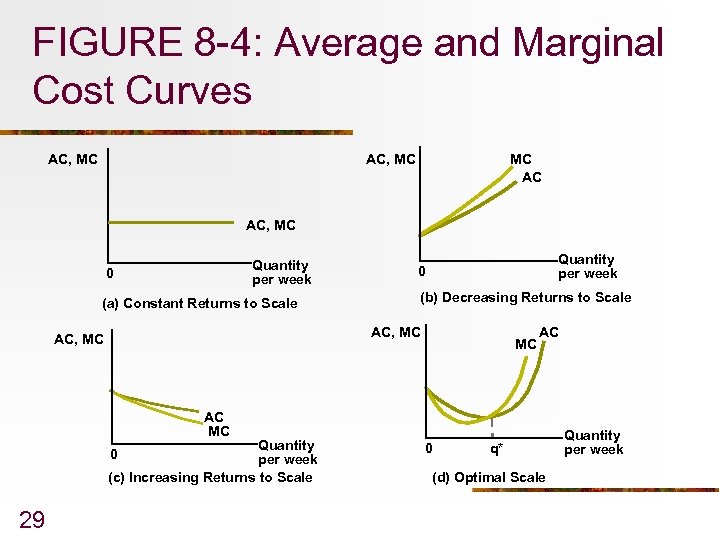 FIGURE 8 -4: Average and Marginal Cost Curves AC, MC MC AC AC, MC Quantity per week 0 (a) Constant Returns to Scale Quantity per week 0 (b) Decreasing Returns to Scale AC, MC MC AC AC MC Quantity 0 per week (c) Increasing Returns to Scale 29 0 q* (d) Optimal Scale Quantity per week
 Average Cost Curves n n 30 For the constant returns to scale case, marginal cost never varies from its initial level, so average cost must stay the same as well. Thus, the average cost curve are the same horizontal line as shown in Panel a of Figure 8 -4.
 Average Cost Curves n n 31 With convex total costs and increasing marginal costs, average costs also rise as shown in Panel b of Figure 8 -4. Because the first few units are produced at low marginal costs, average costs will always b less than marginal cost, so the average cost curve lies below the marginal cost curve.
 Average Cost Curves n n 32 With concave total cost and decreasing marginal costs, average costs will also decrease as shown in Panel c in Figure 8 -4. Because the first few units are produced at relatively high marginal costs, average is less than marginal cost, so the average cost curve lies below the marginal cost curve.
 Average Cost Curves n n 33 The U-shaped marginal cost curve shown in Panel d of Figure 8 -4 reflects decreasing marginal costs at low levels of output and increasing marginal costs at high levels of output. As long as marginal cost is below average cost, the marginal will pull down the average.
 Average Cost Curves n n n 34 When marginal costs are above average cost, the marginal pulls up the average. Thus, the average cost curve must intersect the marginal cost curve at the minimum average cost; q* in Panel d of Figure 8 -4. Since q* represents the lowest average cost, it represents an “optimal scale” of production for the firm.
 Input Inflexibility and Cost Minimization n 35 Since capital is fixed, short-run costs are not the minimal costs of producing variable output levels. Assume the firm has fixed capital of K 1 as shown in Figure 8 -5. To produce q 0 of output, the firm must use L 1 units of labor, with similar situations for q 1, L 1, and q 2, L 2.
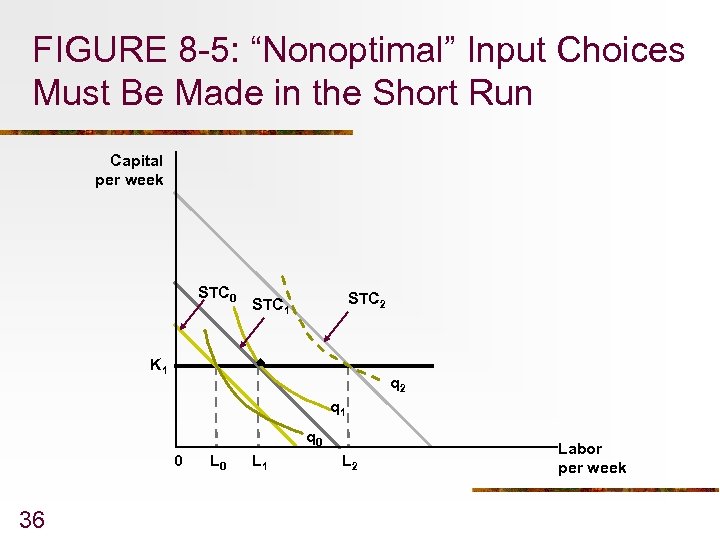 FIGURE 8 -5: “Nonoptimal” Input Choices Must Be Made in the Short Run Capital per week STC 0 STC 2 STC 1 K 1 q 2 q 1 q 0 0 36 L 0 L 1 L 2 Labor per week
 Input Inflexibility and Cost Minimization n 37 The cost of output produced is minimized where the RTS equals the ratio of prices, which only occurs at q 1, L 1. Q 0 could be produce at less cost if less capital than K 1 and more labor than L 0 were used. Q 2 could be produced at less cost if more capital than K 1 and less labor than L 2 were used.
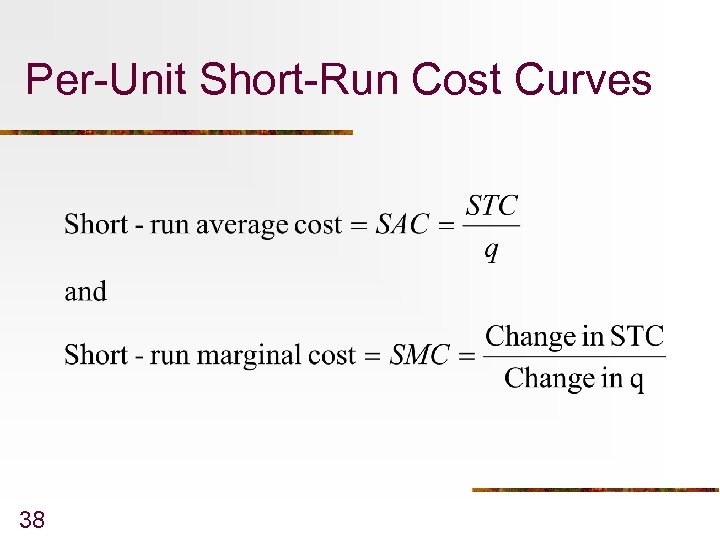 Per-Unit Short-Run Cost Curves 38
 Per-Unit Short-Run Cost Curves n n 39 Having capital fixed in the short run yields a total cost curve that has both concave and convex sections, the resulting short-run average and marginal cost relationships will also be U-shaped. When SMC < SAC, average cost is falling, but when SMC > SAC average cost increase.
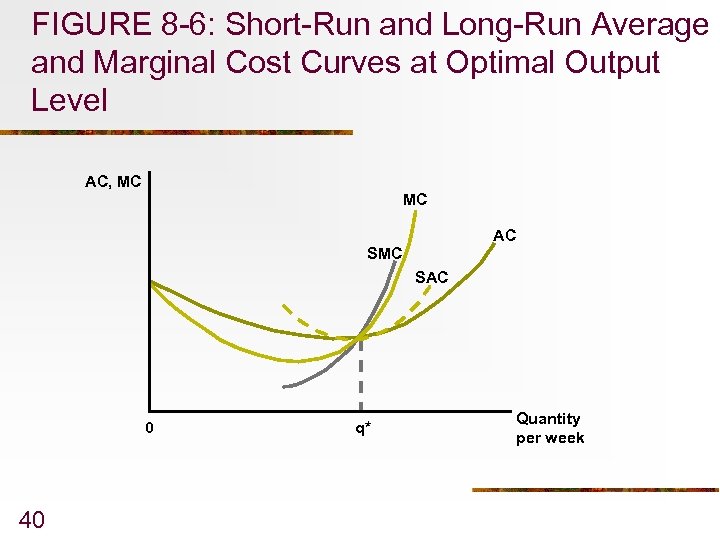 FIGURE 8 -6: Short-Run and Long-Run Average and Marginal Cost Curves at Optimal Output Level AC, MC MC AC SMC SAC 0 40 q* Quantity per week
 Relationship between Short-Run and Long-Run per-Unit Cost Curves n n n 41 In the short-run, when the firm using K* units of capital produces q*, short-run and longrun total costs are equal. In addition, as shown in Figure 8 -6 AC = MC = SAC(K*) = SMC(K*). (8. 8) For output above q* short-run costs are higher than long-run costs. The higher perunit costs reflect the facts that K is fixed.
 Shifts in Cost Curves n n Any change in economic conditions that affects the expansion path will also affect the shape and position of the firm’s cost curves. Three sources of such change are: n n n 42 change in input prices technological innovations, and economies of scope.
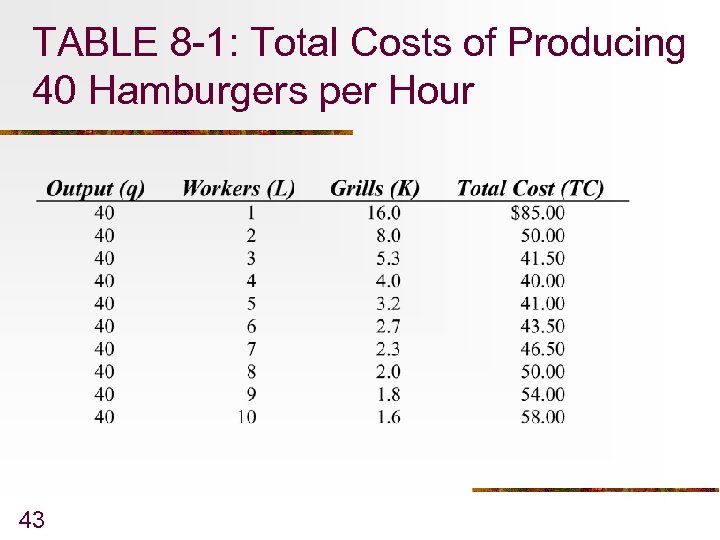 TABLE 8 -1: Total Costs of Producing 40 Hamburgers per Hour 43
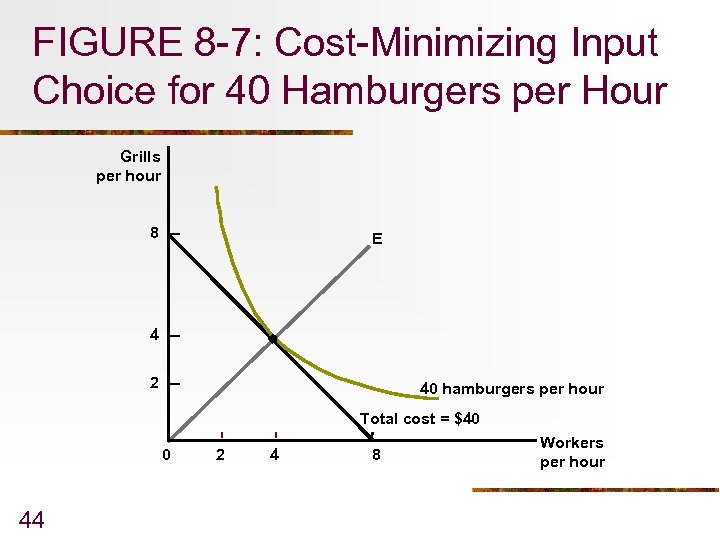 FIGURE 8 -7: Cost-Minimizing Input Choice for 40 Hamburgers per Hour Grills per hour 8 E 4 2 40 hamburgers per hour Total cost = $40 0 44 2 4 8 Workers per hour
 Long-Run cost Curves n n 45 HH’s production function is constant returns to scale so As long as w = v = $5, all of the cost minimizing tangencies will resemble the one shown in Figure 8. 7 and long-run cost minimization will require K = L.
 Long-Run cost Curves n n n 46 This situation, resulting from constant returns to scale, is shown in Figure 8 -8. HH’s long-run total cost function is a straight line through the origin as shown in Panel a. Its long-run average and marginal costs are constant at $1 per burger as shown in Panel b.
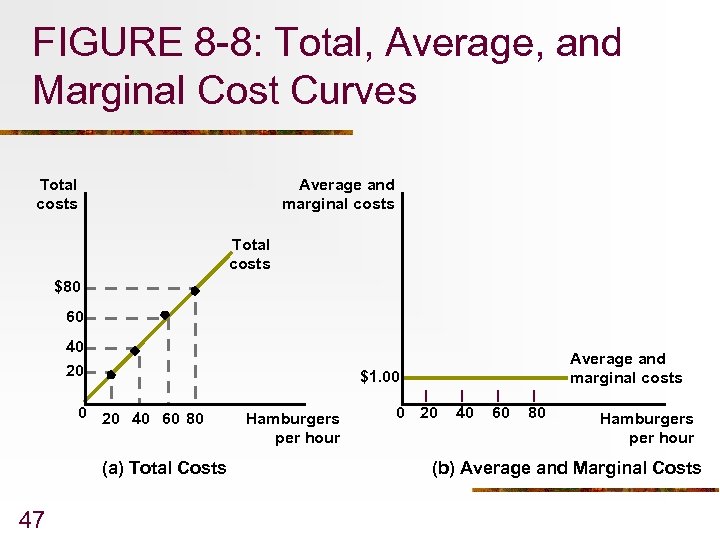 FIGURE 8 -8: Total, Average, and Marginal Cost Curves Total costs Average and marginal costs Total costs $80 60 40 20 $1. 00 0 20 40 60 80 (a) Total Costs 47 Average and marginal costs Hamburgers per hour 0 20 40 60 80 Hamburgers per hour (b) Average and Marginal Costs
 Short-Run Costs n n n 48 Table 8 -2 repeats the labor input required to produce various output levels holding grills fixed at 4. Diminishing marginal productivity of labor causes costs to rise rapidly as output expands. Figure 8 -9 shows the short-run average and marginal costs curves.
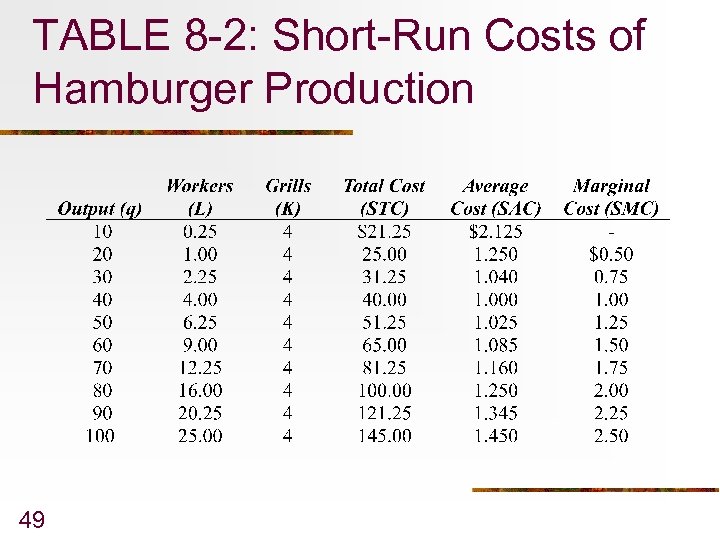 TABLE 8 -2: Short-Run Costs of Hamburger Production 49
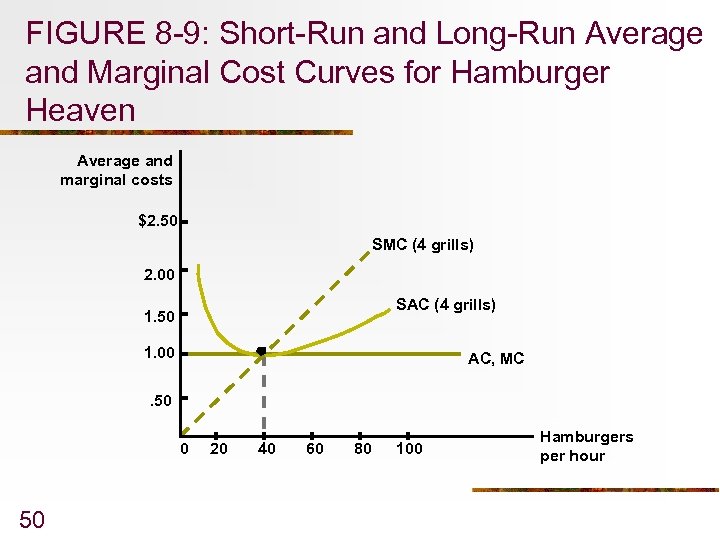 FIGURE 8 -9: Short-Run and Long-Run Average and Marginal Cost Curves for Hamburger Heaven Average and marginal costs $2. 50 SMC (4 grills) 2. 00 SAC (4 grills) 1. 50 1. 00 AC, MC . 50 0 50 20 40 60 80 100 Hamburgers per hour