


 Скачать презентацию Chapter 7 -The U S Constitution How the
80b9ba011a72f4d9399d33dead7a0a9a.ppt
- Количество слайдов: 27
 Chapter 7 -The U. S. Constitution How the United States Government Works
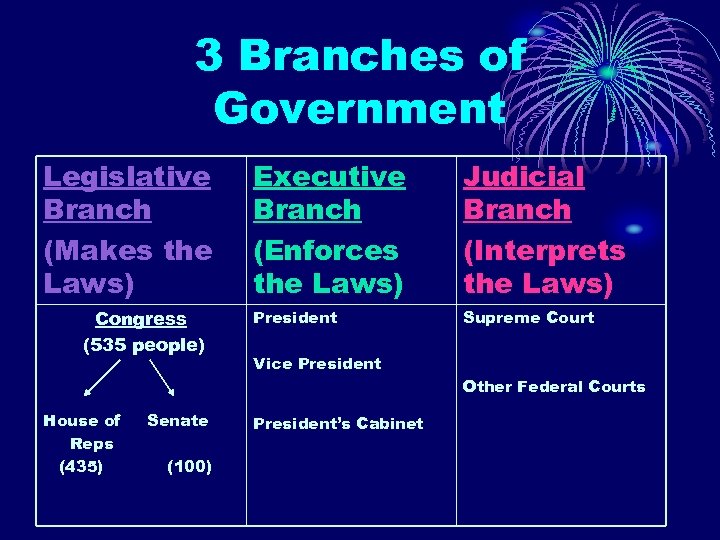 3 Branches of Government Legislative Branch (Makes the Laws) Congress (535 people) Executive Branch (Enforces the Laws) Judicial Branch (Interprets the Laws) President Supreme Court Vice President Other Federal Courts House of Reps (435) Senate (100) President’s Cabinet
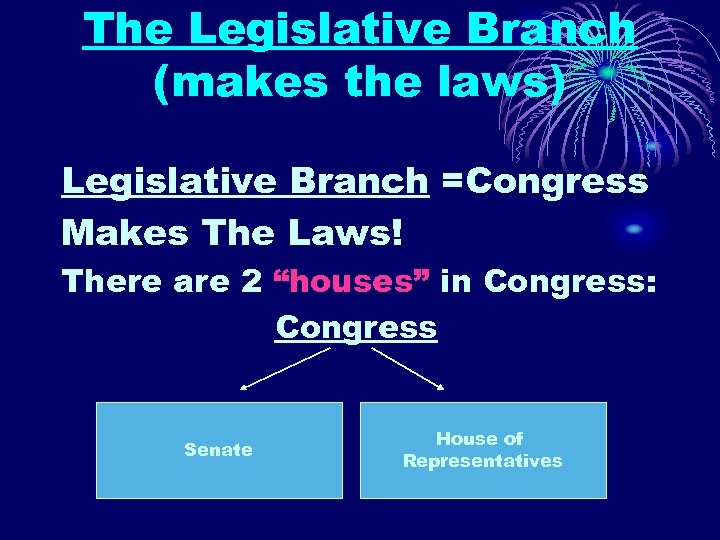 The Legislative Branch (makes the laws) Legislative Branch =Congress Makes The Laws! There are 2 “houses” in Congress: Congress Senate House of Representatives
 Senate • • 2 Senators from each state Senators serve 6 -year terms can be elected unlimited times are directly elected by the people
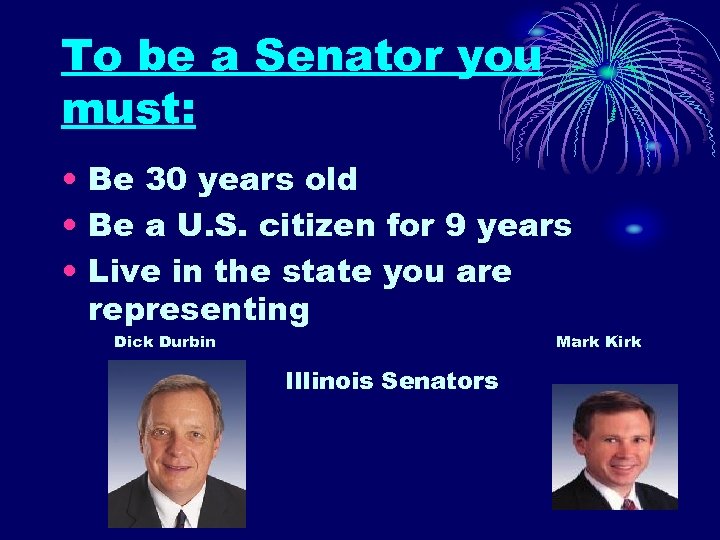 To be a Senator you must: • Be 30 years old • Be a U. S. citizen for 9 years • Live in the state you are representing Dick Durbin Mark Kirk Illinois Senators
 The Senate continued… • Leader of the Senate = The Senate President (Vice-Pres. Of U. S. ) Joe Biden Powers of the Senate • Approve treaties made by the president. • Approve Judges picked by the president. • Holds Impeachment Trials (decide if the person is guilty or innocent).
 House of Representatives • # of Representatives in your state depends on the state’s population • every state has at least 1 rep. • serve 2 -year terms • can be elected unlimited times • are directly elected by the people
 To be a Representative you must: • Be 25 years old • Be a U. S. citizen for 7 years • Live in the state you are representing Adam Kinzinger 11 th District
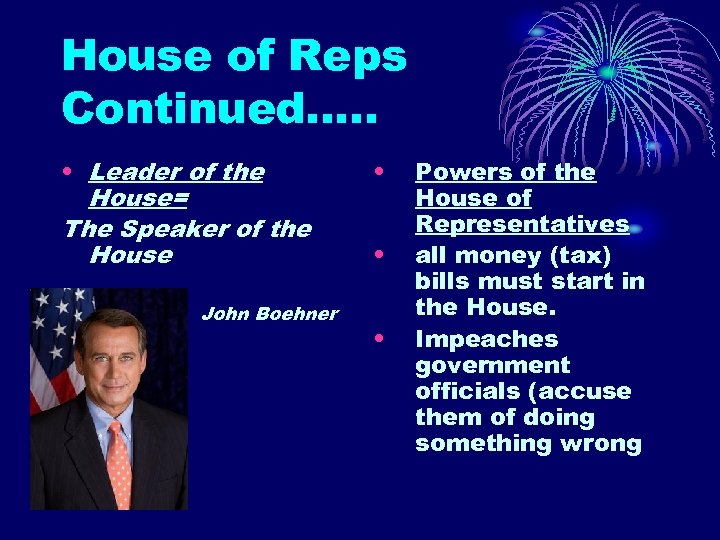 House of Reps Continued…. . • Leader of the House= The Speaker of the House John Boehner • • • Powers of the House of Representatives all money (tax) bills must start in the House. Impeaches government officials (accuse them of doing something wrong
 Powers of Both the House of Representatives and the Senate: Declare War Print money Pass Bills
 How a Bill Becomes A Law • • Bills can start in the House of Representatives or the Senate. (Money/Tax Bills must start in the House of Reps) • • If the Bill starts in the House, it must be voted on in the House first. If it is passed, it goes to the Senate. If the Bill starts in the Senate, it must be voted on in the Senate first. If it is passed, it goes to the House.
 How a Bill Becomes A Law continued…. • The Bill Must Be Passed by The House and the Senate, before it can go to the President! • The President can: SIGN THE BILL or VETO THE BILL. • If the President SIGNS the bill, it will become a law. • If the President VETOS the bill, it will go back to Congress.
 How a Bill Becomes A Law continued…. • If 2/3 of both the House and Senate approve of the Bill, they can OVERRIDE the President and the Bill will still become a law • ***So Technically, only the House and Senate need to pass a Bill in order for it to become a law**** • http: //www. 270 towin. com/
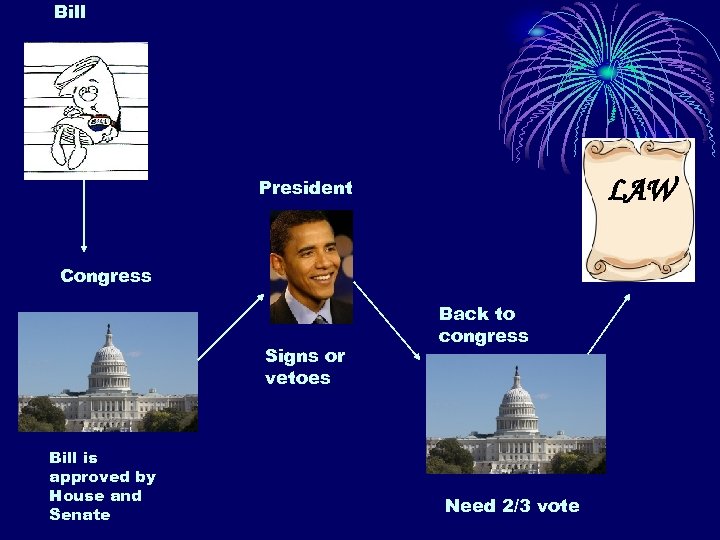 Bill LAW President Congress Signs or vetoes Bill is approved by House and Senate Back to congress Need 2/3 vote
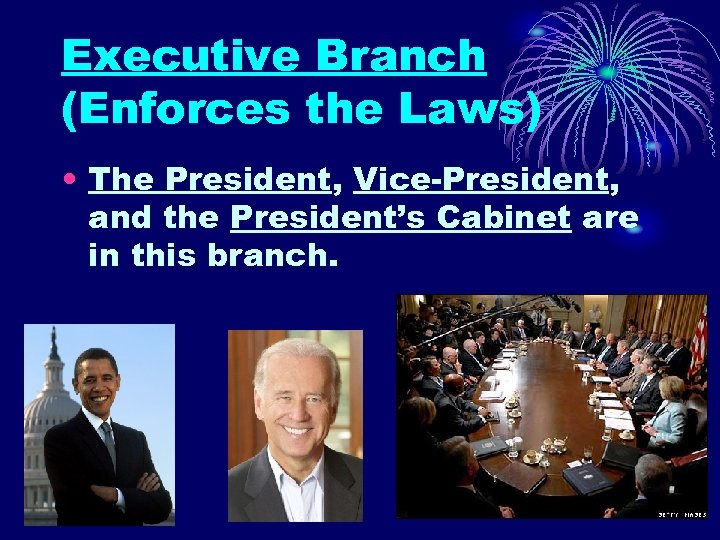 Executive Branch (Enforces the Laws) • The President, Vice-President, and the President’s Cabinet are in this branch.
 Executive Branch Continued: To be President, you must: • 1. Be 35 years old • 2. Live in the U. S. for 14 years • 3. Be a natural born citizen (born in the U. S. ) • President’s Powers & Duties: • Main Job: Enforce the laws! • Veto bills passed by Congress • Makes treaties with other nations (approved by senate) • Appoints/Picks judges (approved by senate) • Commander-in-Chief of the Armed Forces
 Executive Branch Cont… President’s Term • The President serves a 4 year term. • The President can be elected 2 times (2 terms) • Example: President Bush was elected in 2000 and then again in 2004 • A President can serve for a total of 10 years. • The President is elected in November, but can’t take office until January Presidential Succession • If the President dies, these are the next two people in line to take his spot: • The Vice-President • The Speaker of the House
 How Do We Elect the President? • We elect the President through popular vote and the Electoral College • 1. Each state has a certain number of electoral votes. (538 Total Electoral Votes) • 2. Number of electoral votes in each state= # of Reps + # of Senators • Example: Illinois has 20 Electoral Votes (18 reps + 2 senators) • Example: California has 55 Electoral Votes (53 Reps + 2 senators)
 How Do We Elect the President? Continued…. • 3. People go and vote for their favorite person • 4. The person that gets the most votes in that state, gets the electoral votes for that state • Example: John Kerry got the most votes in IL in 2004, so he got 21 electoral votes from IL. • 5. The candidate that gets 270 electoral votes WINS!!!
 Census…how we determine the number of electors ***Every 10 years the government takes a CENSUS which is a poll of questions that Americans answer including; how many people live in the house, what their income is, race, gender, etc. This is how the government determines how many state representatives the state will have.
 The Judicial Branch (interprets the laws) = Supreme Court, other Federal Courts, state and local courts
 The Judicial Branch Supreme Court • The Supreme Court is the HIGHEST court in the land • There are NINE justices (judges) on the Supreme Court • Supreme Court Justices serve a LIFE term
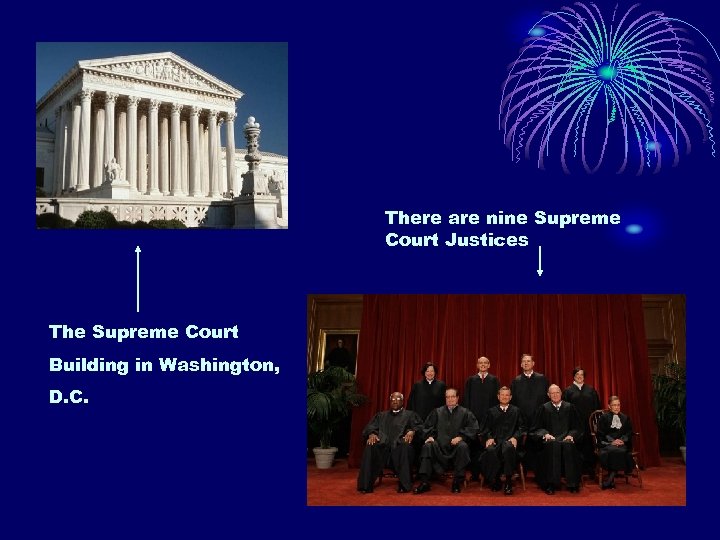 There are nine Supreme Court Justices The Supreme Court Building in Washington, D. C.
 Supreme Court continued…. • Supreme Court Justices are: • appointed/selected by the President • but the Senate has to approve of the Justices. • The Supreme Court can declare laws unconstitutional
 Checks and Balances System • The system in which each branch of government “checks” each other to balance the power. • This ensures that one branch does not become more powerful than the others
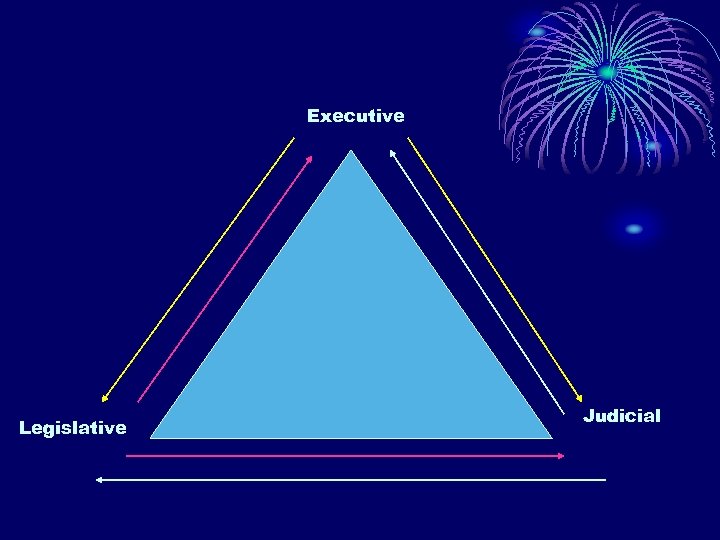 Executive Legislative Judicial
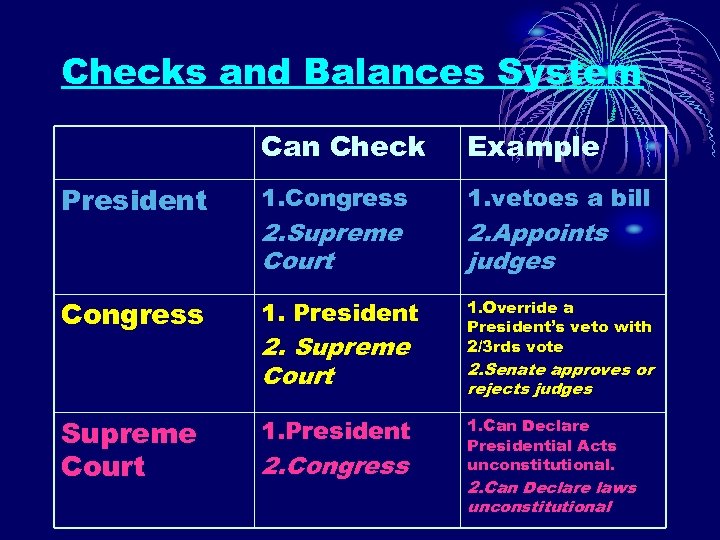 Checks and Balances System Can Check Example President 1. Congress 1. vetoes a bill Congress 1. President 1. Override a President’s veto with 2/3 rds vote Supreme Court 2. Supreme Court 1. President 2. Congress 2. Appoints judges 2. Senate approves or rejects judges 1. Can Declare Presidential Acts unconstitutional. 2. Can Declare laws unconstitutional