


 Скачать презентацию Chapter 7 Retail Locations Mc Graw-Hill Irwin Retailing Management
f8497db161bb9ae8d1c23fa5c35945a3.ppt
- Количество слайдов: 47
 Chapter 7 Retail Locations Mc. Graw-Hill/Irwin Retailing Management, 7/e © 2008 by The Mc. Graw-Hill Companies, All rights reserved.
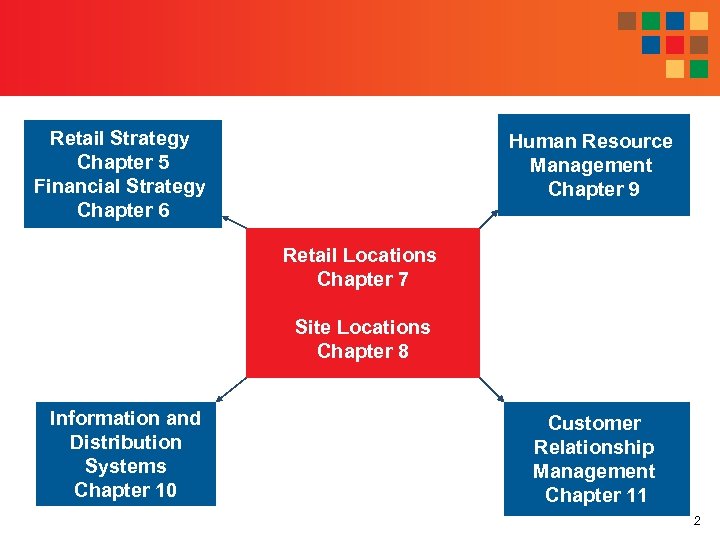 Retail Strategy Chapter 5 Financial Strategy Chapter 6 Human Resource Management Chapter 9 Retail Locations Chapter 7 Site Locations Chapter 8 Information and Distribution Systems Chapter 10 Customer Relationship Management Chapter 11 2
 Questions ■ What types of locations are available to retailers? ■ What are the relative advantages of each location type? ■ Why are some locations particularly well suited to specific retail strategies? ■ Which types of locations are growing in popularity with retailers? 3
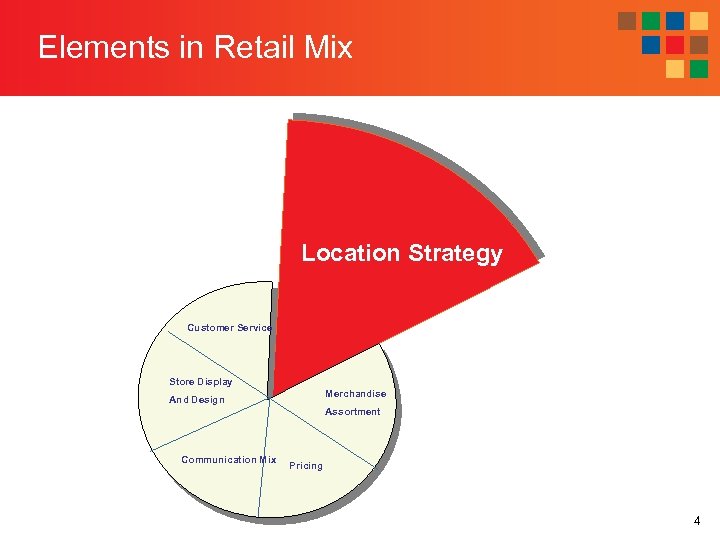 Elements in Retail Mix Location Strategy Customer Service Store Display Merchandise And Design Assortment Communication Mix Pricing 4
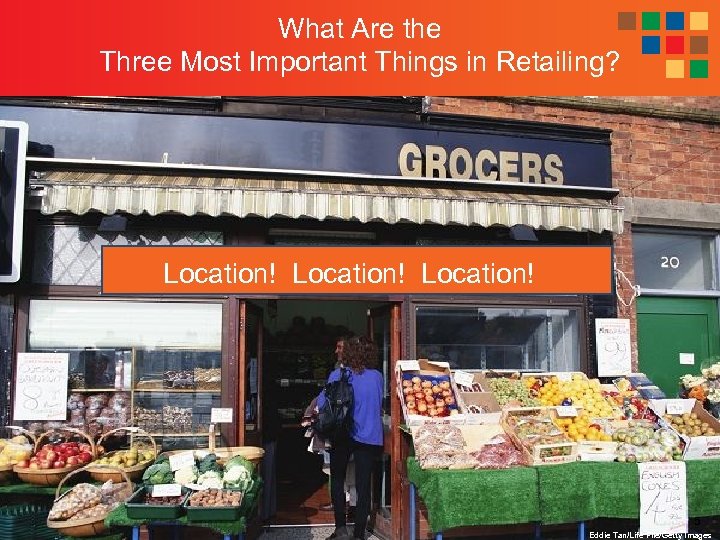 What Are the Three Most Important Things in Retailing? Location! 5 Eddie Tan/Life File/Getty Images
 Facts on Retail Space ■ Currently the U. S. has 20 square feet of retail space in shopping centers for every person. ■ The highest country in the world ■ The second-highest country: n Sweden – 3. 1 square feet person 6
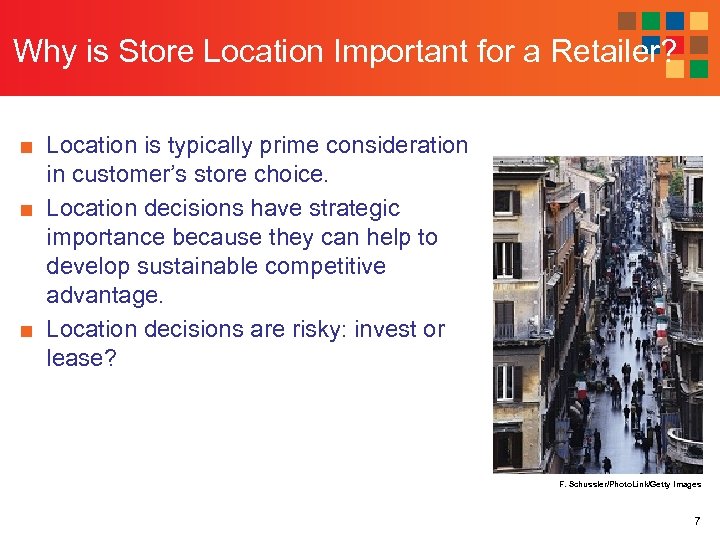 Why is Store Location Important for a Retailer? ■ Location is typically prime consideration in customer’s store choice. ■ Location decisions have strategic importance because they can help to develop sustainable competitive advantage. ■ Location decisions are risky: invest or lease? F. Schussler/Photo. Link/Getty Images 7
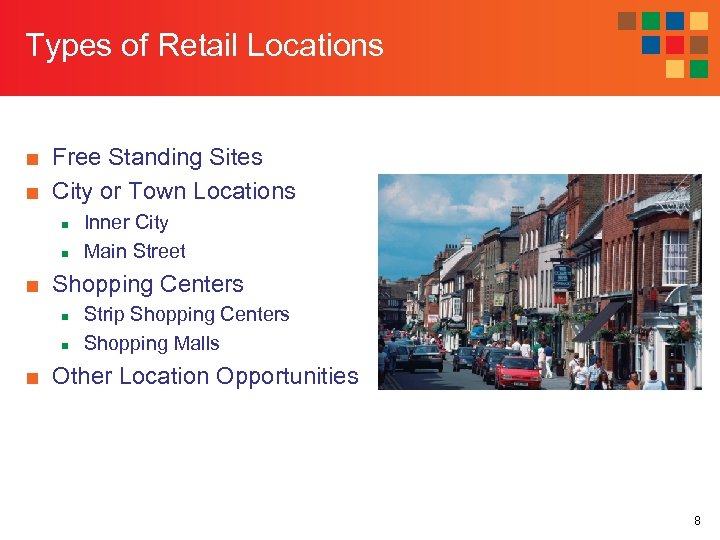 Types of Retail Locations ■ Free Standing Sites ■ City or Town Locations n n Inner City Main Street ■ Shopping Centers n n Strip Shopping Centers Shopping Malls ■ Other Location Opportunities 8
 Selecting a particular location type Involves evaluating a series of trade-offs between ■ The size of the trade area (geographic area encompassing most of the customers who would patronize a specific retail site) ■ the occupancy cost of the location ■ The pedestrian and vehicle customer traffic ■ The restrictions placed on store operations by the property manager ■ The convenience of the location for customers 9
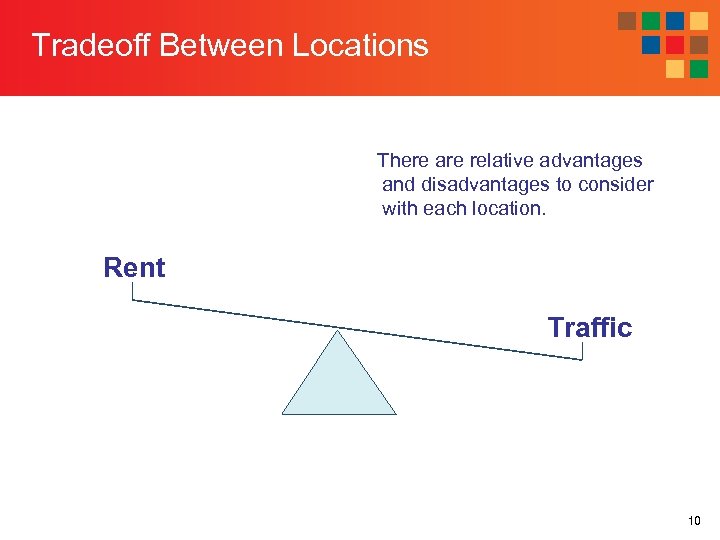 Tradeoff Between Locations There are relative advantages and disadvantages to consider with each location. Rent Traffic 10
 Types of Locations 11
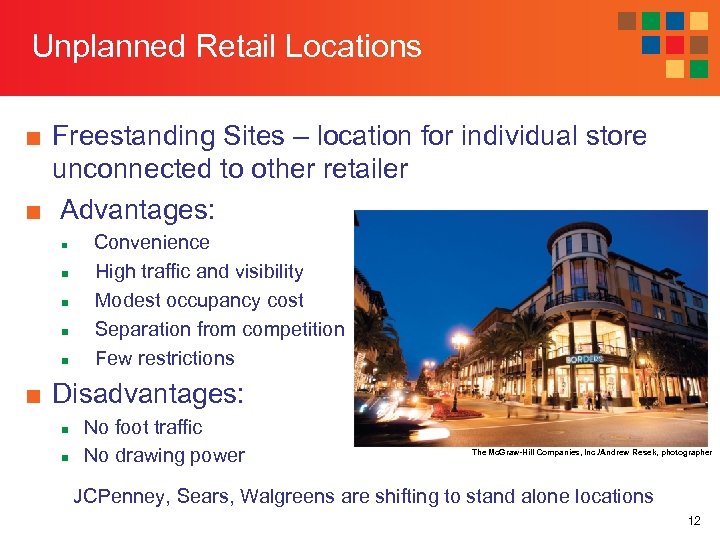 Unplanned Retail Locations ■ Freestanding Sites – location for individual store unconnected to other retailer ■ Advantages: n n n Convenience High traffic and visibility Modest occupancy cost Separation from competition Few restrictions ■ Disadvantages: n n No foot traffic No drawing power The Mc. Graw-Hill Companies, Inc. /Andrew Resek, photographer JCPenney, Sears, Walgreens are shifting to stand alone locations 12
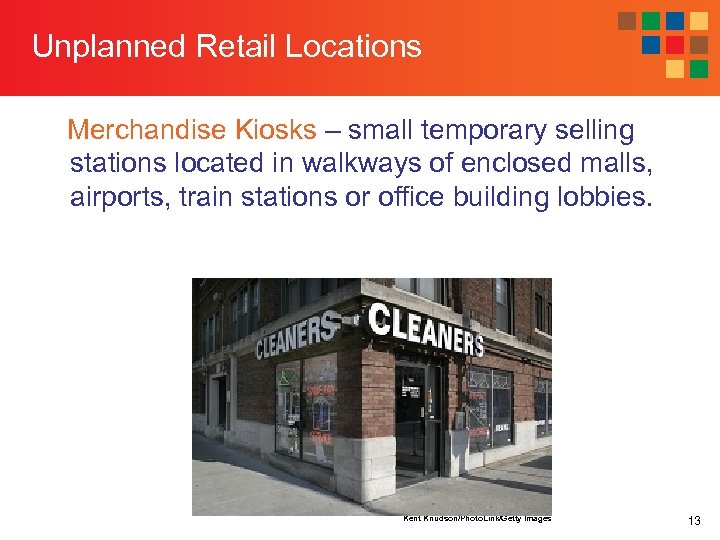 Unplanned Retail Locations Merchandise Kiosks – small temporary selling stations located in walkways of enclosed malls, airports, train stations or office building lobbies. Kent Knudson/Photo. Link/Getty Images 13
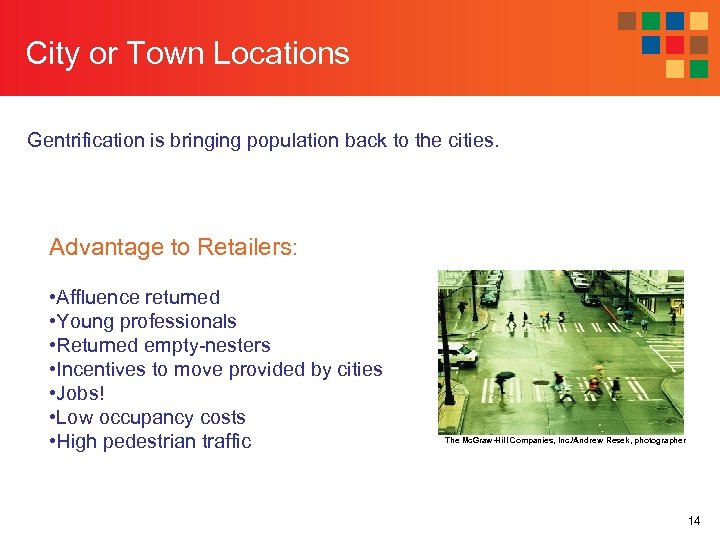 City or Town Locations Gentrification is bringing population back to the cities. Advantage to Retailers: • Affluence returned • Young professionals • Returned empty-nesters • Incentives to move provided by cities • Jobs! • Low occupancy costs • High pedestrian traffic The Mc. Graw-Hill Companies, Inc. /Andrew Resek, photographer 14
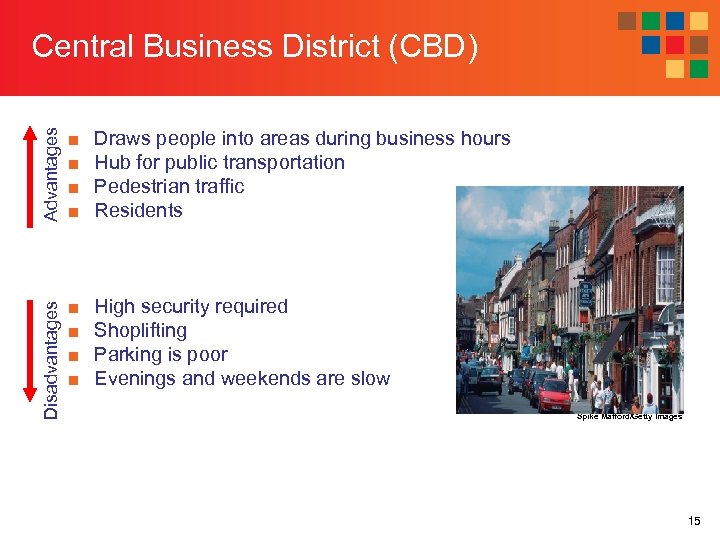 Advantages ■ ■ Draws people into areas during business hours Hub for public transportation Pedestrian traffic Residents Disadvantages Central Business District (CBD) ■ ■ High security required Shoplifting Parking is poor Evenings and weekends are slow Spike Mafford/Getty Images 15
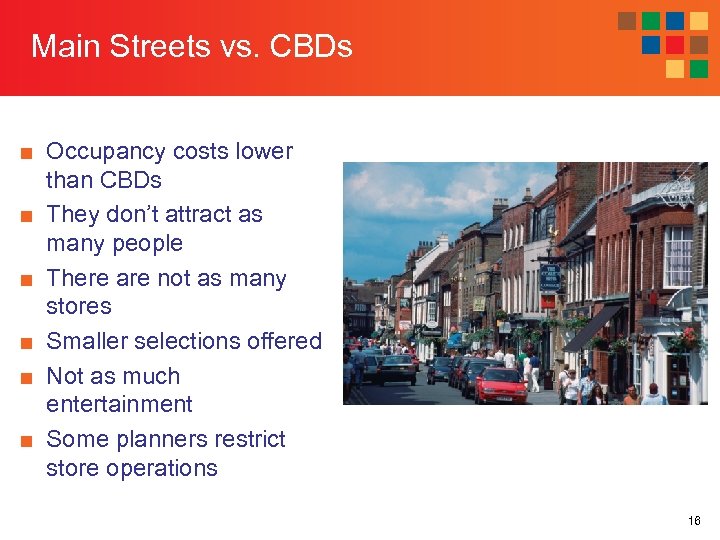 Main Streets vs. CBDs ■ Occupancy costs lower than CBDs ■ They don’t attract as many people ■ There are not as many stores ■ Smaller selections offered ■ Not as much entertainment ■ Some planners restrict store operations 16
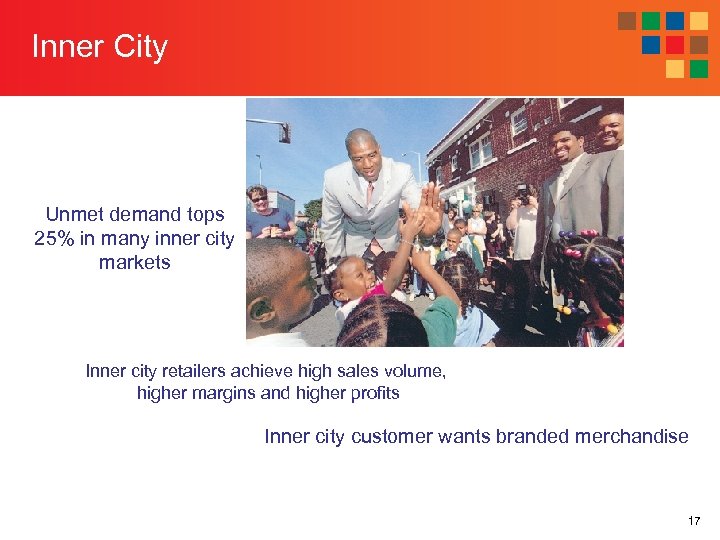 Inner City Unmet demand tops 25% in many inner city markets Inner city retailers achieve high sales volume, higher margins and higher profits Inner city customer wants branded merchandise 17
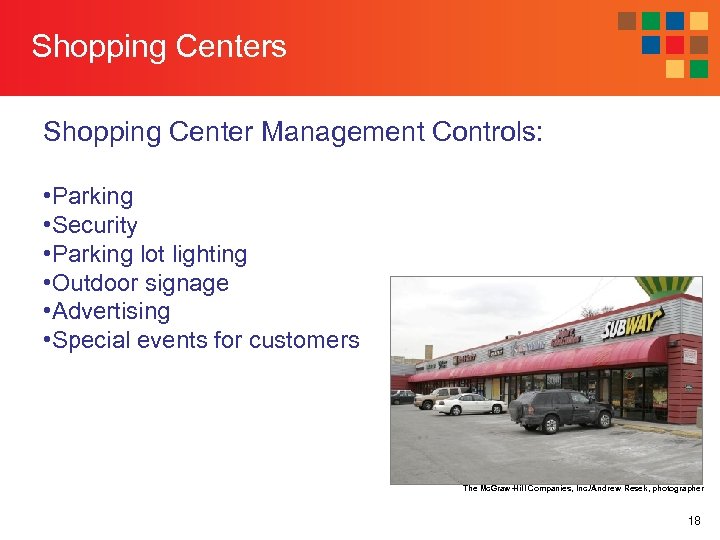 Shopping Centers Shopping Center Management Controls: • Parking • Security • Parking lot lighting • Outdoor signage • Advertising • Special events for customers The Mc. Graw-Hill Companies, Inc. /Andrew Resek, photographer 18
 Types of Shopping Centers ■ Neighborhood and Community Centers (Strip Centers) ■ Power Centers ■ Enclosed Malls ■ Lifestyle Centers ■ Fashion Specialty Centers ■ Outlet Centers 19
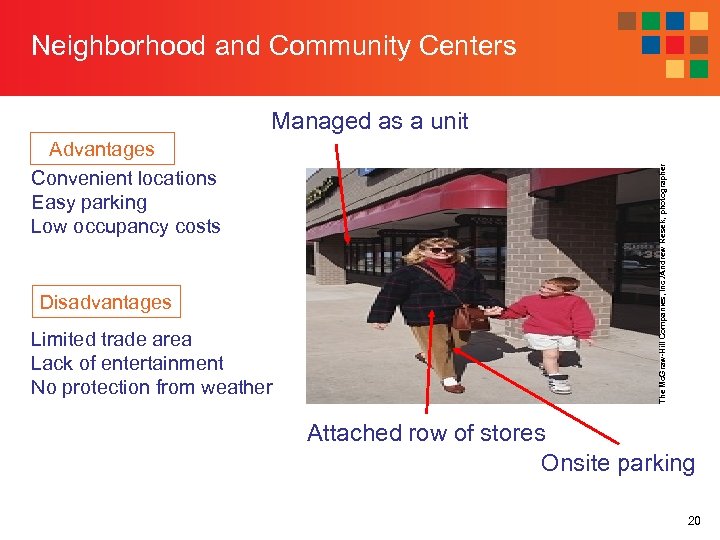 Neighborhood and Community Centers Advantages Convenient locations Easy parking Low occupancy costs Disadvantages Limited trade area Lack of entertainment No protection from weather The Mc. Graw-Hill Companies, Inc. /Andrew Resek, photographer Managed as a unit Attached row of stores Onsite parking 20
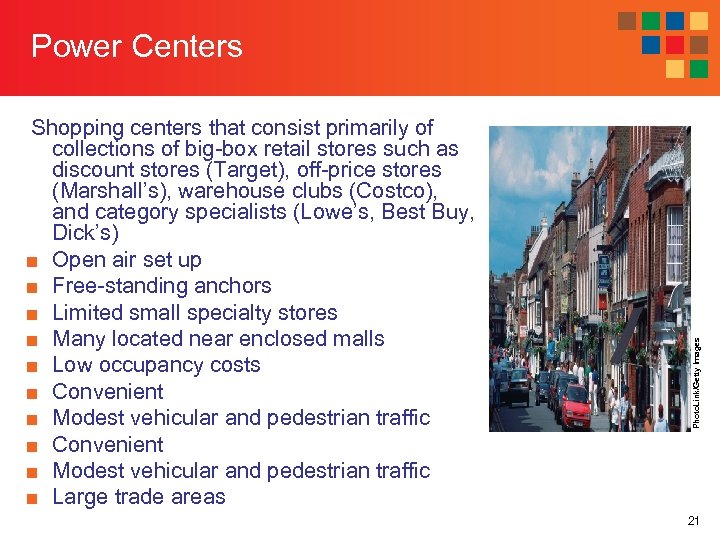 Shopping centers that consist primarily of collections of big-box retail stores such as discount stores (Target), off-price stores (Marshall’s), warehouse clubs (Costco), and category specialists (Lowe’s, Best Buy, Dick’s) ■ Open air set up ■ Free-standing anchors ■ Limited small specialty stores ■ Many located near enclosed malls ■ Low occupancy costs ■ Convenient ■ Modest vehicular and pedestrian traffic ■ Large trade areas Photo. Link/Getty Images Power Centers 21
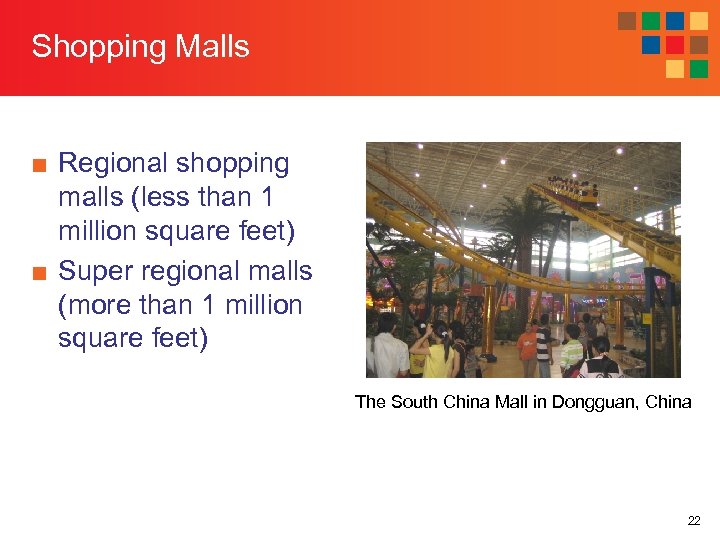 Shopping Malls ■ Regional shopping malls (less than 1 million square feet) ■ Super regional malls (more than 1 million square feet) The South China Mall in Dongguan, China 22
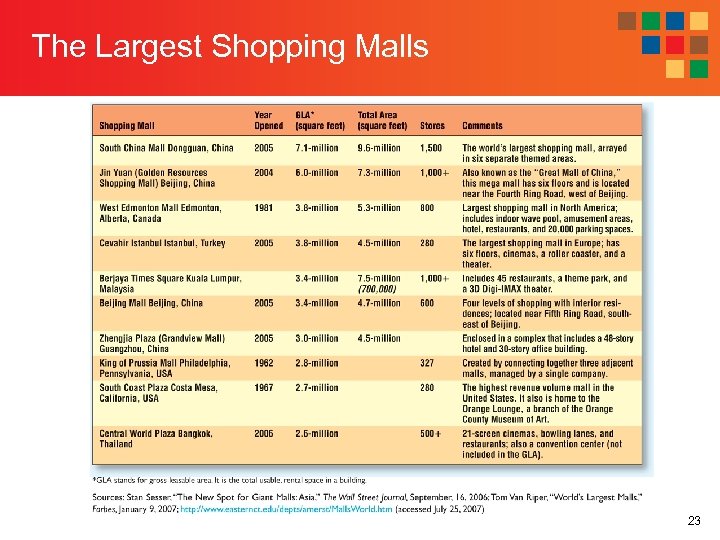 The Largest Shopping Malls 23
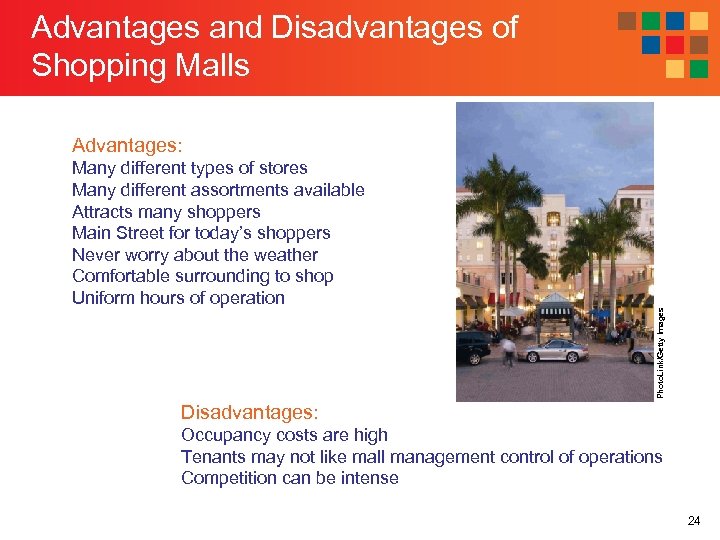 Advantages and Disadvantages of Shopping Malls Many different types of stores Many different assortments available Attracts many shoppers Main Street for today’s shoppers Never worry about the weather Comfortable surrounding to shop Uniform hours of operation Photo. Link/Getty Images Advantages: Disadvantages: Occupancy costs are high Tenants may not like mall management control of operations Competition can be intense 24
 Challenge to Malls ■ ■ ■ Time pressured society makes it impractical to wander malls Fashion apparel sold in malls experiencing limited growth Malls are getting old and rundown – unappealing to shop Anchor tenants are decreasing due to retail consolidation Strategies? n n Make shopping more enjoyable (e. g. , sofas, children’s playing areas) Great food destination (fast food and full-service restaurants) Tailor make its offering to cater to changing demographics (e. g. , repositioning older shopping centers for Hispanic markets) Mall renovation and redevelopment 25
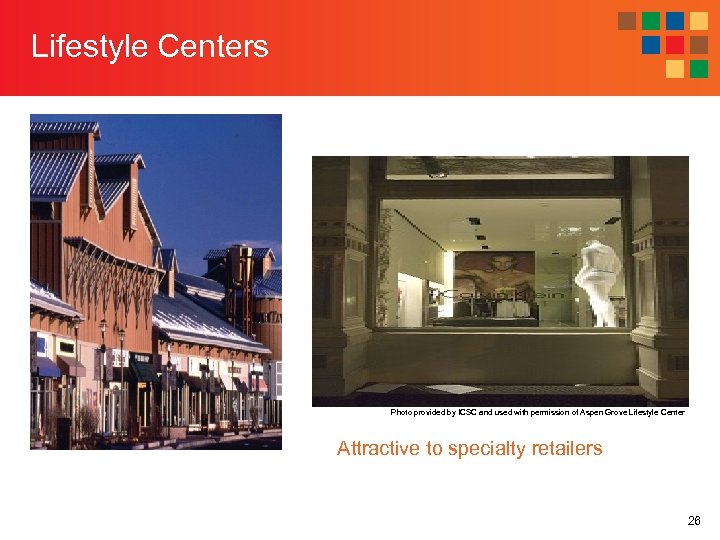 Lifestyle Centers Photo provided by ICSC and used with permission of Aspen Grove Lifestyle Center Attractive to specialty retailers 26
 Stores and Restaurants at Lifestyle Centers Williams-Sonoma Victoria’s Secret Restoration Hardware Barnes & Noble/Borders Coldwater Creek Pottery Barn The Gap Eddie Bauer Banana Republic Bed Bath & Beyond Panera Bread Ann Taylor Starbucks Aeropostale Dick’s Sporting Goods Hallmark Johnny Rockets 27
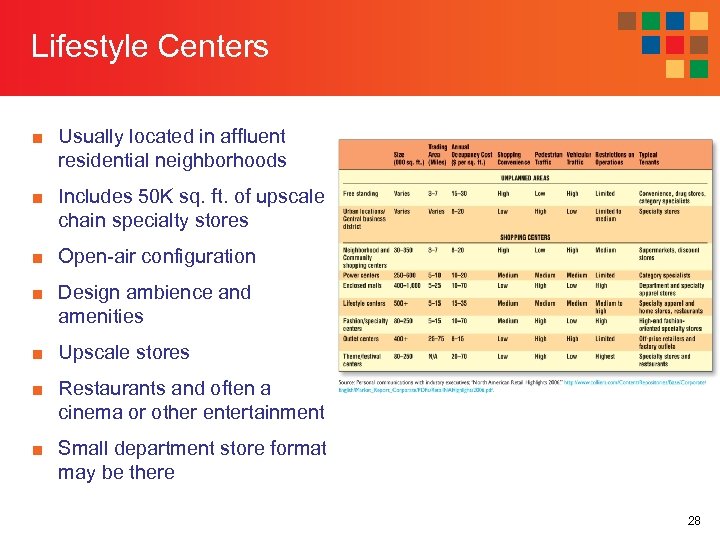 Lifestyle Centers ■ Usually located in affluent residential neighborhoods ■ Includes 50 K sq. ft. of upscale chain specialty stores ■ Open-air configuration ■ Design ambience and amenities ■ Upscale stores ■ Restaurants and often a cinema or other entertainment ■ Small department store format may be there 28
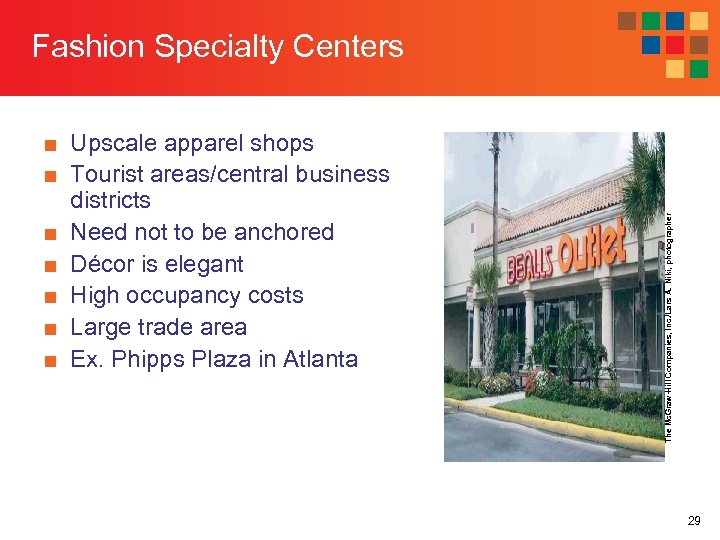 ■ Upscale apparel shops ■ Tourist areas/central business districts ■ Need not to be anchored ■ Décor is elegant ■ High occupancy costs ■ Large trade area ■ Ex. Phipps Plaza in Atlanta The Mc. Graw-Hill Companies, Inc. /Lars A. Niki, photographer Fashion Specialty Centers 29
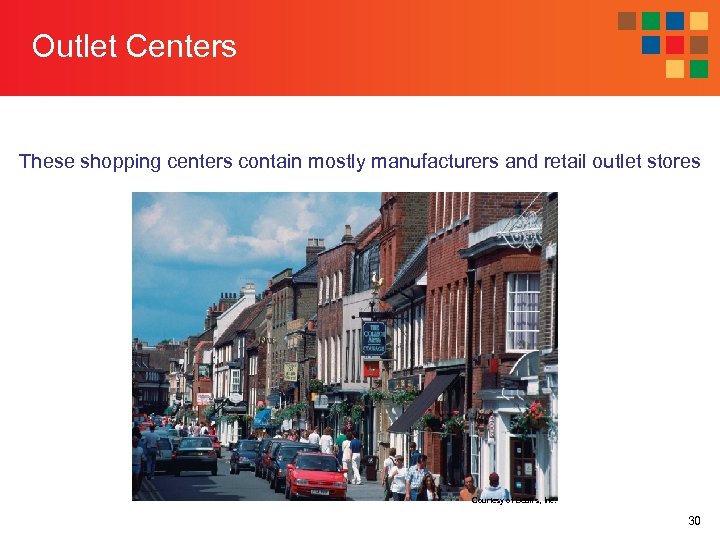 Outlet Centers These shopping centers contain mostly manufacturers and retail outlet stores Courtesy of Beall’s, Inc. 30
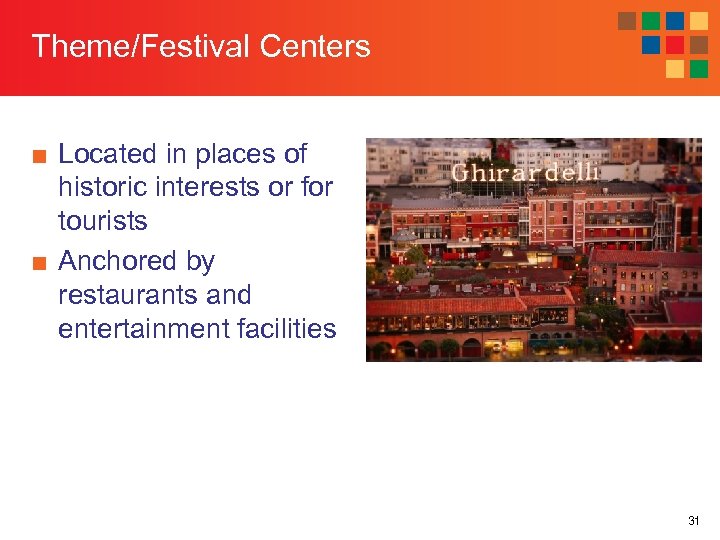 Theme/Festival Centers ■ Located in places of historic interests or for tourists ■ Anchored by restaurants and entertainment facilities 31
 Larger, Multi-format Developments: Omnicenters ■ Combines enclosed malls, lifestyle center, and power centers ■ Larger developments are targeted n n to generate more pedestrian traffic and longer shopping trips To capture cross-shopping consumers 32
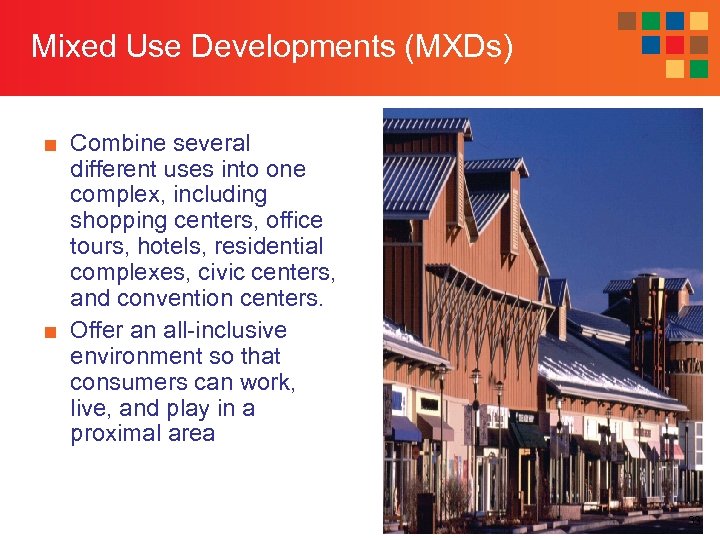 Mixed Use Developments (MXDs) ■ Combine several different uses into one complex, including shopping centers, office tours, hotels, residential complexes, civic centers, and convention centers. ■ Offer an all-inclusive environment so that consumers can work, live, and play in a proximal area 33
 Other Location Opportunities ■ ■ Airports Resorts Store within a Store Temporary or pop-up stores 34
 Alternative Locations Airports: Why wait with nothing to do? Kim Steele/Getty Images Rents are 20% higher than malls Sales/square ft are 3 -4 times higher than malls Best airports are ones with many connecting flights 35
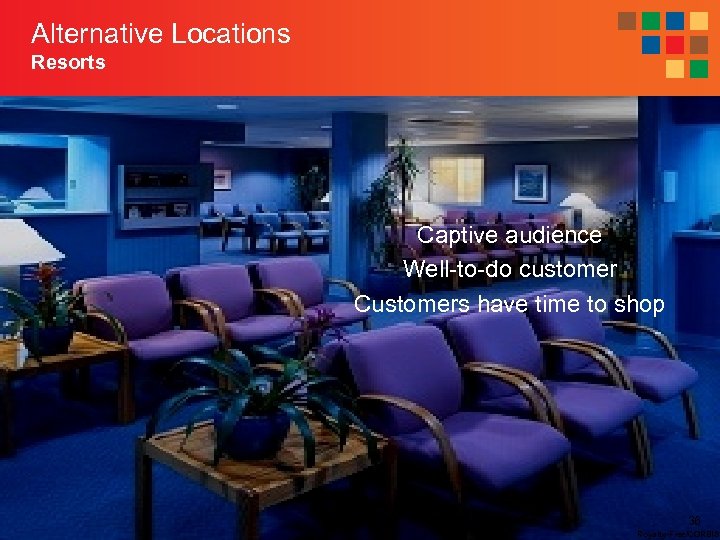 Alternative Locations Resorts Captive audience Well-to-do customer Customers have time to shop 36 Royalty-Free/CORBIS
 Alternative Locations Store within a Store ■ Located within other, larger stores ■ Examples: n n Grocery store with service providers (coffee bars, banks, clinics, video outlets) Sephora in JCPenney 37
 Alternative Locations Hospitals Patients cannot leave Gifts are available Royalty-Free/CORBIS 38
 Matching Location to Retail Strategy The selection of a location type must reinforce the retailer’s strategy be consistent with n n n the shopping behavior size of the target market The retailer’s position in its target market ■ Department Stores Regional Mall ■ Specialty Apparel Central Business District, Regional malls ■ Category Specialists Power Centers, Free Standing ■ Grocery Stores Strip Shopping Centers ■ Drug Stores Stand Alone 39
 Shopping Behavior of Consumers in Retailer’s Target Market ■ Factors affecting the location choice n n n Consumer Shopping Situations • Convenience shopping • Comparison shopping • Specialty shopping Density of Target Market • Ex. Convenience stores in CBD; comparison shopping stores next to Wal-Mart Uniqueness of Retailing Offering • Convenience of locations is less important • Ex. Bass Pro Shop 40
 Minimize the customer’s effort to get the product or service by locating store close to where customers are located The Mc. Graw-Hill Companies, Inc. /Andrew Resek, photographer Convenience Shopping 41
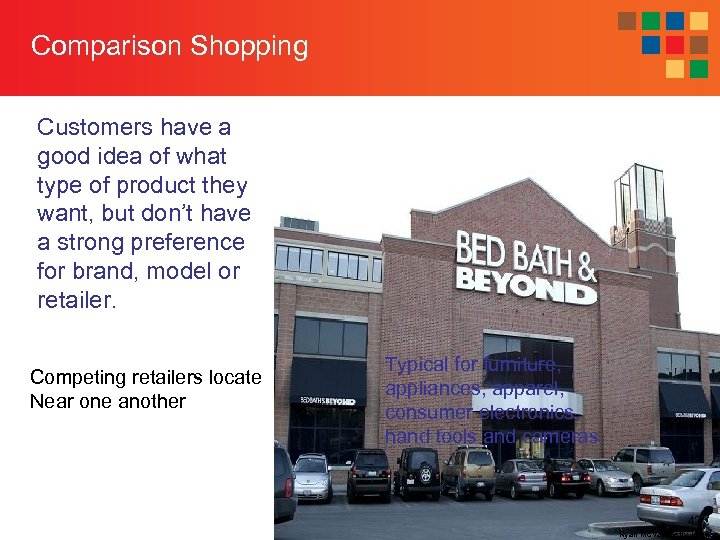 Comparison Shopping Customers have a good idea of what type of product they want, but don’t have a strong preference for brand, model or retailer. Competing retailers locate Near one another Typical for furniture, appliances, apparel, consumer electronics, hand tools and cameras. 42 Ryan Mc. Vay/Getty Images
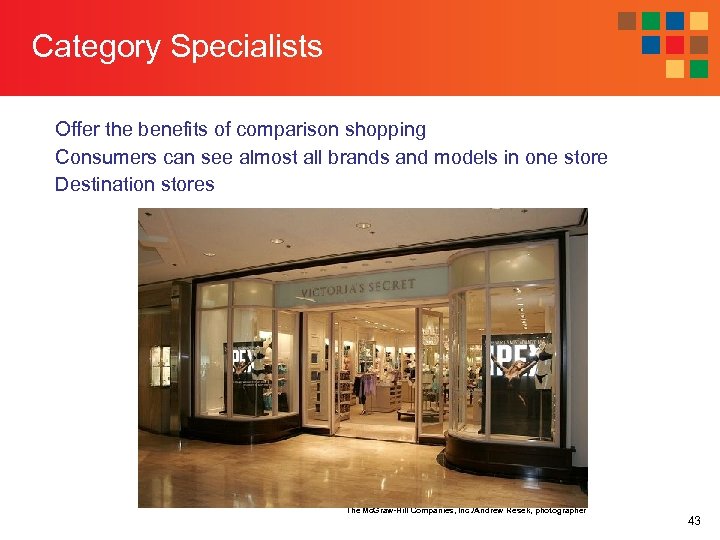 Category Specialists Offer the benefits of comparison shopping Consumers can see almost all brands and models in one store Destination stores The Mc. Graw-Hill Companies, Inc. /Andrew Resek, photographer 43
 Specialty Shopping Customers know what they want Designer labels Convenient location matters less The Mc. Graw-Hill Companies, Inc. /Andrew Resek, photographer 44
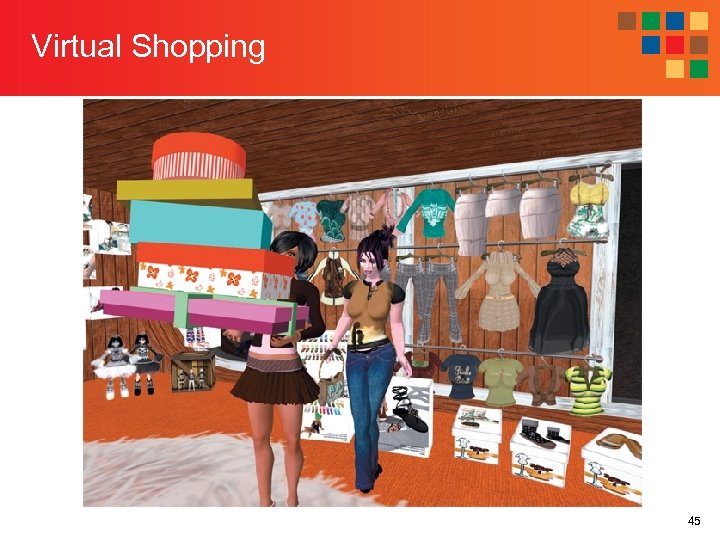 Virtual Shopping 45
 Environmental Issues “Above-ground” risks - such as asbestos-containing materials or lead pipes used in construction. Hazardous materials - e. g. dry cleaning chemicals, motor oil, that have been stored in the ground. Retailers’ Protection Stipulate in the lease that the lessor is responsible for removal and disposal of this material if it’s found. Retailer can buy insurance that specifically protects it from these risks. 46
 Other Legal Issues Zoning and Building Codes Zoning determines how a particular site can be used. Building codes determine the type of building, signs, size, type of parking lot, etc. that can be used Signs Restrictions on the use of signs can also impact a particular site’s desirability Licensing Requirements Some areas may restrict or require a license for alcoholic beverages 47