 Скачать презентацию Chapter 7 Ethnicity PPT by Abe Goldman
e422fb9f059a0242a6682ecbc7f43be8.ppt
- Количество слайдов: 23



Chapter 7 Ethnicity PPT by Abe Goldman
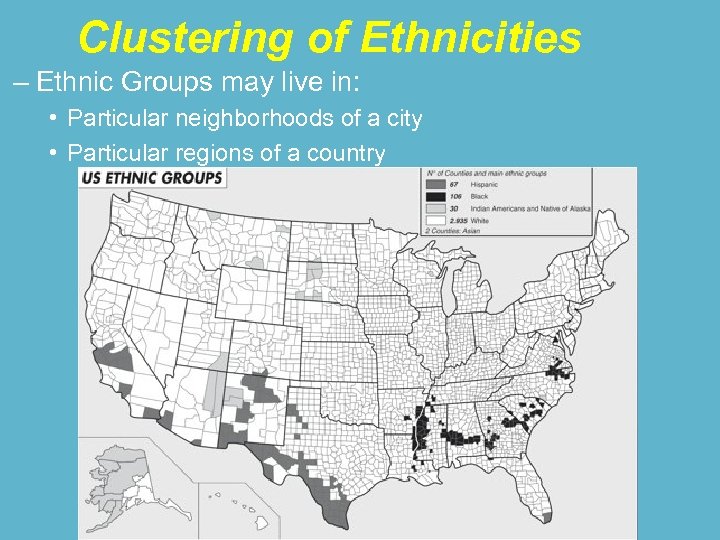
Clustering of Ethnicities – Ethnic Groups may live in: • Particular neighborhoods of a city • Particular regions of a country
Regional Concentrations of Ethnicities • African Americans in the Southeast – ¼ of many southern states, yet less than one percent of may states • Hispanics are in the Southwest – ¼ population of southwestern states and south Florida • Asian Americans in the West – Mainly in Hawaii and California • American Indians in the Southwest and Plains areas – 4 corners region, upper plains area
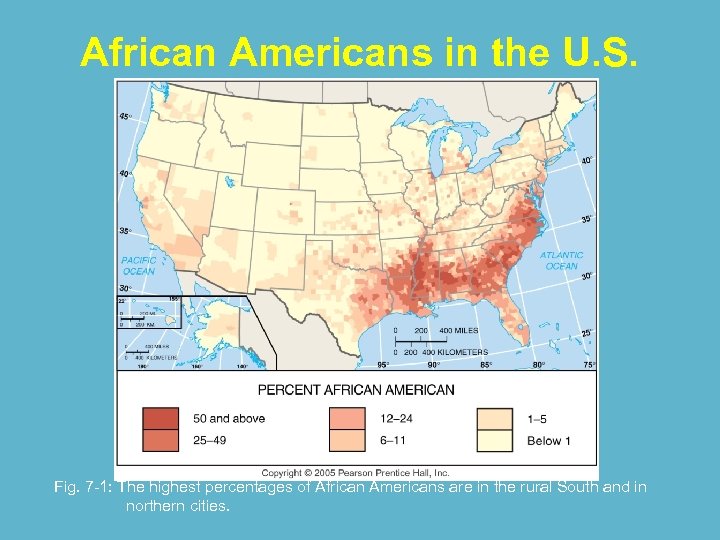
African Americans in the U. S. Fig. 7 -1: The highest percentages of African Americans are in the rural South and in northern cities.
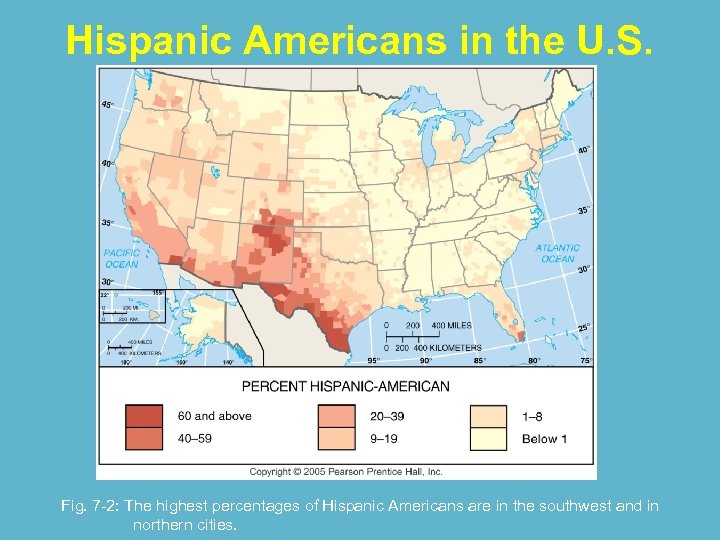
Hispanic Americans in the U. S. Fig. 7 -2: The highest percentages of Hispanic Americans are in the southwest and in northern cities.
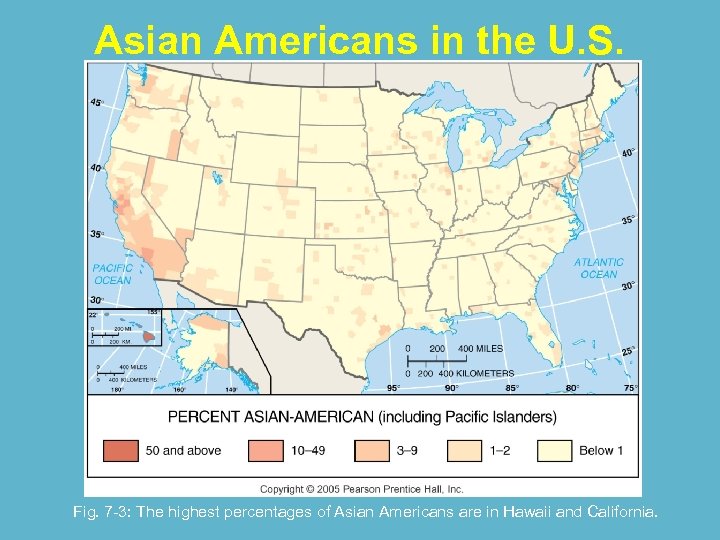
Asian Americans in the U. S. Fig. 7 -3: The highest percentages of Asian Americans are in Hawaii and California.
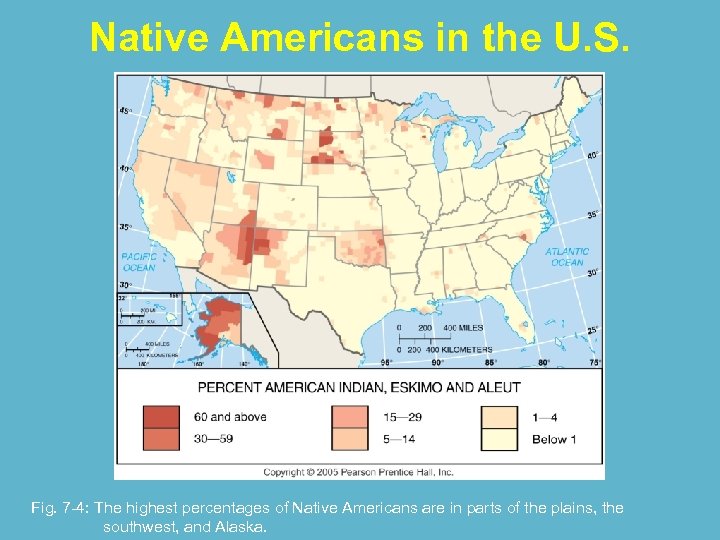
Native Americans in the U. S. Fig. 7 -4: The highest percentages of Native Americans are in parts of the plains, the southwest, and Alaska.
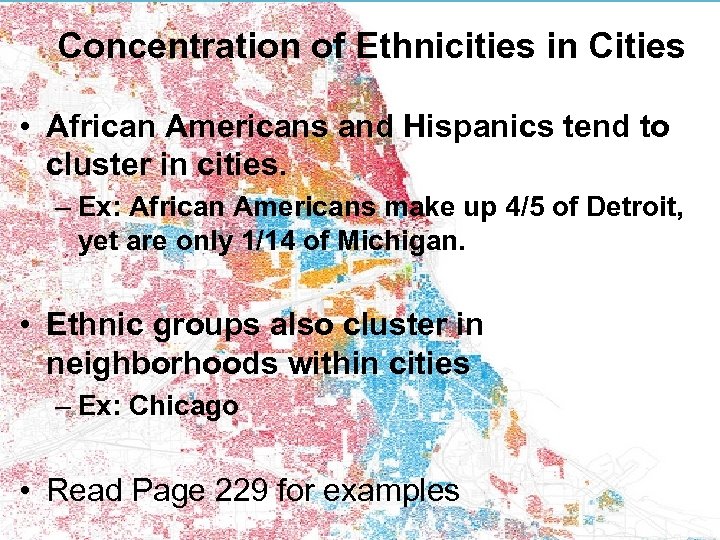
Concentration of Ethnicities in Cities • African Americans and Hispanics tend to cluster in cities. – Ex: African Americans make up 4/5 of Detroit, yet are only 1/14 of Michigan. • Ethnic groups also cluster in neighborhoods within cities – Ex: Chicago • Read Page 229 for examples
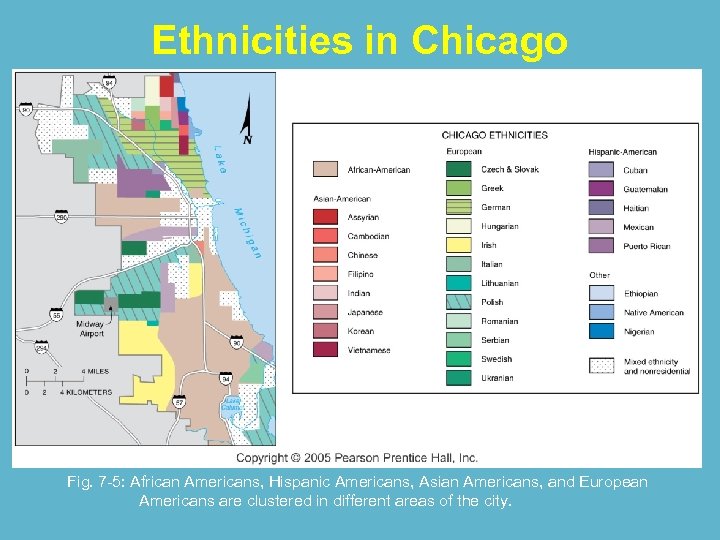
Ethnicities in Chicago Fig. 7 -5: African Americans, Hispanic Americans, Asian Americans, and European Americans are clustered in different areas of the city.
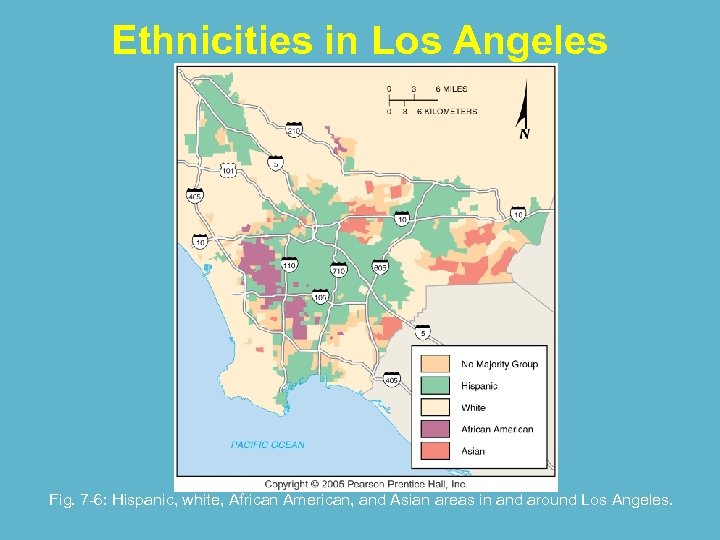
Ethnicities in Los Angeles Fig. 7 -6: Hispanic, white, African American, and Asian areas in and around Los Angeles.
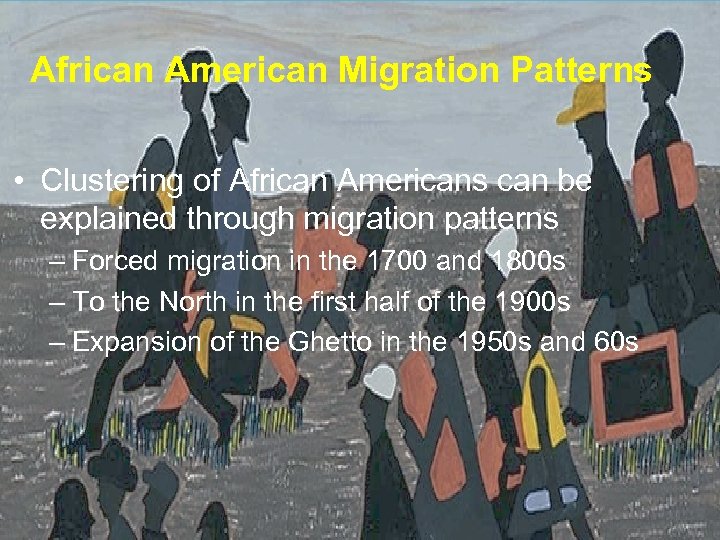
African American Migration Patterns • Clustering of African Americans can be explained through migration patterns – Forced migration in the 1700 and 1800 s – To the North in the first half of the 1900 s – Expansion of the Ghetto in the 1950 s and 60 s
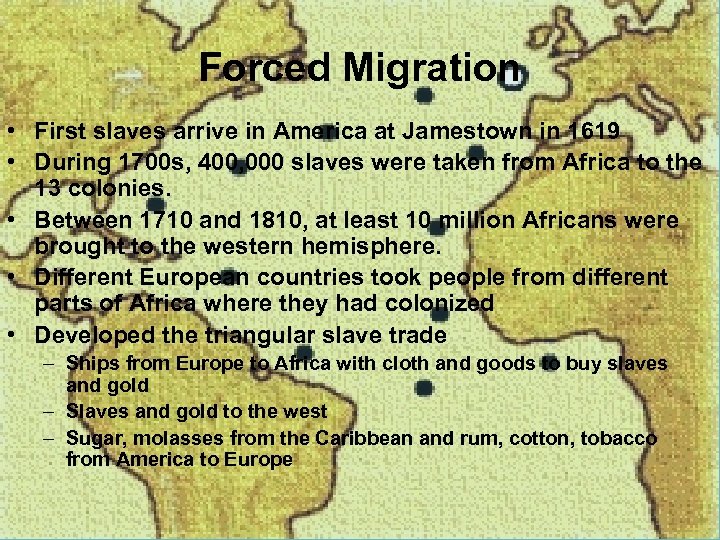
Forced Migration • First slaves arrive in America at Jamestown in 1619 • During 1700 s, 400, 000 slaves were taken from Africa to the 13 colonies. • Between 1710 and 1810, at least 10 million Africans were brought to the western hemisphere. • Different European countries took people from different parts of Africa where they had colonized • Developed the triangular slave trade – Ships from Europe to Africa with cloth and goods to buy slaves and gold – Slaves and gold to the west – Sugar, molasses from the Caribbean and rum, cotton, tobacco from America to Europe
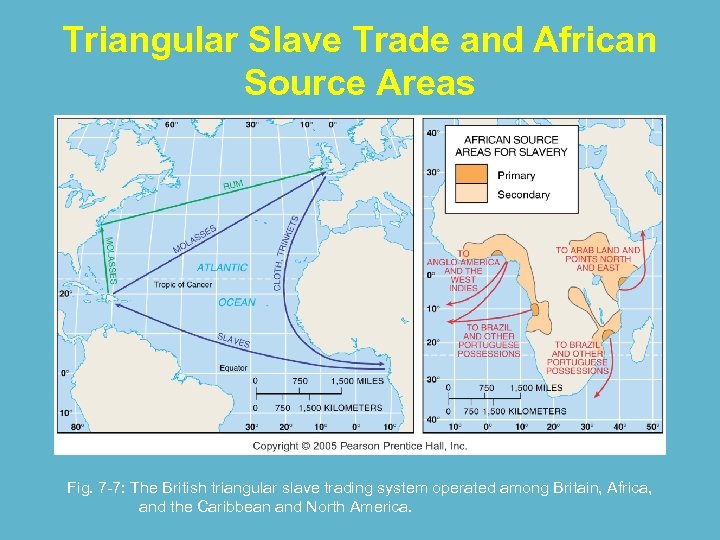
Triangular Slave Trade and African Source Areas Fig. 7 -7: The British triangular slave trading system operated among Britain, Africa, and the Caribbean and North America.
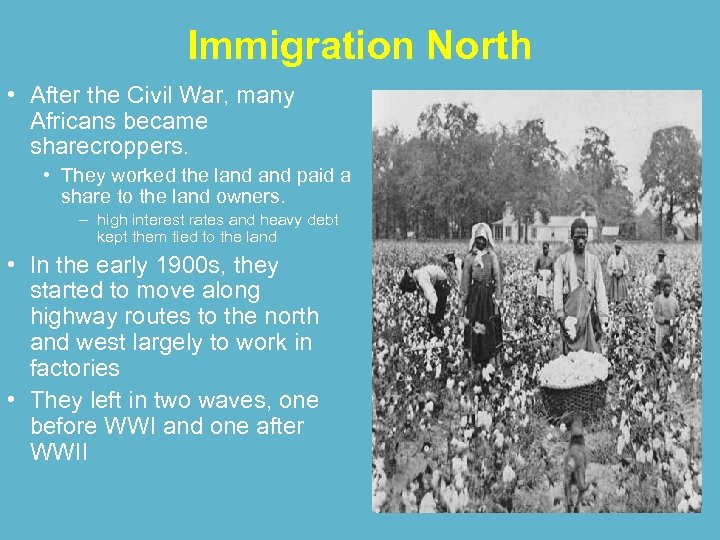
Immigration North • After the Civil War, many Africans became sharecroppers. • They worked the land paid a share to the land owners. – high interest rates and heavy debt kept them tied to the land • In the early 1900 s, they started to move along highway routes to the north and west largely to work in factories • They left in two waves, one before WWI and one after WWII
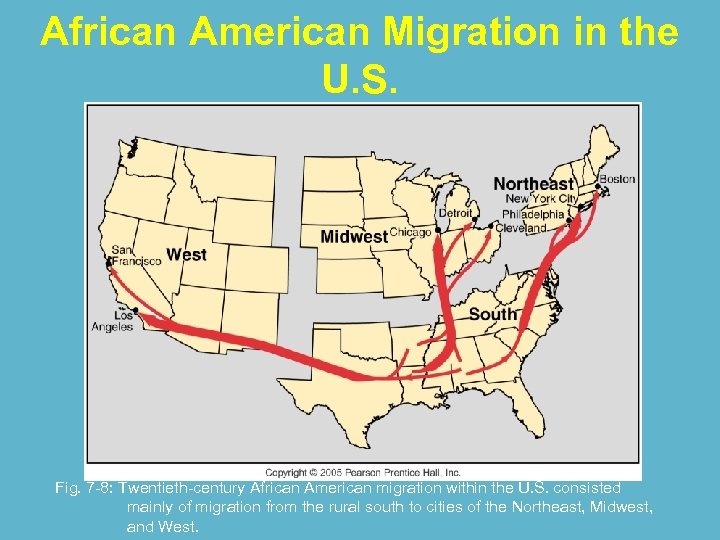
African American Migration in the U. S. Fig. 7 -8: Twentieth-century African American migration within the U. S. consisted mainly of migration from the rural south to cities of the Northeast, Midwest, and West.
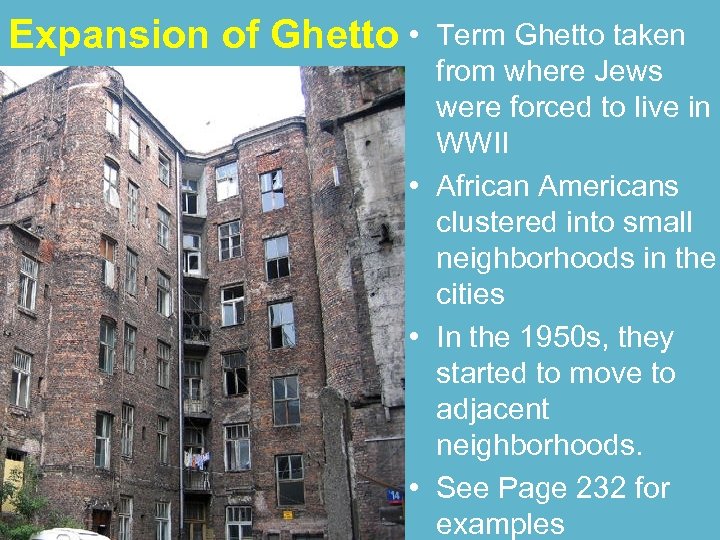
Expansion of Ghetto • Term Ghetto taken from where Jews were forced to live in WWII • African Americans clustered into small neighborhoods in the cities • In the 1950 s, they started to move to adjacent neighborhoods. • See Page 232 for examples
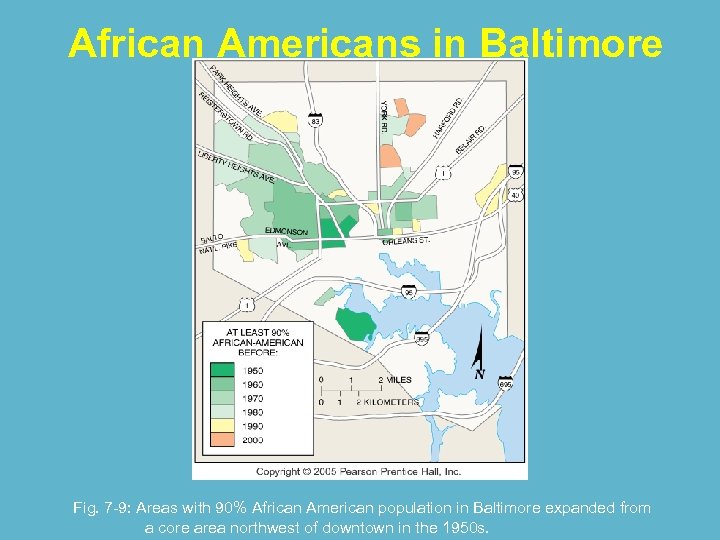
African Americans in Baltimore Fig. 7 -9: Areas with 90% African American population in Baltimore expanded from a core area northwest of downtown in the 1950 s.
Differentiating Ethnicity and Race • Ethnicity is a group of people that share the same geographic hearth and cultural traditions • Race is based on biological differences or traits that can be passed from parents to children • Race is the basis of racism which is a belief that race is the primary determinant of human traits and the one race can be better than another. A racist is a person that believes in racism. • Ethnicity is much more important in human geography because it explains the behaviors of people much better than race. The only racial feature that proves to be important in geography is color of skin. • Often skin color serves as the basis as to where people reside, attend school, recreate, and perform many other daily activities
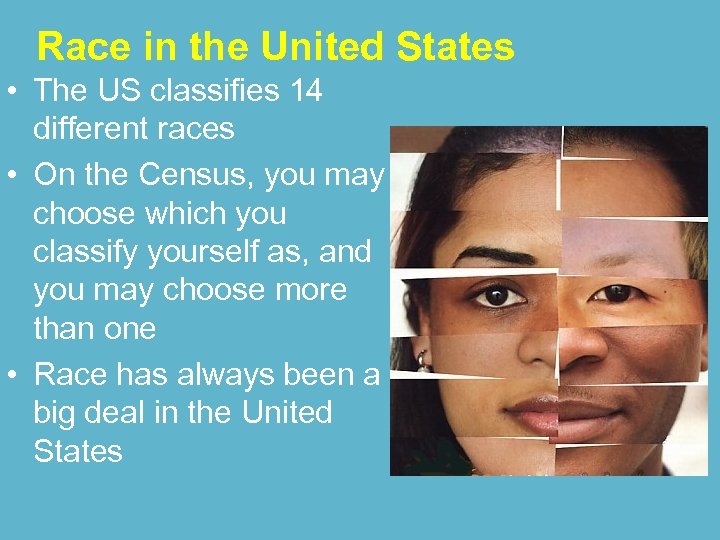
Race in the United States • The US classifies 14 different races • On the Census, you may choose which you classify yourself as, and you may choose more than one • Race has always been a big deal in the United States
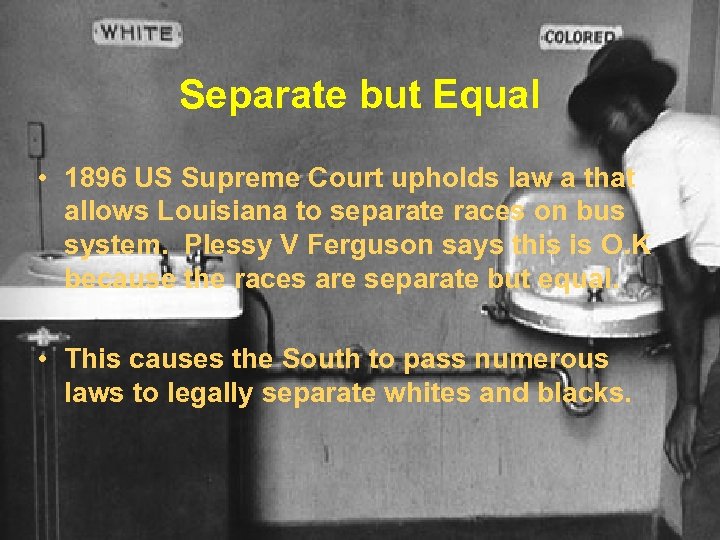
Separate but Equal • 1896 US Supreme Court upholds law a that allows Louisiana to separate races on bus system. Plessy V Ferguson says this is O. K because the races are separate but equal. • This causes the South to pass numerous laws to legally separate whites and blacks.
White Flight • Segregation laws were eliminated during the 1950 s and 60 s. Brown V Board of Education of Topeka, Kansas found separate schools to be unconstitutional. Later all schools were desegregated. • Rather than integrate with the Blacks, many whites fled areas where black ghettos were expanding. • This lead to “blockbusting” in real estate where agents would convince whites to sell their house at low costs because of the threat of black expansion, then sell to the blacks at much higher prices • Many cities to this day remain divided and segregation and inequality still exists.
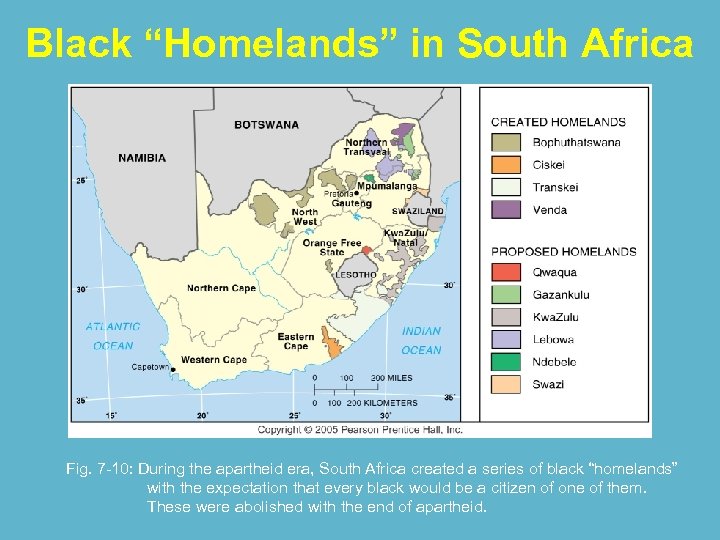
Black “Homelands” in South Africa Fig. 7 -10: During the apartheid era, South Africa created a series of black “homelands” with the expectation that every black would be a citizen of one of them. These were abolished with the end of apartheid.
Ethnicities into Nationalities • Rise of nationalities – Nation-states – Nationalism • Multinational states – Former Soviet Union – Russia – Turmoil in the Caucasus • Revival of ethnic identity – Ethnicity and communism – Rebirth of nationalism in Eastern Europe
Скачать презентацию Chapter 7 Ethnicity PPT by Abe Goldman
e422fb9f059a0242a6682ecbc7f43be8.ppt