


 Скачать презентацию Chapter 7 1 Game Production Management
c802ad5027e2325485db200ff07be56b.ppt
- Количество слайдов: 27
 Chapter 7. 1 Game Production & Management
 Overview l Mainstream Video games and computer games are made by large teams of people. – – – l Chapter 7 is from point of view of the Producer (a. k. a. director or project manager) – – 2 Big Expensive Time-consuming projects Producers can work for game developers Manage the developer’s team in fulfilling a game development contract
 Five Phases of Making a Game 1. 2. 3. 4. 5. 3 Concept Phase Preproduction Postproduction After. Market
 Concept Phase l Publisher has decided to pursue a game concept. – l l l Game concepts usually not brainchild of game designer Usually based on past successes or business deals Where concepts come from – – – 4 Producer usually first person assigned to work on new project – Sequels based on previous successful games Film licenses Technology re-use (characters, add new features inherent in other games that are gaining wide consumer acceptance) Occasionally, original concepts get greenlit
 Concept Phase – cont. l Producing the conceptual design – – l l l Requires several meetings Describes story and character developments to occur Outline improvements – – – l l 5 Game UI Level design Address ways game will reclaim users If the game was a licensed concept… – l Written by Producer or Game Designer Producer can hire internal or external game designer (sworn to secrecy) Producer would have to discuss concept with the licensor. Working Title (Important Marketing Tool) For Sequels you just need a subtitle Producer creates executive summary (just highlights) – Concept Document needs to be brief, yet provide satisfactory answers to big questions
 Concept Phase – cont. Green Light Committee l Producer supplies – – – l Folks Present – l l Executives of Publisher’s studio, distribution, licensing, sales, marketing, financial and international divisions (by teleconference or video conference) The meeting could go smoothly or not . If all goes well the Producer will get approve the Green Light to proceed and use the Publishing company’s resources: – 6 Printed copies of conceptual design Power. Point presentation Games are installed in meeting room Money, personnel, equipment, office space, and internal network
 Pre-Production Phase l Producer needs GDD written by internal or freelance designer and selects development team l GDD (Game Design Document) l Team Selection l Internal staffing plan (management challenge) – – – 7 Existing employees (same roles) Promotions, transfers (new roles) Hire new employees
 External Development l Selecting an external developer – Previously used developers l – – l Referrals (producers, developers) Non-Disclosure Agreement (NDA) Bid package – – Treatment or GDD to date Publisher’s expectations for product l l – Developer needs to know Genre, Platform, Target Audience and Competition Bid format and due date l l 8 Other sources (e. g. IGDA and Gamasutra. com) l Triple-A or budget title? How many levels, characters, or missions game entails? Special technology or features Demo? Specs? Demo Due date? Some developers ask for royalties on the game’s sales. Producer will want lower upfront cost (advance) if royalties are a part of the picture.
 The Development Agreement l l l 9 Developer’s obligations Publisher’s obligations IP ownership Warranties Termination Milestones
 Milestones l l l 10 Highly detailed, specific Quantifiable, measurable Due dates Payment amounts (upon acceptance) Avoid terms like “alpha” and “beta” unless clearly defined Milestone approval cycles
 The Technical Design Document l l l 11 GDD is a statement of the problem; TDD is a statement of the solution Foundation for the programming work Identify technical challenges Plan for technical solutions Set forth asset format guidelines
 Scheduling l l Generate task lists from GDD & TDD Plan everything – – – – l 12 Programming Assets Demos Approvals Green lights Vacations, holidays QA Work backwards from completion
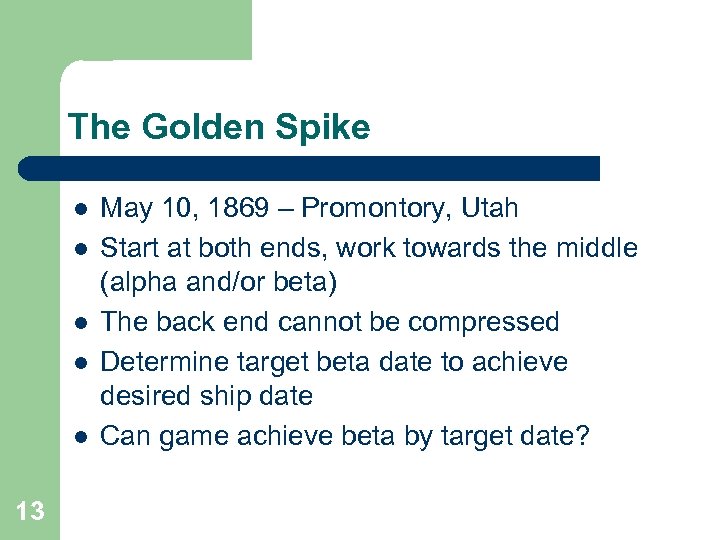 The Golden Spike l l l 13 May 10, 1869 – Promontory, Utah Start at both ends, work towards the middle (alpha and/or beta) The back end cannot be compressed Determine target beta date to achieve desired ship date Can game achieve beta by target date?
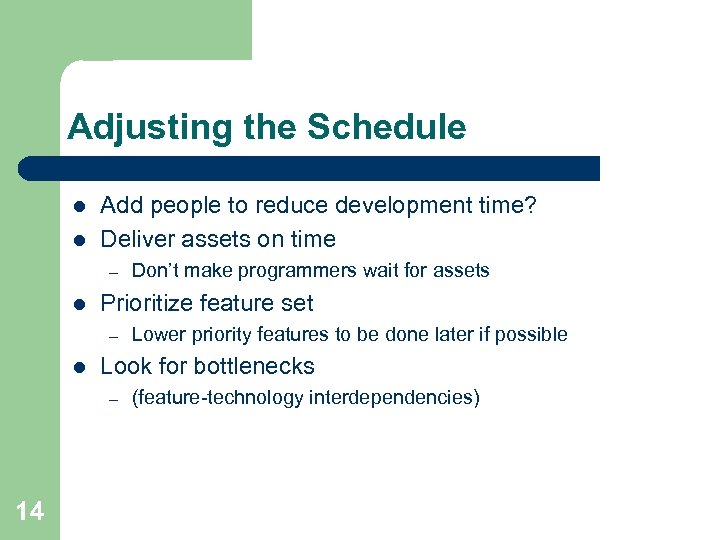 Adjusting the Schedule l l Add people to reduce development time? Deliver assets on time – l Prioritize feature set – l Lower priority features to be done later if possible Look for bottlenecks – 14 Don’t make programmers wait for assets (feature-technology interdependencies)
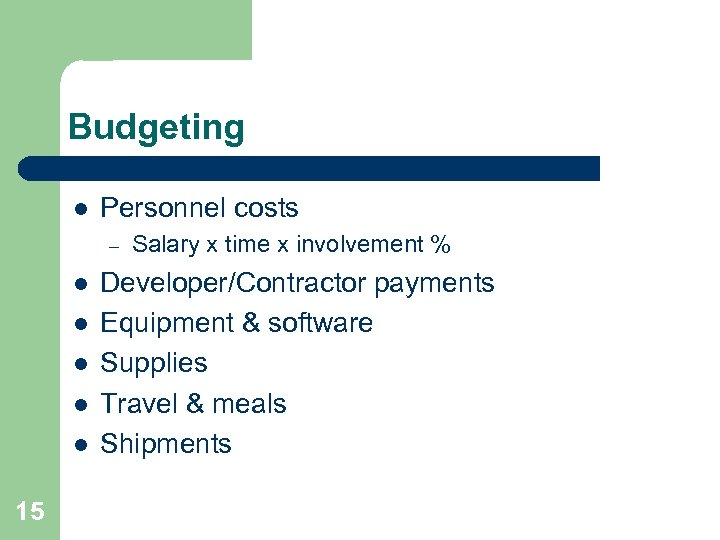 Budgeting l Personnel costs – l l l 15 Salary x time x involvement % Developer/Contractor payments Equipment & software Supplies Travel & meals Shipments
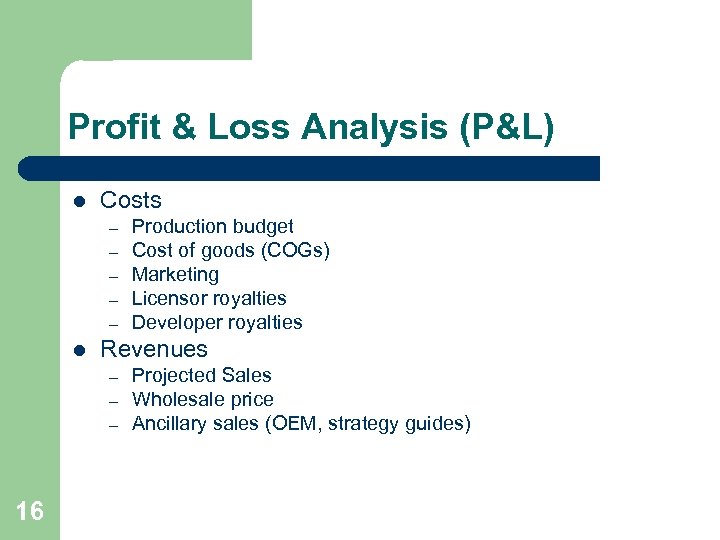 Profit & Loss Analysis (P&L) l Costs – – – l Revenues – – – 16 Production budget Cost of goods (COGs) Marketing Licensor royalties Developer royalties Projected Sales Wholesale price Ancillary sales (OEM, strategy guides)
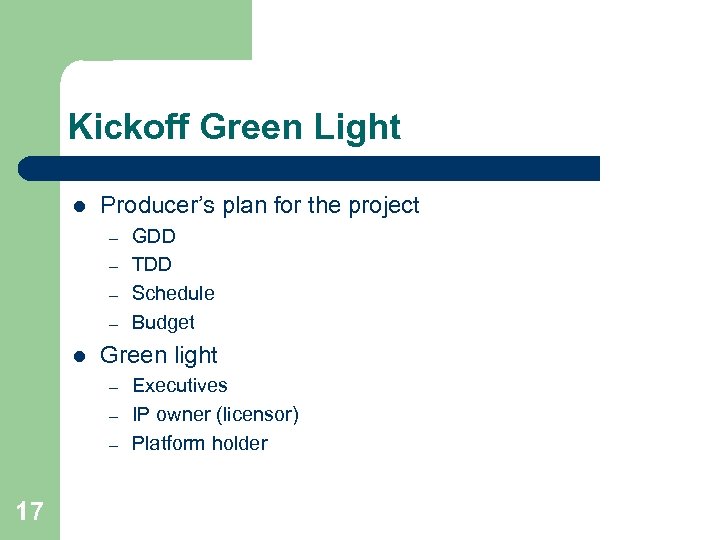 Kickoff Green Light l Producer’s plan for the project – – l Green light – – – 17 GDD TDD Schedule Budget Executives IP owner (licensor) Platform holder
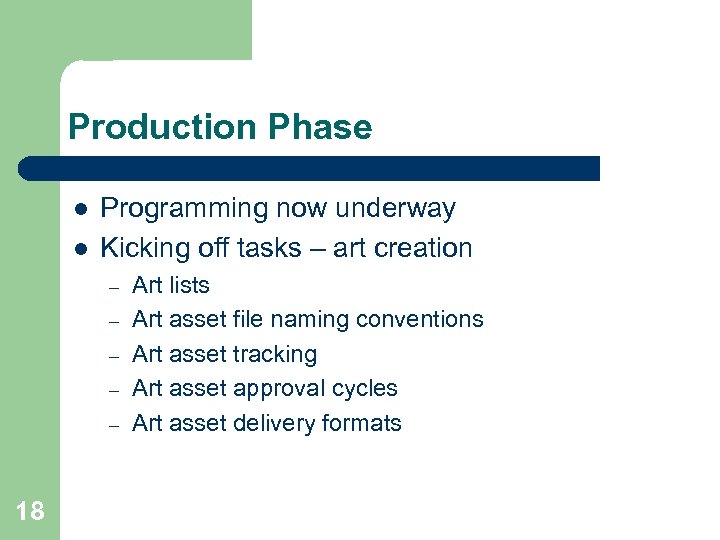 Production Phase l l Programming now underway Kicking off tasks – art creation – – – 18 Art lists Art asset file naming conventions Art asset tracking Art asset approval cycles Art asset delivery formats
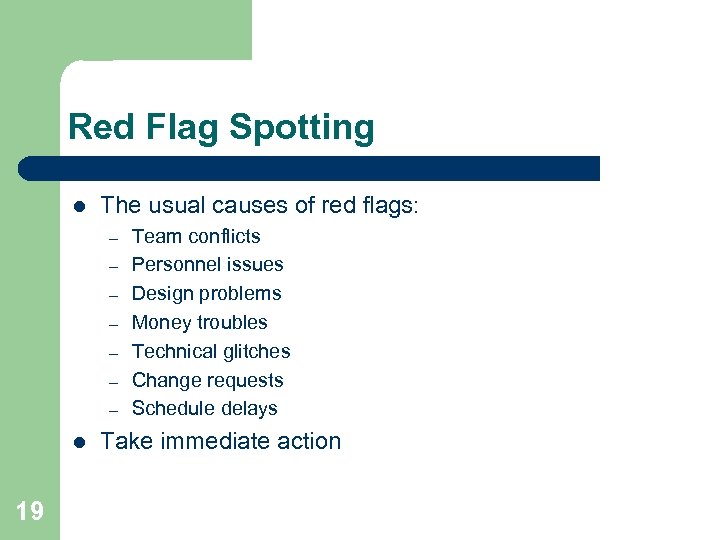 Red Flag Spotting l The usual causes of red flags: – – – – l 19 Team conflicts Personnel issues Design problems Money troubles Technical glitches Change requests Schedule delays Take immediate action
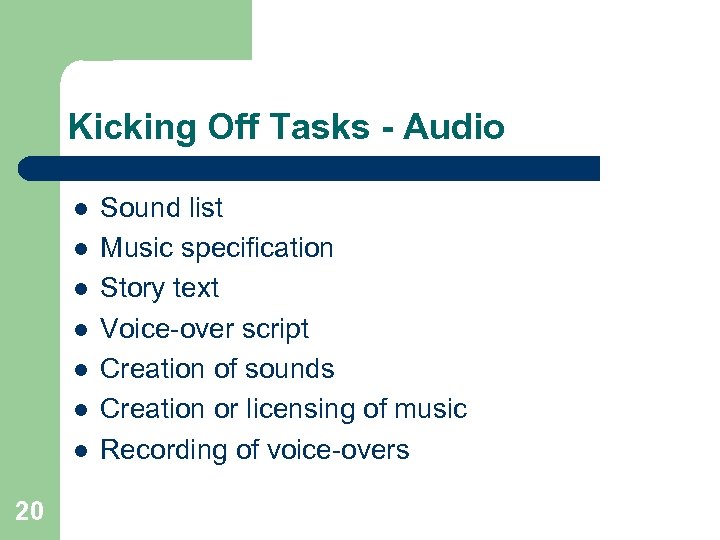 Kicking Off Tasks - Audio l l l l 20 Sound list Music specification Story text Voice-over script Creation of sounds Creation or licensing of music Recording of voice-overs
 First Playable – Proof of Concept l Keeping everyone on board – – l l 21 Licensor(s) Platform holder(s) Executives The Team The Cerny method Keeping the momentum going
 Phases Within Phases l l Pre-production Production – – Early production Mid-production l – Late production l l 22 Alpha Beta Post-production
 The Multitasking Producer l l l 23 Time management Managing mid-production Expecting the unexpected Red flags in mid-production Design by committee = consensus? Late production
 Working with Marketing l l l 24 Working title final title Screen shots E 3 demo Magazine demo Platform holder promo
 Post-Production l l l 25 Personnel transfers Localizations ESRB rating Box & docs Strategy guide
 Quality Assurance l l 26 Test plan The QA database QA – the view from inside The QA-producer relationship
 The Light at the End of the Tunnel l 27 Operations OEM & bundled versions Post mortem