


 Скачать презентацию CHAPTER 6 Transportation 2008 Prentice Hall 6
7cc001d482a552cb2b8274dcdf102323.ppt
- Количество слайдов: 30
 CHAPTER 6 Transportation © 2008 Prentice Hall 6 -
 Learning Objectives F To relate the mode of transport to the user’s shipping volume F To understand the use of routing guides F To realize the role of freight forwarders and other intermediaries F To understand the difference between LTL and TL motor carriers © 2008 Prentice Hall 2
 Learning Objectives F To appreciate the use of terminals as transfer points for bulk materials F To appreciate trade-offs when using vehicles with self -loading/unloading equipment F To learn about project cargo F To learn the basics of freight rate determination © 2008 Prentice Hall 3
 The Domestic Transportation System F Key Terms F Key – Broker – Bulk cargo – Consignee – Freight classification Terms – Freight forwarder – Intermodal transportation – LTL – Nodes © 2008 Prentice Hall 4
 The Domestic Transportation System F Key Terms – Parcel carriers – Private transportation – Project cargo F Key Terms – Routing guides – Shippers’ cooperatives – Terminal TL (truckload) rate – Ton-mile © 2008 Prentice Hall 5
 The Domestic Transportation System F Transportation is the movement of goods and people between two points – Nodes – Links – Air, water, motor carriage, rail, pipeline – Intermodal transportation – Routing guides © 2008 Prentice Hall 6
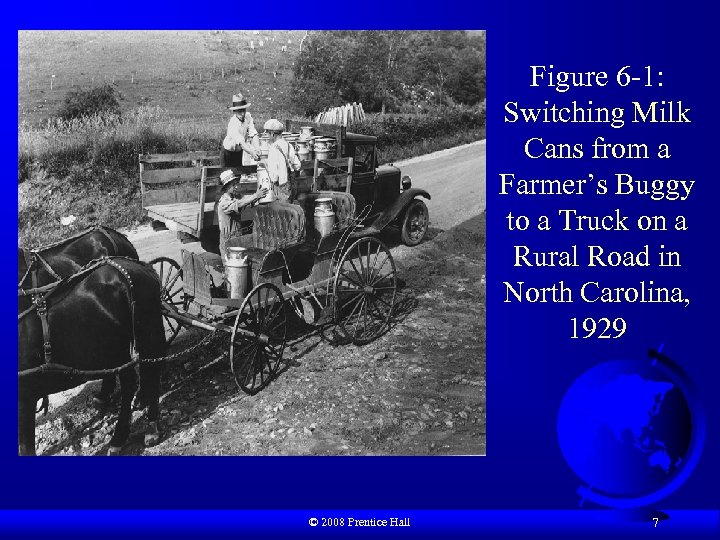 Figure 6 -1: Switching Milk Cans from a Farmer’s Buggy to a Truck on a Rural Road in North Carolina, 1929 © 2008 Prentice Hall 7
 The Domestic Transportation System F Supply chain success requires transportation – Transportation costs are affected by node location – Inventory requirements are influenced by mode – Packaging requirements are dictated by mode – Materials handling equipment and design of the docks are dictated by mode – Maximum consolidation of loads achieved with order-management technology reduces costs – Customer service goals influence carrier choice © 2008 Prentice Hall 8
 Small-Volume Shippers F Parcels are packages weighing up to 150 pounds F Parcel carriers are firms that specialize in small packages (≤ 150 pounds) – UPS – Fed. Ex F Other carriers include – USPS – Passenger carriers—air and bus © 2008 Prentice Hall 9
 LTL Shippers F Less-than-truckload (LTL) – 150 to 10, 000 pounds – Too big to be handled manually, too small to fill a truck – LTL trucks carry shipments from many shippers – Most large firms are LTL carriers u Yellow Freight u Roadway Express u ABF Freight System © 2008 Prentice Hall 10
 LTL Shippers F Less-than-truckload (LTL) (continued) – Process u Local pick-up u Origin terminal used to load aboard line haul u Line haul to terminal near destination u Destination local delivery on smaller trucks u Consignee receives © 2008 Prentice Hall 11
 LTL Shippers F Air Cargo – Can be given directly to airline – Can be given to freight forwarder – Most carried on passenger airlines – Types of products u High in value u Perishable u Require urgent delivery – Shipped in air containers made to fit fuselage © 2008 Prentice Hall 12
 LTL Shippers F Freight forwarders – buy space at TL (truckload) rate and sell at somewhat less than LTL rate – pick-up and deliver; motor carriers or railroads do line-haul – function as transportation departments of small firms – may specialize in specific cargoes © 2008 Prentice Hall 13
 LTL Shippers F Air forwarders – Consolidate shipments – Tender to airlines in containers ready for loading – Forwarders provide retailing function – Airline provides wholesaling function F Shipper’s cooperatives – Similar to air and freight forwarders but are not-for -profit organizations – Membership (shippers) receives any monies earned in excess of costs © 2008 Prentice Hall 14
 LTL Shippers F 3 PLs – May have equipment—trucks, trailers, terminals – May deal in information only – May operate Internet-based auctions F Brokers – A facilitator who brings together a buyer and seller – May consolidate LTL shipments and then give to truckers, forwarders, or shippers’ associations © 2008 Prentice Hall 15
 Truckload and Carload Shippers F Shipments of 20, 000 to 30, 000 pounds F Fill one truck F Cost less per pound than LTL shipments – The shipper loads and consignee unloads the trailer – Load goes from shipper to consignee without passing through a terminal – Paperwork, billing, and control costs are the same © 2008 Prentice Hall 16
 Truckload and Carload Shippers F Rate per haul may be negotiable F Largest TL companies – Schneider National Van Carriers – J. B. Hunt Transport F Many firms are smaller, without national presence F Smaller firms may be owner-operators © 2008 Prentice Hall 17
 Truckload and Carload Shippers F Private transportation is when the shipper provides and operates its own equipment F Dedicated equipment is carrier-owned but assigned to serve specific customers for indefinite periods F Shippers and consignees using railroad service need sidings on their property © 2008 Prentice Hall 18
 Large Bulk Shippers F Bulk cargo – Travels in loose rather than in packaged form – Handled by pumps, scoops, conveyor belts, or the force of gravity – Has various handling characteristics – Moves by u Truckload u Railroad u Water carrier u Pipeline © 2008 Prentice Hall 19
 Large Bulk Shippers F Bulk cargo (continued) – Dry Bulk-Handling Systems u Coal car unloading facility u Taconite loading facility u Grain elevator – Vehicle and Vessel Equipment Choice © 2008 Prentice Hall 20
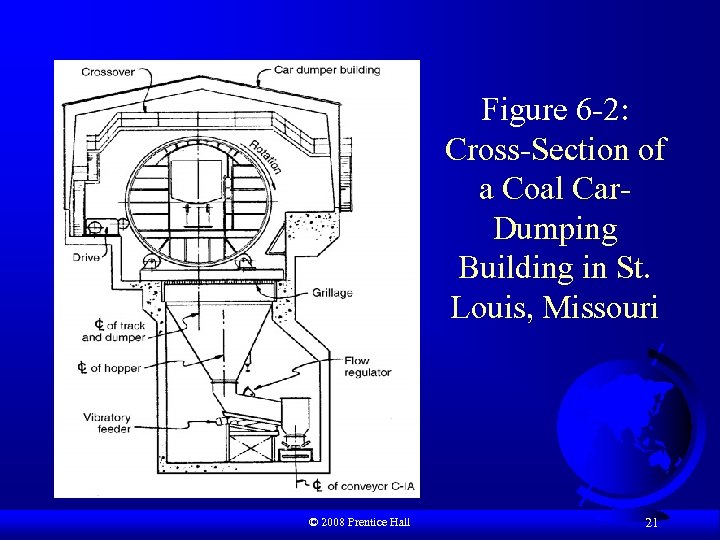 Figure 6 -2: Cross-Section of a Coal Car. Dumping Building in St. Louis, Missouri © 2008 Prentice Hall 21
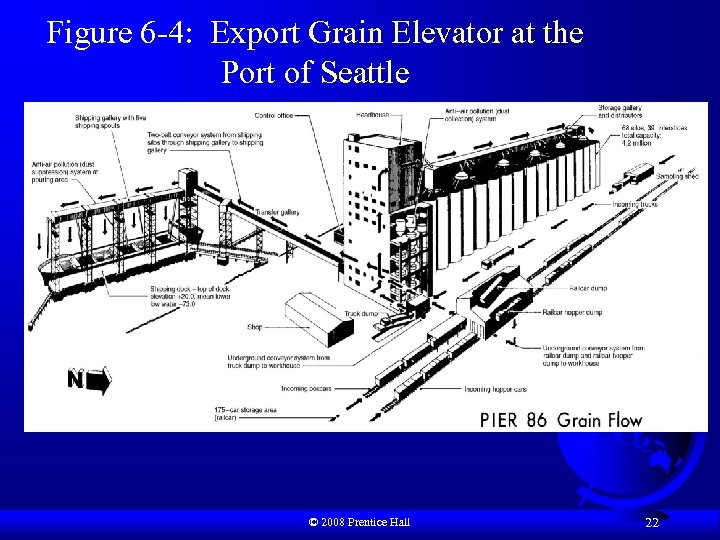 Figure 6 -4: Export Grain Elevator at the Port of Seattle © 2008 Prentice Hall 22
 Unique Cargo F Project cargo is a one-time unique movement of substantial volume – Examples include oil refineries, wood-pulp processing plant F Oversized moves F Hazardous materials © 2008 Prentice Hall 23
 Comparison of Modes F Costs per ton-mile F Speed F On-time delivery © 2008 Prentice Hall 24
 Transportation Regulation and Deregulation F Exceptions to economic deregulation – Rail service to captive shippers – Household goods movers – Many petroleum pipelines – Many natural gas pipelines – Some inland waterway traffic – Some water transport between mainland U. S. and Hawaii, Puerto Rico, and Alaska © 2008 Prentice Hall 25
 Transportation Regulation and Deregulation F Other types of regulation – Vehicle operations – Vehicle dimensions – Safety of operators – Safety of general public © 2008 Prentice Hall 26
 Transportation Rates F Rate structure deals with three factors – Relationships between different products – Relationships between shipments of different weights – Relationships between different distances F Three factors are defined numerically and then tied to a rate of cents per hundredweight (cwt) © 2008 Prentice Hall 27
 Transportation Rates F Negotiated between carrier and shipper F Quoted as percentage discounts from published rates F Four factors determine freight classification – Density – Stowability – Ease or difficulty of handling – Liability to damage and theft © 2008 Prentice Hall 28
 Transportation Rates F To find LTL rates usually need: – Origin and destination zip codes – Weight of shipment – Classification of shipment – Supplemental services needed – Discount awarded to shipper by carrier F Rates may be on carrier Web sites © 2008 Prentice Hall 29
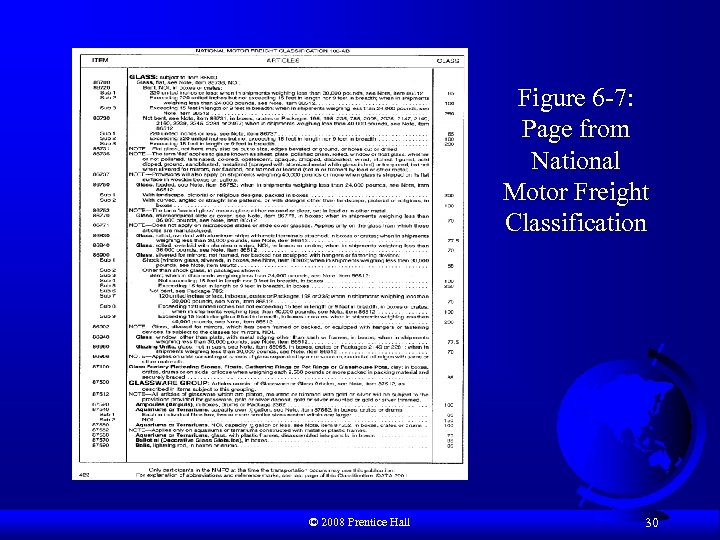 Figure 6 -7: Page from National Motor Freight Classification © 2008 Prentice Hall 30