


 Скачать презентацию CHAPTER 6 Networks Chapter Outline 6 1
c086e89ff4c590cdee175fe6eb97fcdb.ppt
- Количество слайдов: 50
 CHAPTER 6 Networks
 Chapter Outline 6. 1 What Is a Computer Network? 6. 2 Network Fundamentals 6. 3 The Internet and the World Wide Web 6. 4 Network Applications
 Learning Objectives 1. Define the term computer network, and compare and contrast the two major types of networks. 2. Describe the differences among the three types of wireline communications media, and discuss the main advantages and disadvantages of each type. 3. Differentiate between the Internet and the World Wide Web, and describe the most common methods for accessing the Internet.
 Learning Objectives (continued) 4. Identify six major categories of network applications, provide an example of each, and explain how that application supports business functions.
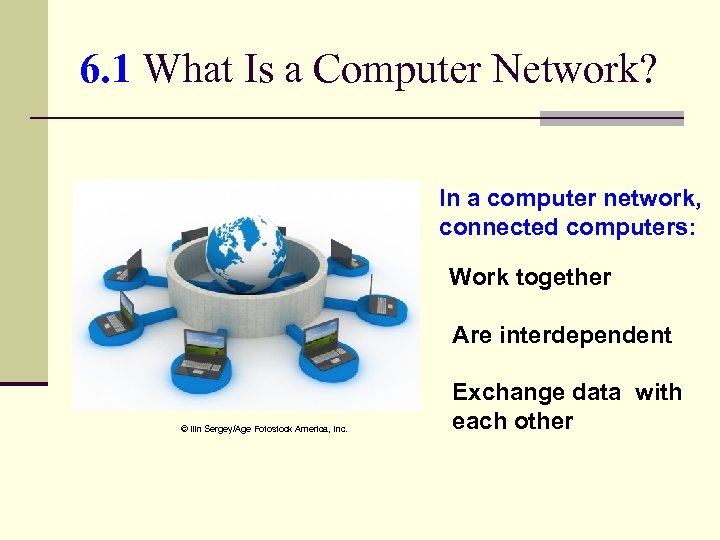 6. 1 What Is a Computer Network? In a computer network, connected computers: Work together Are interdependent © Ilin Sergey/Age Fotostock America, Inc. Exchange data with each other
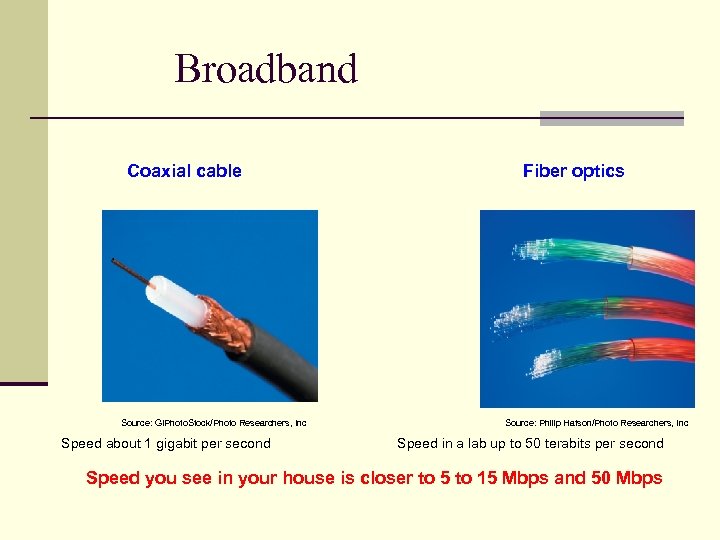 Broadband Coaxial cable Source: GIPhoto. Stock/Photo Researchers, Inc Speed about 1 gigabit per second Fiber optics Source: Philip Hatson/Photo Researchers, Inc Speed in a lab up to 50 terabits per second Speed you see in your house is closer to 5 to 15 Mbps and 50 Mbps
 Size of Computer Networks Home computer network National computer network Global computer network
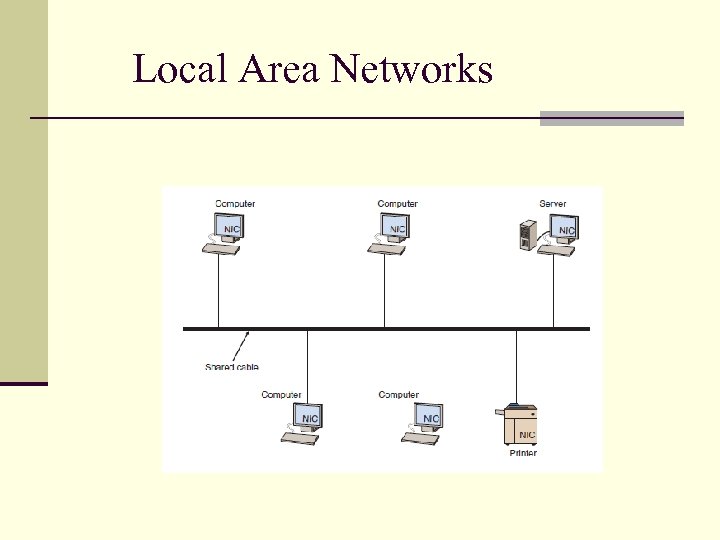 Local Area Networks
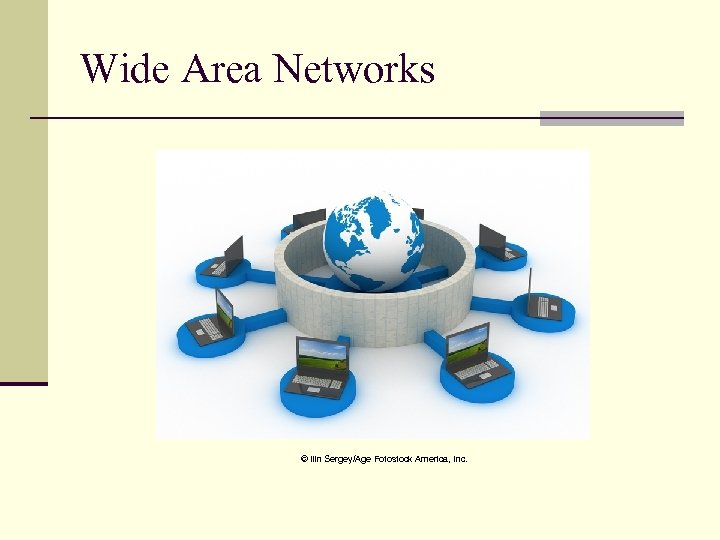 Wide Area Networks © Ilin Sergey/Age Fotostock America, Inc.
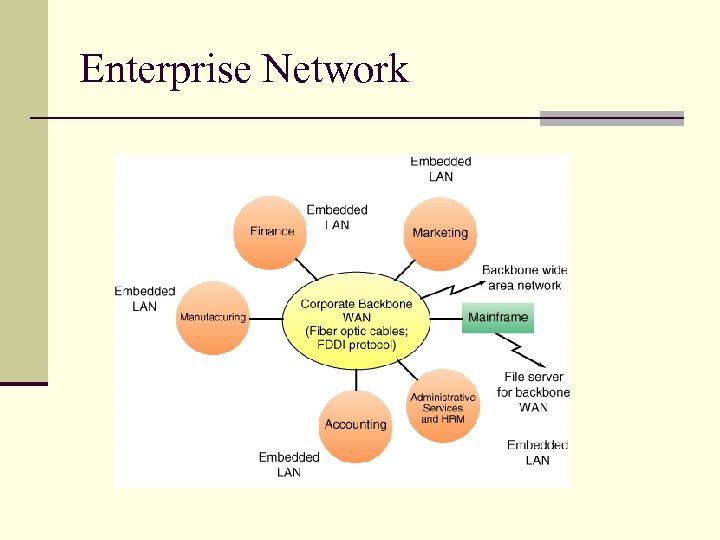 Enterprise Network
 6. 2 Network Fundamentals Analog and Digital Signals Communications Media and Channels Transmission Technologies Network Protocols Types of Network Processing
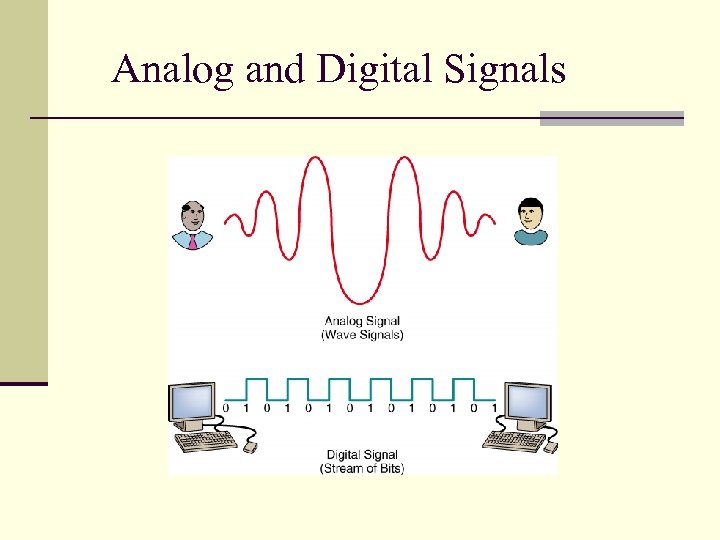 Analog and Digital Signals
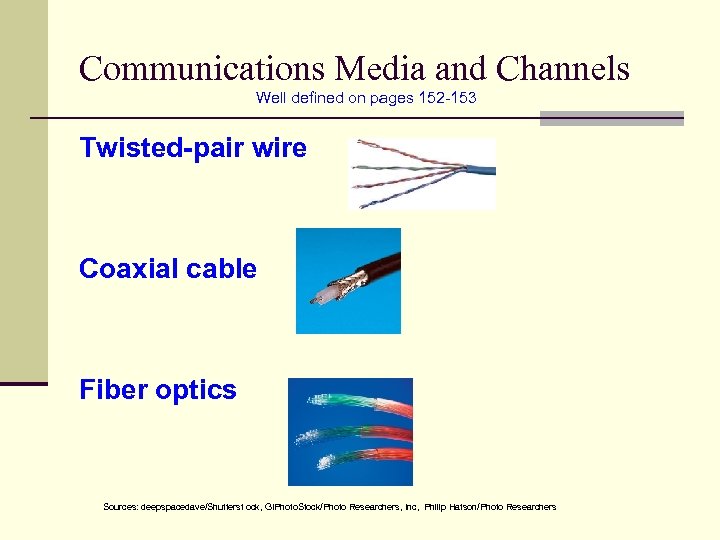 Communications Media and Channels Well defined on pages 152 -153 Twisted-pair wire Coaxial cable Fiber optics Sources: deepspacedave/Shutterst ock, GIPhoto. Stock/Photo Researchers, Inc, Philip Hatson/Photo Researchers
 Transmission Technologies Digital subscriber line (DSL) Asynchronous transfer mode (ATM) Synchronous optical network (SONET) T-carrier system
 Network Protocols Ethernet – like most of the “trunk” transmissions on campus. Speeds of 10 Gbps and 100 Gbps Transmission Control Protocol/Internet Protocol (TCP/IP) – used by the Internet. Unlike communications within an organization, the networks between distant computers may have faults. TCP/IP is fault tolerant, i. e. a robust network protocol
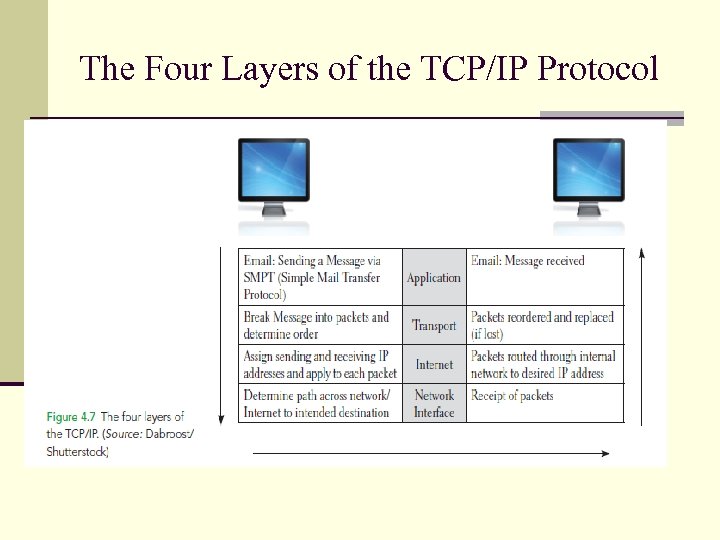 The Four Layers of the TCP/IP Protocol
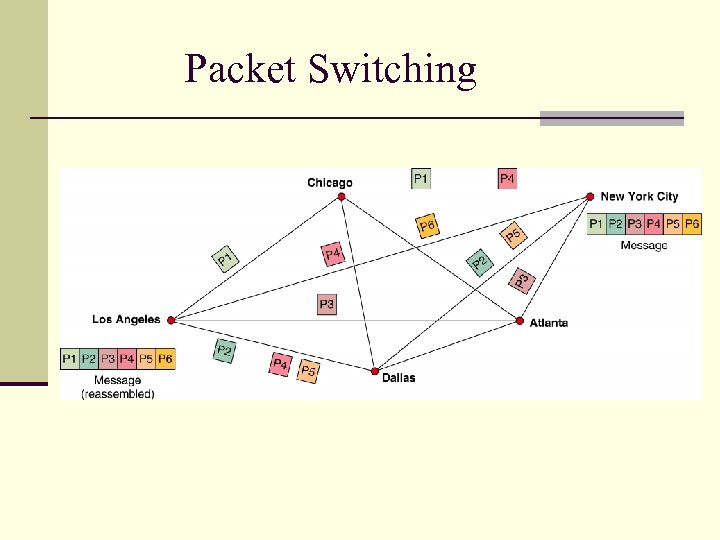 Packet Switching
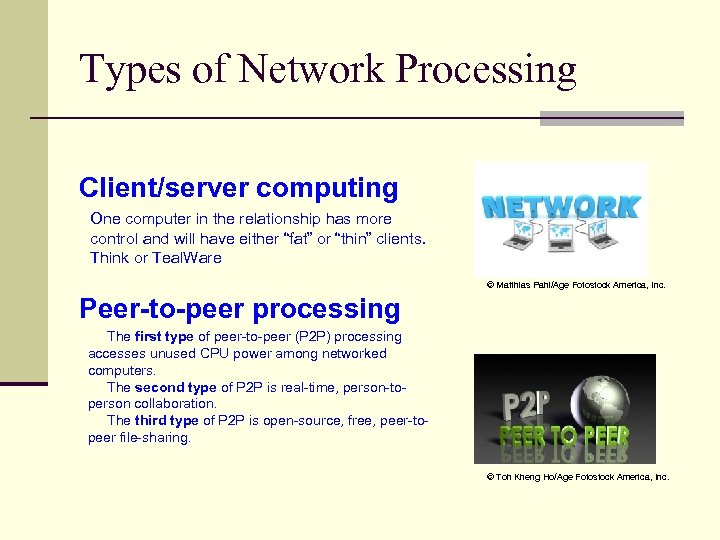 Types of Network Processing Client/server computing One computer in the relationship has more control and will have either “fat” or “thin” clients. Think or Teal. Ware © Matthias Pahl/Age Fotostock America, Inc. Peer-to-peer processing The first type of peer-to-peer (P 2 P) processing accesses unused CPU power among networked computers. The second type of P 2 P is real-time, person-toperson collaboration. The third type of P 2 P is open-source, free, peer-topeer file-sharing. © Toh Kheng Ho/Age Fotostock America, Inc.
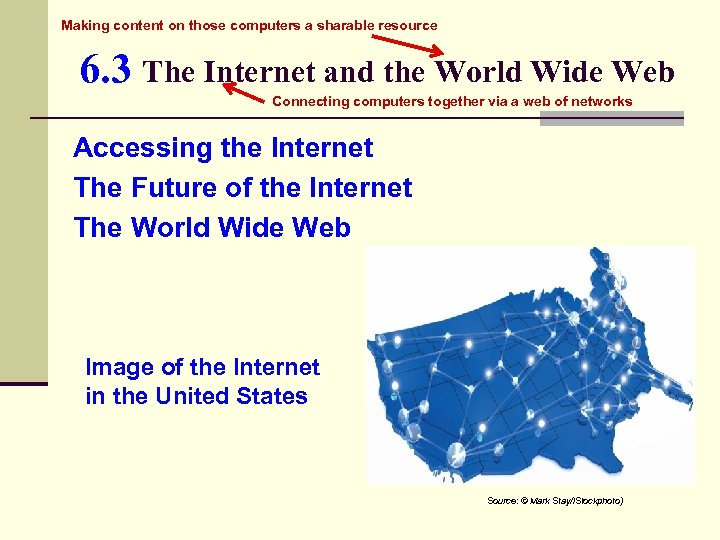 Making content on those computers a sharable resource 6. 3 The Internet and the World Wide Web Connecting computers together via a web of networks Accessing the Internet The Future of the Internet The World Wide Web Image of the Internet in the United States Source: © Mark Stay/i. Stockphoto)
 An Intranet © Corbis/Age Fotostock America, Inc.
 Accessing the Internet Connecting via an online service – such as America Online, AT&T, etc. Dial-up (who cares? ) DSL (for those on a tight budget)
 Accessing the Internet Cable Modem Satellite Wireless Fiber to the Home
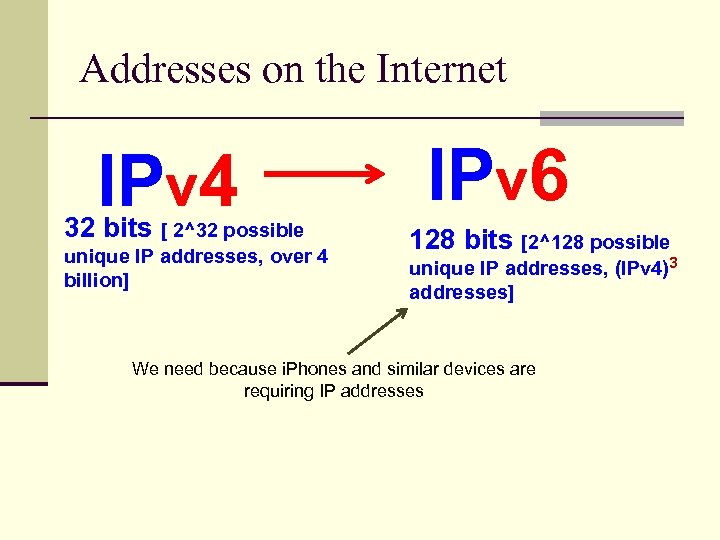 Addresses on the Internet IPv 4 32 bits [ 2^32 possible unique IP addresses, over 4 billion] IPv 6 128 bits [2^128 possible unique IP addresses, (IPv 4)3 addresses] We need because i. Phones and similar devices are requiring IP addresses
 Addresses on the Internet Domain names Top-level domain Name of the organization Name of the specific computer
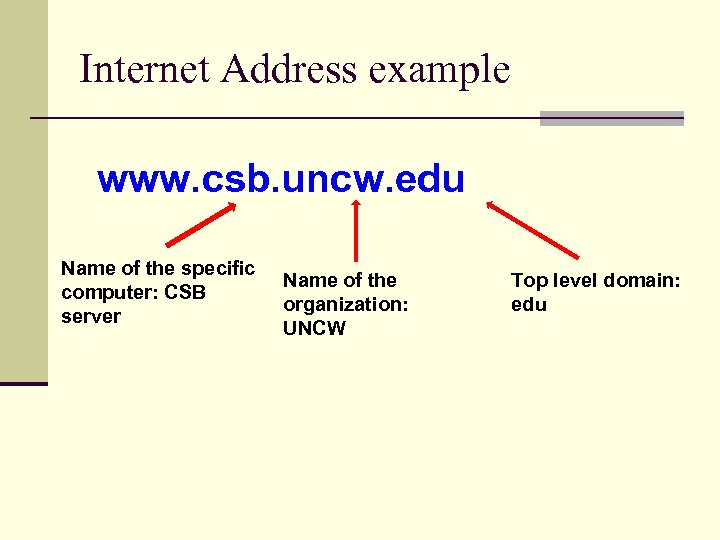 Internet Address example www. csb. uncw. edu Name of the specific computer: CSB server Name of the organization: UNCW Top level domain: edu
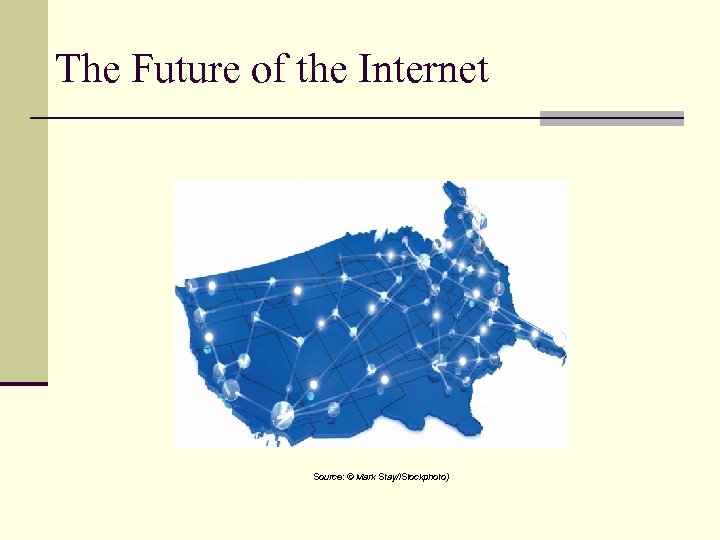 The Future of the Internet Source: © Mark Stay/i. Stockphoto)
 The World Wide Web Not the same thing as the Internet Home page Uniform resource locator (URL such as www. bls. gov) Wi. Max and your intelligent phone © Ilin Sergey/Age Fotostock America, Inc.
 Browser Competition © Matthias Pahl/Age Fotostock America, Inc.
 6. 4 Network Applications Discovery Communication Collaboration E-Learning and Distance Learning Virtual Universities Telecommuting
 Discovery Search engines Metasearch engines Discovery of material in foreign languages Portals
 Four Large Search Engines The largest search engines are: • Google • Yahoo • Bing • Baidu © Claver Carroll/Age Fotostock America, Inc.
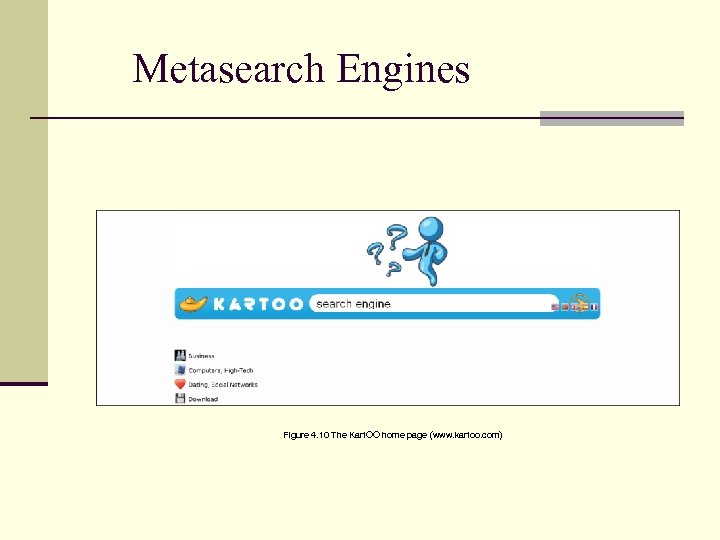 Metasearch Engines Figure 4. 10 The Kart. OO home page (www. kartoo. com)
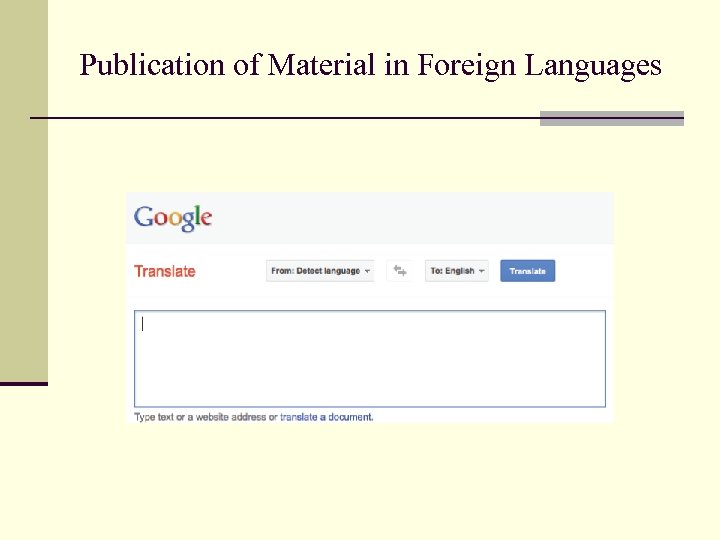 Publication of Material in Foreign Languages
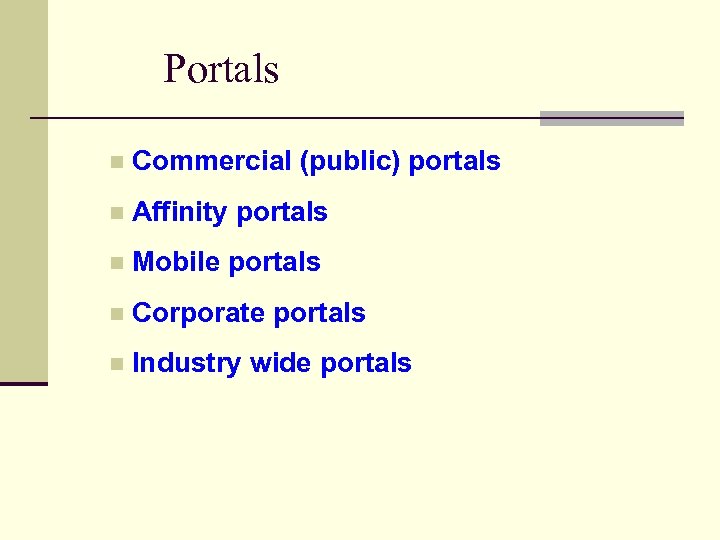 Portals n Commercial (public) portals n Affinity portals n Mobile portals n Corporate portals n Industry wide portals
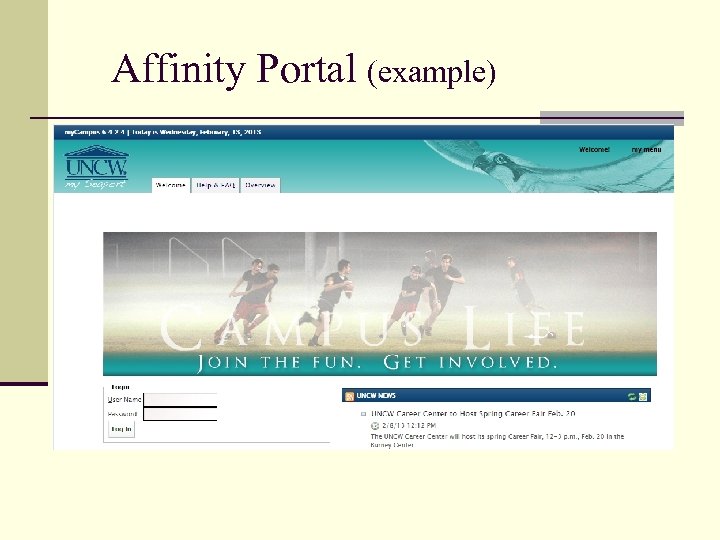 Affinity Portal (example)
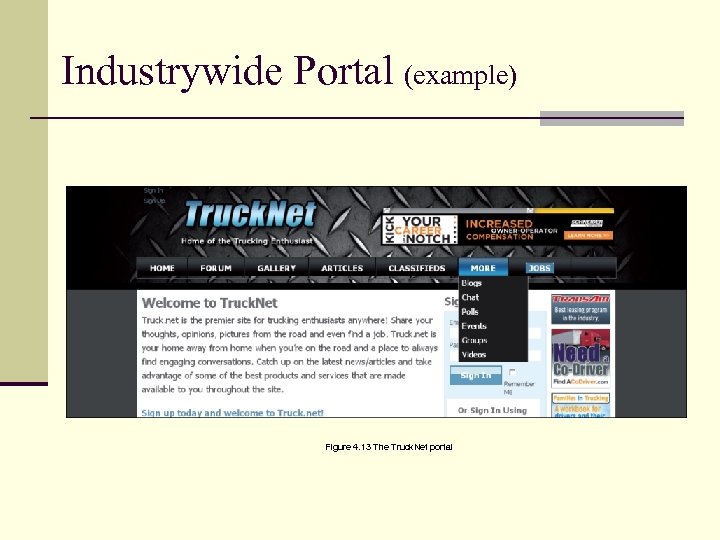 Industrywide Portal (example) Figure 4. 13 The Truck. Net portal
 Communication Electronic mail (e-mail) Web-based call centers (customer call center) Electronic chat room Voice Unified © Mario S Ragma Jr/Age Fotostock America, Inc.
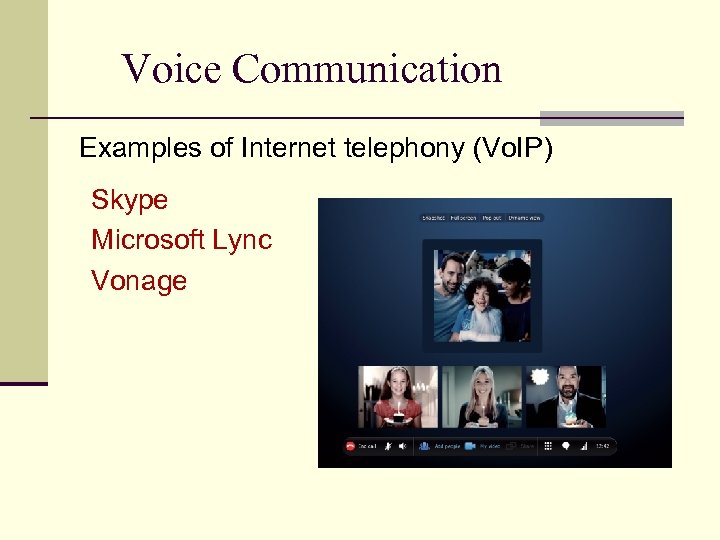 Voice Communication Examples of Internet telephony (Vo. IP) Skype Microsoft Lync Vonage
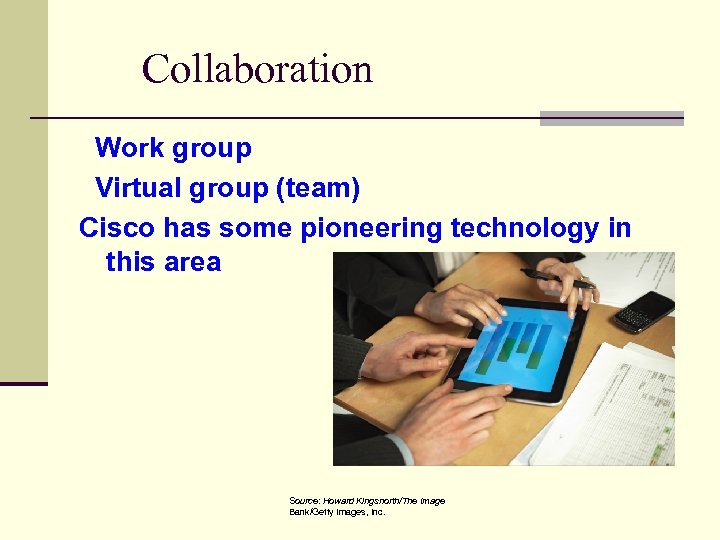 Collaboration Work group Virtual group (team) Cisco has some pioneering technology in this area Source: Howard Kingsnorth/The Image Bank/Getty Images, Inc.
 Collaboration (continued) Virtual collaboration Collaboration software Electronic Teleconferencing E-Learning and Distance Learning
 Crowdsourcing © YURI ACURS/Age Fotostock America, Inc.
 Software products supporting collaboration Microsoft Sharepoint IBM Lotus Quickr Google Docs Jive Software
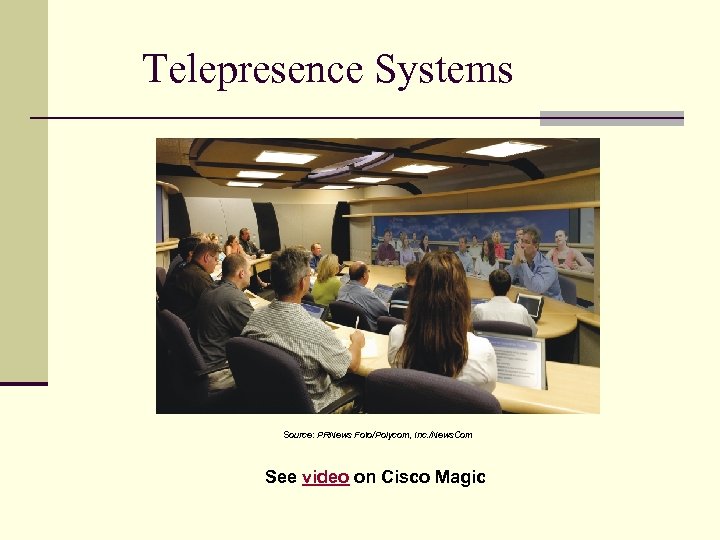 Telepresence Systems Source: PRNews Foto/Polycom, Inc. /News. Com See video on Cisco Magic
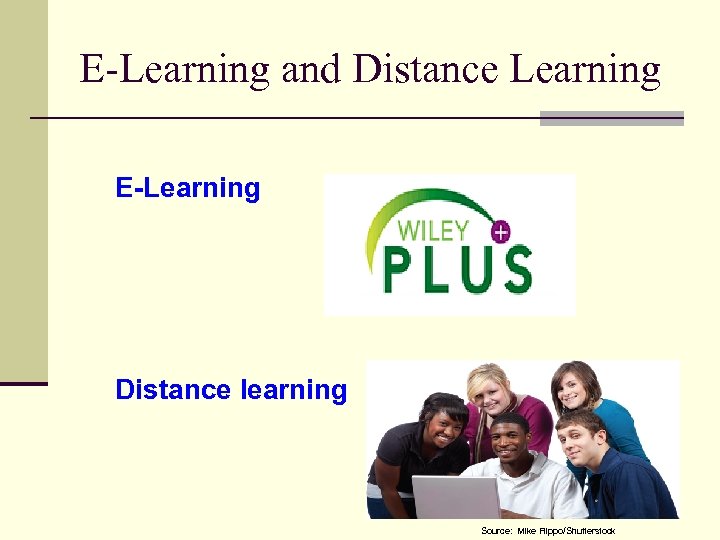 E-Learning and Distance Learning E-Learning Distance learning Source: Mike Flippo/Shutterstock
 Benefits of E-Learning n Self-paced learning increases content retention – self n n -paced but restricted to time constraints of the organization Online materials deliver can high-quality, current content. But there have been failures Students have the flexibility of learning from any place at any time at their own pace. Learning time generally is shorter, and more people can be trained due to faster training time. Training costs can be reduced.
 Drawbacks of E-Learning Many people say the total cost of e. Learning is actually higher than faceto-face education n Instructors may need training to be able to teach electronically. n The purchase of additional multimedia equipment may be necessary. n Students must be computer literate and may miss the face-to-face interaction with instructors. n There are issues with assessing students’ work, as instructors really do not know who completed assignments.
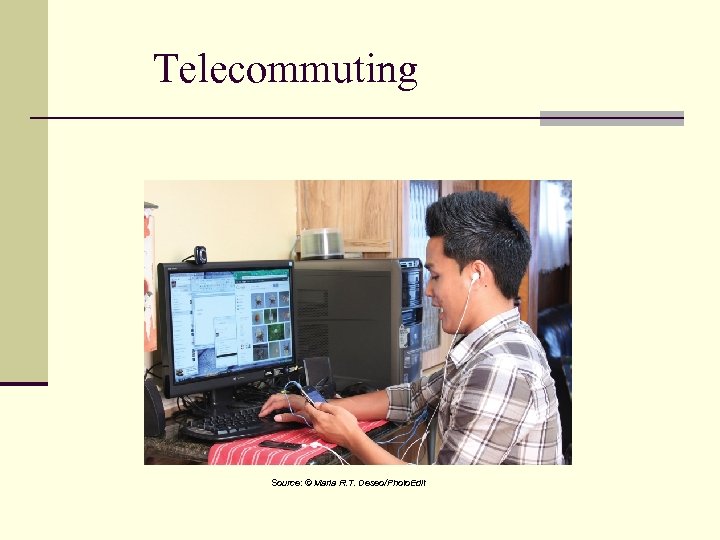 Telecommuting Source: © Maria R. T. Deseo/Photo. Edit
 Telecommuting Benefits n For Employees n Reduced stress, improved family life n Employment opportunities for single parents and persons with disabilities n For Employers n Increased productivity – some studies show telecommuting employees actually work 10% more hours on task than employees at the brick-andmortar location n Ability to retain skilled employees
 Telecommuting Disadvantages n For Employees n Feelings of isolation n No workplace visibility n Potential for slower promotions n For Employers n Difficulties in supervising work n Potential information security problems n Additional training costs
 Chapter Closing Case • The Problem • The Solution • The Results