


 Скачать презентацию Chapter 6 IP Security Outline l l
427cf8ee4693ed6b1721612ad973757b.ppt
- Количество слайдов: 36
 Chapter 6 IP Security
 Outline l l l l Internetworking and Internet Protocols (Appendix 6 A) IP Security Overview IP Security Architecture Authentication Header Encapsulating Security Payload Combinations of Security Associations Key Management
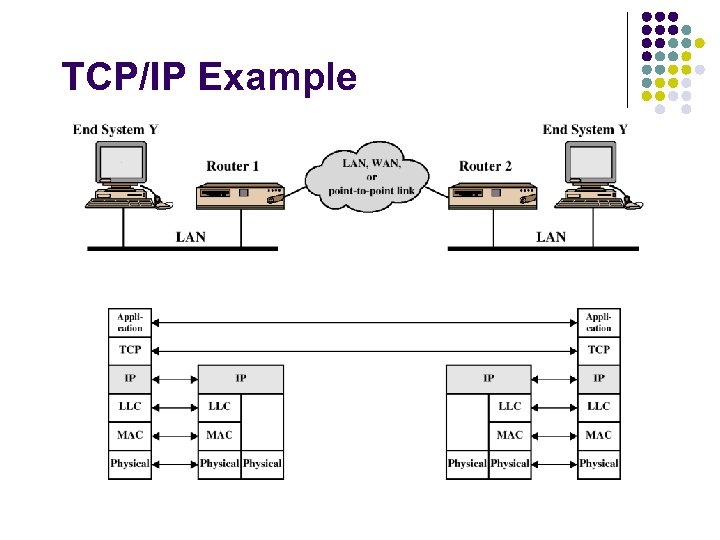 TCP/IP Example
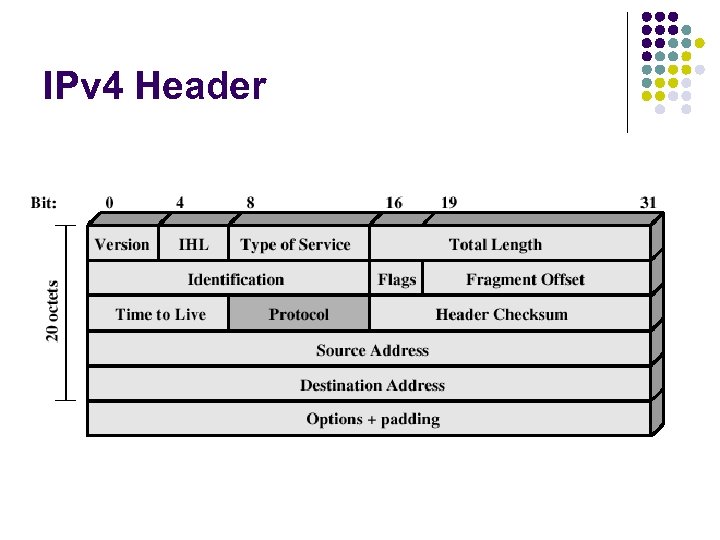 IPv 4 Header
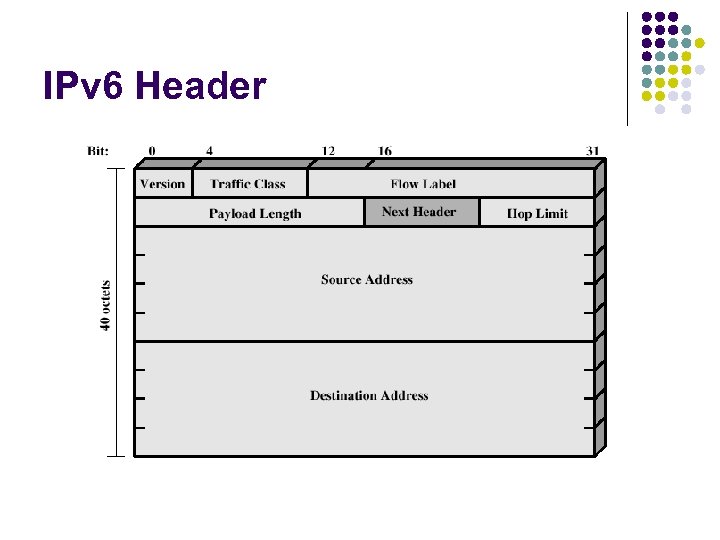 IPv 6 Header
 IP Security Overview l We have considered some application specific security mechanisms l l l eg. S/MIME, PGP, Kerberos, SSL/HTTPS However there are security concerns that cut across protocol layers Would like security implemented by the network for all applications
 IP Security Overview IPSec is not a single protocol. Instead, IPSec provides a set of security algorithms plus a general framework that allows a pair of communicating entities to use whichever algorithms provide security appropriate for the communication.
 IP Security Overview l In general IP Security mechanisms provides l l authentication confidentiality key management It is applicable to use over LANs, across public & private WANs, & for the Internet
 IP Security Overview l Applications of IPSec l l Secure branch office connectivity over the Internet Secure remote access over the Internet Establsihing extranet and intranet connectivity with partners Enhancing electronic commerce security
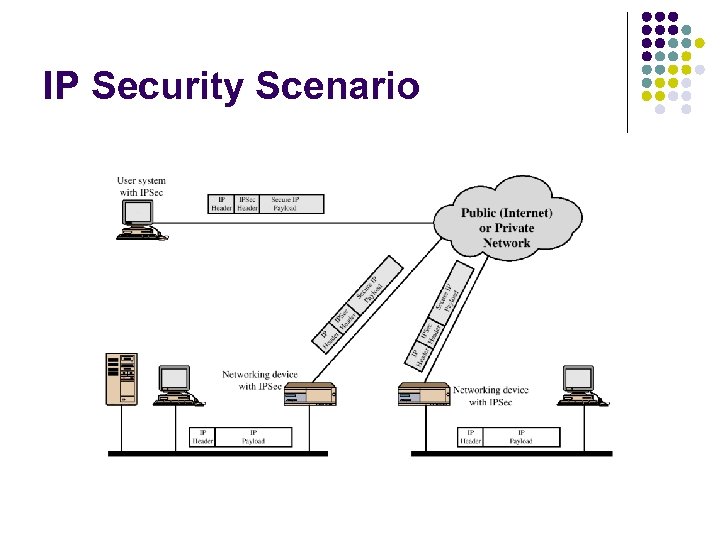 IP Security Scenario
 IP Security Overview l Benefits of IPSec l l l Transparent to applications (below transport layer (TCP, UDP) Provide security for individual users IPSec can assure that: l l l A router or neighbor advertisement comes from an authorized router A redirect message comes from the router to which the initial packet was sent A routing update is not forged
 IP Security Architecture l IPSec documents: l l RFC 2401: An overview of security architecture RFC 2402: Description of a packet encryption extension to IPv 4 and IPv 6 RFC 2406: Description of a packet emcryption extension to IPv 4 and IPv 6 RFC 2408: Specification of key managament capabilities
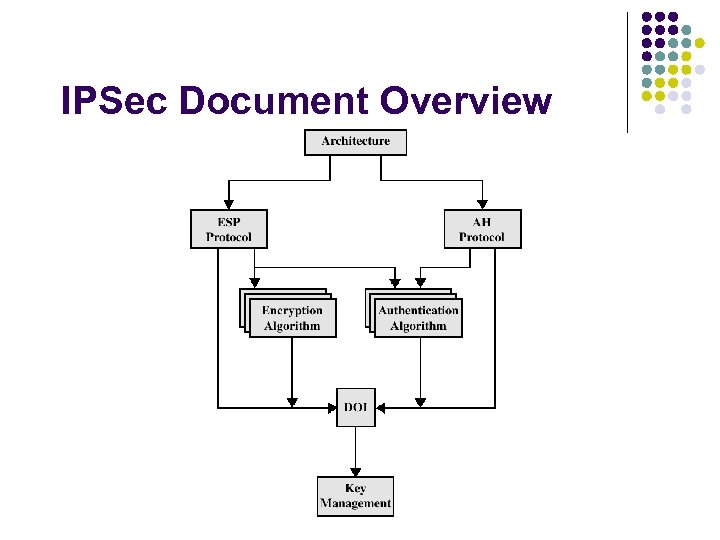 IPSec Document Overview
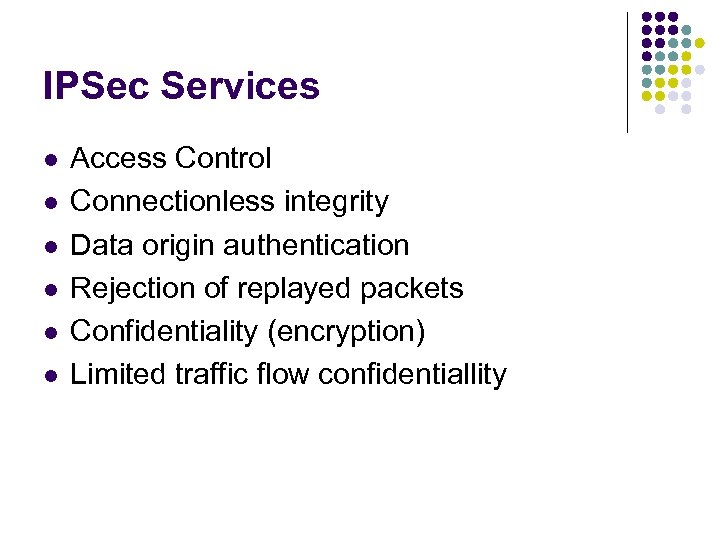 IPSec Services l l l Access Control Connectionless integrity Data origin authentication Rejection of replayed packets Confidentiality (encryption) Limited traffic flow confidentiallity
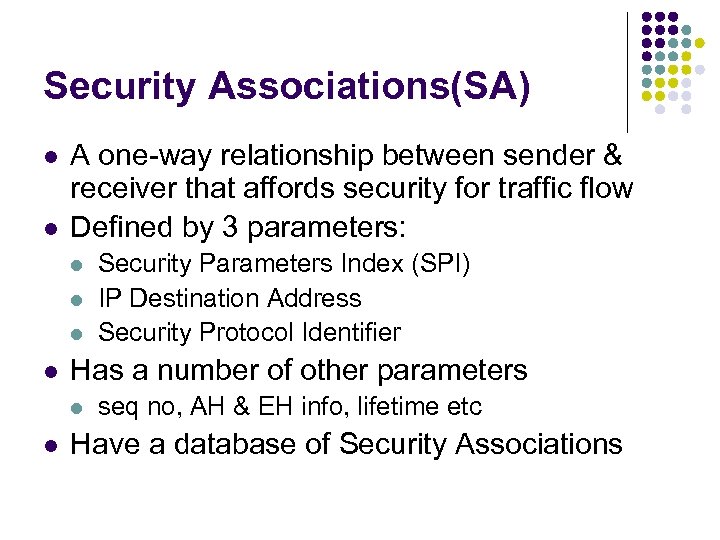 Security Associations(SA) l l A one-way relationship between sender & receiver that affords security for traffic flow Defined by 3 parameters: l l Has a number of other parameters l l Security Parameters Index (SPI) IP Destination Address Security Protocol Identifier seq no, AH & EH info, lifetime etc Have a database of Security Associations
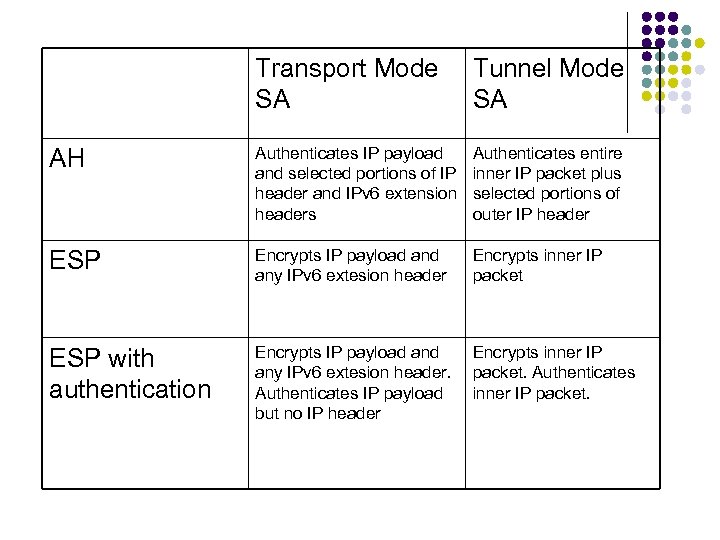 Transport Mode SA Tunnel Mode SA AH Authenticates IP payload and selected portions of IP header and IPv 6 extension headers Authenticates entire inner IP packet plus selected portions of outer IP header ESP Encrypts IP payload any IPv 6 extesion header Encrypts inner IP packet ESP with authentication Encrypts IP payload any IPv 6 extesion header. Authenticates IP payload but no IP header Encrypts inner IP packet. Authenticates inner IP packet.
 Authentication Header (AH) l provides support for data integrity & authentication of IP packets l l l based on use of a MAC l l end system/router can authenticate user/app prevents address spoofing attacks by tracking sequence numbers HMAC-MD 5 -96 or HMAC-SHA-1 -96 parties must share a secret key
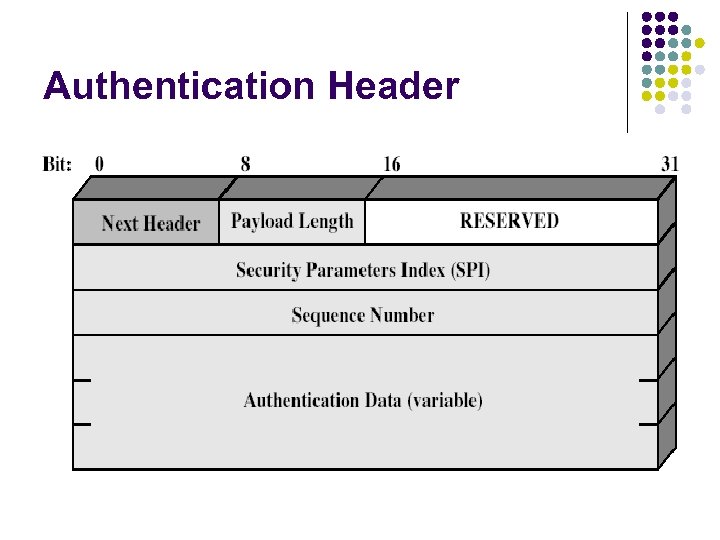 Authentication Header
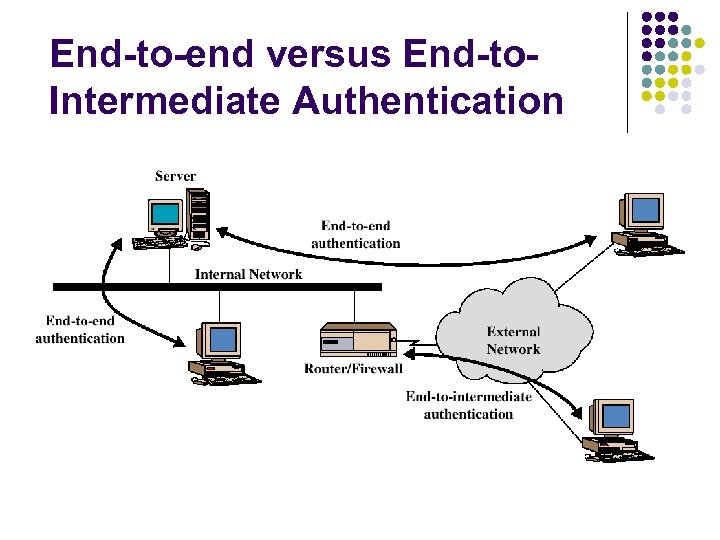 End-to-end versus End-to. Intermediate Authentication
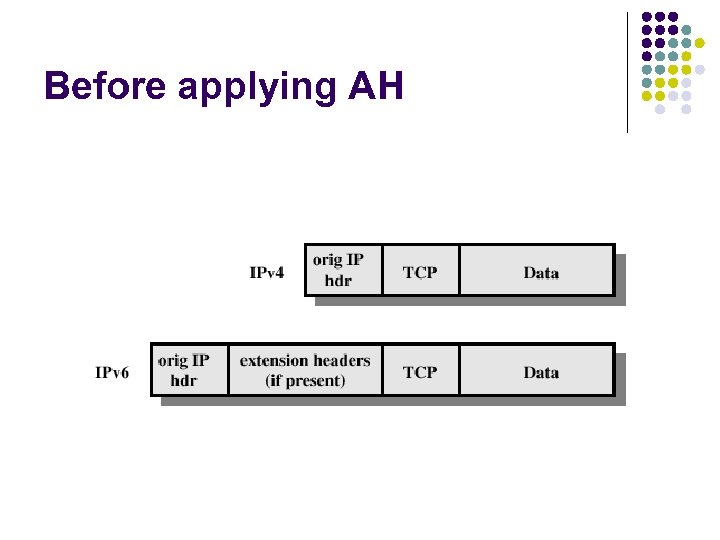 Before applying AH
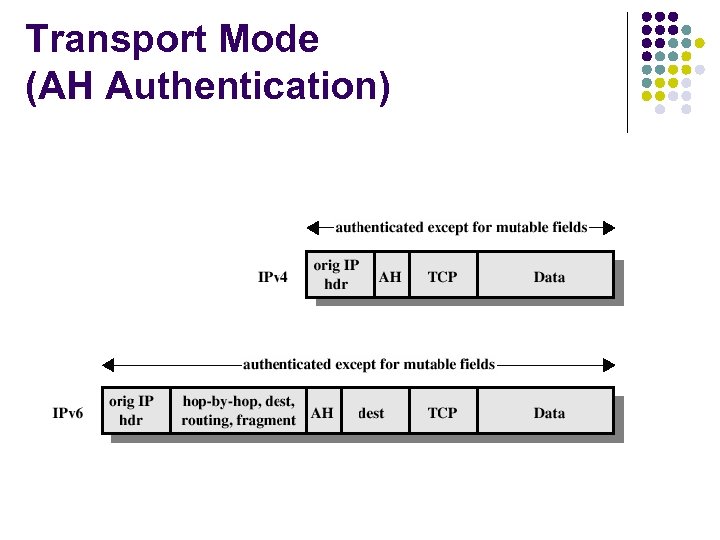 Transport Mode (AH Authentication)
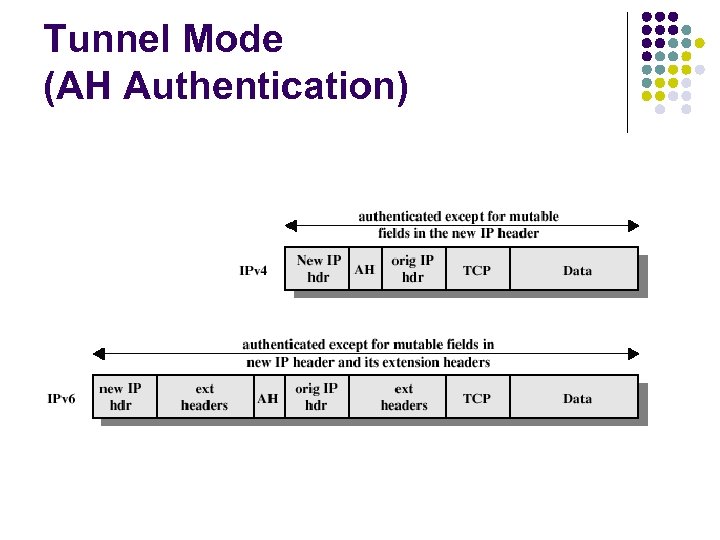 Tunnel Mode (AH Authentication)
 Encapsulating Security Payload (ESP) l l l provides message content confidentiality & limited traffic flow confidentiality can optionally provide the same authentication services as AH supports range of ciphers, modes, padding l l l incl. DES, Triple-DES, RC 5, IDEA, CAST etc CBC most common pad to meet blocksize, for traffic flow
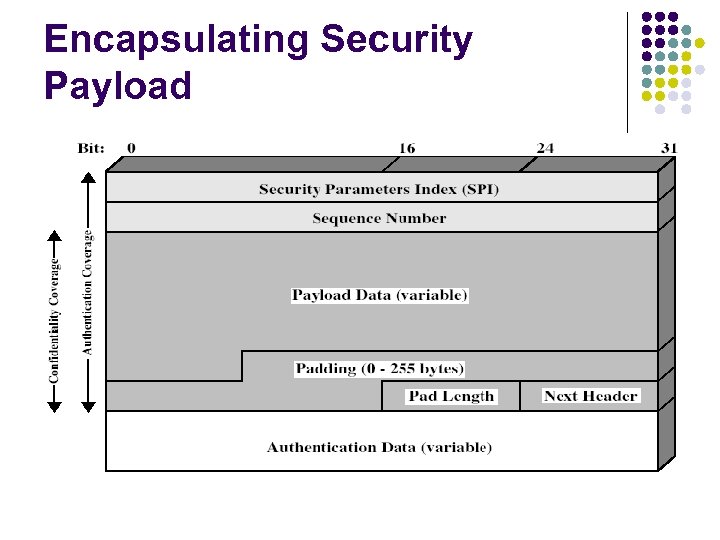 Encapsulating Security Payload
 Encryption and Authentication Algorithms l Encryption: l l l l Three-key triple DES RC 5 IDEA Three-key triple IDEA CAST Blowfish Authentication: l l HMAC-MD 5 -96 HMAC-SHA-1 -96
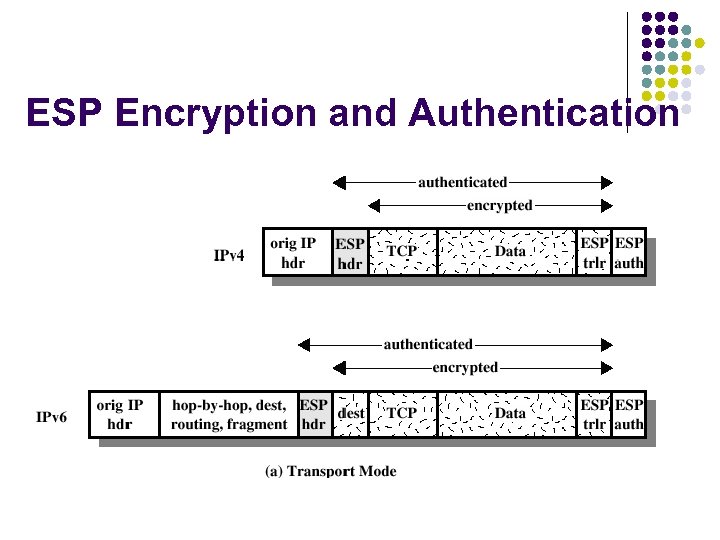 ESP Encryption and Authentication
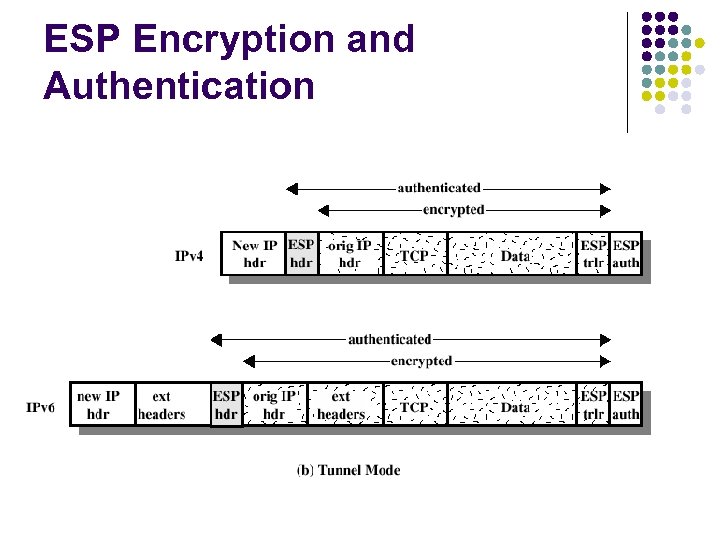 ESP Encryption and Authentication
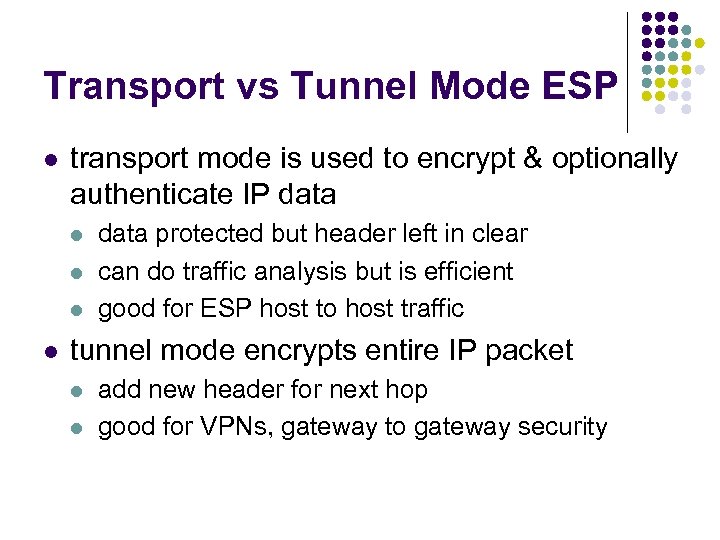 Transport vs Tunnel Mode ESP l transport mode is used to encrypt & optionally authenticate IP data l l data protected but header left in clear can do traffic analysis but is efficient good for ESP host to host traffic tunnel mode encrypts entire IP packet l l add new header for next hop good for VPNs, gateway to gateway security
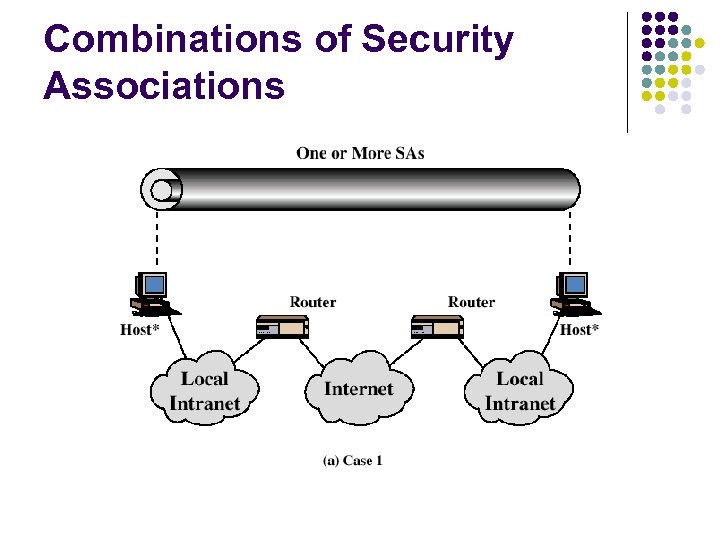 Combinations of Security Associations
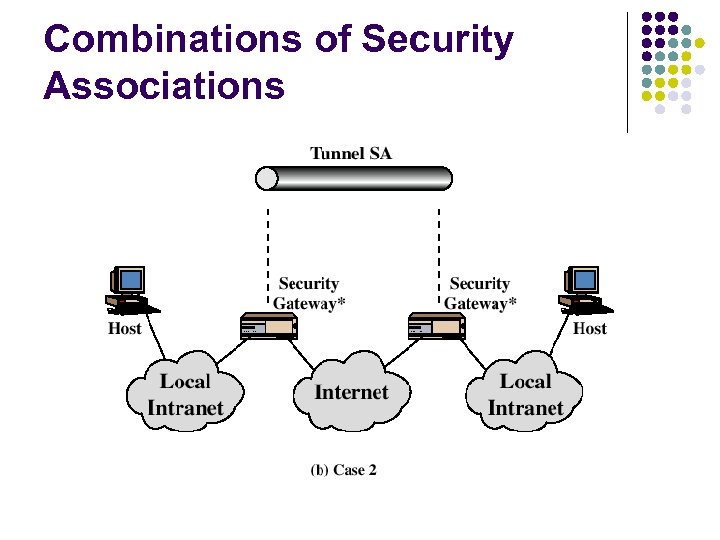 Combinations of Security Associations
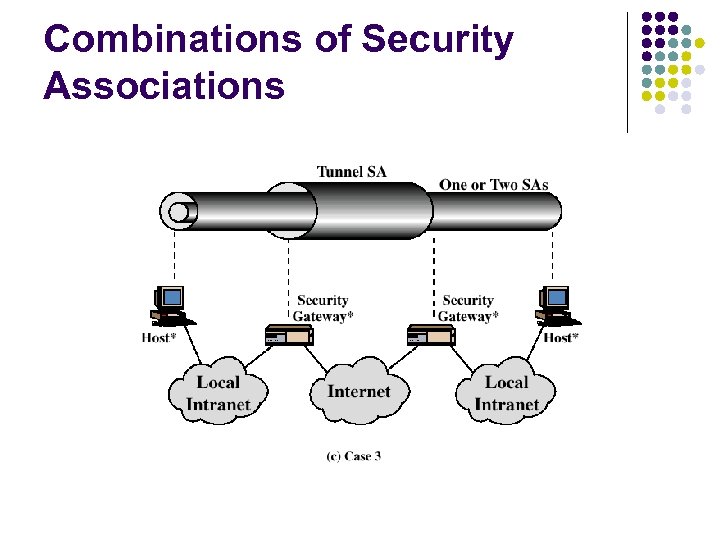 Combinations of Security Associations
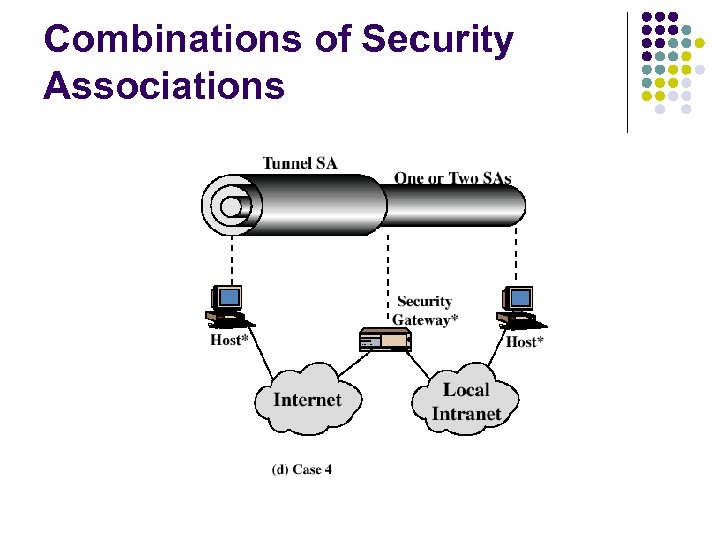 Combinations of Security Associations
 Key Management l Two types: l l Manual Automated l l Oakley Key Determination Protocol Internet Security Association and Key Management Protocol (ISAKMP)
 Oakley l Three authentication methods: l l l Digital signatures Public-key encryption Symmetric-key encryption
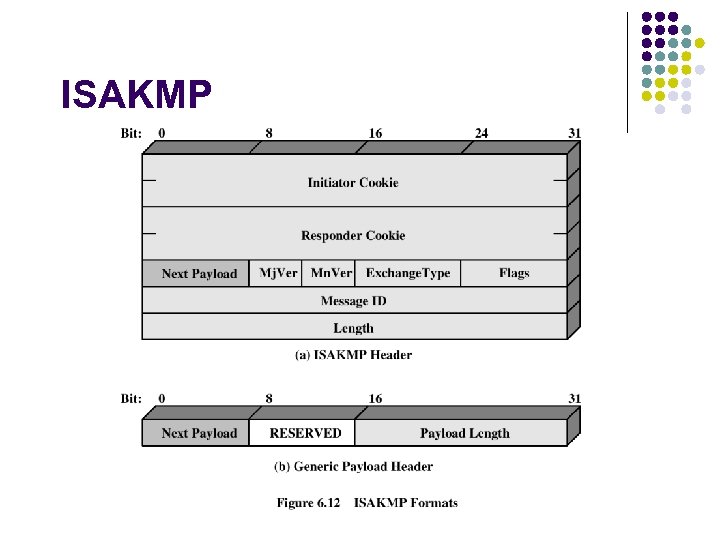 ISAKMP
 Recommended Reading l l Comer, D. Internetworking with TCP/IP, Volume I: Principles, Protocols and Architecture. Prentic Hall, 1995 Stevens, W. TCP/IP Illustrated, Volume 1: The Protocols. Addison-Wesley, 1994