


 Скачать презентацию Chapter 6 Consumer Perception Perception The process
4c7a40069062c2fe42b6c9d8cab1bfd8.ppt
- Количество слайдов: 41
 Chapter 6 Consumer Perception
 Perception The process by which an individual selects, organizes, and interprets stimuli into a meaningful and coherent picture of the world. © 2000 Prentice Hall
 Elements of Perception • • Sensation The absolute threshold The differential threshold Subliminal perception © 2000 Prentice Hall
 Sensory Receptors The human organs (eyes, ears, nose, mouth, skin) that receive sensory inputs. © 2000 Prentice Hall
 Absolute Threshold The lowest level at which an individual can experience a sensation. © 2000 Prentice Hall
 Sensory Adaptation “Getting used to” certain sensations; becoming accommodated to a certain level of stimulation. © 2000 Prentice Hall
 Differential Threshold The minimal difference that can be detected between two stimuli. Also known as the j. n. d. (just noticeable difference). © 2000 Prentice Hall
 Weber’s Law A theory concerning the perceived differentiation between similar stimuli of varying intensities (i. e. , the stronger the initial stimulus, the greater the additional intensity needed for the second stimulus to be perceived as different). © 2000 Prentice Hall
 Marketing Applications of the JND • Need to determine the relevant j. n. d. for their products – so that negative changes are not readily discernible to the public – so that product improvements are very apparent to consumers © 2000 Prentice Hall
 Subliminal Perception of very weak or rapid stimuli received below the level of conscious awareness. © 2000 Prentice Hall
 Is Subliminal Persuasion Effective? • Extensive research has shown no evidence that subliminal advertising can cause behavior changes • Some evidence that subliminal stimuli may influence affective reactions © 2000 Prentice Hall
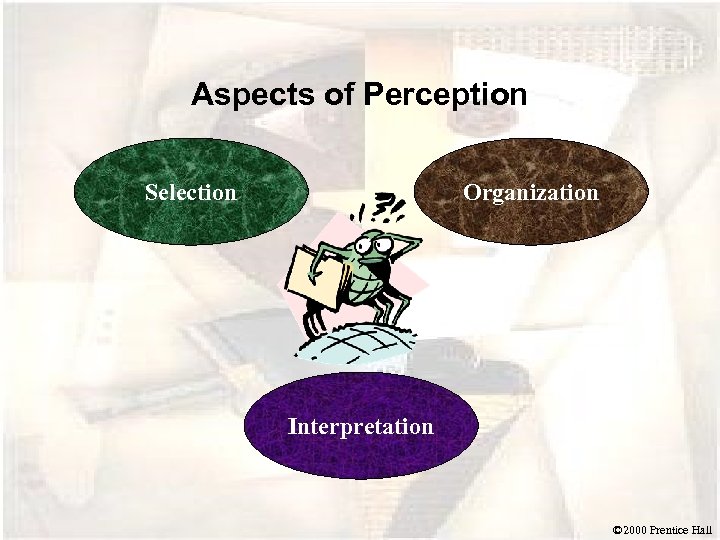 Aspects of Perception Selection Organization Interpretation © 2000 Prentice Hall
 Perceptual Selection • Depends on two major factors – Consumers’ previous experience (expectations) – Consumers’ motives © 2000 Prentice Hall
 Some Marketing Variables Influencing Consumer Perception • • Nature of Product Physical Attributes of Product Package Design Brand Name Advertisements & Commercials Position of Ad Editorial Environment © 2000 Prentice Hall
 Concepts Concerning Selective Perception • • Selective Exposure Selective Attention Perceptual Defense Perceptual Blocking © 2000 Prentice Hall
 Principles of Perceptual Organization • Figure and ground • Grouping • Closure – Zeigernik effect © 2000 Prentice Hall
 Zeigernik Effect A person beginning a task needs to complete it. When he or she is prevented from doing so, a state of tension is created that manifests itself in improved memory for the incomplete task. © 2000 Prentice Hall
 Distorting Influences • • • Physical Appearances Stereotypes Irrelevant Cues First Impressions Jumping to Conclusions Halo Effect © 2000 Prentice Hall
 Issues In Consumer Imagery • • Product Positioning and Repositioning Positioning of Services Perceived Price Perceived Quality Retail Store Image Manufacturers Image Perceived Risk © 2000 Prentice Hall
 Positioning Establishing a specific image for a brand in relation to competing brands. © 2000 Prentice Hall
 Reposition Changing the way a product is perceived by consumers in relation to other brands or product uses. © 2000 Prentice Hall
 Perceptual Mapping A research technique that enables marketers to plot graphically consumers’ perceptions concerning product attributes of specific brands. © 2000 Prentice Hall
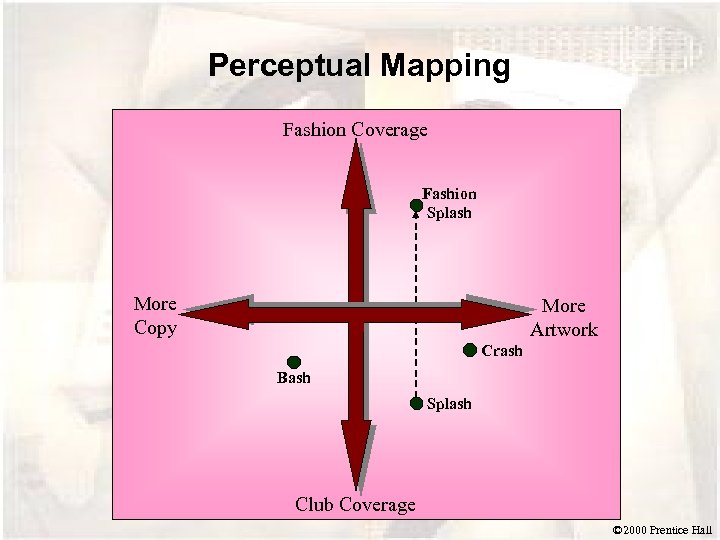 Perceptual Mapping Fashion Coverage Fashion Splash More Copy More Artwork Crash Bash Splash Club Coverage © 2000 Prentice Hall
 The Service Environment: Environmental Variables Most Important to Bank Customers • Privacy • Efficiency/Convenience • Ambient Background Conditions • Social Conditions • Aesthetics © 2000 Prentice Hall
 Issues in Perceived Price • Reference prices • Tensile and objective price claims © 2000 Prentice Hall
 Reference Price Any price that a consumer uses as a basis for comparison in judging another price. © 2000 Prentice Hall
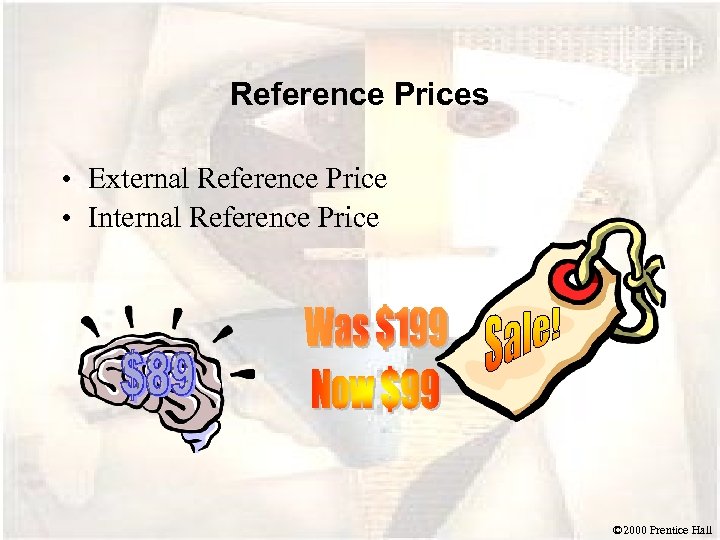 Reference Prices • External Reference Price • Internal Reference Price © 2000 Prentice Hall
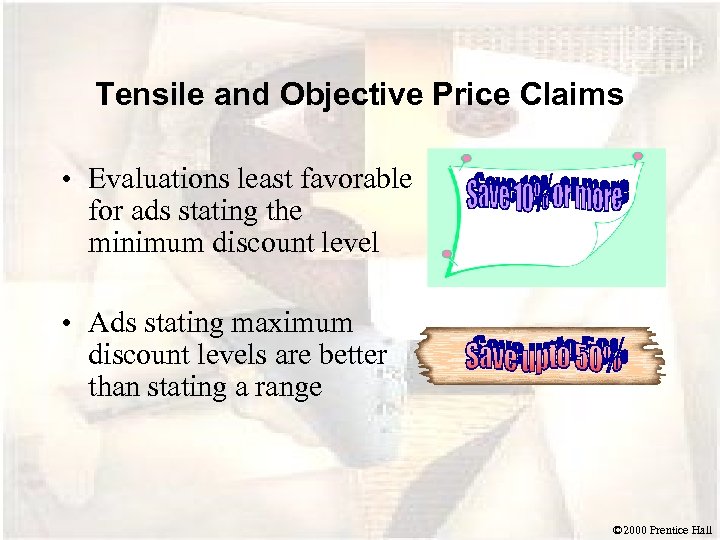 Tensile and Objective Price Claims • Evaluations least favorable for ads stating the minimum discount level • Ads stating maximum discount levels are better than stating a range © 2000 Prentice Hall
 Perceived Quality • Perceived Quality of Products – Intrinsic vs. Extrinsic Cues • Perceived Quality of Services • Price/Quality Relationship © 2000 Prentice Hall
 Intrinsic Cues Physical characteristics of the product (such as size, color, flavor, or aroma) that serve to influence the consumer’s perceptions of product quality. © 2000 Prentice Hall
 Extrinsic Cues external to the product (such as price, store image, or brand image) that serve to influence the consumer’s perception of a product’s quality. © 2000 Prentice Hall
 Characteristics of Services • • Intangible Variable Perishable Simultaneously Produced and Consumed © 2000 Prentice Hall
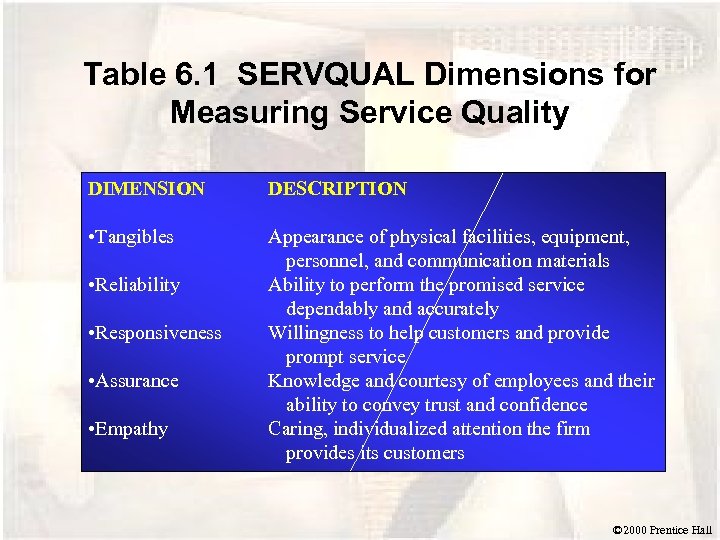 Table 6. 1 SERVQUAL Dimensions for Measuring Service Quality DIMENSION DESCRIPTION • Tangibles Appearance of physical facilities, equipment, personnel, and communication materials Ability to perform the promised service dependably and accurately Willingness to help customers and provide prompt service Knowledge and courtesy of employees and their ability to convey trust and confidence Caring, individualized attention the firm provides its customers • Reliability • Responsiveness • Assurance • Empathy © 2000 Prentice Hall
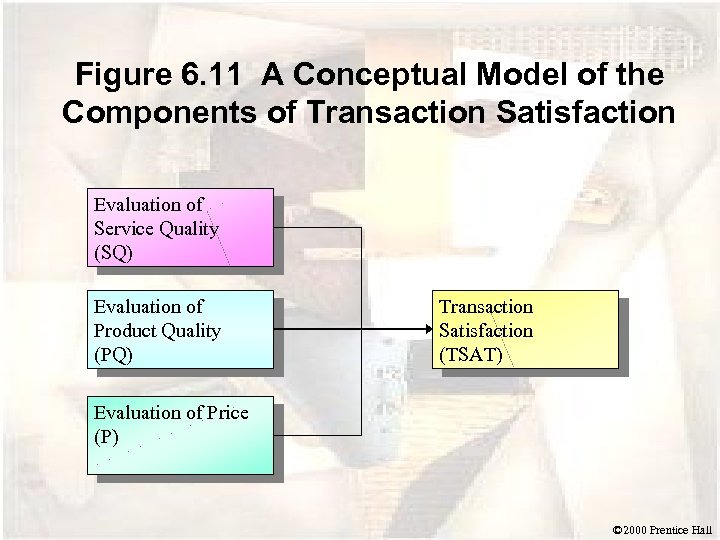 Figure 6. 11 A Conceptual Model of the Components of Transaction Satisfaction Evaluation of Service Quality (SQ) Evaluation of Product Quality (PQ) Transaction Satisfaction (TSAT) Evaluation of Price (P) © 2000 Prentice Hall
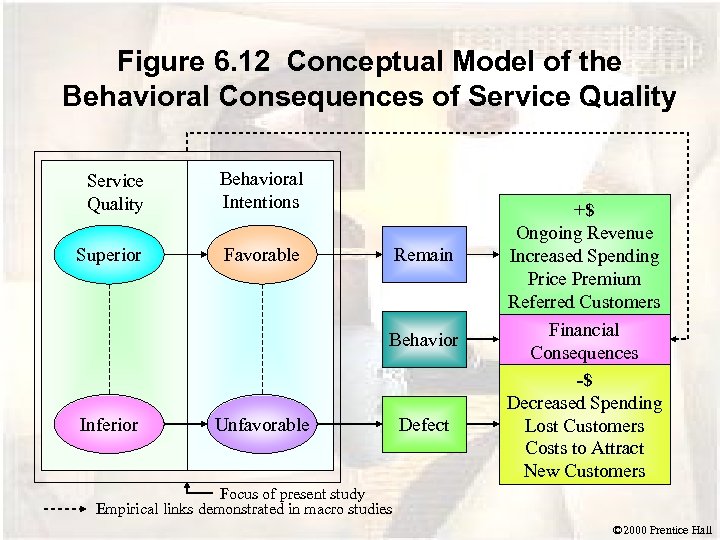 Figure 6. 12 Conceptual Model of the Behavioral Consequences of Service Quality Behavioral Intentions Superior Favorable Remain Behavior Inferior Unfavorable Defect +$ Ongoing Revenue Increased Spending Price Premium Referred Customers Financial Consequences -$ Decreased Spending Lost Customers Costs to Attract New Customers Focus of present study Empirical links demonstrated in macro studies © 2000 Prentice Hall
 Price/Quality Relationship The perception of price as an indicator of product quality (e. g. , the higher the price, the higher the perceived quality of the product). © 2000 Prentice Hall
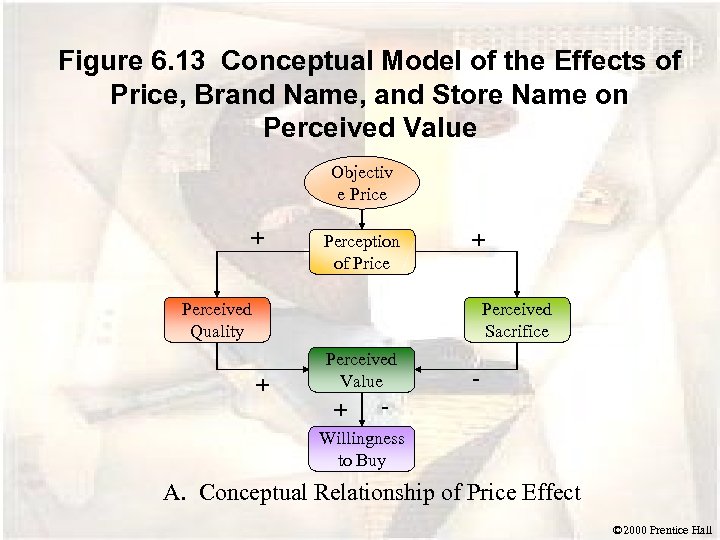 Figure 6. 13 Conceptual Model of the Effects of Price, Brand Name, and Store Name on Perceived Value Objectiv e Price + Perception of Price + Perceived Quality Perceived Sacrifice + Perceived Value + - - Willingness to Buy A. Conceptual Relationship of Price Effect © 2000 Prentice Hall
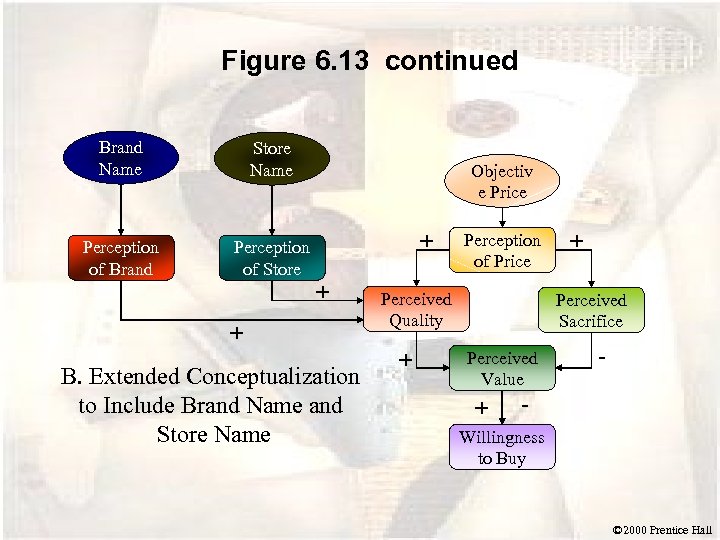 Figure 6. 13 continued Brand Name Store Name Perception of Brand Perception of Store Objectiv e Price + + + B. Extended Conceptualization to Include Brand Name and Store Name Perception of Price Perceived Quality + + Perceived Sacrifice Perceived Value + - - Willingness to Buy © 2000 Prentice Hall
 Perceived Risk The degree of uncertainty perceived by the consumer as to the consequences (outcome) of a specific purchase decision. © 2000 Prentice Hall
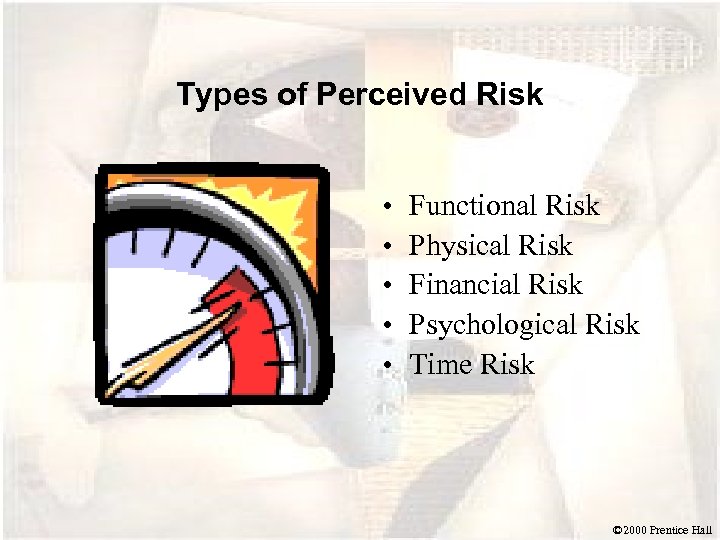 Types of Perceived Risk • • • Functional Risk Physical Risk Financial Risk Psychological Risk Time Risk © 2000 Prentice Hall
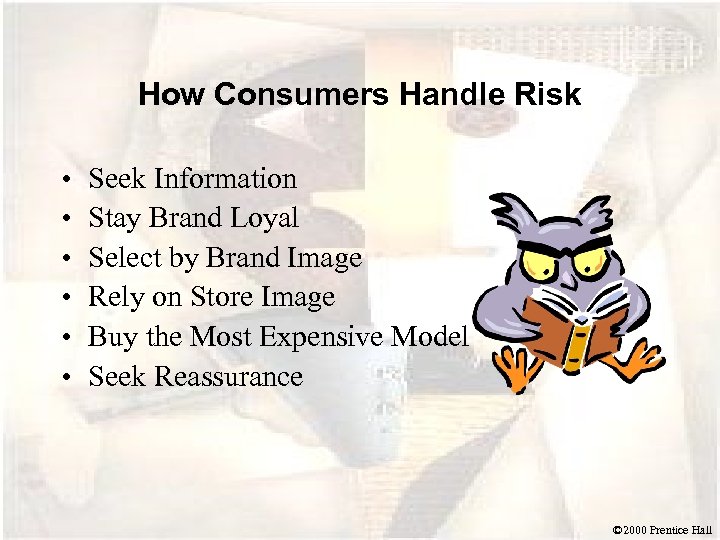 How Consumers Handle Risk • • • Seek Information Stay Brand Loyal Select by Brand Image Rely on Store Image Buy the Most Expensive Model Seek Reassurance © 2000 Prentice Hall