


 Скачать презентацию Chapter 5 Religion 2011 Pearson Education Inc
7273fbf6ba0535c8b7e8499f6034b5d3.ppt
- Количество слайдов: 31
 Chapter 5: Religion © 2011 Pearson Education, Inc.
 Where Are Religions Distributed? • Universalizing religions – Seek to appeal to all people • Ethnic religions – Appeal to a smaller group of people living in one place • Tribal or Traditional Religions – Ethnic religions of groups that lie outside of mainstream culture • Often Animistic, or Shamanistic © 2011 Pearson Education, Inc.
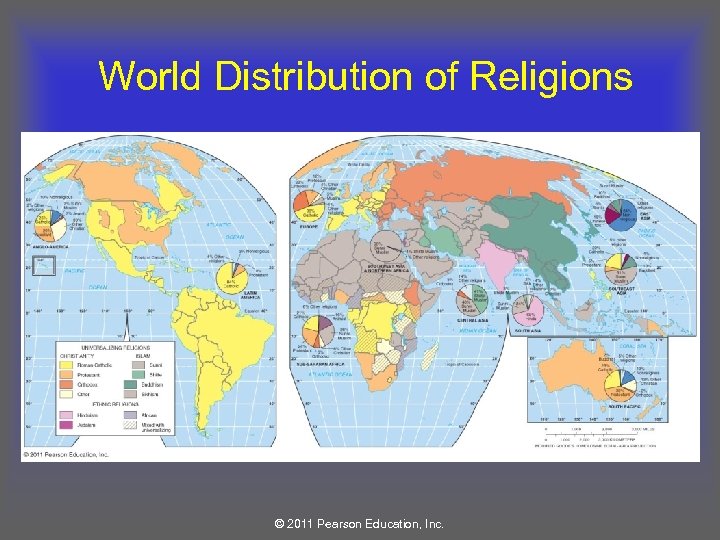 World Distribution of Religions © 2011 Pearson Education, Inc.
 Where Are Religions Distributed? • Universalizing religions – Christianity • The largest world religion (about 2 billion adherents) – Many adherents in Europe, the Americas • Three major branches – Roman Catholicism (51 percent) – Protestant Christianity (24 percent) – Eastern Orthodox (11 percent) » Other, smaller branches of Christianity comprise 14 percent of all Christians © 2011 Pearson Education, Inc.
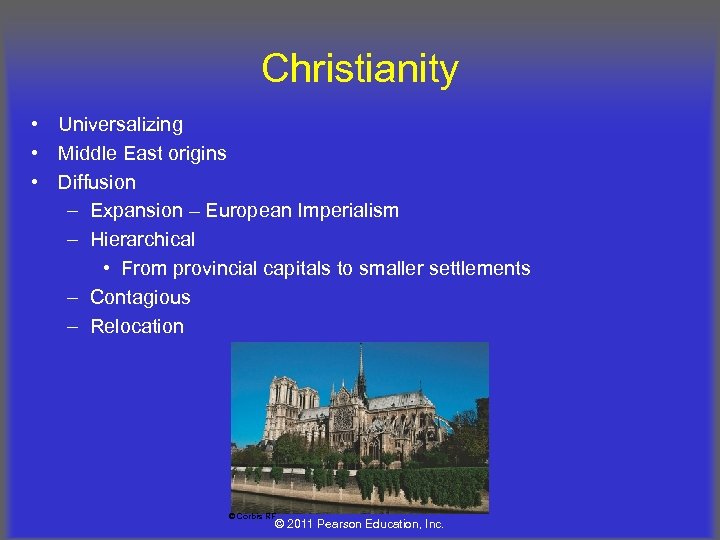 Christianity • Universalizing • Middle East origins • Diffusion – Expansion – European Imperialism – Hierarchical • From provincial capitals to smaller settlements – Contagious – Relocation © Corbis RF Human Geography 11 e © 2011 Pearson Education, Inc.
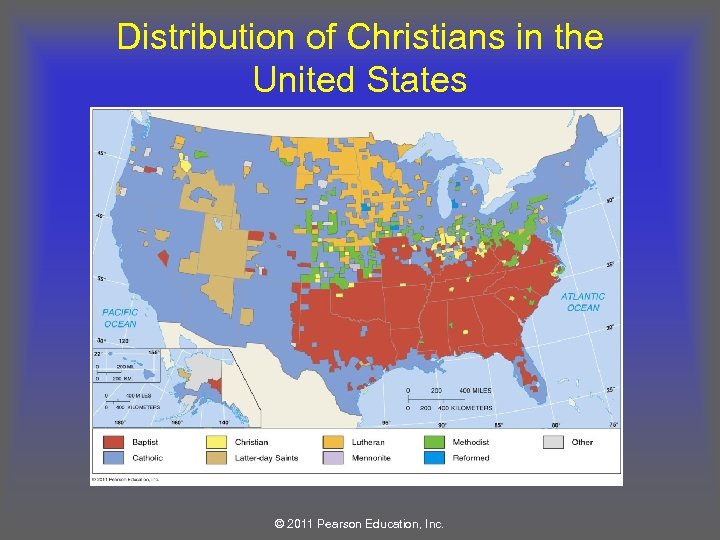 Distribution of Christians in the United States © 2011 Pearson Education, Inc.
 Where Are Religions Distributed? • Universalizing religions – Islam (Middle East) • The second-largest world religion (about 1. 3 billion adherents) – Significant clusters in the Middle East, North Africa, and South Asia • Core of Islamic belief = the five pillars • Holy Book: Koran, Shariah • Two significant branches – Sunnis (83 percent) – Shias or Shiites (16 percent) © 2011 Pearson Education, Inc.
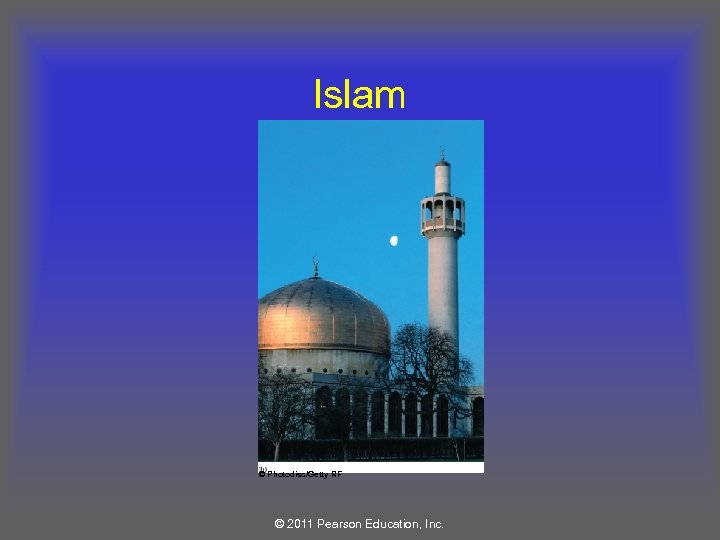 Islam © Photodisc/Getty RF © 2011 Pearson Education, Inc.
 Where Are Religions Distributed? • Universalizing religions – Buddhism - South Asia origins • About 400 million adherents (difficult to quantify) – Significant clusters in China, Southeast Asia • The Four Noble Truths • Three branches – Mahayana (China, Japan, Korea) – Theravada (Southeast Asia) – Tantrayana (Tibet, Mongolia) © 2011 Pearson Education, Inc.
 Where Are Religions Distributed? • Ethnic religions – Hinduism • World’s oldest major religion • The third-largest religion in the world (900 million adherents) • 97 percent of Hindus are found in India • Many paths to spirituality – Dharma and Karma • Reincarnation and Caste © 2011 Pearson Education, Inc.
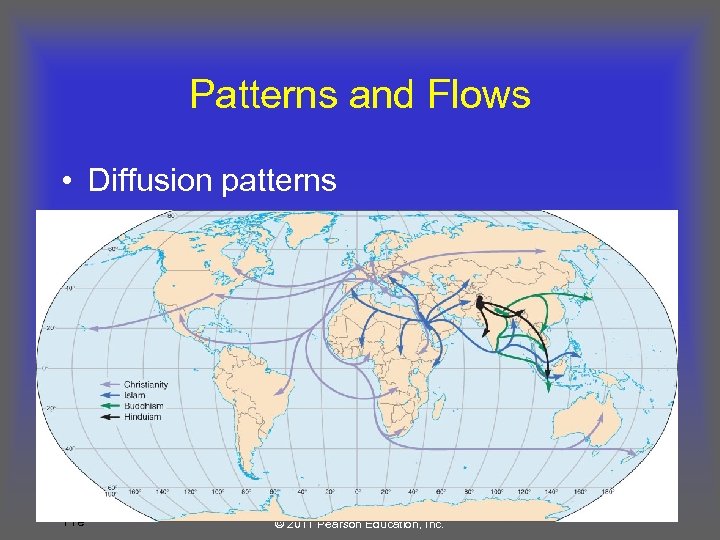 Patterns and Flows • Diffusion patterns Insert figure 5. 20 Human Geography 11 e © 2011 Pearson Education, Inc.
 Where Are Religions Distributed? • Ethnic religions – Other ethnic religions • • Confucianism (China) Daoism (China) Shinto (Japan) Judaism (today: the United States, Israel) – The first monotheistic religion • Ethnic African religions – Animism © 2011 Pearson Education, Inc.
 Judaism • • Ethnic religion Middle East origins Diaspora Two separate branches of Judaism developed in Europe during the Middle Ages: – Sephardim (Iberian Peninsula) – Ashkenazim (Eastern Europe) • Zionism – The belief in the need to create an autonomous Jewish state in Palestine © 2011 Pearson Education, Inc.
 Why Do Religions Have Different Distributions? • Origin of religions – Universalizing: precise origins, tied to a specific founder • Christianity – Founder: Jesus • Islam – Prophet of Islam: Muhammad • Buddhism – Founder: Siddhartha Gautama © 2011 Pearson Education, Inc.
 Why Do Religions Have Different Distributions? • Origin of religions – Ethnic: unclear or unknown origins, not tied to a specific founder • Hinduism – No clear founder – Earliest use of Hinduism = sixth century B. C. – Archaeological evidence dating from 2500 B. C. © 2011 Pearson Education, Inc.
 Why Do Religions Have Different Distributions? • Diffusion of religions – Universalizing religions • Christianity – Diffuses via relocation and expansion diffusion • Islam – Diffuses to North Africa, South and Southeast Asia • Buddhism – Slow diffusion from the core © 2011 Pearson Education, Inc.
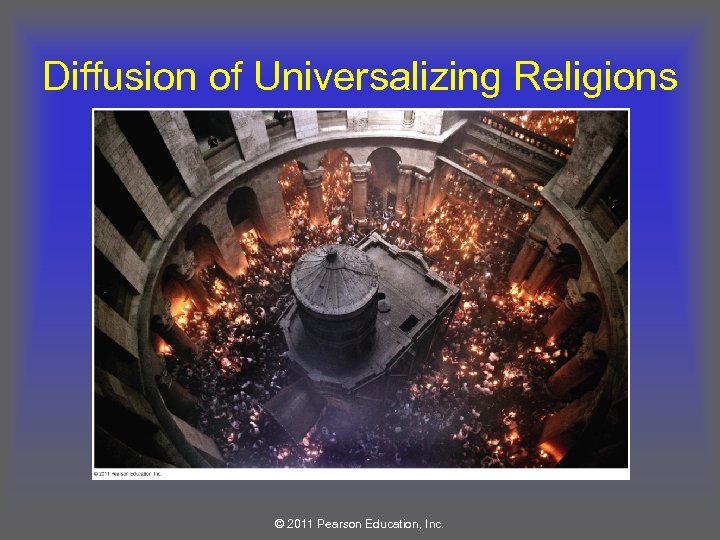 Diffusion of Universalizing Religions © 2011 Pearson Education, Inc.
 Why Do Religions Have Different Distributions? • Limited diffusion of ethnic religions – Universal religions usually compete with ethnic religions – Examples of mingling: • Christianity with African ethnic religions • Buddhism with Confucianism in China and with Shinto in Japan – Ethnic religions can diffuse with migration • Judaism and the diaspora © 2011 Pearson Education, Inc.
 Why Do Religions Have Different Distributions? • Holy places – In universalizing religions • Buddhist shrines • Holy places in Islam = associated with the life of Muhammad – In ethnic religions • Holy places in Hinduism = closely tied to the physical geography of India • Cosmogony in ethnic religions © 2011 Pearson Education, Inc.
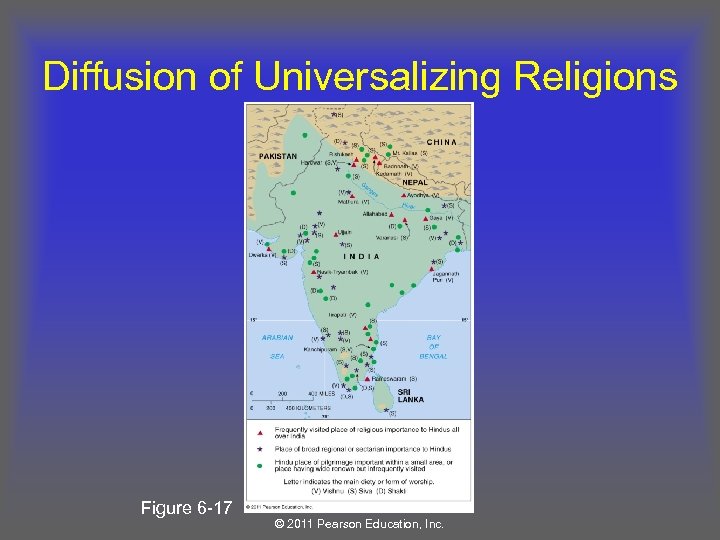 Diffusion of Universalizing Religions Figure 6 -17 © 2011 Pearson Education, Inc.
 Why Do Religions Have Different Distributions? • The calendar – In ethnic religions = celebration of the seasons • The Jewish calendar • The solstice – In universalizing religions = celebration of the founder’s life © 2011 Pearson Education, Inc.
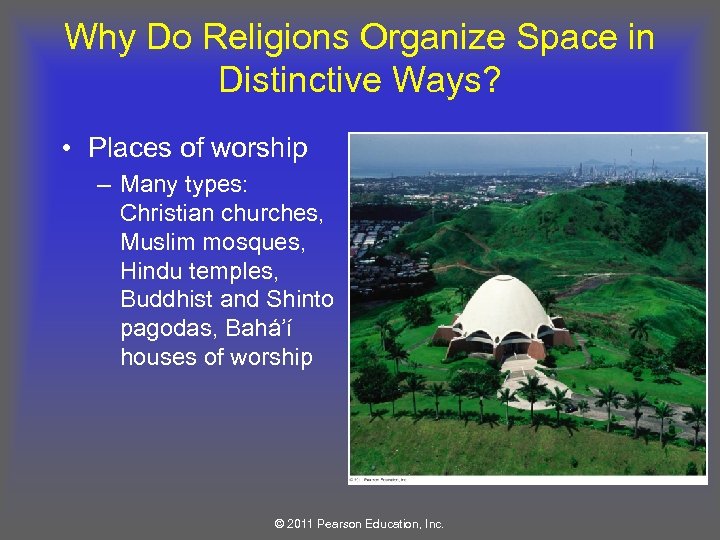 Why Do Religions Organize Space in Distinctive Ways? • Places of worship – Many types: Christian churches, Muslim mosques, Hindu temples, Buddhist and Shinto pagodas, Bahá’í houses of worship © 2011 Pearson Education, Inc.
 Why Do Religions Organize Space in Distinctive Ways? • Sacred space – Disposing of the dead • Burial • Other ways of disposing of the dead – Religious settlements – Religious place names © 2011 Pearson Education, Inc.
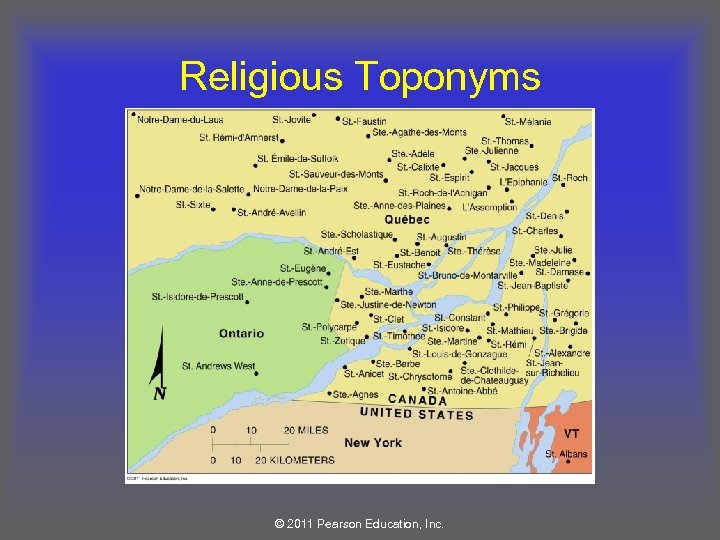 Religious Toponyms © 2011 Pearson Education, Inc.
 Why Do Religions Organize Space in Distinctive Ways? • Administration of space – Hierarchical religions • Roman Catholics – Locally autonomous religions • Islam • Protestant denominations © 2011 Pearson Education, Inc.
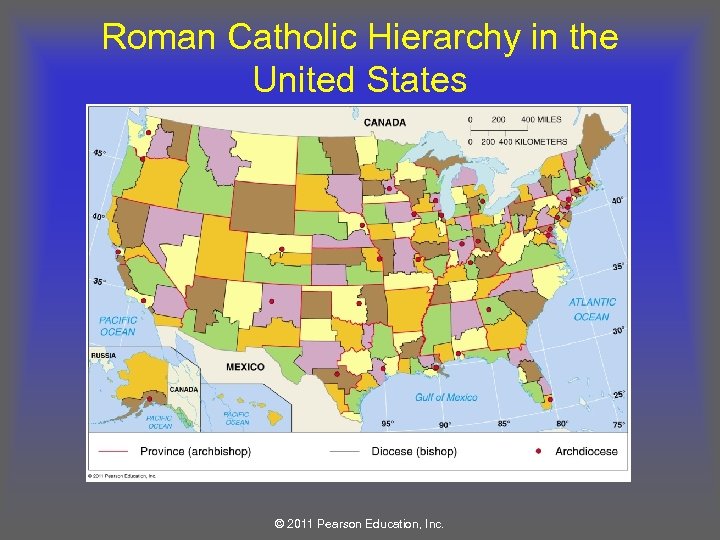 Roman Catholic Hierarchy in the United States © 2011 Pearson Education, Inc.
 Why Do Territorial Conflicts Arise? • Religions versus government policies – Religion versus social change • Taliban and Western values • Hinduism and social inequality – Caste system – Religion versus communism • Eastern Orthodoxy and Islam in the Soviet Union • Buddhism in Asia/China © 2011 Pearson Education, Inc.
 Why Do Territorial Conflicts Arise? • Religion versus religion – Fundamentalism – Religious wars in Ireland – Religious wars in the Middle East • Crusades (Christians in Muslim lands) • Jews and Muslims in Palestine © 2011 Pearson Education, Inc.
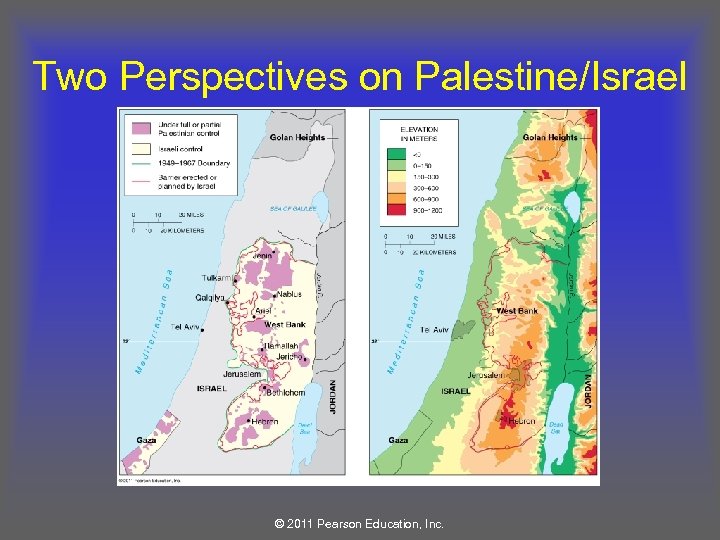 Two Perspectives on Palestine/Israel © 2011 Pearson Education, Inc.
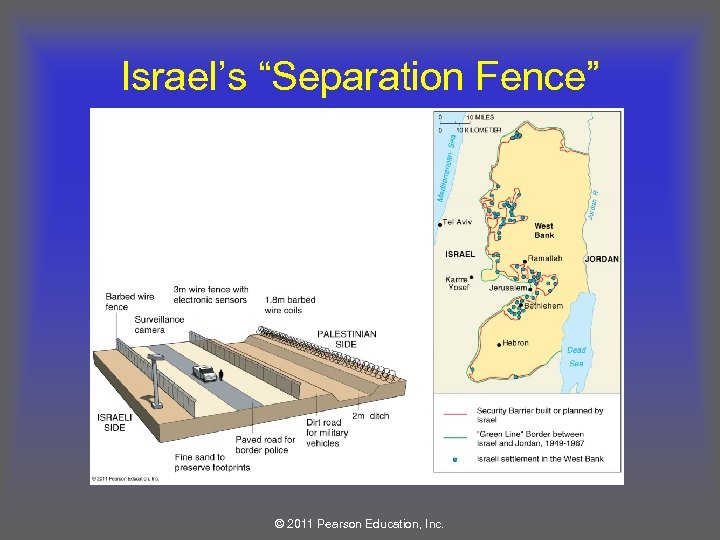 Israel’s “Separation Fence” © 2011 Pearson Education, Inc.
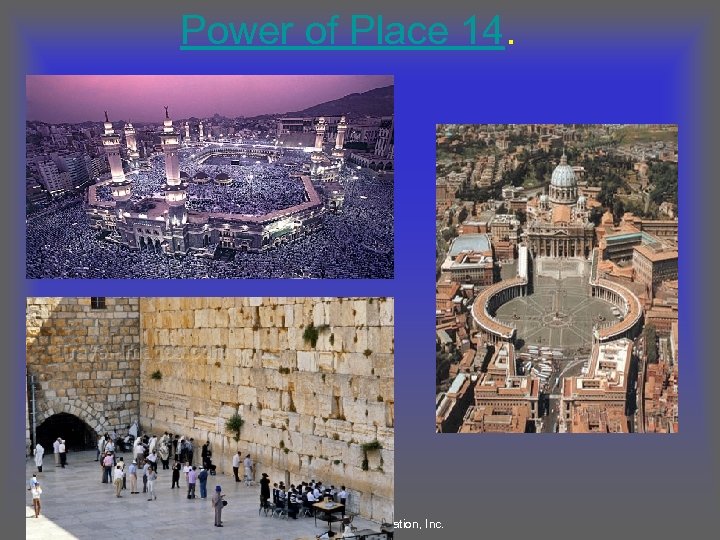 Power of Place 14. © 2011 Pearson Education, Inc.