 Скачать презентацию Chapter 5 Product l The Best Way to
9f5ae9f49722af4bd6936440ab9e743f.ppt
- Количество слайдов: 59



Chapter 5 Product l The Best Way to hold customers is to constantly figure out how to give them more or less.
The learning objectives l l l Product classification Product life-cycle strategies New-product Development Product-line decision Brands decisions
1. What is product? l Anything that can be offered to a market for attention, acquisition, use, or consumption that might satisfy a want or need.
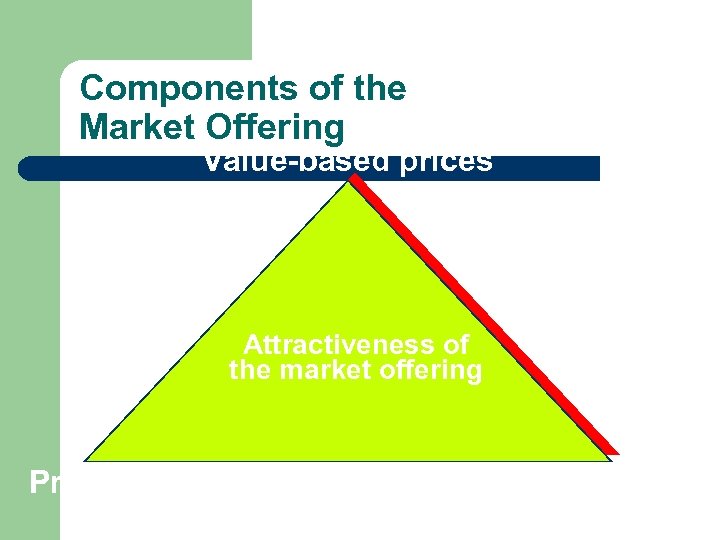
Components of the Market Offering Value-based prices Attractiveness of the market offering Product features and quality Services mix and quality
Service and Experience l Service—Any activity or benefit that one party can offer to another that is essentially intangible and does not result in the ownership of anything.
Discussion l l Disney starbucks
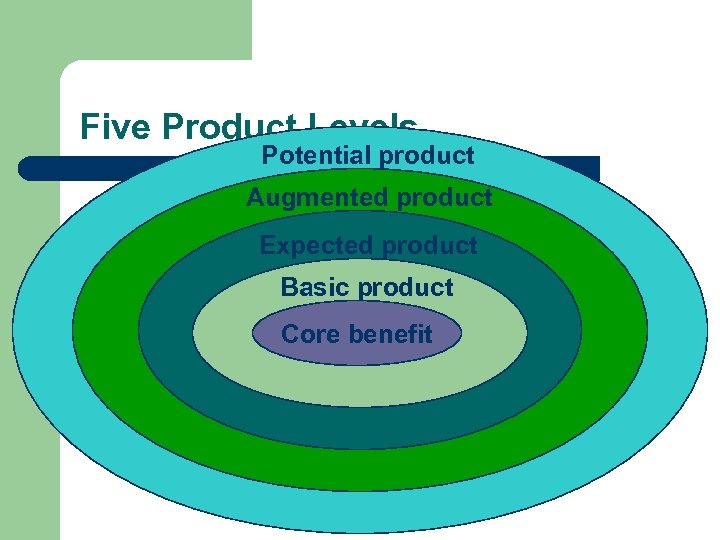
Five Product Levels Potential product Augmented product Expected product Basic product Core benefit
Levels of Product l l l Core product Actual product Augmented product
Core product l Core benefit or service
Actual product l l l Quality level Features Design Package Brand name
Augmented product l l l Installation After-sale service Warranty Delivery and credit Attached benefit
2. Product classifications l l l Consumer products Industrial product Organizations, persons, places, and ideas
Consumer product l l Convenience products Shopping products Specialty unsought
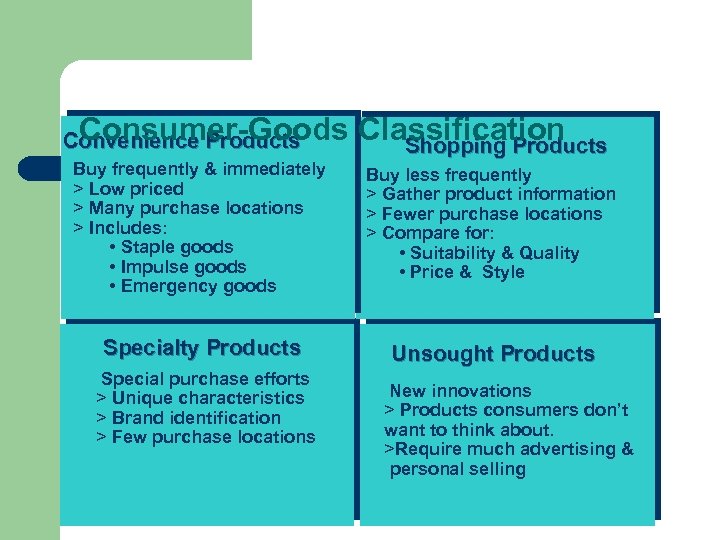
Consumer-Goods Convenience Products Classification Shopping Products Buy frequently & immediately > Low priced > Many purchase locations > Includes: • Staple goods • Impulse goods • Emergency goods Buy less frequently > Gather product information > Fewer purchase locations > Compare for: • Suitability & Quality • Price & Style Specialty Products Unsought Products Special purchase efforts > Unique characteristics > Brand identification > Few purchase locations New innovations > Products consumers don’t want to think about. >Require much advertising & personal selling
Industrial Product l l l Material and parts Capital items Supplies and services
3. Product Life Cycles (PLC) l The course of a product’s sale and profit over it lifetime. It involves five distinct stages: product development, introduction, growth, maturity, and decline.
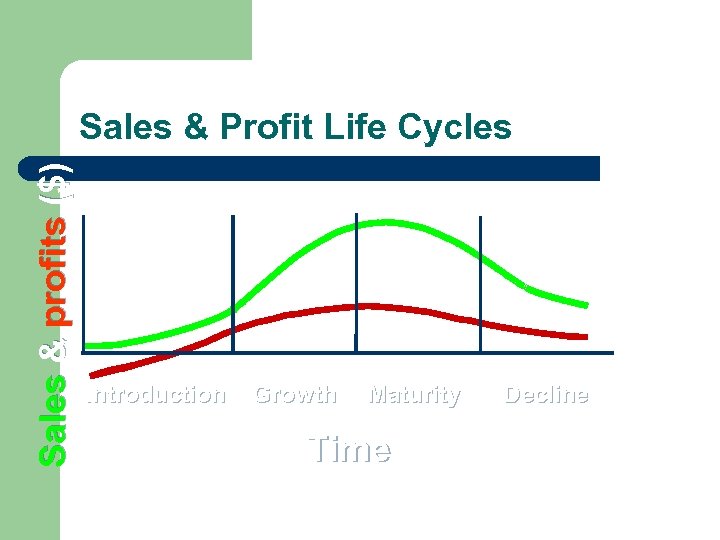
Sales & profits ($) Sales & Profit Life Cycles Introduction Growth Maturity Time Decline
Introduction stage l The product life-cycle stage in which the new product is first distributed and made available for purchase.
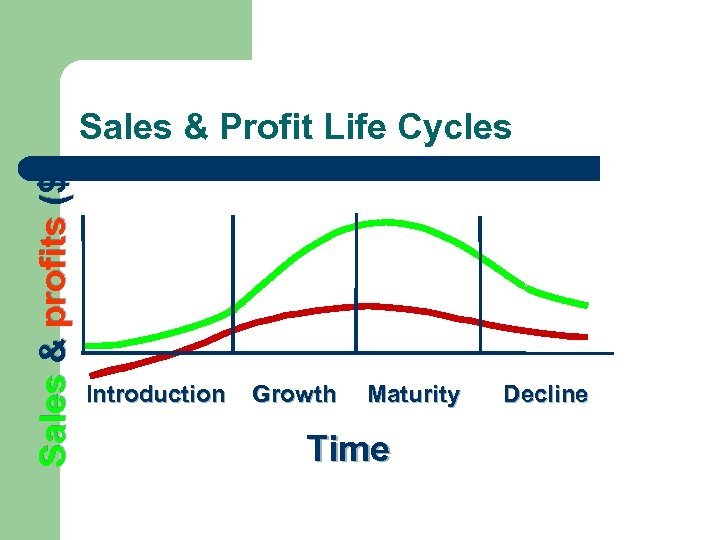
Sales & profits ($) Sales & Profit Life Cycles Introduction Growth Maturity Time Decline
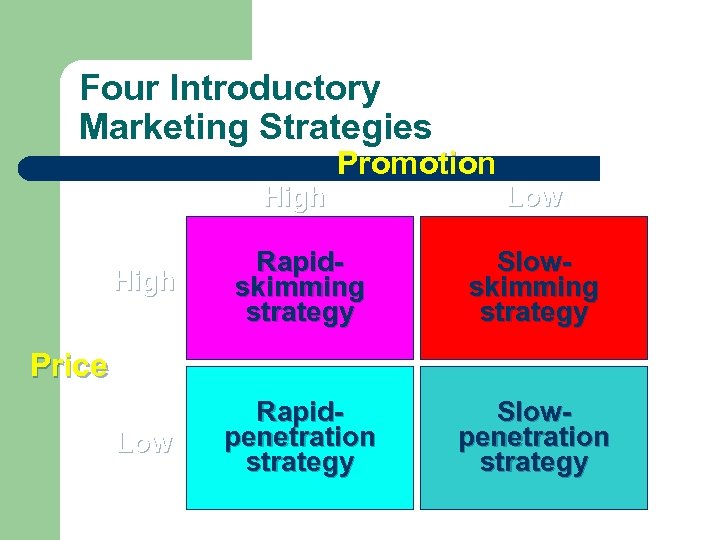
Four Introductory Marketing Strategies High Promotion Low High Rapidskimming strategy Slowskimming strategy Low Rapidpenetration strategy Slowpenetration strategy Price
Growth stage l The product life-cycle stage in which a product’s sales start climbing quickly.
Maturity stage l l The stage in the product life cycle in which sales growth slows or levels off. Modify the market, the product, and the marketing mix.
Decline Stage l The product life cycle stage in which a product’s sales decline
Discussion l l l Please list the marketing objectives and strategies for each stage. 2. what strategic option are open to the marketers of products in the mature stage of the product life cycle? 3. which product life-cycle stage, if any, is the most important? which stage is riskiest? which stage appears to hold the greatest profit potential? Be certain to explain the thinking behind each of your answer.
4. The international PLC
5. new-product development l l What is new product? Major stages in new product development
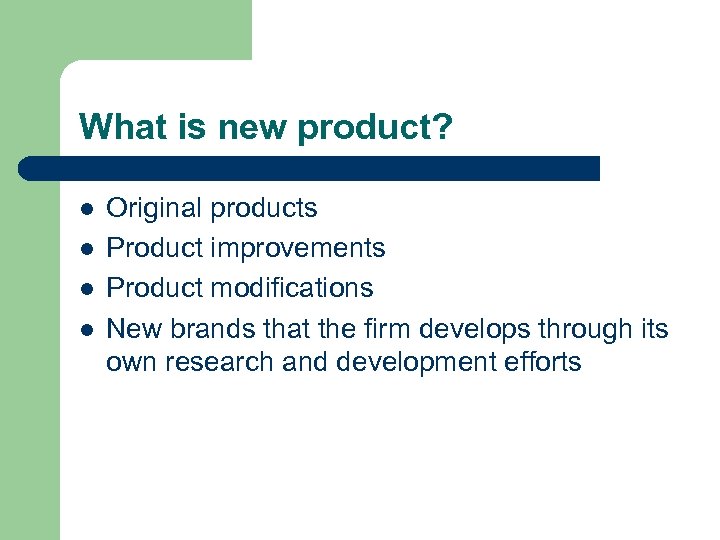
What is new product? l l Original products Product improvements Product modifications New brands that the firm develops through its own research and development efforts
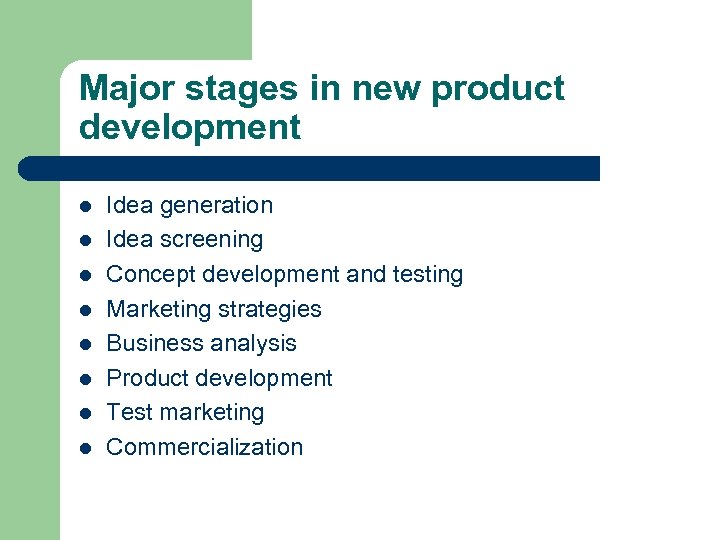
Major stages in new product development l l l l Idea generation Idea screening Concept development and testing Marketing strategies Business analysis Product development Test marketing Commercialization
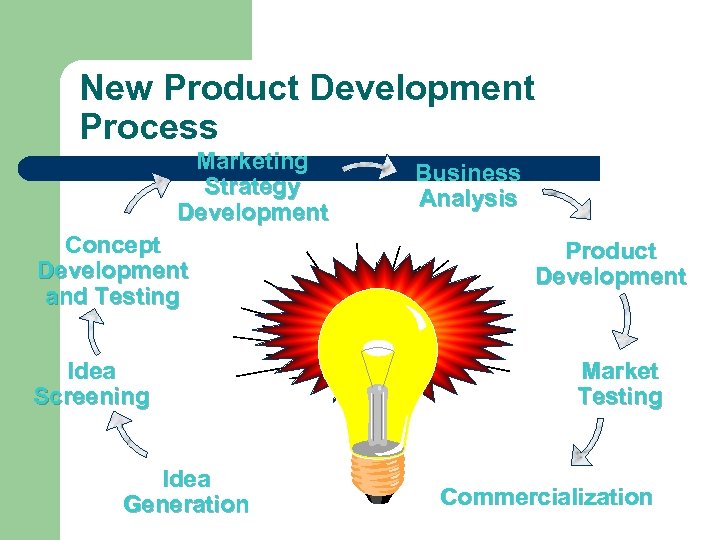
New Product Development Process Marketing Strategy Development Concept Development and Testing Idea Screening Idea Generation Business Analysis Product Development Market Testing Commercialization
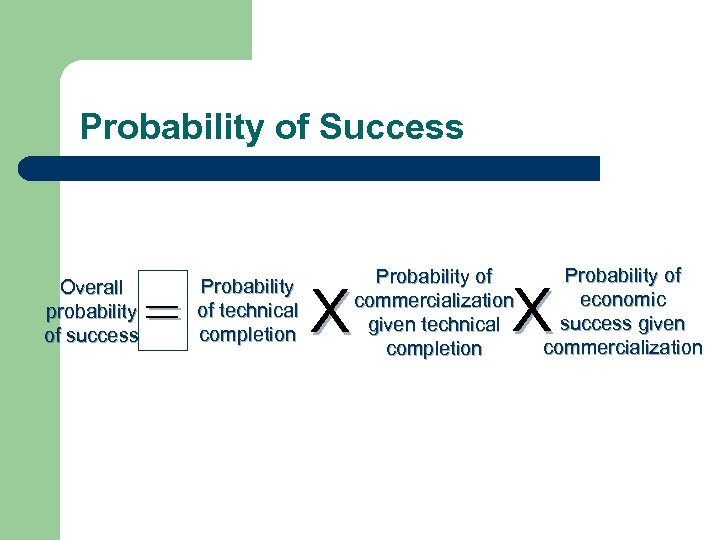
Probability of Success Overall probability of success = Probability of technical completion X Probability of commercialization given technical completion Probability of economic success given commercialization X
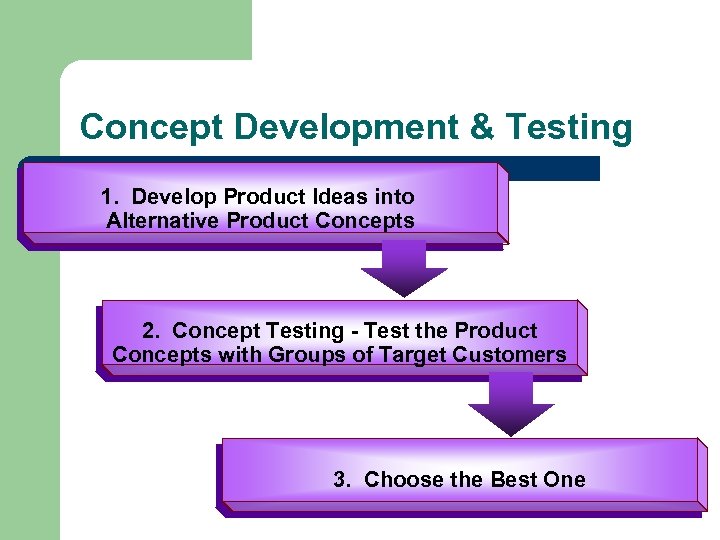
Concept Development & Testing 1. Develop Product Ideas into Alternative Product Concepts 2. Concept Testing - Test the Product Concepts with Groups of Target Customers 3. Choose the Best One
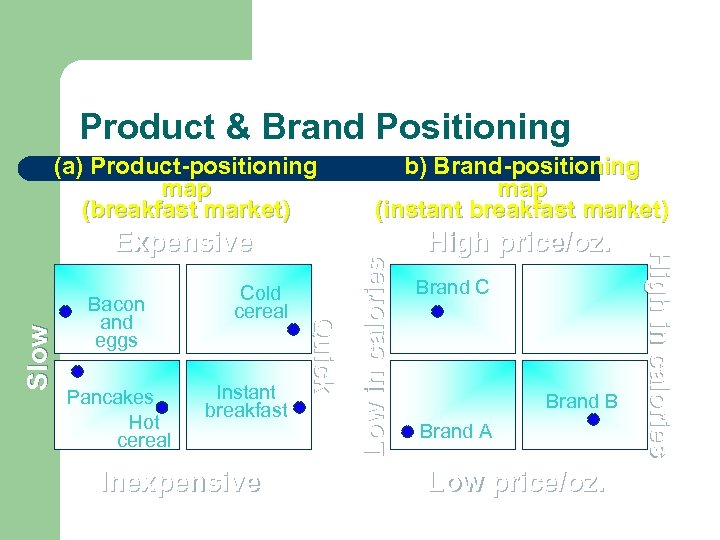
Product & Brand Positioning High price/oz. Pancakes Hot cereal Instant breakfast Inexpensive Quick Bacon and eggs Cold cereal Low in calories Expensive Slow b) Brand-positioning map (instant breakfast market) Brand C Brand B Brand A Low price/oz. High in calories (a) Product-positioning map (breakfast market)
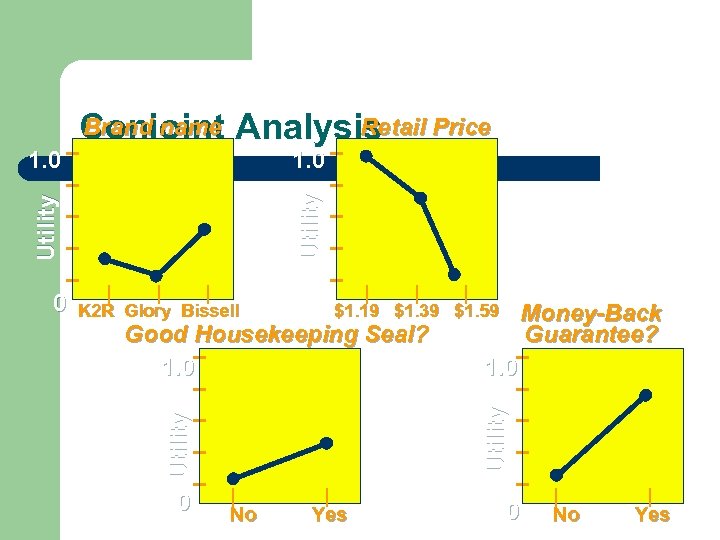
Brand name Retail Conjoint Analysis Price Utility 1. 0 -----| | | 0 $1. 19 $1. 39 $1. 59 Money-Back Glory Bissell Good Housekeeping Seal? Guarantee? 1. 0 -----| | 0 0 No No Yes Utility 1. 0 -----| 0 K 2 R
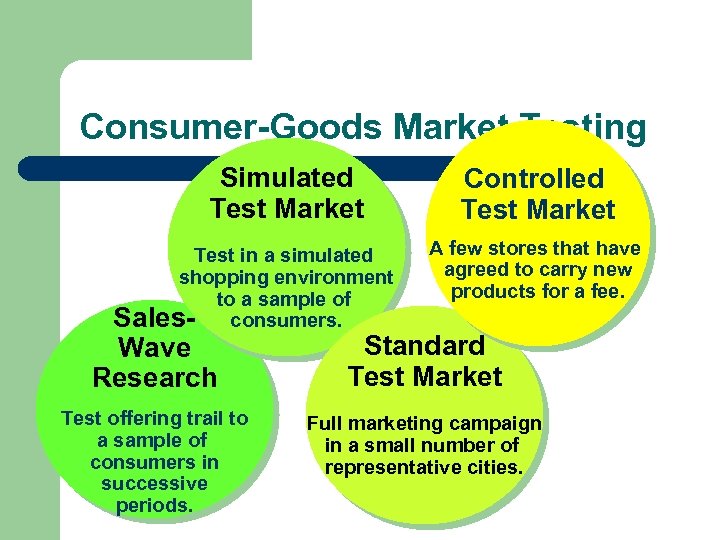
Consumer-Goods Market Testing Simulated Test Market Test in a simulated shopping environment to a sample of Sales- consumers. Controlled Test Market A few stores that have agreed to carry new products for a fee. Wave Research Standard Test Market Test offering trail to a sample of consumers in successive periods. Full marketing campaign in a small number of representative cities.
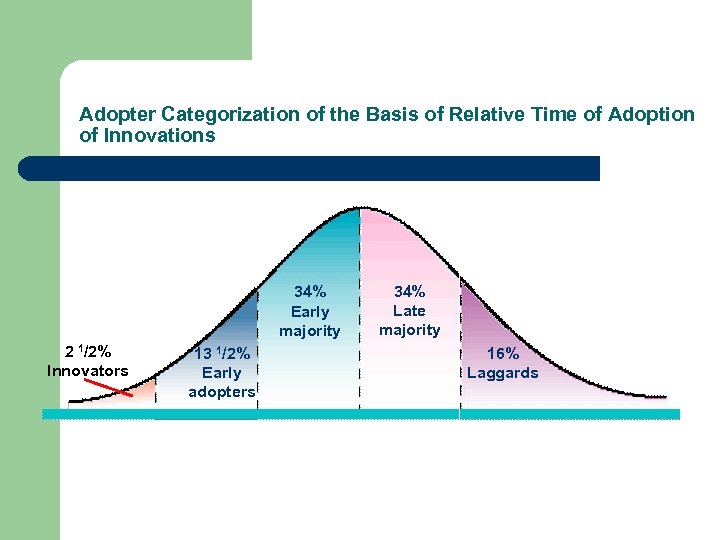
Adopter Categorization of the Basis of Relative Time of Adoption of Innovations 34% Early majority 2 1/2% Innovators 13 1/2% Early adopters 34% Late majority 16% Laggards Time of adoption innovations
6. product-line decision l l l Product mix Product-line analysis Product –line length
Product mix(assortment) l l The set of all products and items that a particular seller offers for sale. A company’s product mix has a certain width, length, depth, and consistency.
l l Width: how many different product lines. Length: the total number of items. Depth: how many variants are offered of each product in the line. Consistency: how closely related the various product lines are in end use, production requirement, distribution channels, or some other way.
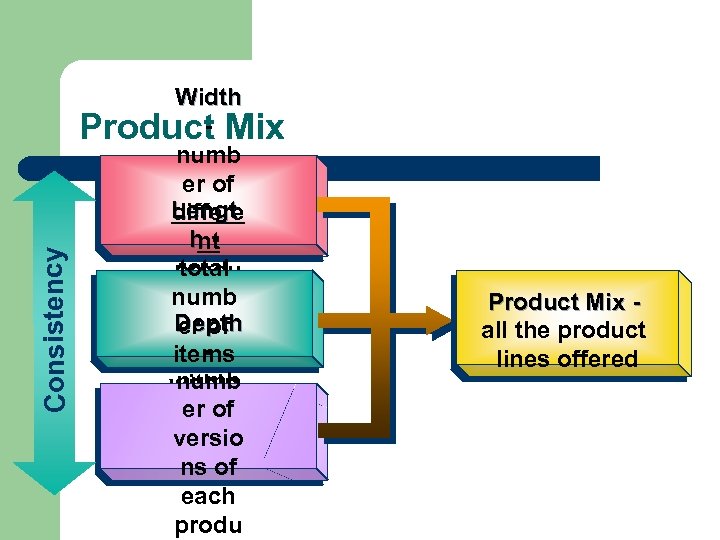
Consistency Width Product Mix numb er of Lengt differe hnt total produ numb ct Depth er of lines items numb within er of the versio lines ns of each produ Product Mix all the product lines offered
Product-line analysis l l Sales and profit Market profile
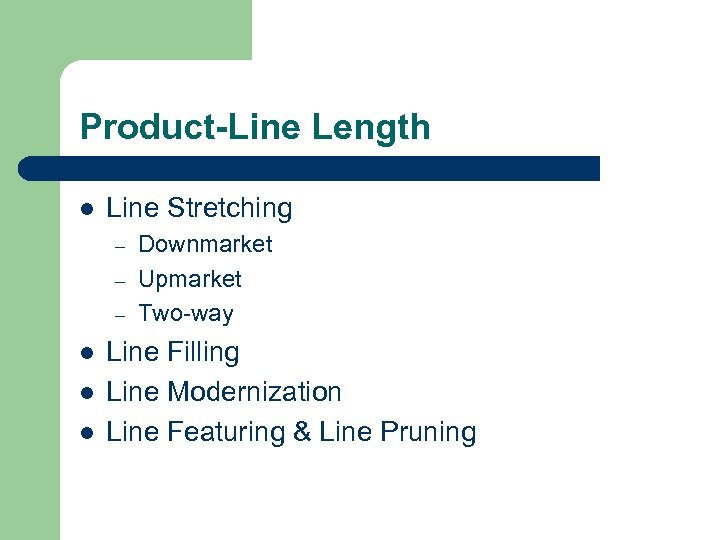
Product-Line Length l Line Stretching – – – l l l Downmarket Upmarket Two-way Line Filling Line Modernization Line Featuring & Line Pruning
Line stretching l l l Downmarket stretch Upmarket stretch Two-way stretch
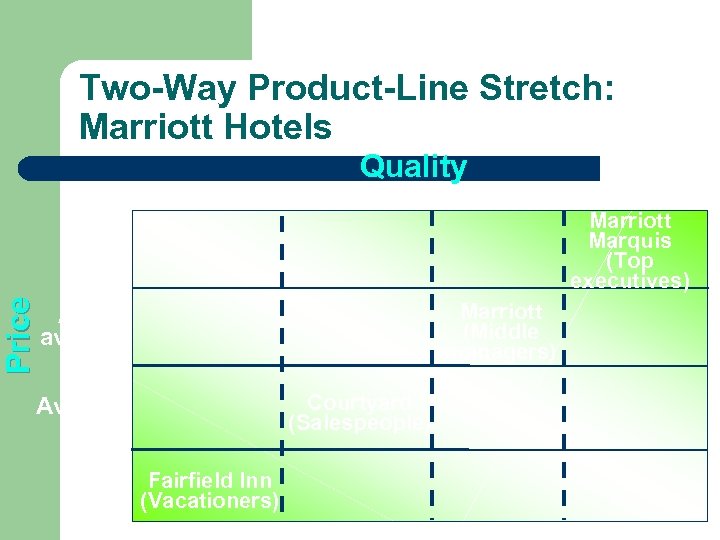
Two-Way Product-Line Stretch: Marriott Hotels Economy Quality Standard Good Marriott Marquis (Top executives) Price High Marriott (Middle managers) Above average Average Fairfield Inn Low (Vacationers) Superior Courtyard (Salespeople)
Line filling l Quality—price analysis
6. Brand Decision l l What is brand? Band decision
What is brand? l Brand is a name, term, sign, symbol, or design, or a combination of them, intended to identify the goods or services of one seller or group of sellers and differentiate them from those of competitors.
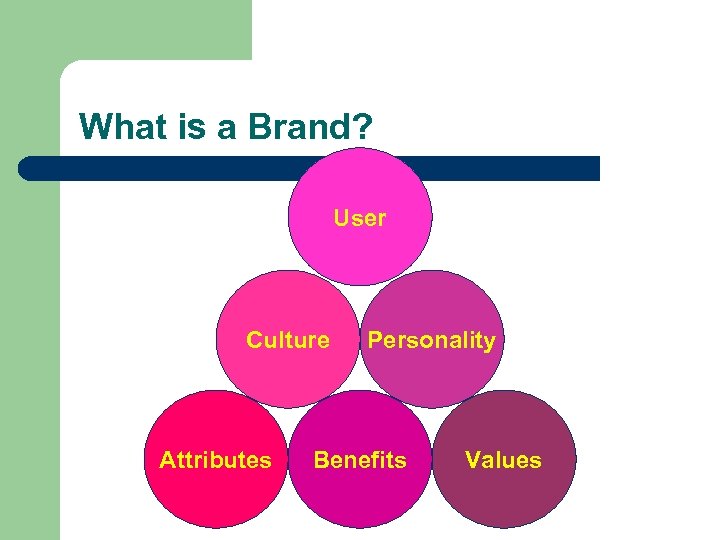
What is a Brand? User Culture Attributes Personality Benefits Values
discussion l l What is difference between product and brand? How to define the line cycle of a brand?
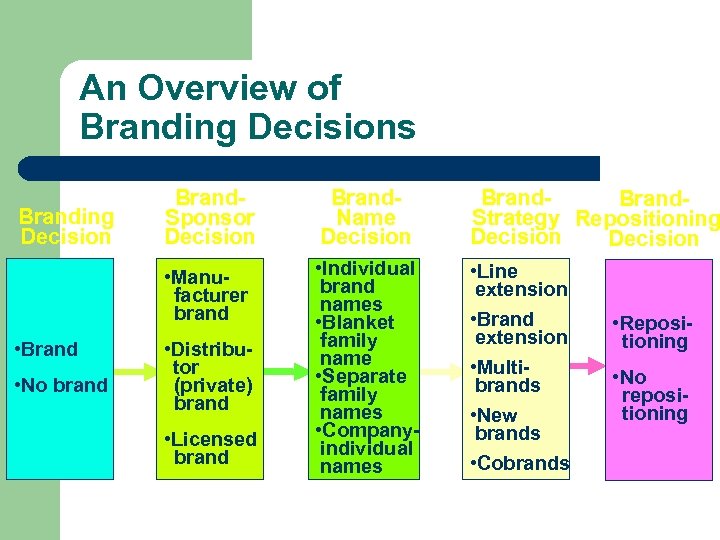
An Overview of Branding Decisions • Brand • No brand Brand. Name Decision Brand. Strategy Repositioning Decision • Manufacturer brand Branding Decision Brand. Sponsor Decision • Individual brand names • Blanket family name • Separate family names • Companyindividual names • Line extension • Brand extension • Multibrands • New brands • Cobrands • Distributor (private) brand • Licensed brand • Repositioning • No repositioning
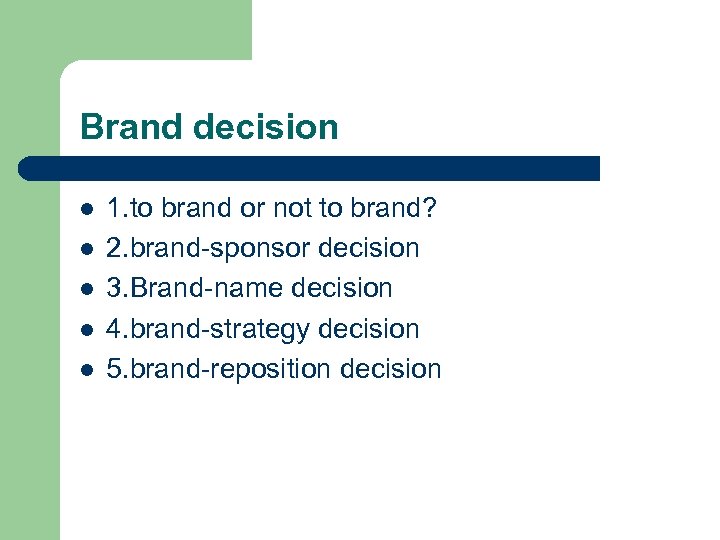
Brand decision l l l 1. to brand or not to brand? 2. brand-sponsor decision 3. Brand-name decision 4. brand-strategy decision 5. brand-reposition decision
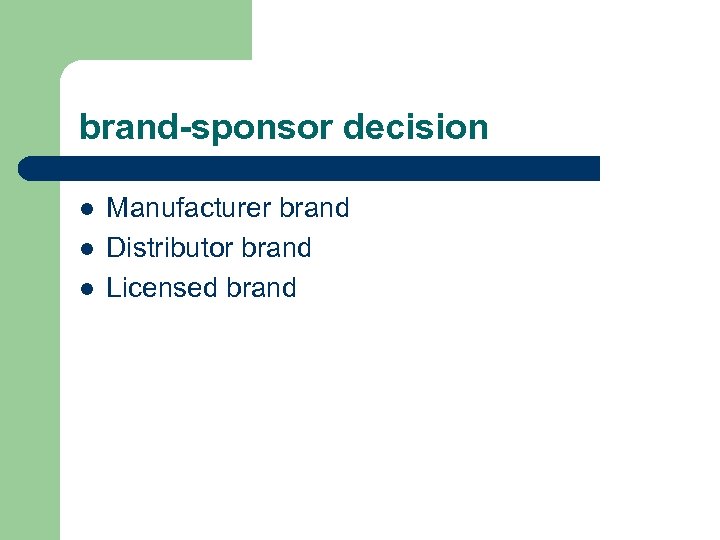
brand-sponsor decision l l l Manufacturer brand Distributor brand Licensed brand
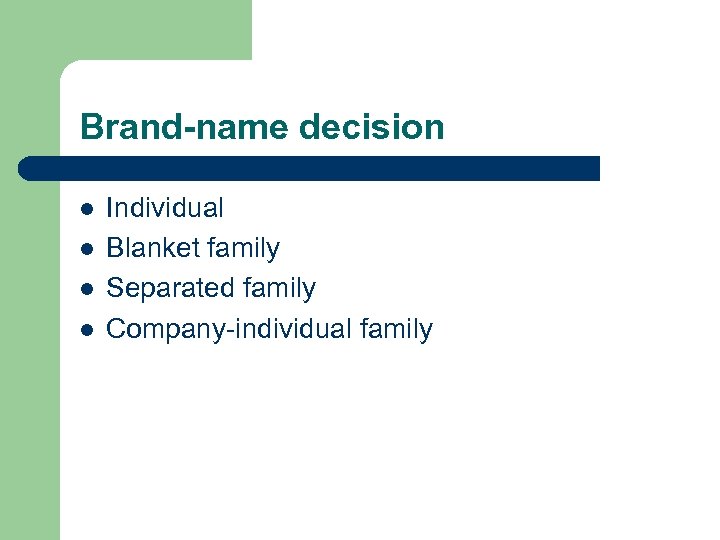
Brand-name decision l l Individual Blanket family Separated family Company-individual family
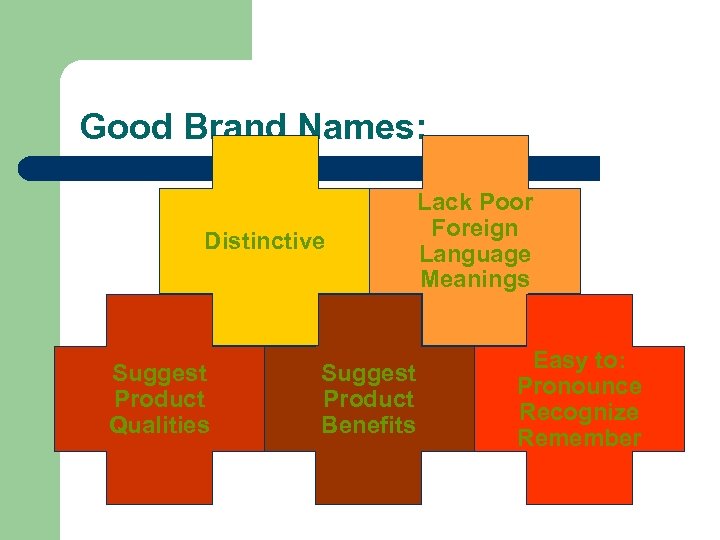
Good Brand Names: Distinctive Suggest Product Qualities Suggest Product Benefits Lack Poor Foreign Language Meanings Easy to: Pronounce Recognize Remember
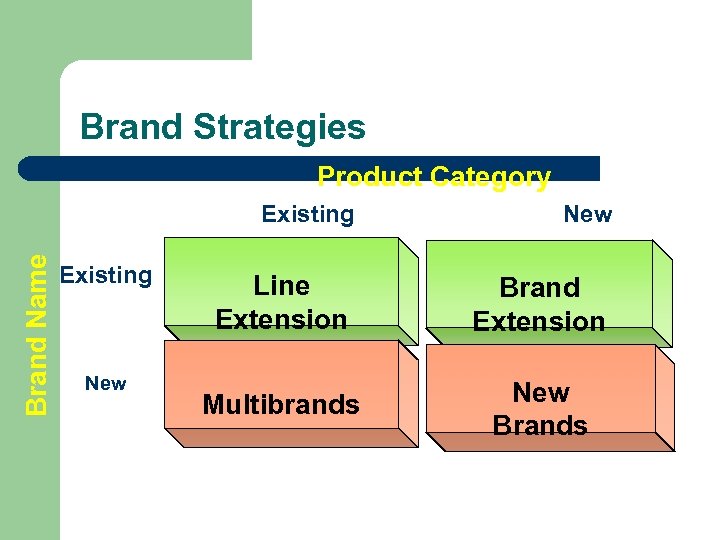
Brand Strategies Product Category Brand Name Existing New Line Extension Brand Extension Multibrands New Brands
brand-strategy decision l l Line extensions Brand extensions New brands cobrands
brand-reposition decision l l Reposition No reposition
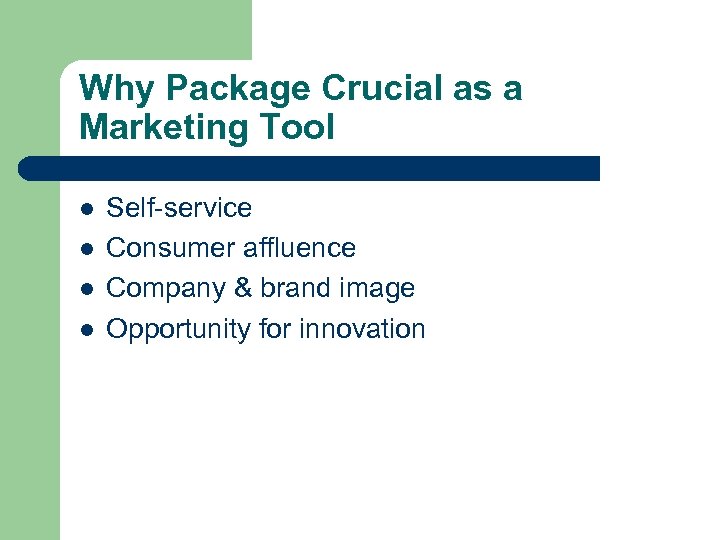
Why Package Crucial as a Marketing Tool l l Self-service Consumer affluence Company & brand image Opportunity for innovation
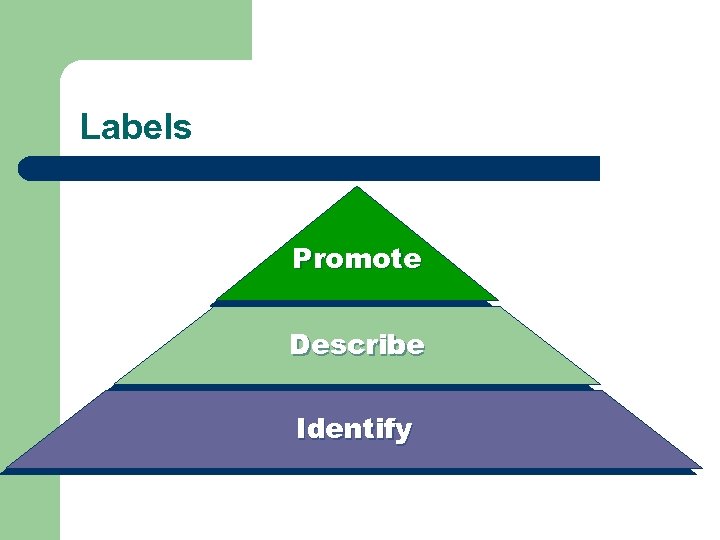
Labels Promote Describe Identify
Assignment l Case study : P 425
Скачать презентацию Chapter 5 Product l The Best Way to
9f5ae9f49722af4bd6936440ab9e743f.ppt