 Скачать презентацию Chapter 5 Perceiving Objects and Scenes The
c28b1c0ec1454ab19a05bdf5b44ff9d1.ppt
- Количество слайдов: 80



Chapter 5: Perceiving Objects and Scenes
The Puzzle of Object and Scene Perception • The stimulus on the receptors is ambiguous. – Inverse projection problem: An image on the retina can be caused by an infinite number of objects. • Objects can be hidden or blurred. – Occlusions are common in the environment.
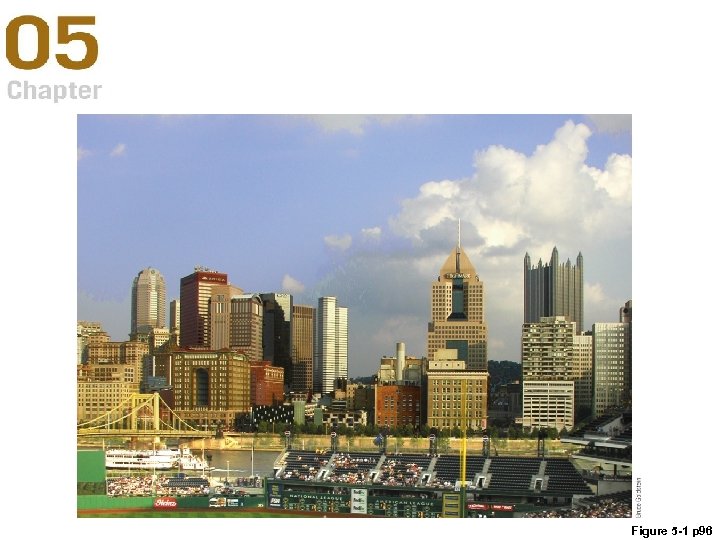
Figure 5 -1 p 96
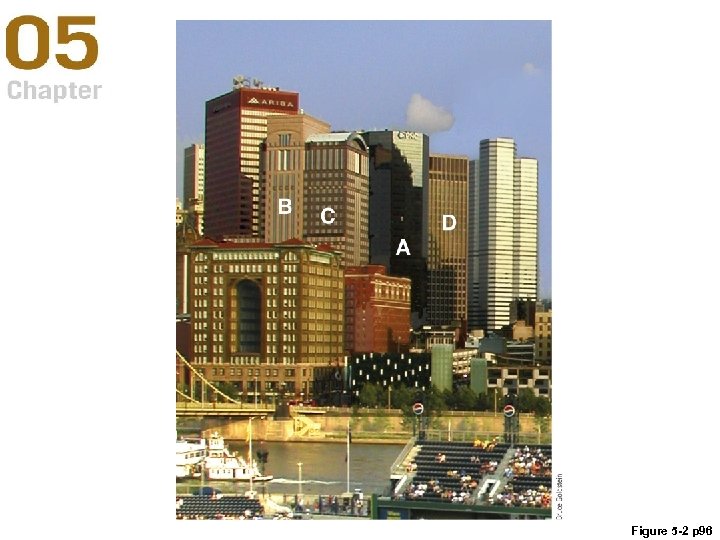
Figure 5 -2 p 96
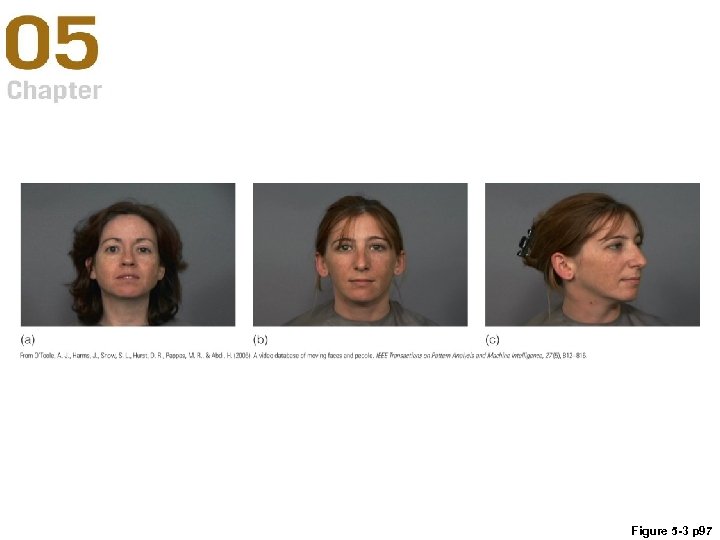
Figure 5 -3 p 97
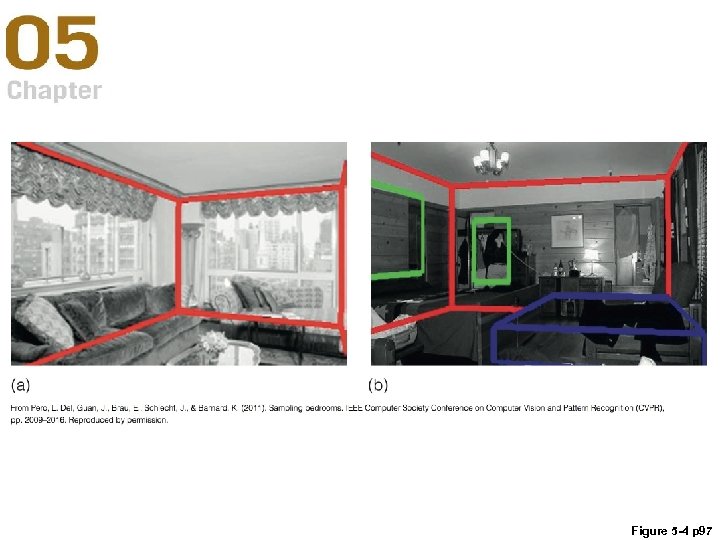
Figure 5 -4 p 97
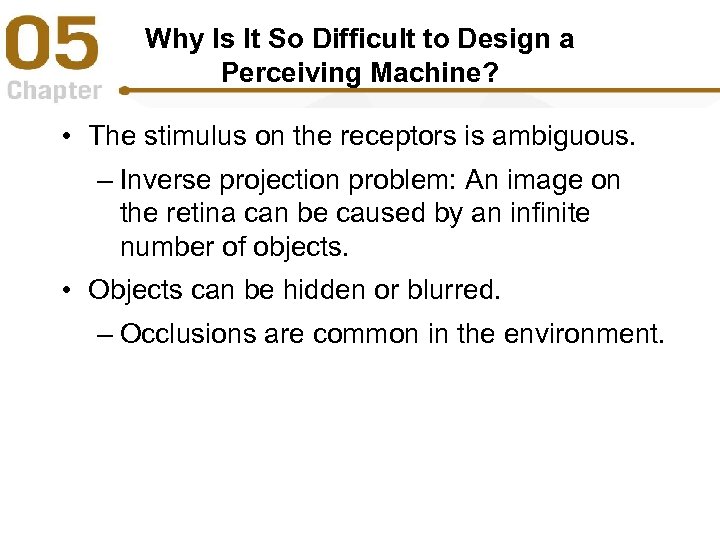
Why Is It So Difficult to Design a Perceiving Machine? • The stimulus on the receptors is ambiguous. – Inverse projection problem: An image on the retina can be caused by an infinite number of objects. • Objects can be hidden or blurred. – Occlusions are common in the environment.
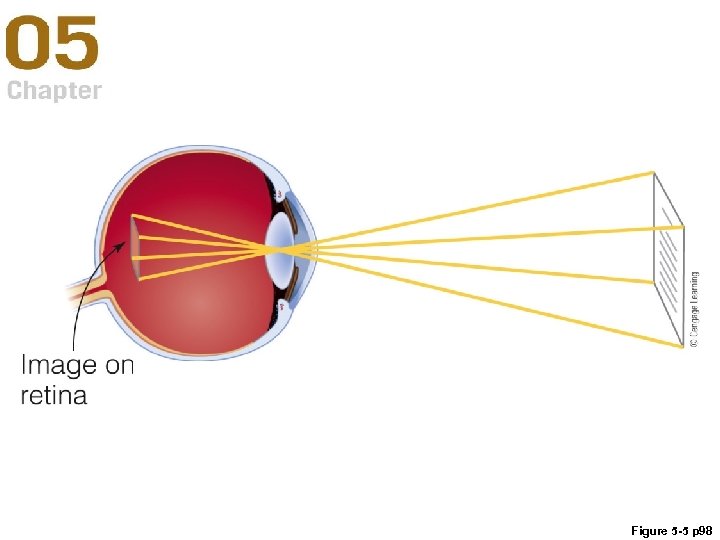
Figure 5 -5 p 98
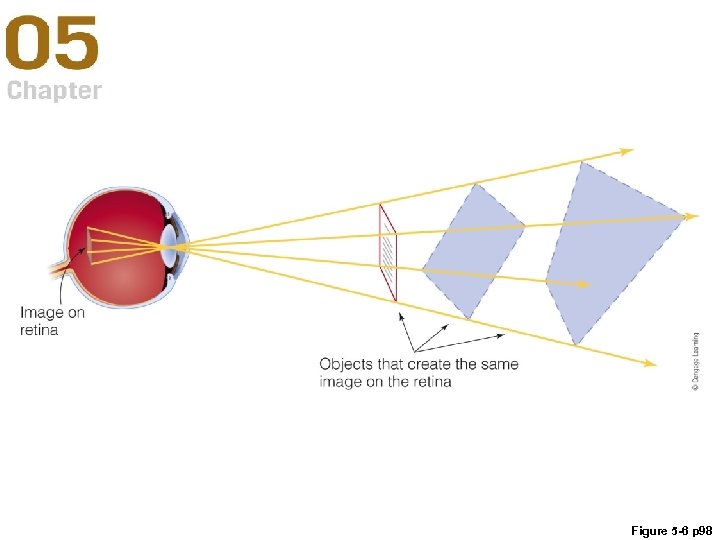
Figure 5 -6 p 98
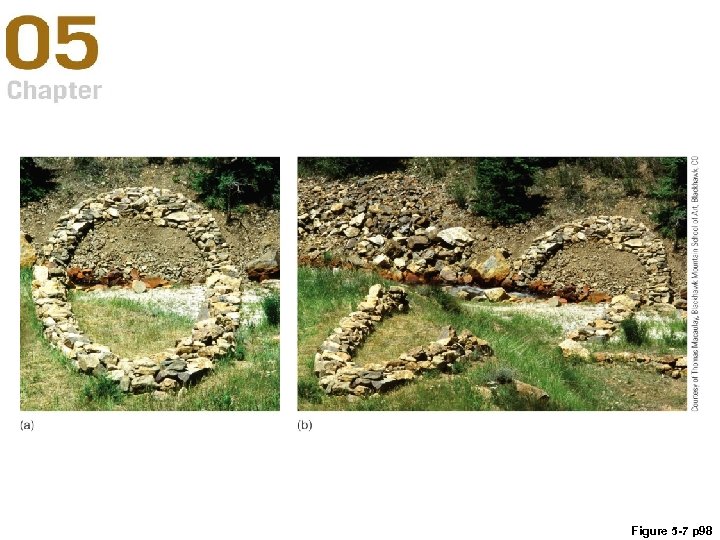
Figure 5 -7 p 98
Why Is It So Difficult to Design a Perceiving Machine? - continued • Objects can be hidden or blurred
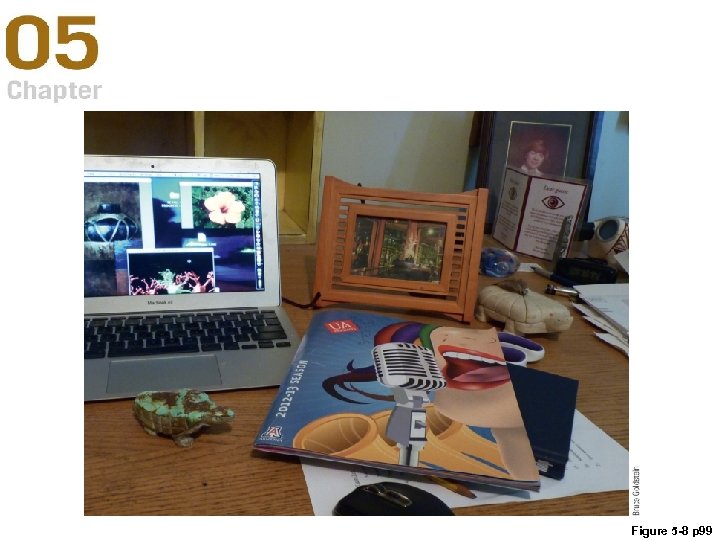
Figure 5 -8 p 99
Figure 5 -9 p 99
Why Is It So Difficult to Design a Perceiving Machine? - continued • Objects look different from different viewpoints – Viewpoint invariance: the ability to recognize an object regardless of the viewpoint – This is a difficult task for computers to perform
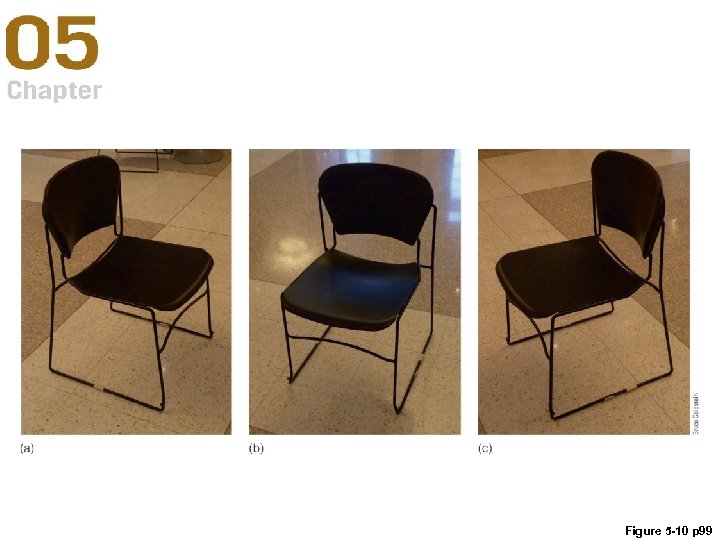
Figure 5 -10 p 99
Perceptual Organization • Approach established by Wundt (late 1800 s) – States that perceptions are created by combining elements called sensations – Structuralism could not explain apparent movement – Stimulated the founding of Gestalt psychology in the 1920 s by Wertheimer, Koffka, and Kohler – The whole differs from the sum of its parts. • Perception is not built up from sensations, but is a result of perceptual organization.
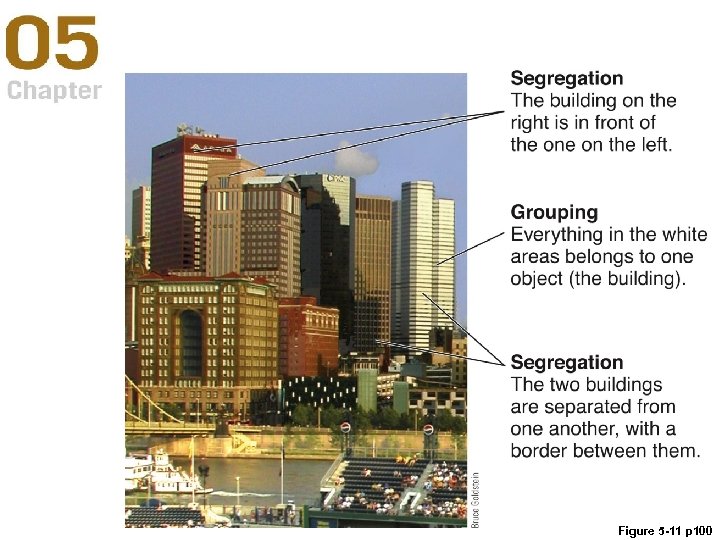
Figure 5 -11 p 100
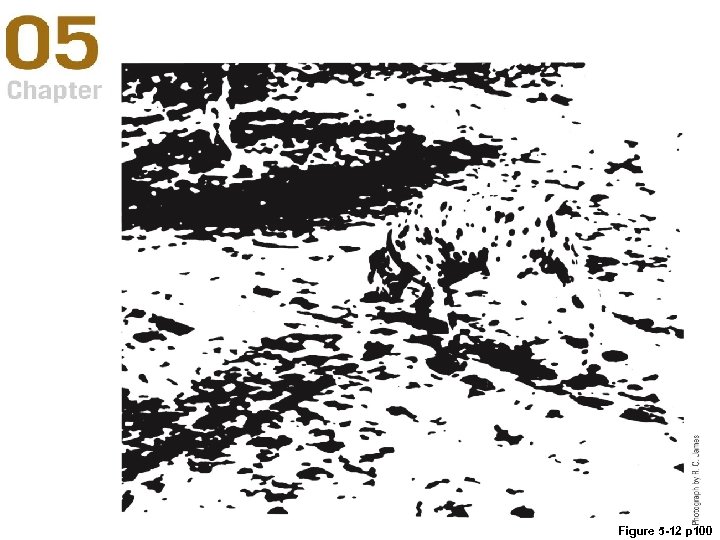
Figure 5 -12 p 100
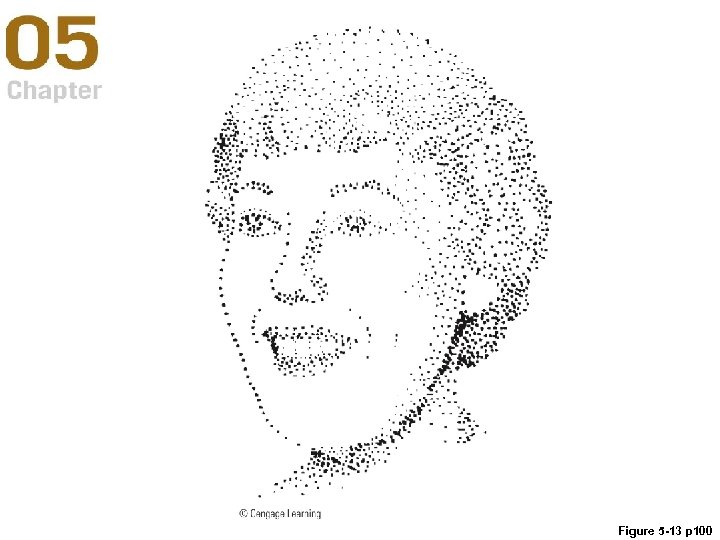
Figure 5 -13 p 100
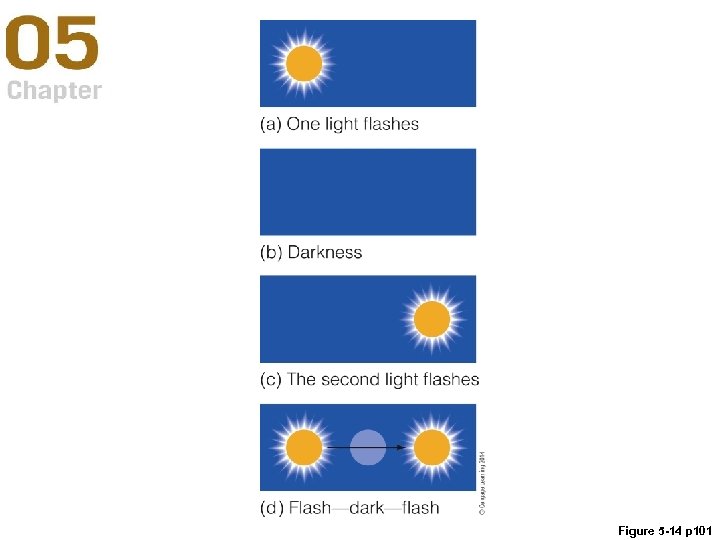
Figure 5 -14 p 101

Figure 5 -15 p 101
Perceptual Organization - continued • Illusory contours- contours that appear real but have physical edge
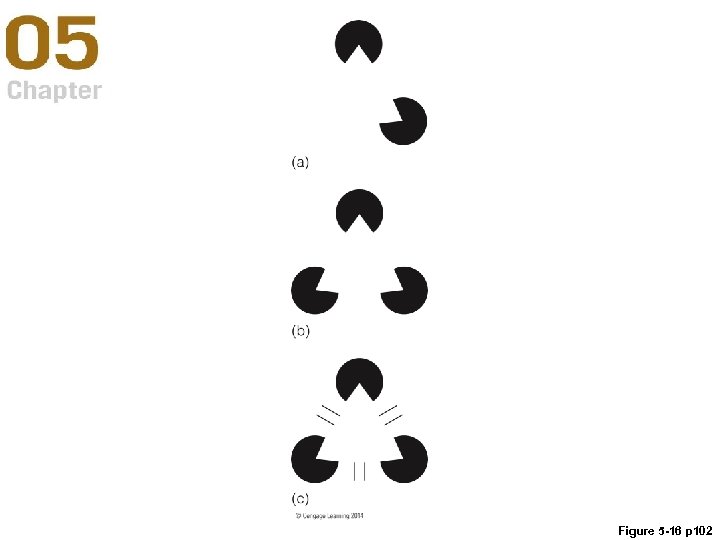
Figure 5 -16 p 102
Gestalt Organizing Principles • Principles of perceptual organization. – Good continuation - connected points resulting in straight or smooth curves belong together • Lines are seen as following the smoothest path – Pragnanz - every stimulus is seen as simply as possible – Similarity - similar things are grouped together
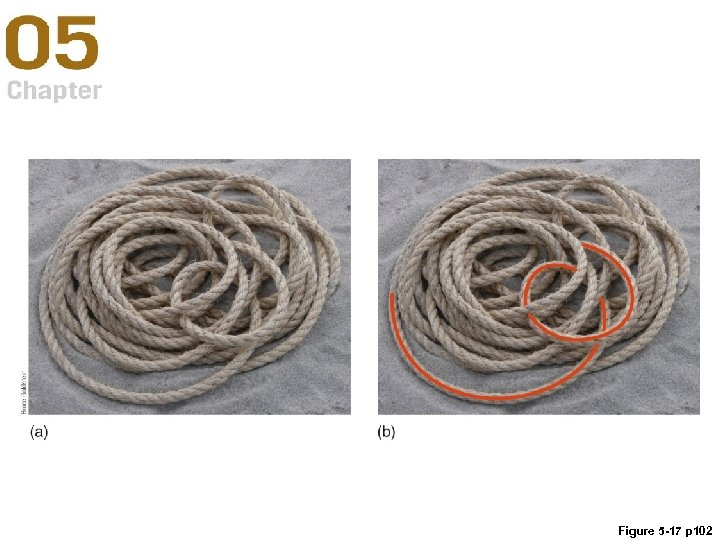
Figure 5 -17 p 102
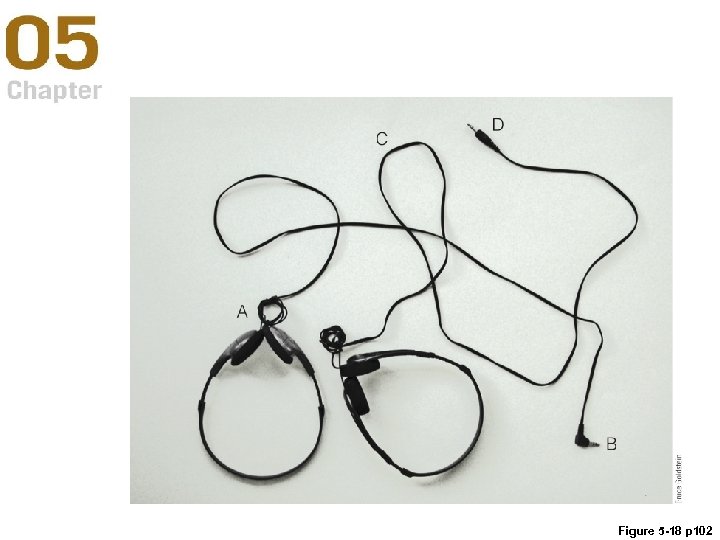
Figure 5 -18 p 102
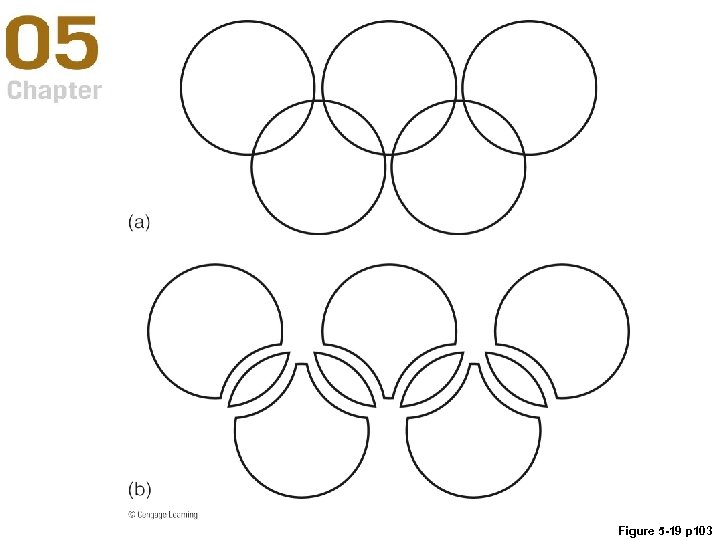
Figure 5 -19 p 103
Gestalt Organizing Principles - continued • Proximity - things that are near to each other are grouped together • Common fate - things moving in same direction are grouped together • Common region - elements in the same region tend to be grouped together • Uniform connectedness - connected region of visual properties are perceived as single unit

Figure 5 -21 p 103
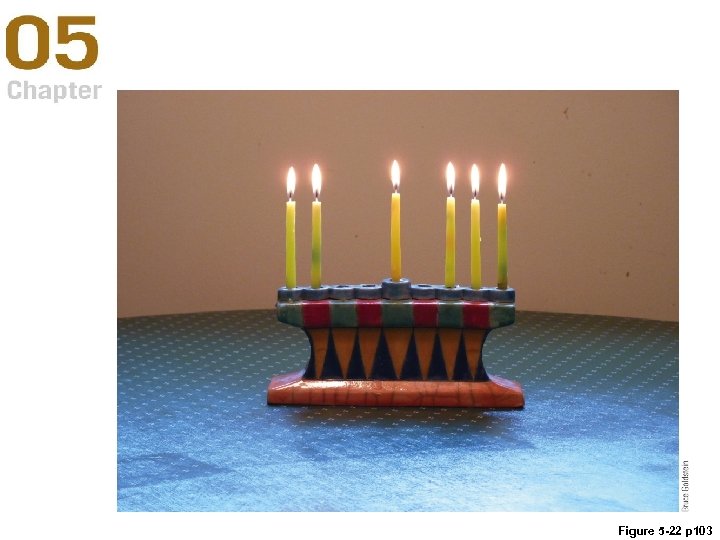
Figure 5 -22 p 103
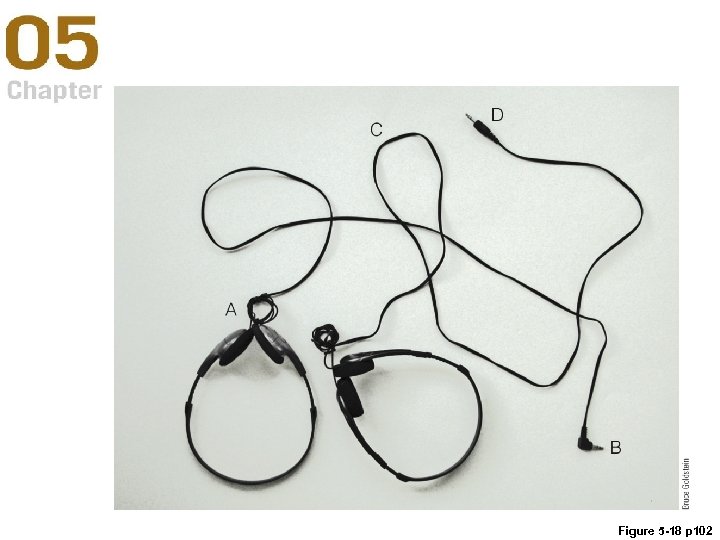
Figure 5 -18 p 102
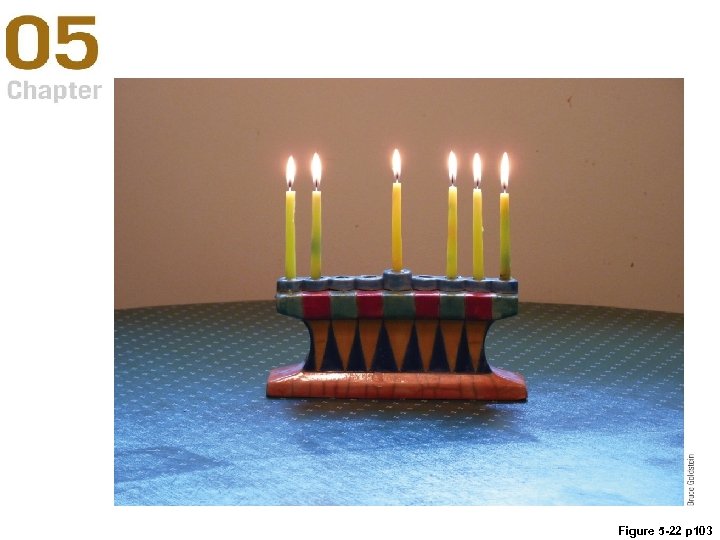
Figure 5 -22 p 103
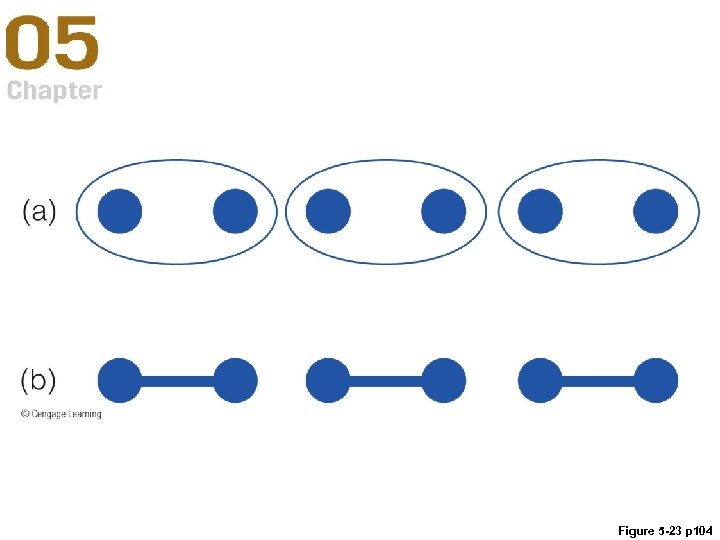
Figure 5 -23 p 104
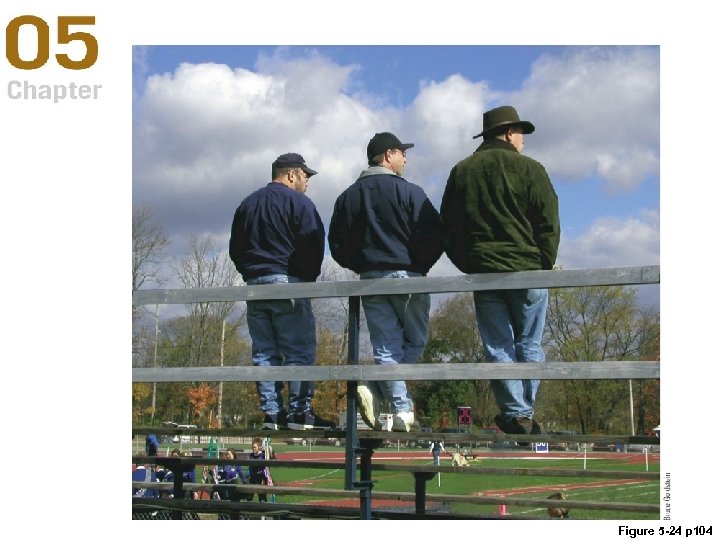
Figure 5 -24 p 104
Perceptual Segregation • Figure-ground segregation - determining what part of environment is the figure so that it “stands out” from the background – Properties of figure and ground • The figure is more “thinglike” and more memorable than ground. • The figure is seen in front of the ground. • The ground is more uniform and extends behind figure. • The contour separating figure from ground belongs to the figure (border ownership).
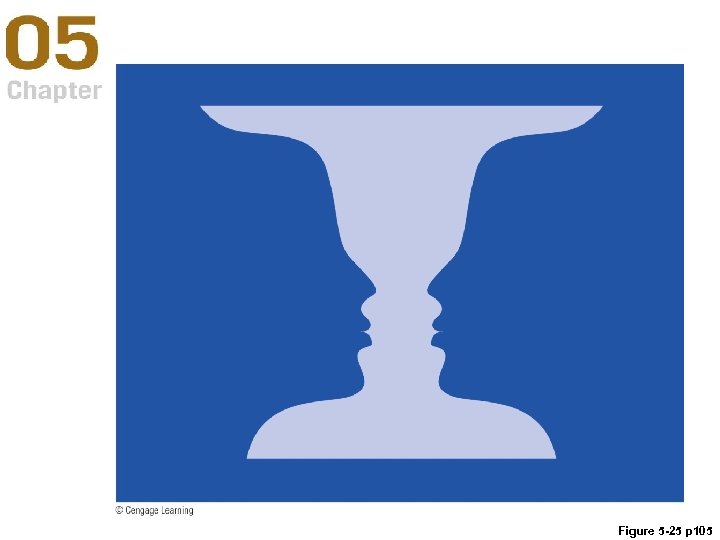
Figure 5 -25 p 105
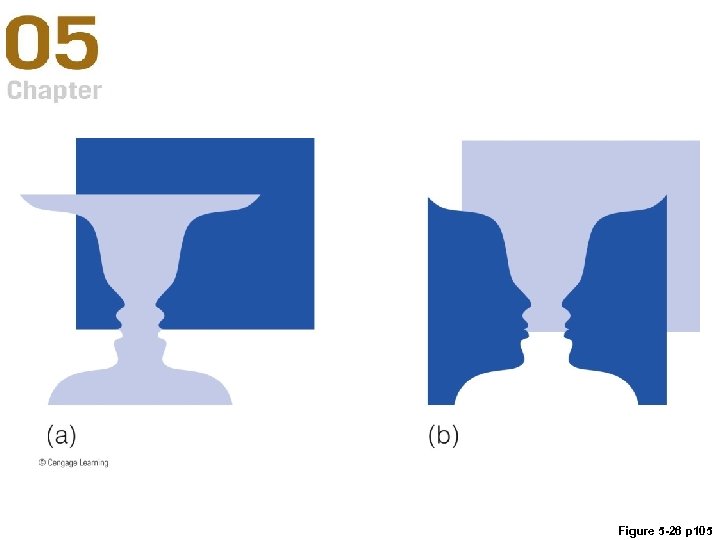
Figure 5 -26 p 105
Perceptual Segregation - continued • Factors that determine which area is figure: – Elements located in the lower part of displays – Convex side of borders
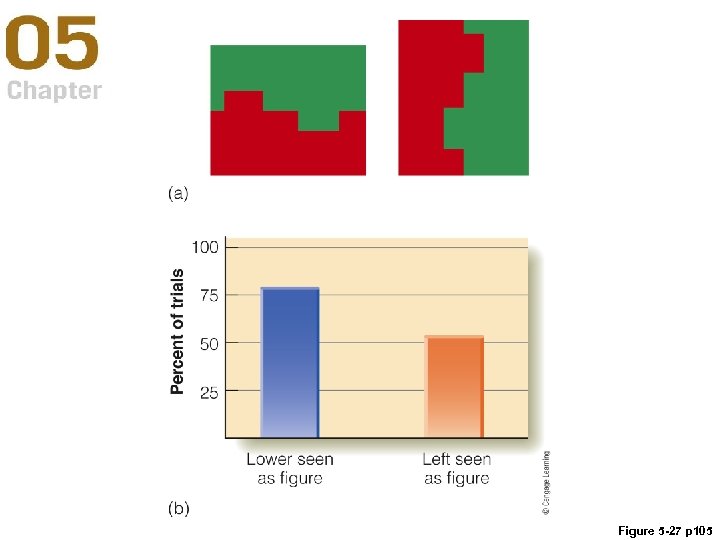
Figure 5 -27 p 105
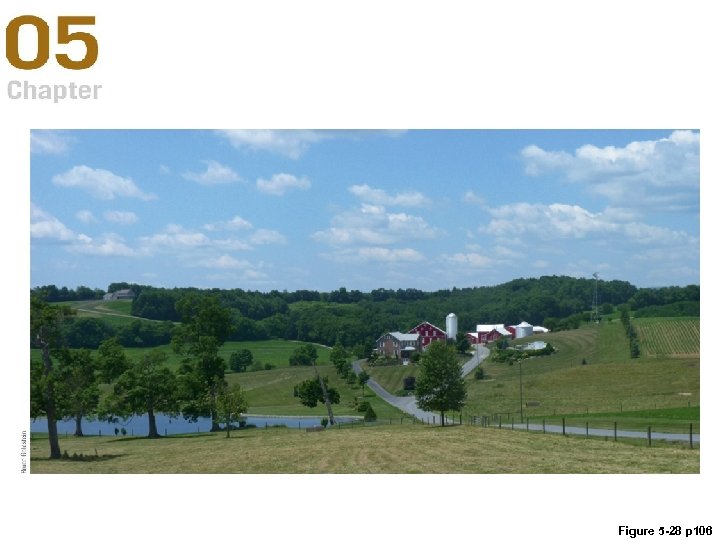
Figure 5 -28 p 106
Subjective Factors That Determine Which are is Figure • Gestalt psychologists believed that experience and meaning play a minor role in perceptual organization. • Gibson Experiment showed that figure-ground can affected by meaningfulness of a stimuli.
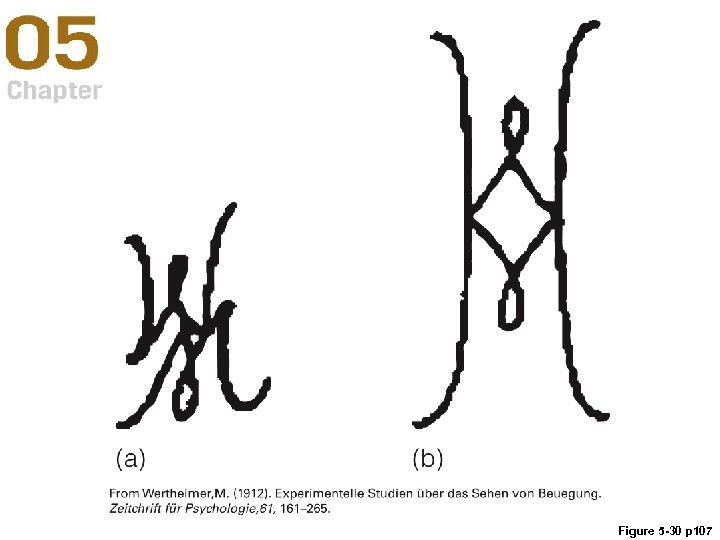
Figure 5 -30 p 107
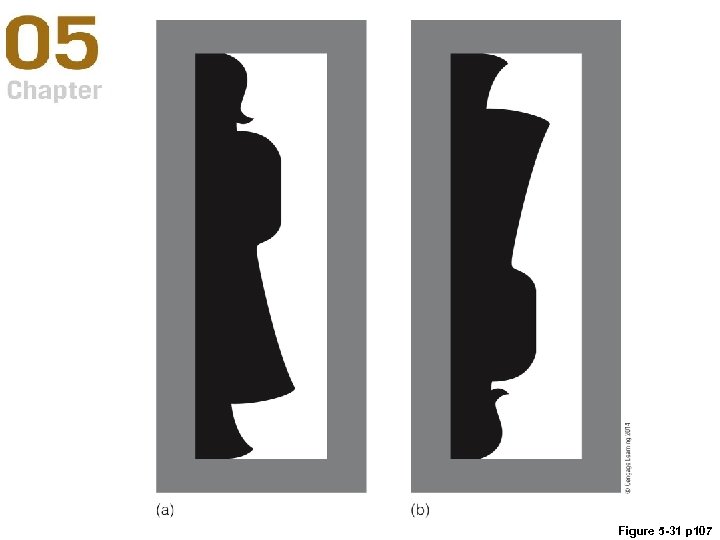
Figure 5 -31 p 107
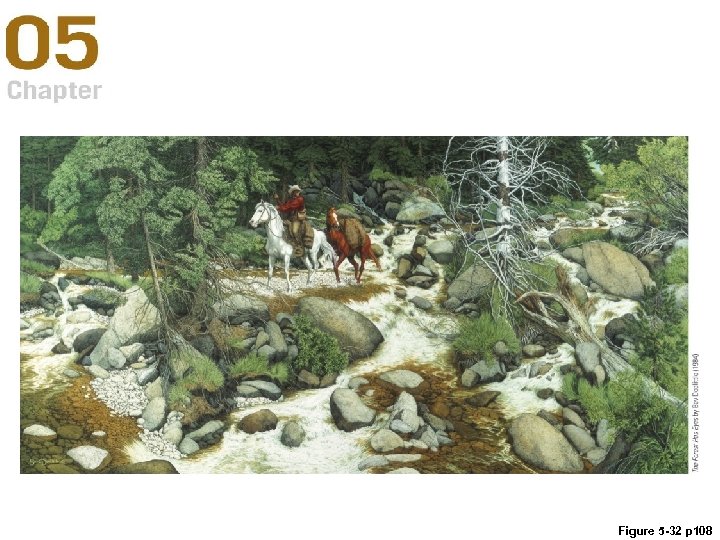
Figure 5 -32 p 108
Perceiving Scenes and Objects in Scenes • A scene contains: – background elements. – objects organized in meaningful ways with each other and the background. • Difference between objects and scenes – A scene is acted within – An object is acted upon
Perceiving Scenes and Objects in Scenes - continued • Research on perceiving gists of scenes – Potter showed that people can do this when a picture is only presented for 1/4 second – Fei-Fei used masking to show that the overall gist is perceived first followed by details.
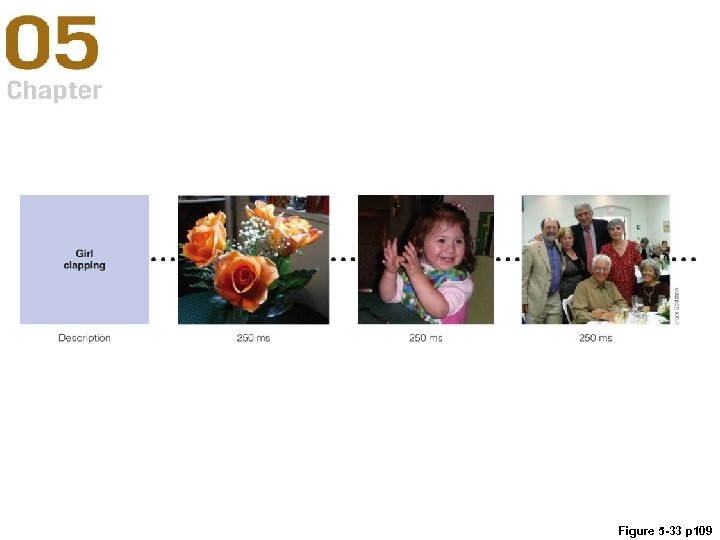
Figure 5 -33 p 109
Perceiving Scenes and Objects in Scenes - continued • Global image features of scenes – Degree of naturalness – Degree of openness – Degree of roughness – Degree of expansion – Color • Such features are holistic and perceived rapidly

Figure 5 -35 p 110
Regularities in the Environment: Information for Perceiving • Physical regularities - regularly occurring physical properties – Oblique effect - people perceive horizontals and vertical more easily than other orientations – Uniform connectedness - objects are defined by areas of the same color or texture
Regularities in the Environment: Information for Perceiving – continued • Physical regularities - regularly occurring physical properties – Homogenous colors and nearby objects have different colors – Light-from-above heuristic - light in natural environment comes from above us
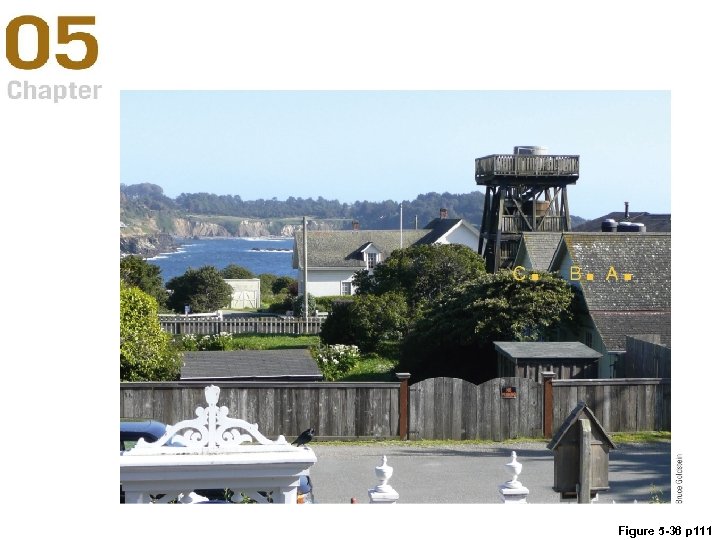
Figure 5 -36 p 111
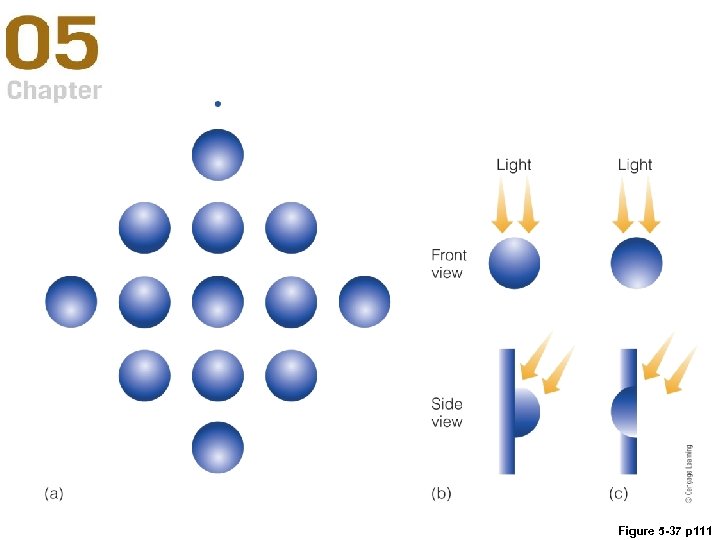
Figure 5 -37 p 111
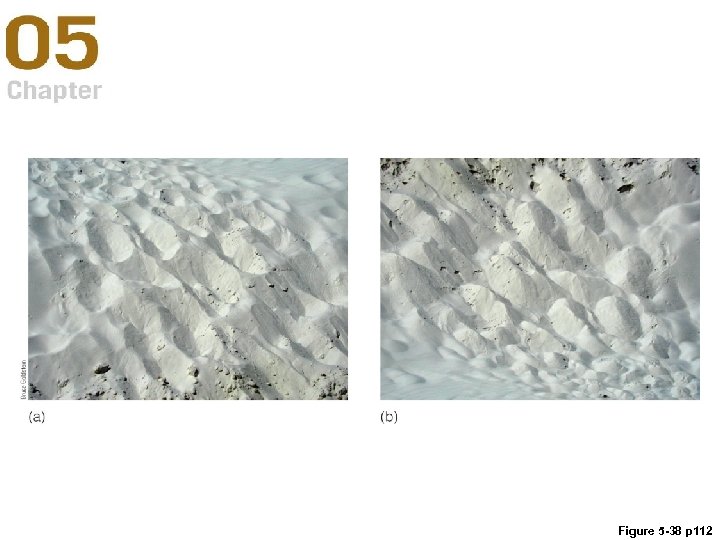
Figure 5 -38 p 112
Regularities in the Environment: Information for Perceiving - continued • Palmer experiment – Observers saw a context scene flashed briefly, followed by a target picture. – Results showed that: • Targets congruent with the context were identified 80% of the time. • Targets that were incongruent were only identified 40% of the time.
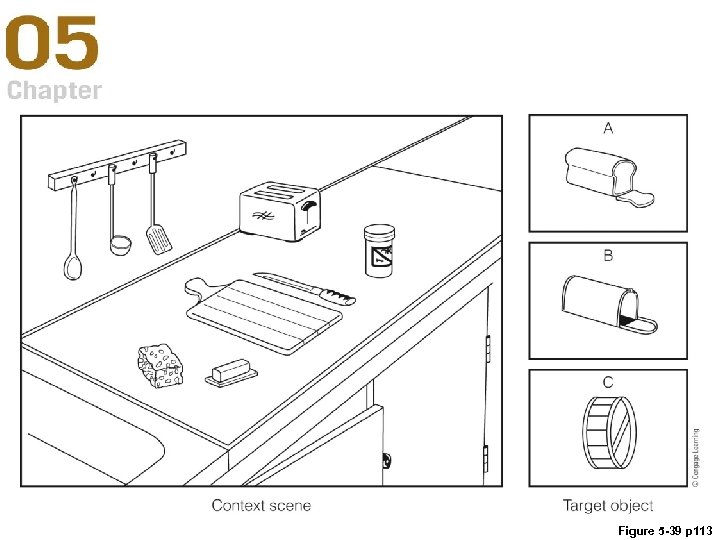
Figure 5 -39 p 113
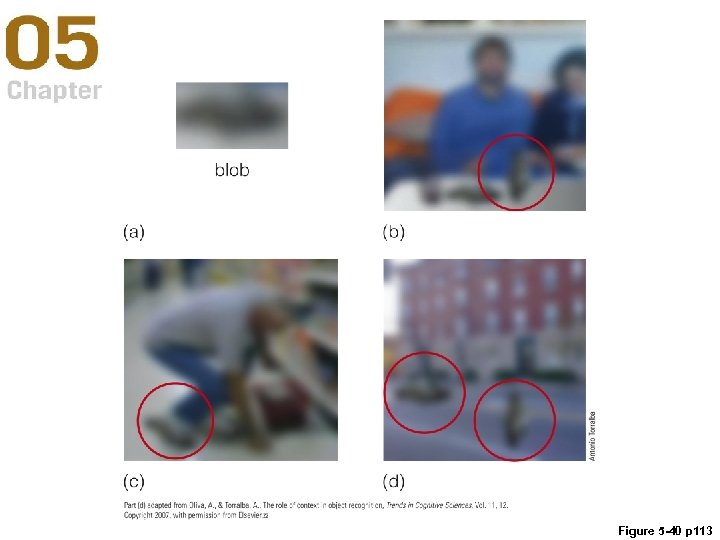
Figure 5 -40 p 113
Role of Inference in Perception • Theory of unconscious inference – Created by Helmholtz (1866/1911) to explain why stimuli can be interpreted in more than one way – Likelihood principle - objects are perceived based on what is most likely to have caused the pattern • Modern researchers use Bayesian inference that take probabilities into account
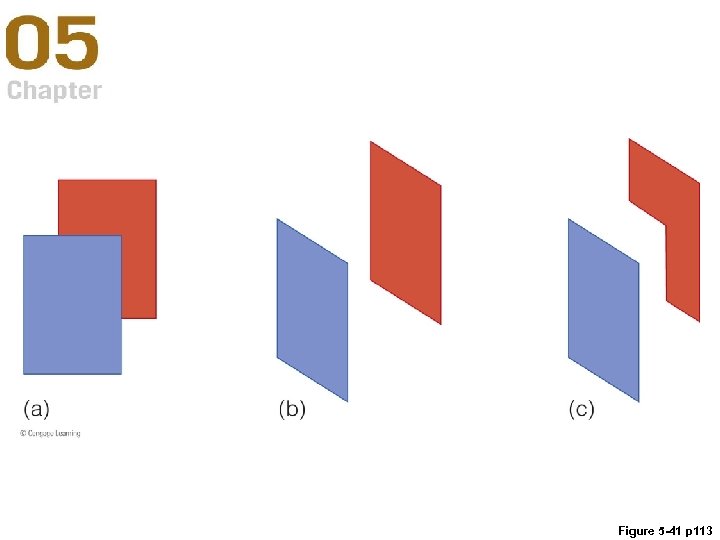
Figure 5 -41 p 113
Connecting Neural Activity and Object Perception • Grill-Spector Experiment • FFA in each participant was monitored. • On each trial, participants were shown either: – a picture of Harrison Ford’s face. – a picture of another person’s face. – a random texture. – All stimuli were shown for 50 ms followed by a random-pattern mask. – Participants were to indicate what they saw. • 60 pictures of each type were presented.
Identifying an Object: Is That Harrison Ford? • Grill-Spector experiment – Region-of-interest approach: the FFA for each person was determined first by: • Showing participants faces and nonfaces • Finding the area that responded preferentially to faces
Connecting Neural Activity and Object Perception - continued • For trials that only included Harrison Ford’s face, results showed that FFA activation: – was greatest when picture was correctly identified as Ford. – was less when picture was identified as other object. – Showed little response when there was no identification of a face • Neural processing is associated with both the presentation of the stimulus and with the response to the stimulus.
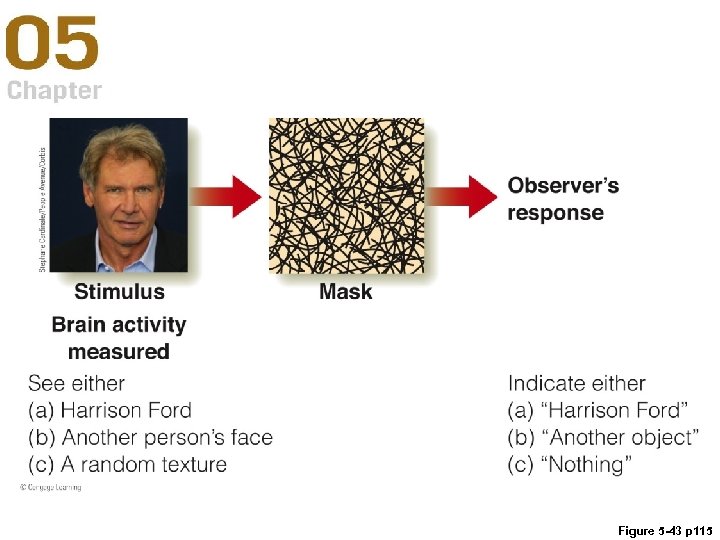
Figure 5 -43 p 115
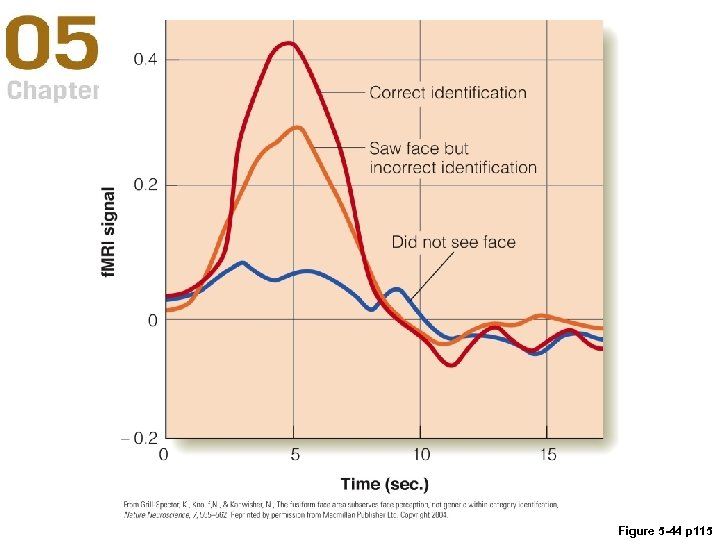
Figure 5 -44 p 115
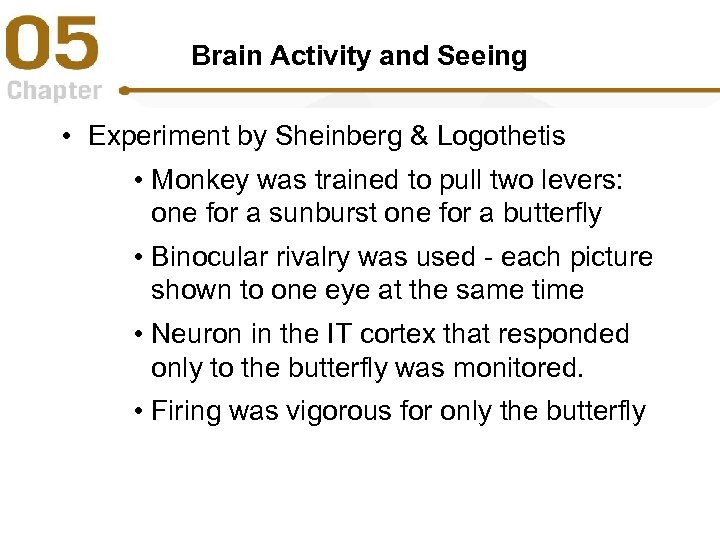
Brain Activity and Seeing • Experiment by Sheinberg & Logothetis • Monkey was trained to pull two levers: one for a sunburst one for a butterfly • Binocular rivalry was used - each picture shown to one eye at the same time • Neuron in the IT cortex that responded only to the butterfly was monitored. • Firing was vigorous for only the butterfly
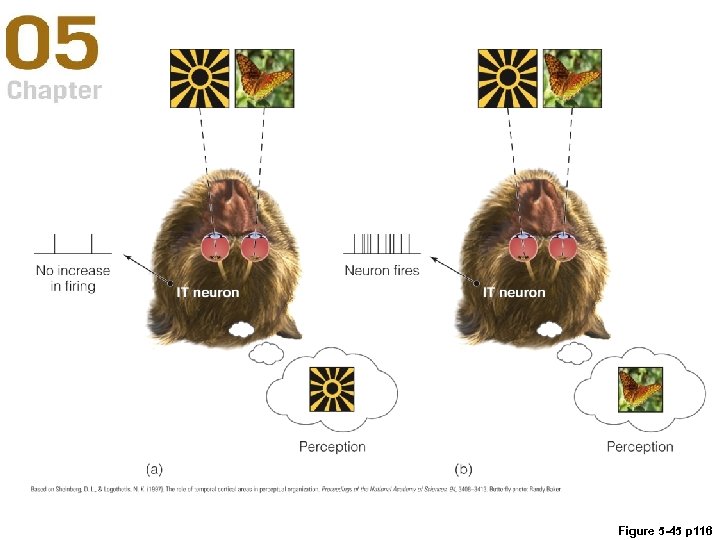
Figure 5 -45 p 116
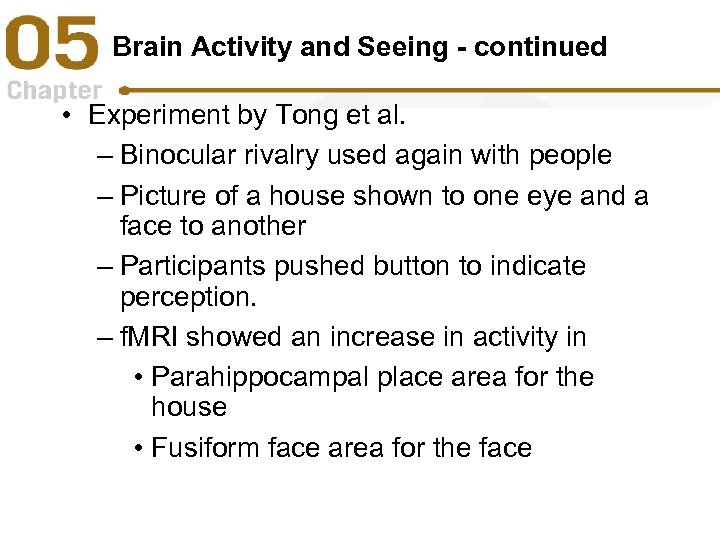
Brain Activity and Seeing - continued • Experiment by Tong et al. – Binocular rivalry used again with people – Picture of a house shown to one eye and a face to another – Participants pushed button to indicate perception. – f. MRI showed an increase in activity in • Parahippocampal place area for the house • Fusiform face area for the face
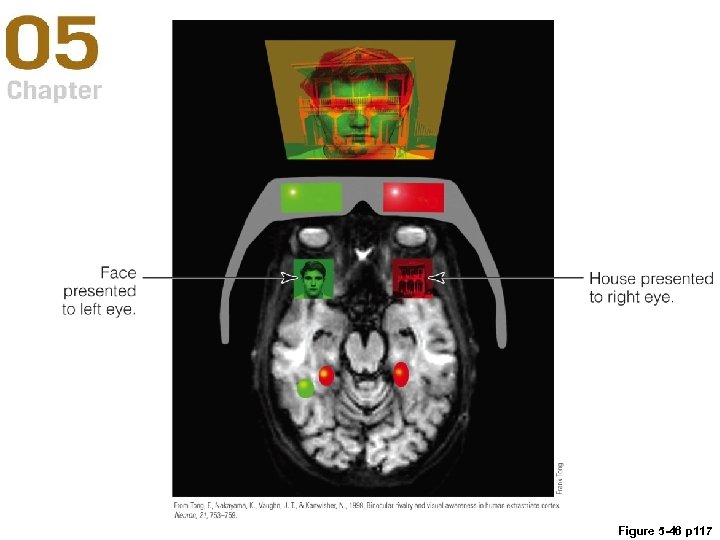
Figure 5 -46 p 117
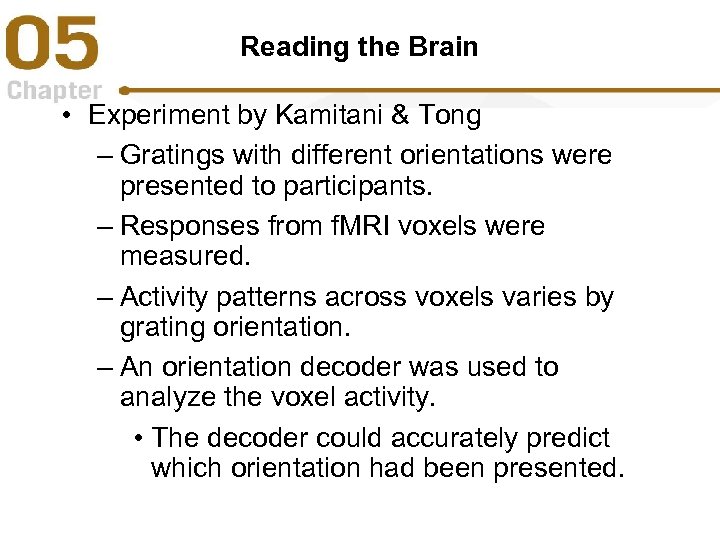
Reading the Brain • Experiment by Kamitani & Tong – Gratings with different orientations were presented to participants. – Responses from f. MRI voxels were measured. – Activity patterns across voxels varies by grating orientation. – An orientation decoder was used to analyze the voxel activity. • The decoder could accurately predict which orientation had been presented.
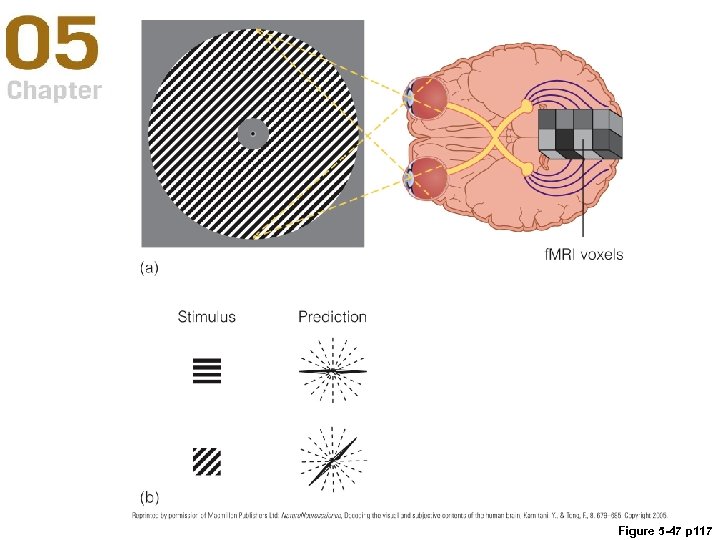
Figure 5 -47 p 117
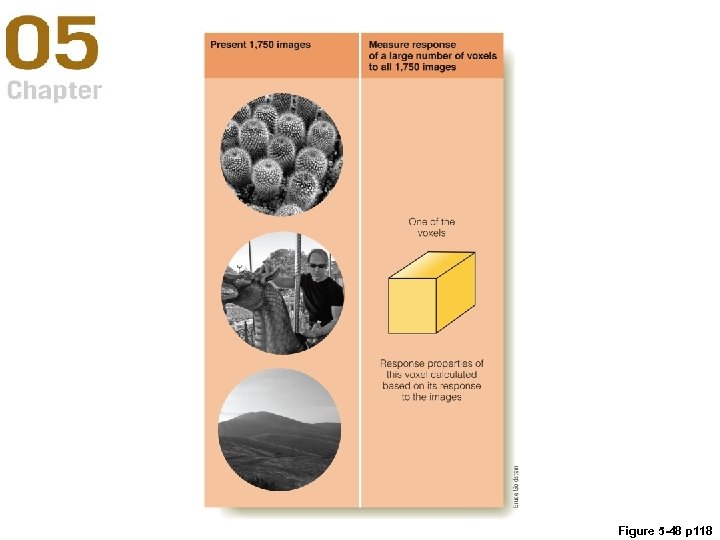
Figure 5 -48 p 118
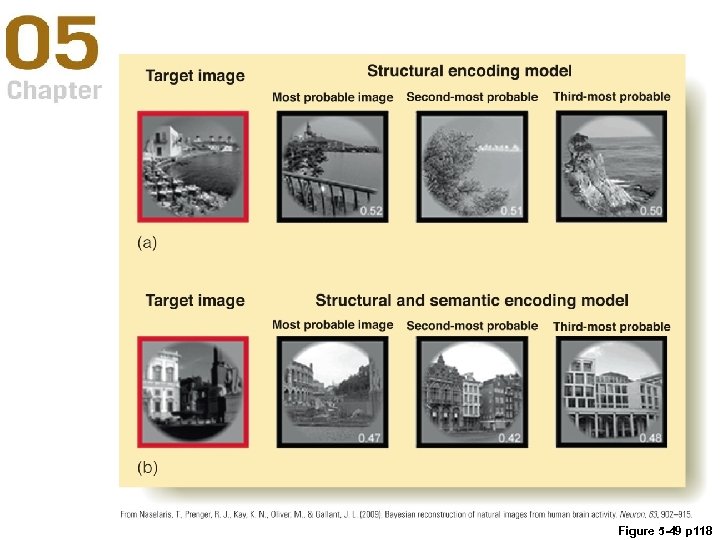
Figure 5 -49 p 118
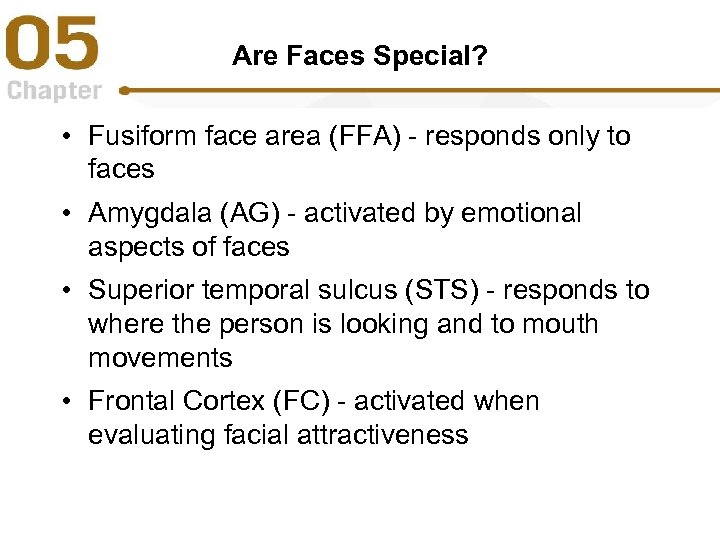
Are Faces Special? • Fusiform face area (FFA) - responds only to faces • Amygdala (AG) - activated by emotional aspects of faces • Superior temporal sulcus (STS) - responds to where the person is looking and to mouth movements • Frontal Cortex (FC) - activated when evaluating facial attractiveness
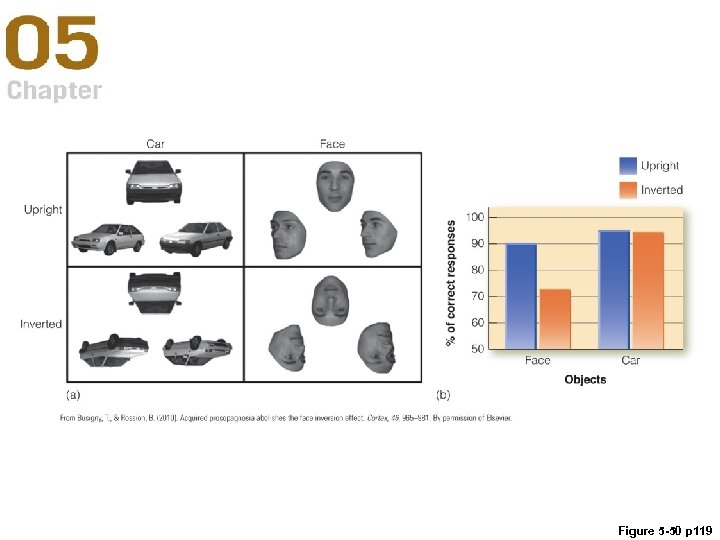
Figure 5 -50 p 119
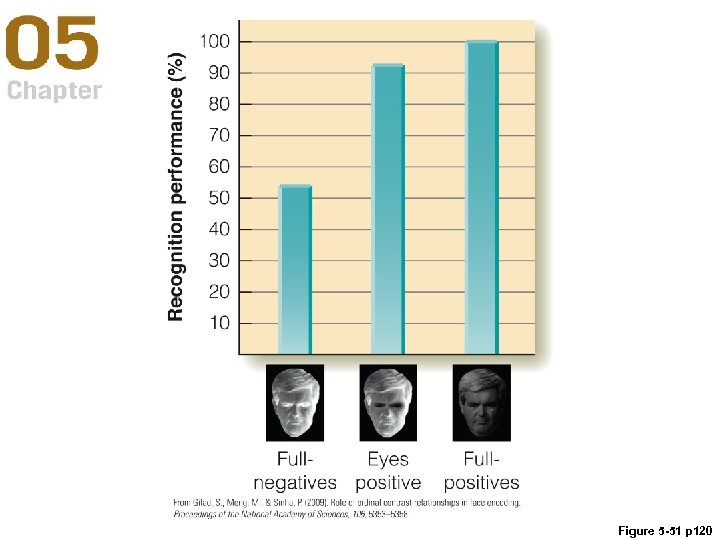
Figure 5 -51 p 120
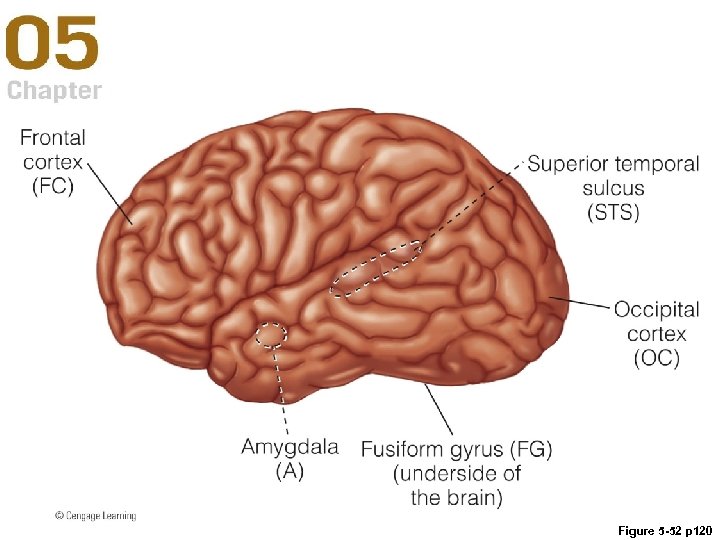
Figure 5 -52 p 120
Infant Face Perception • Understanding what an infant sees using preferential looking effect. • Human faces are among the most important stimuli in an infants environment.
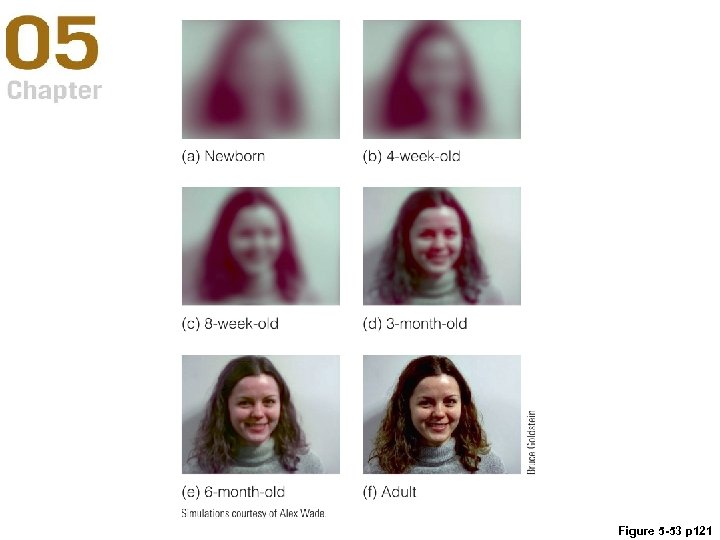
Figure 5 -53 p 121
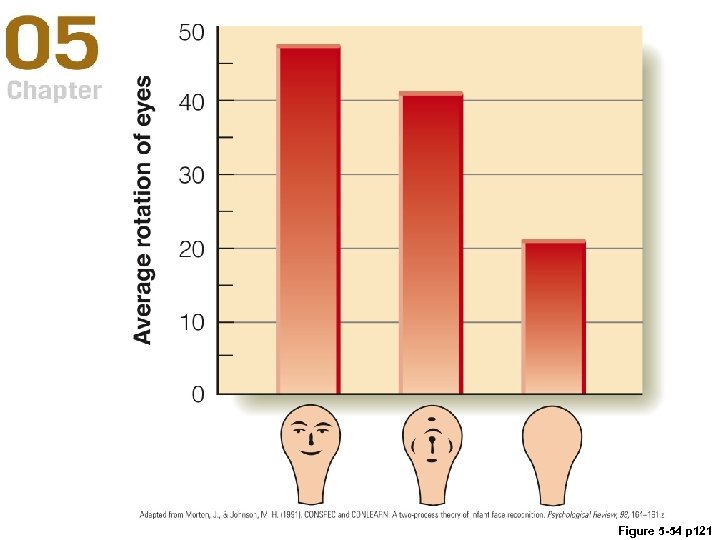
Figure 5 -54 p 121
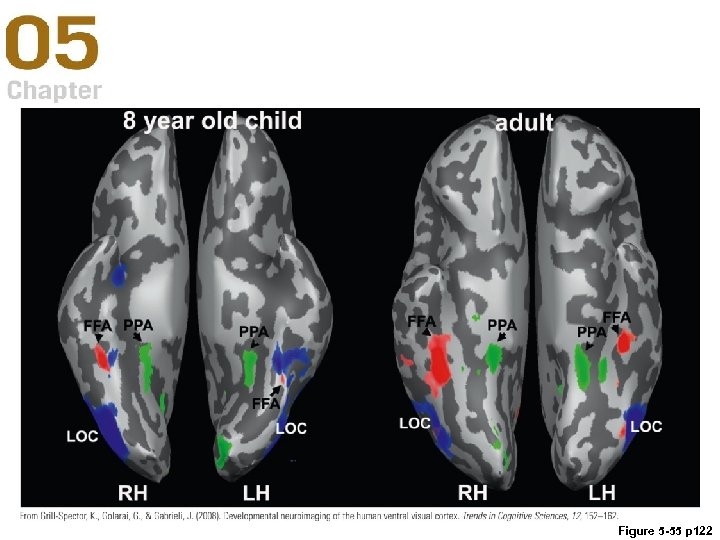
Figure 5 -55 p 122
Скачать презентацию Chapter 5 Perceiving Objects and Scenes The
c28b1c0ec1454ab19a05bdf5b44ff9d1.ppt