


 Скачать презентацию Chapter 5 Input Output 5 1 Principles of I O
2138be5a5567519454e5263c0ad4bafc.ppt
- Количество слайдов: 66
 Chapter 5 Input/Output 5. 1 Principles of I/O hardware 5. 2 Principles of I/O software 5. 3 I/O software layers 5. 4 Disks 5. 5 Clocks 5. 6 Character-oriented terminals 5. 7 Graphical user interfaces 5. 8 Network terminals 5. 9 Power management 1
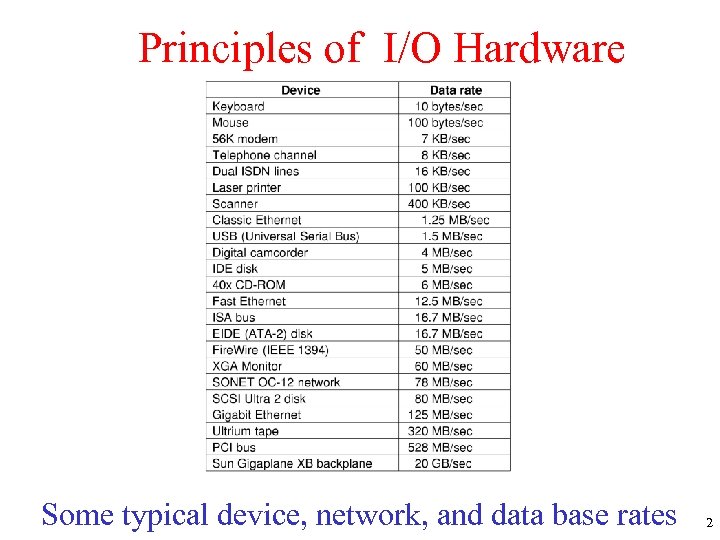 Principles of I/O Hardware Some typical device, network, and data base rates 2
 Device Controllers • I/O devices have components: – mechanical component – electronic component • The electronic component is the device controller – may be able to handle multiple devices • Controller's tasks – convert serial bit stream to block of bytes – perform error correction as necessary – make available to main memory 3
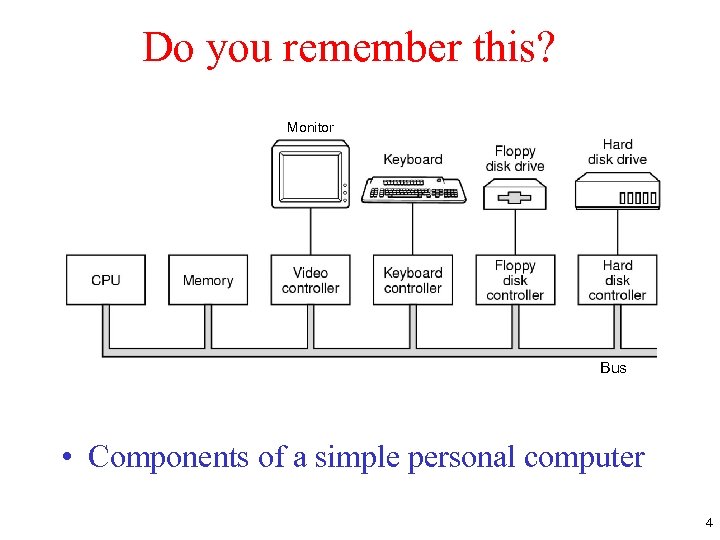 Do you remember this? Monitor Bus • Components of a simple personal computer 4
 Disk Controller • 256 sectors of 512 bytes • Controller sees a serial stream of bits – Preamble – Data – Error Correcting Code • Controller must assemble data bit stream into blocks, error correct, then copy to mem 5
 Video Controller • Must control monitor hardware to scan CRT beam across each line (interlaced/noninterlaced), then go back to top left. • With controller, OS simply tells controller a few parameters (screen resolution, frequency, …) then controller takes care of the rest 6
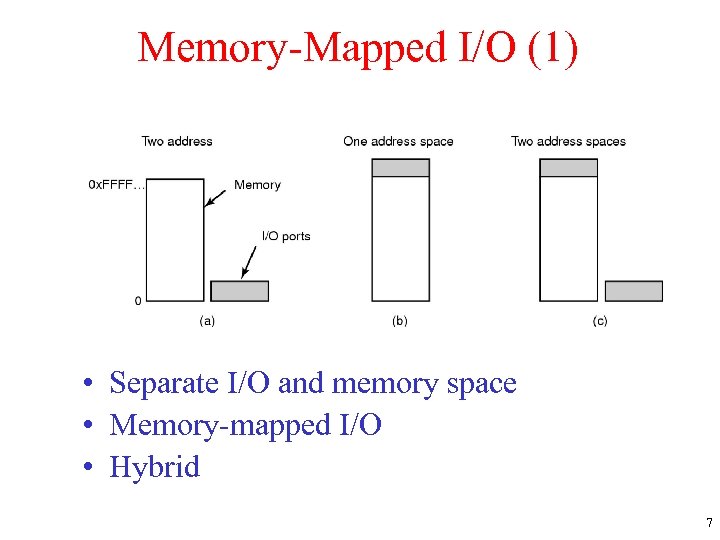 Memory-Mapped I/O (1) • Separate I/O and memory space • Memory-mapped I/O • Hybrid 7
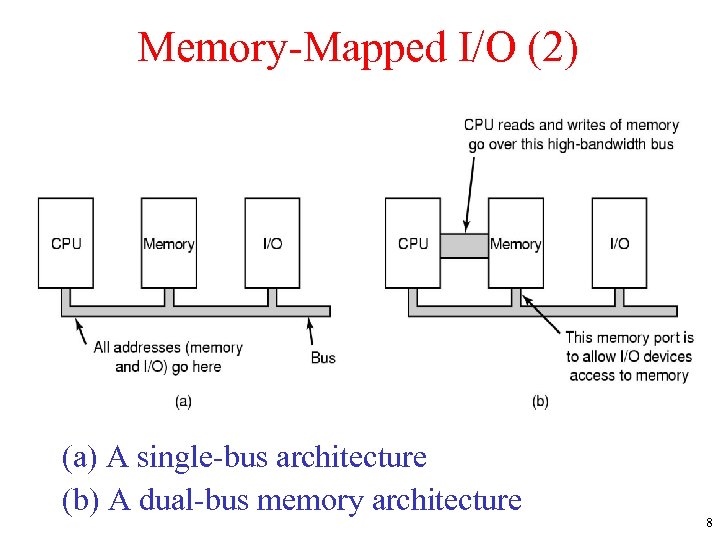 Memory-Mapped I/O (2) (a) A single-bus architecture (b) A dual-bus memory architecture 8
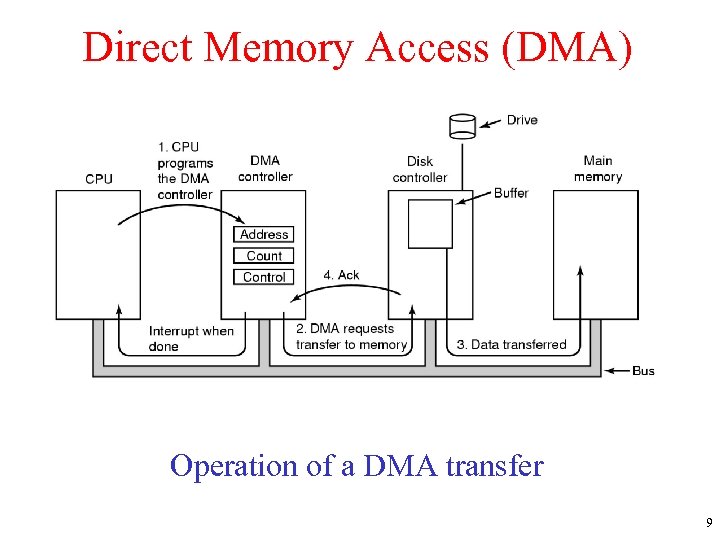 Direct Memory Access (DMA) Operation of a DMA transfer 9
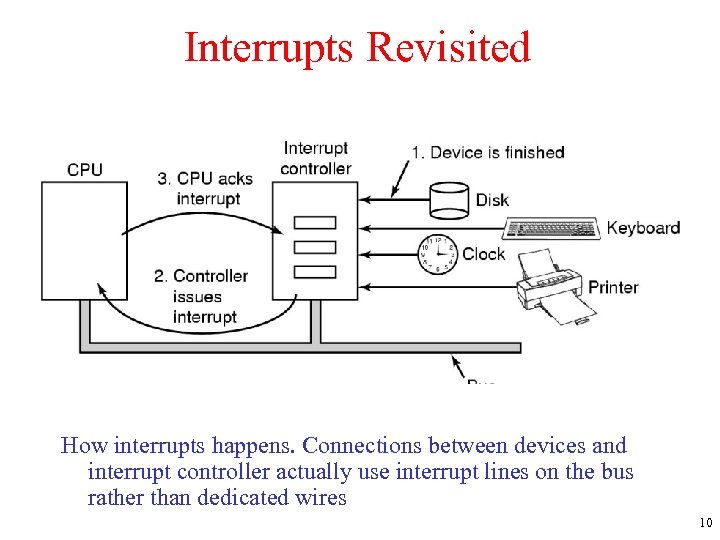 Interrupts Revisited How interrupts happens. Connections between devices and interrupt controller actually use interrupt lines on the bus rather than dedicated wires 10
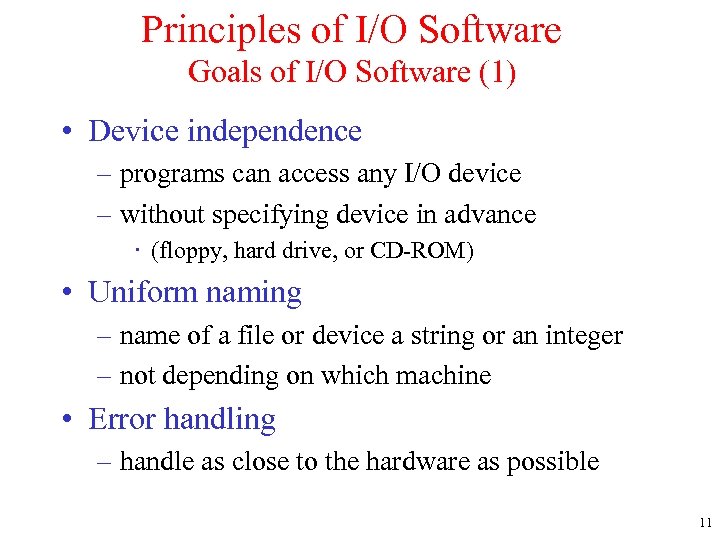 Principles of I/O Software Goals of I/O Software (1) • Device independence – programs can access any I/O device – without specifying device in advance · (floppy, hard drive, or CD-ROM) • Uniform naming – name of a file or device a string or an integer – not depending on which machine • Error handling – handle as close to the hardware as possible 11
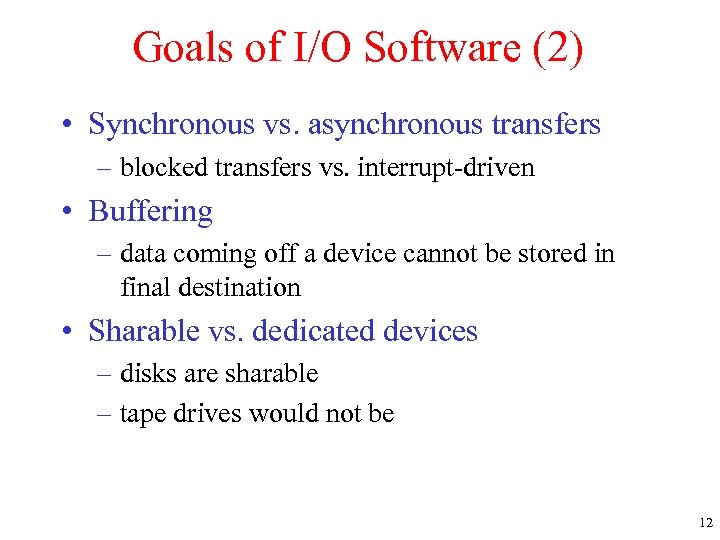 Goals of I/O Software (2) • Synchronous vs. asynchronous transfers – blocked transfers vs. interrupt-driven • Buffering – data coming off a device cannot be stored in final destination • Sharable vs. dedicated devices – disks are sharable – tape drives would not be 12
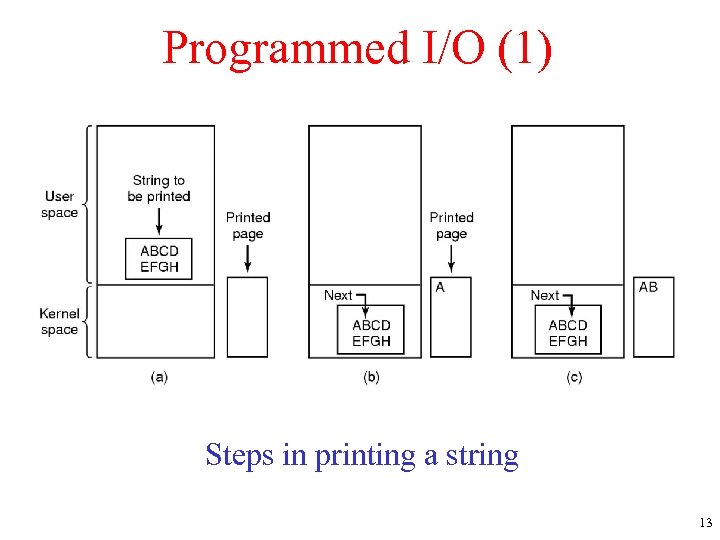 Programmed I/O (1) Steps in printing a string 13
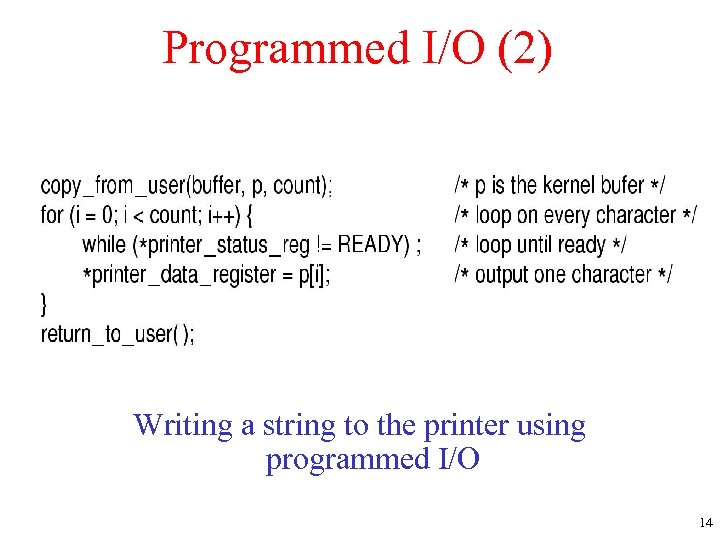 Programmed I/O (2) Writing a string to the printer using programmed I/O 14
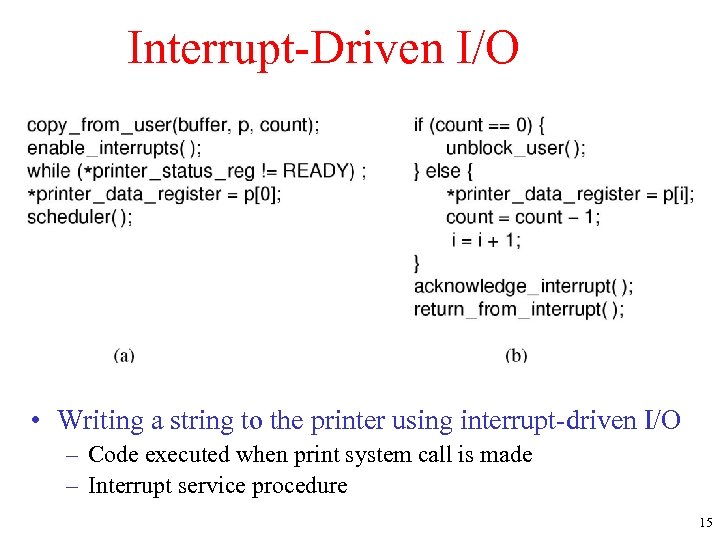 Interrupt-Driven I/O • Writing a string to the printer using interrupt-driven I/O – Code executed when print system call is made – Interrupt service procedure 15
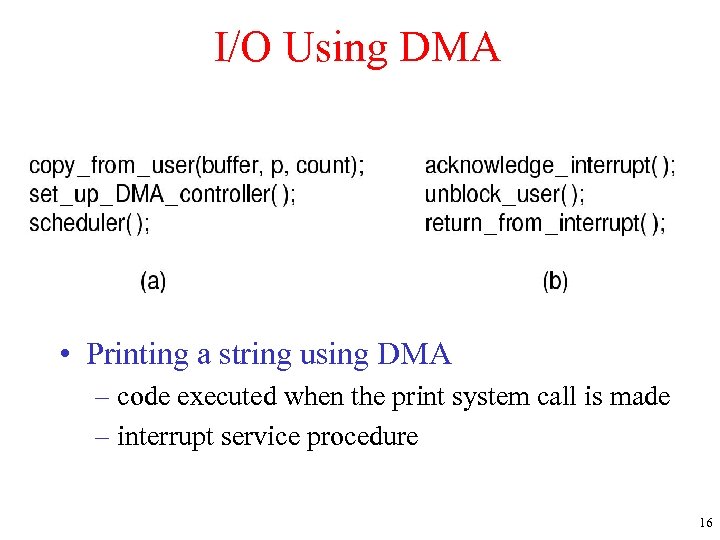 I/O Using DMA • Printing a string using DMA – code executed when the print system call is made – interrupt service procedure 16
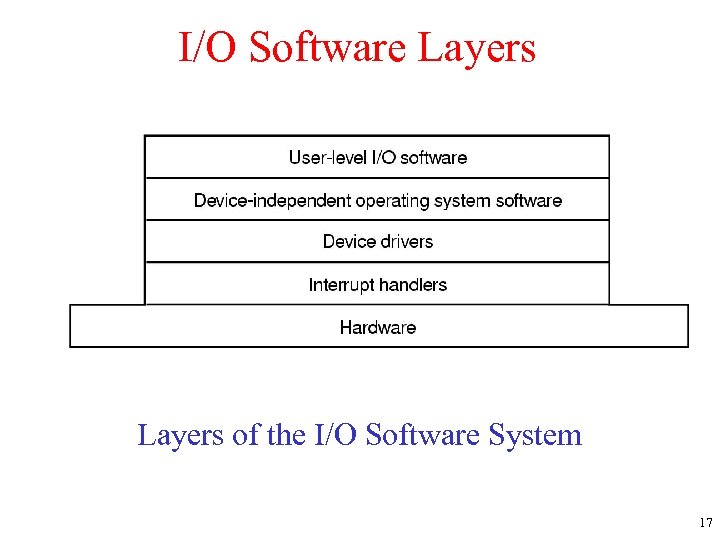 I/O Software Layers of the I/O Software System 17
 Interrupt Handlers (1) • Interrupt handlers are best hidden – have driver starting an I/O operation block until interrupt notifies of completion • Interrupt procedure does its task – then unblocks driver that started it • Steps must be performed in software after interrupt completed 1. Save regs not already saved by interrupt hardware 2. Set up context for interrupt service procedure 18
 Interrupt Handlers (2) 3. 4. 5. 6. 7. 8. 9. Set up stack for interrupt service procedure Ack interrupt controller, reenable interrupts Copy registers from where saved Run service procedure Set up MMU context for process to run next Load new process' registers Start running the new process 19
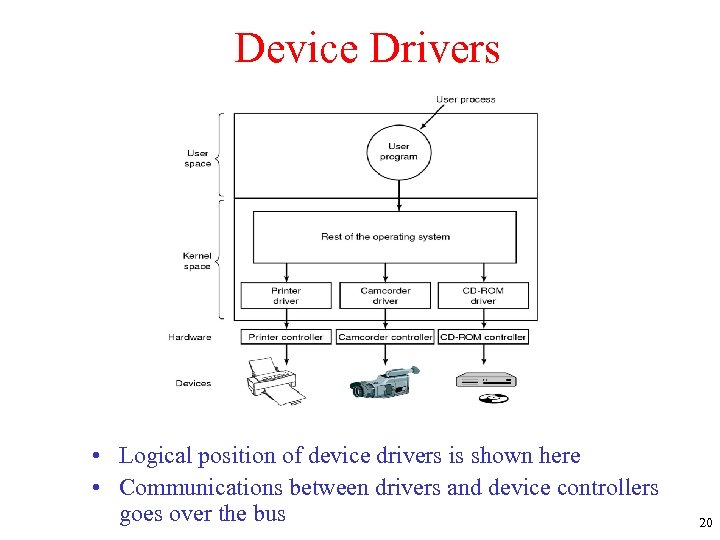 Device Drivers • Logical position of device drivers is shown here • Communications between drivers and device controllers goes over the bus 20
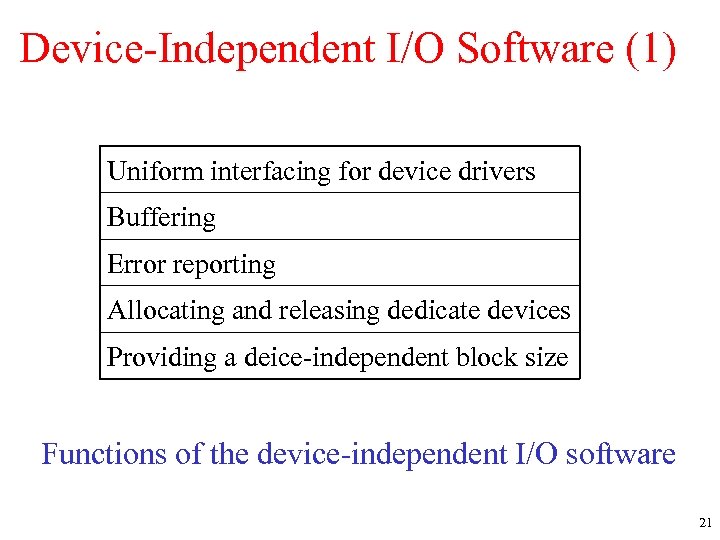 Device-Independent I/O Software (1) Uniform interfacing for device drivers Buffering Error reporting Allocating and releasing dedicate devices Providing a deice-independent block size Functions of the device-independent I/O software 21
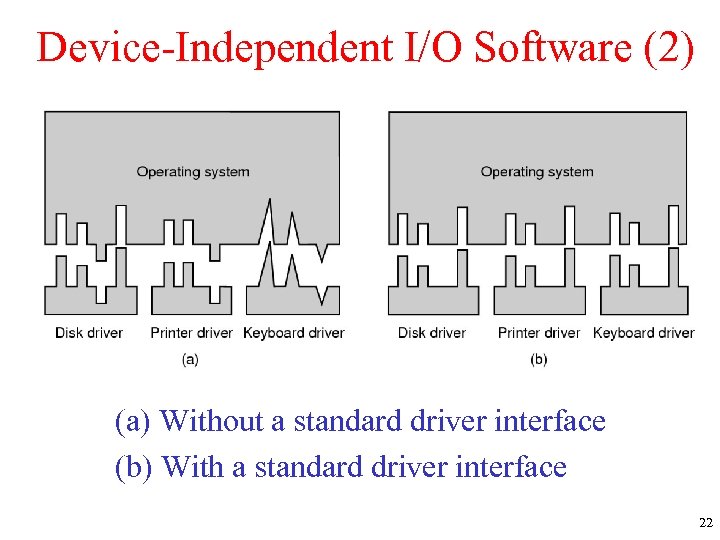 Device-Independent I/O Software (2) (a) Without a standard driver interface (b) With a standard driver interface 22
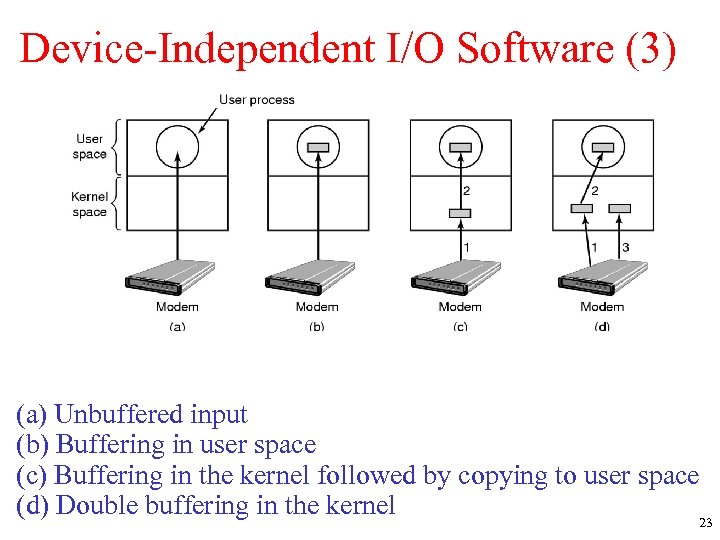 Device-Independent I/O Software (3) (a) Unbuffered input (b) Buffering in user space (c) Buffering in the kernel followed by copying to user space (d) Double buffering in the kernel 23
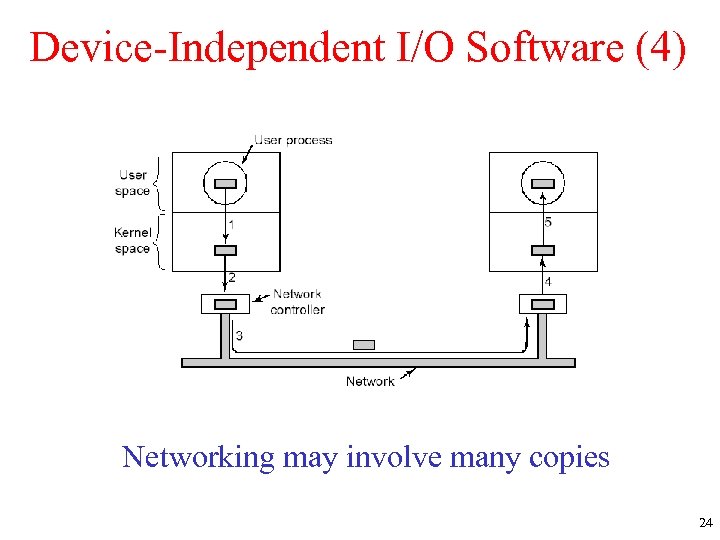 Device-Independent I/O Software (4) Networking may involve many copies 24
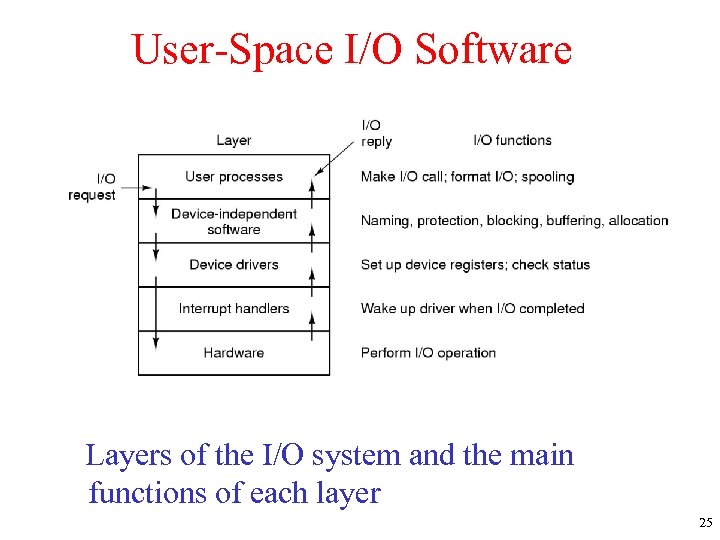 User-Space I/O Software Layers of the I/O system and the main functions of each layer 25
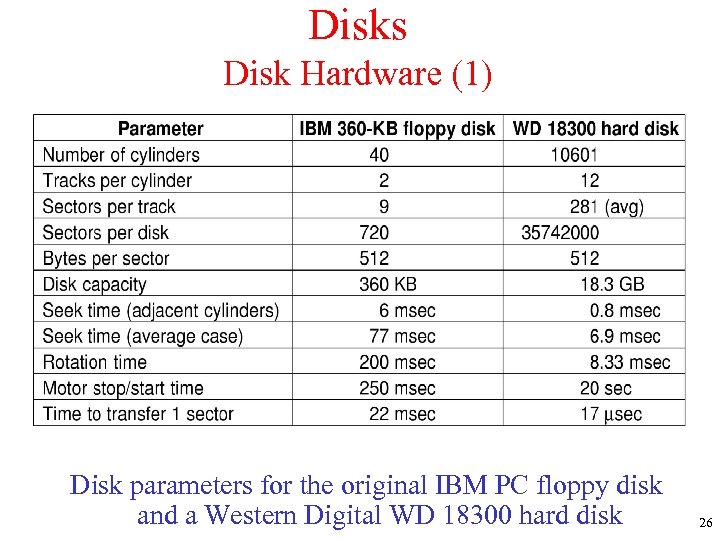 Disks Disk Hardware (1) Disk parameters for the original IBM PC floppy disk and a Western Digital WD 18300 hard disk 26
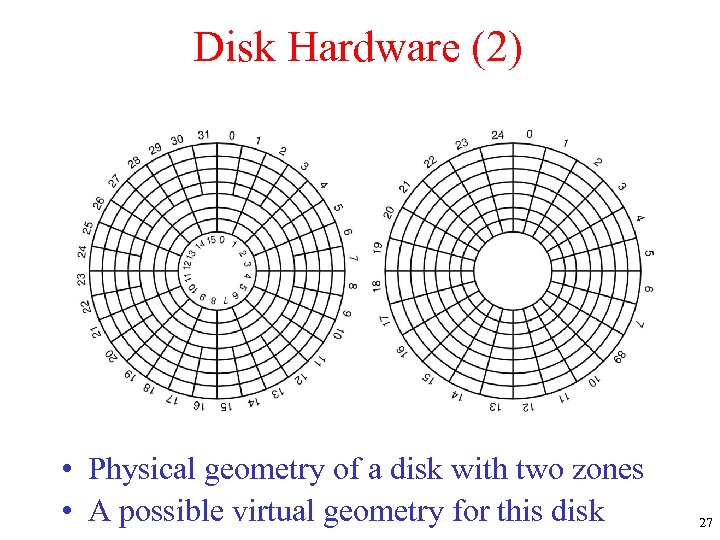 Disk Hardware (2) • Physical geometry of a disk with two zones • A possible virtual geometry for this disk 27
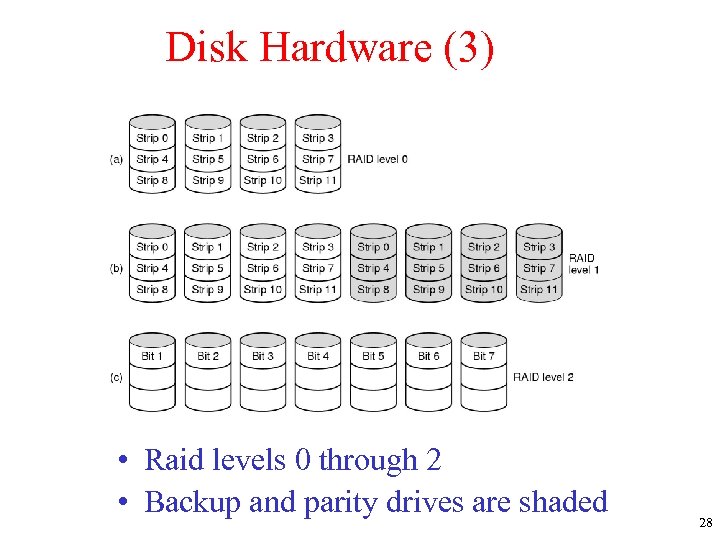 Disk Hardware (3) • Raid levels 0 through 2 • Backup and parity drives are shaded 28
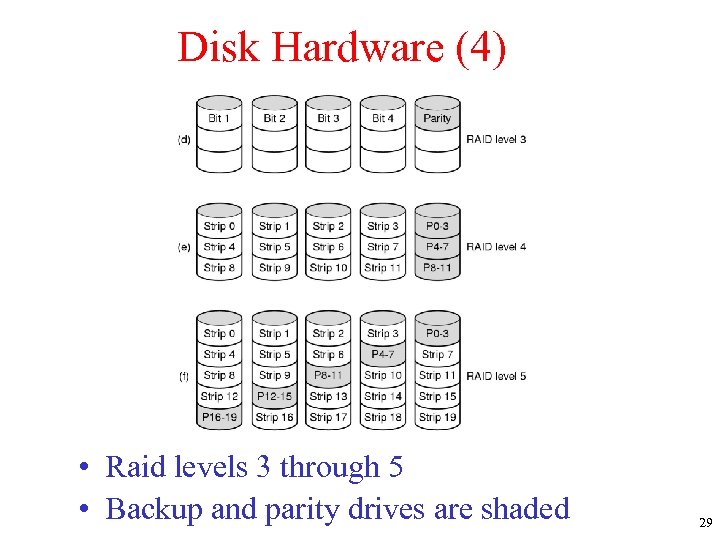 Disk Hardware (4) • Raid levels 3 through 5 • Backup and parity drives are shaded 29
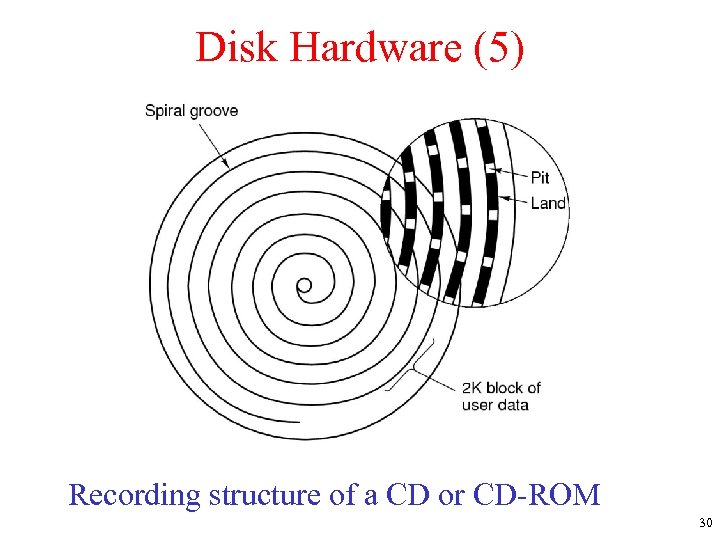 Disk Hardware (5) Recording structure of a CD or CD-ROM 30
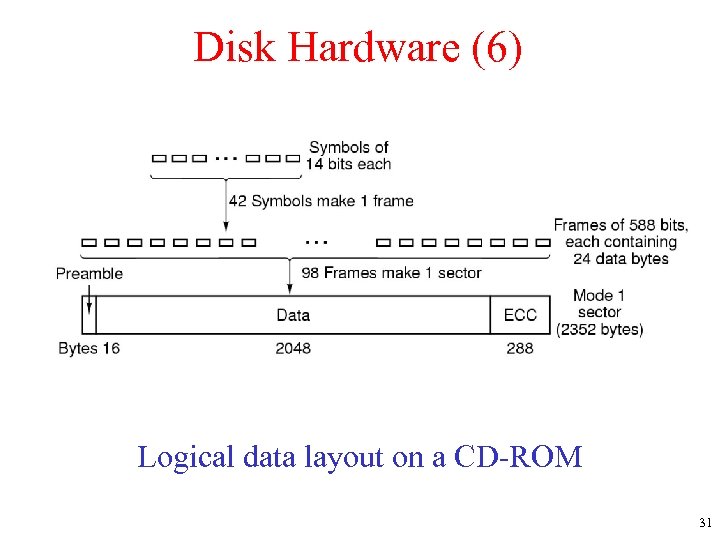 Disk Hardware (6) Logical data layout on a CD-ROM 31
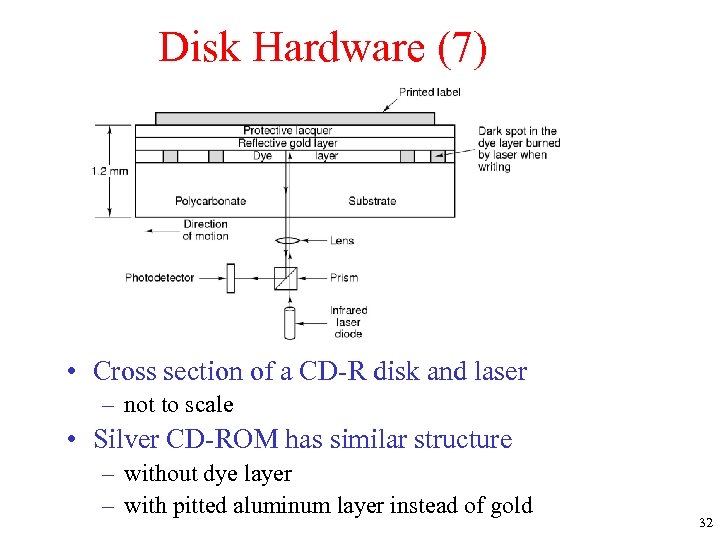 Disk Hardware (7) • Cross section of a CD-R disk and laser – not to scale • Silver CD-ROM has similar structure – without dye layer – with pitted aluminum layer instead of gold 32
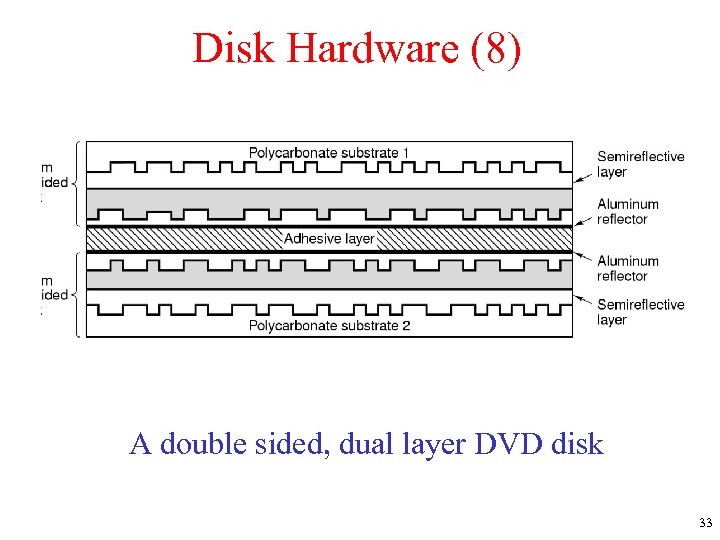 Disk Hardware (8) A double sided, dual layer DVD disk 33
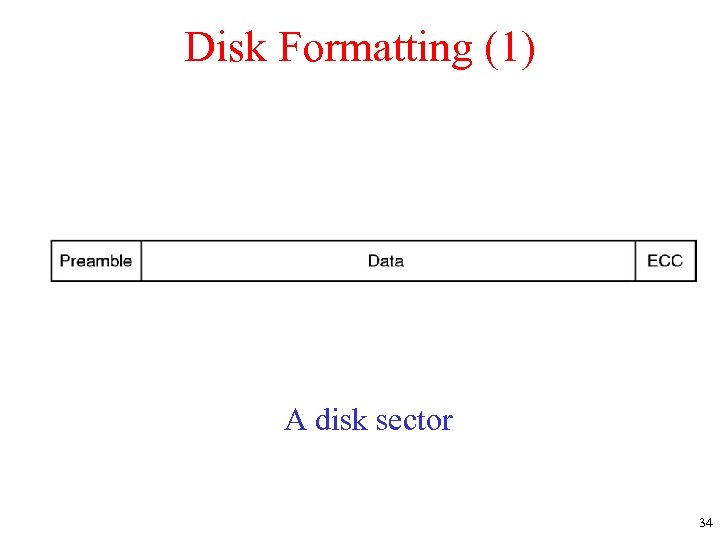 Disk Formatting (1) A disk sector 34
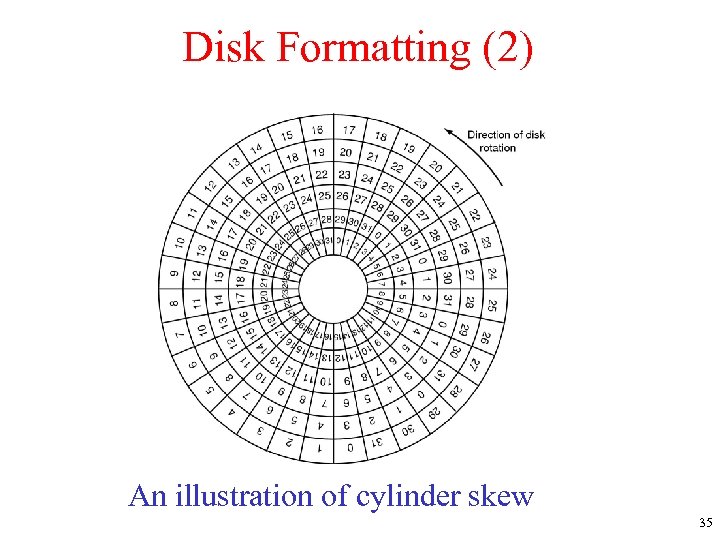 Disk Formatting (2) An illustration of cylinder skew 35
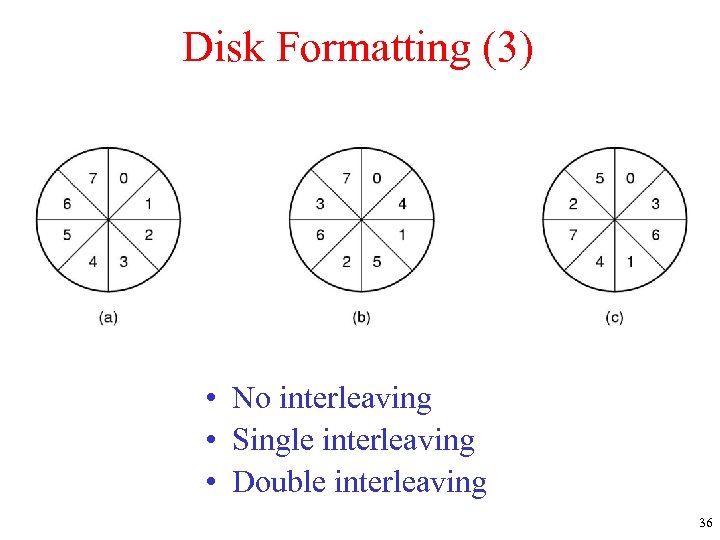 Disk Formatting (3) • No interleaving • Single interleaving • Double interleaving 36
 Disk Arm Scheduling Algorithms (1) • Time required to read or write a disk block determined by 3 factors 1. 2. 3. Seek time Rotational delay Actual transfer time • Seek time dominates • Error checking is done by controllers 37
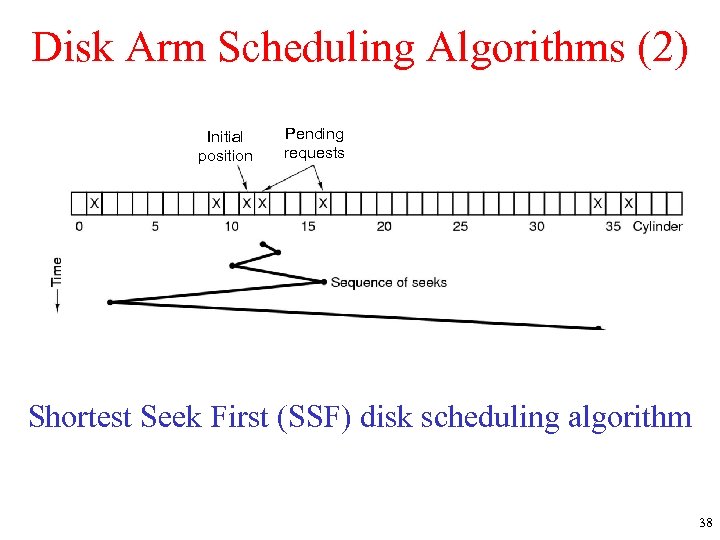 Disk Arm Scheduling Algorithms (2) Initial position Pending requests Shortest Seek First (SSF) disk scheduling algorithm 38
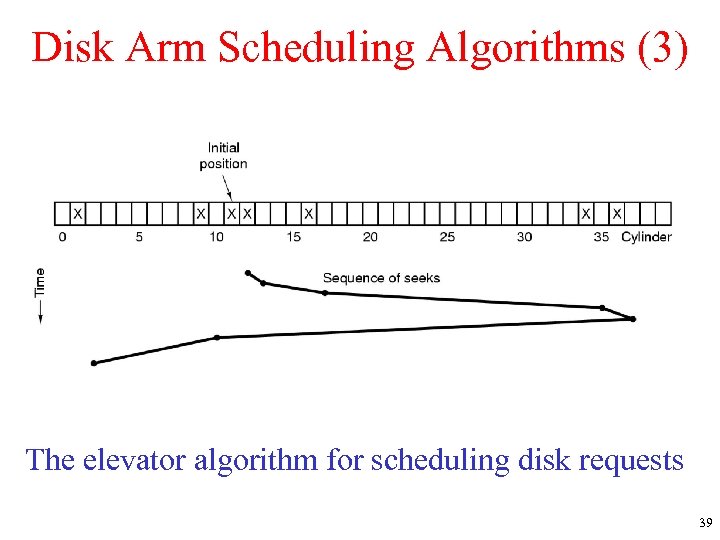 Disk Arm Scheduling Algorithms (3) The elevator algorithm for scheduling disk requests 39
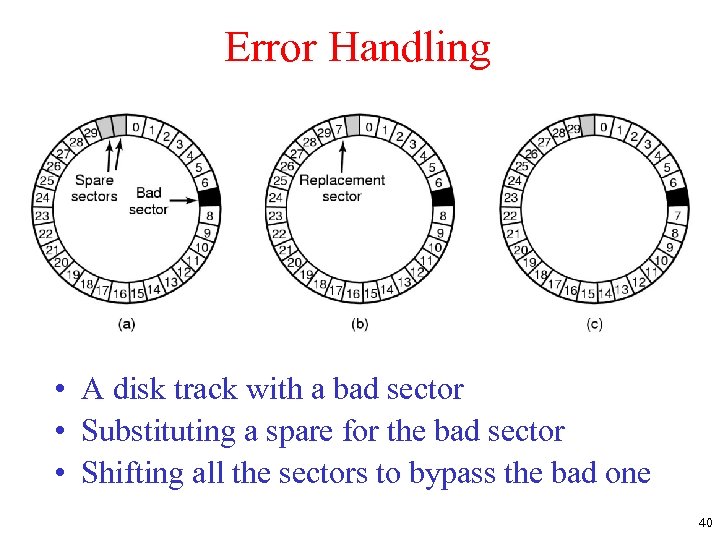 Error Handling • A disk track with a bad sector • Substituting a spare for the bad sector • Shifting all the sectors to bypass the bad one 40
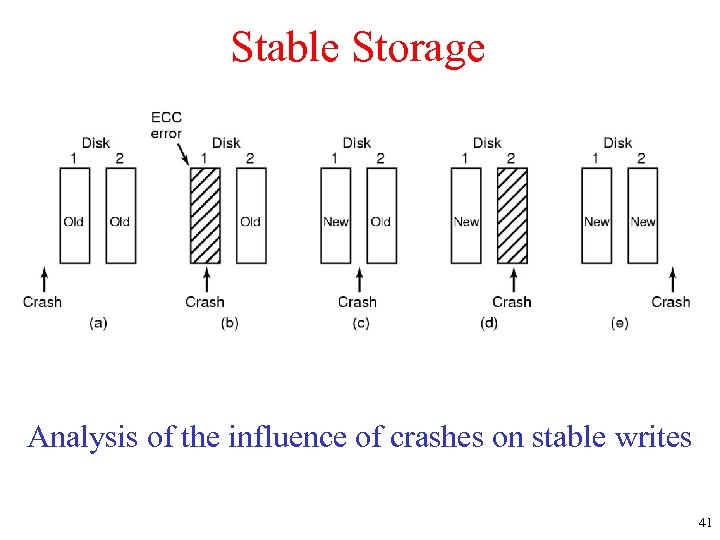 Stable Storage Analysis of the influence of crashes on stable writes 41
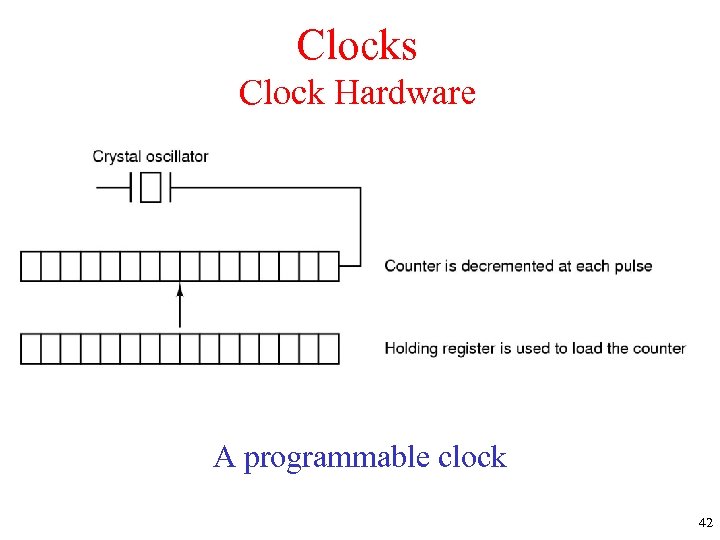 Clocks Clock Hardware A programmable clock 42
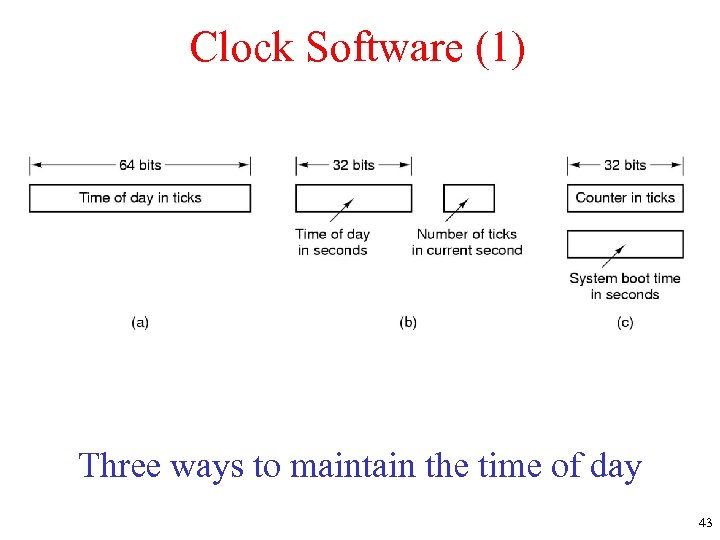 Clock Software (1) Three ways to maintain the time of day 43
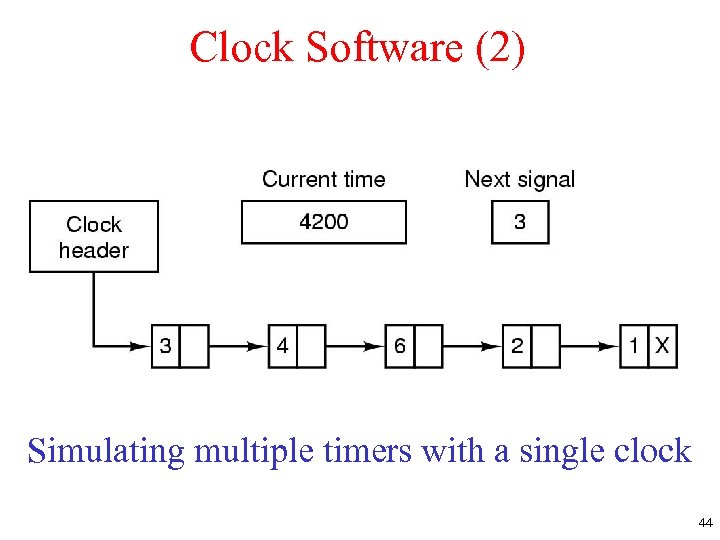 Clock Software (2) Simulating multiple timers with a single clock 44
 Soft Timers • A second clock available for timer interrupts – specified by applications – no problems if interrupt frequency is low • Soft timers avoid interrupts – kernel checks for soft timer expiration before it exits to user mode – how well this works depends on rate of kernel entries 45
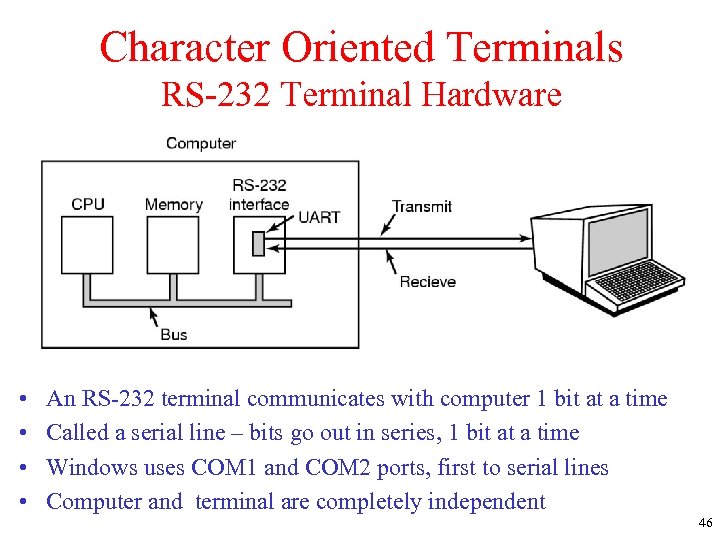 Character Oriented Terminals RS-232 Terminal Hardware • • An RS-232 terminal communicates with computer 1 bit at a time Called a serial line – bits go out in series, 1 bit at a time Windows uses COM 1 and COM 2 ports, first to serial lines Computer and terminal are completely independent 46
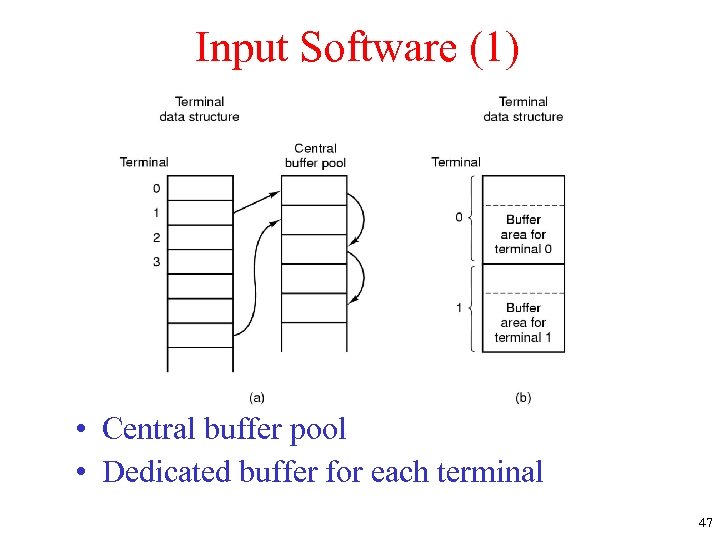 Input Software (1) • Central buffer pool • Dedicated buffer for each terminal 47
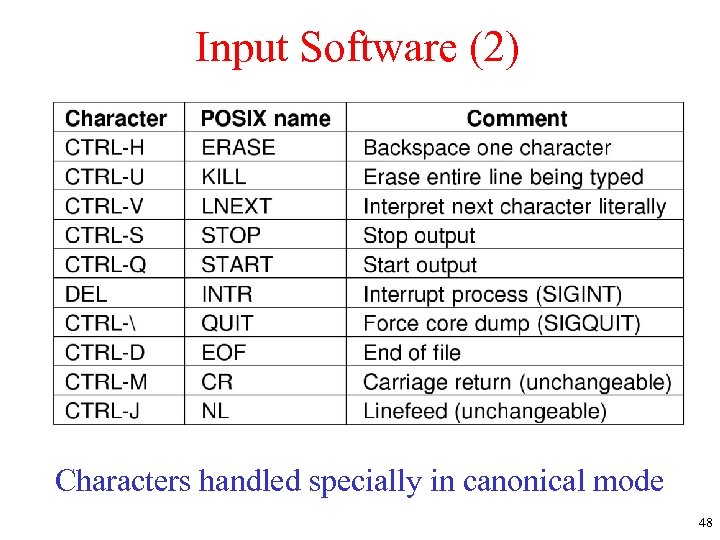 Input Software (2) Characters handled specially in canonical mode 48
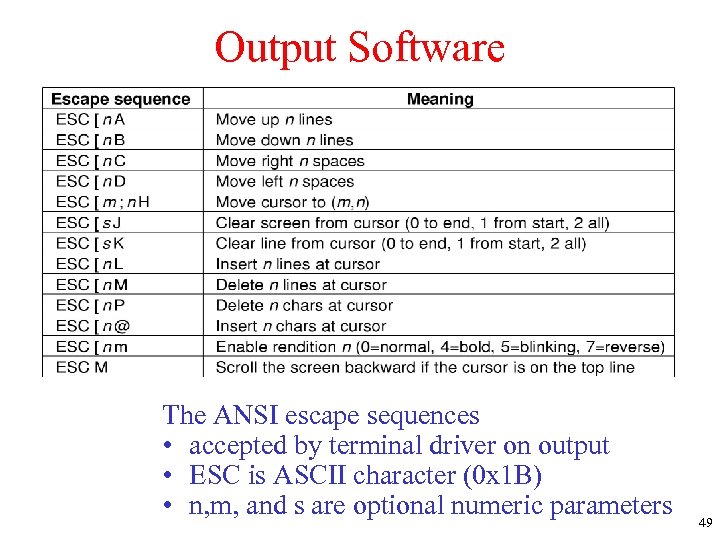 Output Software The ANSI escape sequences • accepted by terminal driver on output • ESC is ASCII character (0 x 1 B) • n, m, and s are optional numeric parameters 49
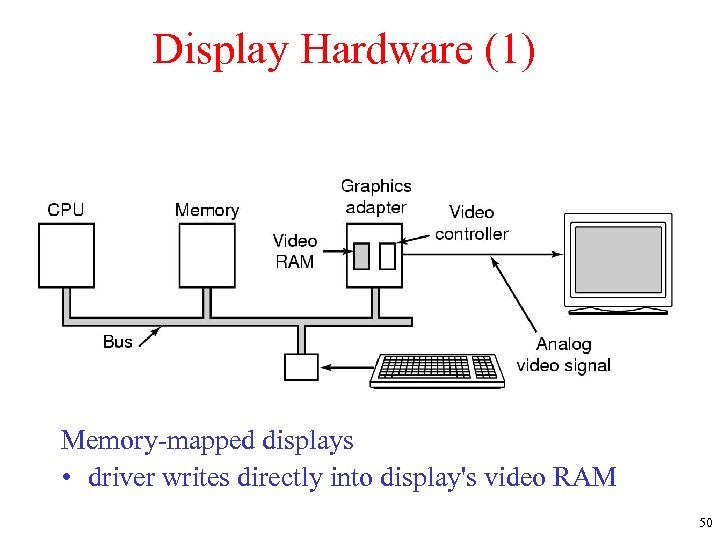 Display Hardware (1) Parallel port Memory-mapped displays • driver writes directly into display's video RAM 50
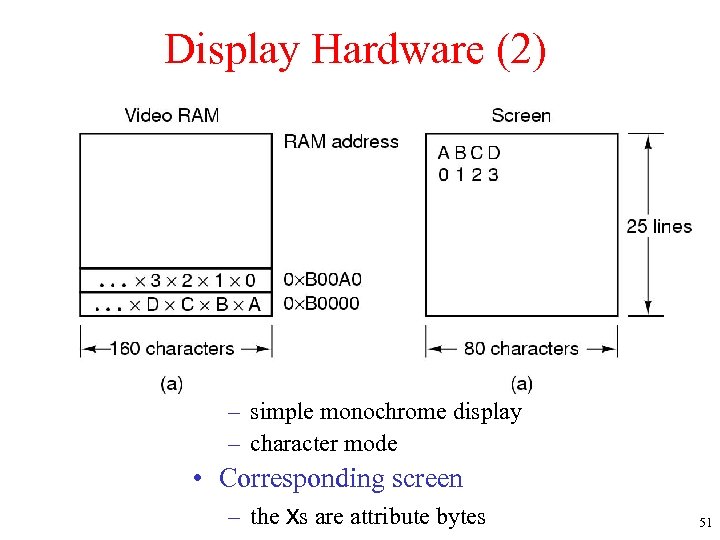 Display Hardware (2) • A video RAM image – simple monochrome display – character mode • Corresponding screen – the xs are attribute bytes 51
 Input Software • Keyboard driver delivers a number – driver converts to characters – uses a ASCII table • Exceptions, adaptations needed for other languages – many OS provide for loadable keymaps or code pages 52
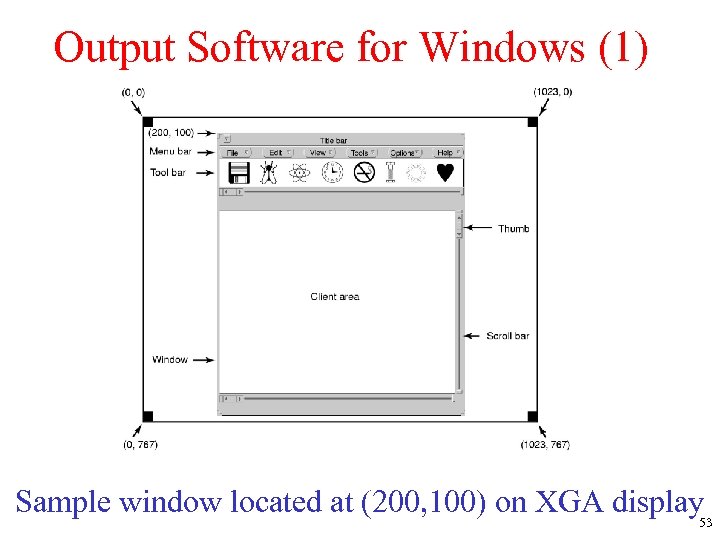 Output Software for Windows (1) Sample window located at (200, 100) on XGA display 53
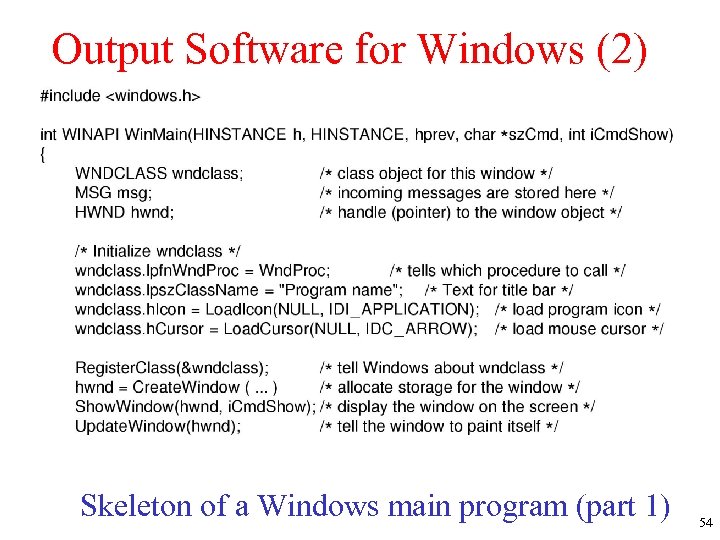 Output Software for Windows (2) Skeleton of a Windows main program (part 1) 54
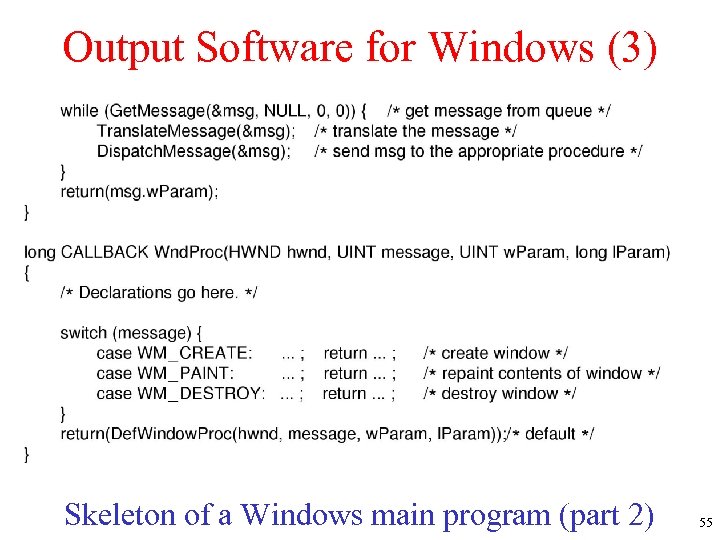 Output Software for Windows (3) Skeleton of a Windows main program (part 2) 55
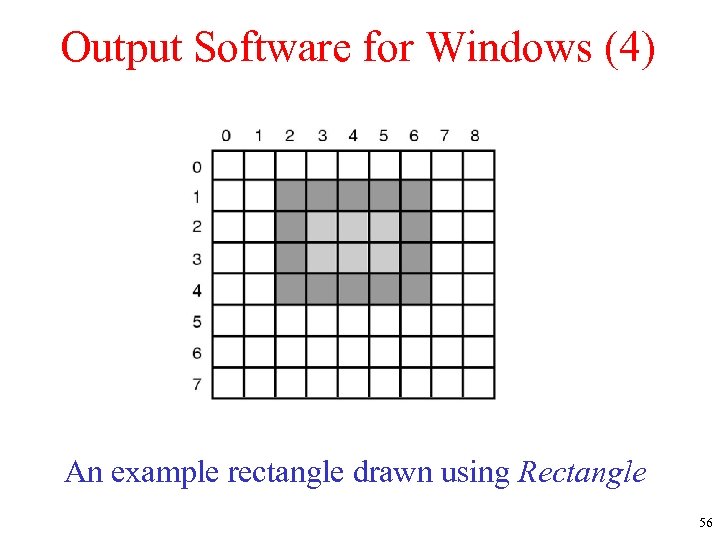 Output Software for Windows (4) An example rectangle drawn using Rectangle 56
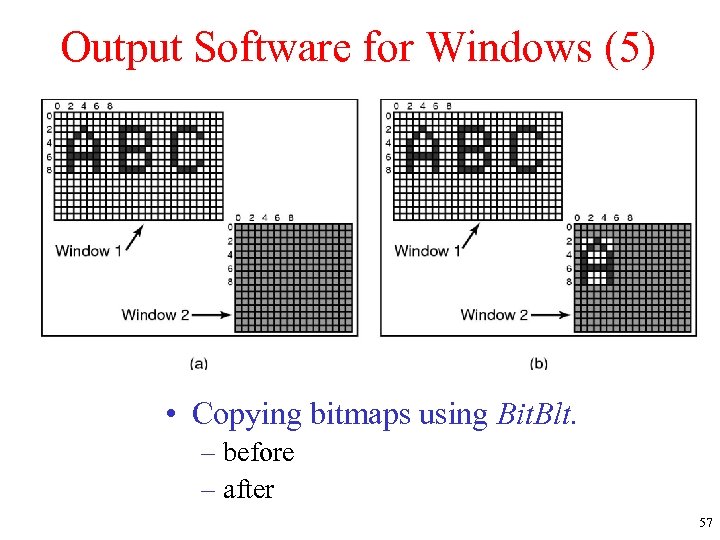 Output Software for Windows (5) • Copying bitmaps using Bit. Blt. – before – after 57
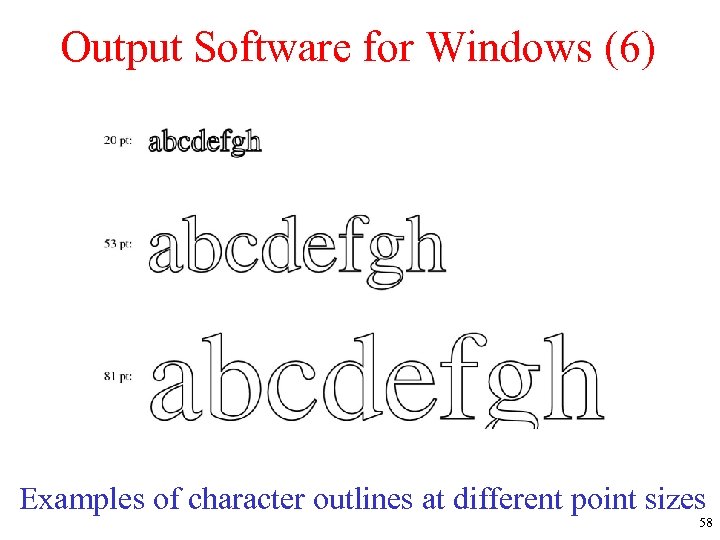 Output Software for Windows (6) Examples of character outlines at different point sizes 58
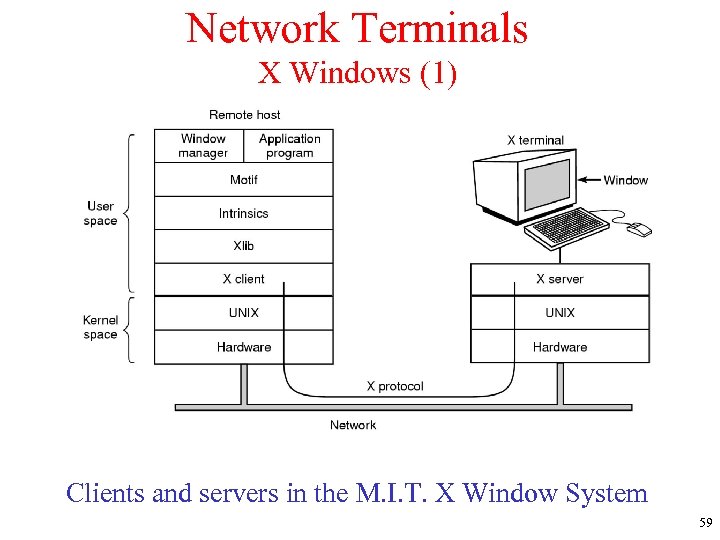 Network Terminals X Windows (1) Clients and servers in the M. I. T. X Window System 59
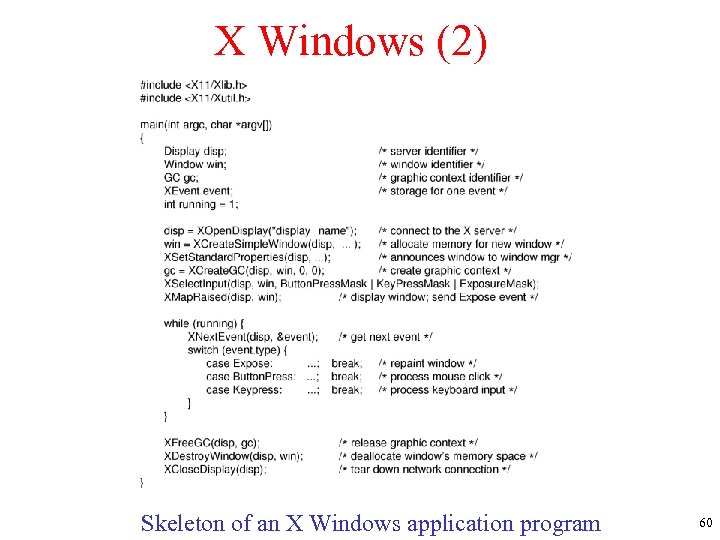 X Windows (2) Skeleton of an X Windows application program 60
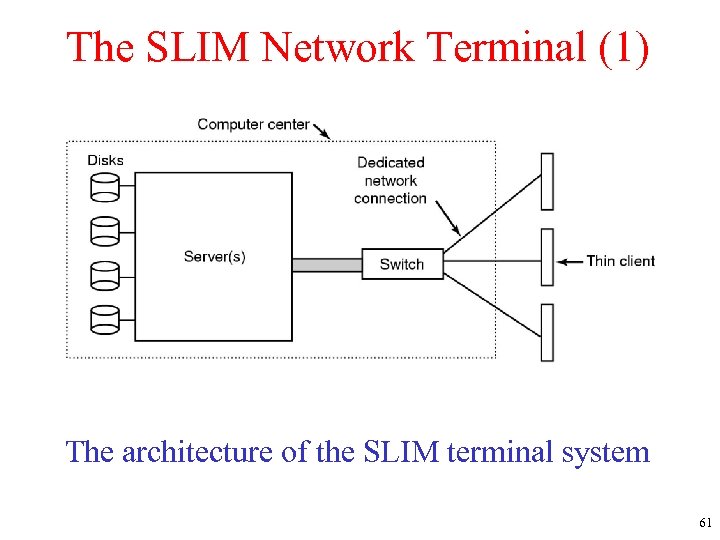 The SLIM Network Terminal (1) The architecture of the SLIM terminal system 61
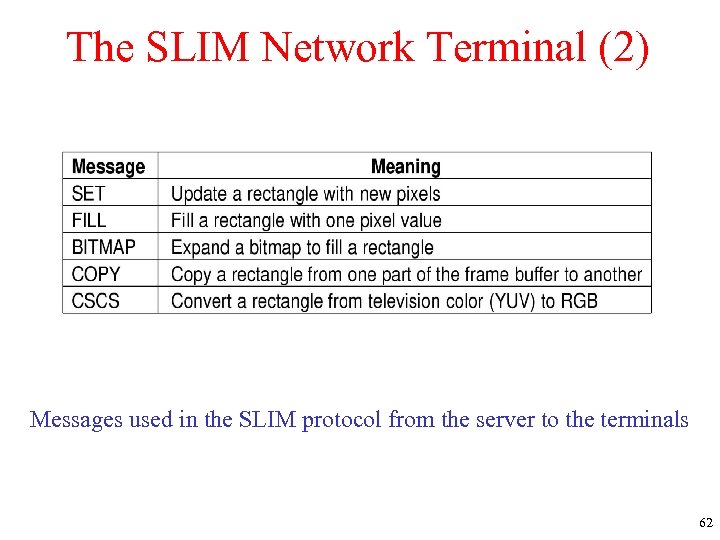 The SLIM Network Terminal (2) Messages used in the SLIM protocol from the server to the terminals 62
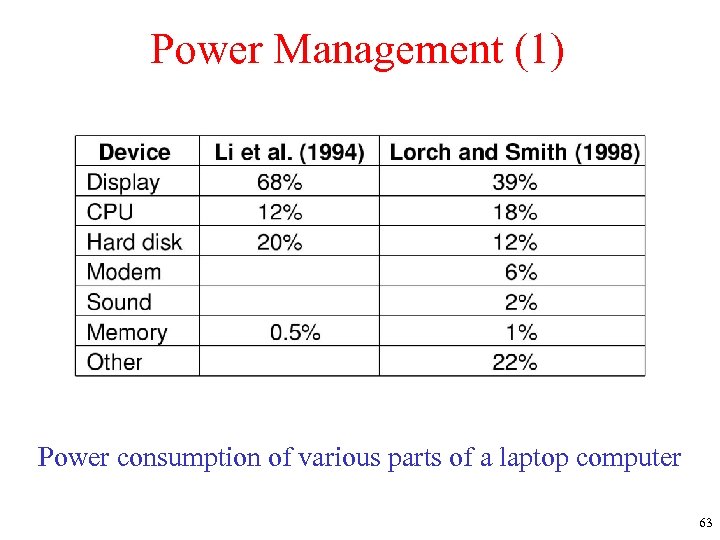 Power Management (1) Power consumption of various parts of a laptop computer 63
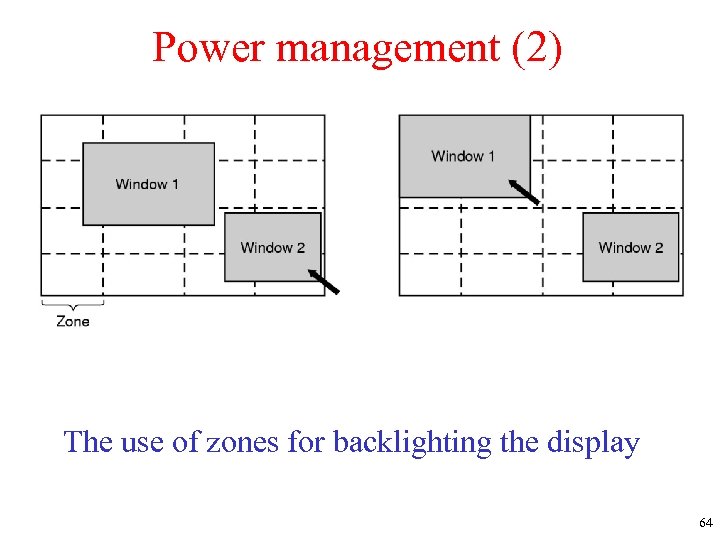 Power management (2) The use of zones for backlighting the display 64
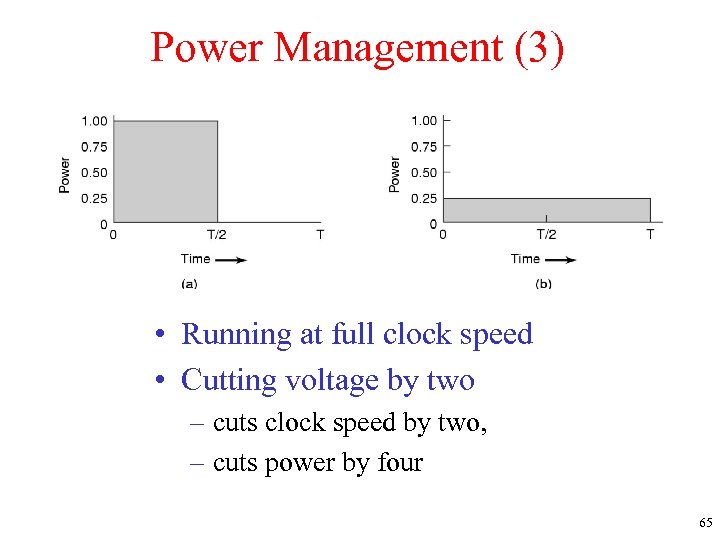 Power Management (3) • Running at full clock speed • Cutting voltage by two – cuts clock speed by two, – cuts power by four 65
 Power Management (4) • Telling the programs to use less energy – may mean poorer user experience • Examples – change from color output to black and white – speech recognition reduces vocabulary – less resolution or detail in an image 66