


 Скачать презентацию CHAPTER 5 Duane A Garrett Jason S
33c8845475cd5117fc15b33a26bf1d87.ppt
- Количество слайдов: 12
 CHAPTER 5 Duane A. Garrett & Jason S. De. Rouchie A MODERN GRAMMAR FOR BIBLICAL HEBREW (B&H, 2009)
 Gender and Number in Nouns CHAPTER 5
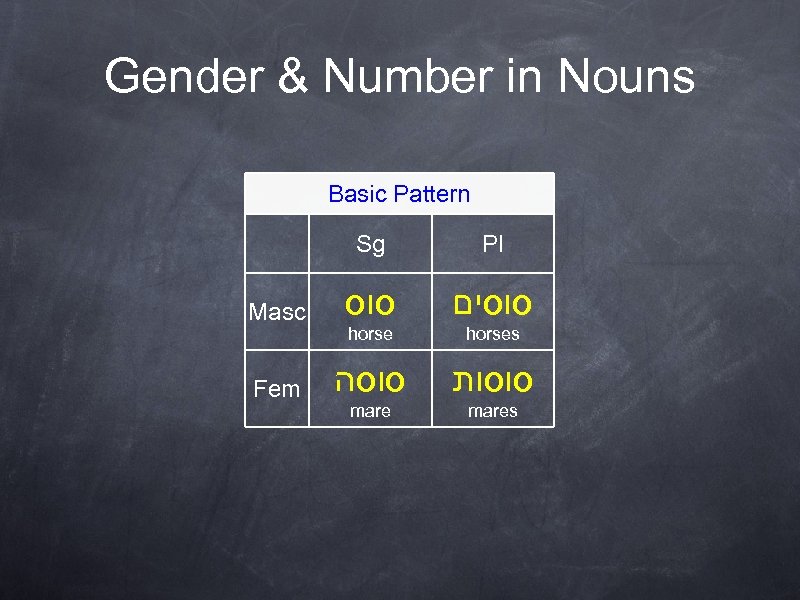 Gender & Number in Nouns Basic Pattern Sg Pl Masc סוסים horses Fem סוסה סוסות mares
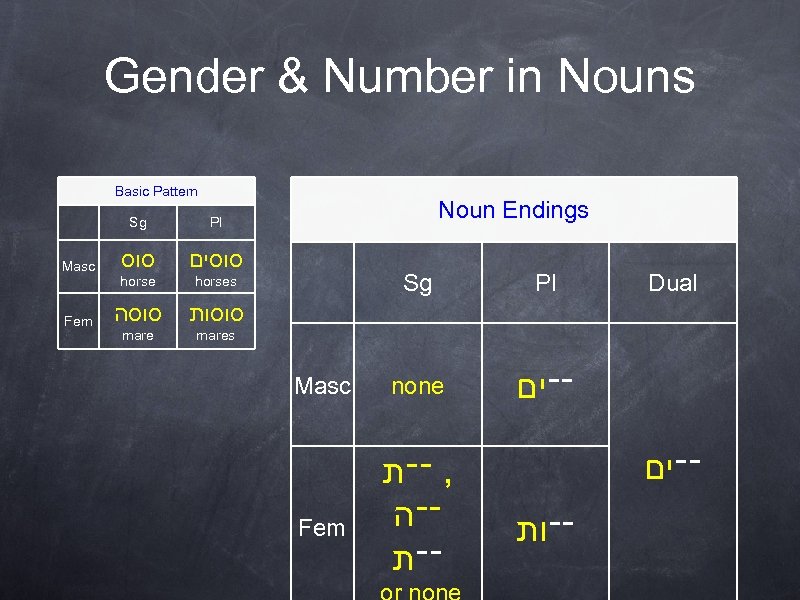 Gender & Number in Nouns Basic Pattern Sg Masc Fem סוסים horses סוסה סוסות mare Noun Endings Pl mares Sg Masc Fem Pl none ־־ים , ־־ת ־־ה ־־ת Dual ־־ים ־־ות
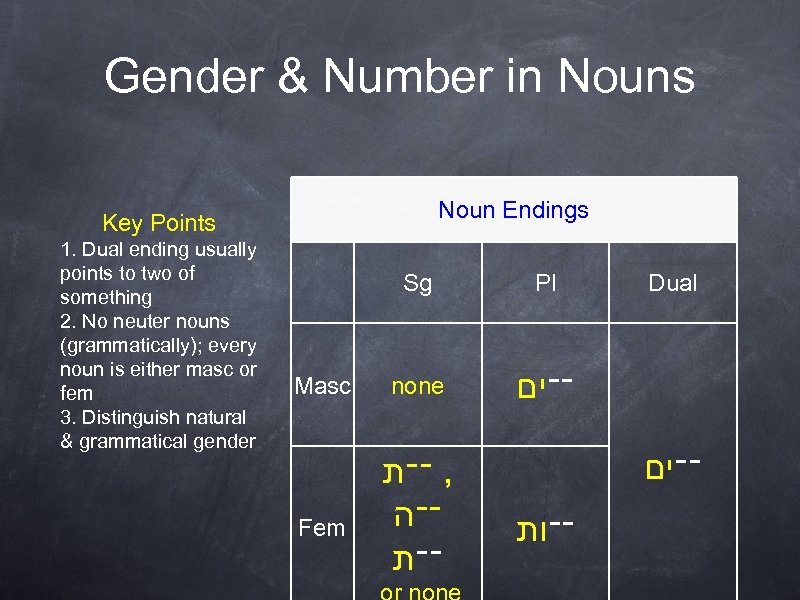 Gender & Number in Nouns Noun Endings Key Points 1. Dual ending usually points to two of something 2. No neuter nouns (grammatically); every noun is either masc or fem 3. Distinguish natural & grammatical gender Sg Masc Fem Pl none ־־ים , ־־ת ־־ה ־־ת Dual ־־ים ־־ות
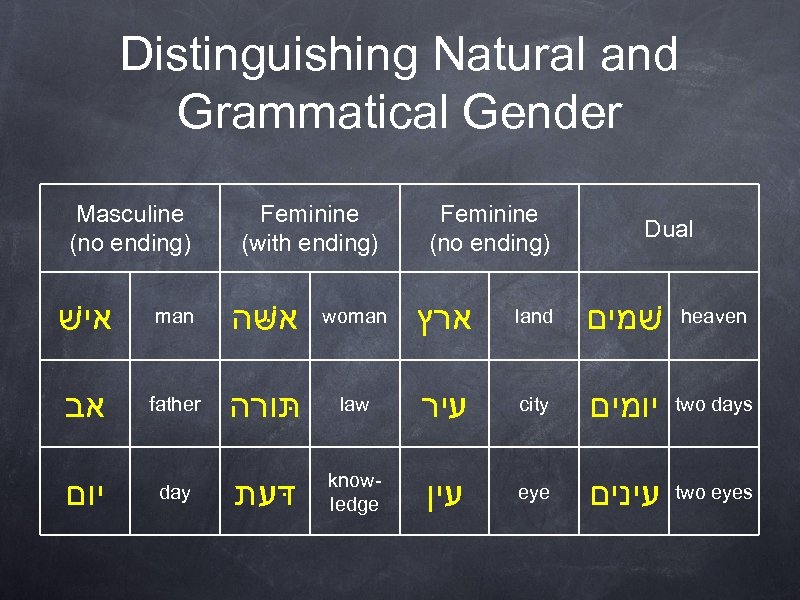 Distinguishing Natural and Grammatical Gender Masculine (no ending) Feminine (with ending) Feminine (no ending) Dual אישׁ man אשּׁה woman ארץ land שׁמים heaven אב father תּורה law עיר city יומים two days יום day דּעת knowledge עין eye עינים two eyes
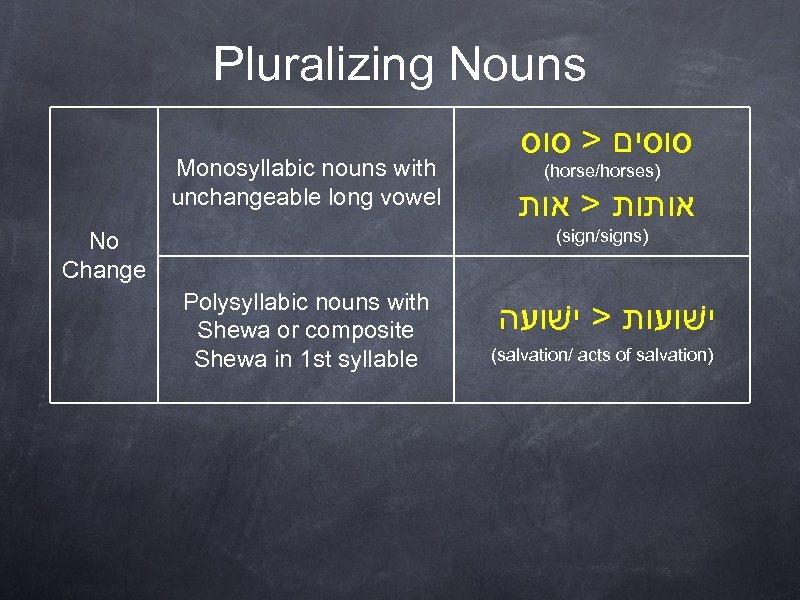 Pluralizing Nouns Monosyllabic nouns with unchangeable long vowel סוסים > סוס (horse/horses) אותות > אות (sign/signs) No Change Polysyllabic nouns with Shewa or composite Shewa in 1 st syllable ישׁועות > ישׁועה (salvation/ acts of salvation)
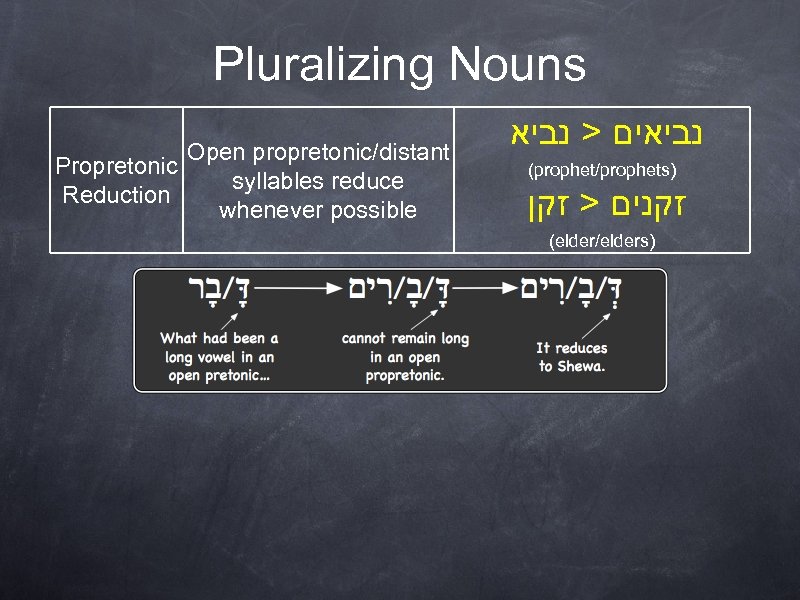 Pluralizing Nouns Open propretonic/distant Propretonic syllables reduce Reduction whenever possible נביאים > נביא (prophet/prophets) זקנים > זקן (elder/elders)
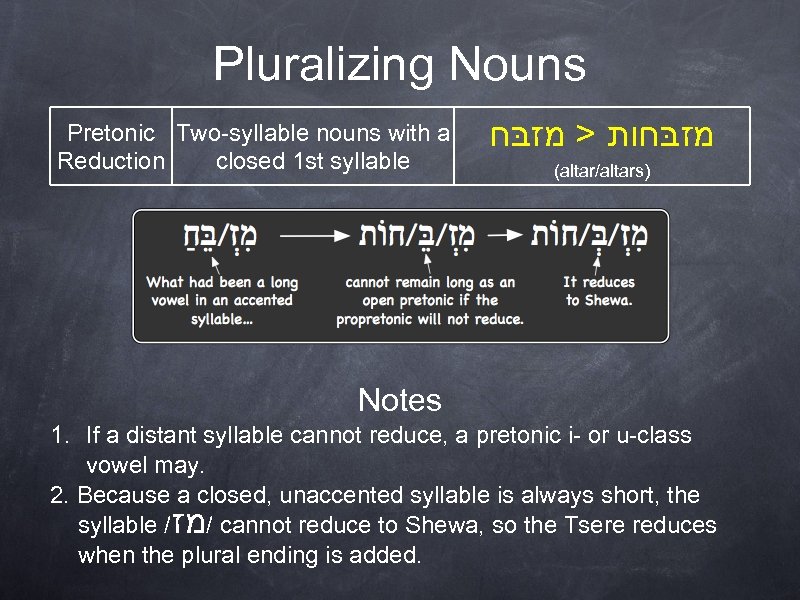 Pluralizing Nouns Pretonic Two-syllable nouns with a Reduction closed 1 st syllable מזבּחות > מזבּח (altar/altars) Notes 1. If a distant syllable cannot reduce, a pretonic i- or u-class vowel may. 2. Because a closed, unaccented syllable is always short, the syllable / /מז cannot reduce to Shewa, so the Tsere reduces when the plural ending is added.
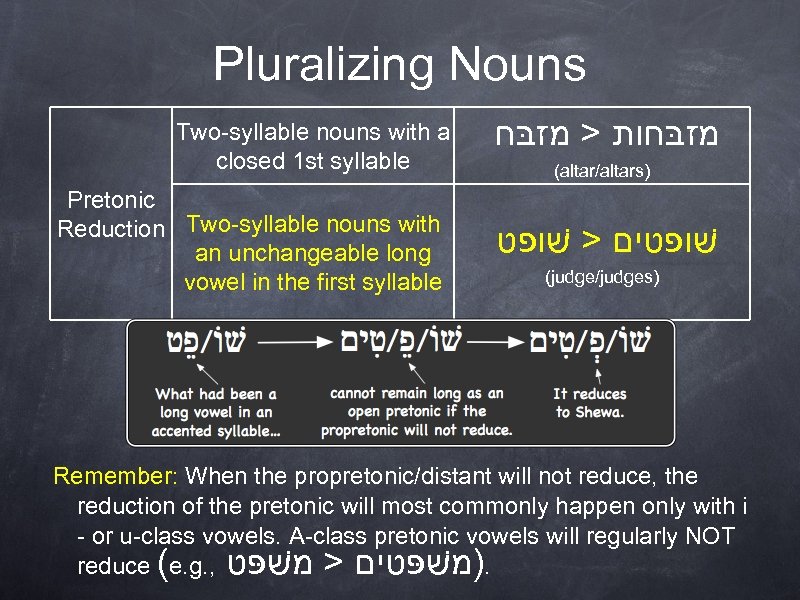 Pluralizing Nouns Two-syllable nouns with a closed 1 st syllable Pretonic Reduction Two-syllable nouns with an unchangeable long vowel in the first syllable מזבּחות > מזבּח (altar/altars) שׁופטים > שׁופט (judge/judges) Remember: When the propretonic/distant will not reduce, the reduction of the pretonic will most commonly happen only with i - or u-class vowels. A-class pretonic vowels will regularly NOT reduce (e. g. , . )משׁפּטים > משׁפּט
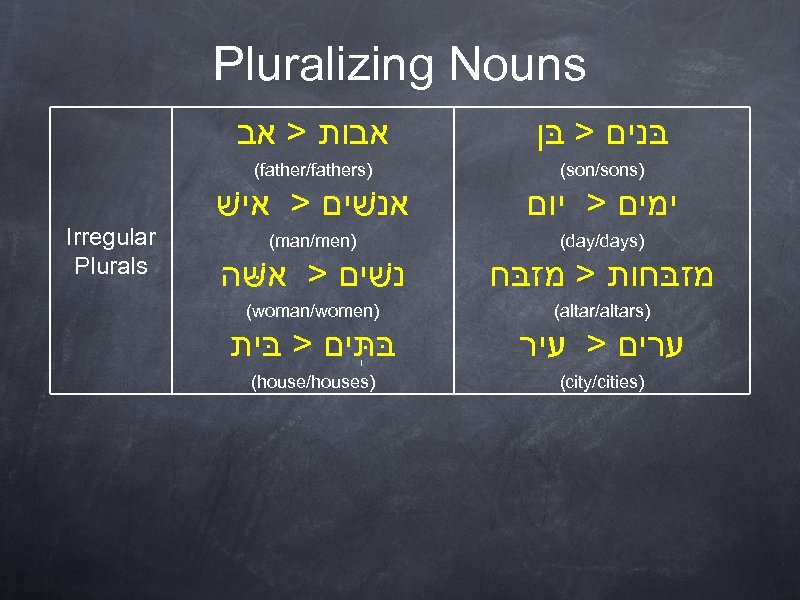 Pluralizing Nouns אבות > אב (father/fathers) (son/sons) אנשׁים > אישׁ Irregular Plurals בּנים > בּן ימים > יום (man/men) (day/days) נשׁים > אשּׁה מזבּחות > מזבּח (woman/women) (altar/altars) בּתּים > בּית ערים > עיר (house/houses) (city/cities)
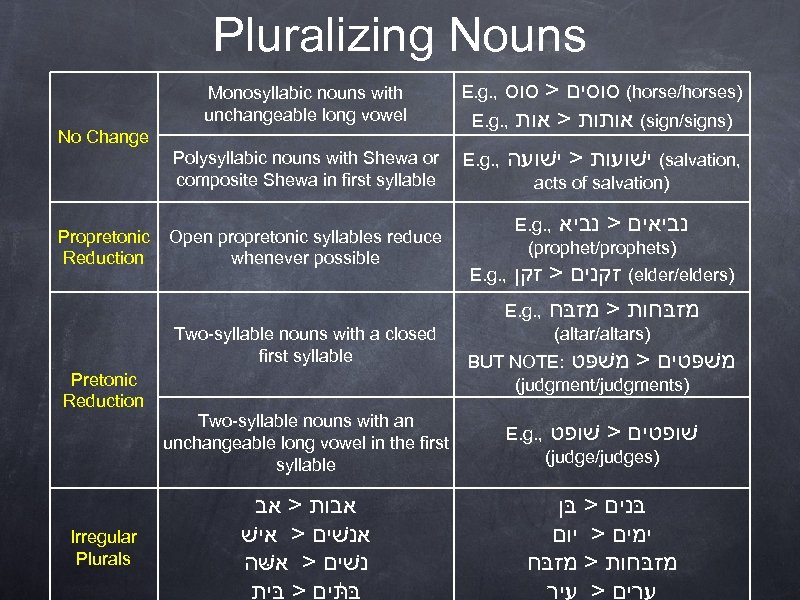 Pluralizing Nouns ( סוסים > סוס horse/horses) E. g. , ( אותות > אות sign/signs) Monosyllabic nouns with unchangeable long vowel E. g. , Polysyllabic nouns with Shewa or composite Shewa in first syllable E. g. , No Change Propretonic Reduction Open propretonic syllables reduce whenever possible ( ישׁועות > ישׁועה salvation, acts of salvation) E. g. , נביאים > נביא (prophet/prophets) E. g. , ( זקנים > זקן elder/elders) E. g. , Two-syllable nouns with a closed first syllable Pretonic Reduction Irregular Plurals Two-syllable nouns with an unchangeable long vowel in the first syllable אבות > אב אנשׁים > אישׁ נשׁים > אשּׁה בּתּים > בּית מזבּחות > מזבּח (altar/altars) BUT NOTE: משׁפּטים > משׁפּט (judgment/judgments) E. g. , שׁופטים > שׁופט (judge/judges) בּנים > בּן ימים > יום מזבּחות > מזבּח ערים > עיר