


 Скачать презентацию Chapter 5 COLONIAL SOCIETY ON THE EVE OF
fdbfc23b3b75e9eef3c344b5cd6171ba.ppt
- Количество слайдов: 26
 Chapter 5 COLONIAL SOCIETY ON THE EVE OF REVOLUTION
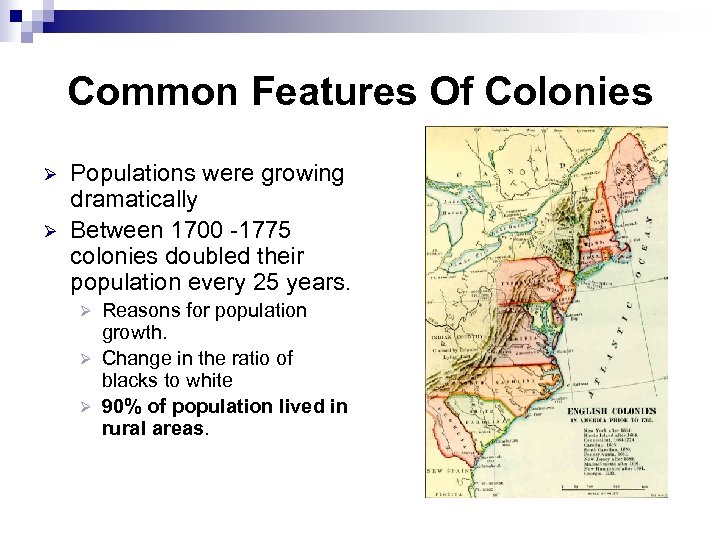 Common Features Of Colonies Ø Ø Populations were growing dramatically Between 1700 -1775 colonies doubled their population every 25 years. Reasons for population growth. Ø Change in the ratio of blacks to white Ø 90% of population lived in rural areas. Ø
 Population Location Most of population cooped up between Atlantic and Appalachian, n Vanguard of settlers across mountains and as far as Tenn. and Kentucky. n Va. , Mass. , Pa, NC and Maryland were the biggest colonies, in that order. n Philly the biggest city with 34, 000. n
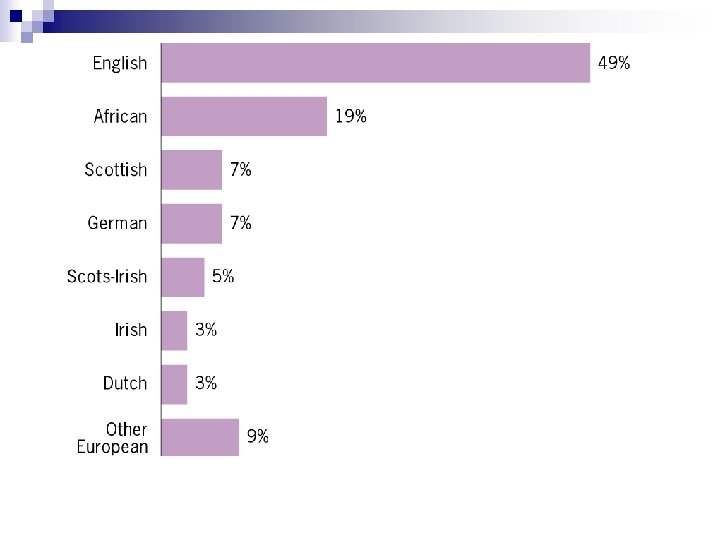
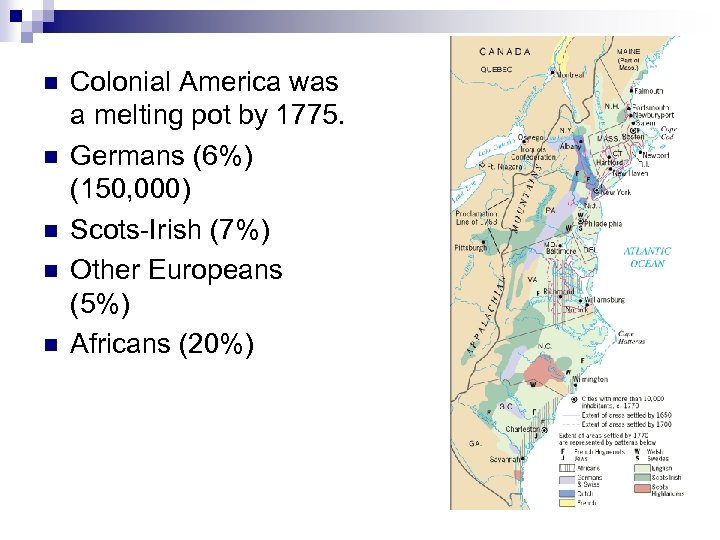 n n n Colonial America was a melting pot by 1775. Germans (6%) (150, 000) Scots-Irish (7%) Other Europeans (5%) Africans (20%)
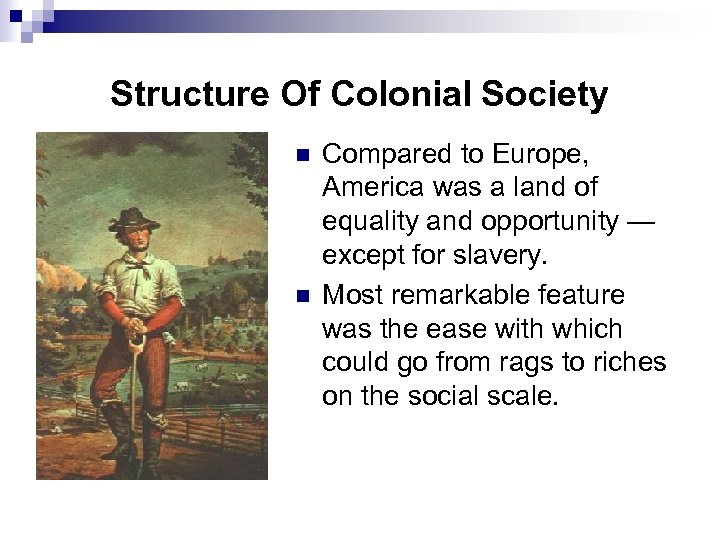 Structure Of Colonial Society n n Compared to Europe, America was a land of equality and opportunity — except for slavery. Most remarkable feature was the ease with which could go from rags to riches on the social scale.
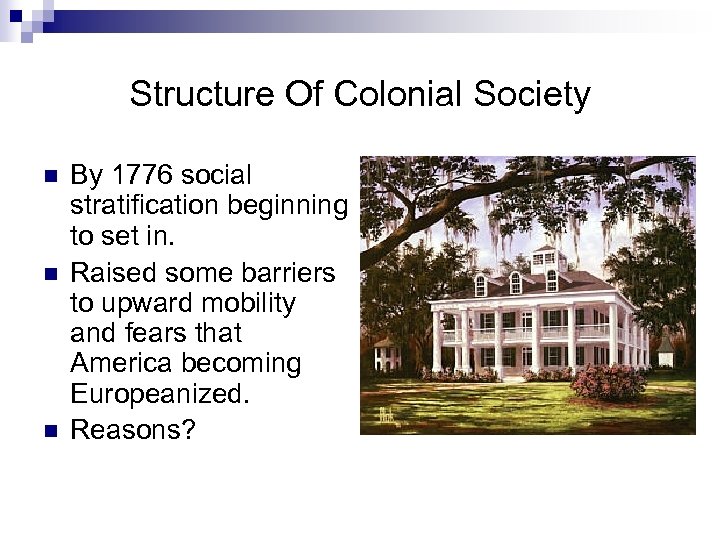 Structure Of Colonial Society n n n By 1776 social stratification beginning to set in. Raised some barriers to upward mobility and fears that America becoming Europeanized. Reasons?
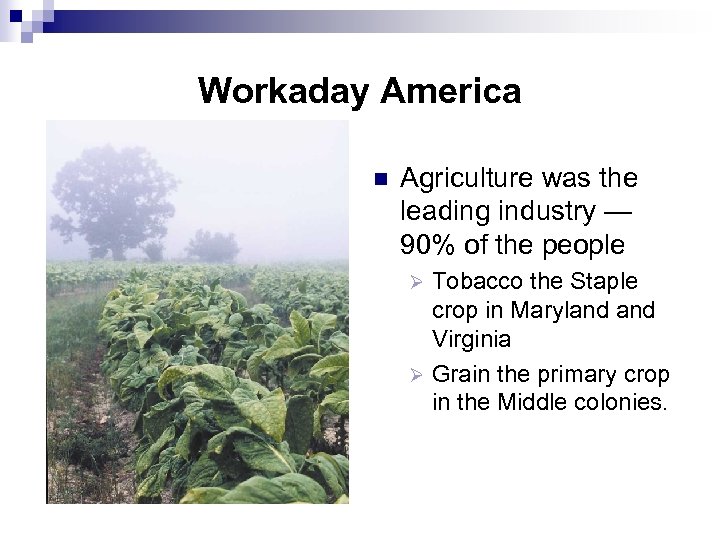 Workaday America n Agriculture was the leading industry — 90% of the people Tobacco the Staple crop in Maryland Virginia Ø Grain the primary crop in the Middle colonies. Ø
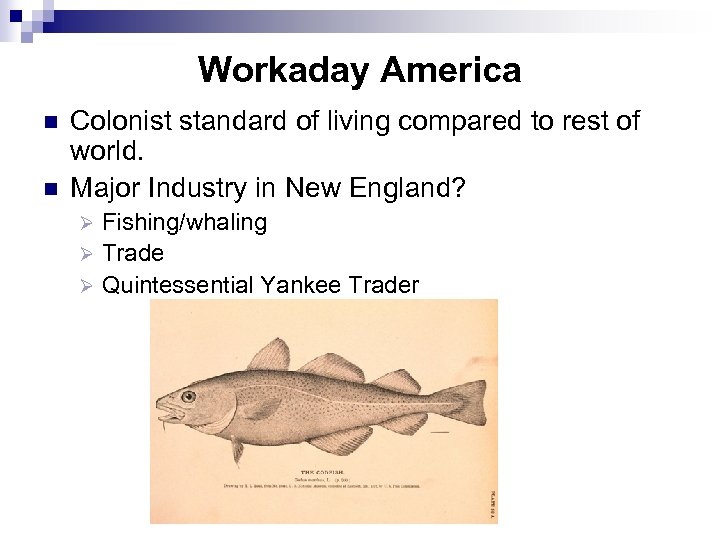 Workaday America n n Colonist standard of living compared to rest of world. Major Industry in New England? Fishing/whaling Ø Trade Ø Quintessential Yankee Trader Ø
 Nature of Trade What was being traded to Europe? n From Europe? n What is the Triangular Trade? n
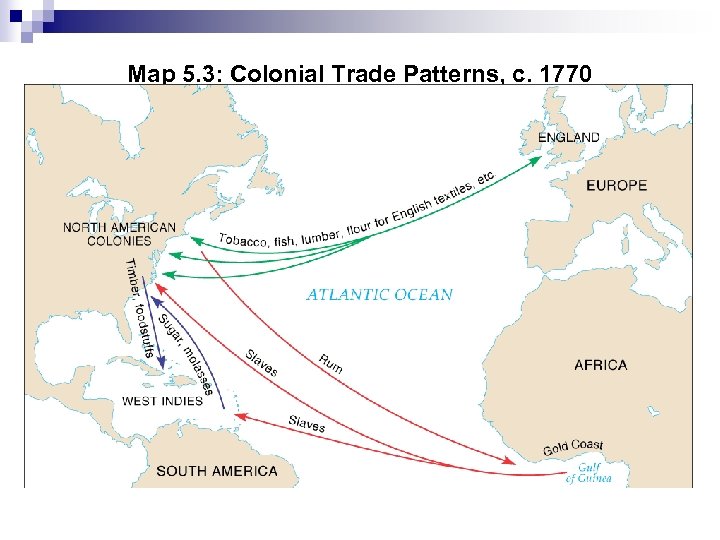 Map 5. 3: Colonial Trade Patterns, c. 1770
 Colonial Manufacturing was limited and only of secondary importance. n Reasons: n Ø 1)partly due to lack of money to invest Ø 2) partly due to lack of laborers and Ø 3) partly due to mercantilism.
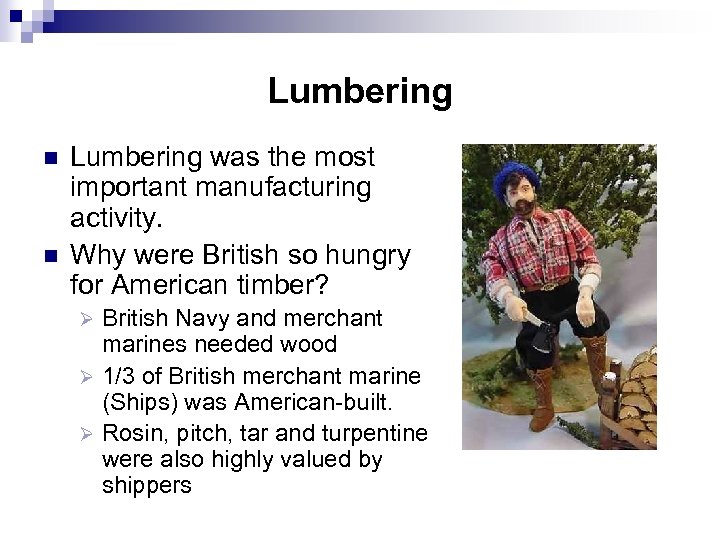 Lumbering n n Lumbering was the most important manufacturing activity. Why were British so hungry for American timber? British Navy and merchant marines needed wood Ø 1/3 of British merchant marine (Ships) was American-built. Ø Rosin, pitch, tar and turpentine were also highly valued by shippers Ø
 Economic Problem in the 1730 s n What economic problems faced US in 1730 s? England saturated with American products. Ø Americans need cash and the only way to get cash is through sale of American goods. Ø Thus, Americans want to tap other markets to sell their goods. Ø Are shipping a lot of timber and food to the French West Indies, which is providing cash for Americans to buy from England. Ø But……… Ø
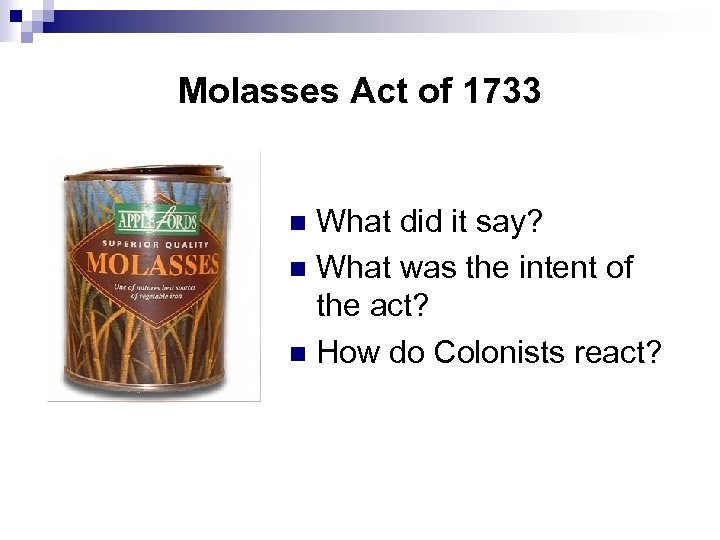 Molasses Act of 1733 What did it say? n What was the intent of the act? n How do Colonists react? n
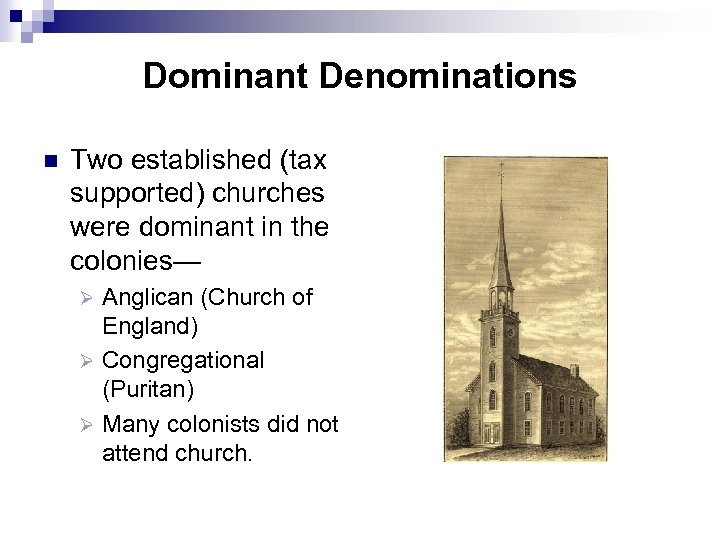 Dominant Denominations n Two established (tax supported) churches were dominant in the colonies— Anglican (Church of England) Ø Congregational (Puritan) Ø Many colonists did not attend church. Ø
 Anglican Church n n n n Official church in Ga. , North and South Carolina, Va. and Maryland. Strongest in the south Why did Britain want to increase its power? Not very fervent. Clergy was poorly trained. Anglicans lacked a bishop in America, thus all ministers had to train in England. Colonists resisted idea of an American Bishop. Ø Why?
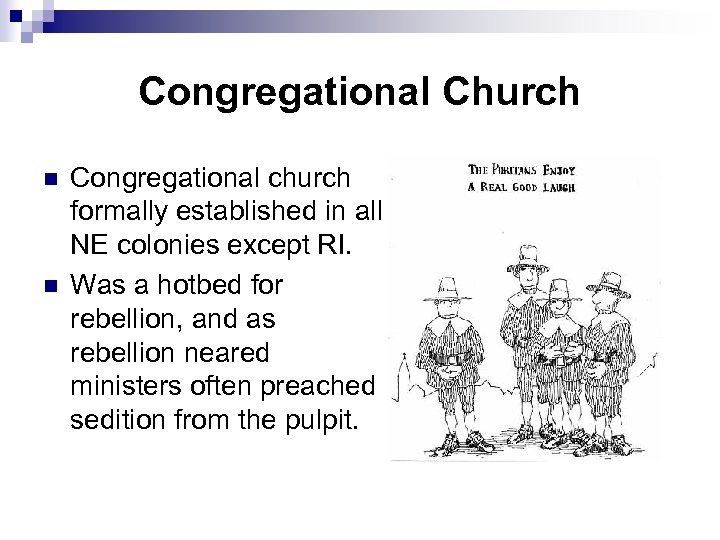 Congregational Church n n Congregational church formally established in all NE colonies except RI. Was a hotbed for rebellion, and as rebellion neared ministers often preached sedition from the pulpit.
 The Great Awakening n Causes: Ø People less fervent. Ø Puritan churches struggling. Why? Ø “Dead dog” ministers. Ø Ministers worried that the people had grown soft. Ø Liberal ideas began to challenge old time religion.
 The Great Awakening A religious revival in 1730 -40’s n Spread like wildfire. n Was a reaction against the rationalism and enlightenment of the period that put reason above God. n Reaction against complacency of religion. n First North American Mass Movement n
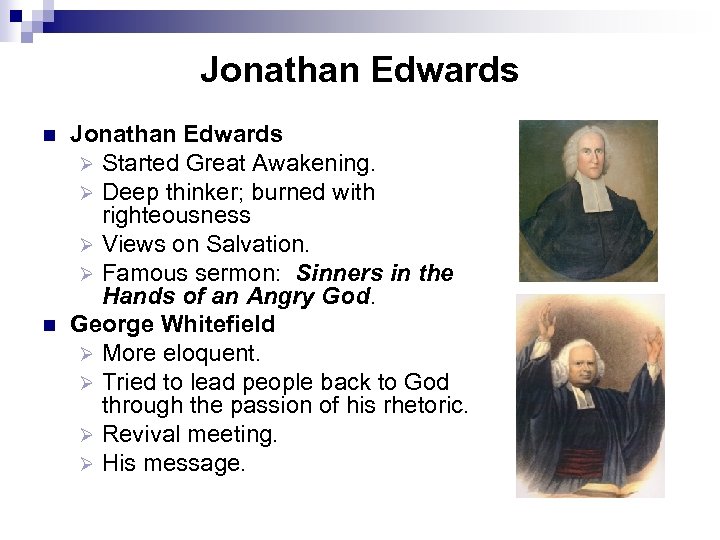 Jonathan Edwards n n Jonathan Edwards Ø Started Great Awakening. Ø Deep thinker; burned with righteousness Ø Views on Salvation. Ø Famous sermon: Sinners in the Hands of an Angry God. George Whitefield Ø More eloquent. Ø Tried to lead people back to God through the passion of his rhetoric. Ø Revival meeting. Ø His message.
 Results of the Great Awakening People split off to new churches n Undermined older clergy n New denominations n Increased missionary work n Founding of new colleges n Broke down sectional boundaries and contributed to sense of Americans as one people. n
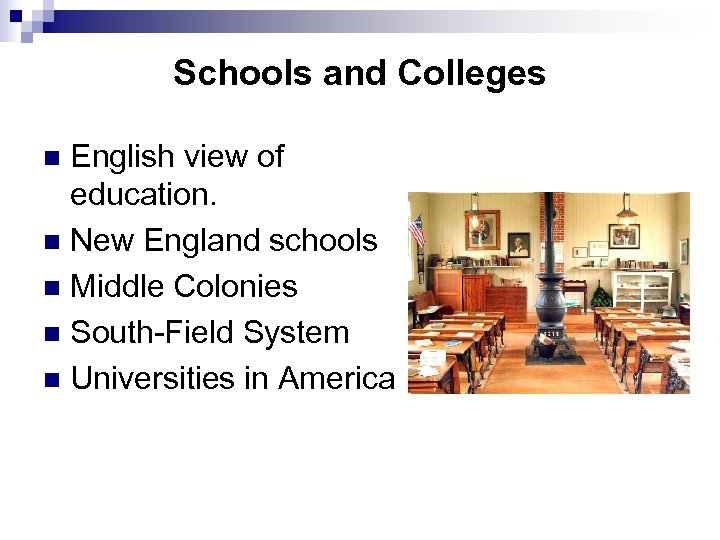 Schools and Colleges English view of education. n New England schools n Middle Colonies n South-Field System n Universities in America n
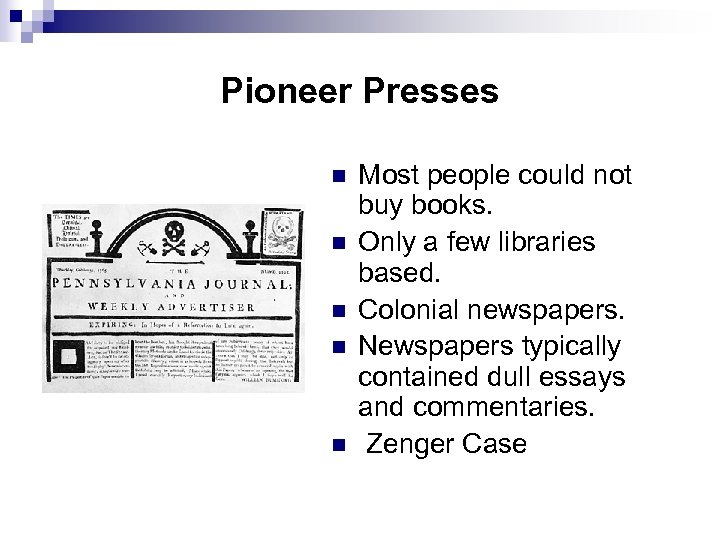 Pioneer Presses n n n Most people could not buy books. Only a few libraries based. Colonial newspapers. Newspapers typically contained dull essays and commentaries. Zenger Case
 Government In The Colonies n Originally: 8 were royal colonies. Ø 3 were proprietorships ( Maryland, Pennsylvania, and Delaware) Ø 2 had self-governing charters (Connecticut and Rhode Island. ) Ø n By time of Revolution, most were royal.
 Common Features in Governments Almost all the colonies used a two-house legislature. n Powers of Legislatures n Ability to Control the Governors n Religious and/or property-owning requirements for vote existed in all colonies. n