


 Скачать презентацию Chapter 4 The Law of Demand What
8ec7c3e8369bddd2e6fd298a6b0df664.ppt
- Количество слайдов: 31
 Chapter 4 The Law of Demand
 What is Demand? § Quantity demanded of a product or service is the number that would be bought by the public at a given price
 The Law of Demand § When a good’s price is lower, consumers will buy more of it § When a good’s price is higher, consumers will buy less of it
 The Law of Demand § The Law of Demand is affected by two behavior patterns § The Substitution Effect § The Income Effect
 The Substitution Effect § As the price for one good rises compared to a similar good, consumers will substitute the similar good for their purchases.
 The Income Effect § As prices go up, your money becomes worth less than it was worth before § People are less likely to buy the good now
 Demand Schedule § A demand schedule shows the likely number of purchases based on a series of arbitrarily chosen prices
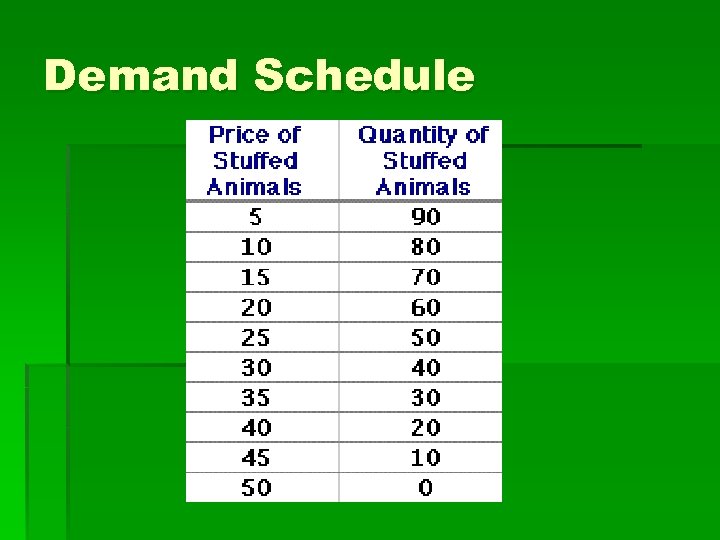 Demand Schedule
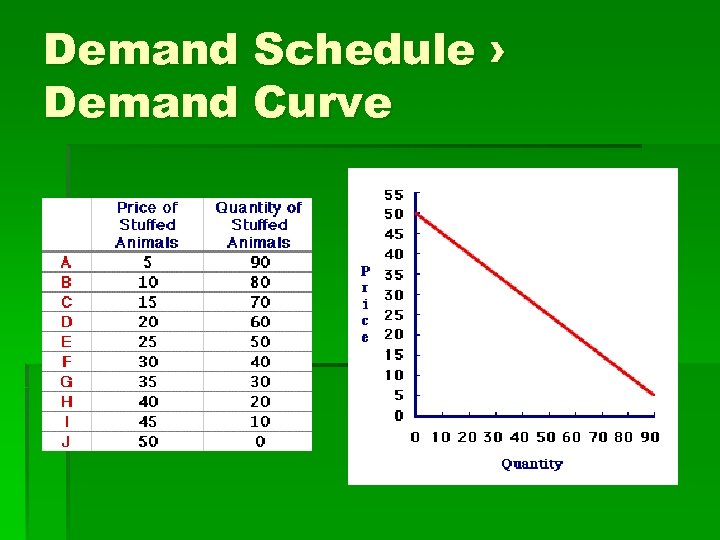 Demand Schedule › Demand Curve
 A Change (Shift) in Demand § If one of 5 other factors changes, the entire demand curve will shift to the left or right § The curve does NOT shift if the price of the good is the only change
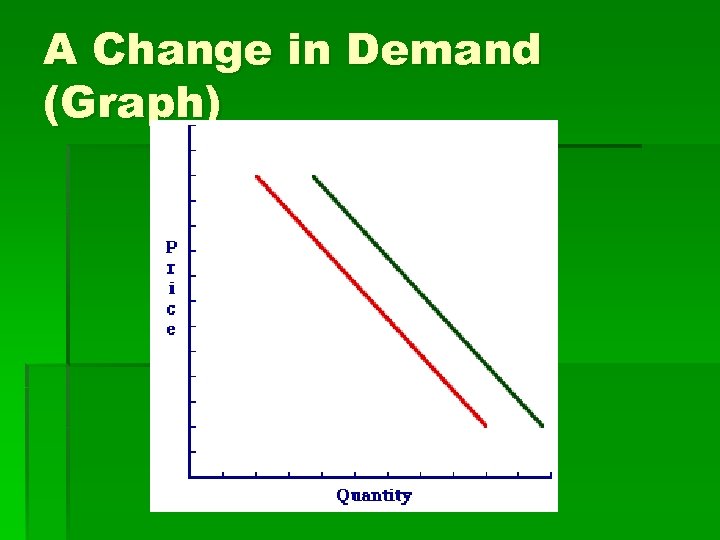 A Change in Demand (Graph)
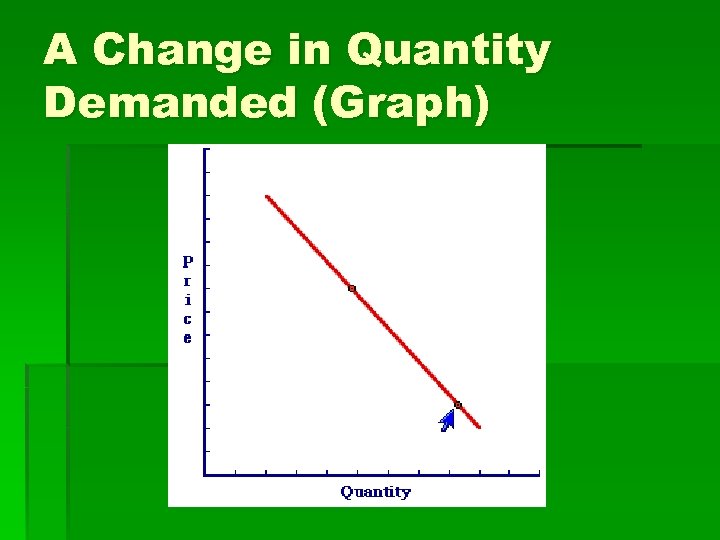 A Change in Quantity Demanded (Graph)
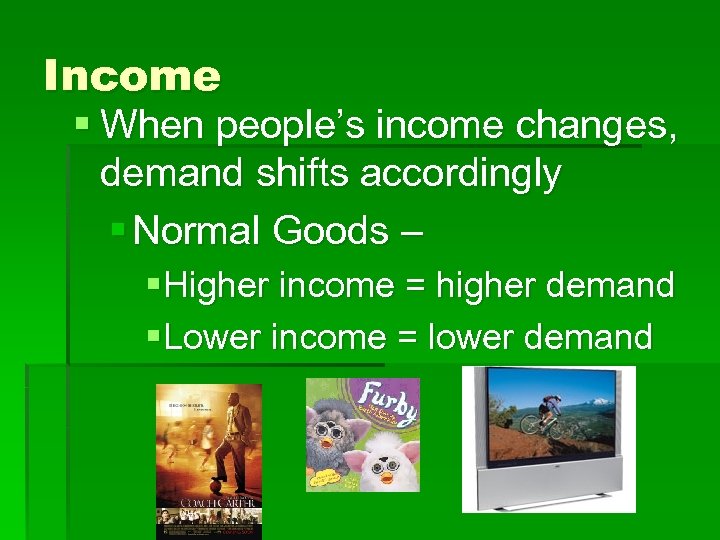 Income § When people’s income changes, demand shifts accordingly § Normal Goods – § Higher income = higher demand § Lower income = lower demand
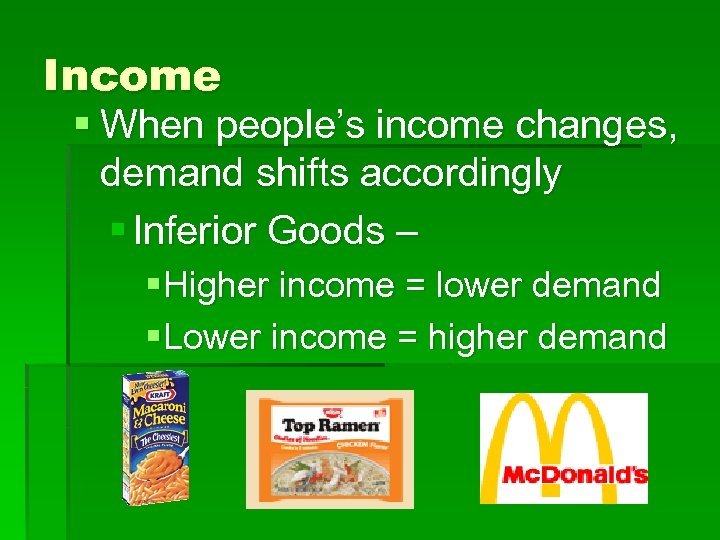 Income § When people’s income changes, demand shifts accordingly § Inferior Goods – § Higher income = lower demand § Lower income = higher demand
 Consumer Expectations § If consumers expect a price to rise in the future, current demand increases § If consumers expect a price to fall in the future, current demand decreases
 Population § When one sector of the population grows, demand increases for products that sector uses § Fastest growing sector of the population today?
 Consumer Tastes and Advertising § Increased advertising can increase consumer demand § Bad news about a product can decrease demand
 Price of Related Goods § Complimentary Goods – goods that are bought and used together § Higher Complementary Price = decrease in demand § Lower Complementary Price = increase in demand
 Price of Related Goods § Substitute Goods – goods that are used in place of one another § Higher Substitute Price = increase in demand § Lower Substitute Price = decrease in demand
 Elasticity of Demand § Elasticity refers to how responsive the quantity demanded is to a change in prices
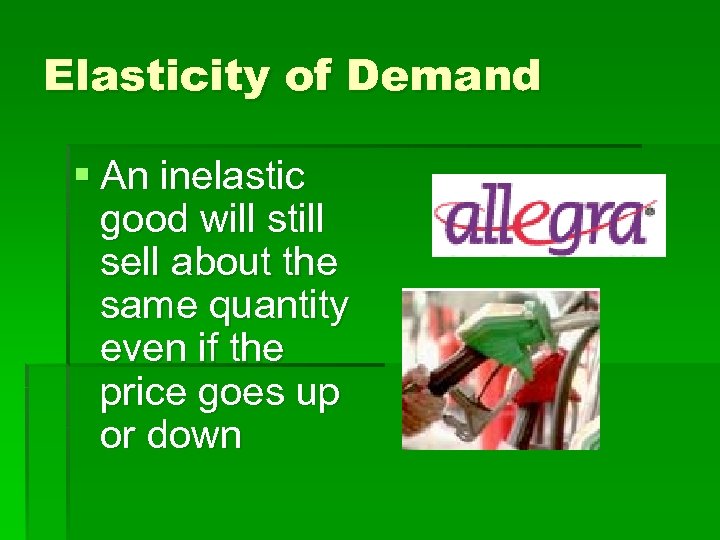 Elasticity of Demand § An inelastic good will still sell about the same quantity even if the price goes up or down
 Elasticity of Demand § An elastic good will have a higher change in Qd when there is a price change
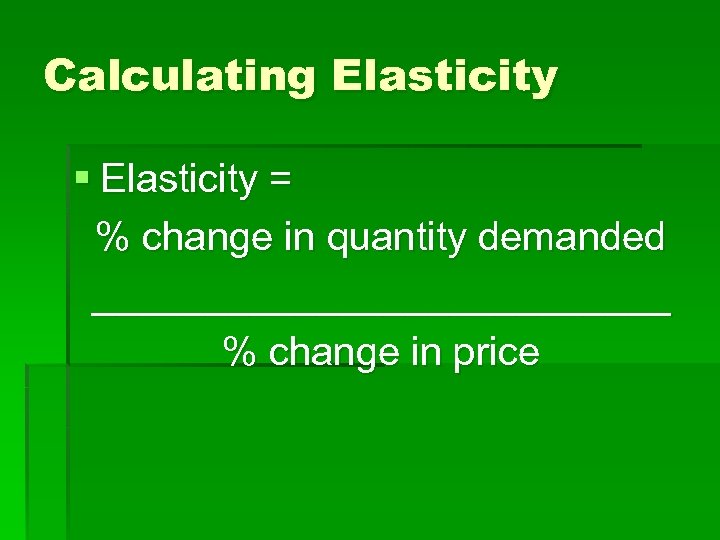 Calculating Elasticity § Elasticity = % change in quantity demanded _____________ % change in price
 Calculating Elasticity § If Elasticity is < 1, the good is inelastic § If Elasticity is > 1, the good is elastic § If Elasticity = 1, the good has a unitary elastic demand
 Factors Affecting Elasticity § Availability of Substitutes – if you have no other options, demand is inelastic.
 Factors Affecting Elasticity § Availability of Substitutes – if you have equally appealing options, demand is highly elastic
 Factors Affecting Elasticity § Relative Importance – what percentage of your budget is spent on the good? § If it is low, price changes will not alter demand § If it is high, even small price changes can greatly affect demand
 Factors Affecting Elasticity § Necessities vs. Luxuries – consumption of milk might stay the same with price changes, while consumption of lobster would greatly change with price changes
 Factors Affecting Elasticity § Change over time – price changes may produce inelastic demand in the short term, but elastic demand long term § 1970 s fuel crisis – people still bought the same amount of gas at first, but eventually started buying smaller cars
 Elasticity and Revenue § Total Revenue – the amount of money a company receives by selling its good or service § With elastic demand, revenue will decrease greatly with price increases
 Elasticity and Revenue § With Inelastic demand, price increases will increase revenue