


 Скачать презентацию CHAPTER 4 FOLK AND POPULAR CULTURE I
8817db7d50de5f4a77621b08eec9403e.ppt
- Количество слайдов: 38
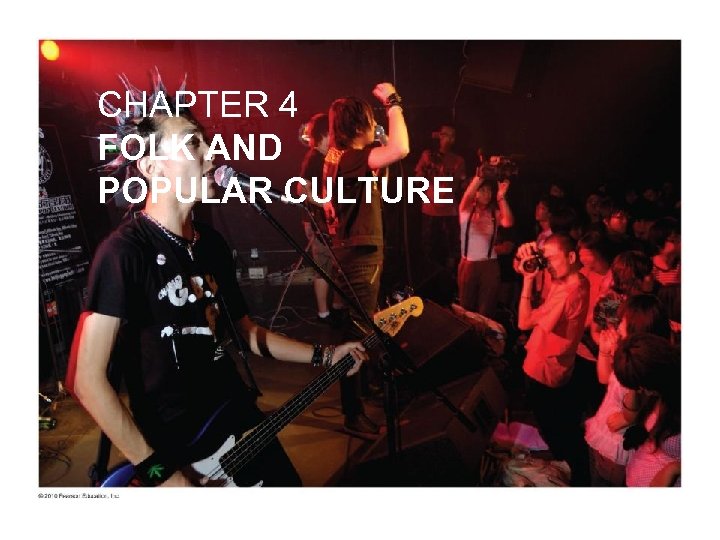 CHAPTER 4 FOLK AND POPULAR CULTURE
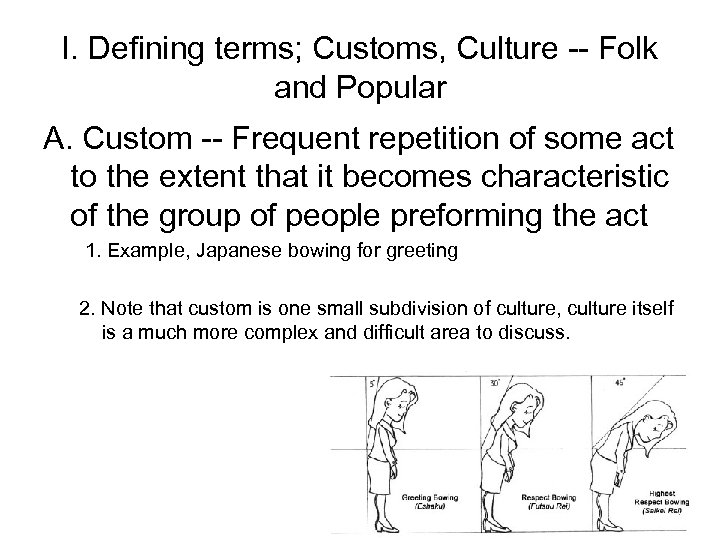 I. Defining terms; Customs, Culture -- Folk and Popular A. Custom -- Frequent repetition of some act to the extent that it becomes characteristic of the group of people preforming the act 1. Example, Japanese bowing for greeting 2. Note that custom is one small subdivision of culture, culture itself is a much more complex and difficult area to discuss.
 Defining terms… B. Culture body of – – – Material traits (Chap 4) Customary practices & beliefs (Chap 5 & 6) Social forms (Chap 7 & 8) Economic traits (Chap 9, 10, & 11) Constitute distinct tradition of a group
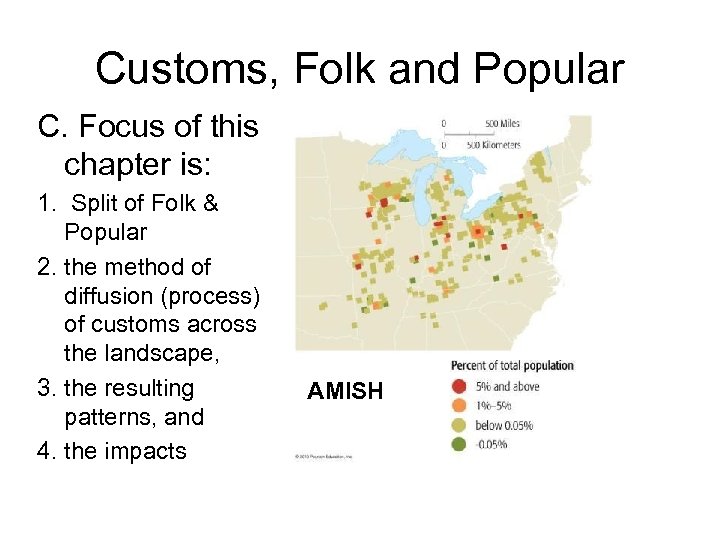 Customs, Folk and Popular C. Focus of this chapter is: 1. Split of Folk & Popular 2. the method of diffusion (process) of customs across the landscape, 3. the resulting patterns, and 4. the impacts AMISH
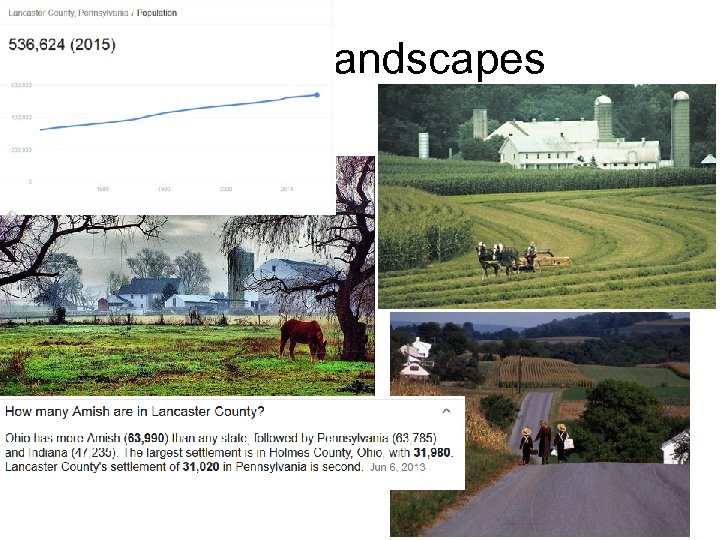 Amish Landscapes http: //farm 4. static. flickr. com/3117/2637074305_1791 d 49 b 02. jpg http: //www. brunswicktours. com/images/Amish. Far http: //imagecache 2. allposters. com/images/PTGPOD/3293 19 -FB. jpg m. jpg
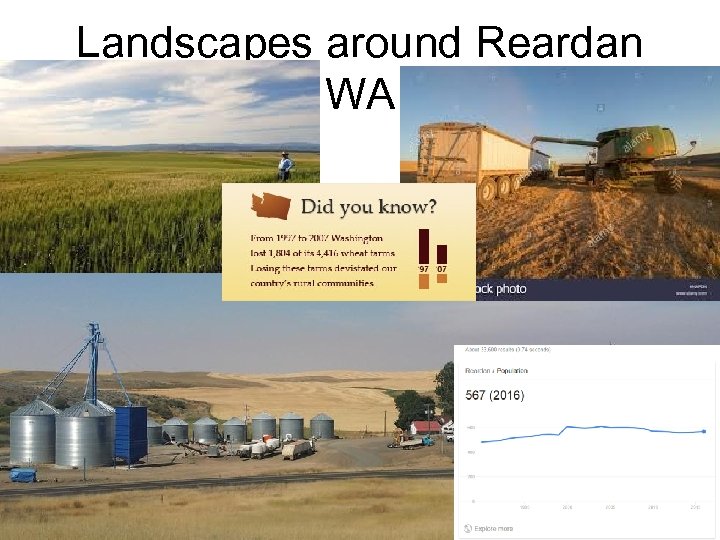 Landscapes around Reardan WA
 C. Divide customs into a dichotomy FOLK ------------ POPULAR for each will provide a definition, and discuss their – origin, – spread, – interaction, – and purpose.
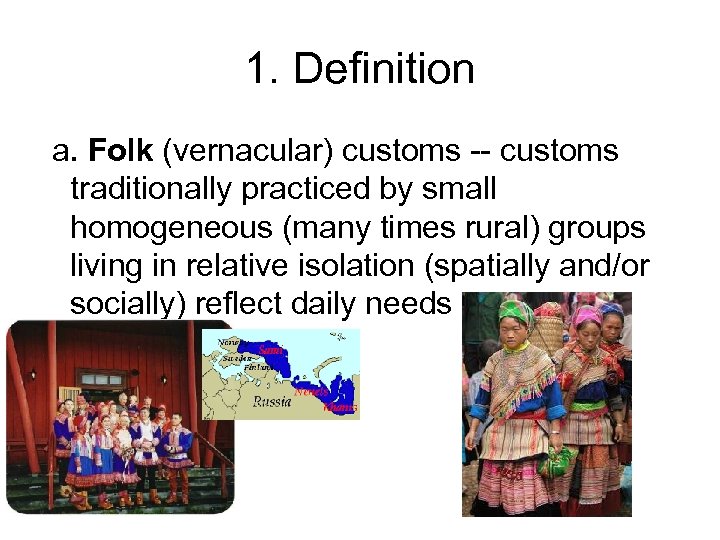 1. Definition a. Folk (vernacular) customs -- customs traditionally practiced by small homogeneous (many times rural) groups living in relative isolation (spatially and/or socially) reflect daily needs
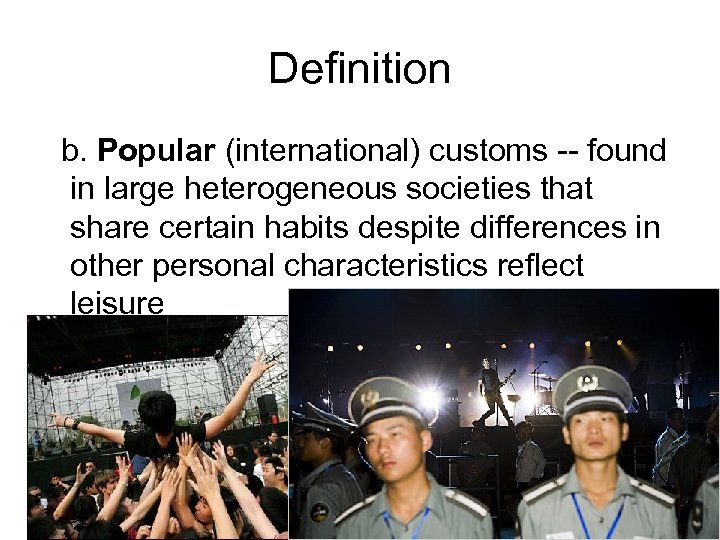 Definition b. Popular (international) customs -- found in large heterogeneous societies that share certain habits despite differences in other personal characteristics reflect leisure
 2. Origin a. Folk tend to be Anonymous - unknown person - unknown time - although often a general location for origin can be estimated 1) Example the song "La Bamba" -- many know this as older popular song in the US that initially was recorded by members of the Hispanic community in the 1960 s and revived in the late 1980 s, in fact La Bamba comes from a dance that entered Mexico along with African slaves perhaps as early as the 16 th century
 2. Origin b. Popular are products of industrial societies and result from a combination of: - more leisure time (results in demand for new activities) - more disposable income - industrial technology to enable reproduction 1) Since popular customs are usually reproduced for the purpose of commercial sale origin in time and place is crucial to protect Copyrights and Patents 2) Many times reproduction of outputs require skills that are not readily available to general public (i. e. can't be easily pirated) 3) Examples -- Hollywood movies, designer clothes
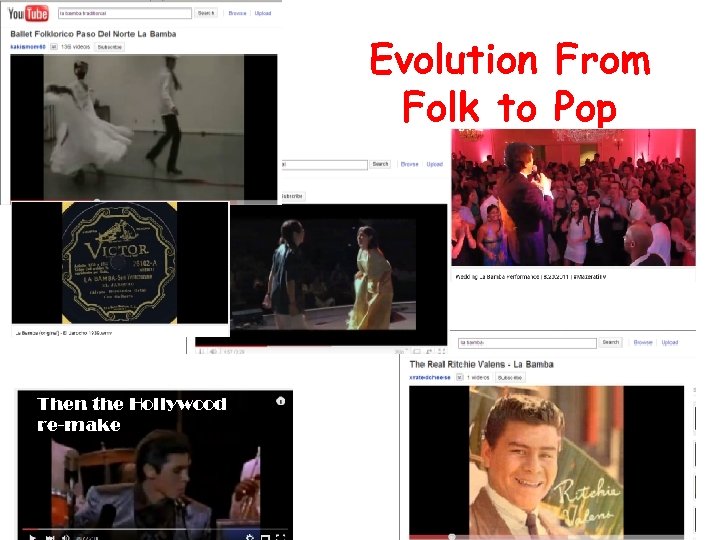 Evolution From Folk to Pop Then the Hollywood re-make
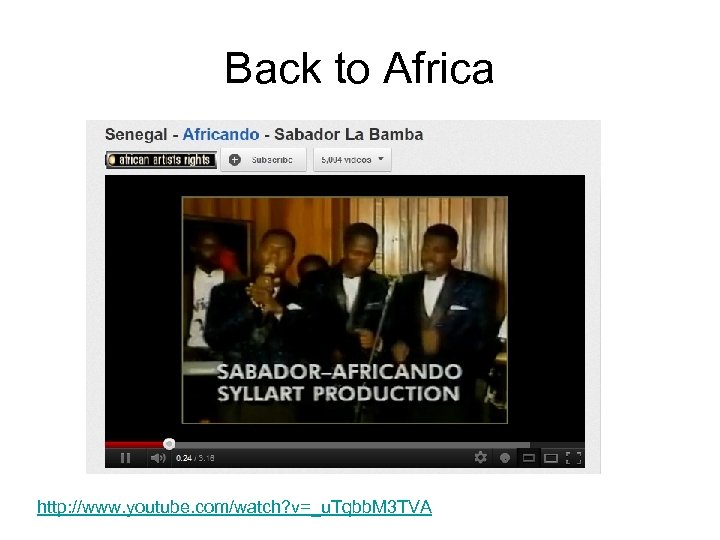 Back to Africa http: //www. youtube. com/watch? v=_u. Tqbb. M 3 TVA
 3. Spread and Interaction a. Folk 1) Primarily spread through relocation diffusion, result is slow spread and limited area of exposure 2) Usually limited interaction outside of originating group
 3. Spread and Interaction c. Example -- La Bamba started as a folk custom in Africa and only came to the America's with the relocation of people (enslaved Africans) and then remained only among the black migrants. It eventually spreads to other groups in Mexico based on face to face contact and eventually is brought to the US with Hispanic migration into the US. In the 1960's it becomes a commercial hit (i. e. becomes a popular rather than folk custom) and then is rapidly spread to every household in the country via radio. Note that this example also indicates that folk customs can be commercialized and become popular customs.
 3. Spread and Interaction b. Popular 1) Primarily spread through contagious or hierarchical diffusion assisted by mass media communication and modern transportation 2) Spread tends to be very rapid and over extensive area 3) Highly desirable to interact across cultures, countries, continents. . . (this is especially true for commercial customs)
 3. Spread and Interaction a. Example -- rock videos, a popular custom, are rapidly diffused via internet like You. Tube… are available simultaneously everywhere in the world due to satellites, and internet and are designed to appeal to a world audience. (“What does the Fox Say? ” http: //www. youtube. com/watch? v=jof. NR_Wko. CE ) b. Third example – clothes fashions – value depends on “ownership” and rapid diffusion
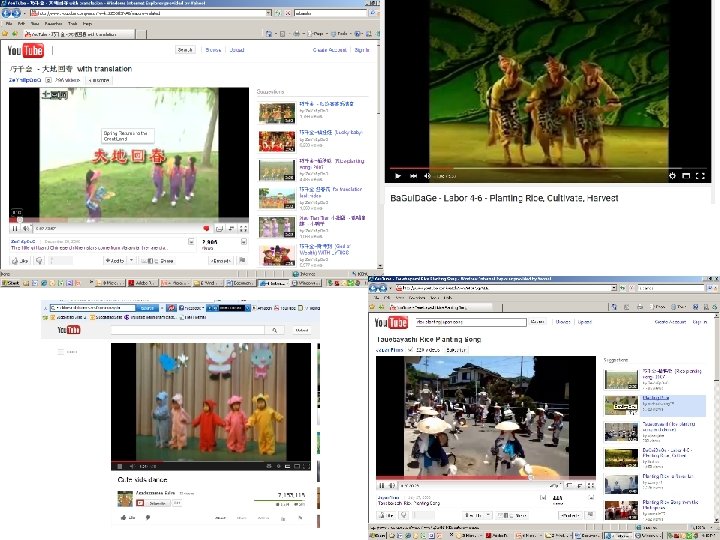
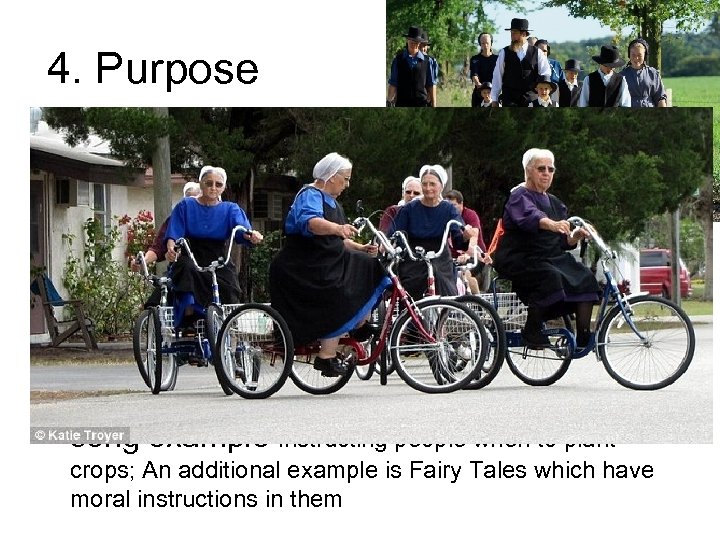 4. Purpose Folk 1) Usually arise out of necessities of life; food, shelter, clothing, maintenance of society, . . . although leisure can also be included (even in Third World countries people have some leisure time) 2) Rubenstein provides a Vietnamese folk song example instructing people when to plant crops; An additional example is Fairy Tales which have moral instructions in them
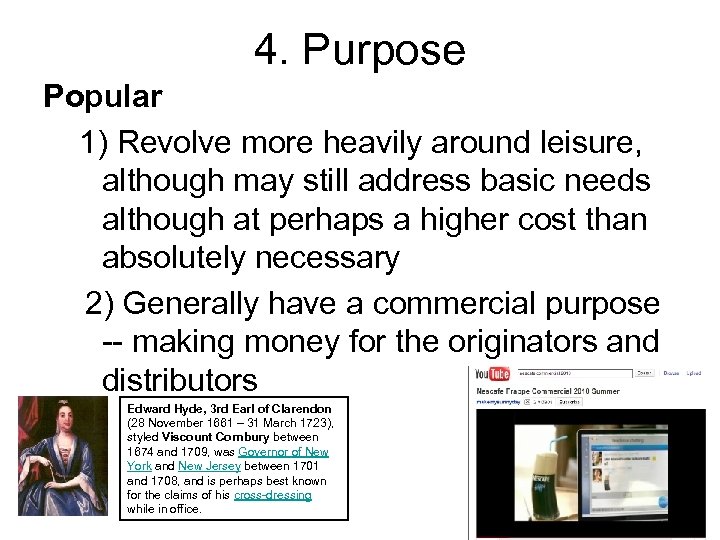 4. Purpose Popular 1) Revolve more heavily around leisure, although may still address basic needs although at perhaps a higher cost than absolutely necessary 2) Generally have a commercial purpose -- making money for the originators and distributors Edward Hyde, 3 rd Earl of Clarendon (28 November 1661 – 31 March 1723), styled Viscount Cornbury between 1674 and 1709, was Governor of New York and New Jersey between 1701 and 1708, and is perhaps best known for the claims of his cross-dressing while in office.
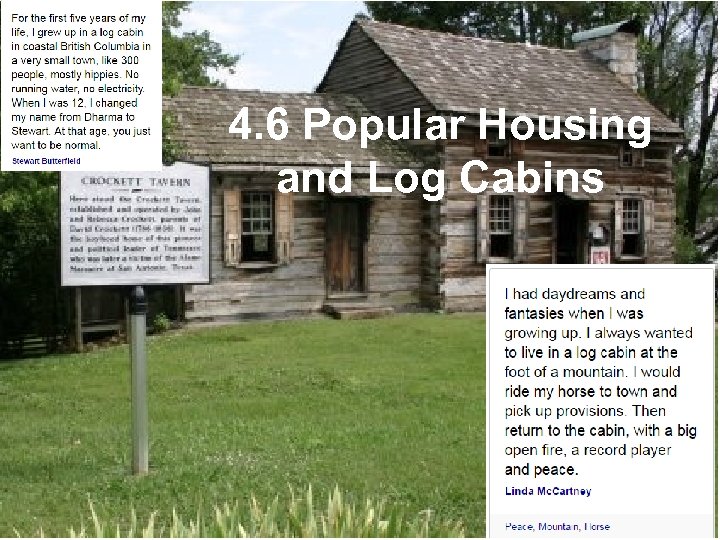 4. 6 Popular Housing and Log Cabins
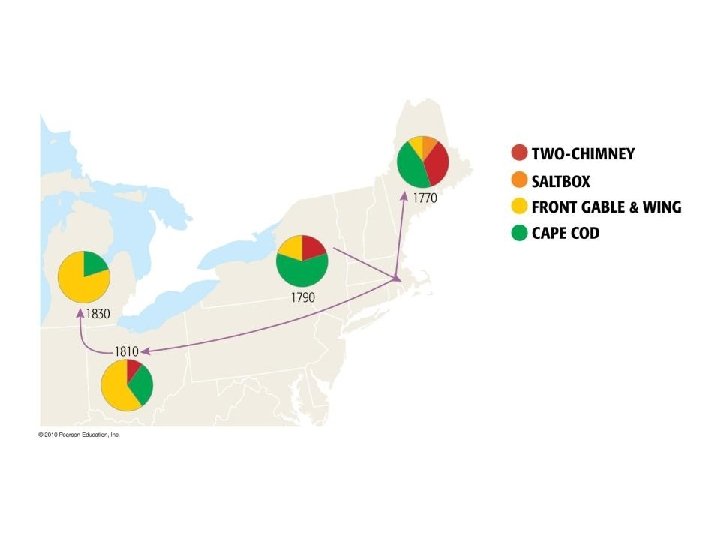
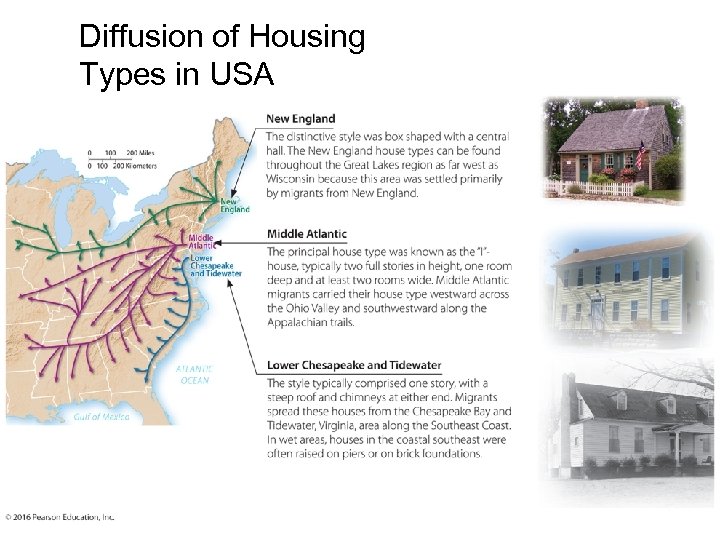 Diffusion of Housing Types in USA
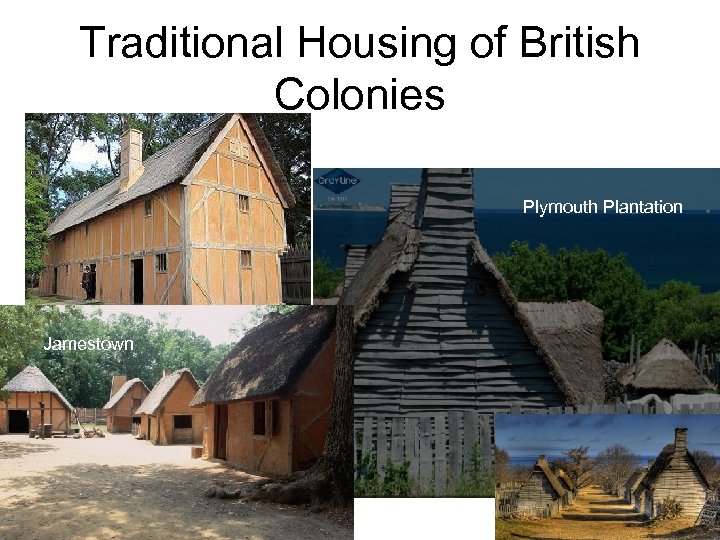 Traditional Housing of British Colonies Plymouth Plantation Jamestown
 Housing as custom – What about Log Cabins?
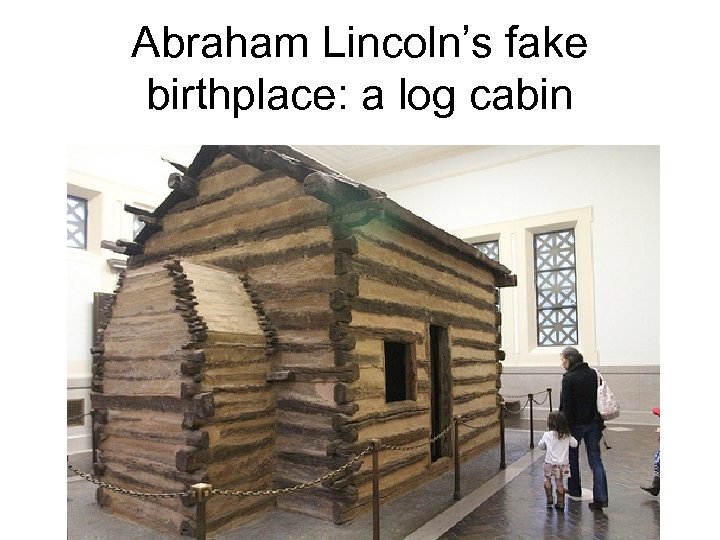 Abraham Lincoln’s fake birthplace: a log cabin
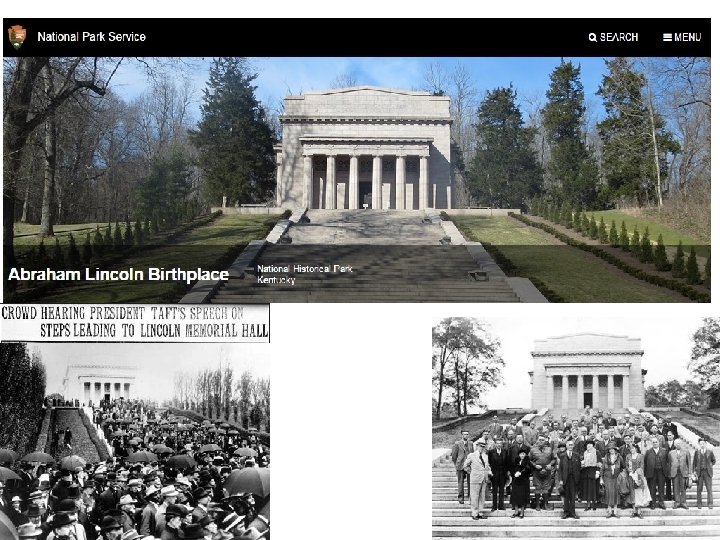
 Terry Jordan published his largest study, American Log Buildings: An Old World Heritage, in 1985, and sought to reinvigorate theory of Swedish origins. He employs four concepts from the discipline of "cultural geography" in this study: 1. first effective settlement, 2. cultural pre-adaptation, 3. cultural simplification, 4. and cultural syncretism (1985: 4 -7). http: //www. histarch. illinois. edu/harper/demoryarch. html
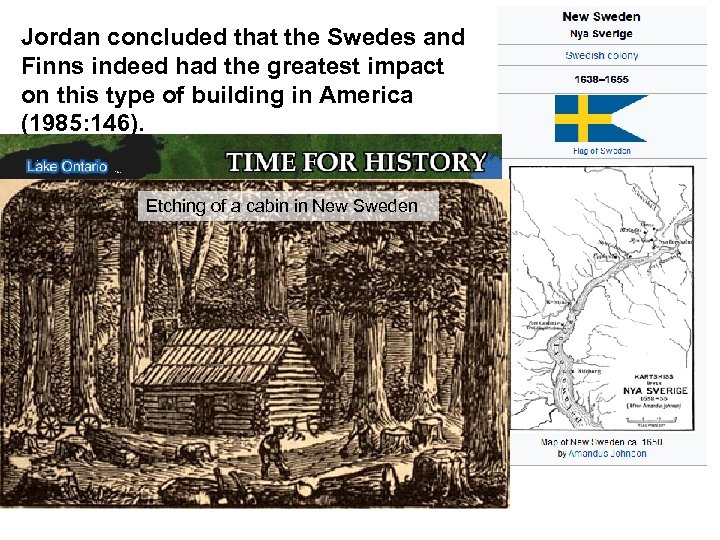 Jordan concluded that the Swedes and Finns indeed had the greatest impact on this type of building in America (1985: 146). Etching of a cabin in New Sweden
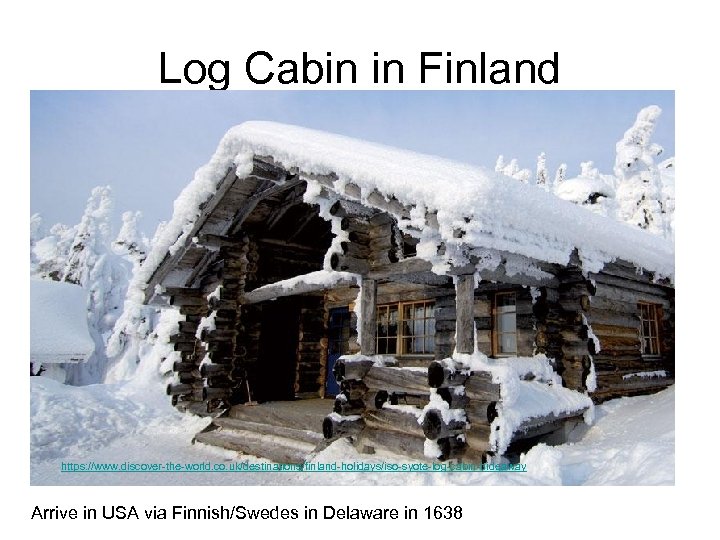 Log Cabin in Finland https: //www. discover-the-world. co. uk/destinations/finland-holidays/iso-syote-log-cabin-hideaway Arrive in USA via Finnish/Swedes in Delaware in 1638
 Discussion of Jordan’s work Jordan argues that this resulted due to the status of Swedes and Finns as first permanent settlers in the Delaware Valley in the 1630 s. Using the concept of first effective settlement, this fact indicates to Jordan that their construction and settlement methods would have a more lasting impact on later waves of settlers. He argues that they also possessed cultural pre-adaptation in the form of log building techniques well suited to the frontiers of the American colonies. Simplification resulted because only certain "Old World" architectural styles were introduced successfully to the colonies. Syncretism resulted as Germanic, Scots-Irish and British building traditions were grafted onto a base established by the Swedes and Finns (1985: 14754). Jordan does a much more thorough and rigorous job at making this argument and presenting supporting evidence. However, the counterarguments by Kniffen, Glassie and others remain more persuasive.
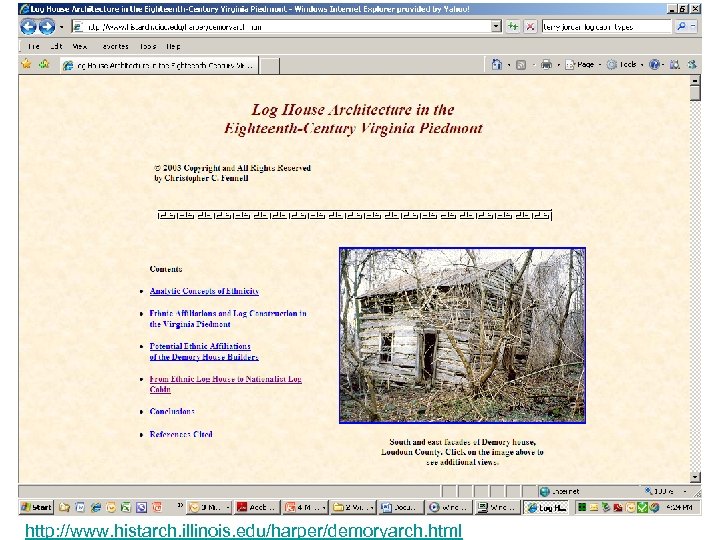 http: //www. histarch. illinois. edu/harper/demoryarch. html
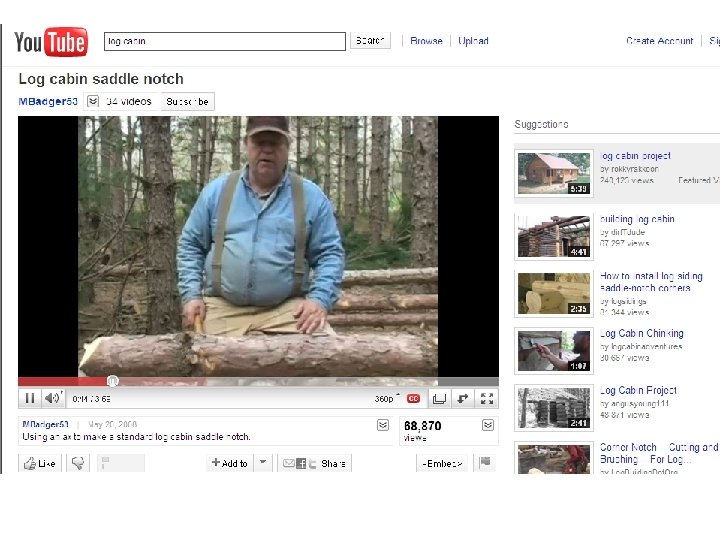
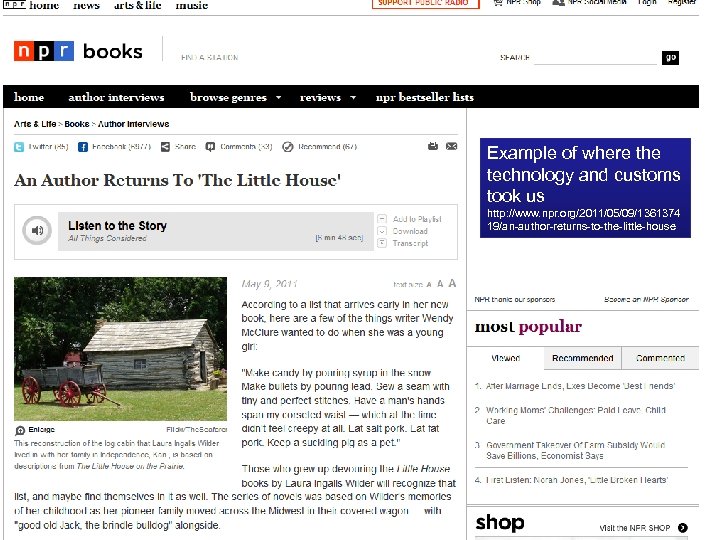 Example of where the technology and customs took us http: //www. npr. org/2011/05/09/1361374 19/an-author-returns-to-the-little-house
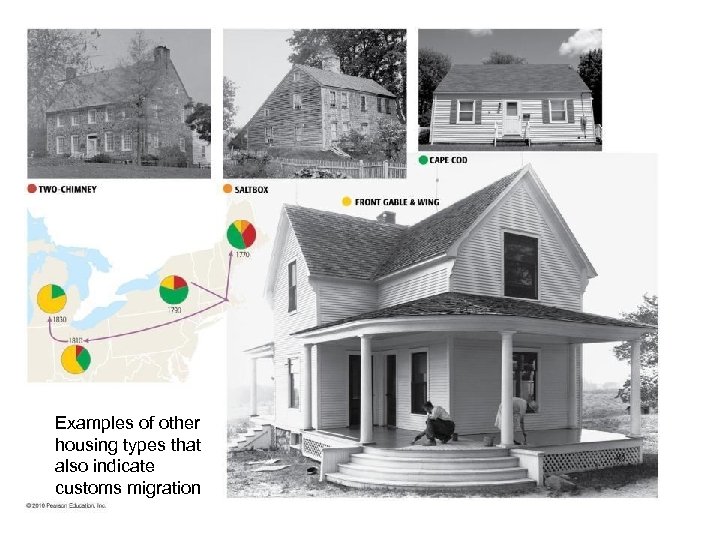 Examples of other housing types that also indicate customs migration
 Apply Tools to Log Cabins – Group Work • • • Folk or Popular – go to definition Origin Spread Purpose For each of the above determine what your answer is and why • Write out your answers
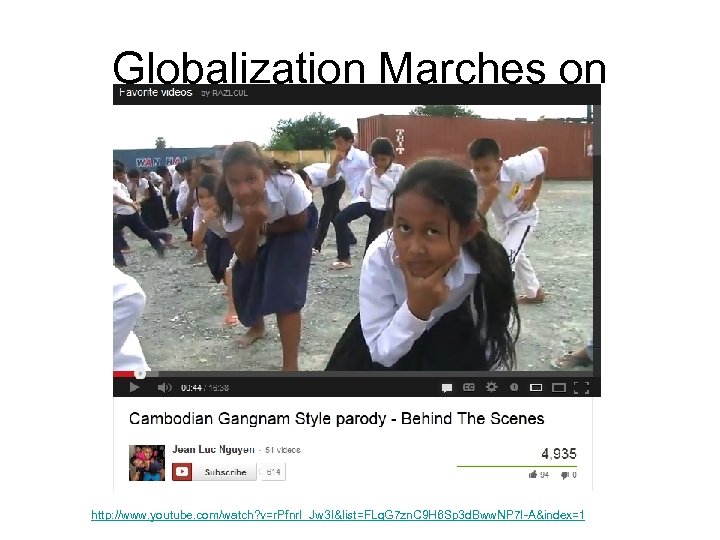 Globalization Marches on http: //www. youtube. com/watch? v=r. Pfnr. I_Jw 3 I&list=FLq. G 7 zn. C 9 H 6 Sp 3 d. Bww. NP 7 I-A&index=1
 International https: //www. youtube. com/watch? v=jof. NR_Wko. CE (Original) https: //www. youtube. com/watch? v=3 EYJal. N 0_VI (Korean) https: //youtu. be/o 0 S 3 TMWJZt 0 Under no circumstances view this video https: //www. youtube. com/watch? v=kf. Vsf. OSb. JY 0 Better in Manderin? https: //www. youtube. com/watch? v=j. Tz 3 m. CSL 4 Sg Much better in Japanese https: //www. youtube. com/watch? v=Rz-So. Nc. LJ 4 A