


 Скачать презентацию Chapter 4 Consumer Demand Mc Graw-Hill Irwin Copyright
aead4d12f79bf1338e5a69a18f520971.ppt
- Количество слайдов: 22
 Chapter 4 Consumer Demand Mc. Graw-Hill/Irwin Copyright © 2011 by The Mc. Graw-Hill Companies, Inc. All Rights Reserved.
 Determinants of Demand • What determines what we buy? – The Sociopsychiatric Explanation – The Economic Explanation LO-1 4 -2
 The Sociopsychiatric Explanation • The desire for goods and services arises from our needs for social acceptance (or envy), security, and ego gratification. • “Keeping up with the Joneses” • Self preservation • Expressions of affluence LO-1 4 -3
 The Economic Explanation • Prices and income are just as relevant to consumption decisions as more basic desires and preferences. • Demand – The ability and willingness to buy specific quantities of a good at alternative prices in a given time period, ceteris paribus. LO-1 4 -4
 Determinants of Market Demand • Tastes - desire for this and other goods • Income (of consumers) • Expectations (for income, prices, tastes) • Other goods (their availability) • The number of consumers in the market LO-1 4 -5
 Total Utility • Utility is the pleasure or satisfaction obtained from a good or service. • Total utility is the amount of satisfaction obtained from entire consumption of a product. LO-1 4 -6
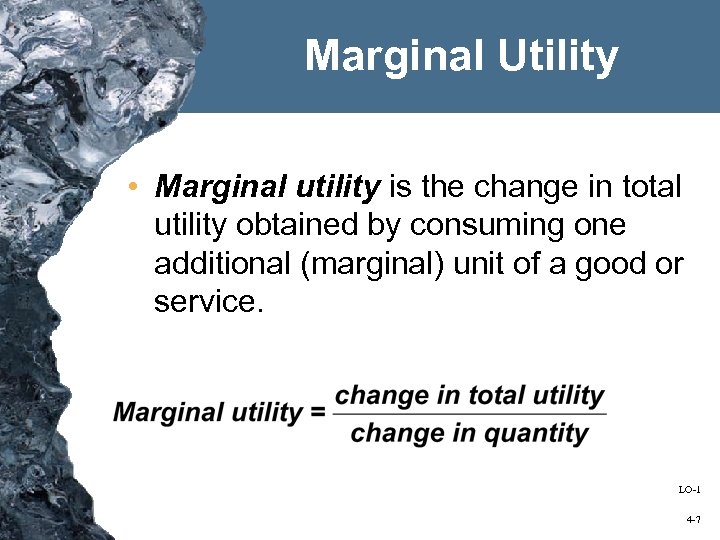 Marginal Utility • Marginal utility is the change in total utility obtained by consuming one additional (marginal) unit of a good or service. LO-1 4 -7
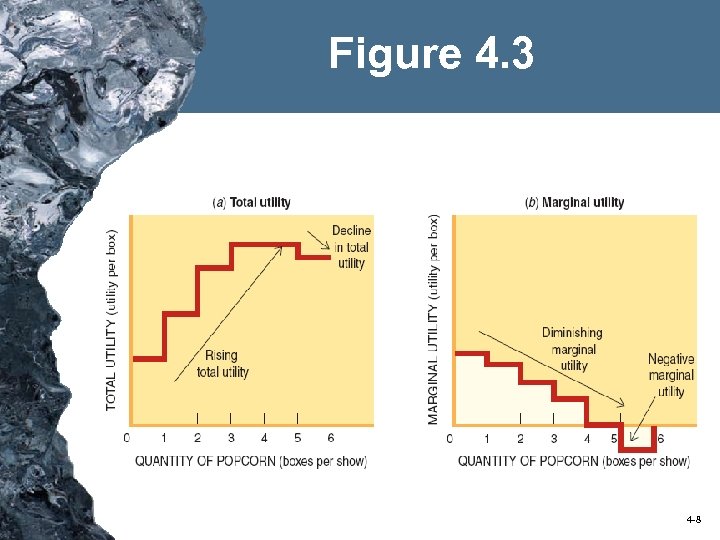 Figure 4. 3 4 -8
 Law of Diminishing Marginal Utility • The marginal utility of a good declines as more of it is consumed in a given time period. • Suppose a student who enjoys popcorn can eat all he/she wants for free. – The first box consumed is very rewarding. – The second box is good. – The third box is decent, etc. – After eating the sixth box, he/she gets sick. LO-1 4 -9
 Law of Demand • According to the law of demand, the quantity of a good demanded in a given time period increases as its price falls, ceteris paribus. LO-1 4 -10
 Demand Curve • The quantities of a good a consumer is willing and able to buy at alternative prices in a given time period, ceteris paribus. LO-1 4 -11
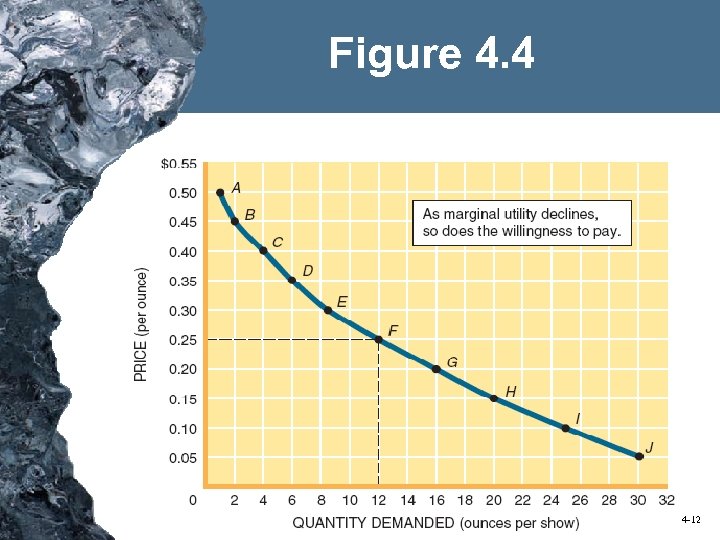 Figure 4. 4 4 -12
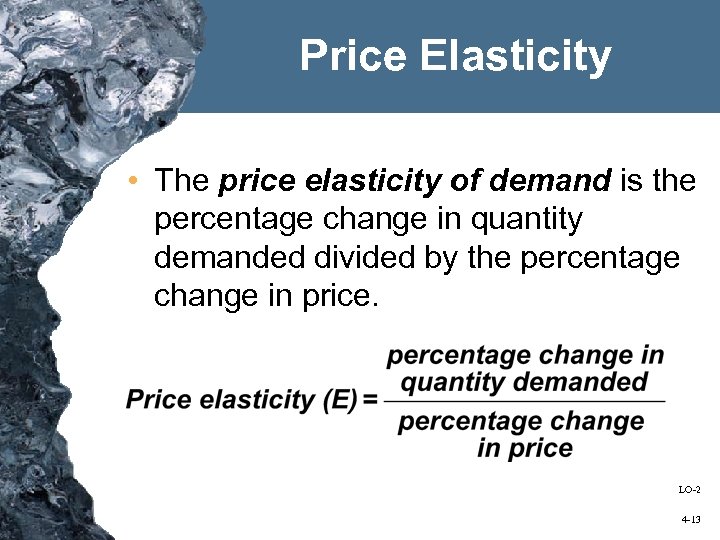 Price Elasticity • The price elasticity of demand is the percentage change in quantity demanded divided by the percentage change in price. LO-2 4 -13
 Elastic Demand • Demand is elastic if the absolute value of E is greater than 1. • Consumer response is large relative to the change in price. LO-2 4 -14
 Inelastic Demand • Demand is inelastic if the absolute value of E is less than 1. • Consumers are not very responsive to price changes. LO-2 4 -15
 Unitary Elastic Demand • Demand is unitary elastic if the absolute value of E equals 1. • The percentage change in quantity demanded is equal to the percentage change in price. LO-2 4 -16
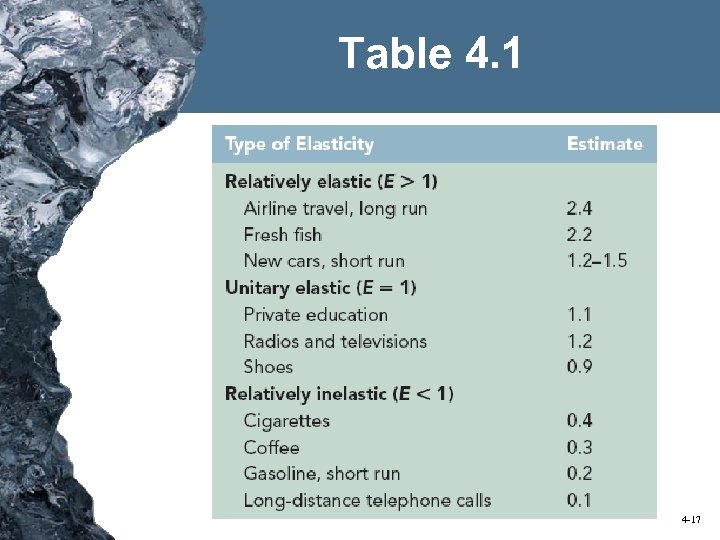 Table 4. 1 4 -17
 Price Elasticity and Total Revenue • Price elasticity explains why producers cannot charge the highest possible price. • Although one would think otherwise, higher prices may actually reduce total sales revenue. LO-3 4 -18
 Elasticity and Total Revenue • A price cut decreases total revenue if demand is price inelastic. • A price cut increases total revenue if demand is price elastic. • A price cut does not change total revenue if demand is unitary elastic. LO-3 4 -19
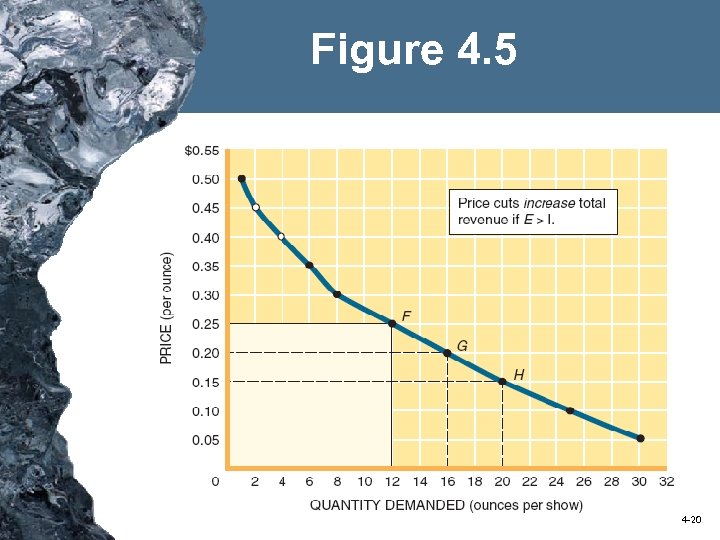 Figure 4. 5 4 -20
 Determinants of Price Elasticity • Differences in price elasticity are explained by several factors: – Whether the Good is a Necessity or Luxury – The Availability of Substitutes – The Price Relative to Income LO-3 4 -21
 End of Chapter 4