


 Скачать презентацию Chapter 4 Authentication Applications 1 We cannot
e4cba2a9ce45c2a9899a42d8ddf2cd6f.ppt
- Количество слайдов: 32
 Chapter 4 Authentication Applications 1
 We cannot enter into alliance with neighboring princes until we are acquainted with their designs. We are not fit to lead an army on the march unless we are familiar with the face of the country--its mountains and forests, its pitfalls and precipices, its marshes and swamps. —The Art of War, Sun Tzu 是故不知诸侯之谋者,不能预交。不知山林、 险阻、沮泽之形者,不能行军。 — 《孙子兵法》九地篇 2
 Outline • • Introduction Kerberos X. 509 Authentication Service Recommended reading and Web Sites 3
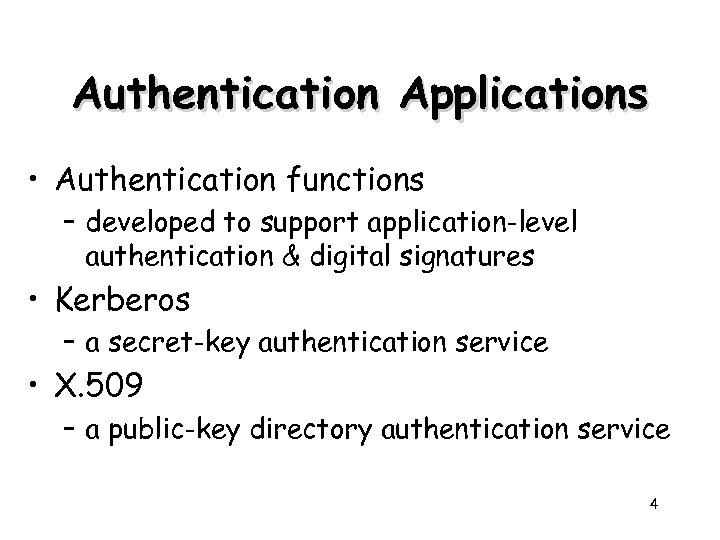 Authentication Applications • Authentication functions – developed to support application-level authentication & digital signatures • Kerberos – a secret-key authentication service • X. 509 – a public-key directory authentication service 4
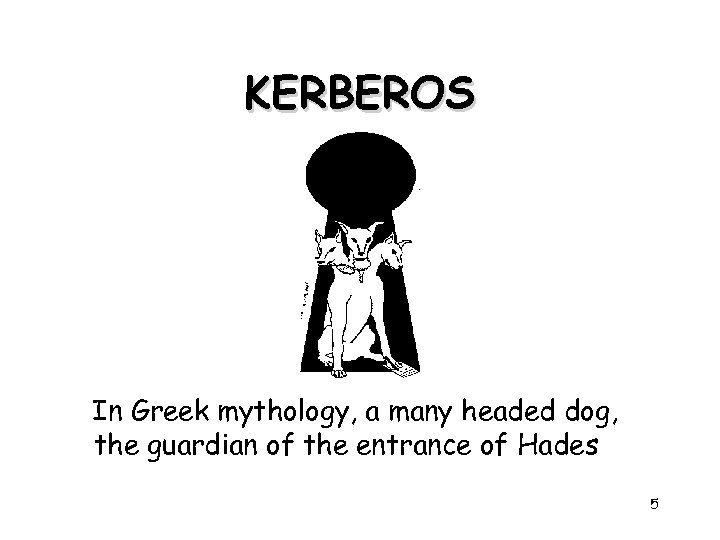 KERBEROS In Greek mythology, a many headed dog, the guardian of the entrance of Hades 5
 KERBEROS • Users wish to access services on servers. • Three threats exist: – User pretend to be another user. – User alter the network address of a workstation. – User eavesdrop on exchanges and use a replay attack. 6
 KERBEROS • A centralized authentication server – From MIT – To authenticate users to servers and servers to users – Relies on conventional encryption • Making no use of public-key encryption – Allows users to access services distributed in network • Without needing to trust all workstations • All trust a central authentication server • Two versions: version 4 and 5 – Version 4 makes use of DES 7
 Kerberos v 4 Overview • a basic 3 rd-party authentication scheme • have an Authentication Server (AS) – users initially negotiate with AS to identify self – AS provides a non-corruptible authentication credential • ticket granting ticket (TGT) • have a Ticket Granting server (TGS) – users subsequently request access to other services from TGS based on users’ TGT 8
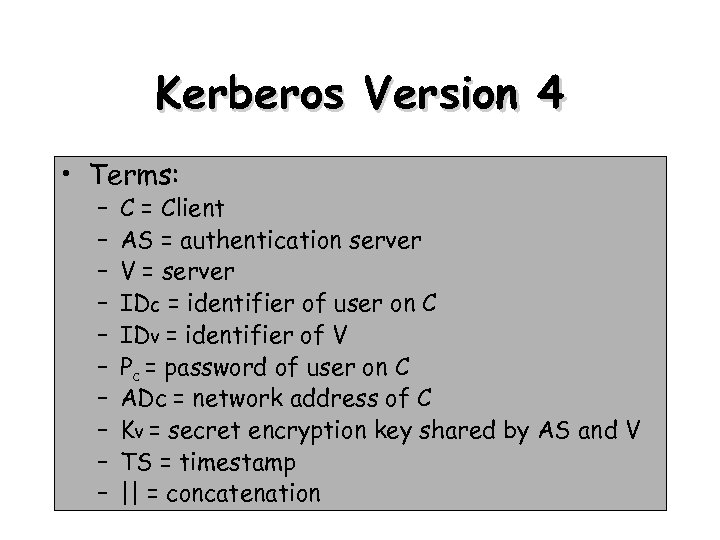 Kerberos Version 4 • Terms: – – – – – C = Client AS = authentication server V = server IDc = identifier of user on C IDv = identifier of V Pc = password of user on C ADc = network address of C Kv = secret encryption key shared by AS and V TS = timestamp || = concatenation 9
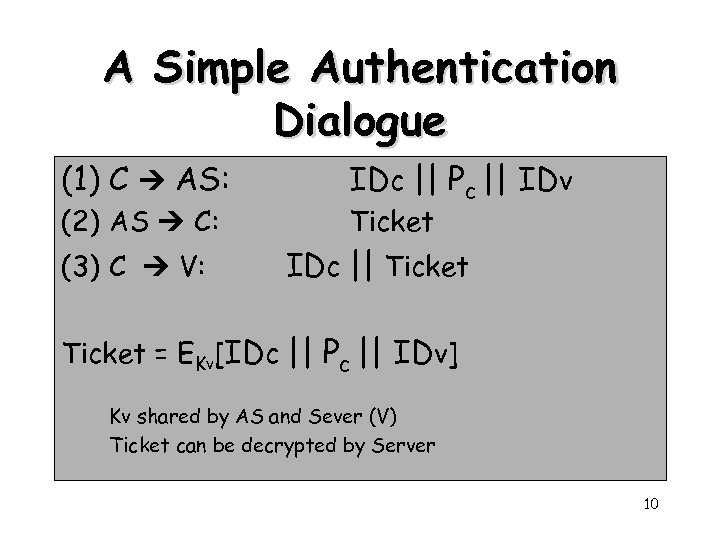 A Simple Authentication Dialogue (1) C AS: (2) AS C: (3) C V: IDc || Pc || IDv Ticket IDc || Ticket = EKv[IDc || Pc || IDv] Kv shared by AS and Sever (V) Ticket can be decrypted by Server 10
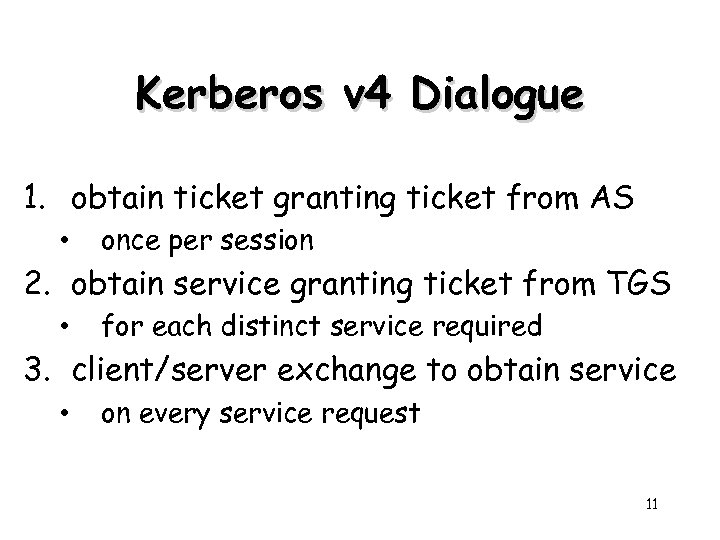 Kerberos v 4 Dialogue 1. obtain ticket granting ticket from AS • once per session 2. obtain service granting ticket from TGS • for each distinct service required 3. client/server exchange to obtain service • on every service request 11
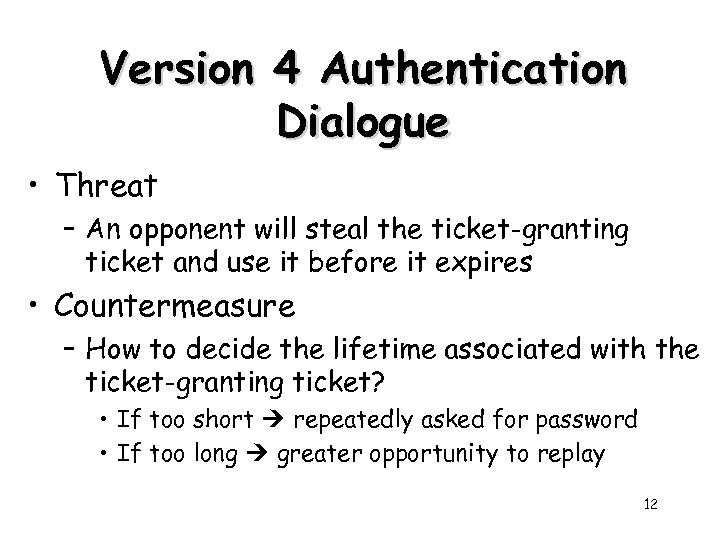 Version 4 Authentication Dialogue • Threat – An opponent will steal the ticket-granting ticket and use it before it expires • Countermeasure – How to decide the lifetime associated with the ticket-granting ticket? • If too short repeatedly asked for password • If too long greater opportunity to replay 12
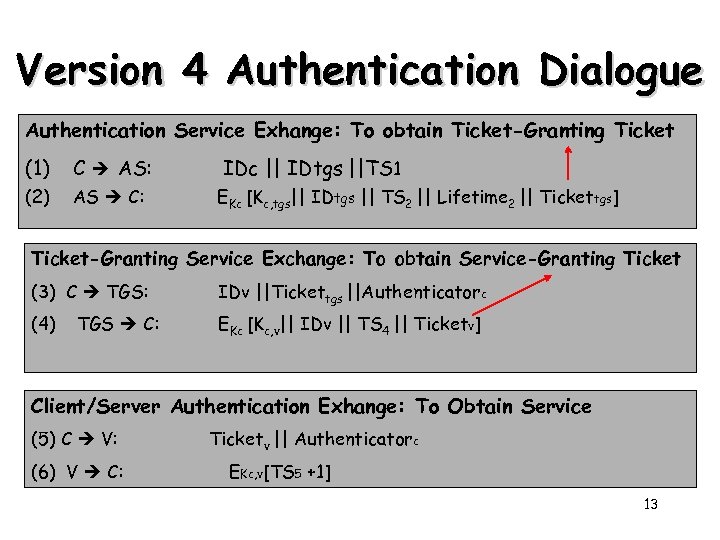 Version 4 Authentication Dialogue Authentication Service Exhange: To obtain Ticket-Granting Ticket (1) C AS: IDc || IDtgs ||TS 1 (2) AS C: EKc [Kc, tgs|| IDtgs || TS 2 || Lifetime 2 || Tickettgs] Ticket-Granting Service Exchange: To obtain Service-Granting Ticket (3) C TGS: IDv ||Tickettgs ||Authenticatorc (4) EKc [Kc, v|| IDv || TS 4 || Ticketv] TGS C: Client/Server Authentication Exhange: To Obtain Service (5) C V: (6) V C: Ticketv || Authenticatorc EKc, v[TS 5 +1] 13
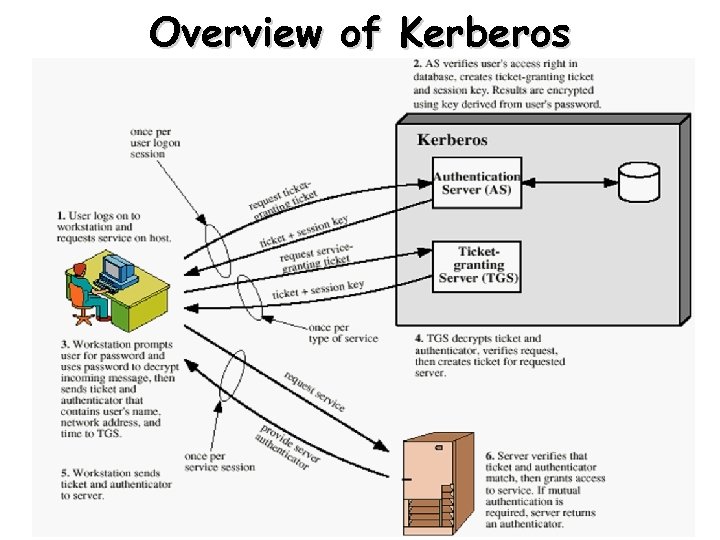 Overview of Kerberos 14
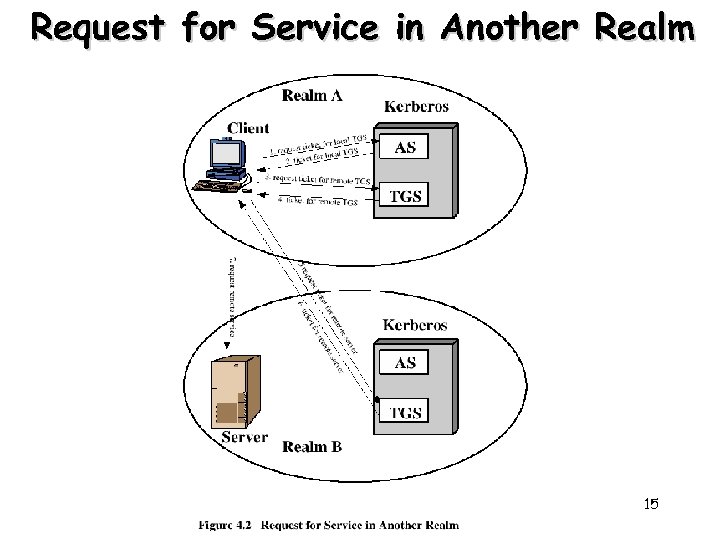 Request for Service in Another Realm 15
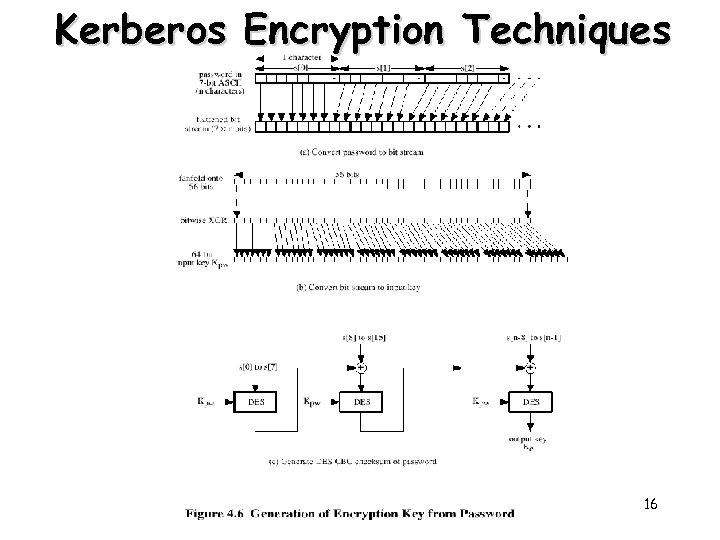 Kerberos Encryption Techniques 16
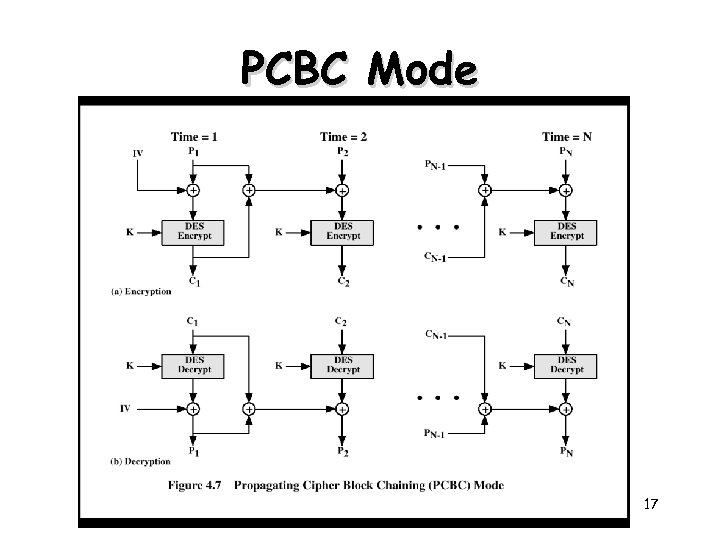 PCBC Mode 17
 Kerberos - in practice • currently have two Kerberos versions: • v 4 – restricted to a single realm • v 5 – allows inter-realm authentication – Kerberos v 5 is an Internet standard – specified in RFC 1510, and used by many utilities • To use Kerberos: – need to have a KDC on your network – need to have Kerberised applications running on all participating systems • major problem - US export restrictions – Kerberos cannot be directly distributed outside the US in source format (& binary versions must obscure crypto routine entry points and have no encryption) – else crypto libraries must be reimplemented locally 18
 X. 509 Authentication Service • A distributed set of servers that maintain a database about users. • Each certificate contains the public key of a user and is signed with the private key of a CA. – used in S/MIME, IP Security, SSL/TLS and SET. – RSA is recommended to use. 19
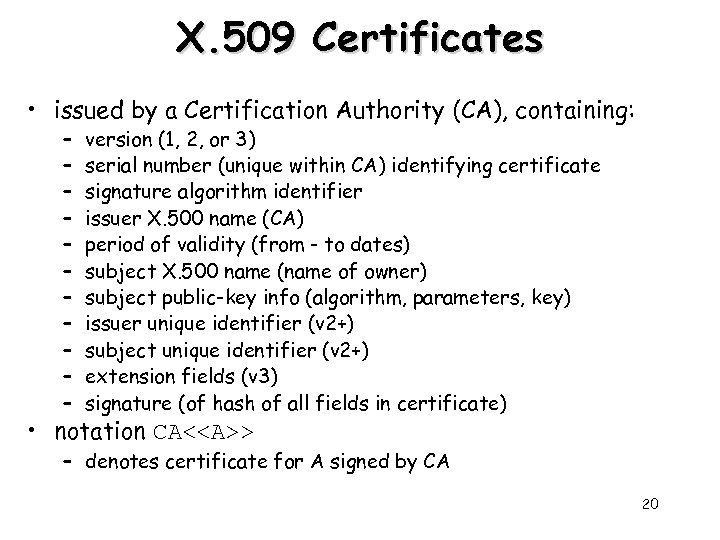 X. 509 Certificates • issued by a Certification Authority (CA), containing: – – – version (1, 2, or 3) serial number (unique within CA) identifying certificate signature algorithm identifier issuer X. 500 name (CA) period of validity (from - to dates) subject X. 500 name (name of owner) subject public-key info (algorithm, parameters, key) issuer unique identifier (v 2+) subject unique identifier (v 2+) extension fields (v 3) signature (of hash of all fields in certificate) • notation CA<> – denotes certificate for A signed by CA 20
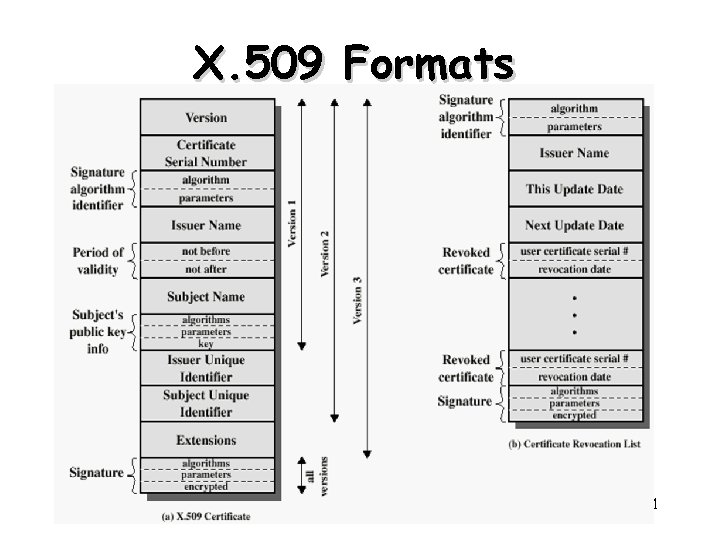 X. 509 Formats 21
 Obtaining a User’s Certificate • Characteristics of certificates generated by CA: – Any user with access to the public key of the CA can recover the user public key that was certified. – Nobody other than the CA can modify the certificate without this being detected. 22
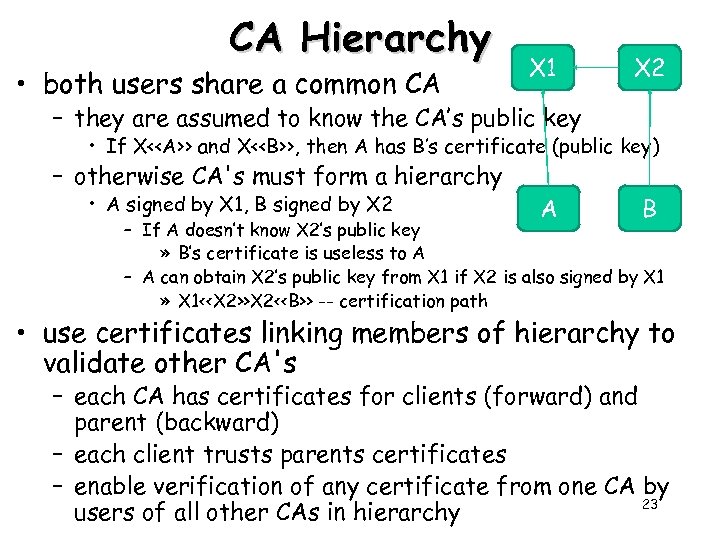 CA Hierarchy • both users share a common CA X 1 X 2 – they are assumed to know the CA’s public key • If X<> and X<>, then A has B’s certificate (public key) – otherwise CA's must form a hierarchy • A signed by X 1, B signed by X 2 A B – If A doesn’t know X 2’s public key » B’s certificate is useless to A – A can obtain X 2’s public key from X 1 if X 2 is also signed by X 1 » X 1<
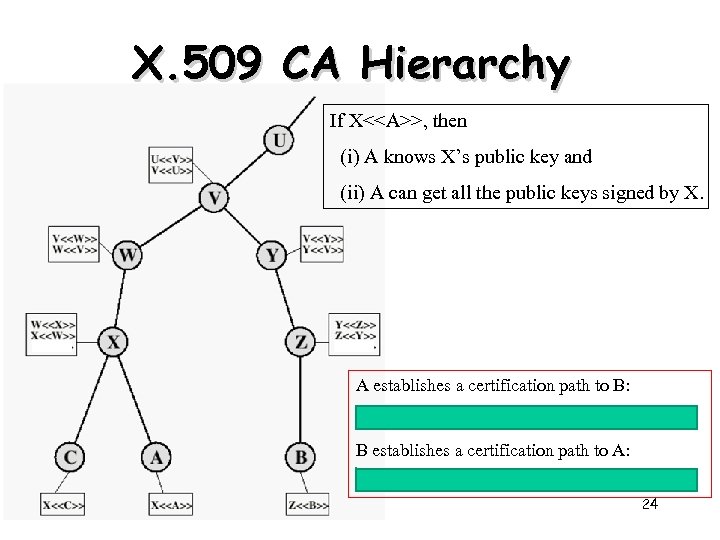 X. 509 CA Hierarchy If X<>, then (i) A knows X’s public key and (ii) A can get all the public keys signed by X. A establishes a certification path to B: X<
 Revocation of Certificates • Reasons for revocation: – The user’s private key is assumed to be compromised. – The user is no longer certified by this CA. – The CA’s certificate is assumed to be compromised. 25
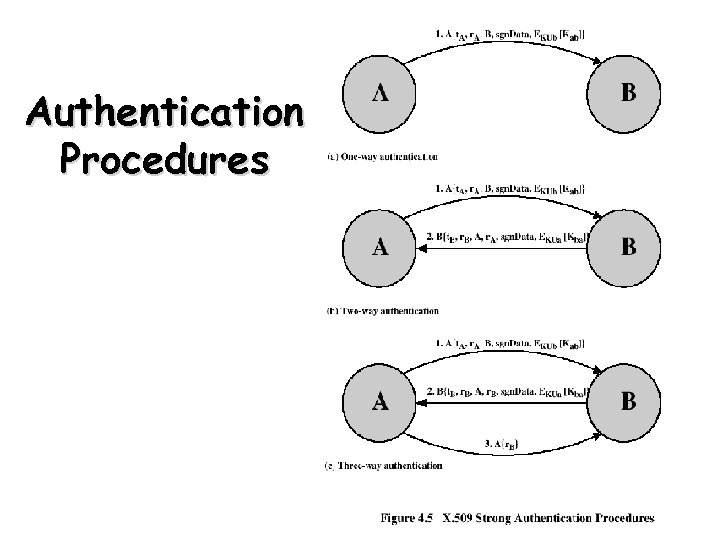
 Authentication Procedures • X. 509 includes three alternative authentication procedures: – One-Way Authentication – Two-Way Authentication – Three-Way Authentication • all use public-key signatures 26
 One-Way Authentication • 1 message ( A->B) used to establish – the identity of A and that message is from A – message was intended for B – integrity & originality of message • message must include timestamp, nonce, B's identity and is signed by A – Timestamp (t. A) • Message generation and expiration time – Nonce (r. A) • Value must be unique within the expiration time • Used to detect replay attacks • may include additional info for B – Eg. session key 27
 Two-Way Authentication • 2 messages (A->B, B->A) which also establishes: – the identity of B and that reply is from B – that reply is intended for A – integrity & originality of reply • reply includes original nonce from A, also timestamp and nonce from B • may include additional info for A 28
 Three-Way Authentication • 3 messages (A->B, B->A, A->B) to enable above authentication without synchronized clocks • has reply from A back to B containing signed copy of nonce from B – means that timestamps need not be checked or relied upon 29
 Authentication Procedures 30
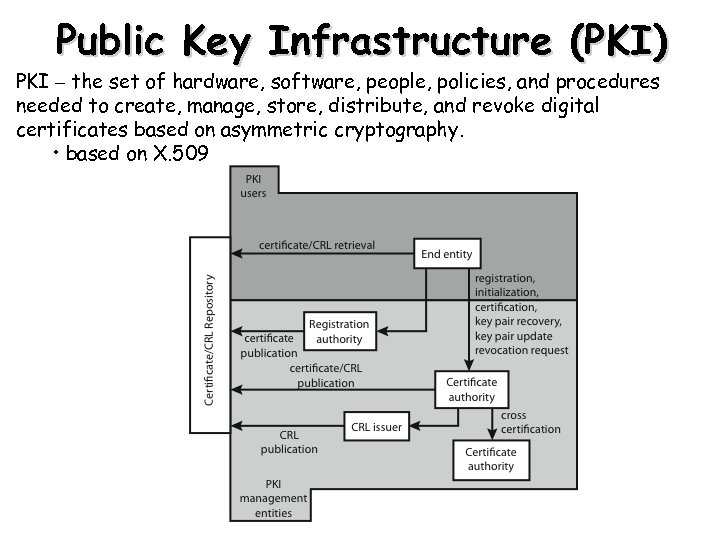 Public Key Infrastructure (PKI) PKI – the set of hardware, software, people, policies, and procedures needed to create, manage, store, distribute, and revoke digital certificates based on asymmetric cryptography. • based on X. 509 31
 Recommended Reading and WEB Sites • www. whatis. com (search for kerberos) • Bryant, W. Designing an Authentication System: A Dialogue in Four Scenes. http: //web. mit. edu/kerberos/www/dialogue. html • Kohl, J. ; Neuman, B. “The Evolotion of the Kerberos Authentication Service” http: //web. mit. edu/kerberos/www/papers. html • http: //www. isi. edu/gost/info/kerberos/ 32