


 Скачать презентацию Chapter 4 A Tour of the Cell Power
4c72029255f249a23e914fcf75754376.ppt
- Количество слайдов: 69
 Chapter 4 A Tour of the Cell Power. Point® Lectures for Campbell Essential Biology, Fifth Edition, and Campbell Essential Biology with Physiology, Fourth Edition – Eric J. Simon, Jean L. Dickey, and Jane B. Reece Lectures by Edward J. Zalisko © 2013 Pearson Education, Inc.
 Biology and Society: Antibiotics: Drugs that Target Bacterial Cells • Antibiotics were first isolated from mold in 1928. • The widespread use of antibiotics drastically decreased deaths from bacterial infections. • Most antibiotics kill bacteria while minimally harming the human host by binding to structures found only on bacterial cells. • Some antibiotics bind to the bacterial ribosome, leaving human ribosomes unaffected. • Other antibiotics target enzymes found only in the bacterial cells © 2013 Pearson Education, Inc.
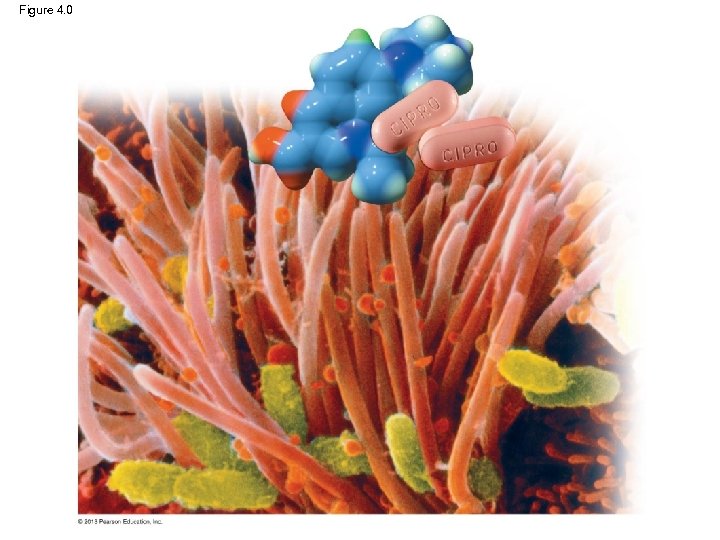 Figure 4. 0
 Microscopes as Windows on the World of Cells • Organisms are either – Single-celled, such as most prokaryotes and protists or – Multicelled, such as plants, animals, and most fungi • Cells were first described in 1665 by Robert Hooke. • The accumulation of scientific evidence led to the cell theory which states that. – All living things are composed of cells – The cell is the basic living unit of organization for all organisms – All cells come from other cells.
 Microscopes as Windows on the World of Cells • Light microscopes can be used to explore the structures and functions of cells. • When scientists examine a specimen on a microscope slide, – light passes through the specimen and – lenses enlarge, or magnify, the image. • Magnification is an increase in the object’s image size compared to its actual size. • Resolving power is the ability of an optical instrument to show two objects as separate. © 2013 Pearson Education, Inc.
 Microscopes as Windows on the World of Cells • The electron microscope (EM) uses a beam of electrons, which results in better resolving power than the light microscope. • Two kinds of electron microscopes reveal different parts of cells • Scanning electron microscopes (SEM) examine cell surfaces. • Transmission electron microscopes (TEM) are useful for internal details of cells. • The electron microscope can • Magnify up to 100, 000 times • Distinguish between objects 0. 2 nanometers apart © 2013 Pearson Education, Inc.
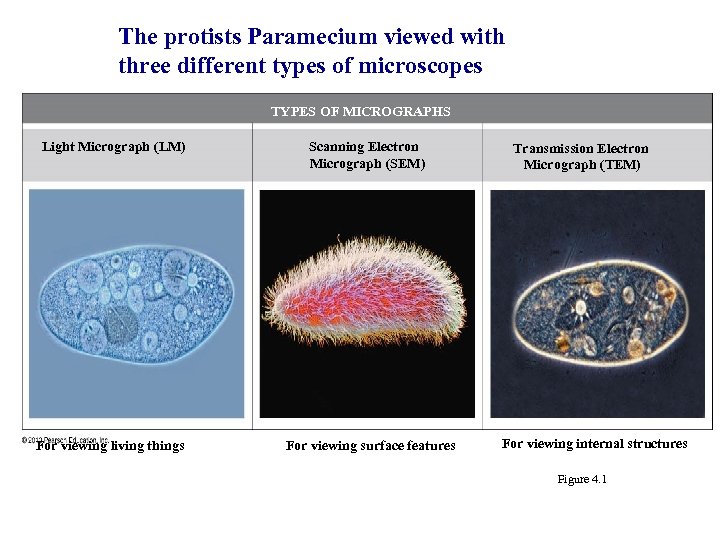 The protists Paramecium viewed with three different types of microscopes TYPES OF MICROGRAPHS Light Micrograph (LM) Scanning Electron Micrograph (SEM) For viewing living things For viewing surface features Transmission Electron Micrograph (TEM) For viewing internal structures Figure 4. 1
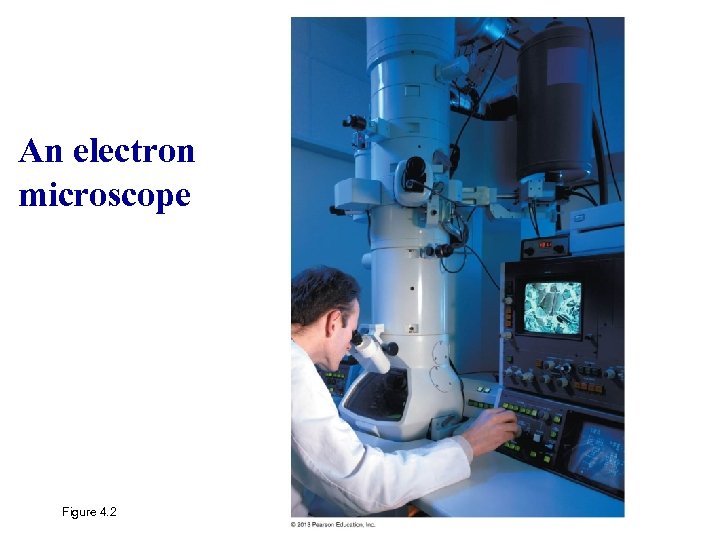 An electron microscope Figure 4. 2
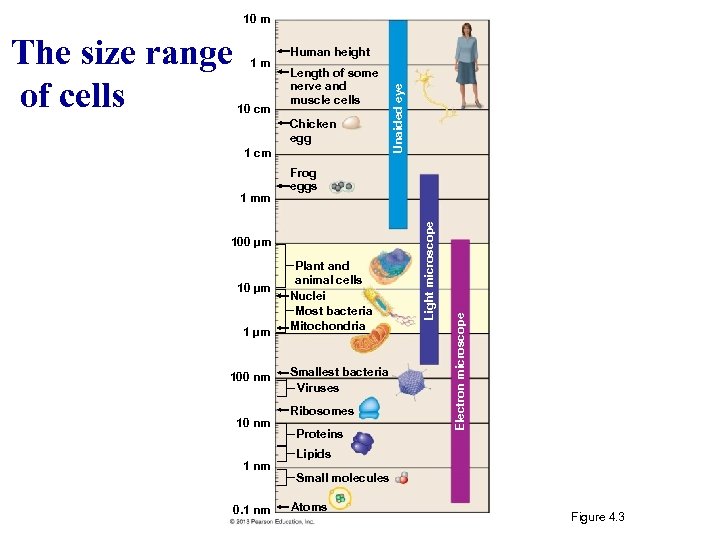 10 m Length of some nerve and muscle cells Chicken egg 1 cm 1 mm Frog eggs 100 µm 100 nm 1 nm 0. 1 nm Plant and animal cells Nuclei Most bacteria Mitochondria Smallest bacteria Viruses Ribosomes Proteins Electron microscope 10 cm Human height Light microscope 1 m Unaided eye The size range of cells Lipids Small molecules Atoms Figure 4. 3
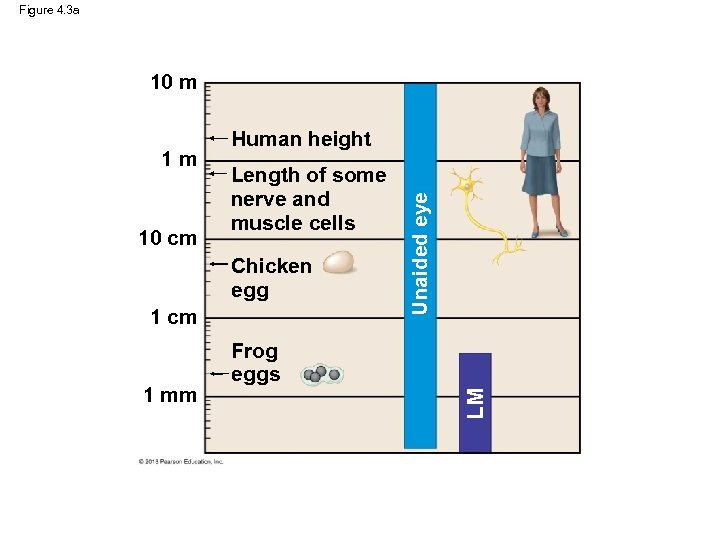 Figure 4. 3 a 10 m Chicken egg 1 cm 1 mm Frog eggs LM 10 cm Length of some nerve and muscle cells Unaided eye 1 m Human height
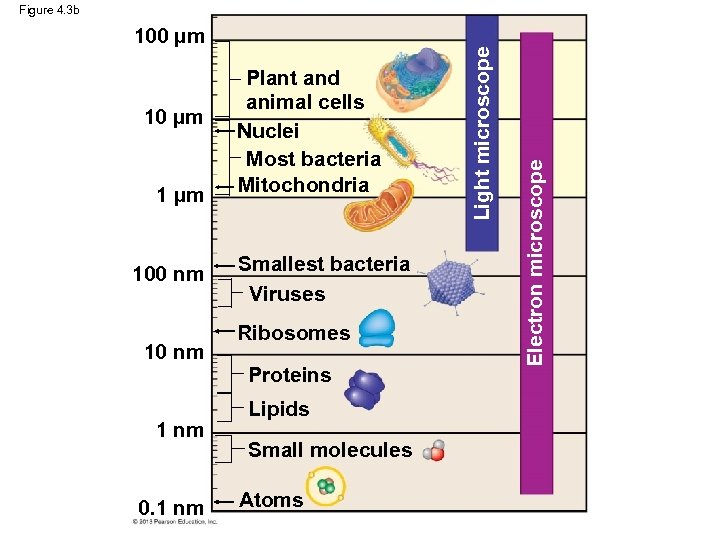 10 µm 100 nm 1 nm 0. 1 nm Plant and animal cells Nuclei Most bacteria Mitochondria Smallest bacteria Viruses Ribosomes Proteins Lipids Small molecules Atoms Electron microscope 100 µm Light microscope Figure 4. 3 b
 The Two Major Categories of Cells • The countless cells on Earth fall into two basic categories: 1. Prokaryotic cells — Bacteria and Archaea and 2. Eukaryotic cells — protists, plants, fungi, and animals (Structural complexity inside the cell). • All cells have several basic features. – They are all bounded by a thin plasma membrane. – Inside all cells is a thick, jelly-like fluid called the cytosol, in which cellular components are suspended. – All cells have one or more chromosomes carrying genes made of DNA. – All cells have ribosomes (machinery for protein ), tiny structures that build proteins according to the instructions from the DNA. © 2013 Pearson Education, Inc.
 The Two Major Categories of Cells • Prokaryotic cells are older than eukaryotic cells (first cells that live on earth). – Prokaryotes appeared about 3. 5 billion years ago – Eukaryotes appeared about 2. 1 billion years ago. • Prokaryotic cells are – usually smaller than eukaryotic cells and – simpler in structure (one cell or one compartment where they do all the things that eukaryotic cell do). © 2013 Pearson Education, Inc.
 The Two Major Categories of Cells • A prokaryotic cell lacks a nucleus. – Its DNA is coiled into a nucleus-like region called the nucleoid, which is not partitioned from the rest of the cell by membranes (Localized again the wall). • Eukaryotes (are structurally more complex) – Only eukaryotic cells have organelles, membraneenclosed structures that perform specific functions. – The most important organelle is the nucleus, which – houses most of a eukaryotic cell’s DNA and – is surrounded by a double membrane. © 2013 Pearson Education, Inc.
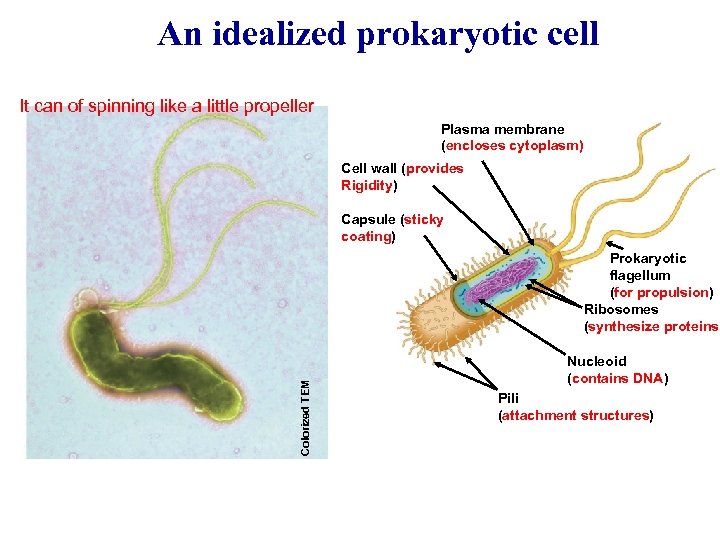 An idealized prokaryotic cell It can of spinning like a little propeller Plasma membrane (encloses cytoplasm) Cell wall (provides Rigidity) Capsule (sticky coating) Nucleoid (contains DNA) Colorized TEM Prokaryotic flagellum (for propulsion) Ribosomes (synthesize proteins) Pili (attachment structures)
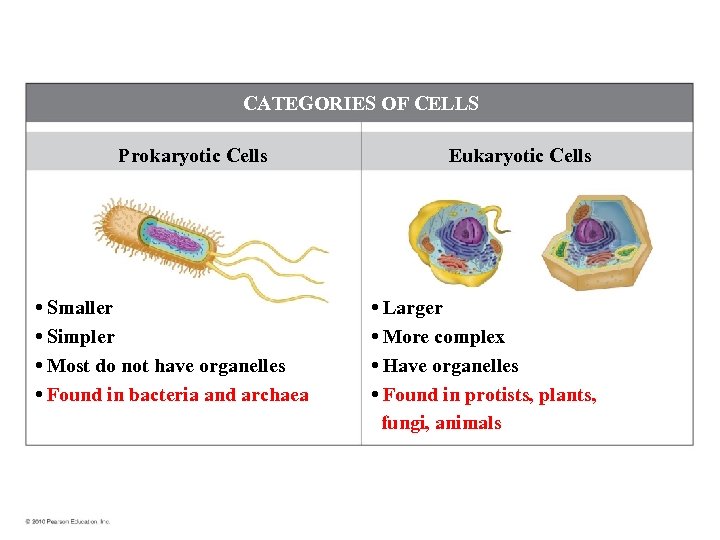 CATEGORIES OF CELLS Prokaryotic Cells • Smaller • Simpler • Most do not have organelles • Found in bacteria and archaea Eukaryotic Cells • Larger • More complex • Have organelles • Found in protists, plants, fungi, animals
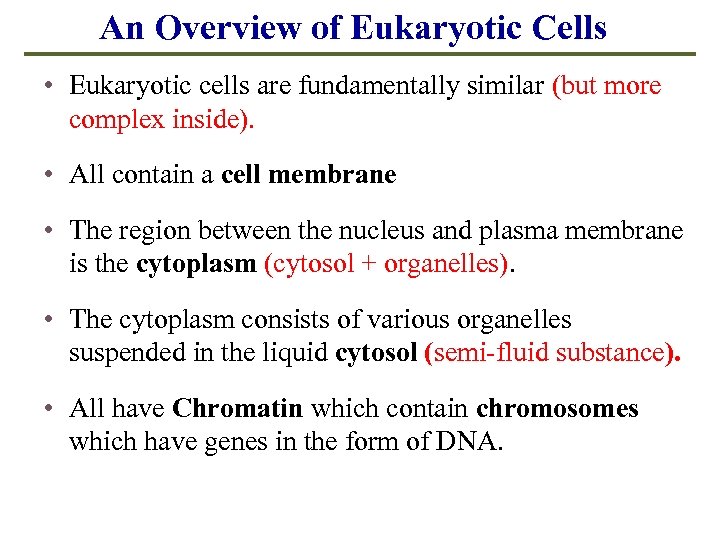 An Overview of Eukaryotic Cells • Eukaryotic cells are fundamentally similar (but more complex inside). • All contain a cell membrane • The region between the nucleus and plasma membrane is the cytoplasm (cytosol + organelles). • The cytoplasm consists of various organelles suspended in the liquid cytosol (semi-fluid substance). • All have Chromatin which contain chromosomes which have genes in the form of DNA.
 An Overview of Eukaryotic Cells • Unlike animal cells, plant cells have - chloroplasts, which convert light energy to the chemical energy of food in the process of photosynthesis, and - protective cell walls. • Only animal cells have lysosomes (b/c we do digest things), bubbles of digestive enzymes surrounded by membranes Bio. Flix Animation: Tour Of An Animal Cell Bio. Flix Animation: Tour Of A Plant Cell Blast Animation: Animal Cell Overview Blast Animation: Plant Cell Overview © 2013 Pearson Education, Inc.
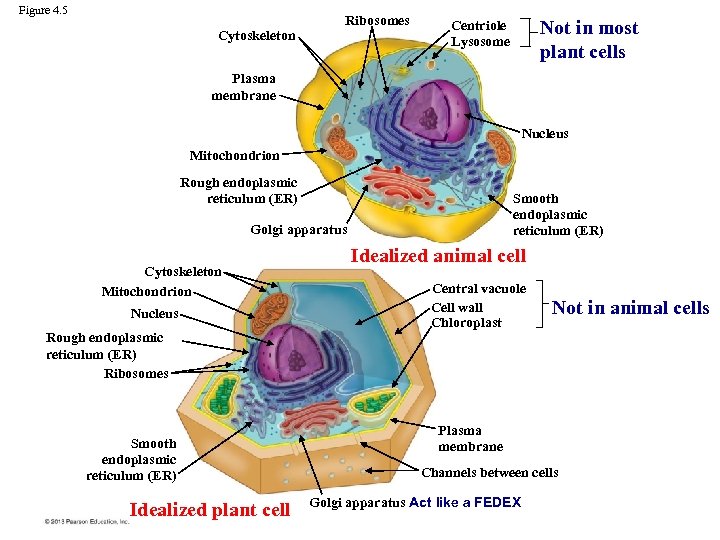 Figure 4. 5 Cytoskeleton Ribosomes Not in most plant cells Centriole Lysosome Plasma membrane Nucleus Mitochondrion Rough endoplasmic reticulum (ER) Smooth endoplasmic reticulum (ER) Golgi apparatus Cytoskeleton Mitochondrion Nucleus Rough endoplasmic reticulum (ER) Ribosomes Smooth endoplasmic reticulum (ER) Idealized plant cell Idealized animal cell Central vacuole Cell wall Chloroplast Not in animal cells Plasma membrane Channels between cells Golgi apparatus Act like a FEDEX
 The Plasma Membrane: A Fluid Mosaic of Lipids and Proteins • The plasma membrane separates the living cell from its nonliving surroundings. • The remarkably thin membranes of cells are composed mostly of lipids and proteins. – The lipids belong to a special category called phospholipids. – Phospholipids form a two-layered membrane (that act as a selective barrier), the phospholipid bilayer. – Proteins (main job is to primary allow things in and out of the cell) © 2013 Pearson Education, Inc.
 The Plasma Membrane: A Fluid Mosaic of Lipids and Proteins • Most membranes have specific proteins embedded in the phospholipid bilayer. • These proteins help regulate traffic across the membrane and perform other functions. – Allow the passage of O 2 ; nutrients and waste • The plasma membrane is a fluid mosaic. – Fluid because molecules can move freely past one another. – A mosaic because of the diversity of proteins in the membrane. © 2013 Pearson Education, Inc.
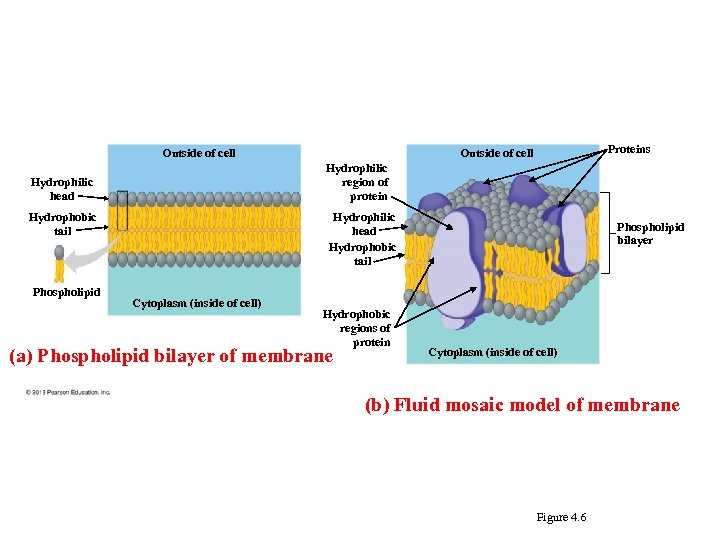 Outside of cell Hydrophilic region of protein Hydrophilic head Hydrophobic tail Phospholipid Proteins Outside of cell Cytoplasm (inside of cell) Hydrophobic regions of protein (a) Phospholipid bilayer of membrane Phospholipid bilayer Cytoplasm (inside of cell) (b) Fluid mosaic model of membrane Figure 4. 6
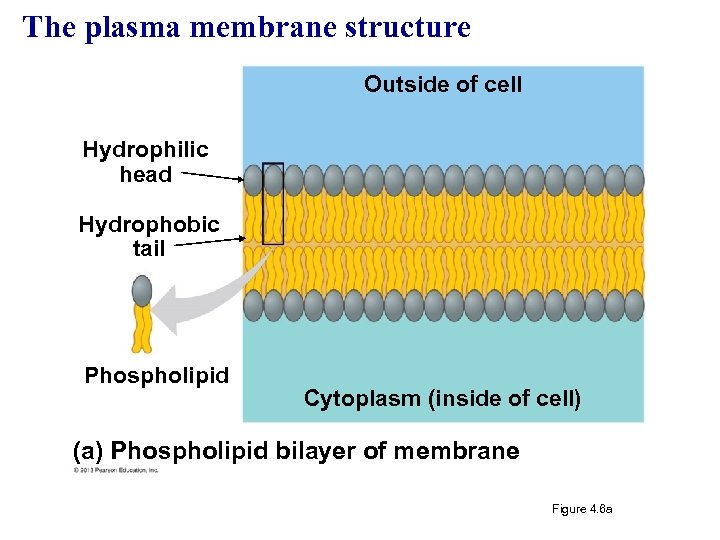 The plasma membrane structure Outside of cell Hydrophilic head Hydrophobic tail Phospholipid Cytoplasm (inside of cell) (a) Phospholipid bilayer of membrane Figure 4. 6 a
 The Process of Science: What Makes a Superbug? • Observation: Bacteria use a protein called PSM to disable human immune cells by forming holes in the plasma membrane. • Question: Does PSM play a role in MRSA infections? • Hypothesis: MRSA bacteria lacking the ability to produce PSM would be less deadly than normal MRSA strains. • Experiment: Researchers infected – Seven mice with normal MRSA – Eight mice with MRSA that does not produce PSM • Results: – All seven mice infected with normal MRSA died. – Five of the eight mice infected with MRSA that does not produce PSM survived. • Conclusions: – MRSA strains appear to use the membrane-destroying PSM protein, but – Factors other than PSM protein contributed to the death of mice
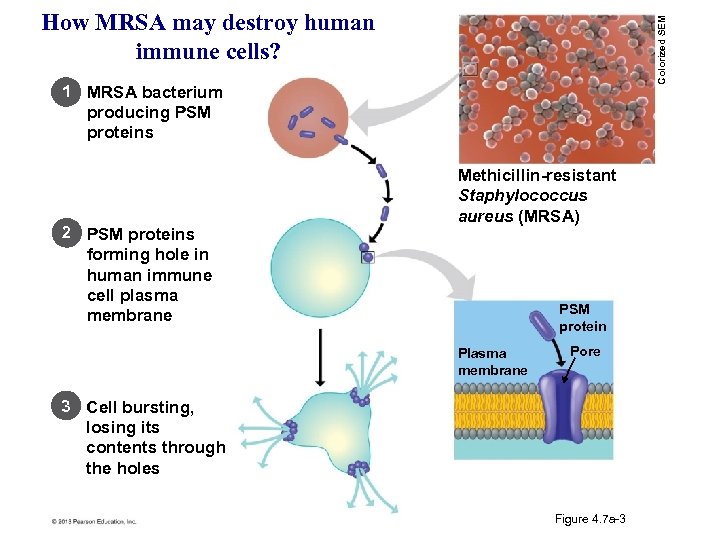 Colorized SEM How MRSA may destroy human immune cells? 1 MRSA bacterium producing PSM proteins 2 PSM proteins forming hole in human immune cell plasma membrane Methicillin-resistant Staphylococcus aureus (MRSA) PSM protein Plasma membrane Pore 3 Cell bursting, losing its contents through the holes Figure 4. 7 a-3
 Cell Surfaces • Plant cells have rigid cell walls surrounding the membrane. • Plant cell walls – are made of cellulose, – protect the cells, – maintain cell shape, and – keep cells from absorbing too much water. © 2013 Pearson Education, Inc.
 Cell Surfaces • Animal cells – lack cell walls and – typically have an extracellular matrix, which – helps hold cells together in tissues and – protects and supports them. • The surfaces of most animal cells contain cell junctions, structures that connect cells together into tissues, allowing them to function in a coordinated way. © 2013 Pearson Education, Inc.
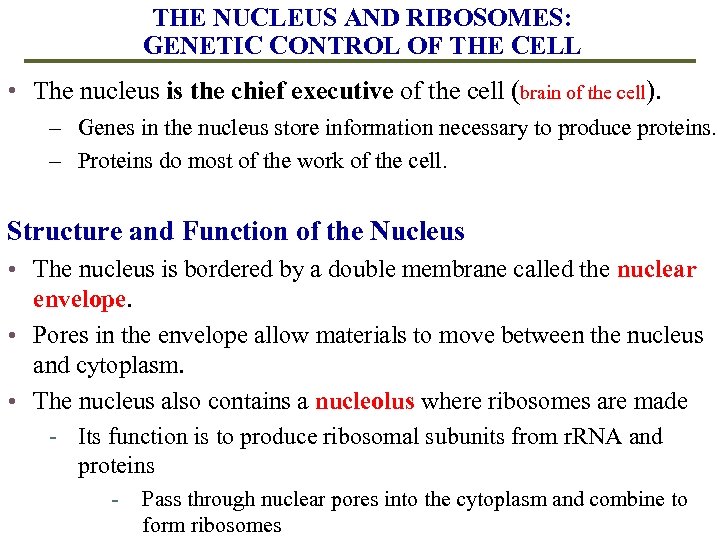 THE NUCLEUS AND RIBOSOMES: GENETIC CONTROL OF THE CELL • The nucleus is the chief executive of the cell (brain of the cell). – Genes in the nucleus store information necessary to produce proteins. – Proteins do most of the work of the cell. Structure and Function of the Nucleus • The nucleus is bordered by a double membrane called the nuclear envelope. • Pores in the envelope allow materials to move between the nucleus and cytoplasm. • The nucleus also contains a nucleolus where ribosomes are made - Its function is to produce ribosomal subunits from r. RNA and proteins - Pass through nuclear pores into the cytoplasm and combine to form ribosomes
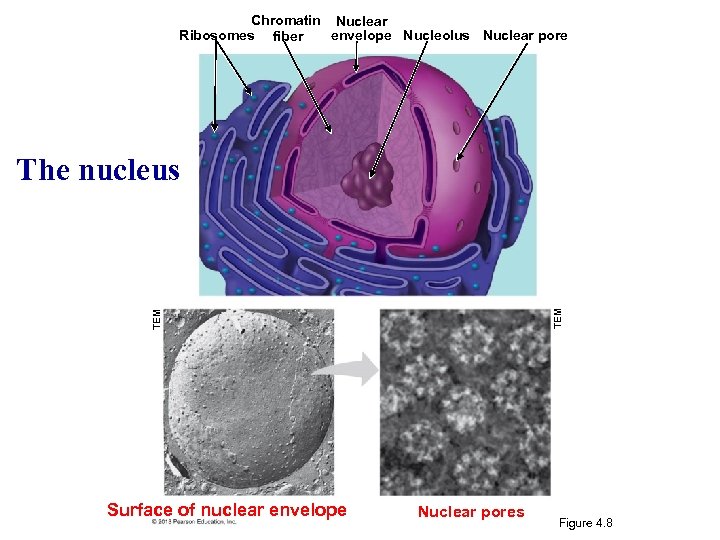 Chromatin Nuclear envelope Nucleolus Nuclear pore Ribosomes fiber TEM The nucleus Surface of nuclear envelope Nuclear pores Figure 4. 8
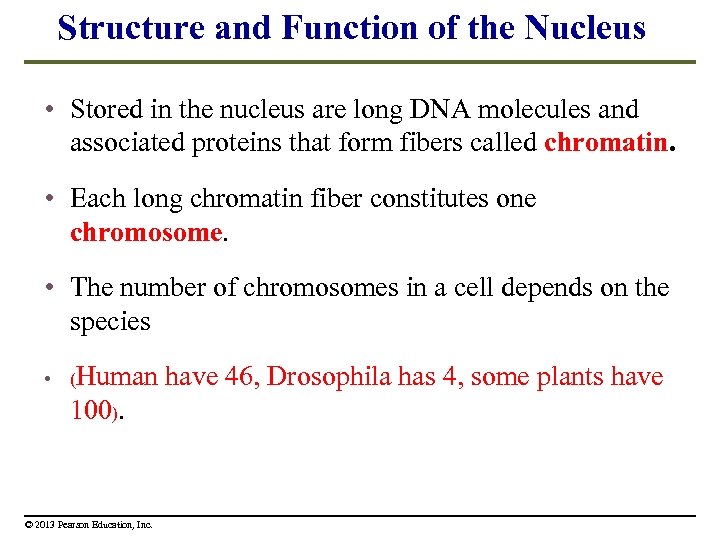 Structure and Function of the Nucleus • Stored in the nucleus are long DNA molecules and associated proteins that form fibers called chromatin. • Each long chromatin fiber constitutes one chromosome. • The number of chromosomes in a cell depends on the species • (Human 100). © 2013 Pearson Education, Inc. have 46, Drosophila has 4, some plants have
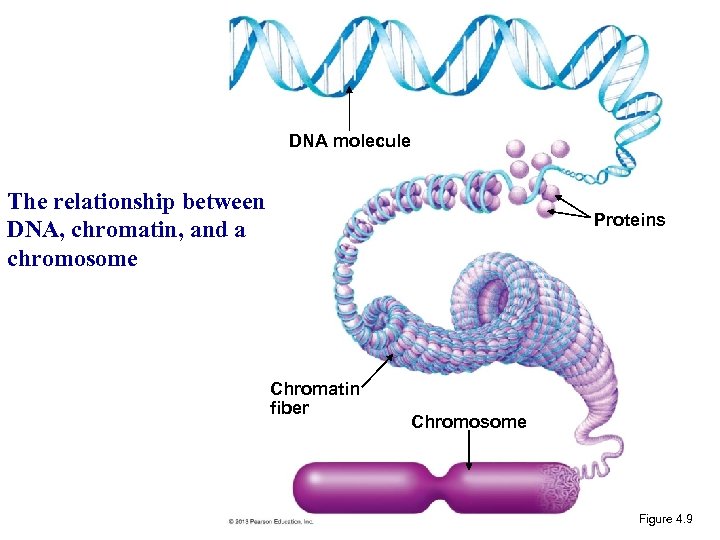 DNA molecule The relationship between DNA, chromatin, and a chromosome Proteins Chromatin fiber Chromosome Figure 4. 9
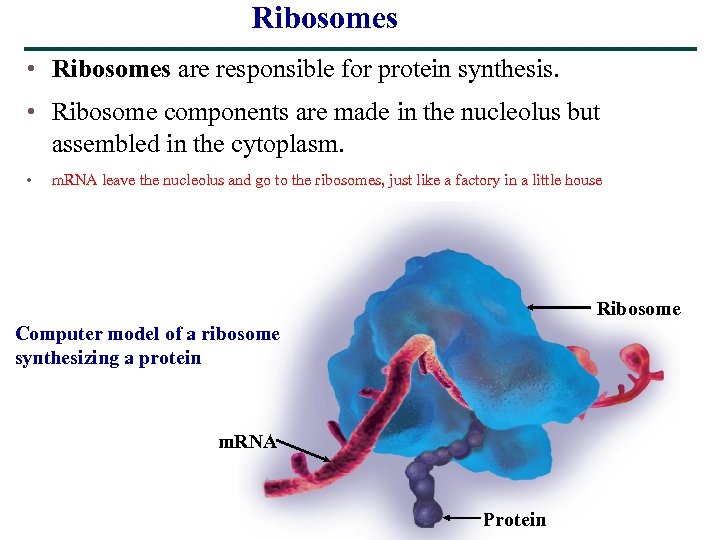 Ribosomes • Ribosomes are responsible for protein synthesis. • Ribosome components are made in the nucleolus but assembled in the cytoplasm. • m. RNA leave the nucleolus and go to the ribosomes, just like a factory in a little house Ribosome Computer model of a ribosome synthesizing a protein m. RNA Protein
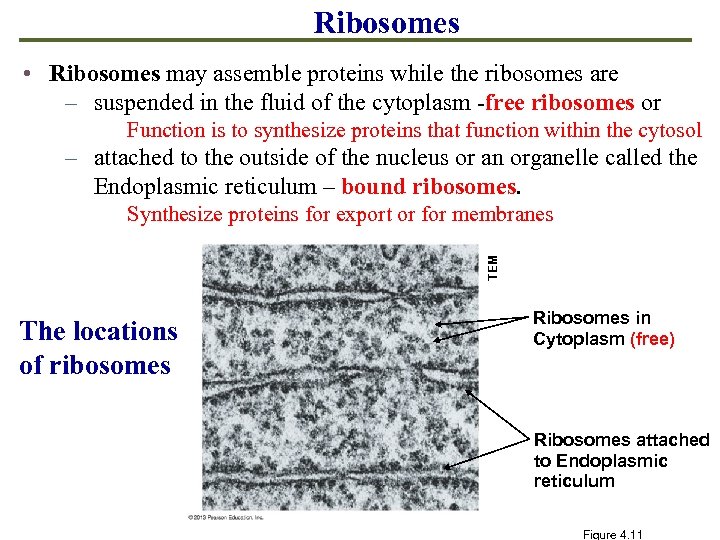 Ribosomes • Ribosomes may assemble proteins while the ribosomes are – suspended in the fluid of the cytoplasm -free ribosomes or Function is to synthesize proteins that function within the cytosol – attached to the outside of the nucleus or an organelle called the Endoplasmic reticulum – bound ribosomes. TEM Synthesize proteins for export or for membranes The locations of ribosomes Ribosomes in Cytoplasm (free) Ribosomes attached to Endoplasmic reticulum Figure 4. 11
 How DNA Directs Protein Production • DNA programs protein production in the cytoplasm by transferring its coded information into messenger RNA (m. RNA). • Messenger RNA exits the nucleus through pores in the nuclear envelope. • A ribosome moves along the m. RNA, translating the genetic message into a protein with a specific amino acid sequence. © 2013 Pearson Education, Inc.
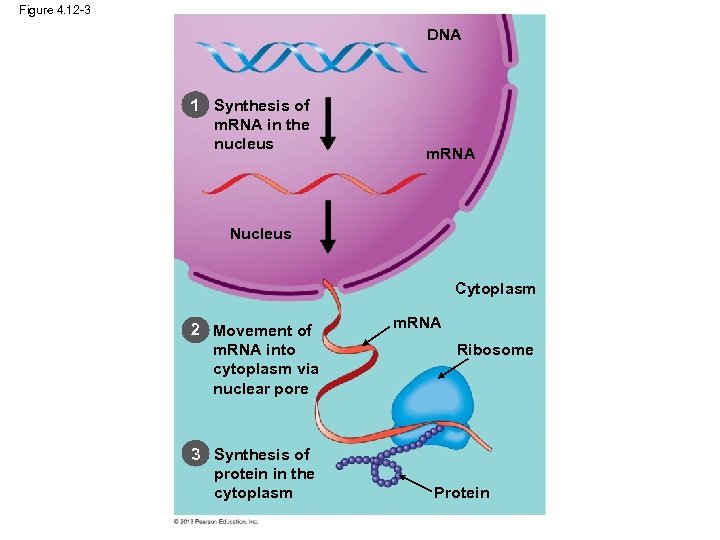 Figure 4. 12 -3 DNA 1 Synthesis of m. RNA in the nucleus m. RNA Nucleus Cytoplasm 2 Movement of m. RNA into cytoplasm via nuclear pore m. RNA Ribosome 3 Synthesis of protein in the cytoplasm Protein
 THE ENDOMEMBRANE SYSTEM: MANUFACTURING AND DISTRIBUTING CELLULAR PRODUCTS • Many membranous organelles forming the endomembrane system in a cell are interconnected either – directly by their membranes or – by transfer of membrane segments between them. © 2013 Pearson Education, Inc.
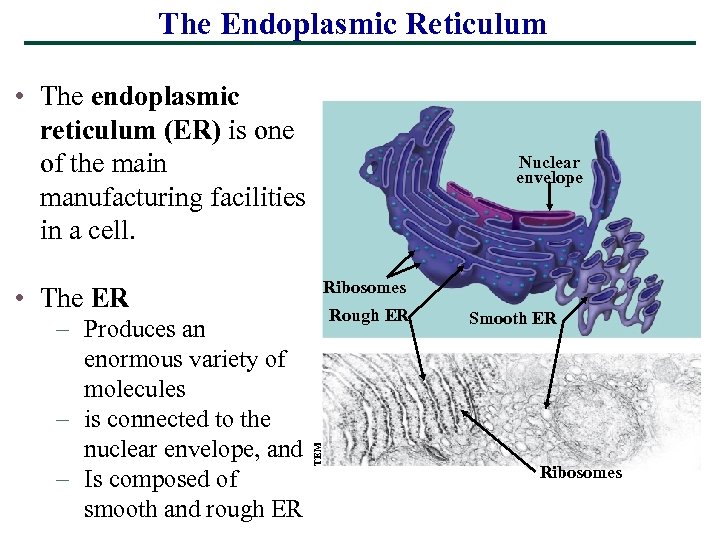 The Endoplasmic Reticulum • The endoplasmic reticulum (ER) is one of the main manufacturing facilities in a cell. – Produces an enormous variety of molecules – is connected to the nuclear envelope, and – Is composed of smooth and rough ER Ribosomes Rough ER TEM • The ER Nuclear envelope Smooth ER Ribosomes
 Rough ER and Smooth ER • The “rough” in rough ER refers to ribosomes that stud the outside of this portion of the ER membrane. – These ribosomes produce membrane proteins and secretory proteins. • Some products manufactured by rough ER are dispatched to other locations in the cell by transport vesicles, sacs made of membrane that bud off from the rough ER. • The smooth ER – lacks surface ribosomes, – produces lipids (phospholipids) , including steroids, and – Responsible for hydrolysis of breaking down the glycogen in the liver into glucose – helps liver cells detoxify circulating drugs and poisons (alcohol and barbiturates)
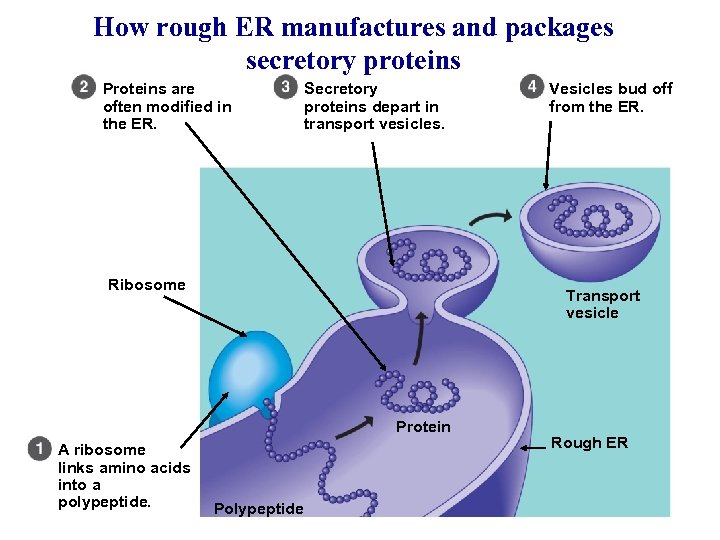 How rough ER manufactures and packages secretory proteins Proteins are often modified in the ER. Secretory proteins depart in transport vesicles. Ribosome Transport vesicle Protein A ribosome links amino acids into a polypeptide. Vesicles bud off from the ER. Polypeptide Rough ER
 The Golgi Apparatus • The Golgi apparatus (Here is where things from the ER end up ) – works in partnership with the ER and – Function : receives, refines, stores, and distributes chemical products of the cell – Center of manufacturing, warehousing, sorting and shipping – Structure : flattened membranous sacs – Two sides = 2 functions – “Cis” Receiving side fuse with vesicles – “Trans” Shipping side buds off vesicles that travel to other sites
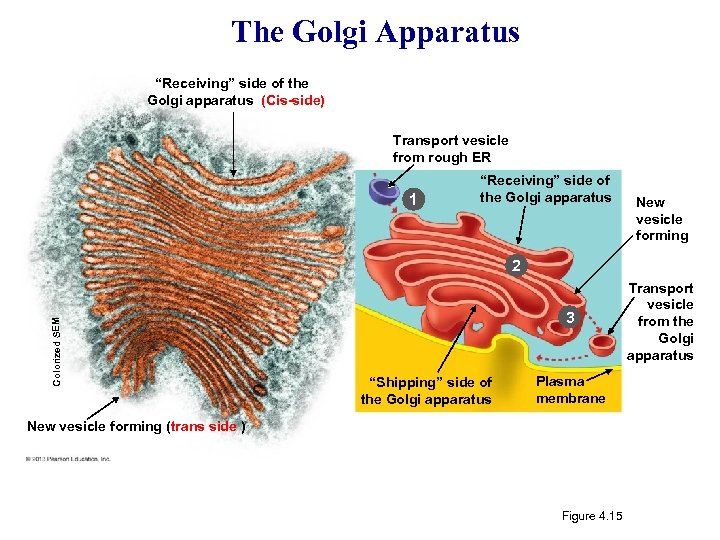 The Golgi Apparatus “Receiving” side of the Golgi apparatus (Cis-side) Transport vesicle from rough ER 1 “Receiving” side of the Golgi apparatus New vesicle forming Colorized SEM 2 3 “Shipping” side of the Golgi apparatus Plasma membrane New vesicle forming (trans side ) Figure 4. 15 Transport vesicle from the Golgi apparatus
 Lysosomes • There are other kinds of vesicles and lysosomes are one of them • A lysosome is a membrane-bound sac of digestive enzymes found in animal cells. • Lysosomes are absent from most plant cells. • Enzymes in a lysosome can break down large molecules such as – proteins, – polysaccharides, – fats, and – nucleic acids. © 2013 Pearson Education, Inc.
 Lysosomes • Lysosomes have several types of digestive functions. – Many cells engulf nutrients in tiny cytoplasmic sacs called food vacuoles. – These food vacuoles fuse with lysosomes, exposing food to enzymes to digest the food. – Small molecules from digestion leave the lysosome and nourish the cell. • Lysosomes can also – Destroy harmful bacteria – Break down damaged organelles – sculpt tissues during embryonic development, helping to form structures such as fingers. Animation: Lysosome Formation
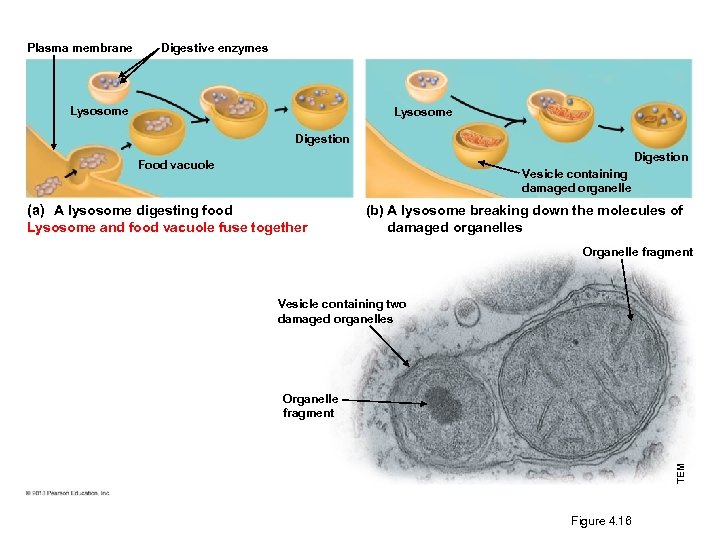 Plasma membrane Digestive enzymes Lysosome Digestion Food vacuole Vesicle containing damaged organelle (a) A lysosome digesting food Lysosome and food vacuole fuse together (b) A lysosome breaking down the molecules of damaged organelles Organelle fragment Vesicle containing two damaged organelles TEM Organelle fragment Figure 4. 16
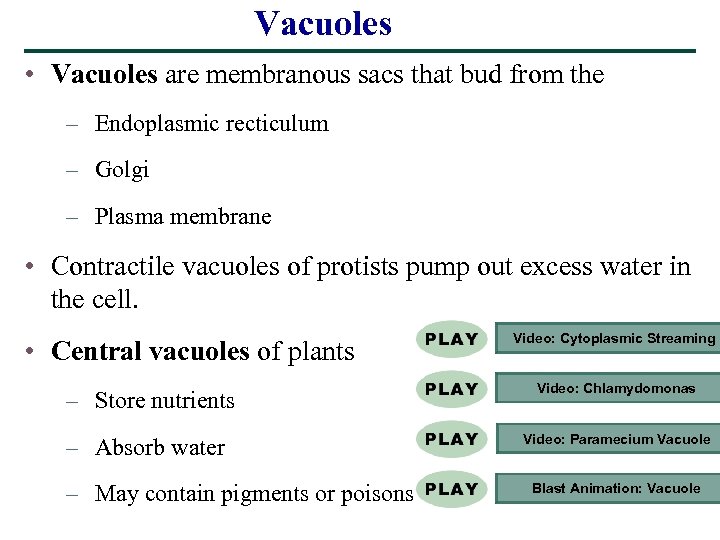 Vacuoles • Vacuoles are membranous sacs that bud from the – Endoplasmic recticulum – Golgi – Plasma membrane • Contractile vacuoles of protists pump out excess water in the cell. • Central vacuoles of plants – Store nutrients – Absorb water – May contain pigments or poisons Video: Cytoplasmic Streaming Video: Chlamydomonas Video: Paramecium Vacuole Blast Animation: Vacuole
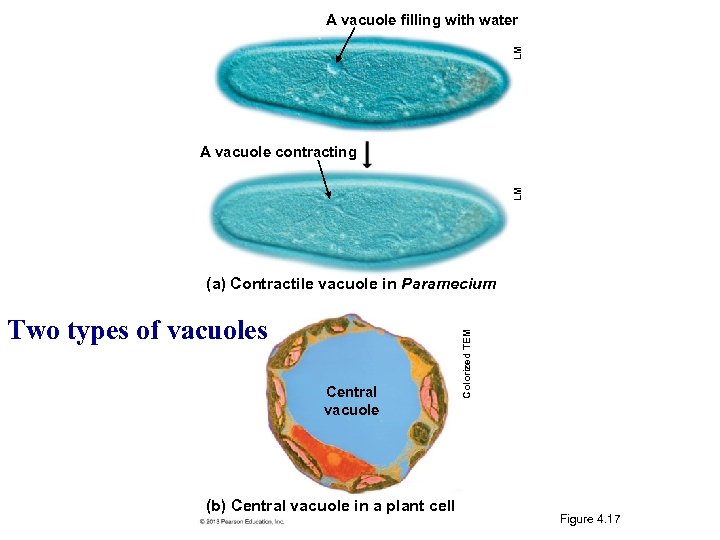 LM A vacuole filling with water LM A vacuole contracting Two types of vacuoles Central vacuole (b) Central vacuole in a plant cell Colorized TEM (a) Contractile vacuole in Paramecium Figure 4. 17
 Vacuoles • To review, the endomembrane system interconnects the – – – nuclear envelope, ER, Golgi, lysosomes, vacuoles, and plasma membrane. Blast Animation : Vesicle Transport Along Microtubules © 2013 Pearson Education, Inc.
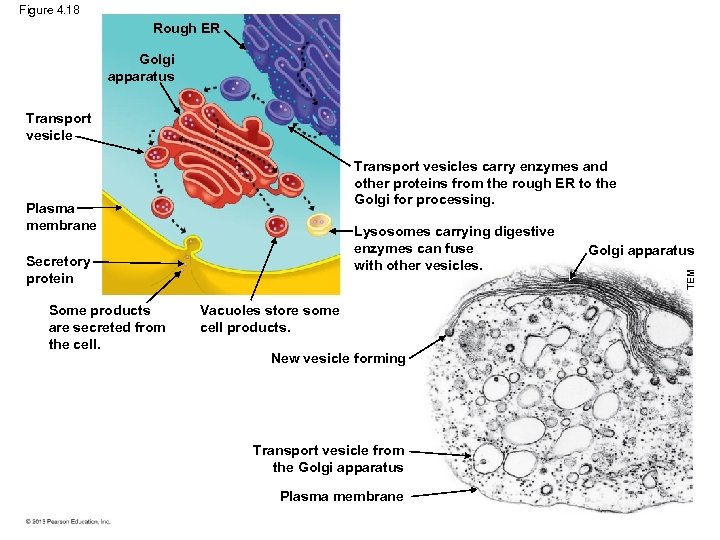 Figure 4. 18 Rough ER Golgi apparatus Transport vesicles carry enzymes and other proteins from the rough ER to the Golgi for processing. Lysosomes carrying digestive enzymes can fuse with other vesicles. Secretory protein Some products are secreted from the cell. Vacuoles store some cell products. New vesicle forming Transport vesicle from the Golgi apparatus Plasma membrane Golgi apparatus TEM Plasma membrane
 CHLOROPLASTS AND MITOCHONDRIA: ENERGY CONVERSION • All the work that these organelles are doing require energy • Cells require a continuous energy supply to perform the work of life. • Two organelles act as cellular power stations: – chloroplasts and mitochondria. Plants have both • Most of the living world runs on the energy provided by photosynthesis. • Photosynthesis is the conversion of light energy from the sun to the chemical energy of sugar and other organic molecules.
 Chloroplasts • Chloroplasts are – unique to the photosynthetic cells of plants and algae and – the organelles that perform photosynthesis. • Chloroplasts are divided into three major compartments by internal membranes: 1. the space between the two membranes, 2. the stroma, a thick fluid within the chloroplast, and 3. the space within grana, membrane-enclosed discs and tubes that trap light energy and convert it to chemical energy. © 2013 Pearson Education, Inc.
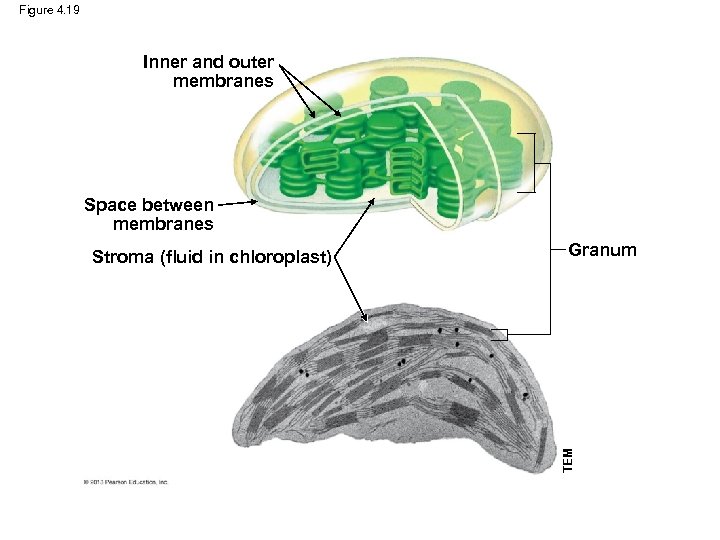 Figure 4. 19 Inner and outer membranes Space between membranes Granum TEM Stroma (fluid in chloroplast)
 Mitochondria • Mitochondria – are the organelles of cellular respiration (in the presence of O 2), – are found in almost all eukaryotic cells, and – produce ATP from the energy of food molecules. • An envelope of two membranes encloses the mitochondrion: 1. an outer smooth membrane and 2. an inner membrane that – has numerous infoldings called cristae and – encloses a thick fluid called the matrix (where certain chemical reactions occur in the breaking of sugar ).
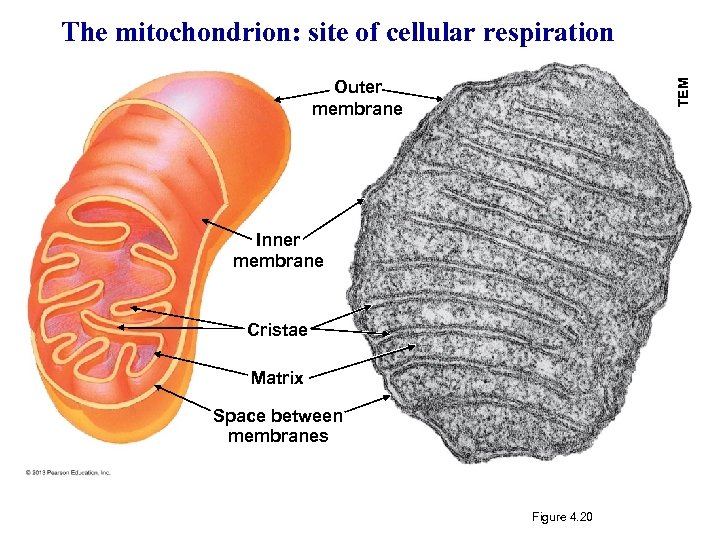 The mitochondrion: site of cellular respiration TEM Outer membrane Inner membrane Cristae Matrix Space between membranes Figure 4. 20
 Mitochondria • Mitochondria and chloroplasts contain their own DNA, which encodes some of their proteins. • This DNA is evidence that mitochondria and chloroplasts evolved from free-living prokaryotes in the distant past. © 2013 Pearson Education, Inc.
 THE CYTOSKELETON: CELL SHAPE AND MOVEMENT (Linking every thing together ) • The cytoskeleton is a network of fibers extending throughout the cytoplasm. – Provides mechanical support to the cell and maintains its shape • The cytoskeleton contains several types of fibers made from different proteins: – Microtubules – Are straight and hollow – Guide the movement of organelles and chromosomes – Intermediate filaments and microfilaments are thinner and solid. • The cytoskeleton provides anchorage and reinforcement for many organelles.
 Maintaining Cell Shape • The cytoskeleton is quite dynamic. • Changes in the cytoskeleton contribute to the amoeboid (crawling) movements of – the protist Amoeba and – some of our white blood cells. © 2013 Pearson Education, Inc.
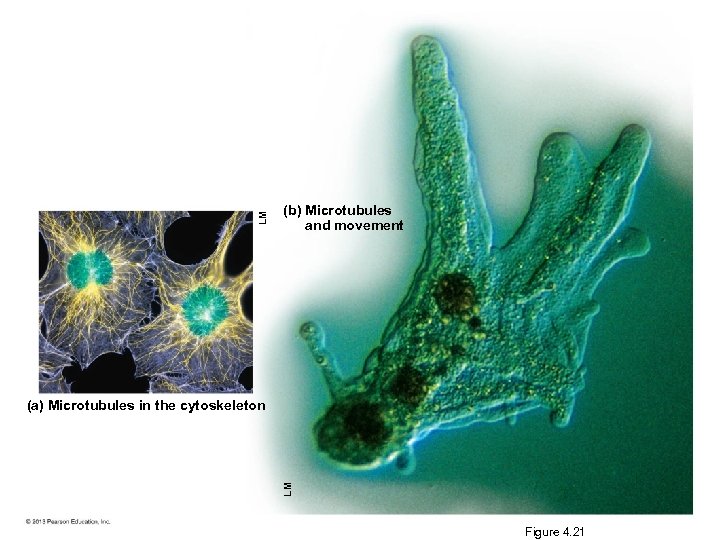 LM (b) Microtubules and movement LM (a) Microtubules in the cytoskeleton Figure 4. 21
 Cilia and Flagella are also made of microtubules • Cilia and flagella are motile appendages that aid in movement. – Flagella propel the cell through their undulating, whiplike motion. – Cilia move in a coordinated back-and-forth motion. – Cilia and flagella have the same basic architecture, but cilia are generally shorter and more numerous than flagella. © 2013 Pearson Education, Inc.
 Cilia and Flagella • Cilia may extend from nonmoving cells. • On cells lining the human trachea, cilia help sweep mucus with trapped debris out of the lungs. • Fallopian tubes are also cover by cilia in femelle Animation: Cilia and Flagella Video: Euglena Video: Paramecium Cilia © 2013 Pearson Education, Inc.
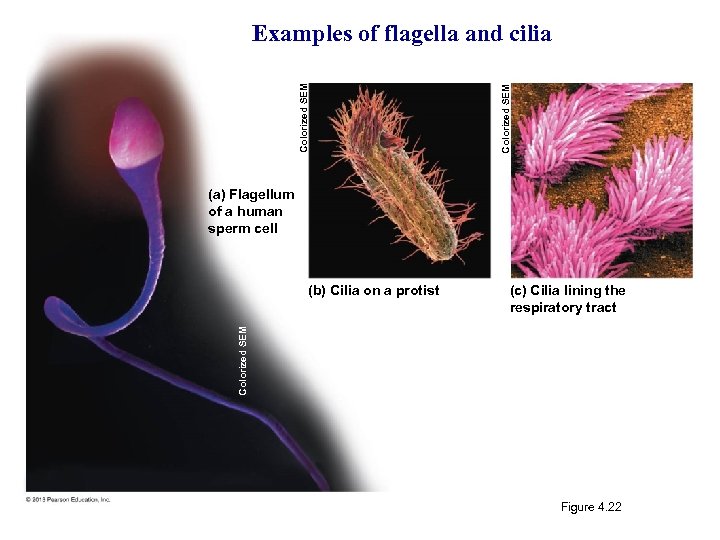 Colorized SEM Examples of flagella and cilia (a) Flagellum of a human sperm cell (c) Cilia lining the respiratory tract Colorized SEM (b) Cilia on a protist Figure 4. 22
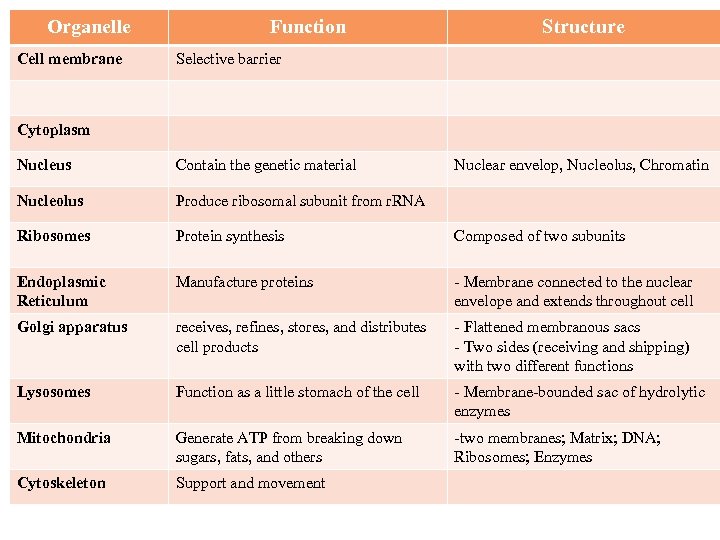 Organelle Cell membrane Function Structure Selective barrier Cytoplasm Nucleus Contain the genetic material Nuclear envelop, Nucleolus, Chromatin Nucleolus Produce ribosomal subunit from r. RNA Ribosomes Protein synthesis Composed of two subunits Endoplasmic Reticulum Manufacture proteins - Membrane connected to the nuclear envelope and extends throughout cell Golgi apparatus receives, refines, stores, and distributes cell products - Flattened membranous sacs - Two sides (receiving and shipping) with two different functions Lysosomes Function as a little stomach of the cell - Membrane-bounded sac of hydrolytic enzymes Mitochondria Generate ATP from breaking down sugars, fats, and others -two membranes; Matrix; DNA; Ribosomes; Enzymes Cytoskeleton Support and movement
 Evolution Connection: The Evolution of Antibiotic Resistance • Many antibiotics disrupt cellular structures of invading microorganisms. • Introduced in the 1940 s, penicillin worked well against such infections. • But over time, bacteria that were resistant to antibiotics, such as the MRSA strain, were favored. • The widespread use and abuse of antibiotics continue to favor bacteria that resist antibiotics. © 2013 Pearson Education, Inc.
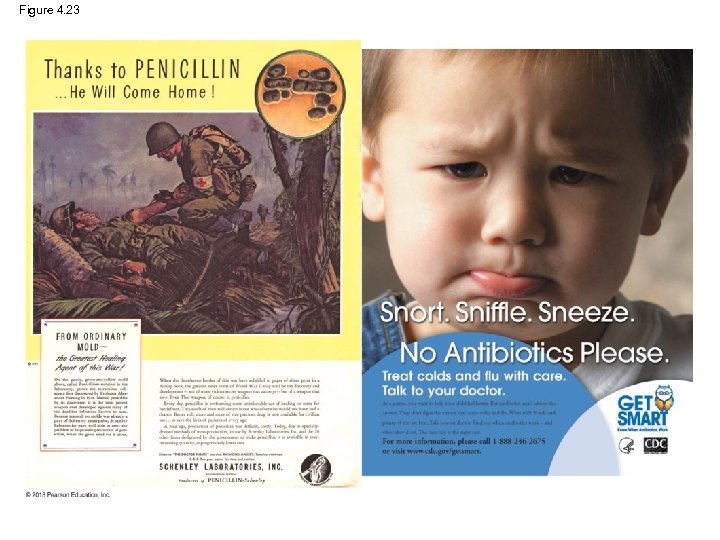 Figure 4. 23
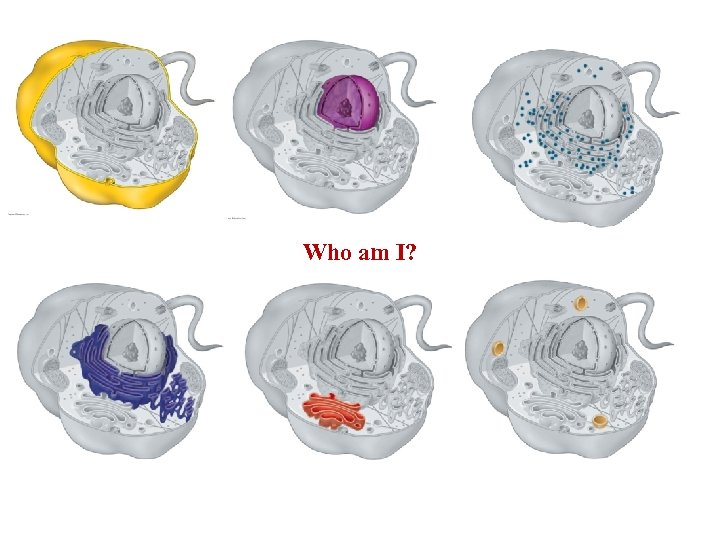 Who am I?
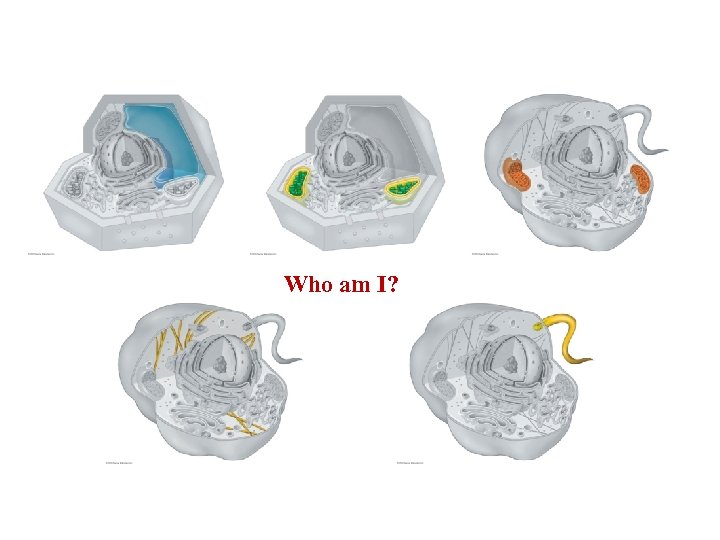 Who am I?
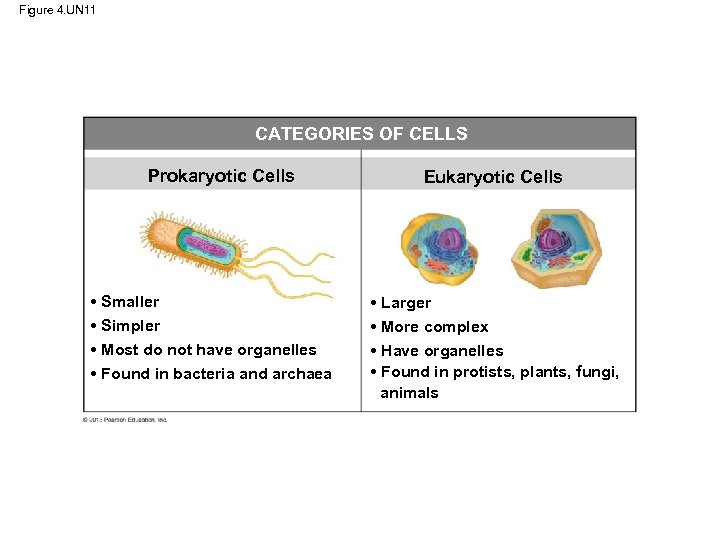 Figure 4. UN 11 CATEGORIES OF CELLS Prokaryotic Cells Eukaryotic Cells • Smaller • Simpler • Larger • More complex • Most do not have organelles • Found in bacteria and archaea • Have organelles • Found in protists, plants, fungi, animals
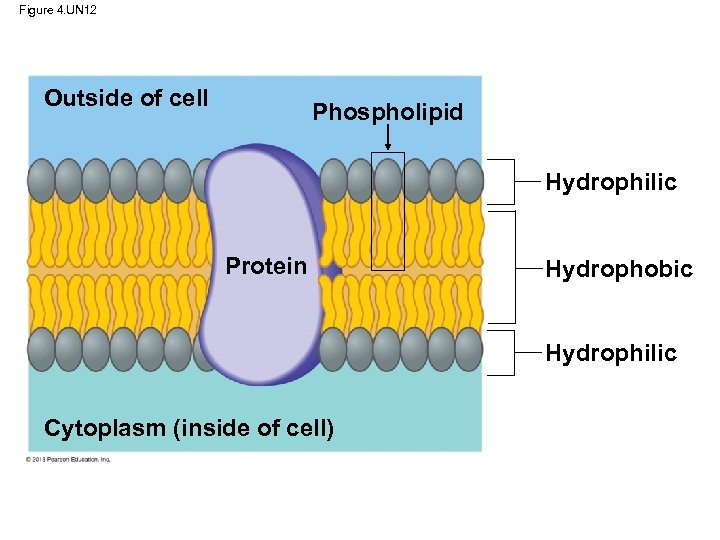 Figure 4. UN 12 Outside of cell Phospholipid Hydrophilic Protein Hydrophobic Hydrophilic Cytoplasm (inside of cell)
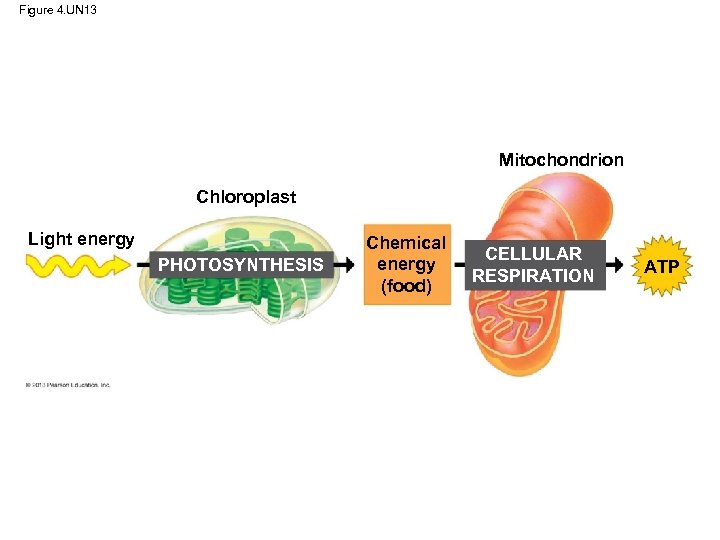 Figure 4. UN 13 Mitochondrion Chloroplast Light energy PHOTOSYNTHESIS Chemical energy (food) CELLULAR RESPIRATION ATP