 Скачать презентацию Chapter 4 1872 -1912 Becoming a World Power
5184fc74c9f229c8c33b711f93ff0d34.ppt
- Количество слайдов: 105



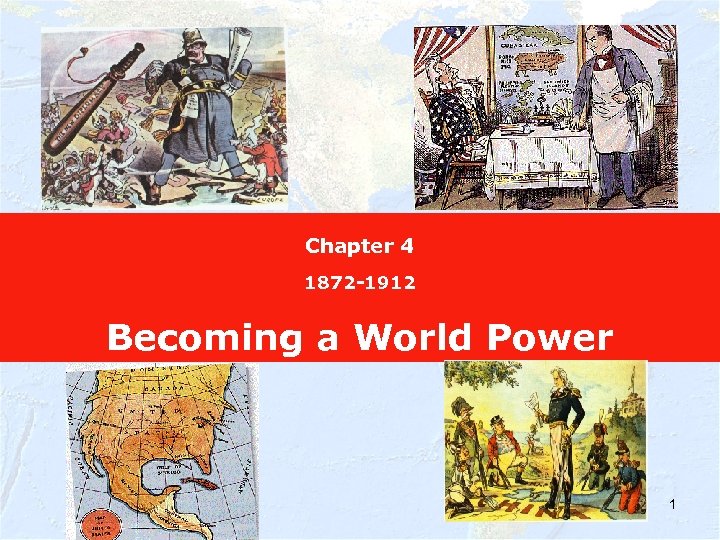
Chapter 4 1872 -1912 Becoming a World Power 1
PRODUCED BY Multimedia Learning, LLC http: //www. multimedialearning. org WRITTEN BY HERSCHEL SARNOFF & DANA BAGDASARIAN COPYRIGHT 2007 CONTACT INFORMATION: VERSION 1. 1 hsarnoff@gmail. com danabag@gmail. com 2
Chapter 4 1772 -1912 Becoming a World Power Section 1: The Imperialist Vision 3
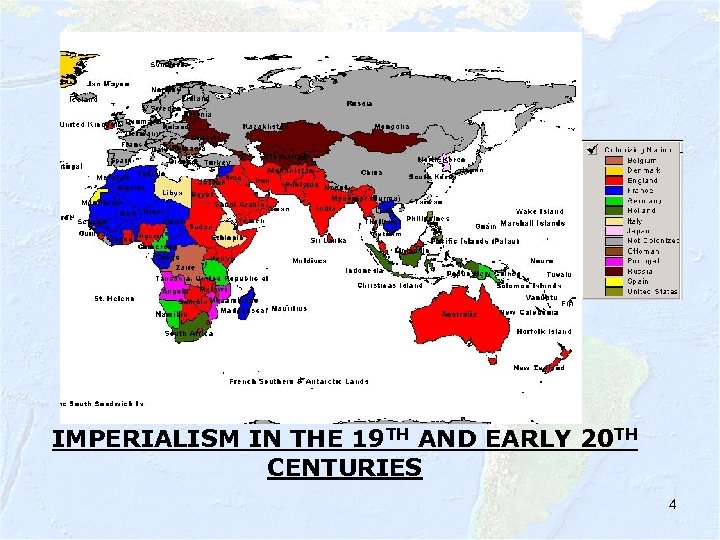
IMPERIALISM IN THE 19 TH AND EARLY 20 TH CENTURIES 4
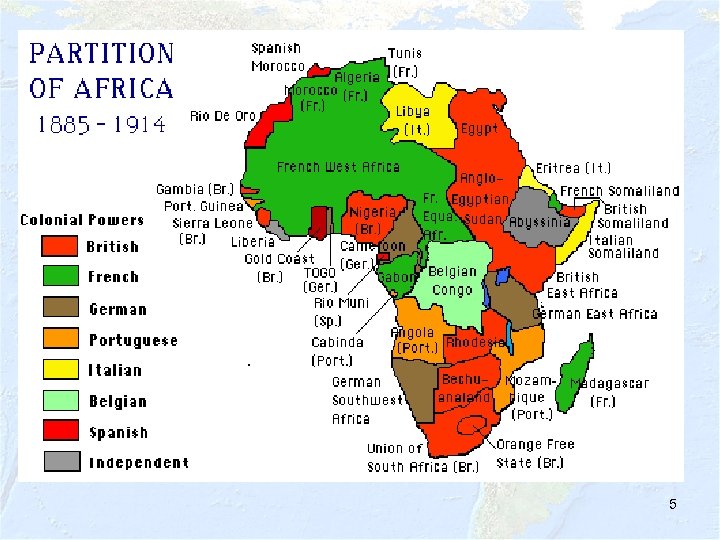
5
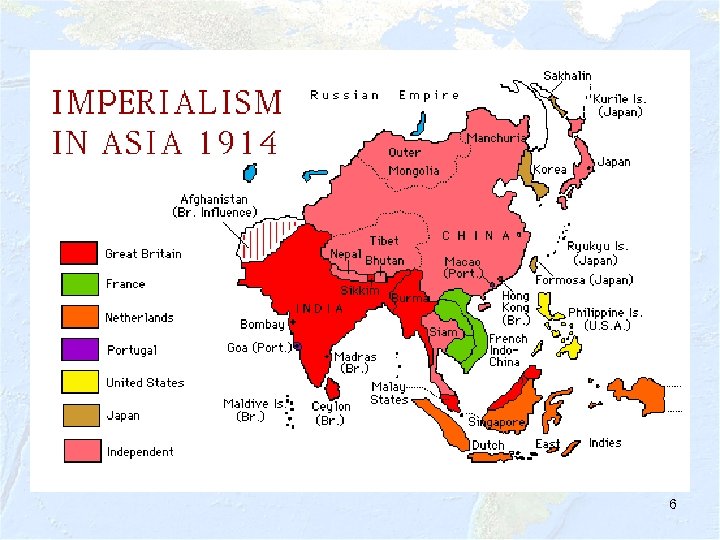
6
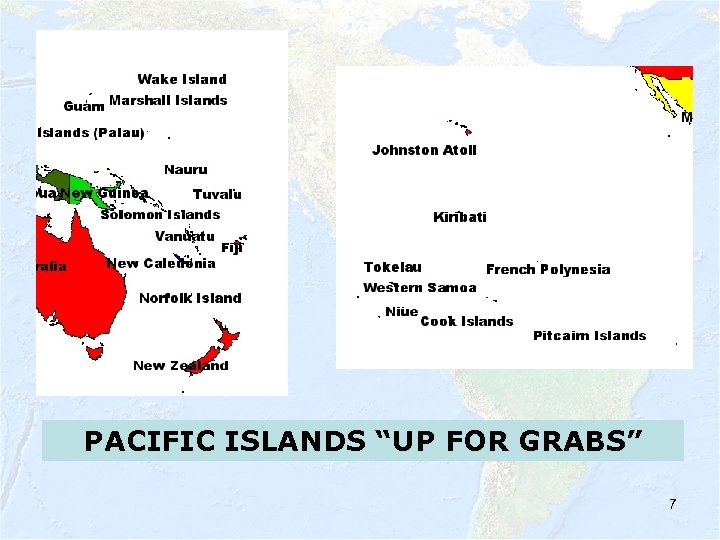
PACIFIC ISLANDS “UP FOR GRABS” 7
• Traditional foreign policy • Definition of imperialism • Reasons and rationalizations for imperialism 8
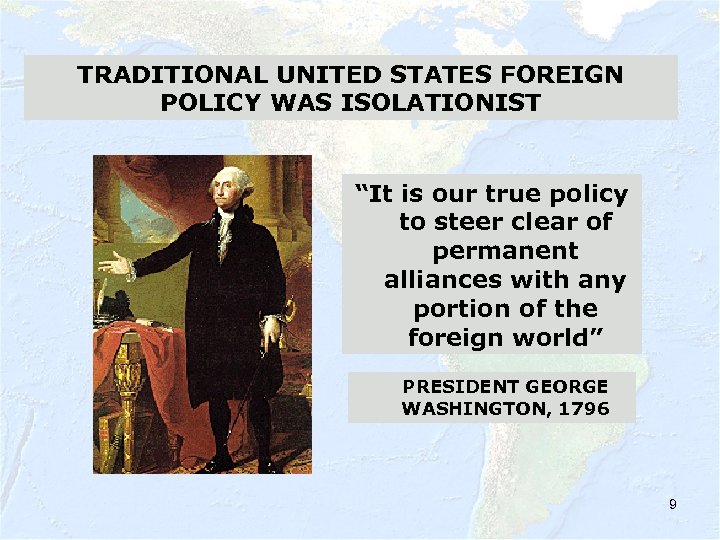
TRADITIONAL UNITED STATES FOREIGN POLICY WAS ISOLATIONIST “It is our true policy to steer clear of permanent alliances with any portion of the foreign world” PRESIDENT GEORGE WASHINGTON, 1796 9
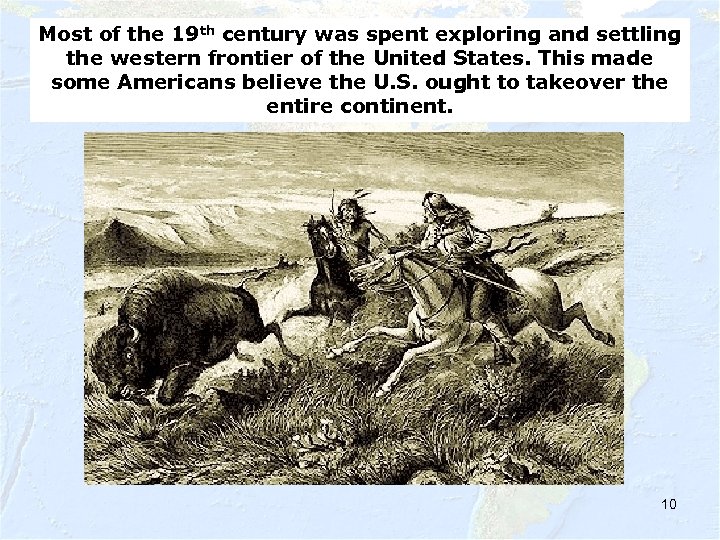
Most of the 19 th century was spent exploring and settling the western frontier of the United States. This made some Americans believe the U. S. ought to takeover the entire continent. 10
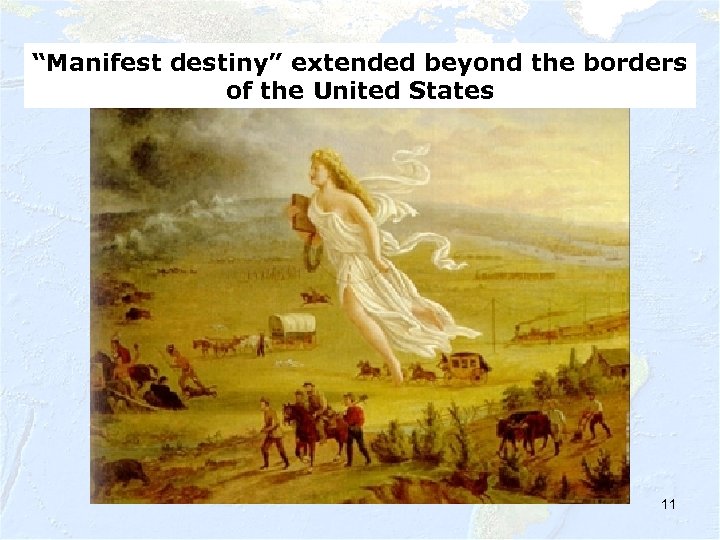
“Manifest destiny” extended beyond the borders of the United States 11
DEFINITION OF IMPERIALISM The policy of one nation extending it's authority over another through territorial acquisition and control over the government and economy in the conquered nation. 12
REASONS AND RATIONALIZATIONS FOR IMPERIALISM • To gain more power in the international arena by following the European example • Missionary zeal • To gain more wealth 13
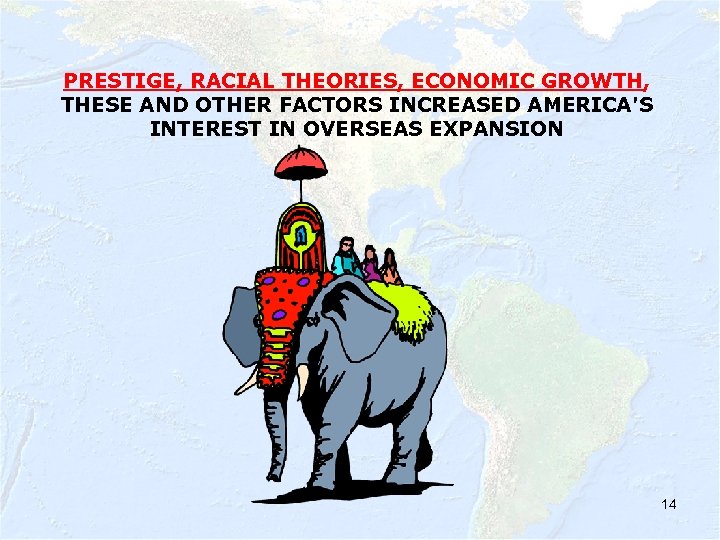
PRESTIGE, RACIAL THEORIES, ECONOMIC GROWTH, THESE AND OTHER FACTORS INCREASED AMERICA'S INTEREST IN OVERSEAS EXPANSION 14
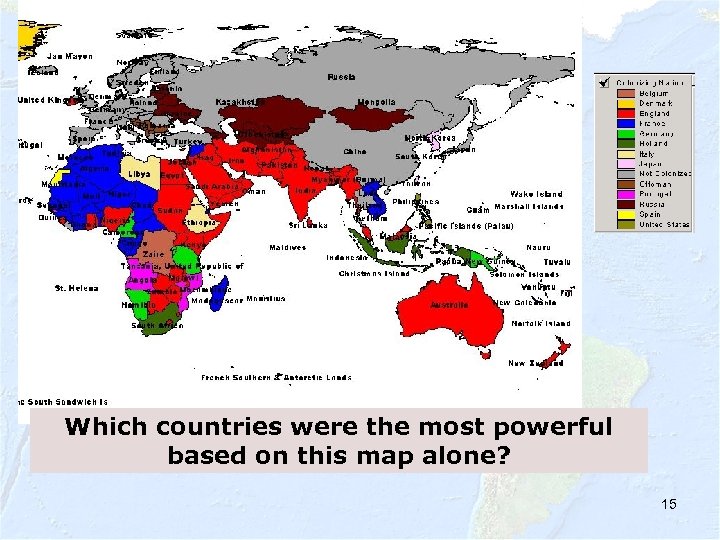
Which countries were the most powerful based on this map alone? 15
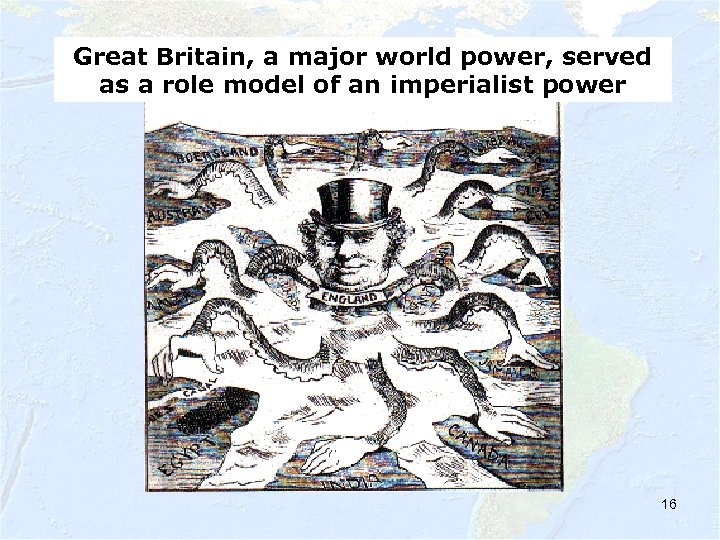
Great Britain, a major world power, served as a role model of an imperialist power 16
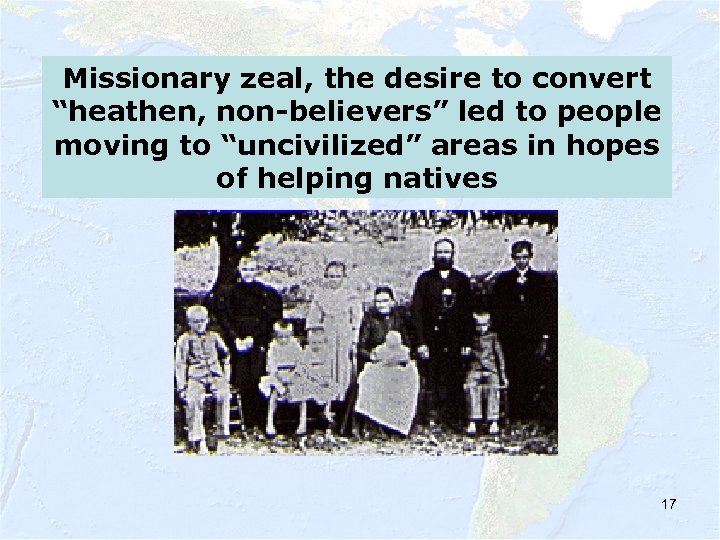
Missionary zeal, the desire to convert “heathen, non-believers” led to people moving to “uncivilized” areas in hopes of helping natives 17
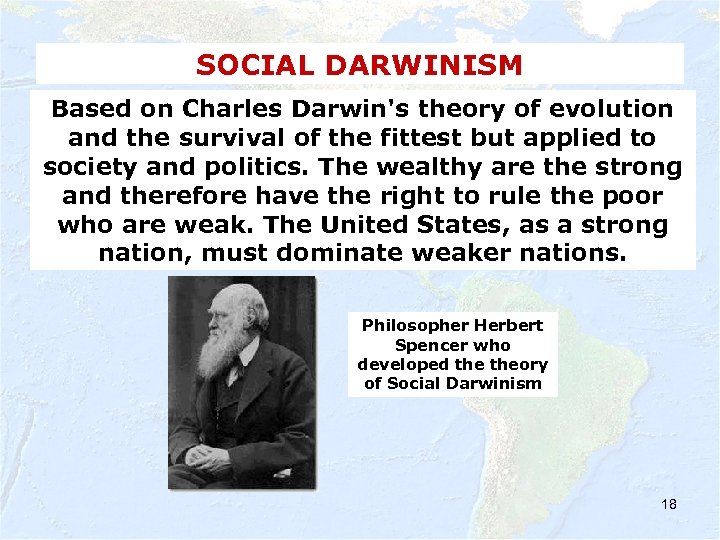
SOCIAL DARWINISM Based on Charles Darwin's theory of evolution and the survival of the fittest but applied to society and politics. The wealthy are the strong and therefore have the right to rule the poor who are weak. The United States, as a strong nation, must dominate weaker nations. Philosopher Herbert Spencer who developed theory of Social Darwinism 18
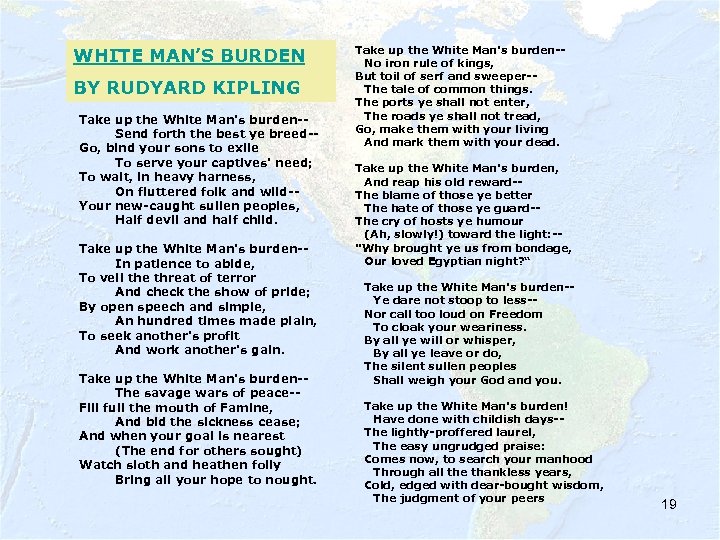
WHITE MAN’S BURDEN BY RUDYARD KIPLING Take up the White Man's burden-- Send forth the best ye breed-- Go, bind your sons to exile To serve your captives' need; To wait, in heavy harness, On fluttered folk and wild-- Your new-caught sullen peoples, Half devil and half child. Take up the White Man's burden-- In patience to abide, To veil the threat of terror And check the show of pride; By open speech and simple, An hundred times made plain, To seek another's profit And work another's gain. Take up the White Man's burden-- The savage wars of peace-- Fill full the mouth of Famine, And bid the sickness cease; And when your goal is nearest (The end for others sought) Watch sloth and heathen folly Bring all your hope to nought. Take up the White Man's burden-- No iron rule of kings, But toil of serf and sweeper-- The tale of common things. The ports ye shall not enter, The roads ye shall not tread, Go, make them with your living And mark them with your dead. Take up the White Man's burden, And reap his old reward-- The blame of those ye better The hate of those ye guard-- The cry of hosts ye humour (Ah, slowly!) toward the light: -- "Why brought ye us from bondage, Our loved Egyptian night? “ Take up the White Man's burden-- Ye dare not stoop to less-- Nor call too loud on Freedom To cloak your weariness. By all ye will or whisper, By all ye leave or do, The silent sullen peoples Shall weigh your God and you. Take up the White Man's burden! Have done with childish days-- The lightly-proffered laurel, The easy ungrudged praise: Comes now, to search your manhood Through all the thankless years, Cold, edged with dear-bought wisdom, The judgment of your peers 19
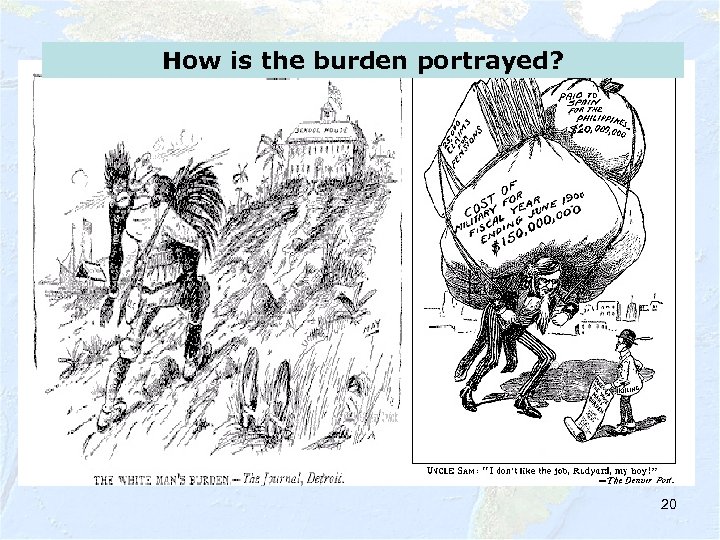
How is the burden portrayed? 20
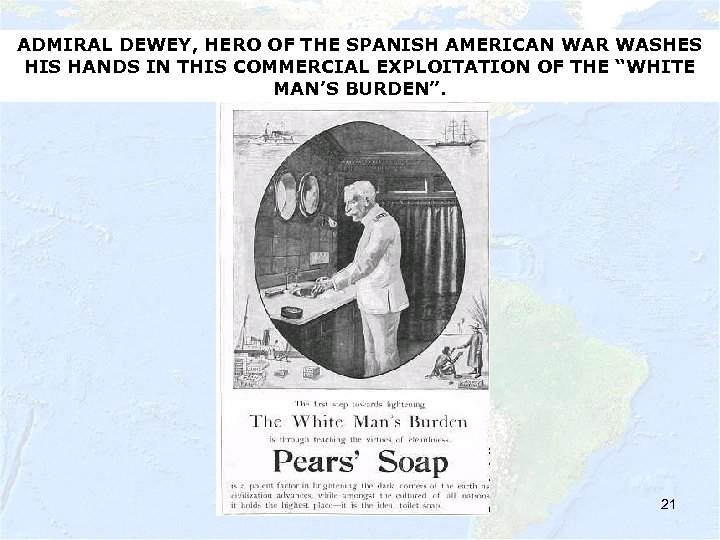
ADMIRAL DEWEY, HERO OF THE SPANISH AMERICAN WAR WASHES HIS HANDS IN THIS COMMERCIAL EXPLOITATION OF THE “WHITE MAN’S BURDEN”. 21
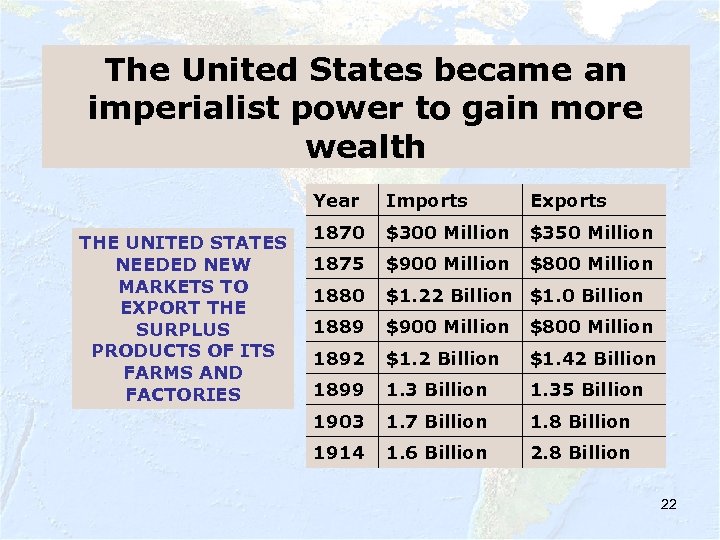
The United States became an imperialist power to gain more wealth Year THE UNITED STATES NEEDED NEW MARKETS TO EXPORT THE SURPLUS PRODUCTS OF ITS FARMS AND FACTORIES Imports Exports 1870 $300 Million $350 Million 1875 $900 Million $800 Million 1880 $1. 22 Billion $1. 0 Billion 1889 $900 Million $800 Million 1892 $1. 2 Billion $1. 42 Billion 1899 1. 3 Billion 1. 35 Billion 1903 1. 7 Billion 1. 8 Billion 1914 1. 6 Billion 2. 8 Billion 22
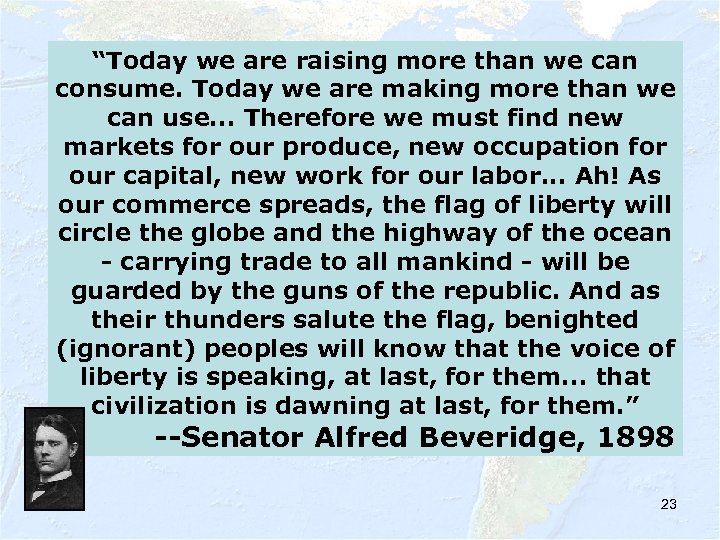
“Today we are raising more than we can consume. Today we are making more than we can use. . . Therefore we must find new markets for our produce, new occupation for our capital, new work for our labor. . . Ah! As our commerce spreads, the flag of liberty will circle the globe and the highway of the ocean - carrying trade to all mankind - will be guarded by the guns of the republic. And as their thunders salute the flag, benighted (ignorant) peoples will know that the voice of liberty is speaking, at last, for them. . . that civilization is dawning at last, for them. ” --Senator Alfred Beveridge, 1898 23
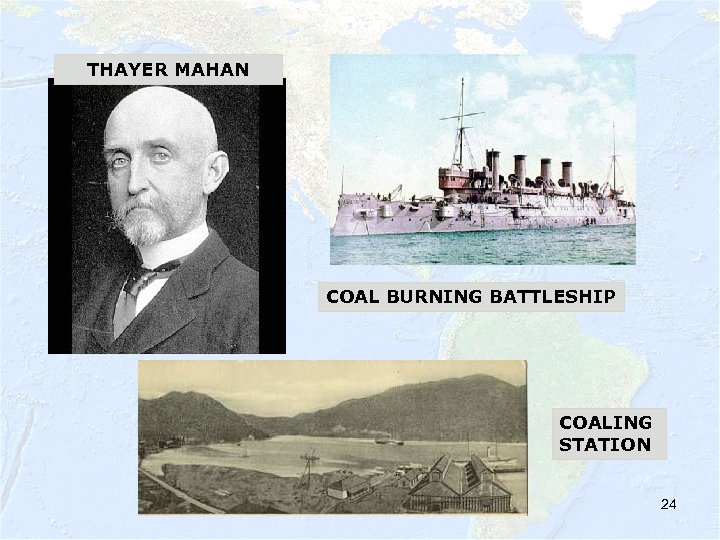
THAYER MAHAN COAL BURNING BATTLESHIP COALING STATION 24
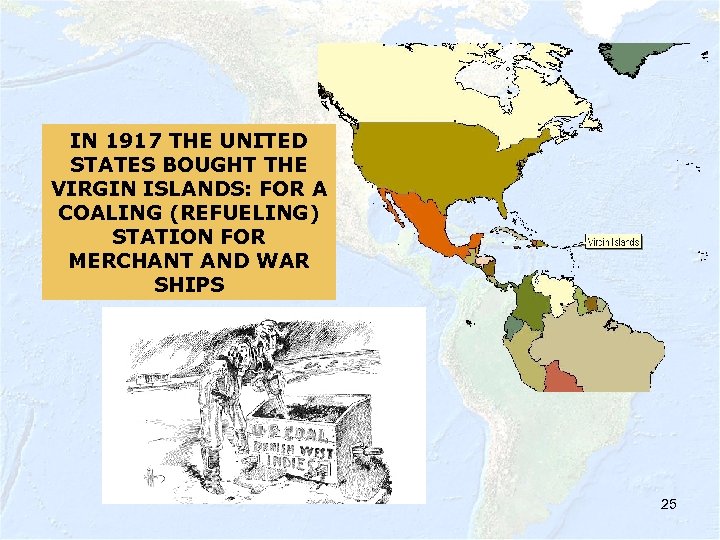
IN 1917 THE UNITED STATES BOUGHT THE VIRGIN ISLANDS: FOR A COALING (REFUELING) STATION FOR MERCHANT AND WAR SHIPS 25
• Samoa • Hawaii 26
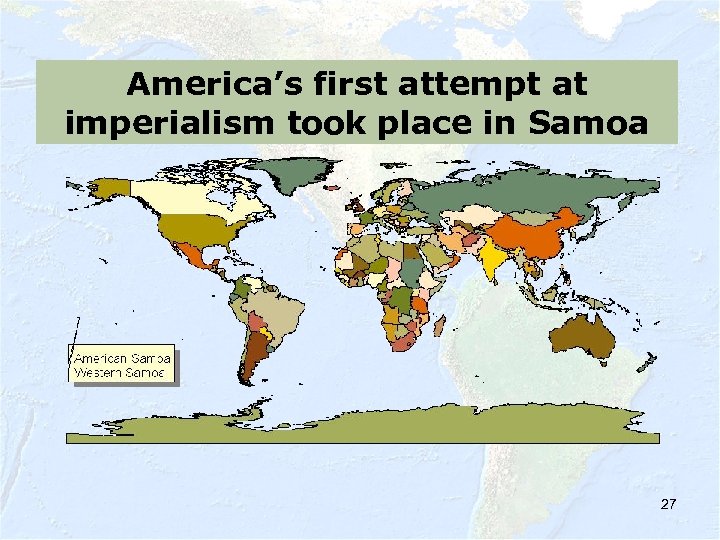
America’s first attempt at imperialism took place in Samoa 27
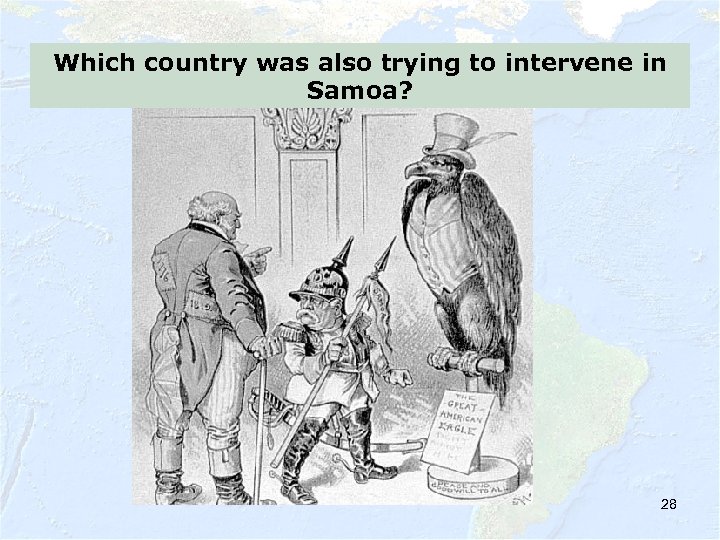
Which country was also trying to intervene in Samoa? 28
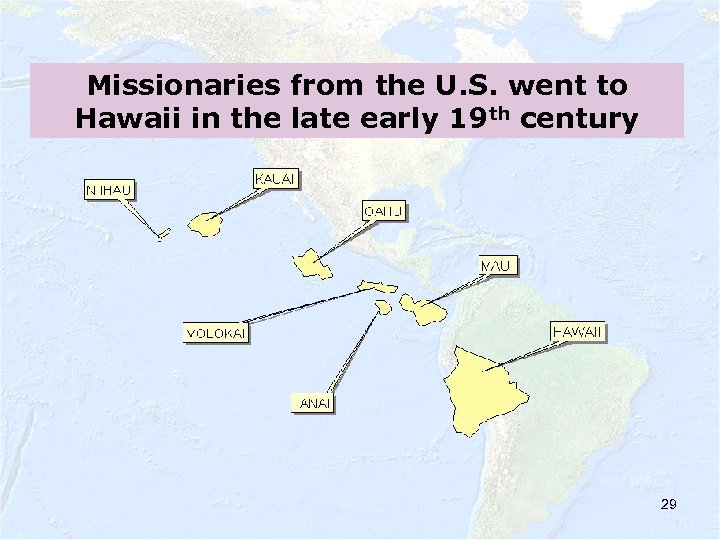
Missionaries from the U. S. went to Hawaii in the late early 19 th century 29
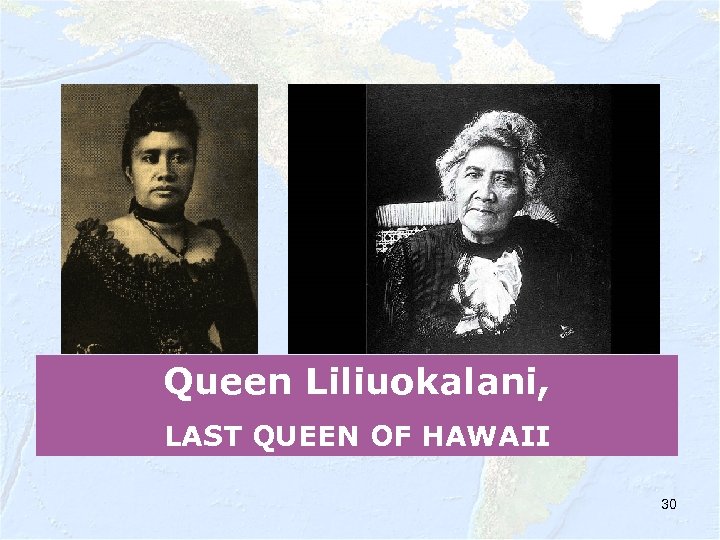
Queen Liliuokalani, LAST QUEEN OF HAWAII 30
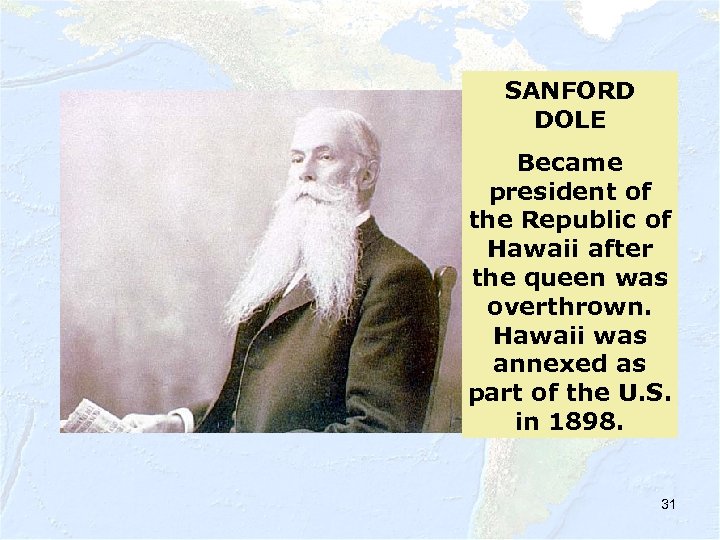
SANFORD DOLE Became president of the Republic of Hawaii after the queen was overthrown. Hawaii was annexed as part of the U. S. in 1898. 31
Chapter 4 1772 -1912 Becoming a World Power Section 2: The Spanish-American War 32
• Role of media • U. S. S. Maine • War in Cuba • Teller amendment • Philippines • Differing opinions on imperialism 33
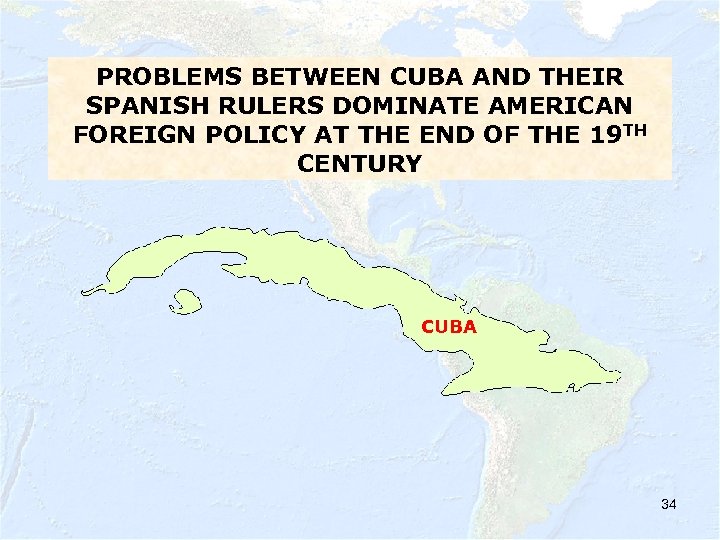
PROBLEMS BETWEEN CUBA AND THEIR SPANISH RULERS DOMINATE AMERICAN FOREIGN POLICY AT THE END OF THE 19 TH CENTURY CUBA 34
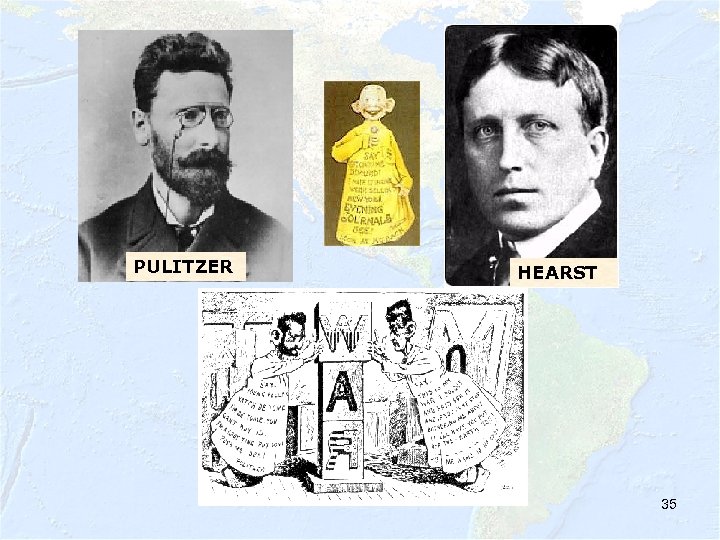
PULITZER HEARST 35
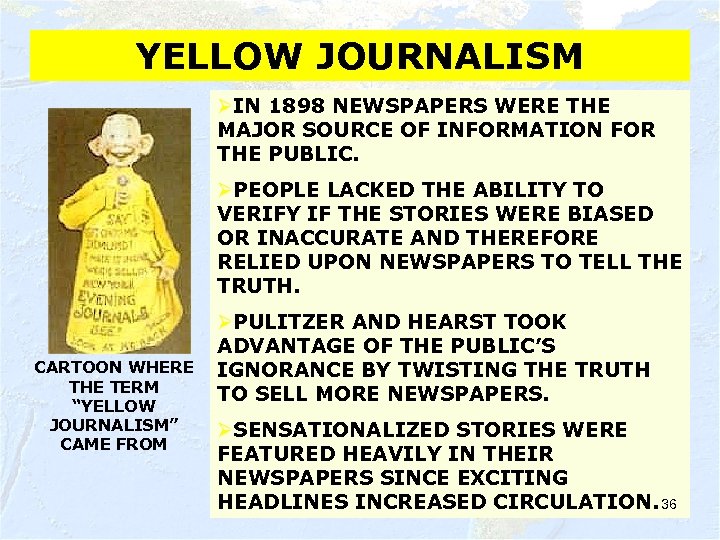
YELLOW JOURNALISM ØIN 1898 NEWSPAPERS WERE THE MAJOR SOURCE OF INFORMATION FOR THE PUBLIC. ØPEOPLE LACKED THE ABILITY TO VERIFY IF THE STORIES WERE BIASED OR INACCURATE AND THEREFORE RELIED UPON NEWSPAPERS TO TELL THE TRUTH. CARTOON WHERE THE TERM “YELLOW JOURNALISM” CAME FROM ØPULITZER AND HEARST TOOK ADVANTAGE OF THE PUBLIC’S IGNORANCE BY TWISTING THE TRUTH TO SELL MORE NEWSPAPERS. ØSENSATIONALIZED STORIES WERE FEATURED HEAVILY IN THEIR NEWSPAPERS SINCE EXCITING HEADLINES INCREASED CIRCULATION. 36
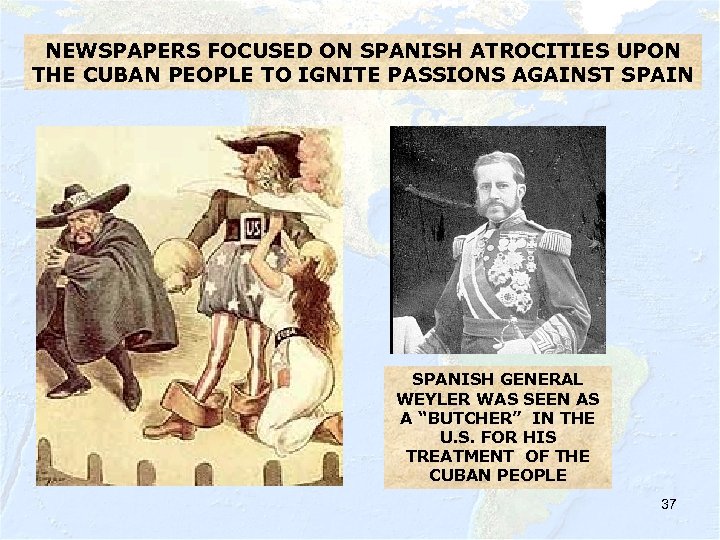
NEWSPAPERS FOCUSED ON SPANISH ATROCITIES UPON THE CUBAN PEOPLE TO IGNITE PASSIONS AGAINST SPAIN SPANISH GENERAL WEYLER WAS SEEN AS A “BUTCHER” IN THE U. S. FOR HIS TREATMENT OF THE CUBAN PEOPLE 37
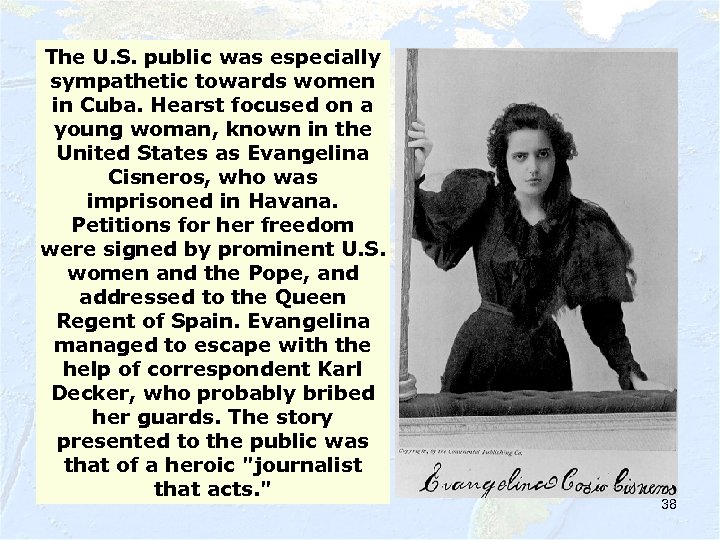
The U. S. public was especially sympathetic towards women in Cuba. Hearst focused on a young woman, known in the United States as Evangelina Cisneros, who was imprisoned in Havana. Petitions for her freedom were signed by prominent U. S. women and the Pope, and addressed to the Queen Regent of Spain. Evangelina managed to escape with the help of correspondent Karl Decker, who probably bribed her guards. The story presented to the public was that of a heroic "journalist that acts. " 38
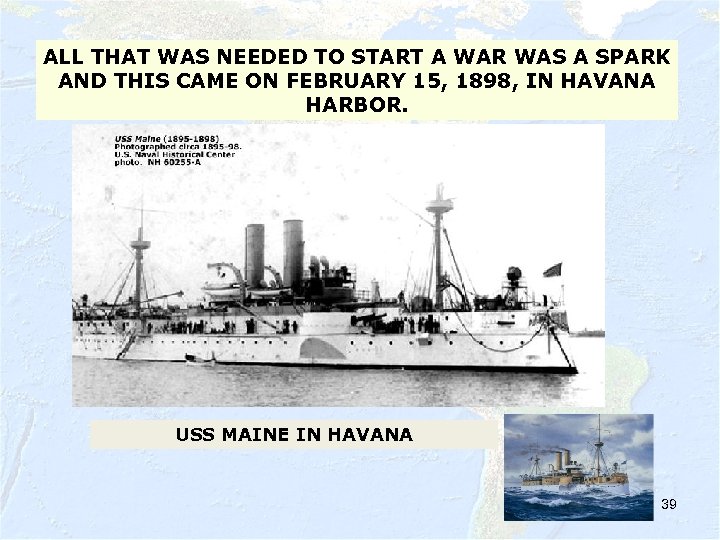
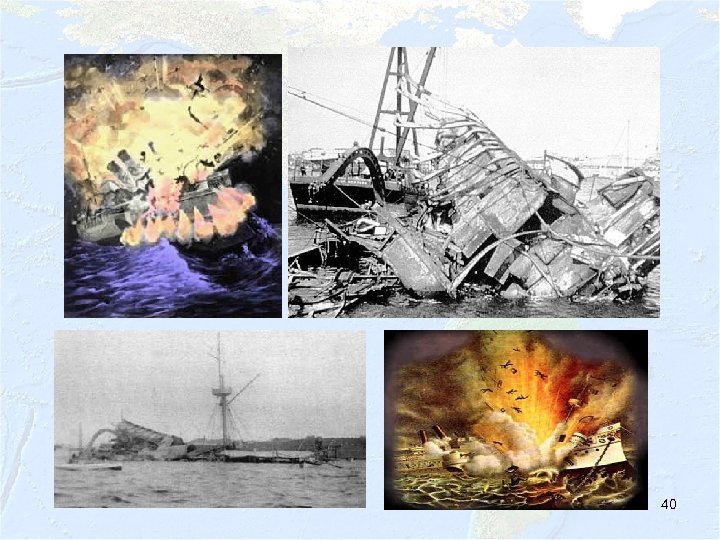
ALL THAT WAS NEEDED TO START A WAR WAS A SPARK AND THIS CAME ON FEBRUARY 15, 1898, IN HAVANA HARBOR. USS MAINE IN HAVANA 39
40
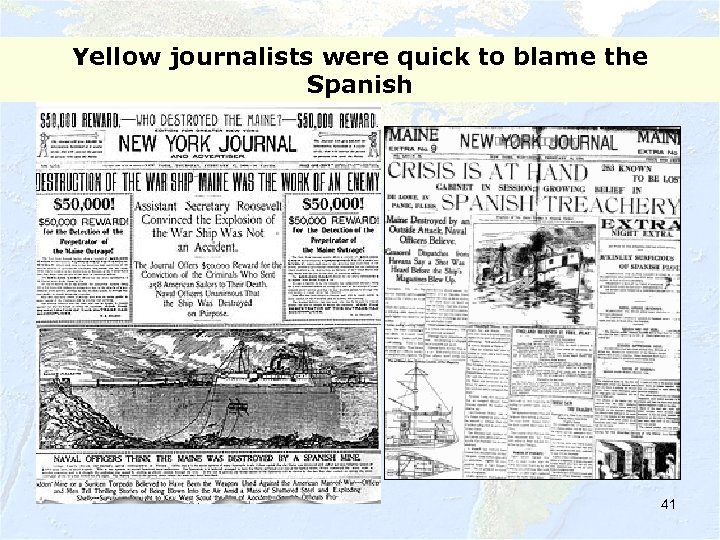
Yellow journalists were quick to blame the Spanish 41
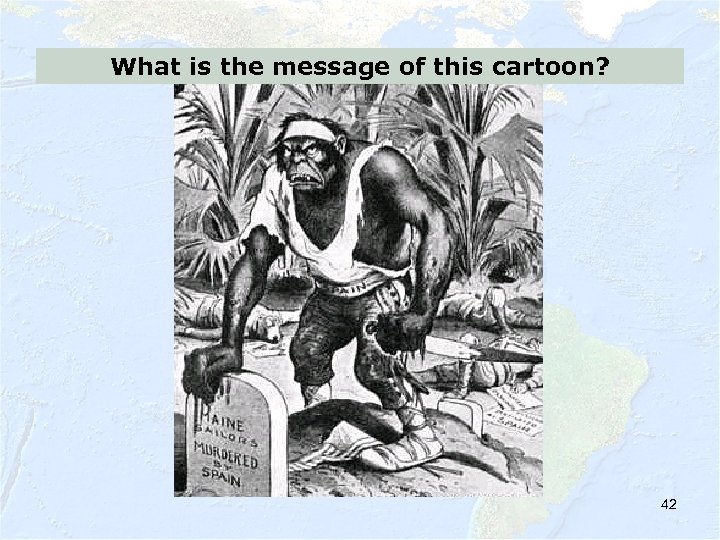
What is the message of this cartoon? 42
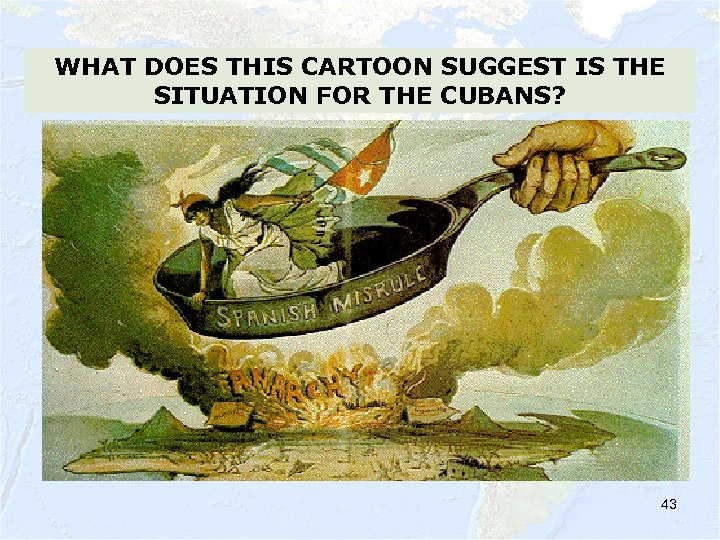
WHAT DOES THIS CARTOON SUGGEST IS THE SITUATION FOR THE CUBANS? 43
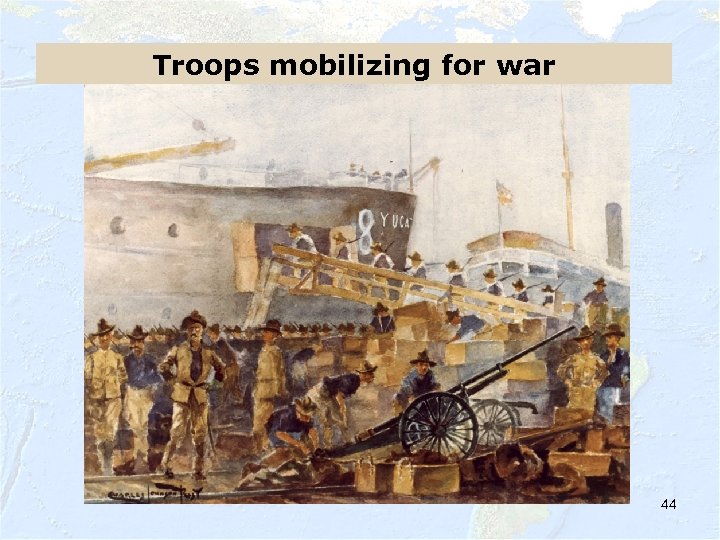
Troops mobilizing for war 44
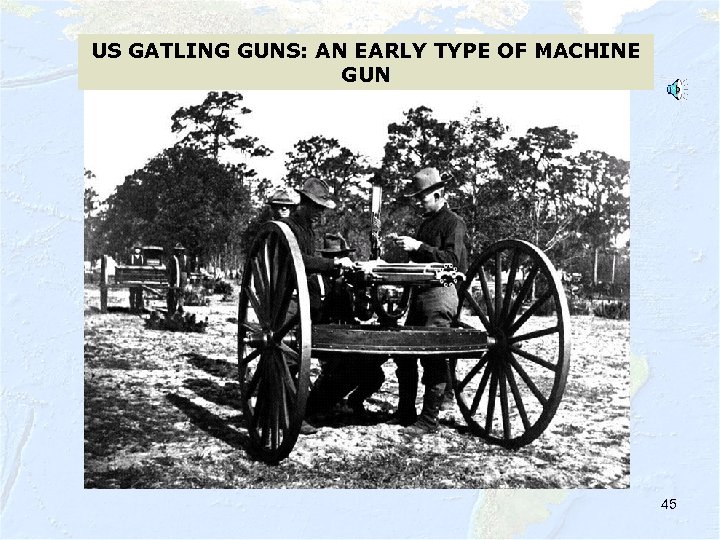
US GATLING GUNS: AN EARLY TYPE OF MACHINE GUN 45
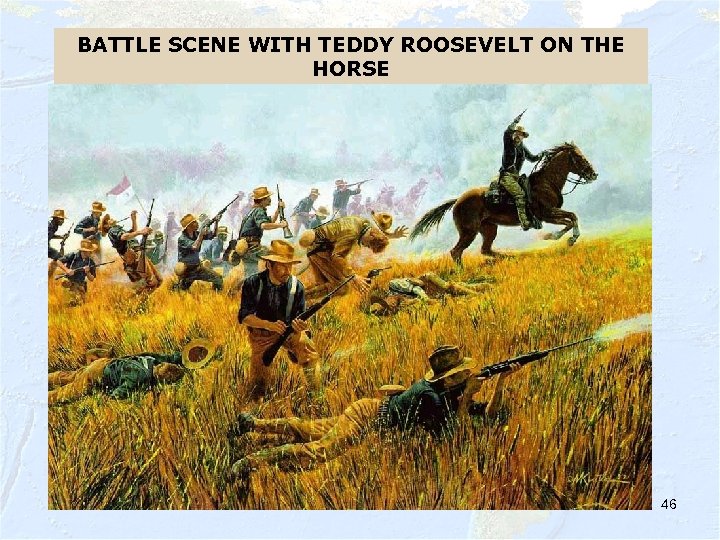
BATTLE SCENE WITH TEDDY ROOSEVELT ON THE HORSE 46
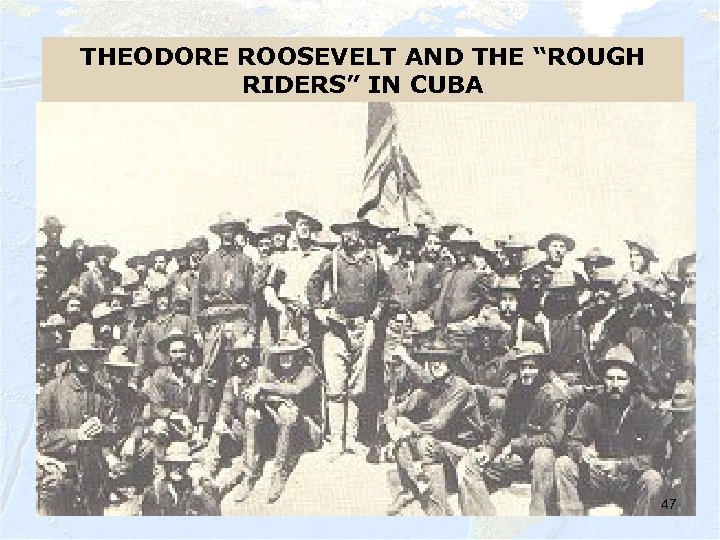
THEODORE ROOSEVELT AND THE “ROUGH RIDERS” IN CUBA 47
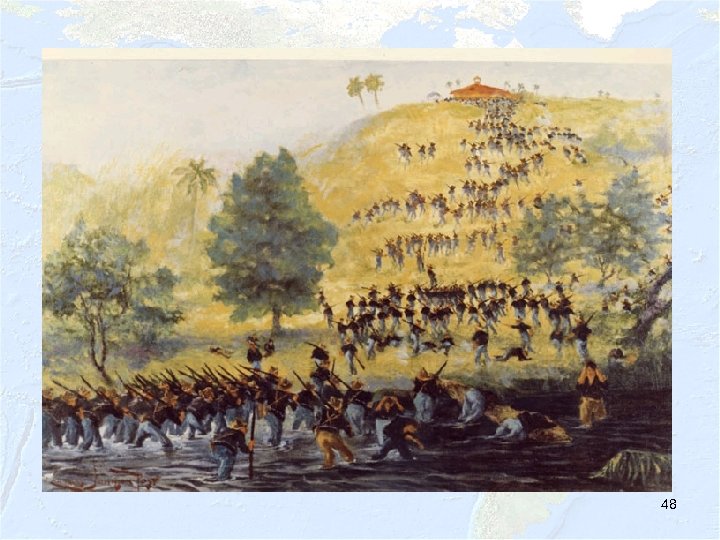
48
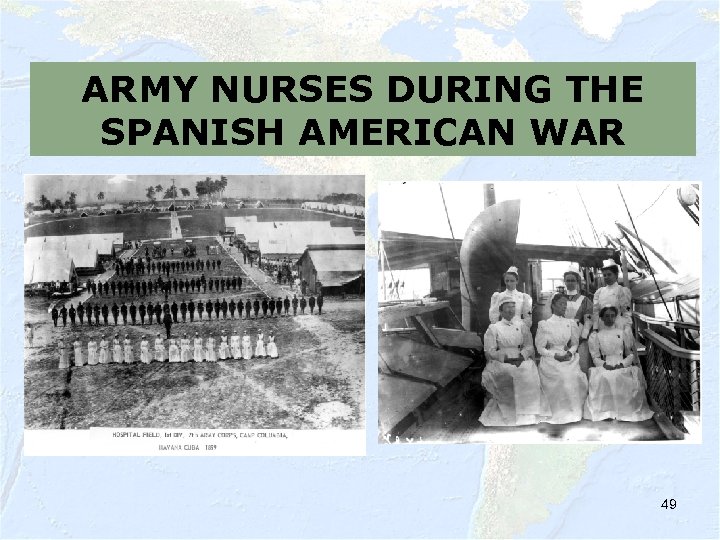
ARMY NURSES DURING THE SPANISH AMERICAN WAR 49
Teller Amendment, 1898 Joint resolution for the recognition of the independence of the people of Cuba, demanding that the Government of Spain relinquish its authority and government in the Island of Cuba, and to withdraw its land naval forces from Cuba and Cuban waters, and directing the President of the United States to use the land naval forces of the United States to carry these resolutions into effect. Whereas the abhorrent conditions which have existed for more than three years in the Island of Cuba, so near our own borders, have shocked the moral sense of the people of the United States, have been a disgrace to Christian civilization, culminating, as they have, in the destruction of a United States battle ship, with two hundred and sixty-six of its officers and crew, while on a friendly visit in the harbor of Havana, and can not longer be endured, as has been set forth by the President of the United States in his message to Congress of April eleventh, eighteen hundred and ninety-eight, upon which the action of Congress was invited: Therefore, Resolved, First. That the people of the Island of Cuba are, of right ought to be, free and independent. Second. That it is the duty of the United States to demand, and the Government of the United States does hereby demand, that the Government of Spain at once relinquish its authority and government in the Island of Cuba and withdraw its land naval forces from Cuba and Cuban waters. Third. That the President of the United States be, and he hereby is, directed and empowered to use the entire land naval forces of the United States, and to call into the actual service of the United States the militia of the several States, to such extent as may be necessary to carry these resolutions into effect. Fourth. That the United States hereby disclaims any disposition or intention to exercise sovereignty, jurisdiction, or control over said Island except for the pacification thereof, and asserts its determination, when that is accomplished, to leave the government and control of the Island to its people. 50
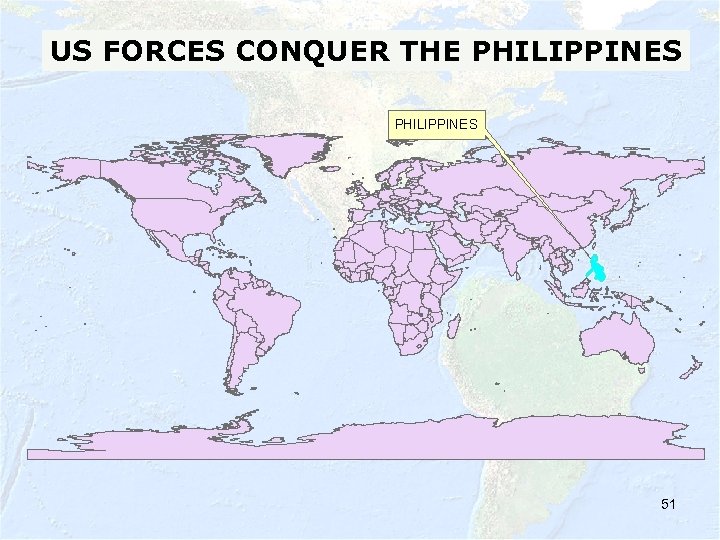
US FORCES CONQUER THE PHILIPPINES 51
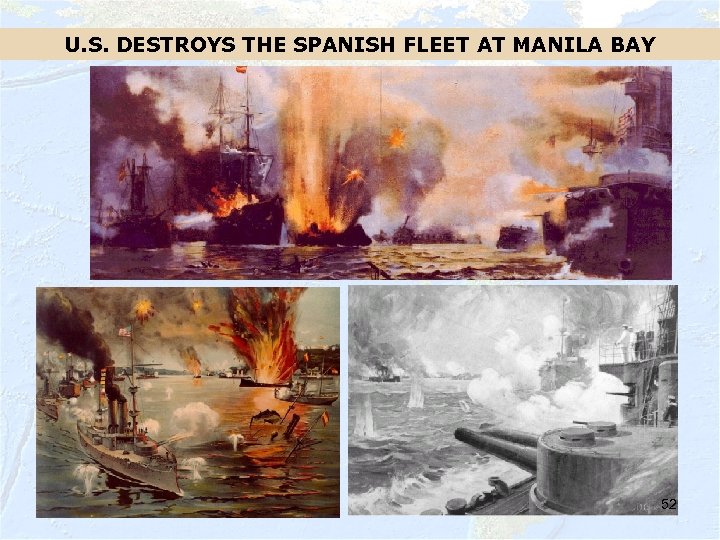
U. S. DESTROYS THE SPANISH FLEET AT MANILA BAY 52
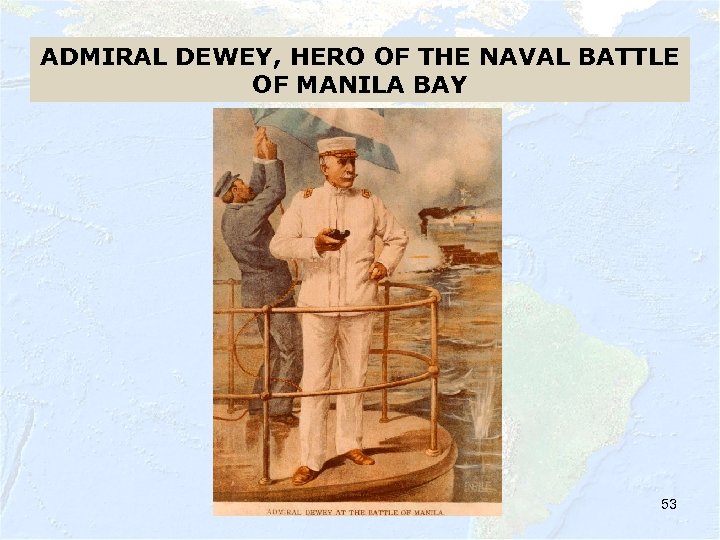
ADMIRAL DEWEY, HERO OF THE NAVAL BATTLE OF MANILA BAY 53
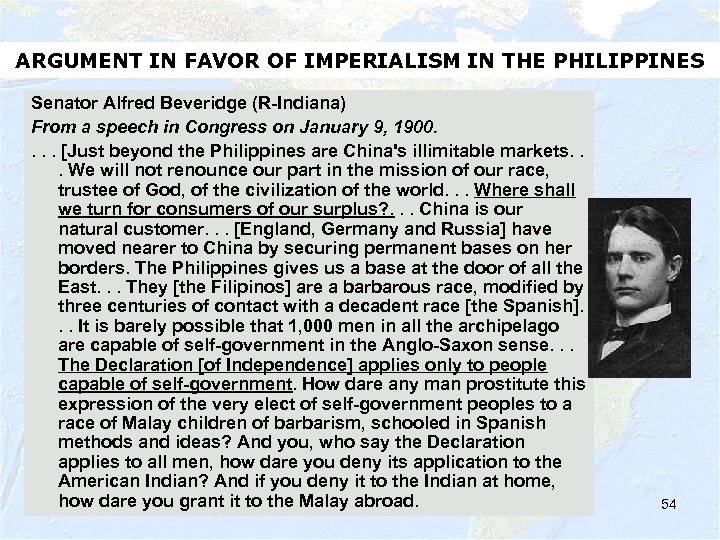
ARGUMENT IN FAVOR OF IMPERIALISM IN THE PHILIPPINES Senator Alfred Beveridge (R-Indiana) From a speech in Congress on January 9, 1900. . [Just beyond the Philippines are China's illimitable markets. . . We will not renounce our part in the mission of our race, trustee of God, of the civilization of the world. . . Where shall we turn for consumers of our surplus? . . . China is our natural customer. . . [England, Germany and Russia] have moved nearer to China by securing permanent bases on her borders. The Philippines gives us a base at the door of all the East. . . They [the Filipinos] are a barbarous race, modified by three centuries of contact with a decadent race [the Spanish]. . . It is barely possible that 1, 000 men in all the archipelago are capable of self-government in the Anglo-Saxon sense. . . The Declaration [of Independence] applies only to people capable of self-government. How dare any man prostitute this expression of the very elect of self-government peoples to a race of Malay children of barbarism, schooled in Spanish methods and ideas? And you, who say the Declaration applies to all men, how dare you deny its application to the American Indian? And if you deny it to the Indian at home, how dare you grant it to the Malay abroad. 54
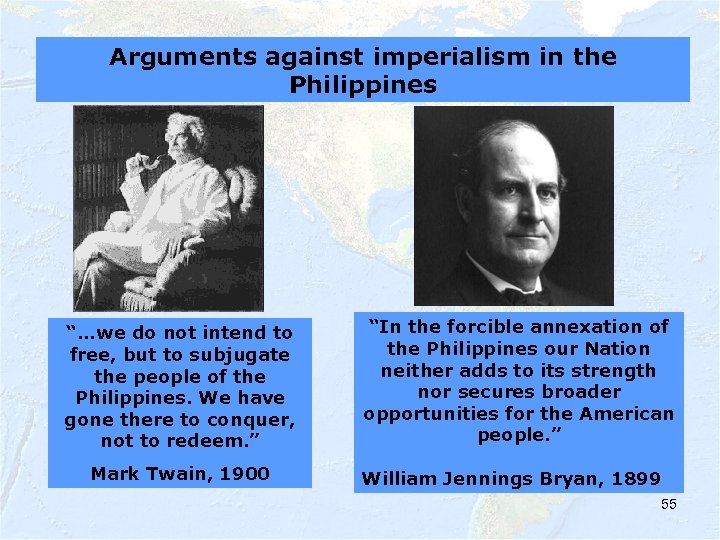
Arguments against imperialism in the Philippines “…we do not intend to free, but to subjugate the people of the Philippines. We have gone there to conquer, not to redeem. ” Mark Twain, 1900 “In the forcible annexation of the Philippines our Nation neither adds to its strength nor secures broader opportunities for the American people. ” William Jennings Bryan, 1899 55
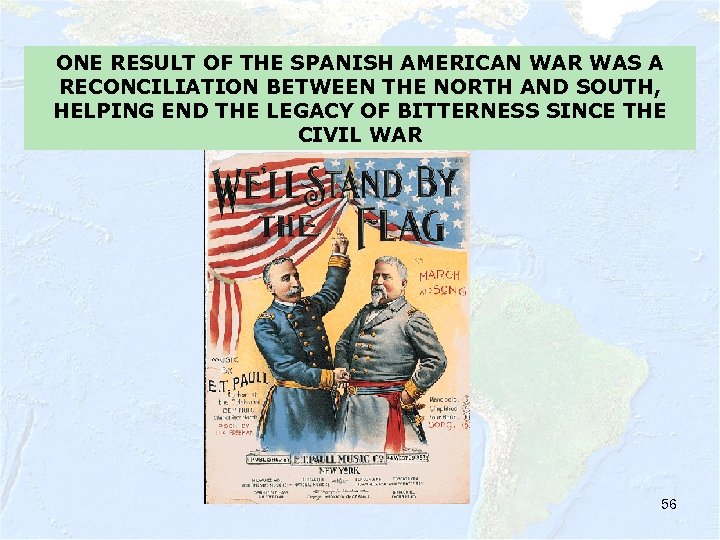
ONE RESULT OF THE SPANISH AMERICAN WAR WAS A RECONCILIATION BETWEEN THE NORTH AND SOUTH, HELPING END THE LEGACY OF BITTERNESS SINCE THE CIVIL WAR 56
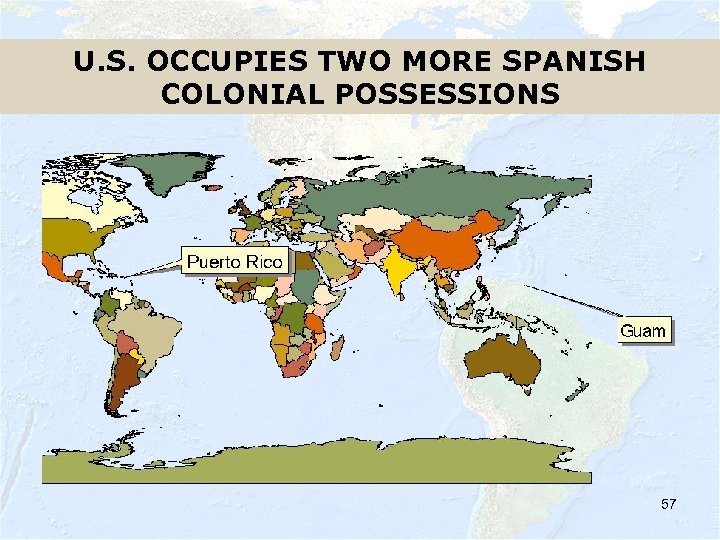
U. S. OCCUPIES TWO MORE SPANISH COLONIAL POSSESSIONS 57
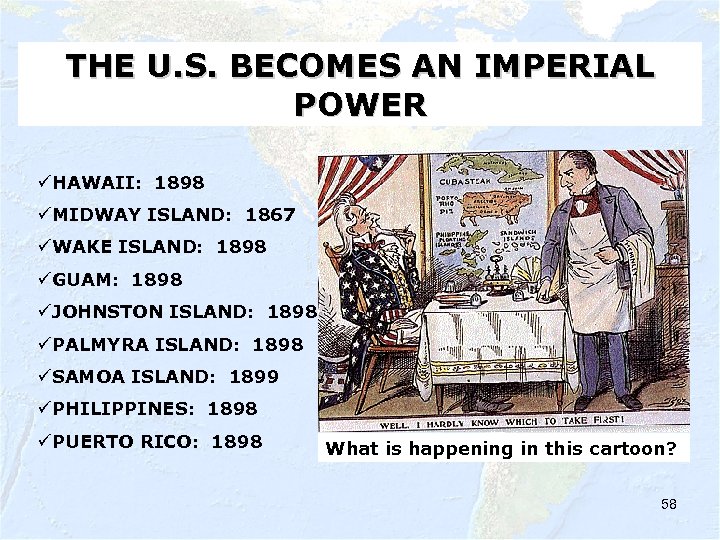
THE U. S. BECOMES AN IMPERIAL POWER üHAWAII: 1898 üMIDWAY ISLAND: 1867 üWAKE ISLAND: 1898 üGUAM: 1898 üJOHNSTON ISLAND: 1898 üPALMYRA ISLAND: 1898 üSAMOA ISLAND: 1899 üPHILIPPINES: 1898 üPUERTO RICO: 1898 What is happening in this cartoon? 58
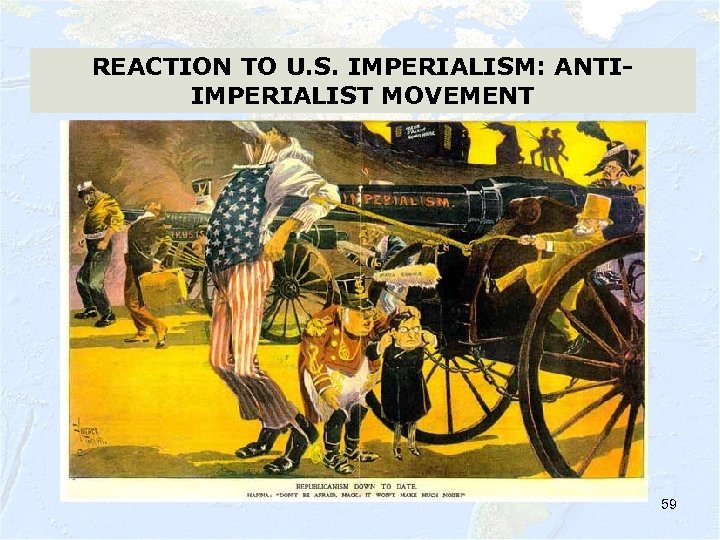
REACTION TO U. S. IMPERIALISM: ANTIIMPERIALIST MOVEMENT 59
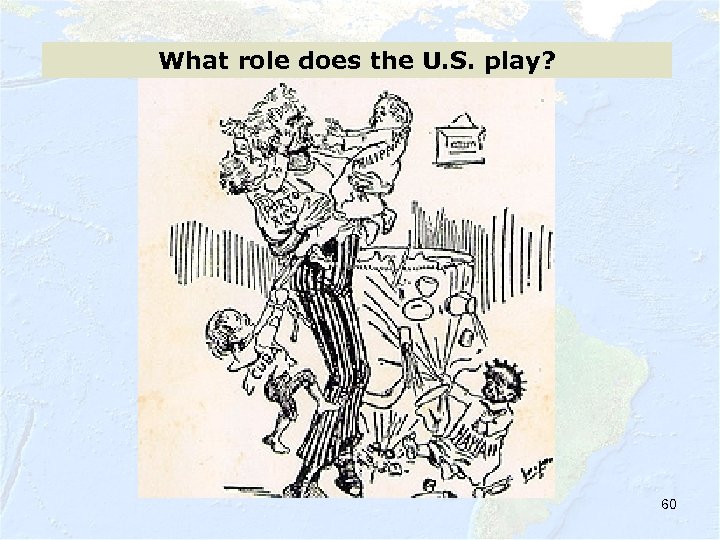
What role does the U. S. play? 60
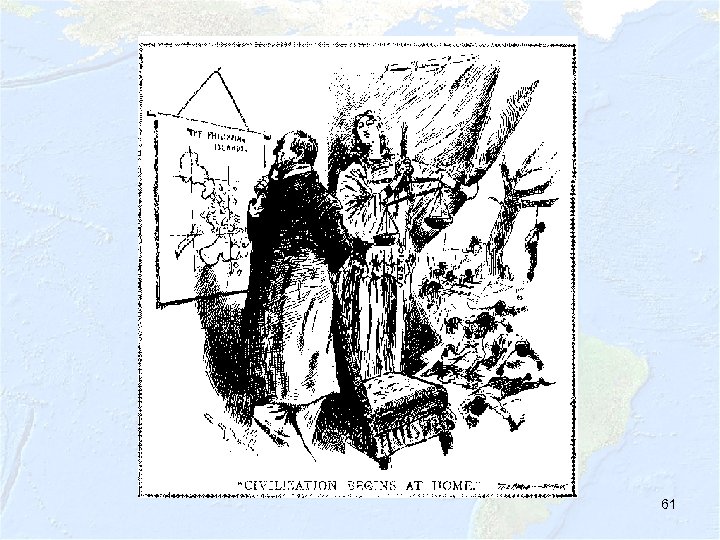
61
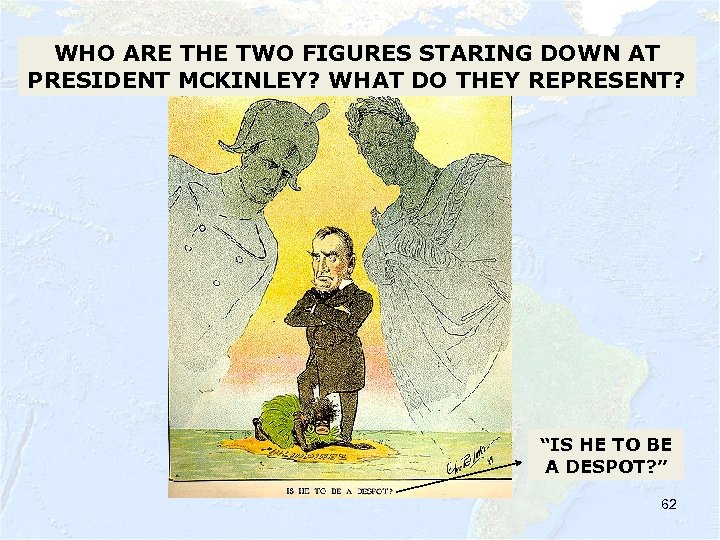
WHO ARE THE TWO FIGURES STARING DOWN AT PRESIDENT MCKINLEY? WHAT DO THEY REPRESENT? “IS HE TO BE A DESPOT? ” 62
Chapter 4 1772 -1912 Becoming a World Power Section 3: New American Diplomacy 63
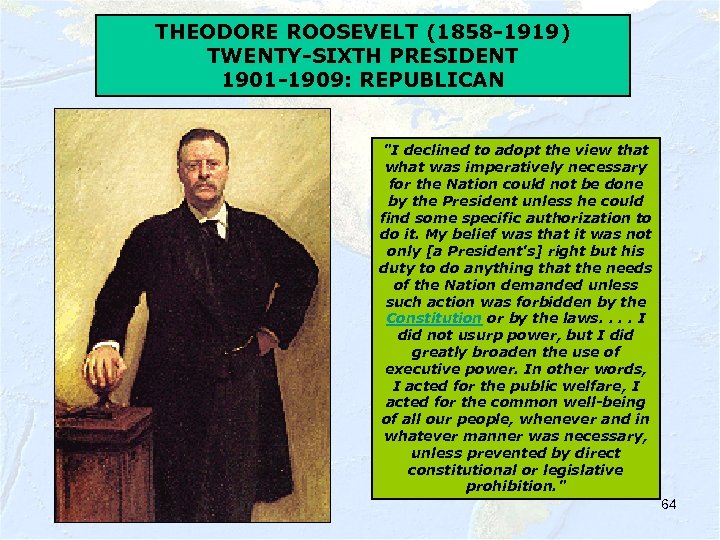
THEODORE ROOSEVELT (1858 -1919) TWENTY-SIXTH PRESIDENT 1901 -1909: REPUBLICAN "I declined to adopt the view that was imperatively necessary for the Nation could not be done by the President unless he could find some specific authorization to do it. My belief was that it was not only [a President's] right but his duty to do anything that the needs of the Nation demanded unless such action was forbidden by the Constitution or by the laws. . I did not usurp power, but I did greatly broaden the use of executive power. In other words, I acted for the public welfare, I acted for the common well-being of all our people, whenever and in whatever manner was necessary, unless prevented by direct constitutional or legislative prohibition. " 64
• Open door policy • Spheres of influence • Boxer rebellion • Japan becomes imperialist 65
OPEN DOOR POLICY 66
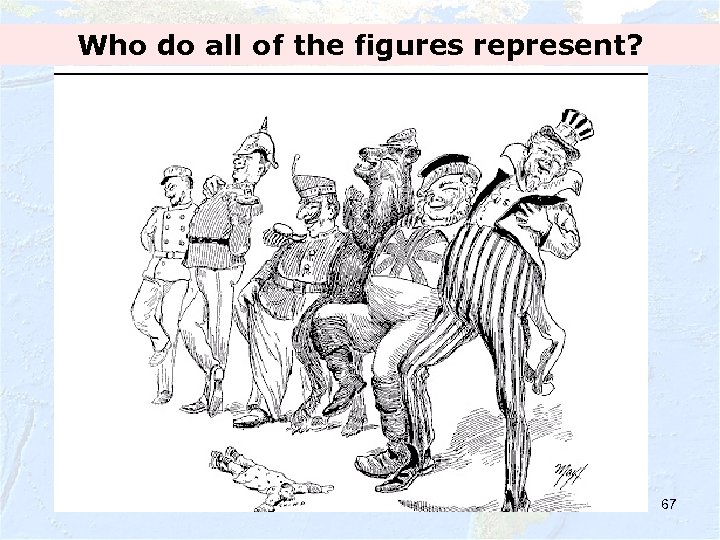
Who do all of the figures represent? 67
68
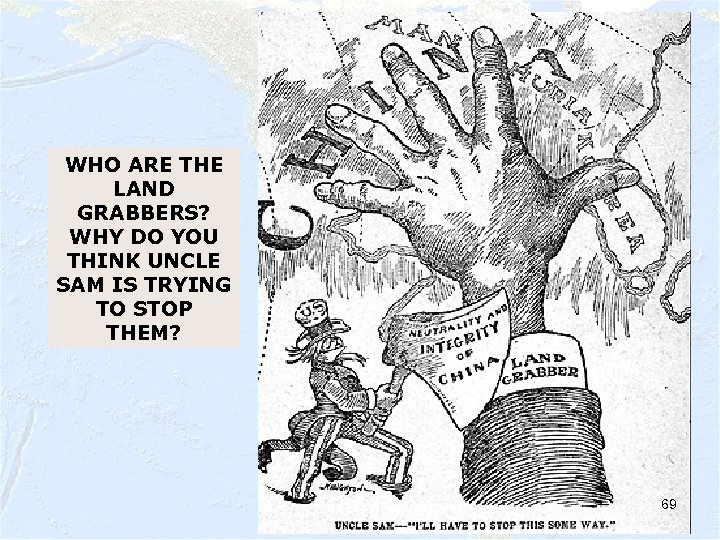
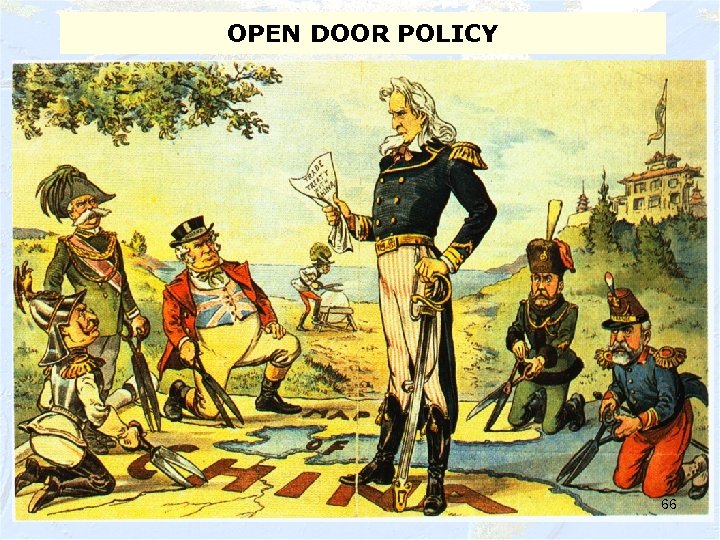
WHO ARE THE LAND GRABBERS? WHY DO YOU THINK UNCLE SAM IS TRYING TO STOP THEM? 69
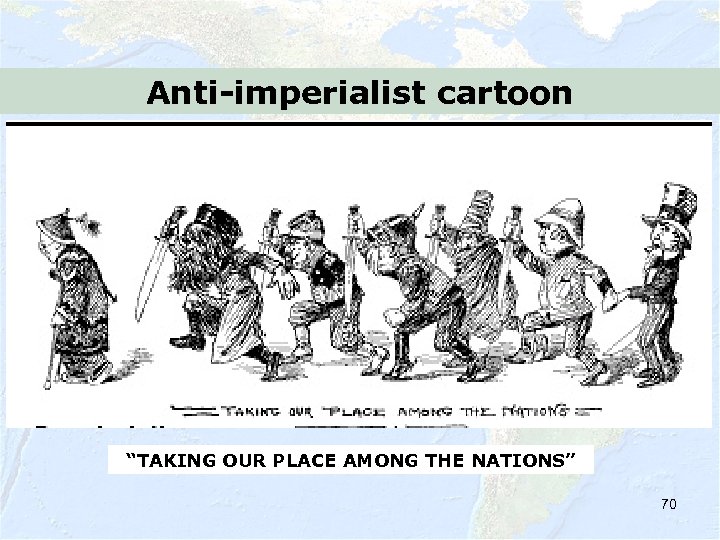
Anti-imperialist cartoon “TAKING OUR PLACE AMONG THE NATIONS” 70
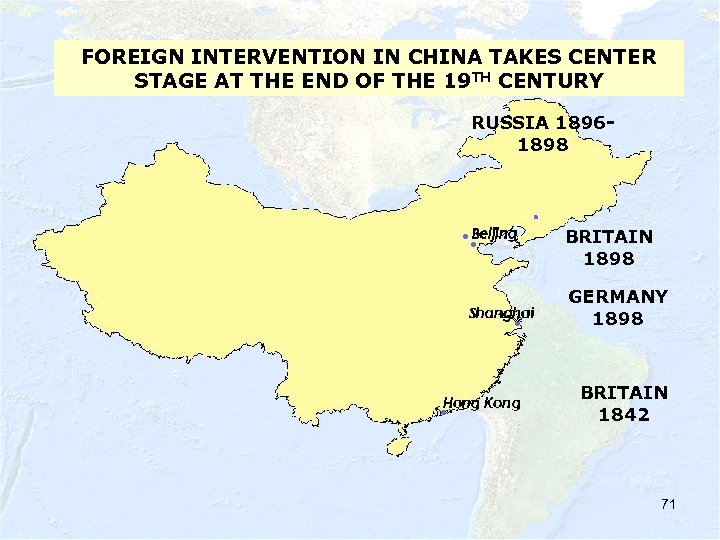
FOREIGN INTERVENTION IN CHINA TAKES CENTER STAGE AT THE END OF THE 19 TH CENTURY RUSSIA 18961898 BRITAIN 1898 GERMANY 1898 BRITAIN 1842 71
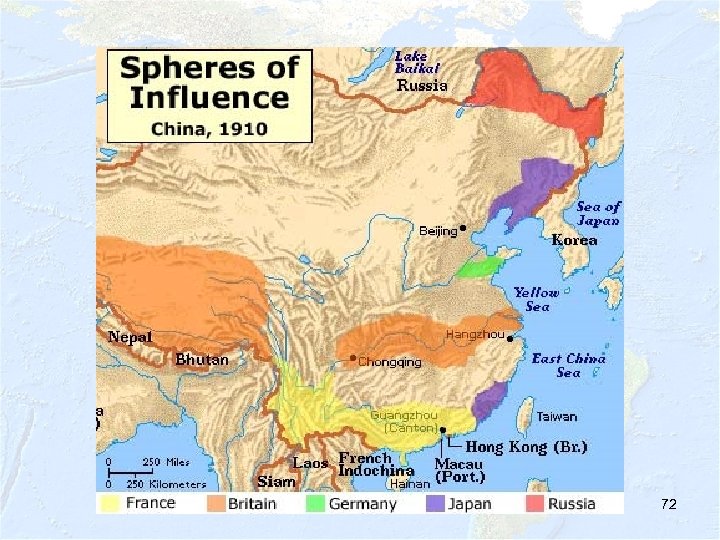
72
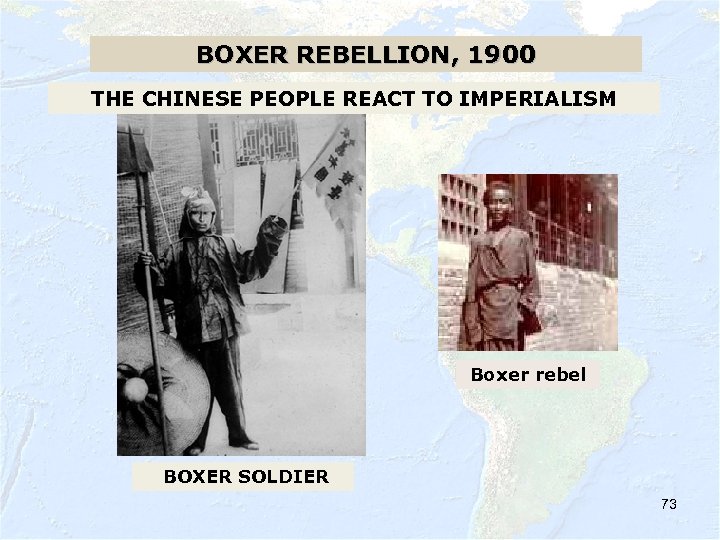
BOXER REBELLION, 1900 THE CHINESE PEOPLE REACT TO IMPERIALISM Boxer rebel BOXER SOLDIER 73
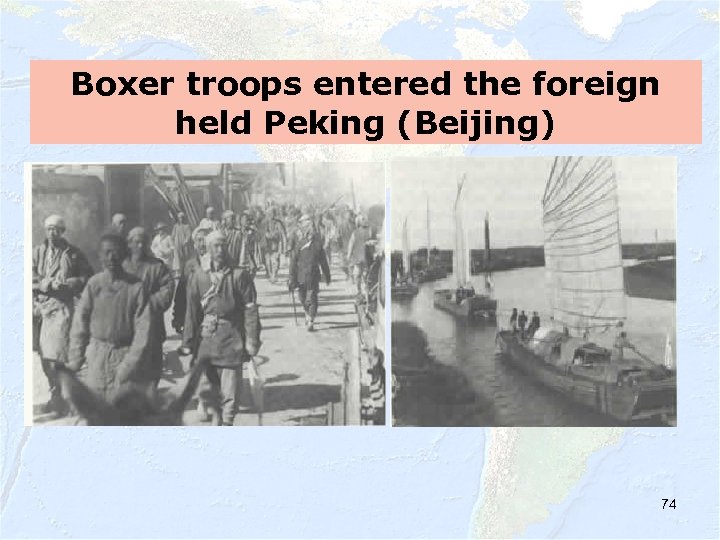
Boxer troops entered the foreign held Peking (Beijing) 74
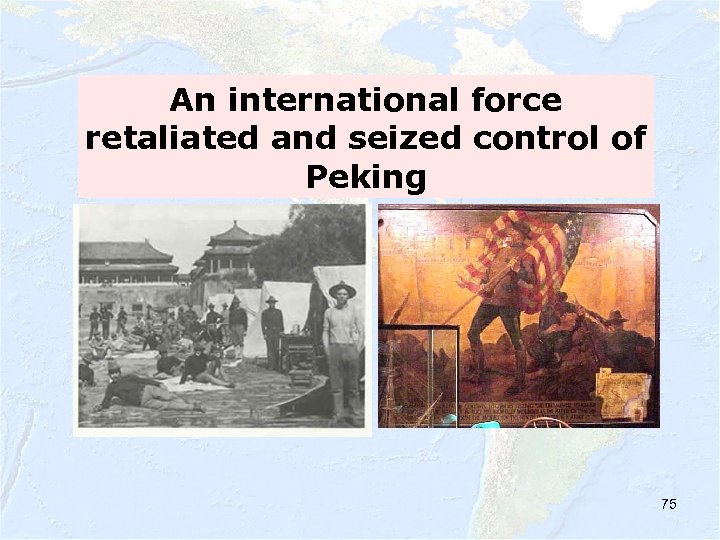
An international force retaliated and seized control of Peking 75
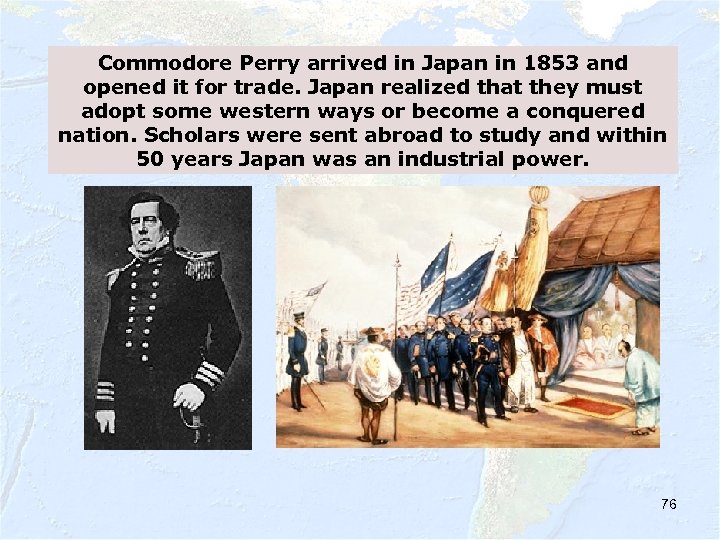
Commodore Perry arrived in Japan in 1853 and opened it for trade. Japan realized that they must adopt some western ways or become a conquered nation. Scholars were sent abroad to study and within 50 years Japan was an industrial power. 76
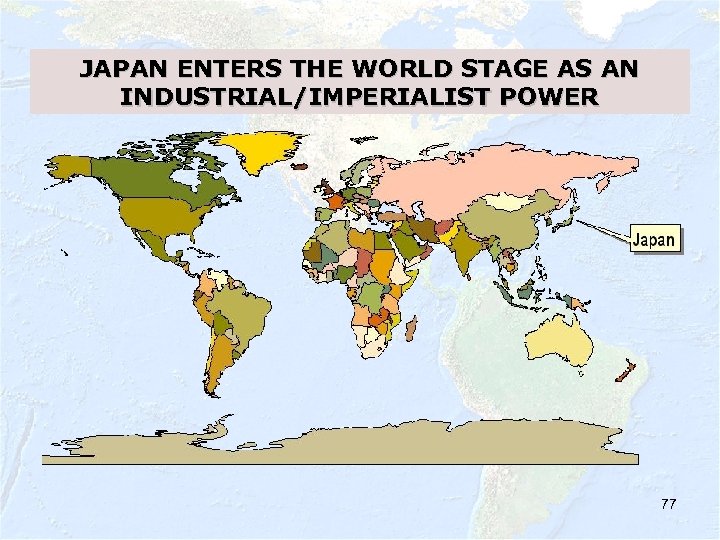
JAPAN ENTERS THE WORLD STAGE AS AN INDUSTRIAL/IMPERIALIST POWER 77
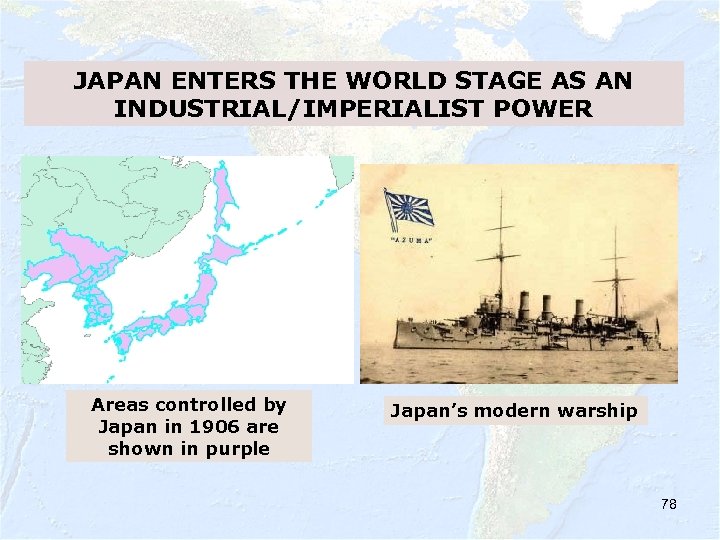
JAPAN ENTERS THE WORLD STAGE AS AN INDUSTRIAL/IMPERIALIST POWER Areas controlled by Japan in 1906 are shown in purple Japan’s modern warship 78
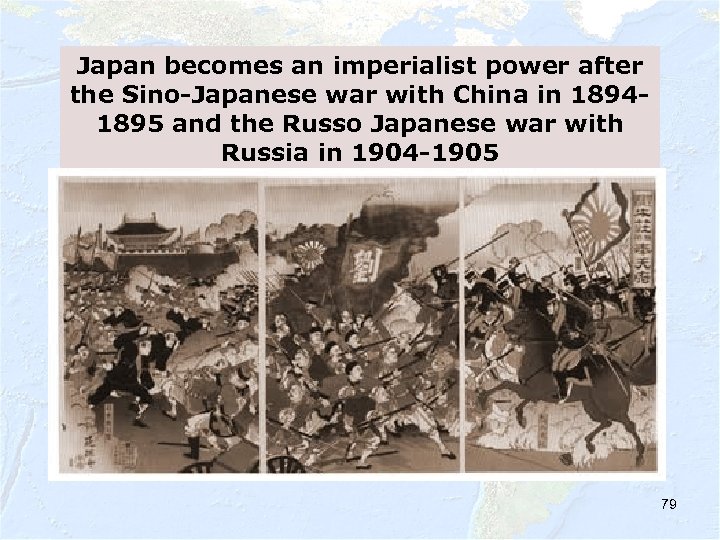
Japan becomes an imperialist power after the Sino-Japanese war with China in 18941895 and the Russo Japanese war with Russia in 1904 -1905 79
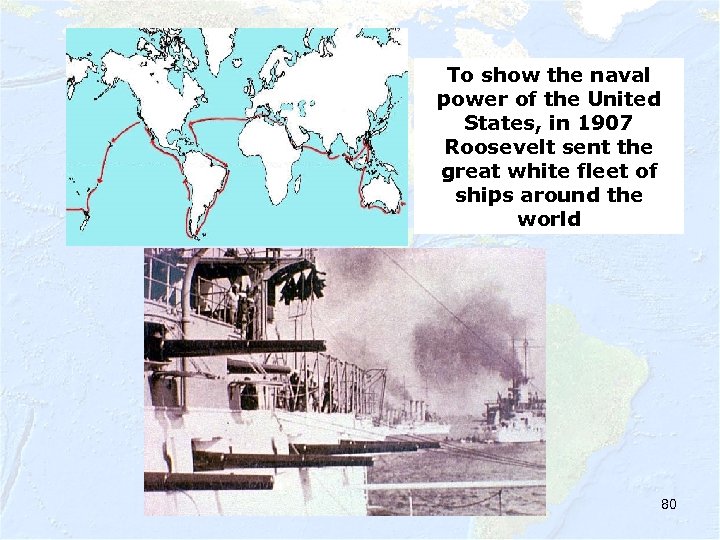
To show the naval power of the United States, in 1907 Roosevelt sent the great white fleet of ships around the world 80
• The need for a canal • Panama revolution • Building the canal 81
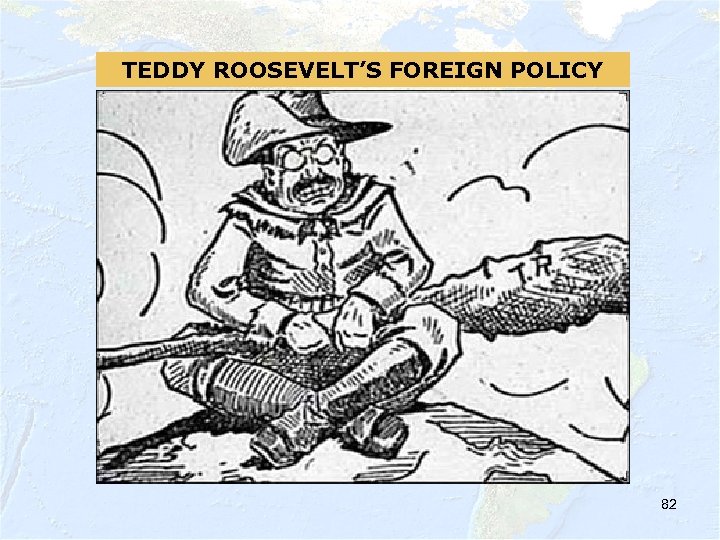
TEDDY ROOSEVELT’S FOREIGN POLICY 82
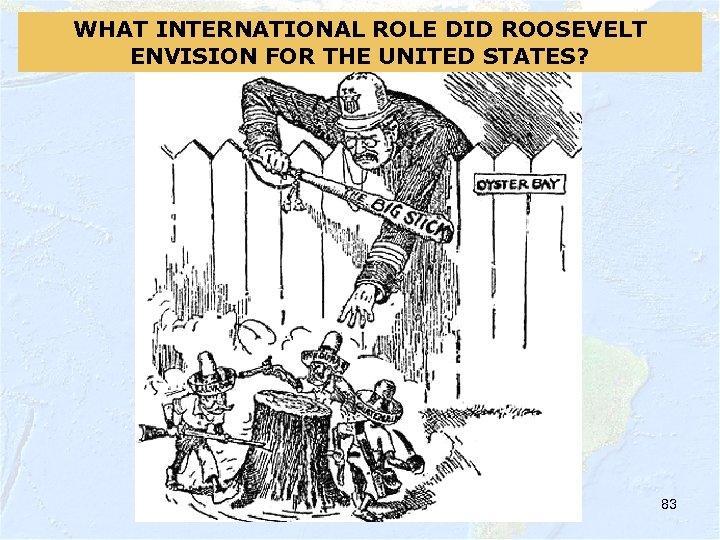
WHAT INTERNATIONAL ROLE DID ROOSEVELT ENVISION FOR THE UNITED STATES? 83
84
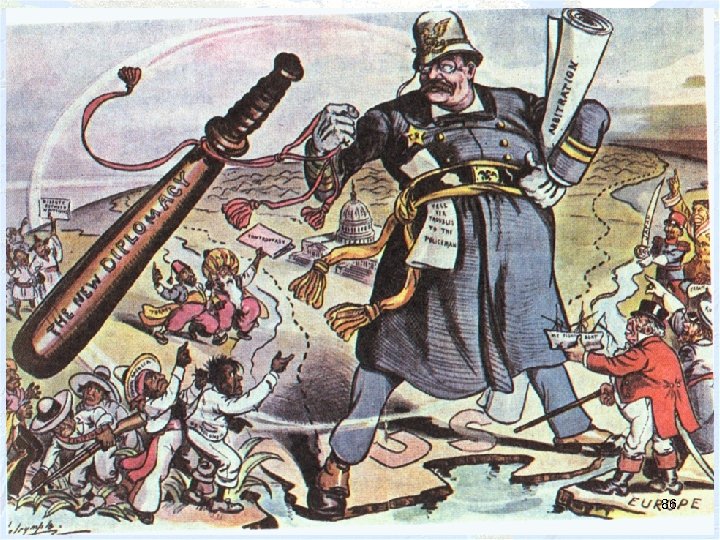
ROOSEVELT COROLLARY Part of Roosevelt’s “Big Stick” foreign policy was that the U. S. would support the Monroe Doctrine by keeping European nations out of the Caribbean and South America through direct intervention (military force), if necessary. 85
86
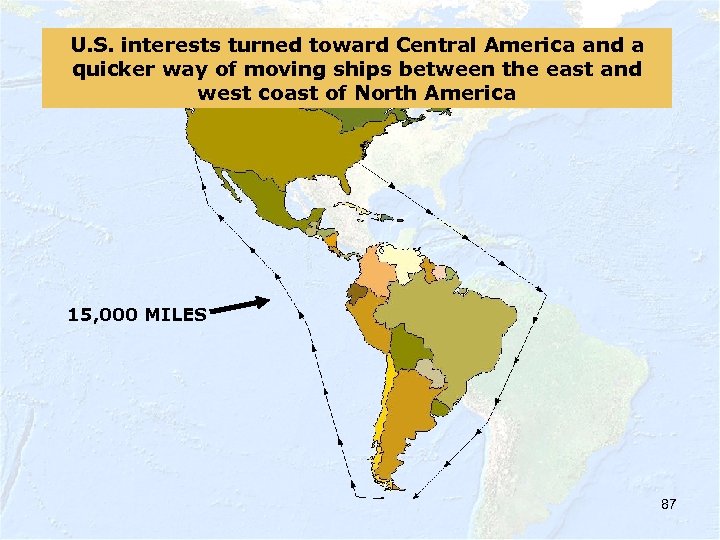
U. S. interests turned toward Central America and a quicker way of moving ships between the east and west coast of North America 15, 000 MILES 87
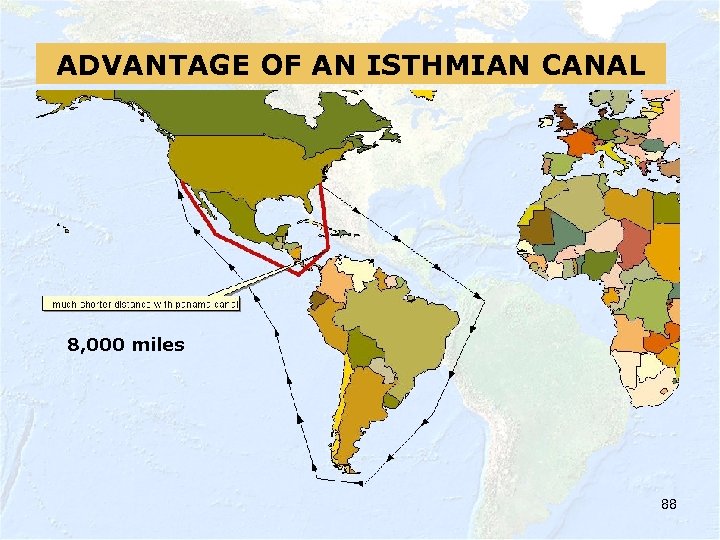
ADVANTAGE OF AN ISTHMIAN CANAL 8, 000 miles 88
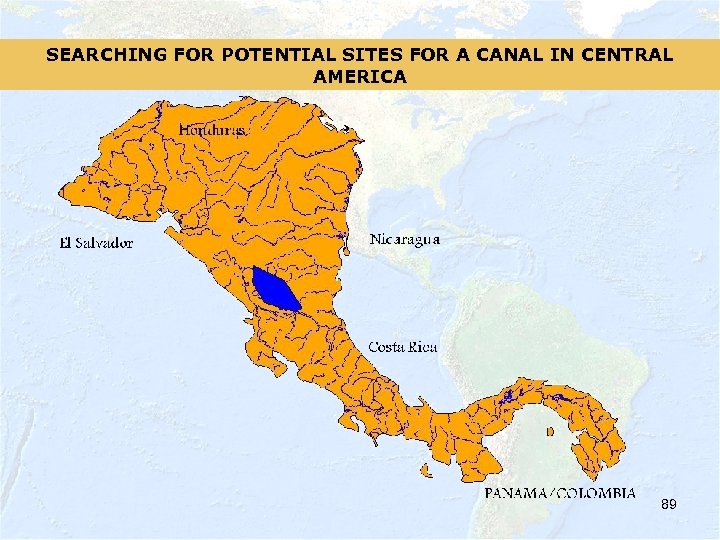
SEARCHING FOR POTENTIAL SITES FOR A CANAL IN CENTRAL AMERICA 89
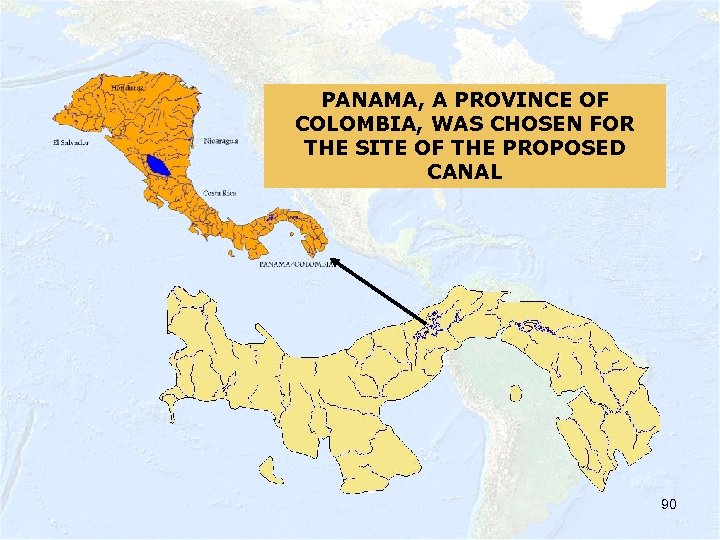
PANAMA, A PROVINCE OF COLOMBIA, WAS CHOSEN FOR THE SITE OF THE PROPOSED CANAL 90
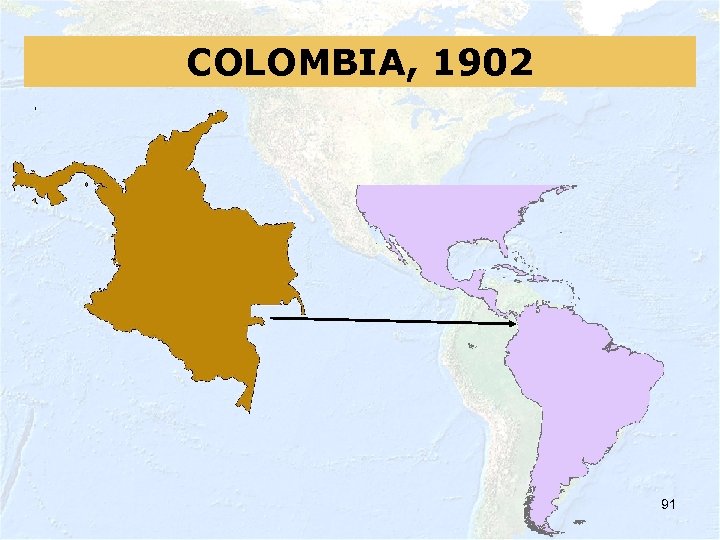
COLOMBIA, 1902 91
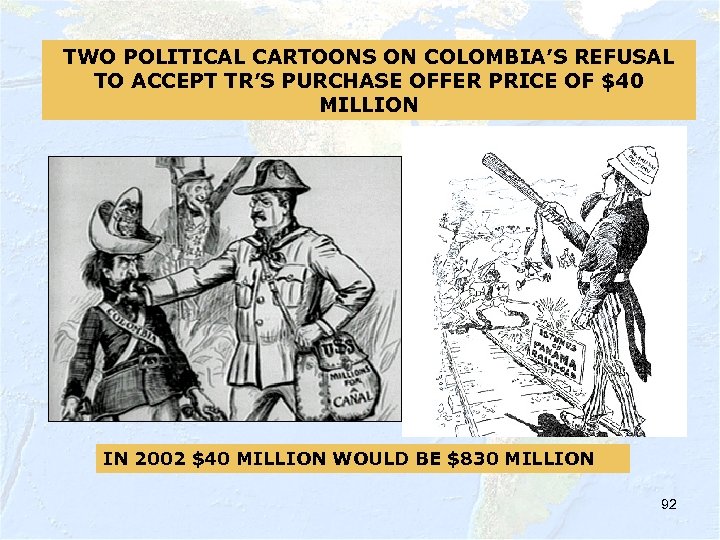
TWO POLITICAL CARTOONS ON COLOMBIA’S REFUSAL TO ACCEPT TR’S PURCHASE OFFER PRICE OF $40 MILLION IN 2002 $40 MILLION WOULD BE $830 MILLION 92
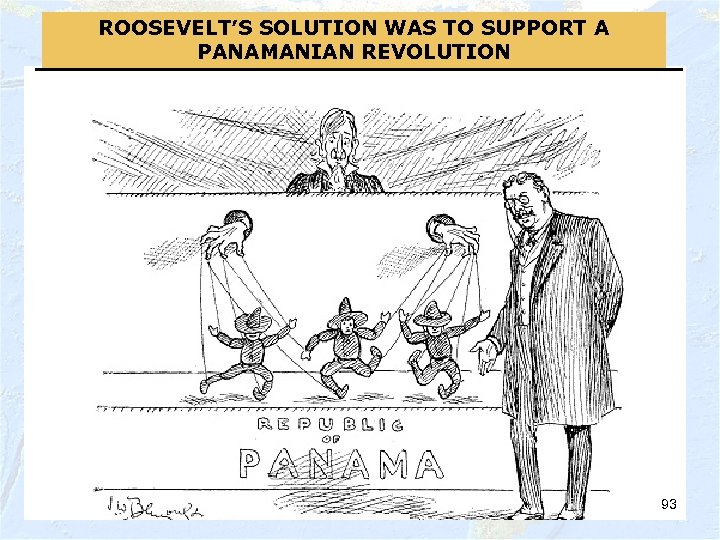
ROOSEVELT’S SOLUTION WAS TO SUPPORT A PANAMANIAN REVOLUTION 93
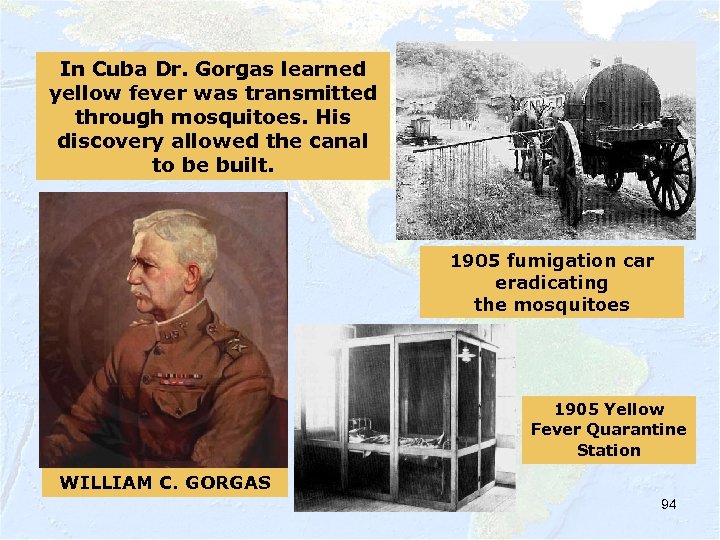
In Cuba Dr. Gorgas learned yellow fever was transmitted through mosquitoes. His discovery allowed the canal to be built. 1905 fumigation car eradicating the mosquitoes 1905 Yellow Fever Quarantine Station WILLIAM C. GORGAS 94
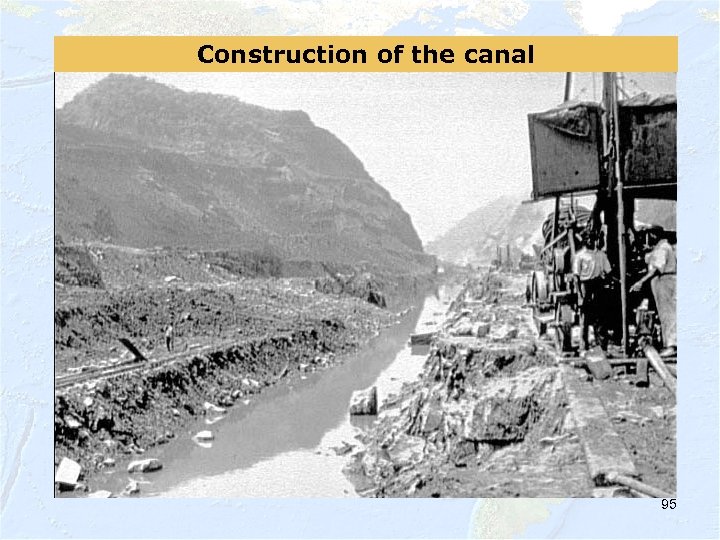
Construction of the canal 95
96
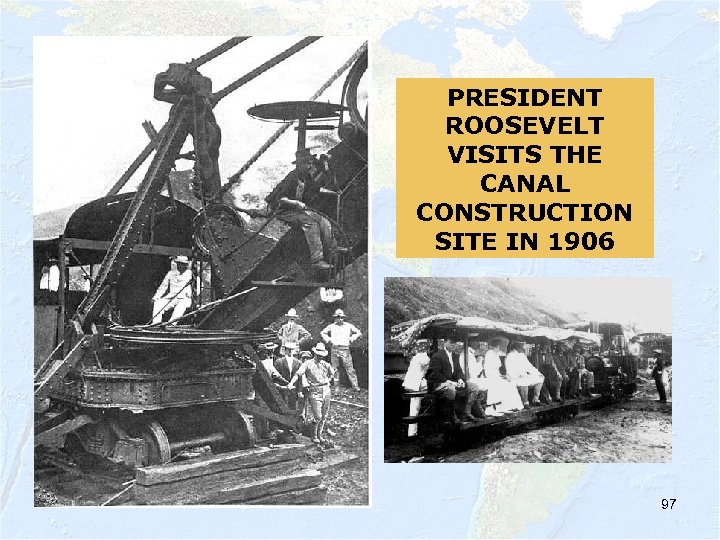
PRESIDENT ROOSEVELT VISITS THE CANAL CONSTRUCTION SITE IN 1906 97
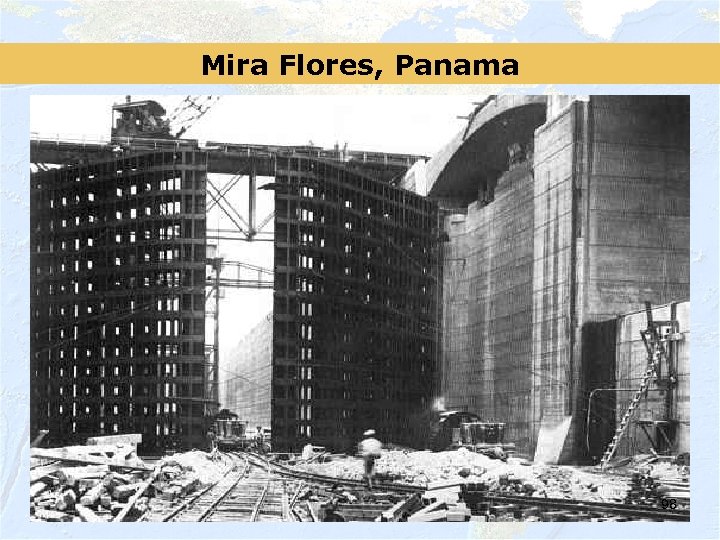
Mira Flores, Panama 98
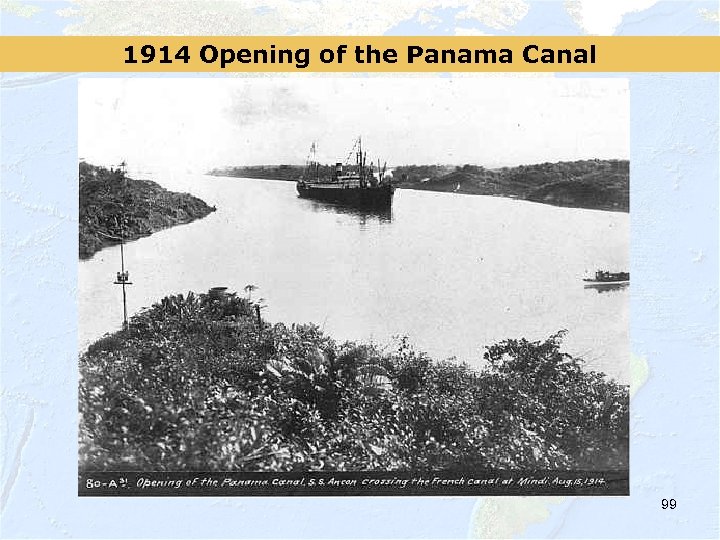
1914 Opening of the Panama Canal 99
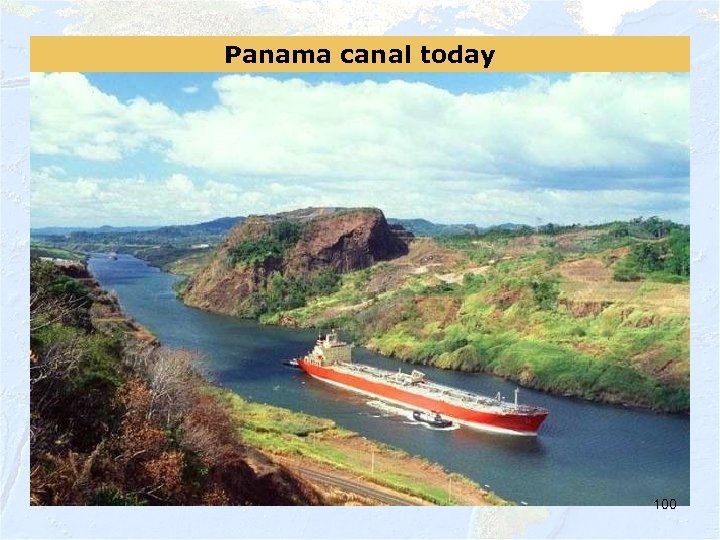
Panama canal today 100
101
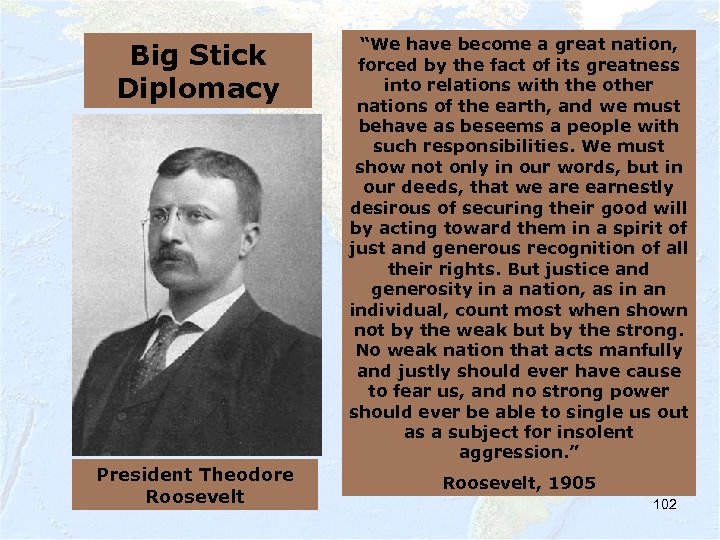
Big Stick Diplomacy President Theodore Roosevelt “We have become a great nation, forced by the fact of its greatness into relations with the other nations of the earth, and we must behave as beseems a people with such responsibilities. We must show not only in our words, but in our deeds, that we are earnestly desirous of securing their good will by acting toward them in a spirit of just and generous recognition of all their rights. But justice and generosity in a nation, as in an individual, count most when shown not by the weak but by the strong. No weak nation that acts manfully and justly should ever have cause to fear us, and no strong power should ever be able to single us out as a subject for insolent aggression. ” Roosevelt, 1905 102
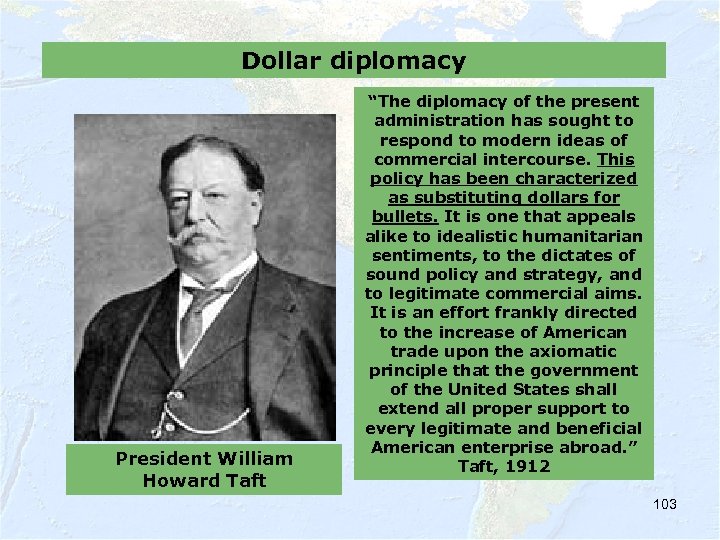
Dollar diplomacy President William Howard Taft “The diplomacy of the present administration has sought to respond to modern ideas of commercial intercourse. This policy has been characterized as substituting dollars for bullets. It is one that appeals alike to idealistic humanitarian sentiments, to the dictates of sound policy and strategy, and to legitimate commercial aims. It is an effort frankly directed to the increase of American trade upon the axiomatic principle that the government of the United States shall extend all proper support to every legitimate and beneficial American enterprise abroad. ” Taft, 1912 103
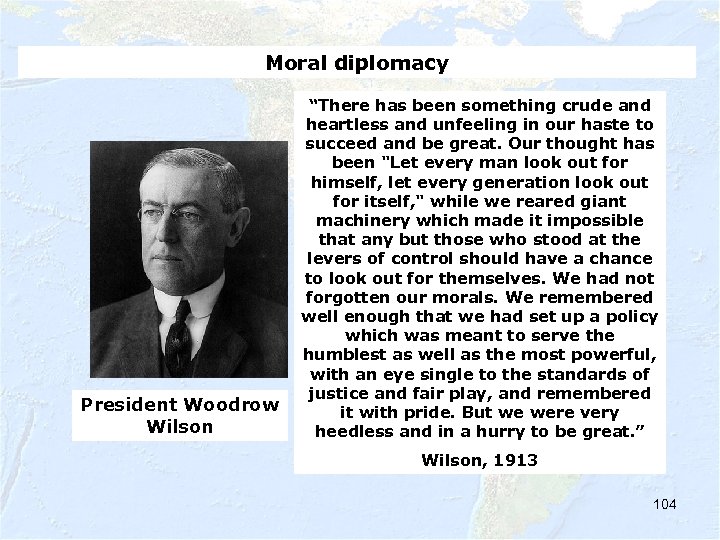
Moral diplomacy “There has been something crude and heartless and unfeeling in our haste to succeed and be great. Our thought has been "Let every man look out for himself, let every generation look out for itself, " while we reared giant machinery which made it impossible that any but those who stood at the levers of control should have a chance to look out for themselves. We had not forgotten our morals. We remembered well enough that we had set up a policy which was meant to serve the humblest as well as the most powerful, with an eye single to the standards of justice and fair play, and remembered President Woodrow it with pride. But we were very Wilson heedless and in a hurry to be great. ” Wilson, 1913 104
History Online Self-Check Quiz Visit the American Vision: Modern Times Web site at tav. mt. glencoe. com and click on Self-Check Quizzes-Chapter 4 to assess your knowledge of chapter content. 105
Скачать презентацию Chapter 4 1872 -1912 Becoming a World Power
5184fc74c9f229c8c33b711f93ff0d34.ppt