Скачать презентацию Chapter 39 The Seventies 1968 -1980 Election
6934a8b12e76e67e314cd216c7e7b8ec.ppt
- Количество слайдов: 69
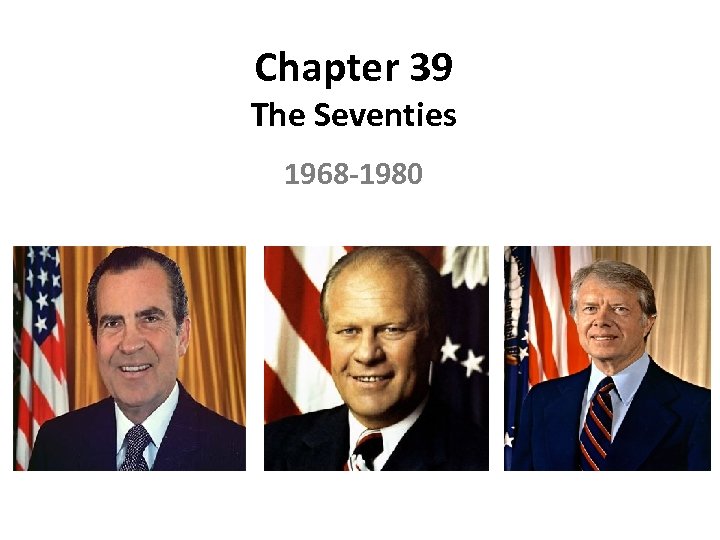 Chapter 39 The Seventies 1968 -1980
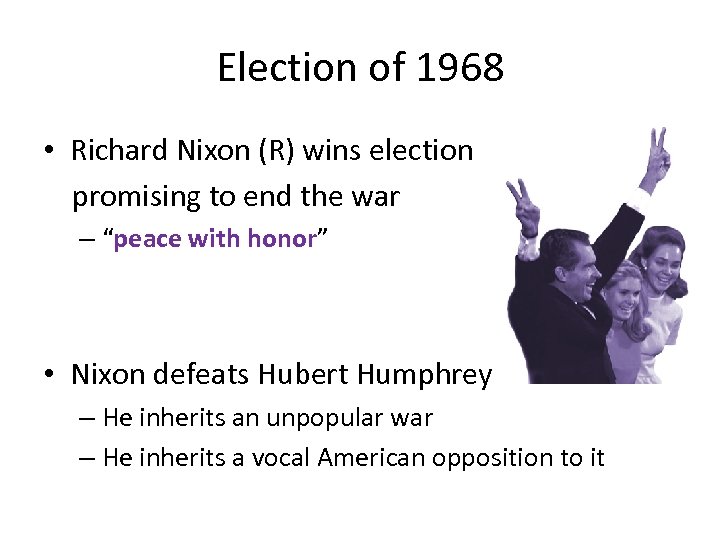 Election of 1968 • Richard Nixon (R) wins election promising to end the war – “peace with honor” • Nixon defeats Hubert Humphrey – He inherits an unpopular war – He inherits a vocal American opposition to it
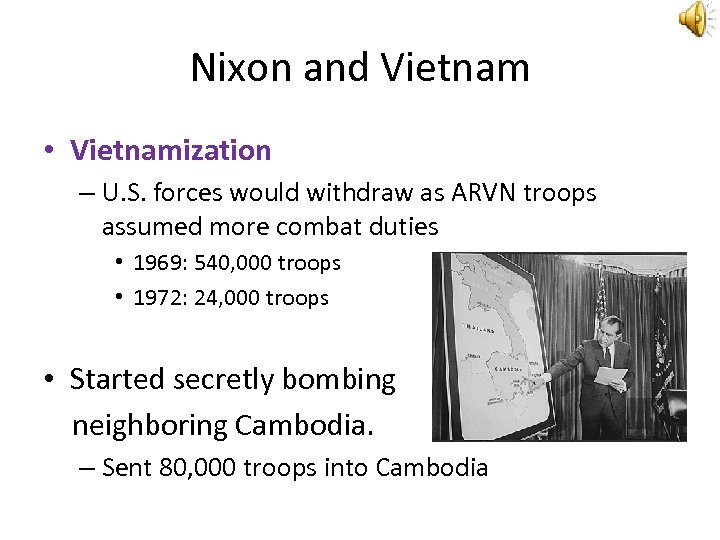 Nixon and Vietnam • Vietnamization – U. S. forces would withdraw as ARVN troops assumed more combat duties • 1969: 540, 000 troops • 1972: 24, 000 troops • Started secretly bombing neighboring Cambodia. – Sent 80, 000 troops into Cambodia
 Cambodia • Ho Chi Minh trail ran through Cambodia – Goal was to attack N. V. supply lines – CONVN (N. V. central headquarters) • This was a “limited” attack – Eventually called off
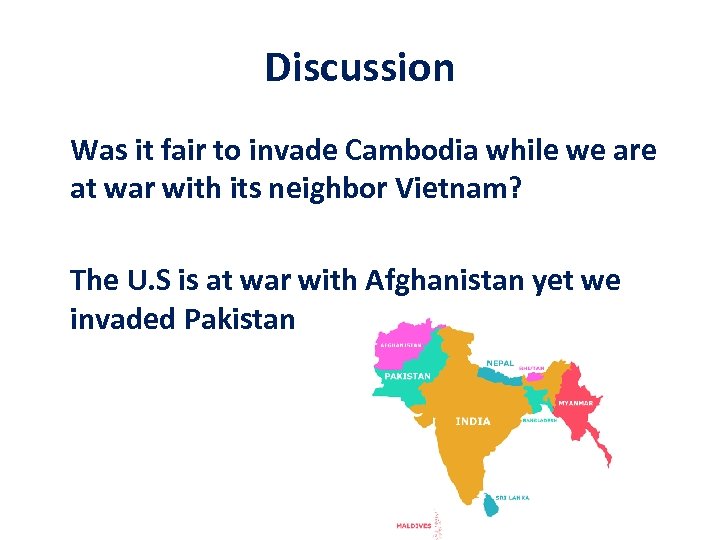 Discussion Was it fair to invade Cambodia while we are at war with its neighbor Vietnam? The U. S is at war with Afghanistan yet we invaded Pakistan
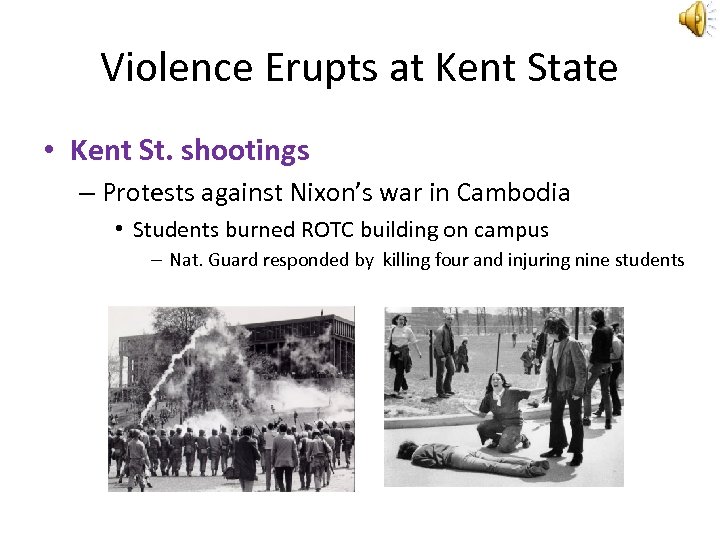 Violence Erupts at Kent State • Kent St. shootings – Protests against Nixon’s war in Cambodia • Students burned ROTC building on campus – Nat. Guard responded by killing four and injuring nine students
 Laos • ARVN- training wheels came off – Sent along Rt 9 to Tchepone • N. V. supply headquarters – Failed miserably • Disaster proved the ARVN couldn’t fight this war without American support
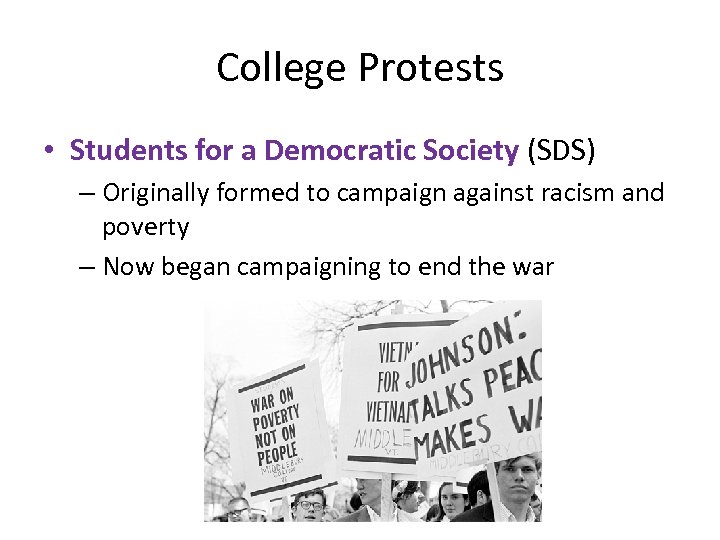 College Protests • Students for a Democratic Society (SDS) – Originally formed to campaign against racism and poverty – Now began campaigning to end the war
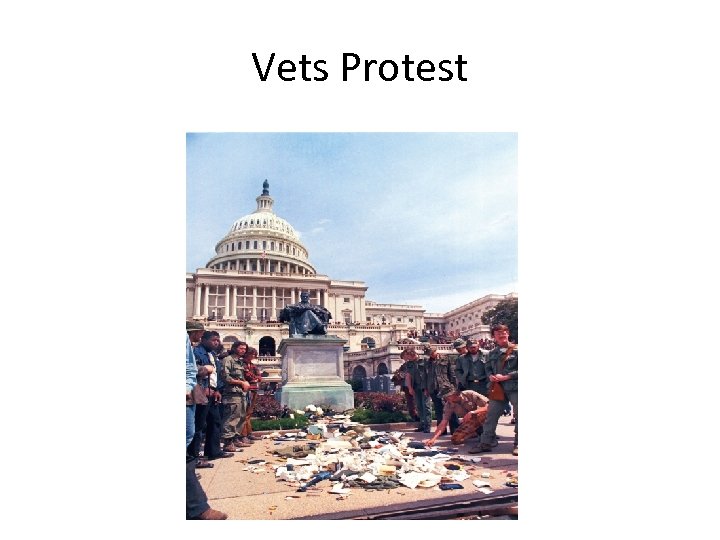 Vets Protest
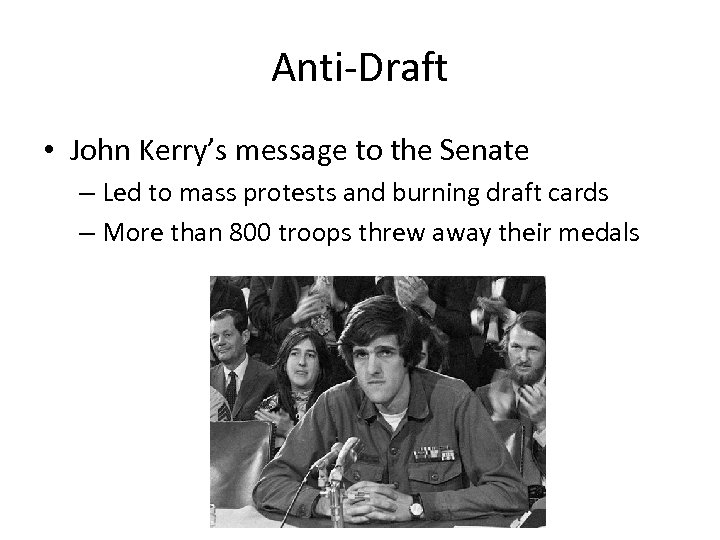 Anti-Draft • John Kerry’s message to the Senate – Led to mass protests and burning draft cards – More than 800 troops threw away their medals
 Fact By the Spring of 1969, there were 35, 000 combat deaths 60% are 21 years old or younger
 Key Pieces of Legislation • Nixon Doctrine – Countries would have to fight their own wars with out American ground troops • Repeal of Gulf of Tonkin blank check – Eventually led to War Powers Act (1973) • Twenty Sixth Amendment (1971) – Lowered the voting age to 18
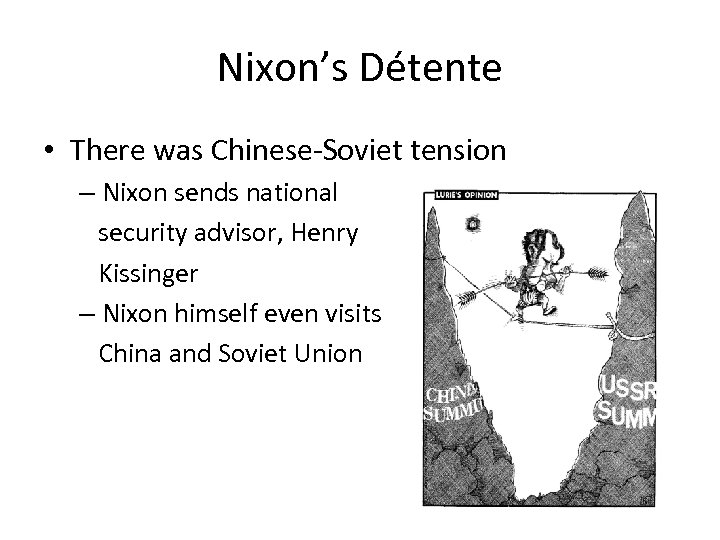 Nixon’s Détente • There was Chinese-Soviet tension – Nixon sends national security advisor, Henry Kissinger – Nixon himself even visits China and Soviet Union
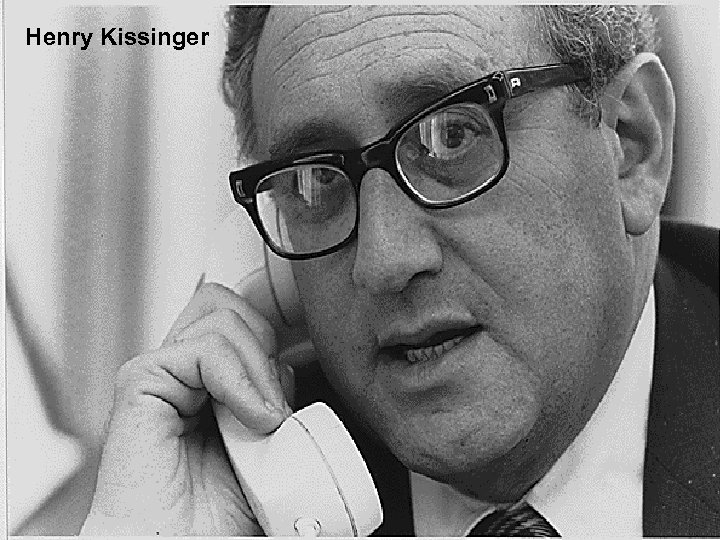 Henry Kissinger
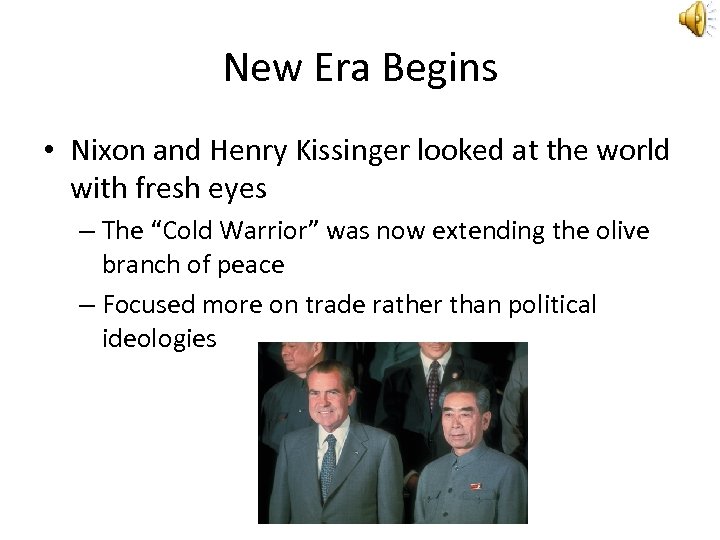 New Era Begins • Nixon and Henry Kissinger looked at the world with fresh eyes – The “Cold Warrior” was now extending the olive branch of peace – Focused more on trade rather than political ideologies
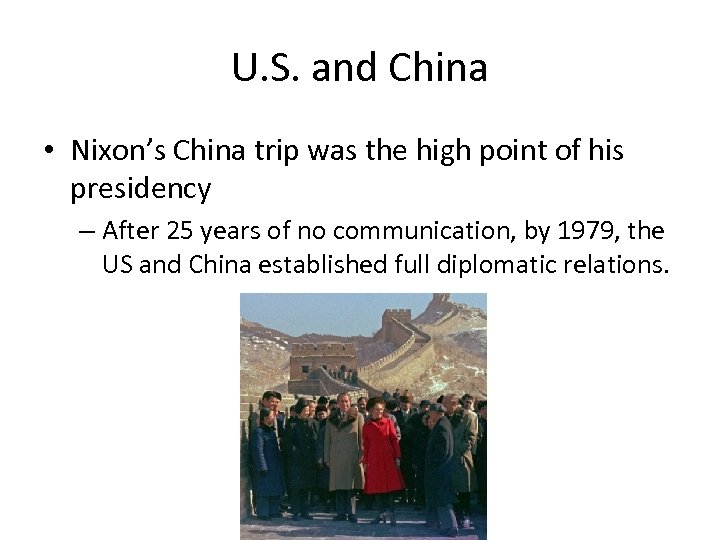 U. S. and China • Nixon’s China trip was the high point of his presidency – After 25 years of no communication, by 1979, the US and China established full diplomatic relations.
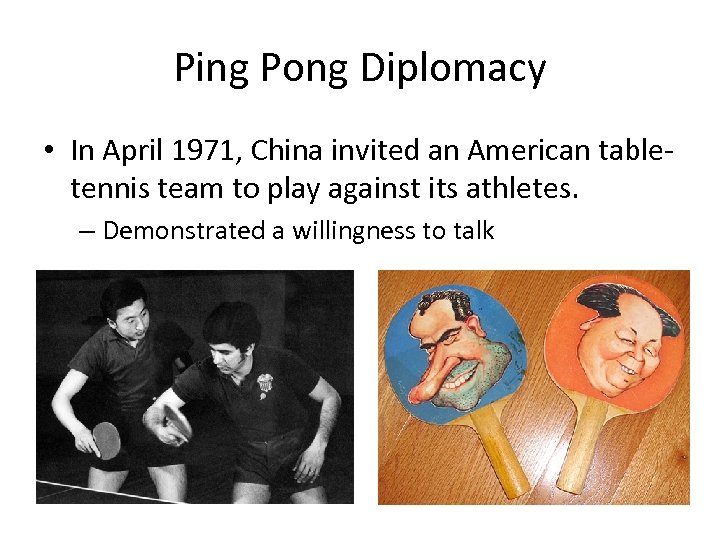 Ping Pong Diplomacy • In April 1971, China invited an American tabletennis team to play against its athletes. – Demonstrated a willingness to talk
 Nixon’s New Foreign Policy • He did not divide the world into “us” (democratic countries) and “them” (communist countries). • He practiced realpolitik — foreign policy based on concrete national interests rather than ideology. • He concluded that there was no united worldwide communist movement.
 The Warren Court • Gideon v. Wainwright (1963) – All criminal defendants were entitled to legal counsel • Griswold v. Connecticut (1965) – Struck down state law that prohibited the use of contraceptives • Miranda v. Arizona (1966) – The right to remain silent • Roe v. Wade (1973) – Legalized abortion
 Nixon on the Home Front • Increased entitlements: – Food stamps – Medicaid – Aid to Families with Dependent Children – Supplemental Security Income • Philadelphia Plan – Hiring quotas • Affirmative Action
 Nixon and the Environment • Environmental Protection Agency (EPA) – Rachel Carson wrote Silent Spring (1962) and was a huge influence in gaining concern for the environment • • Earth Day (1970) Clean Air Act (1970) Clean Water Act (1972) Endangered Species Act (1973)
 Nixon and the Workplace • Occupational Safety and Health Administration – Improved working conditions – Safety standards • Consumer Product Safety Commission – Held companies accountable for selling dangerous products
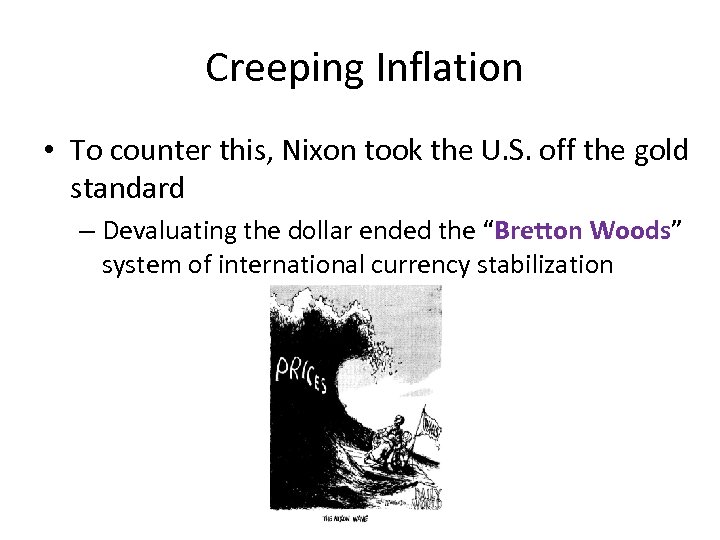 Creeping Inflation • To counter this, Nixon took the U. S. off the gold standard – Devaluating the dollar ended the “Bretton Woods” system of international currency stabilization
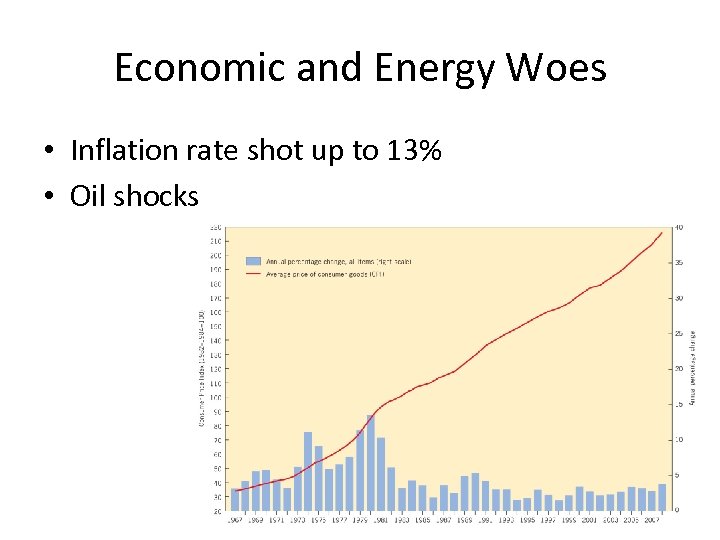 Economic and Energy Woes • Inflation rate shot up to 13% • Oil shocks
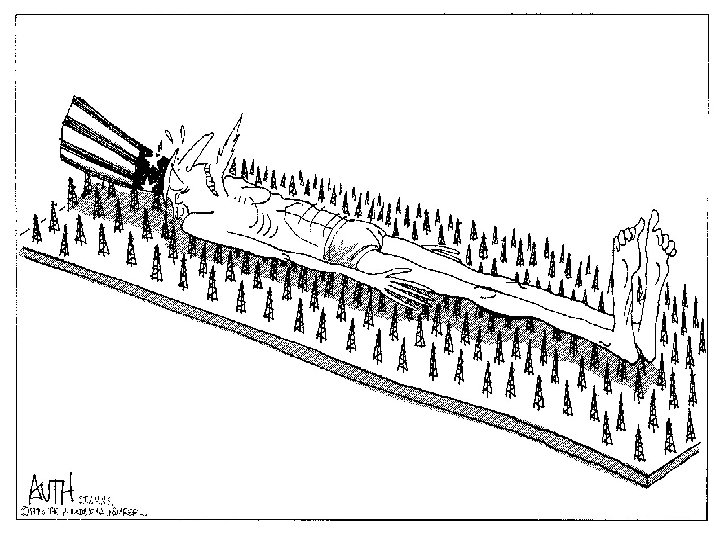
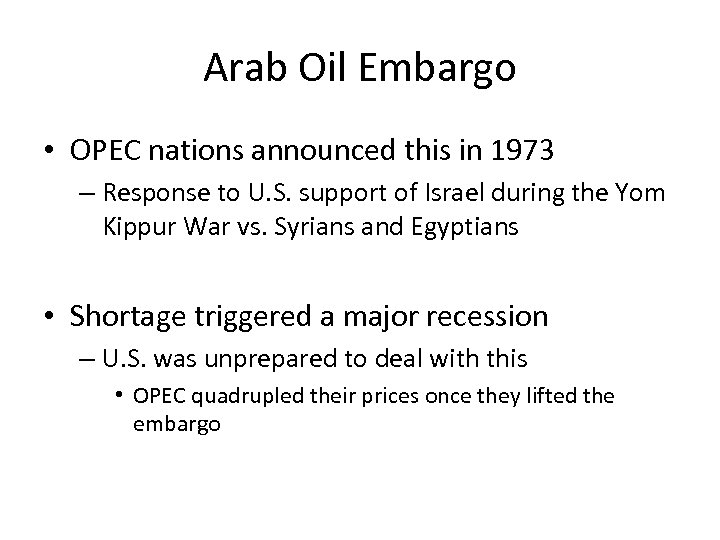 Arab Oil Embargo • OPEC nations announced this in 1973 – Response to U. S. support of Israel during the Yom Kippur War vs. Syrians and Egyptians • Shortage triggered a major recession – U. S. was unprepared to deal with this • OPEC quadrupled their prices once they lifted the embargo
 Election of 1972 Richard Nixon (R) • Made significant efforts to end war in Vietnam • Buzz Aldrin and Neil Armstrong Walk on moon – 1969 • Strong foreign policy thanks to relations with China George Mc. Govern (D) • Best option for Dems after Ted Kennedy’s Chappaquiddick incident in 1969 • Chose a running mate who had mental problems • Lost Electoral Vote – 520 -to 17
 Watergate • Five men arrested – Tried to plant “bugs” in Democratic Party headquarters • Other “Dirty Tricks” – Forging documents – IRS harassment of innocent individuals – “Enemy Lists” – Burglarizing • psychiatrist who treated leaker of Pentagon Papers – Playing the FBI and CIA
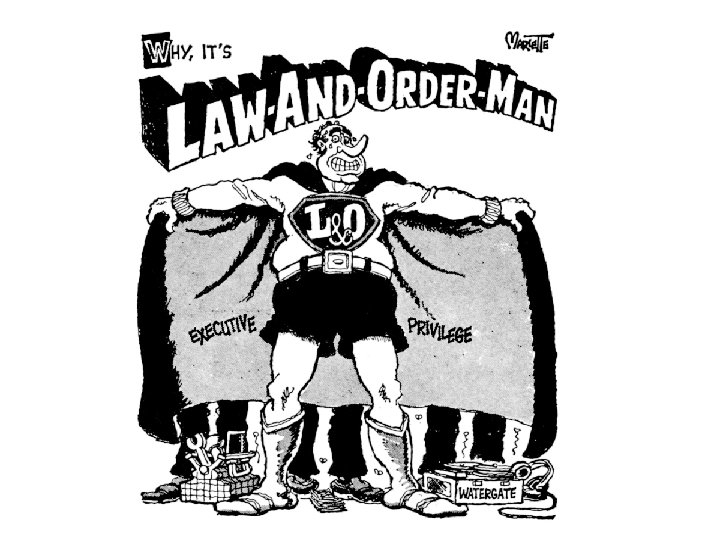
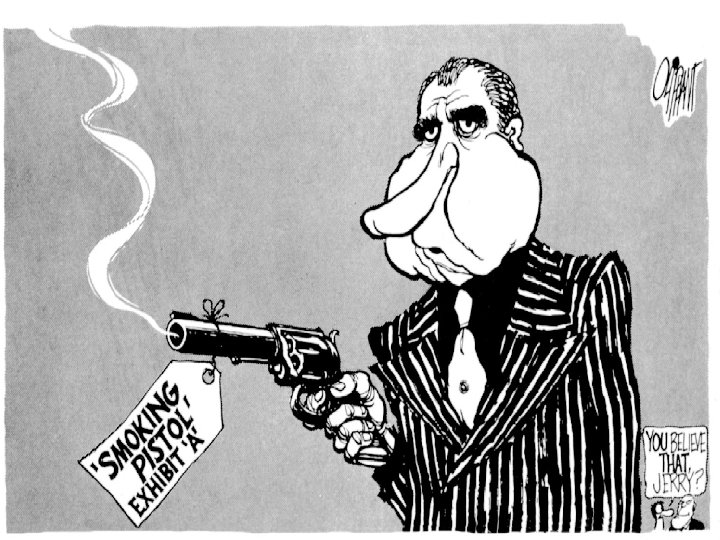
 Nixon’s Accusation • Nixon was accused of obstructing justice – Oval Office tapes could reveal the truth • Nixon cited “executive privilege” • Supreme Court asked for the tapes – Nixon publicly gave three tapes over • One of them was the Smoking Gun Tape • Others were deleted or inaudible
 Nixon’s Vice Resigns • Spiro Agnew – Took bribes while governor and vice-president • Twenty-fifth Amendment – Deals with succession of the President and Vice President • Ratified in 1967 • Passed following the JFK assassination when LBJ was president w/o at vice for 14 months • Nixon nominated and Congress confirmed Gerald Ford
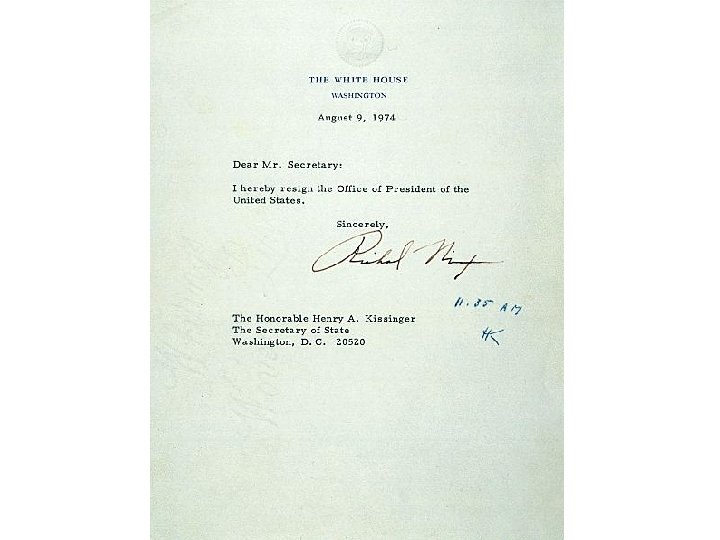
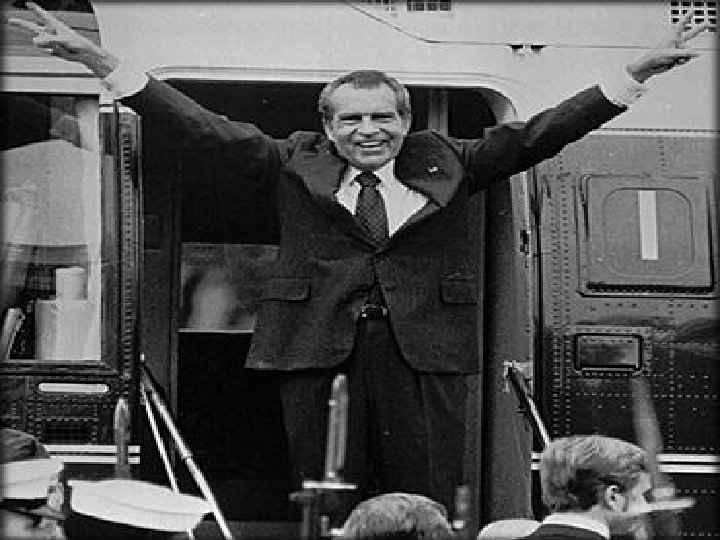
 Resignation • House and Senate had the numbers to impeach Nixon – Instead he resigned on Aug 8, 1974 • The Constitution works! • Democracy works!
 Great Quote “Always give your best, never get discouraged, never be petty; always remember, others may hate you, but those who hate you don’t win unless you hate them, and then you destroy yourself. ” - Richard Nixon, day he left White House
 Gerald Ford • Replaces Nixon – First man to be made president solely by a vote of Congress • Ford pardons Nixon
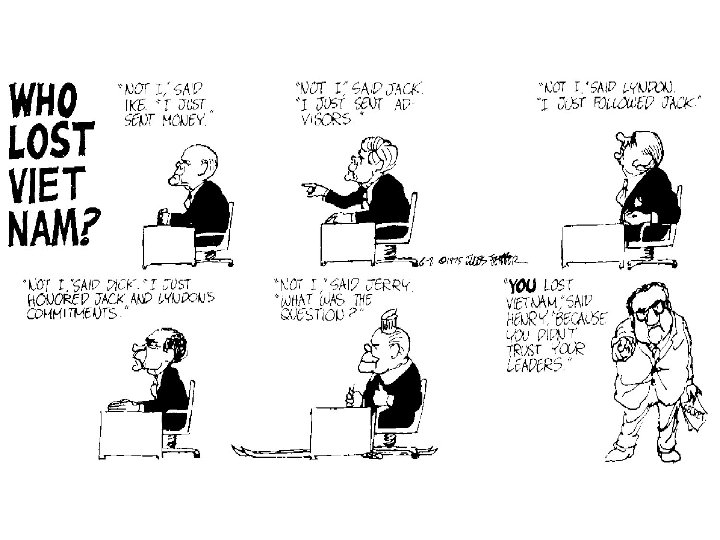
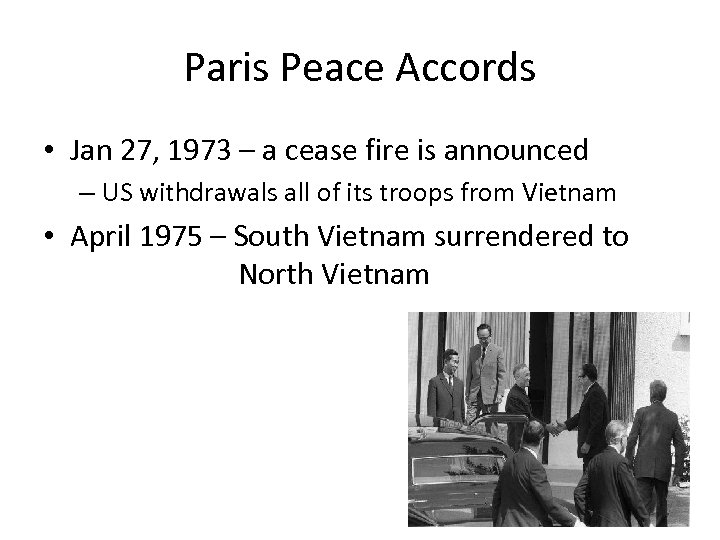 Paris Peace Accords • Jan 27, 1973 – a cease fire is announced – US withdrawals all of its troops from Vietnam • April 1975 – South Vietnam surrendered to North Vietnam
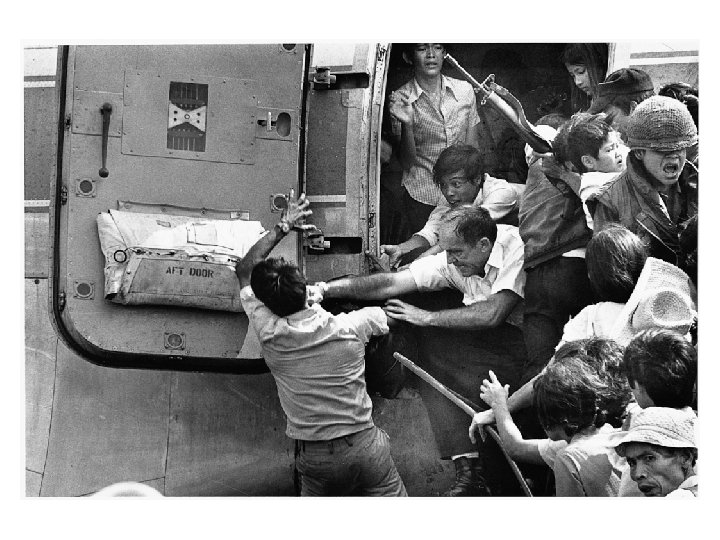
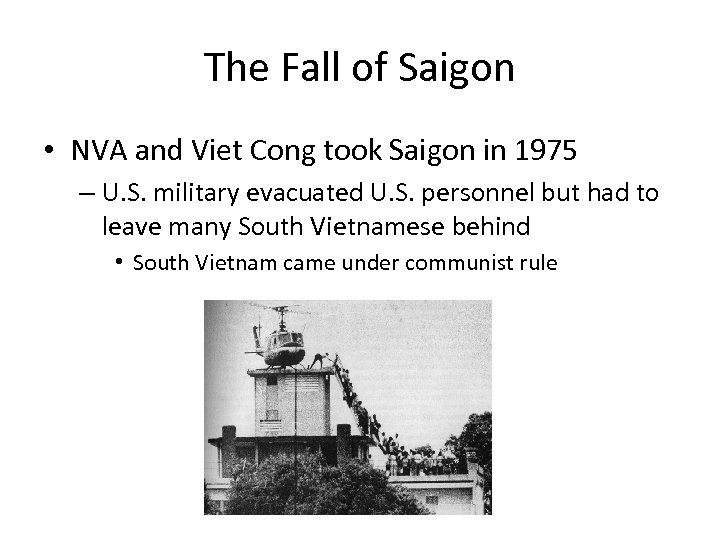 The Fall of Saigon • NVA and Viet Cong took Saigon in 1975 – U. S. military evacuated U. S. personnel but had to leave many South Vietnamese behind • South Vietnam came under communist rule
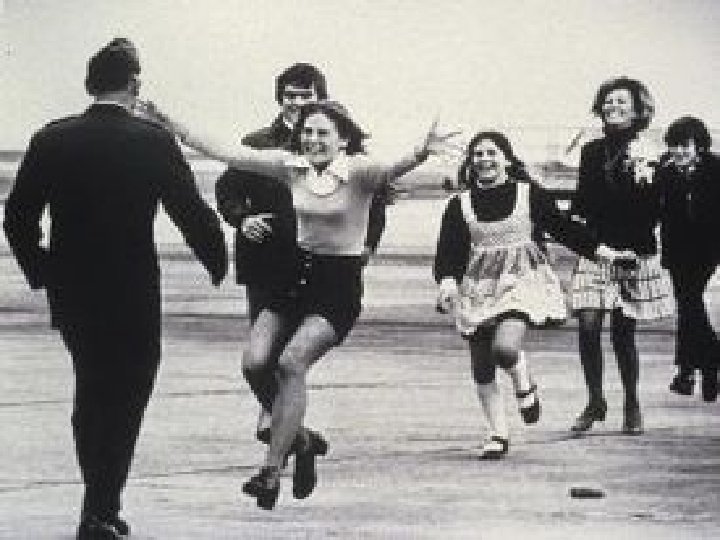
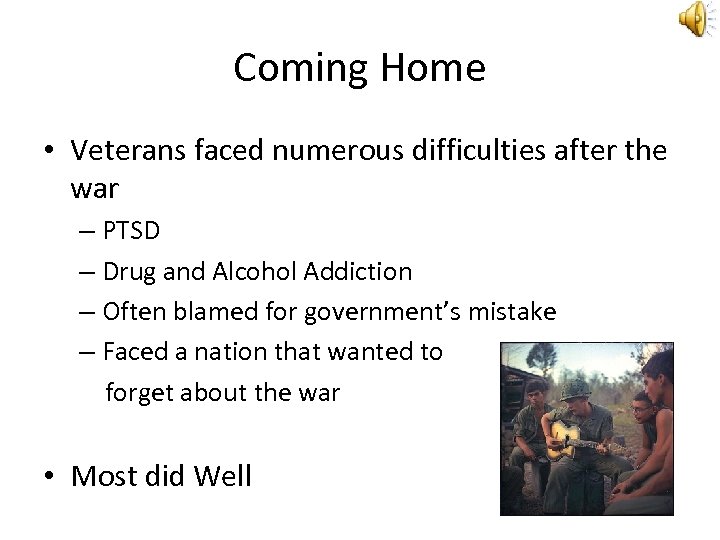 Coming Home • Veterans faced numerous difficulties after the war – PTSD – Drug and Alcohol Addiction – Often blamed for government’s mistake – Faced a nation that wanted to forget about the war • Most did Well
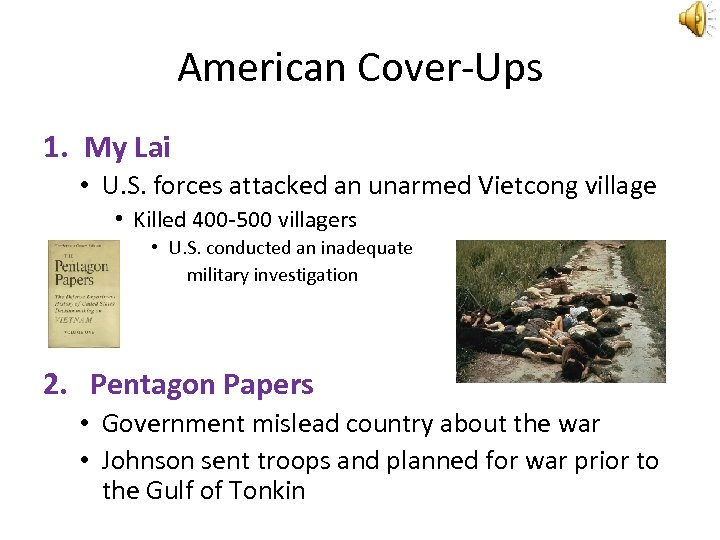 American Cover-Ups 1. My Lai • U. S. forces attacked an unarmed Vietcong village • Killed 400 -500 villagers • U. S. conducted an inadequate military investigation 2. Pentagon Papers • Government mislead country about the war • Johnson sent troops and planned for war prior to the Gulf of Tonkin
 Discussion How do you feel about individuals leaking government secrets to the public? Example: Pentagon Papers and Wikileaks? How do you feel about the American people protesting against the war while our troops are in Vietnam?
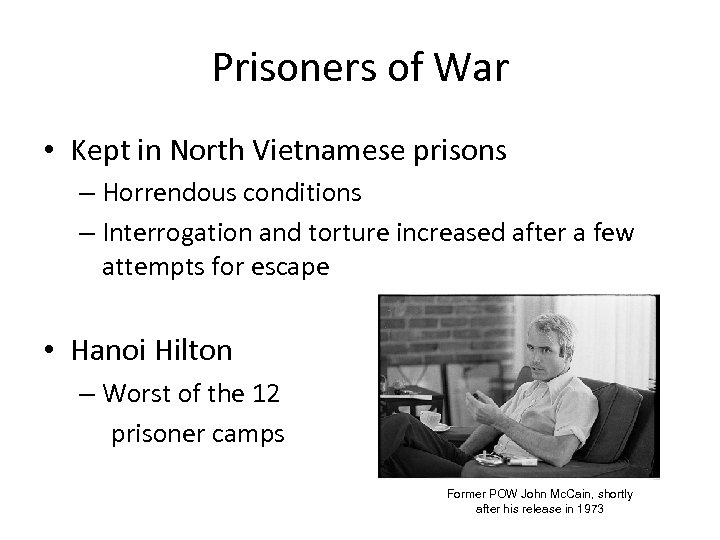 Prisoners of War • Kept in North Vietnamese prisons – Horrendous conditions – Interrogation and torture increased after a few attempts for escape • Hanoi Hilton – Worst of the 12 prisoner camps Former POW John Mc. Cain, shortly after his release in 1973
 National Effect • • • Mistrust of government 58, 000 American deaths 2, 000 American’s missing 300, 000 American’s wounded Over 2 million Vietnamese dead Cost $150 billion for war ($700 billion today) • Communist regimes eventually came to power in Vietnam, Laos, and Cambodia but it didn’t spread as expected. • War Powers Act – Congress to declare war; pres. has 60 days
 Discussion What are your thoughts about government funds going to the Vietnam War and not to the War on Poverty?
 Upfront Magazine Modern Vietnam
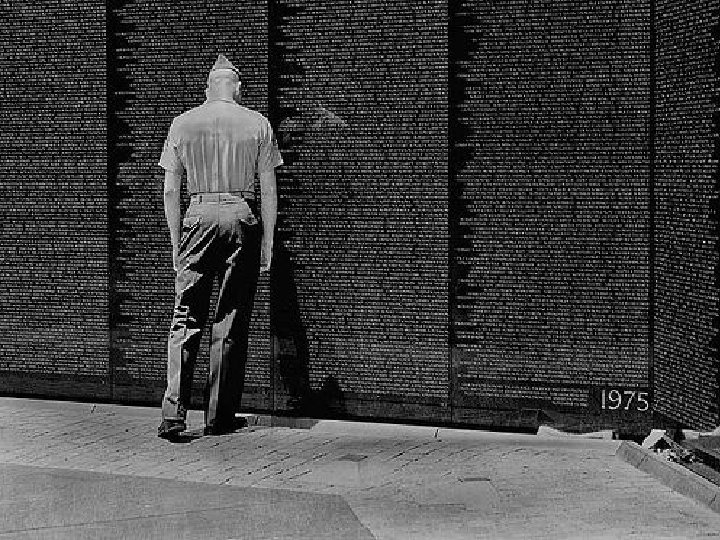
 Lessons • Do what you are asked to do to the best of your ability. • They went, they served, they sacrificed, and fought like tigers. • Did what was asked (drafted)
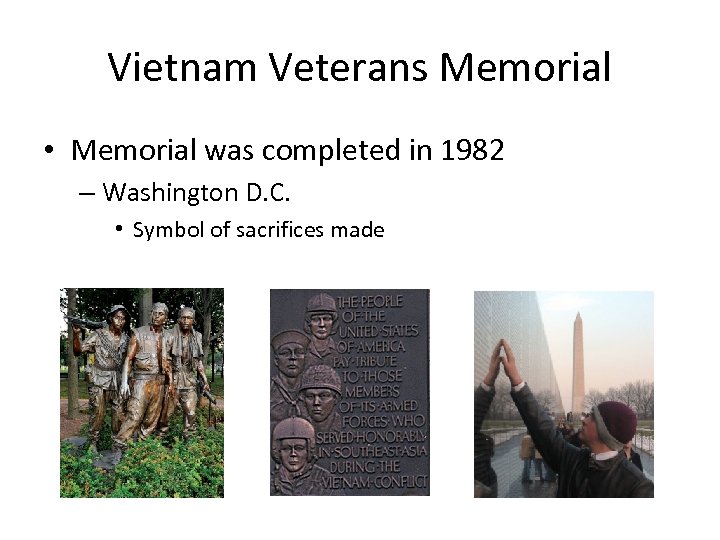 Vietnam Veterans Memorial • Memorial was completed in 1982 – Washington D. C. • Symbol of sacrifices made
 Stagnation • Slump in productivity: – Women and Teenagers meant fewer skills in workforce – Declining investment in machinery – Shift from manufacturing to services • Vietnam War – Drained dollars
 American Feminists Victories • Title IX – Prohibits sex discrimination Defeats • Antifeminists blamed women’s movement for high divorce rates • ERA (1972) – Reed v. Reed (1971) – Frontiero v. Richardson (1973) • Discrimination in employment • Roe v. Wade (1973) – Protecting abortion • Equal Rights Amendment – Treating women like men hurts women • Died in 1982
 Reverse Discrimination • Bakke v. California (1978) – Case against Affirmative Action • Weight on racial and ethnic background shouldn’t trump ability or achievement • Racial quotas were unconstitutional but race could be taken into account as one factor in college admissions
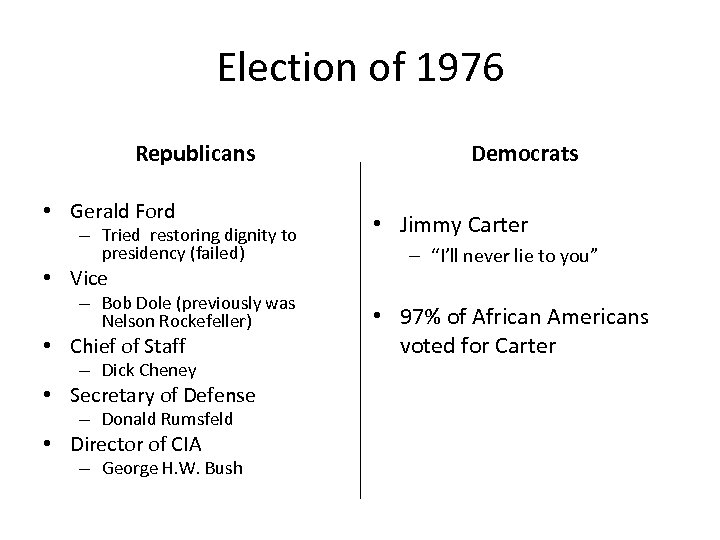 Election of 1976 Republicans • Gerald Ford – Tried restoring dignity to presidency (failed) • Vice – Bob Dole (previously was Nelson Rockefeller) • Chief of Staff – Dick Cheney • Secretary of Defense – Donald Rumsfeld • Director of CIA – George H. W. Bush Democrats • Jimmy Carter – “I’ll never lie to you” • 97% of African Americans voted for Carter
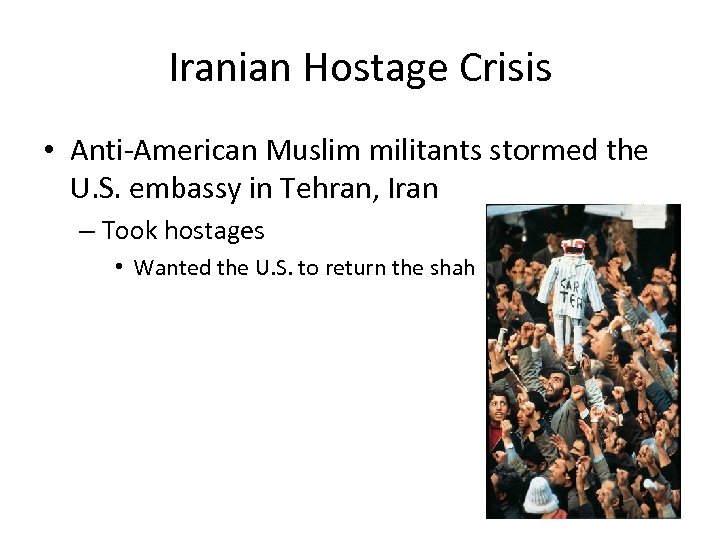 Iranian Hostage Crisis • Anti-American Muslim militants stormed the U. S. embassy in Tehran, Iran – Took hostages • Wanted the U. S. to return the shah
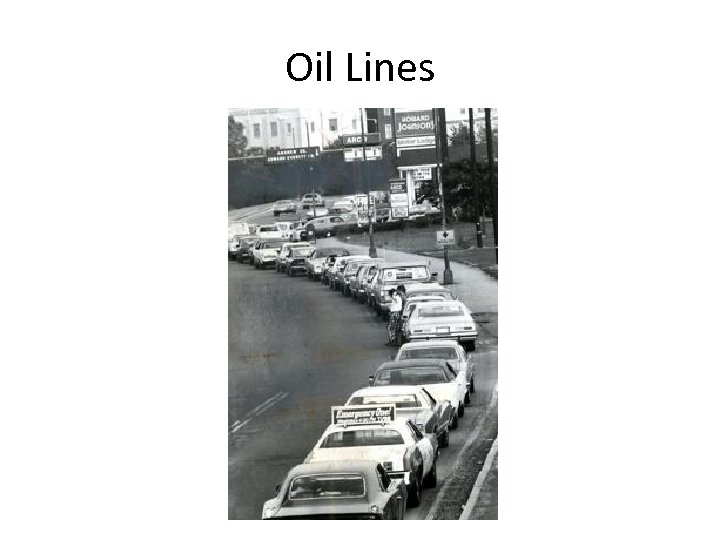 Oil Lines
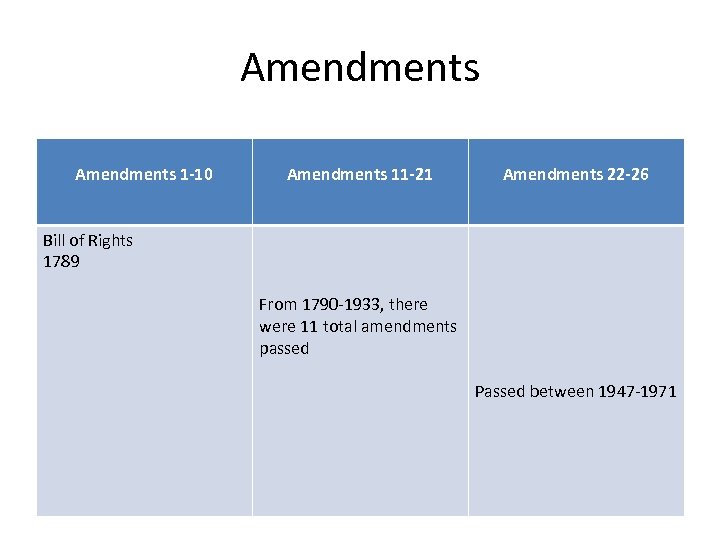 Amendments 1 -10 Amendments 11 -21 Amendments 22 -26 Bill of Rights 1789 From 1790 -1933, there were 11 total amendments passed Passed between 1947 -1971