


 Скачать презентацию Chapter 34 Administering Oral Topical and Inhalant Medications
d22b51ec8ed1cbe502e2f52e0e71ca34.ppt
- Количество слайдов: 44
 Chapter 34 Administering Oral, Topical, and Inhalant Medications Copyright © 2014, 2009 by Saunders, an imprint of Elsevier Inc. All rights reserved.
 Chapter 34 Lesson 34. 1 Copyright © 2014, 2009 by Saunders, an imprint of Elsevier Inc. All rights reserved.
 Learning Objectives Theory 1) Describe the legal and professional responsibilities of the LPN/LVN related to medication administration. 2) Identify the parts of a valid medication order. 3) Compare and contrast various medication record systems such as the hard copy medication administration record (MAR) and computerized systems. 4) Discuss medication dispensing and delivery systems. 5) Analyze the advantages and disadvantages of the unit-dose system and the prescription system. Copyright © 2014, 2009 by Saunders, an imprint of Elsevier Inc. All rights reserved. Slide 3
 Learning Objectives Clinical Practice 1) Demonstrate the accounting for doses of controlled drugs that must be withdrawn from the locked narcotics cabinet or dispensed from an automatic dispensing unit. 2) Prepare and apply topical medications such as eye ointments, eardrops, nasal medications transdermal patches, and topical ointments. 3) Review a care plan for a patient who is receiving medication that includes patient-specific data, an identified nursing diagnosis, and interventions that you used. Copyright © 2014, 2009 by Saunders, an imprint of Elsevier Inc. All rights reserved. Slide 4
 Nursing Responsibilities in Medication Administration Be accurate during all steps of medication administration Follow exactly all procedures related to medication administration Report any error promptly Interpret the medication order correctly, then give the correct medication to the patient Make an assessment of the patient after medication has been administered Follow the Six Rights of medication administration Copyright © 2014, 2009 by Saunders, an imprint of Elsevier Inc. All rights reserved. Slide 5
 Medication Orders Nurses must question unclear, incomplete, or ambiguous medication orders Complete drug orders must contain: Full name of the patient Ø Name of the drug and how it is to be given Ø Dosage to be given and route of administration Ø Date, time, and signature of the prescribing physician Ø Copyright © 2014, 2009 by Saunders, an imprint of Elsevier Inc. All rights reserved. Slide 6
 Dosages Dosages may be ordered in the metric system (most often used) or in the apothecary system Nurses must be able to calculate the dosage in either system Nurses must be able to convert from one system to the other Checking conversions with another nurse may prevent medication errors from conversions Copyright © 2014, 2009 by Saunders, an imprint of Elsevier Inc. All rights reserved. Slide 7
![Routes of Oral Medications PO (per os [by mouth])—solid or liquid medications (oral, sublingual,](https://present5.com/presentation/d22b51ec8ed1cbe502e2f52e0e71ca34/image-8.jpg "Routes of Oral Medications PO (per os [by mouth])—solid or liquid medications (oral, sublingual,") Routes of Oral Medications PO (per os [by mouth])—solid or liquid medications (oral, sublingual, buccal) or via feeding tube Patients with difficulty in swallowing may need pills crushed or changed to liquids Medications that should not be crushed: Ø Sublingual medications, enteric-coated medications, and sustained-release preparations Copyright © 2014, 2009 by Saunders, an imprint of Elsevier Inc. All rights reserved. Slide 8
Routes of Oral Medications PO (per os [by mouth])—solid or liquid medications (oral, sublingual, buccal) or via feeding tube Patients with difficulty in swallowing may need pills crushed or changed to liquids Medications that should not be crushed: Ø Sublingual medications, enteric-coated medications, and sustained-release preparations Copyright © 2014, 2009 by Saunders, an imprint of Elsevier Inc. All rights reserved. Slide 8
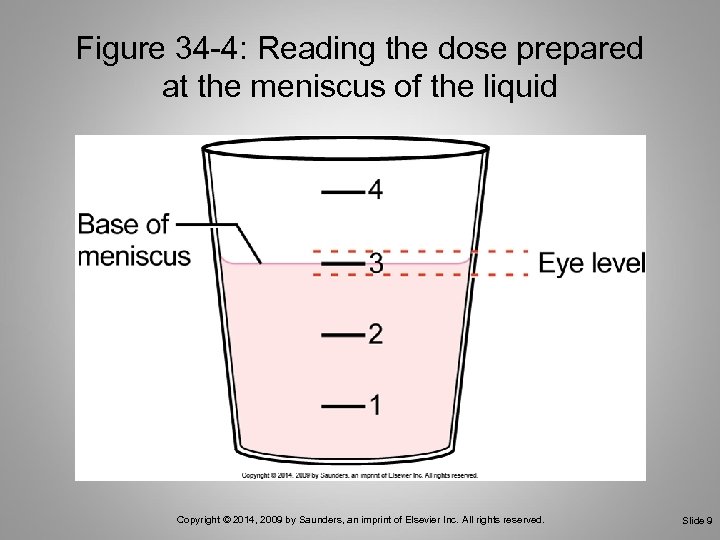 Figure 34 -4: Reading the dose prepared at the meniscus of the liquid Copyright © 2014, 2009 by Saunders, an imprint of Elsevier Inc. All rights reserved. Slide 9
 Routes of Topical Medications Applied in the form of: Drops (eye or ear) Ø Ointments, pastes, or lotions Ø Rectal suppositories Ø Transdermal medication • Should be applied to a hairless area Ø Inhalants Copyright © 2014, 2009 by Saunders, an imprint of Elsevier Inc. All rights reserved. Slide 10
 Question 1 Which medication system is most commonly used in health care agencies? 1) 2) 3) 4) Stock supply Individual prescription system Unit-dose method Pharmacy profile Copyright © 2014, 2009 by Saunders, an imprint of Elsevier Inc. All rights reserved. Slide 11
 Question 2 Narcotic orders are good for how long before a physician in a hospital setting must renew them? 1) 2) 3) 4) 24 hours 48 hours 4 days 1 week Copyright © 2014, 2009 by Saunders, an imprint of Elsevier Inc. All rights reserved. Slide 12
 Chapter 34 Lesson 34. 2 Copyright © 2014, 2009 by Saunders, an imprint of Elsevier Inc. All rights reserved.
 Learning Objectives Theory 6) State four principles to be followed when giving a medication through a feeding tube. 7) Analyze special considerations when administering oral and topical medications to an elderly patient. 8) Evaluate your responsibilities in the event of a medication error. Copyright © 2014, 2009 by Saunders, an imprint of Elsevier Inc. All rights reserved. Slide 14
 Learning Objectives Clinical Practice 4) Give oral and topical medications using the Six Rights. 5) Teach a patient to use a metered-dose inhaler. 6) Instill a vaginal and a rectal suppository safely and effectively. 7) Document medication administration and your patient’s response to therapy. Copyright © 2014, 2009 by Saunders, an imprint of Elsevier Inc. All rights reserved. Slide 15
 Administering Meds via Feeding Tube If patient unable to swallow meds Meds in liquid form best Tablets can be used if place in liquids Do not mix meds with formula or tube feeding Copyright © 2014, 2009 by Saunders, an imprint of Elsevier Inc. All rights reserved. Slide 16
 Routes of Eye and Ear Medications Ophthalmic (eye) medications may be in the form of drops, ointment, or eye disk The word ophthalmic must be clearly visible on container Otic (ear) medications are usually administrated as drops or irrigation Copyright © 2014, 2009 by Saunders, an imprint of Elsevier Inc. All rights reserved. Slide 17
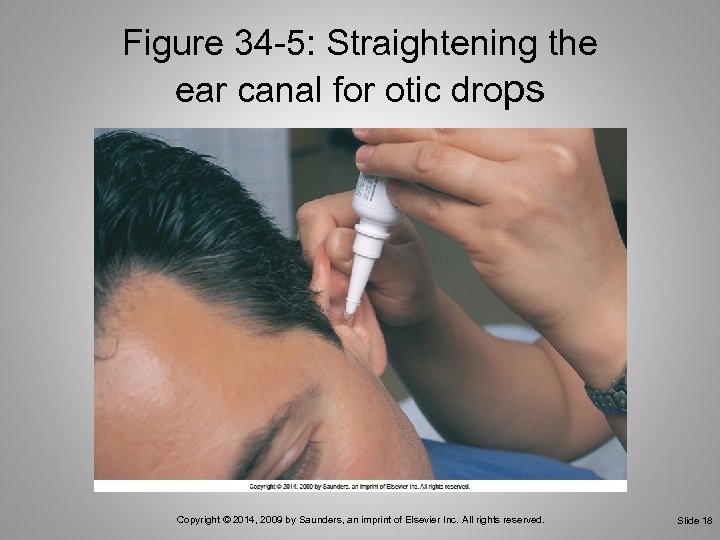 Figure 34 -5: Straightening the ear canal for otic drops Copyright © 2014, 2009 by Saunders, an imprint of Elsevier Inc. All rights reserved. Slide 18
 Routes of Nasal Medications Come in atomizers or dropper bottles Have patient block one nostril and inhale through nose as atomizer is squeezed Drops should be administered with patient lying on the back with neck hyperextended while medication is dropped into the nostrils Copyright © 2014, 2009 by Saunders, an imprint of Elsevier Inc. All rights reserved. Slide 19
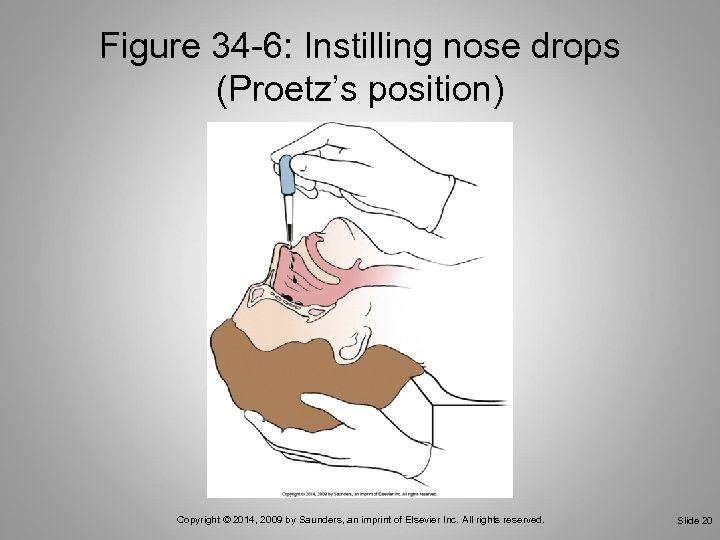 Figure 34 -6: Instilling nose drops (Proetz’s position) Copyright © 2014, 2009 by Saunders, an imprint of Elsevier Inc. All rights reserved. Slide 20
 Routes of Inhalation Medications May be administered through a nebulizer, spray, or atomizer to penetrate the lungs Metered-dose inhaler: prescribed amount of medication is administered in each spray; it is held in front of the mouth and medication is inhaled as the inhaler is triggered May require a spacer for effective use Copyright © 2014, 2009 by Saunders, an imprint of Elsevier Inc. All rights reserved. Slide 21
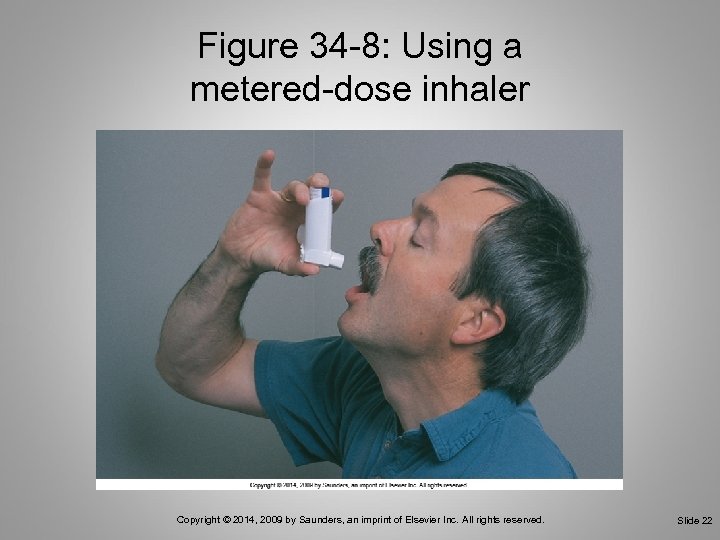 Figure 34 -8: Using a metered-dose inhaler Copyright © 2014, 2009 by Saunders, an imprint of Elsevier Inc. All rights reserved. Slide 22
 Routes of Vaginal Medications Used to: Cleanse the vagina for surgery Ø Reduce bacterial growth Ø Remove odors and discharge Ø Apply heat or cold to inflamed tissues Ø Absorb medication into local mucosa Ø Copyright © 2014, 2009 by Saunders, an imprint of Elsevier Inc. All rights reserved. Slide 23
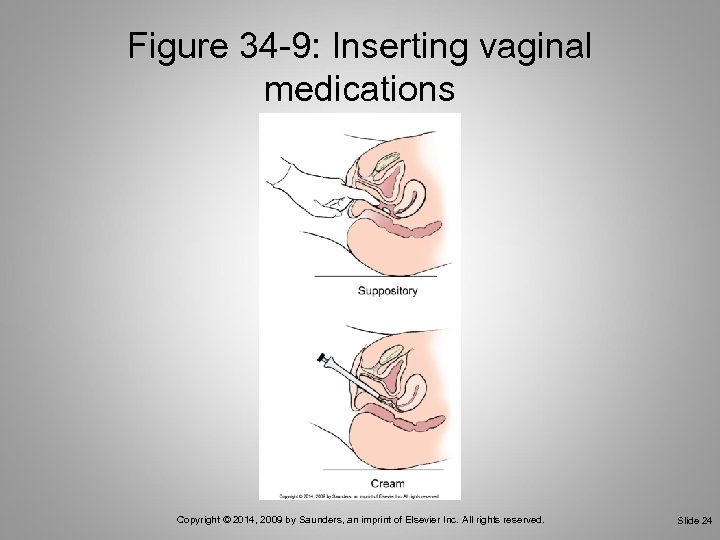 Figure 34 -9: Inserting vaginal medications Copyright © 2014, 2009 by Saunders, an imprint of Elsevier Inc. All rights reserved. Slide 24
 Routes of Rectal Medications Dispensed in the form of suppositories; used to: Prevent vomiting Ø Soothe hemorrhoids Ø Prevent bladder spasms Ø Promote bowel evacuation Ø Reduce fever Ø Copyright © 2014, 2009 by Saunders, an imprint of Elsevier Inc. All rights reserved. Slide 25
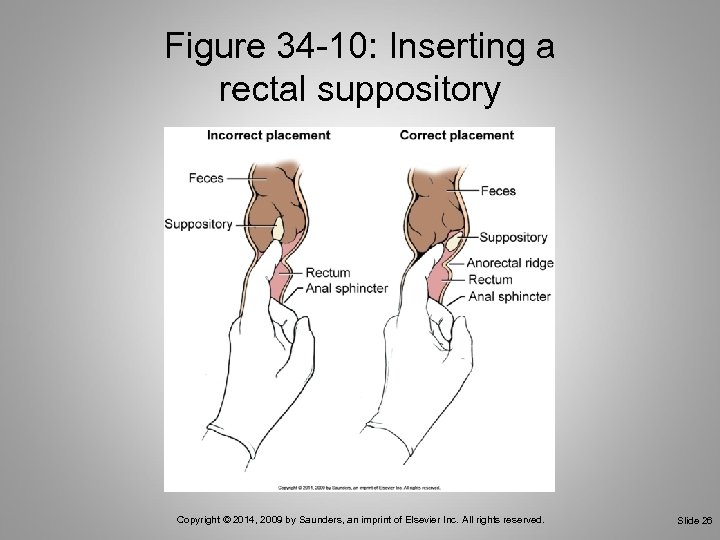 Figure 34 -10: Inserting a rectal suppository Copyright © 2014, 2009 by Saunders, an imprint of Elsevier Inc. All rights reserved. Slide 26
 Routes of Transdermal Medications Supplied as paste or patch Should be applied to clean, hairless area and left in place Typical drugs available Ø Nitroglycerin, scopolamine, estrogen, fentanyl Copyright © 2014, 2009 by Saunders, an imprint of Elsevier Inc. All rights reserved. Slide 27
 Regularly Scheduled Medication Orders Maintain desired level of medication in the bloodstream, often given several times a day Physician’s order will specify how often the medication is to be given Three times a day (tid), every 4 hours (q 4 hr), etc. Copyright © 2014, 2009 by Saunders, an imprint of Elsevier Inc. All rights reserved. Slide 28
 PRN Medication Orders Some PRN medication orders specify when or how often the medication can be given hs PRN, meaning “hour of sleep as needed” Ø q 4 hr PRN, meaning “as often as every 4 hours as needed” Ø Copyright © 2014, 2009 by Saunders, an imprint of Elsevier Inc. All rights reserved. Slide 29
 Stat and Single-Dose Medication Orders May consist of more than one drug or may involve spacing drops or tablets over a short period Stat orders indicate that the order has top priority and medication must be administered without delay Copyright © 2014, 2009 by Saunders, an imprint of Elsevier Inc. All rights reserved. Slide 30
 Renewal Orders Many hospitals have medication policies limiting the time for which certain types of medication orders are valid Opiate analgesics generally have a 48 - or 72 -hour limit Ø Sedatives and antibiotics may have a 5 - or 7 -day limit Ø A 30 -day limit may be imposed by some agencies on all medications Ø Copyright © 2014, 2009 by Saunders, an imprint of Elsevier Inc. All rights reserved. Slide 31
 Stop or Discontinue Orders Medications given to patient until the specified number of doses have been administered or until the order has expired or has been canceled All medication orders automatically canceled whenever a patient undergoes surgery or general anesthesia Copyright © 2014, 2009 by Saunders, an imprint of Elsevier Inc. All rights reserved. Slide 32
 Medication Administration Record (MAR) Used to record a patient’s medications Nurses record the doses of drugs administered each day Referred to when giving regularly scheduled and PRN medications Copyright © 2014, 2009 by Saunders, an imprint of Elsevier Inc. All rights reserved. Slide 33
 Medication Cards Rarely used now, but may be encountered in small long-term care facilities or rehabilitation centers For each patient, one card is made for each medication ordered The card is used: When the dose is prepared Ø At the bedside to help identify what is being given Ø To chart after the medication is given Ø Copyright © 2014, 2009 by Saunders, an imprint of Elsevier Inc. All rights reserved. Slide 34
 Medication Administration and Technology Improve medication administration safety Computerized physician order entry systems (CPOE) Ø Bar code scanners Ø Prescriber directly enters the medication order in the computer; this decreases potential for transcription errors Scan the medication package and the patient ID bands Personal digital assistants Download and upload specific patient information to a PDA that is connected to the larger hospital information system Copyright © 2014, 2009 by Saunders, an imprint of Elsevier Inc. All rights reserved. Slide 35
 Unit-Dose System Provides premeasured, prepackaged, prelabeled dose Safest because dose prescribed is dose dispensed May be dispensed from mobile cart, or the fixed medication preparation center Benefits Pharmacy supplies the exact dose of medication ordered Ø Saves time for the nurse Ø Patient is charged only for medications used Ø Allows keeping a minimum amount of drugs on the nursing units Ø Copyright © 2014, 2009 by Saunders, an imprint of Elsevier Inc. All rights reserved. Slide 36
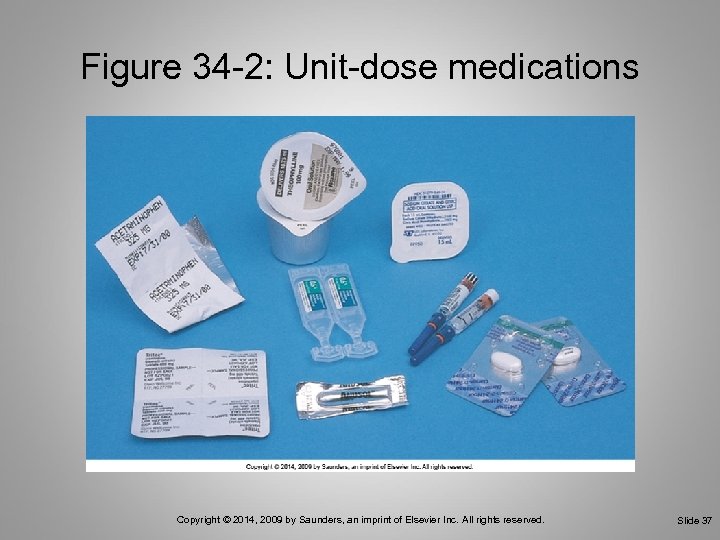 Figure 34 -2: Unit-dose medications Copyright © 2014, 2009 by Saunders, an imprint of Elsevier Inc. All rights reserved. Slide 37
 Prescription System Prescription is written for each drug ordered and is filled by the pharmacist, who provides individual containers holding doses for several days In the long-term care facility, a week’s or month’s supply of each medication is often provided in a bubble pack Copyright © 2014, 2009 by Saunders, an imprint of Elsevier Inc. All rights reserved. Slide 38
 Preparation of Oral Controlled Substances from a Dispenser A controlled dispensing system is used for distributing opiate analgesics and hypnotics Legally controlled substances must be under lock and key Automated controlled substance dispensing machines are often used in the clinical setting to monitor and control narcotic use When not in a dispensing machine, drugs are supplied in a controlled dispenser or a commercially prepared package Copyright © 2014, 2009 by Saunders, an imprint of Elsevier Inc. All rights reserved. Slide 39
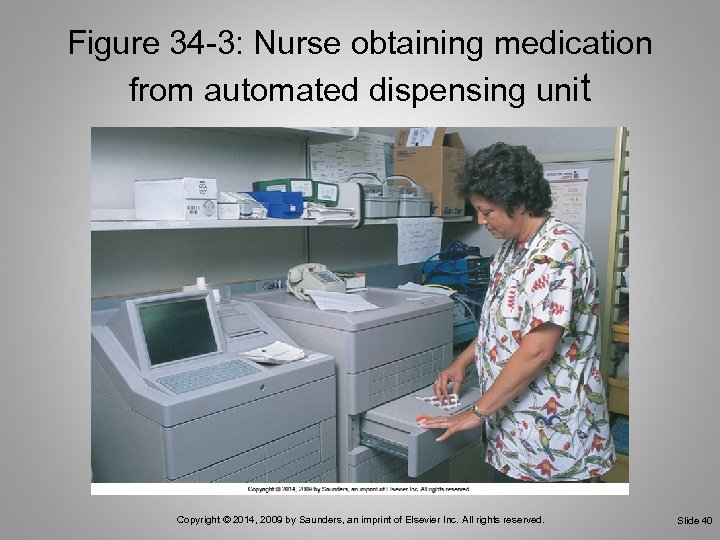 Figure 34 -3: Nurse obtaining medication from automated dispensing unit Copyright © 2014, 2009 by Saunders, an imprint of Elsevier Inc. All rights reserved. Slide 40
 Medication Errors All medication errors must be reported An incident or occurrence form is filled out for the medication error After notifying the physician, orders are carried out to safeguard the patient The goal is to prevent harm to the patient from the error and to prevent similar errors from happening again Copyright © 2014, 2009 by Saunders, an imprint of Elsevier Inc. All rights reserved. Slide 41
 Question 3 Paige is getting ready to administer eardrops to a 2 year-old girl. When administering eardrops, it is important to remember to: 1) 2) 3) 4) pull the earlobe downward to straighten the canal. pull the earlobe upward to straighten the canal. pull the earlobe toward the back of the head to straighten the canal. None of the above Copyright © 2014, 2009 by Saunders, an imprint of Elsevier Inc. All rights reserved. Slide 42
 Question 4 Allison is getting ready to administer her patient’s medication through a feeding tube. Which types of medications cannot be crushed or administered through a feeding tube? 1) 2) 3) 4) Buccal, sublingual, and liquid Liquid, sublingual, and enteric-coated Sublingual, enteric-coated, or sustained-release Liquid, sustained-release, and suppository Copyright © 2014, 2009 by Saunders, an imprint of Elsevier Inc. All rights reserved. Slide 43
 Question 5 Allison’s patient is going to surgery. What will happen to her patient’s medication orders? 1) 2) 3) 4) They will go with the patient at all times throughout the surgery. New orders will probably be added after surgery. All orders are canceled and new orders must be rewritten after surgery except routine medications. Copyright © 2014, 2009 by Saunders, an imprint of Elsevier Inc. All rights reserved. Slide 44