


 Скачать презентацию Chapter 33 The Reagan Era Mr Wells Hickory
70eabbba4f01ab558f0ebd6fe0797afa.ppt
- Количество слайдов: 33
 Chapter 33 The Reagan Era Mr. Wells Hickory Ridge HS
 As the 1980 presidential election approached, why was America a nation ready for change? Low Spirits • People lacked confidence in government. • The turbulent 1960 s, Watergate, the Soviet invasion of Afghanistan, the Iranian Hostage crisis (1979), and long gasolines put Americans in an uneasy mood. • Critics said Carter blamed Americans for the crisis in confidence instead of fixing the problems. • A conservative movement that opposed liberal, and racial policies was growing.
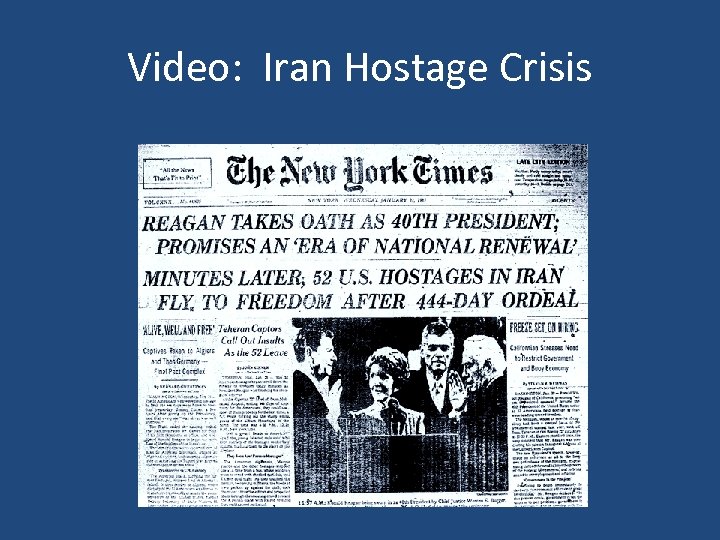 Video: Iran Hostage Crisis
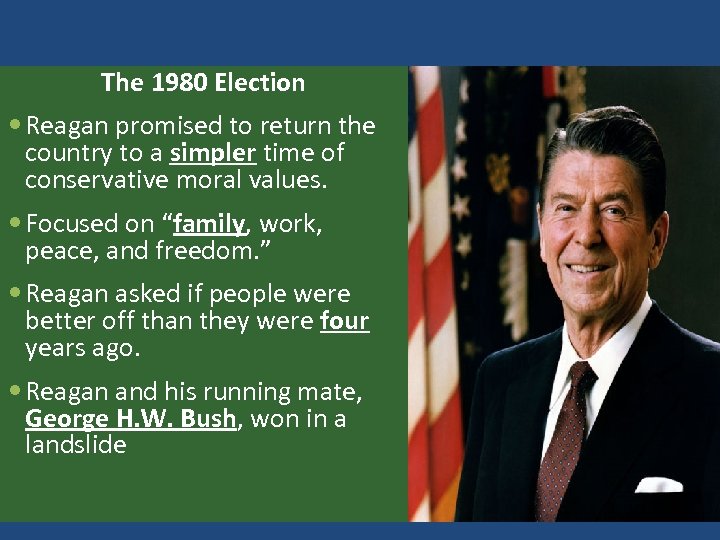 The 1980 Election Reagan promised to return the country to a simpler time of conservative moral values. Focused on “family, work, peace, and freedom. ” Reagan asked if people were better off than they were four years ago. Reagan and his running mate, George H. W. Bush, won in a landslide
 The Reagan Revolution Reagan began his political life as a Democrat, by 1962 he found his home in the Republican Party. In 1966 he became the governor of California. Reagan was the hero of a growing movement called the New Right. His powerful personality, optimism, and acting skills drew many Americans—even Democrats—to his side.
 The New Right Emerges • New Right – Opposed abortion – Endorsed school prayer – Blocked Equal Rights Amendment – Criticized Affirmative Action – Favor stronger military, small government, lower taxes – Against gun control, homosexual rights • New Right thought affirmative action was reverse discrimination • Conservative Coalition • Moral Majority: Jerry Falwell and Pat Robertson
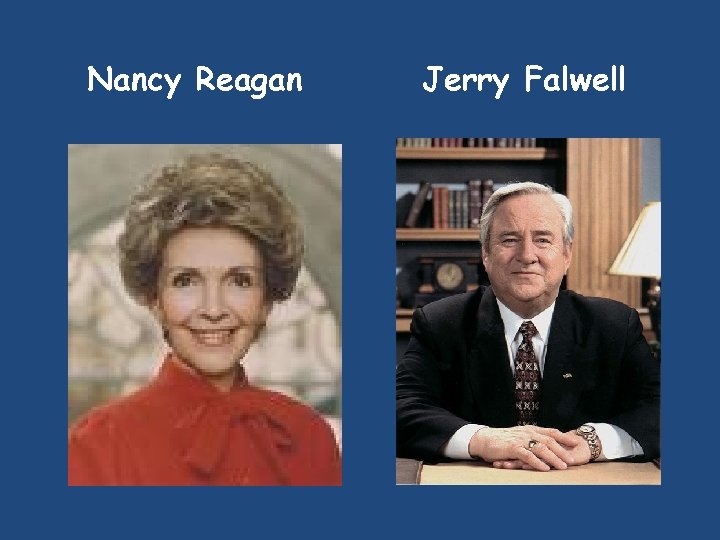 Nancy Reagan Jerry Falwell
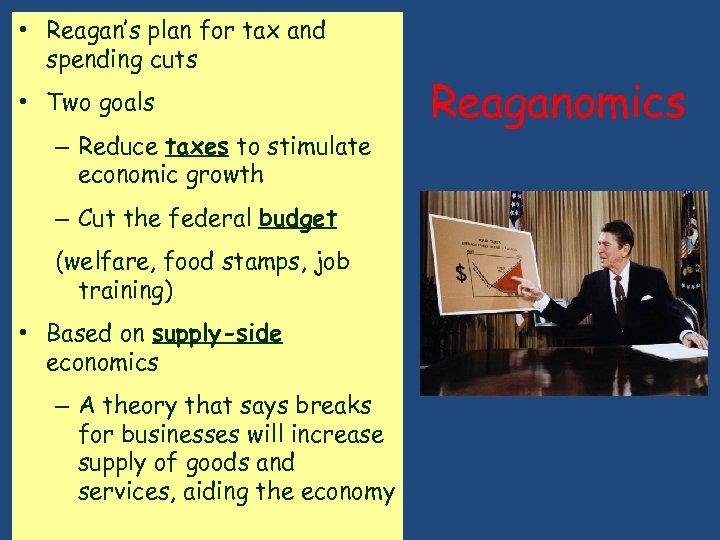 • Reagan’s plan for tax and spending cuts • Two goals – Reduce taxes to stimulate economic growth – Cut the federal budget (welfare, food stamps, job training) • Based on supply-side economics – A theory that says breaks for businesses will increase supply of goods and services, aiding the economy Reaganomics
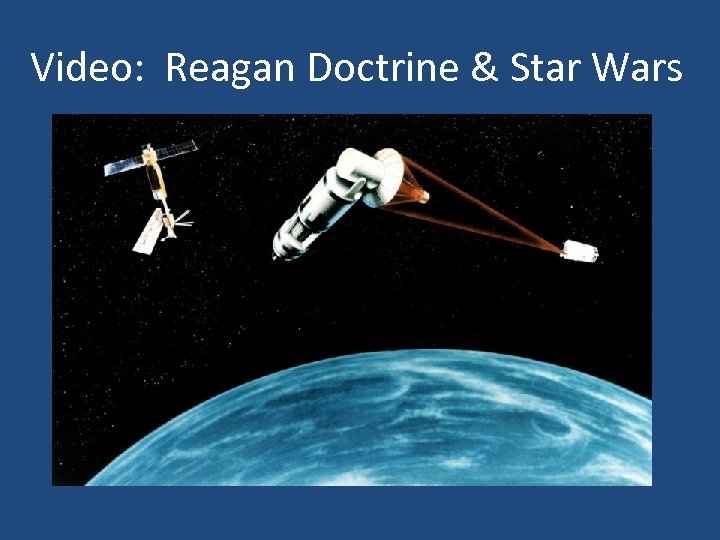 Video: Reagan Doctrine & Star Wars
 Reagan and The Cold War • Reagan rejected the policies of containment and détente; he wanted to destroy communism – Position worsened relations with the Soviets – Forged bonds with like-minded leaders, including Margaret Thatcher and Pope John Paul II – Critics of his policy called Reagan reckless • Reagan obtained massive increases in military spending – Much of the new spending went to nuclear weapons. – SDI (Strategic Defense Initiative)— lasers in space to protect the United States against incoming Soviet missiles. • Critics called this Star Wars and said it wouldn’t work.
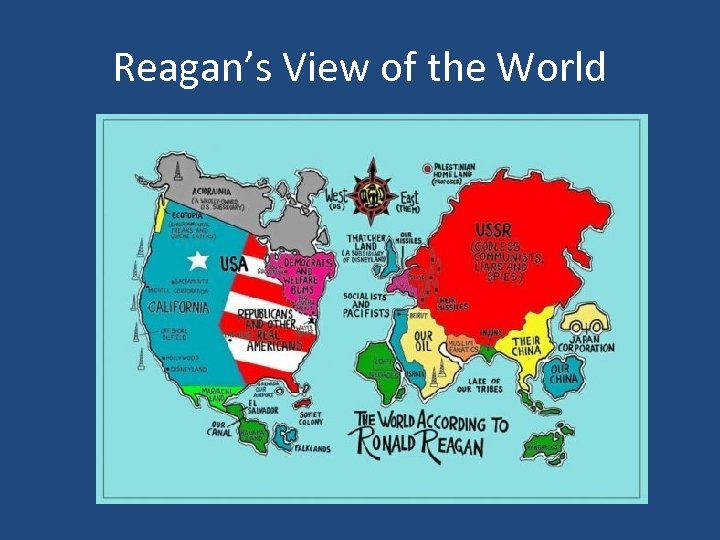 Reagan’s View of the World
 The Reagan Smash
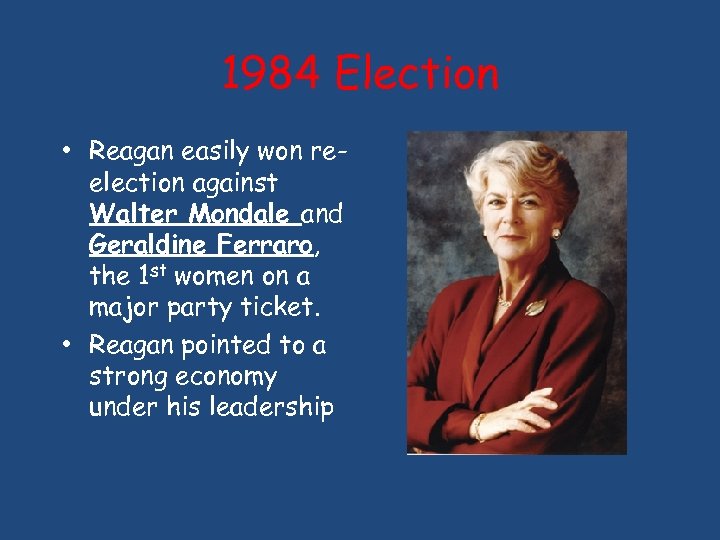 1984 Election • Reagan easily won reelection against Walter Mondale and Geraldine Ferraro, the 1 st women on a major party ticket. • Reagan pointed to a strong economy under his leadership
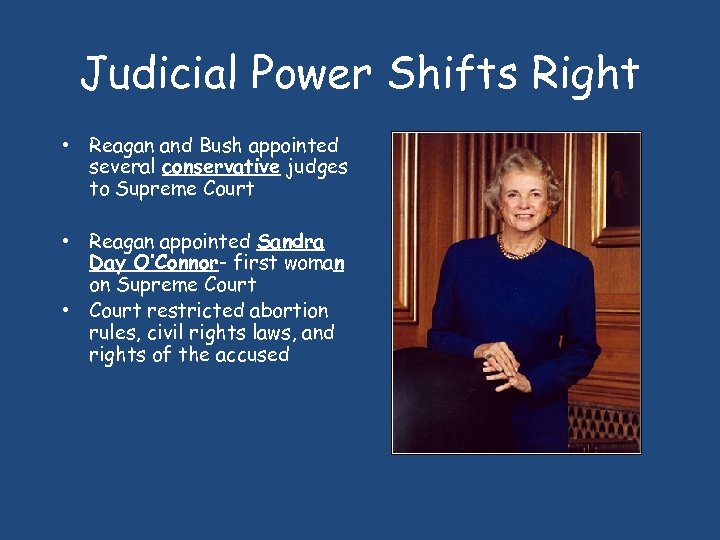 Judicial Power Shifts Right • Reagan and Bush appointed several conservative judges to Supreme Court • Reagan appointed Sandra Day O’Connor- first woman on Supreme Court • Court restricted abortion rules, civil rights laws, and rights of the accused
 A Thaw in the Cold War The Soviet Union • By the late 1970 s the Soviet economy was shrinking. • Industrial and farm production, population growth, education, and medical care all fell. • The Soviet Union started importing food • Strikes in Poland led by Lech Walesa highlighted Soviet weaknesses. • Walesa successfully forced the Soviet-backed government to legalize independent trade unions. • He also led a new independent union called Solidarity. U. S. -Soviet Relations • A visionary leader came to power in the Soviet Union— Mikhail Gorbachev. • Believed the only way to save the Soviet Union was to strike a deal with the United States • Reagan and Gorbachev sign the INF Treaty (Intermediate Nuclear Force Treaty) • First treaty to actually reduce nuclear arms • INF Treaty destroyed a whole class of weapons (more than 2, 500 missiles).
 Upheaval in Latin America • Nicaragua’s government was ousted by the Sandinistas—a Marxist group. • Reagan cut off aid to Nicaragua saying that the Sandinistas were backed by the USSR. Nicaragua • Reagan then allowed the CIA to equip and train a Sandinista opposition group called the Contras. • Congress cut off funds to the Contras and banned all further direct or indirect U. S. support of them.
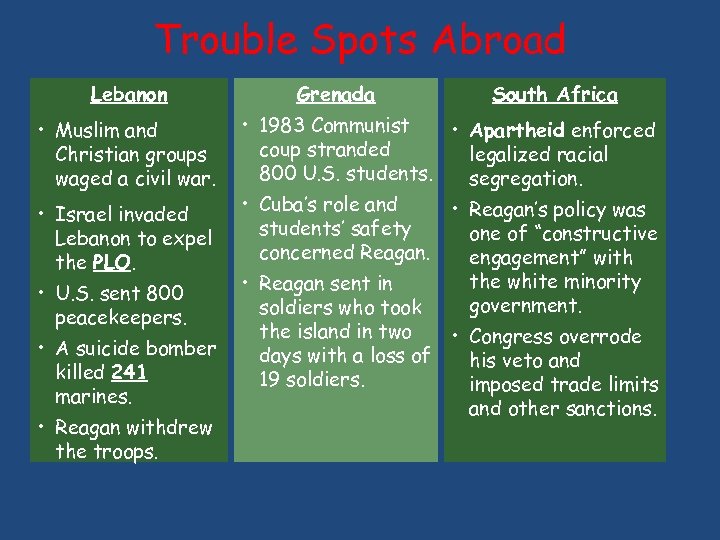 Trouble Spots Abroad Lebanon • Muslim and Christian groups waged a civil war. • Israel invaded Lebanon to expel the PLO. • U. S. sent 800 peacekeepers. • A suicide bomber killed 241 marines. • Reagan withdrew the troops. Grenada South Africa • 1983 Communist • Apartheid enforced coup stranded legalized racial 800 U. S. students. segregation. • Cuba’s role and • Reagan’s policy was students’ safety one of “constructive concerned Reagan. engagement” with the white minority • Reagan sent in government. soldiers who took the island in two • Congress overrode days with a loss of his veto and 19 soldiers. imposed trade limits and other sanctions.
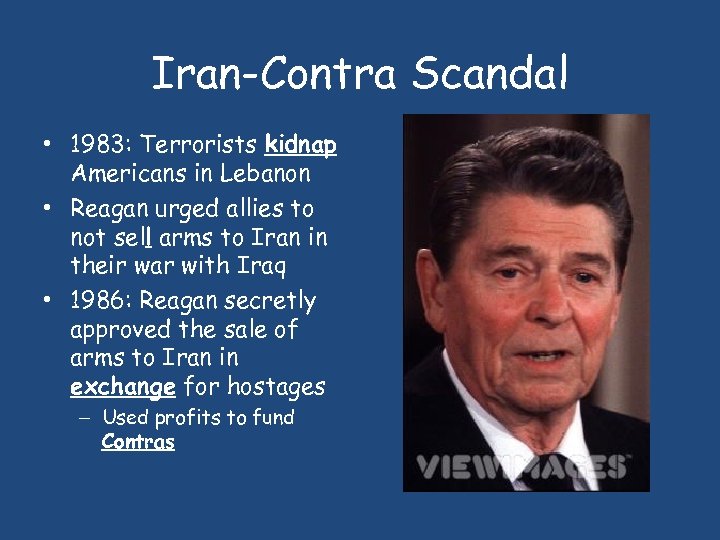 Iran-Contra Scandal • 1983: Terrorists kidnap Americans in Lebanon • Reagan urged allies to not sell arms to Iran in their war with Iraq • 1986: Reagan secretly approved the sale of arms to Iran in exchange for hostages – Used profits to fund Contras
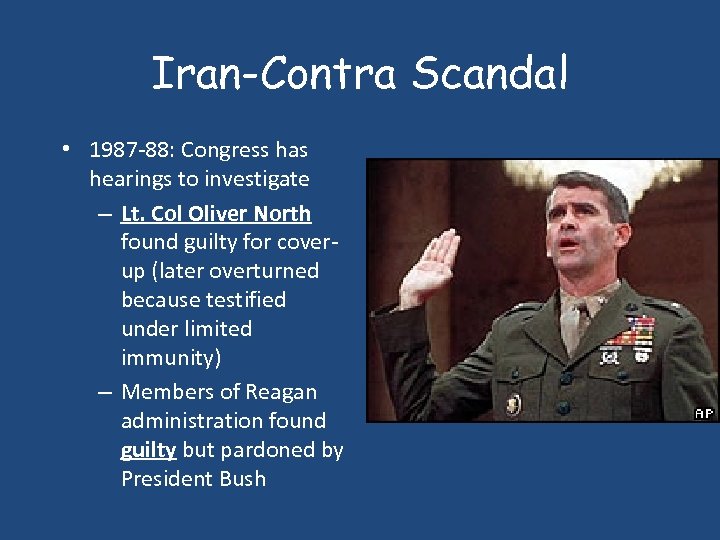 Iran-Contra Scandal • 1987 -88: Congress has hearings to investigate – Lt. Col Oliver North found guilty for coverup (later overturned because testified under limited immunity) – Members of Reagan administration found guilty but pardoned by President Bush
 The 1988 Election • Wealthy, World War II pilot, congressman from George H. W. Texas, U. S. ambassador to the United Nations, Bush head of the C. I. A. , and vice president • Republican nomination for president in 1988 Jesse Jackson Michael Dukakis • Major civil rights leader and a liberal candidate who ran for the Democratic Party’s nomination • Won the most votes on Super Tuesday and had significant support from both white and black voters • Governor of Massachusetts who ended up winning the Democratic Party’s nomination • Running mate was Texas senator Lloyd Bentsen
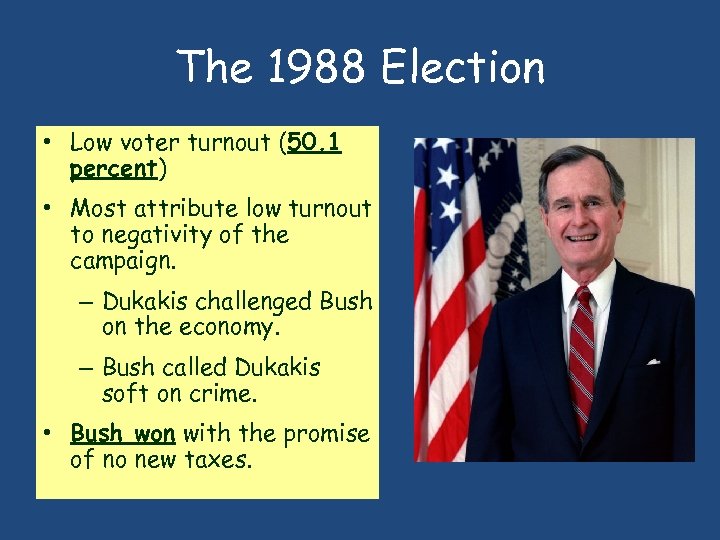 The 1988 Election • Low voter turnout (50. 1 percent) • Most attribute low turnout to negativity of the campaign. – Dukakis challenged Bush on the economy. – Bush called Dukakis soft on crime. • Bush won with the promise of no new taxes.
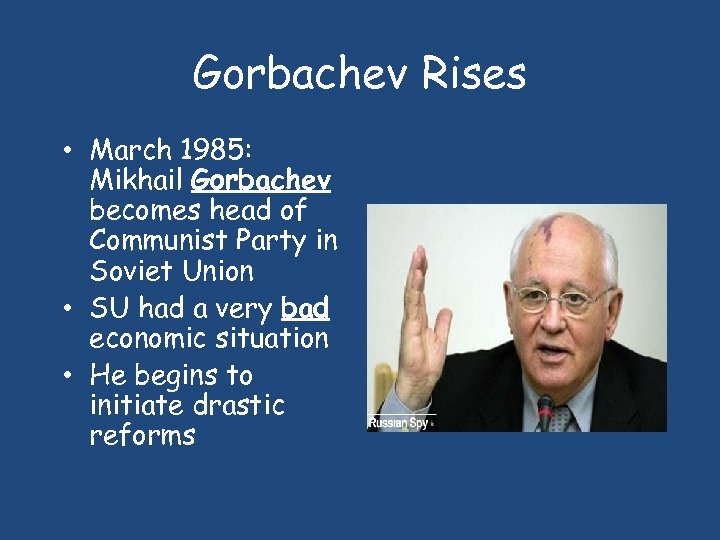 Gorbachev Rises • March 1985: Mikhail Gorbachev becomes head of Communist Party in Soviet Union • SU had a very bad economic situation • He begins to initiate drastic reforms
 How did Soviet Society become more open? Glasnost • Gorbachev announced a new era of glasnost, or “opening. ” • Allowed public to criticize their government • Gorbachev held press interviews. • Slowly Soviet citizens began to speak out. • They complained about the price of food, of empty store shelves, and of their sons dying in Afghanistan. Perestroika • Gorbachev began the process of perestroika, the “restructuring” of their corrupt government. • Dismantled the Soviet central planning system • Free elections took place in 1989. • Withdrew from Afghanistan • Visited with China to ease tensions between the nations • Attempted to cover up the Chernobyl nuclear accident
 The Collapse of the Soviet Union • The call for glasnost and perestroika awakened a spirit of nationalism in the subject nations of Eastern Europe. • Gorbachev knew the USSR could not support the ailing Eastern European economies. • He ordered a large troop pullback from the region and warned leaders to adopt reforms. • Revolutions swept across Eastern Europe in the late 1980 s.
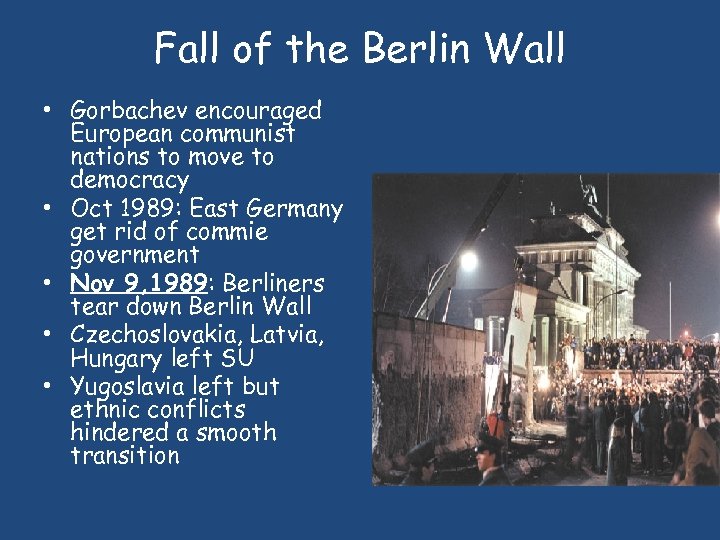 Fall of the Berlin Wall • Gorbachev encouraged European communist nations to move to democracy • Oct 1989: East Germany get rid of commie government • Nov 9, 1989: Berliners tear down Berlin Wall • Czechoslovakia, Latvia, Hungary left SU • Yugoslavia left but ethnic conflicts hindered a smooth transition
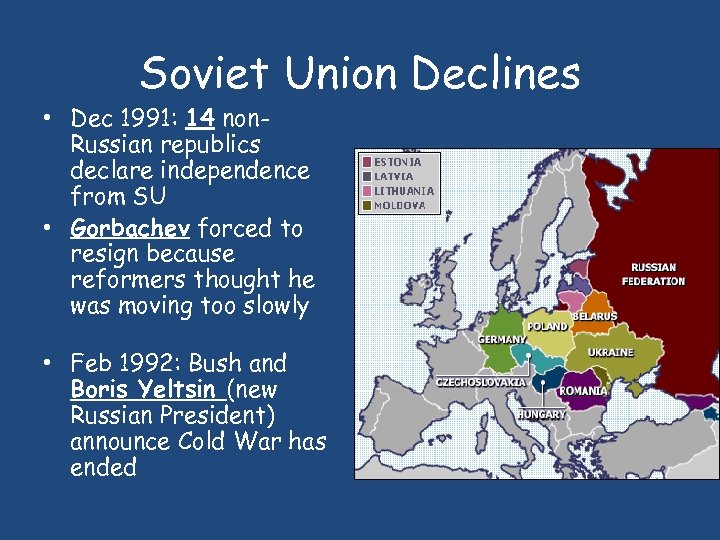 Soviet Union Declines • Dec 1991: 14 non. Russian republics declare independence from SU • Gorbachev forced to resign because reformers thought he was moving too slowly • Feb 1992: Bush and Boris Yeltsin (new Russian President) announce Cold War has ended
 The End of the Cold War
 Global Conflicts near the end of the Cold War China: Democracy Crushed • Chinese students called on their Communist leaders to embrace reforms. • Led huge pro-democracy demonstrations that filled Tiananmen Square. • Tanks surrounded the protesters and opened fire. • Hundreds of unarmed people were killed. • Bush announced an arms embargo. Panama: A Dictator Falls • Colonel Manuel Noriega was a brutal dictator. • The United States tried to indict him for drug smuggling. • In 1989 Noriega declared a state of war with the United States. • Noriega’s soldiers killed a U. S. marine • Bush ordered an invasion of Panama. (War on Drugs) • Troops arrested Noriega and took him to Florida.
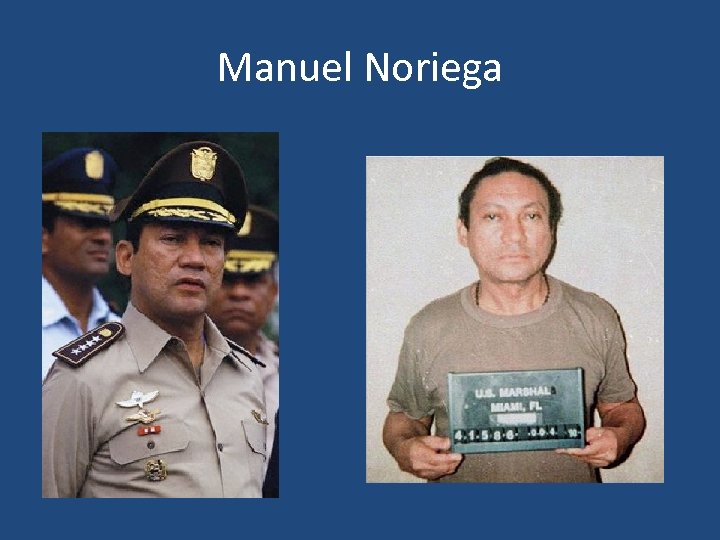 Manuel Noriega
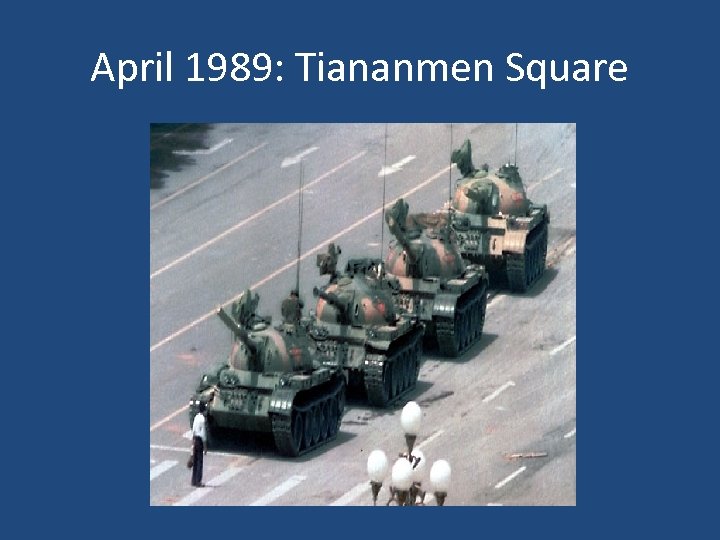 April 1989: Tiananmen Square
 Other Bush Era Conflicts The Persian Gulf War South Africa: New Freedom • Iraq’s Saddam Hussein invaded Kuwait in 1990. • F. W. de Klerk sought a gradual, orderly lifting of apartheid. • The attack shocked the United States—who depended on the region’s oil—and other Arab nations. • He released political prisoners, including Nelson Mandela. • Reports of atrocities by Iraqi troops surfaced. • The UN imposed sanctions but the deadline passed. • ON January 16, 1991, the U. S. led force attacked. • Operation Desert Storm was a successful, conventional war. • De Klerk and Mandela worked together to end apartheid. • A new constitution was written. • Nation’s first all-race elections were held in 1994. • Mandela and his African National Congress won. • De Klerk and Mandela won the Nobel Peace Prize in 1993.
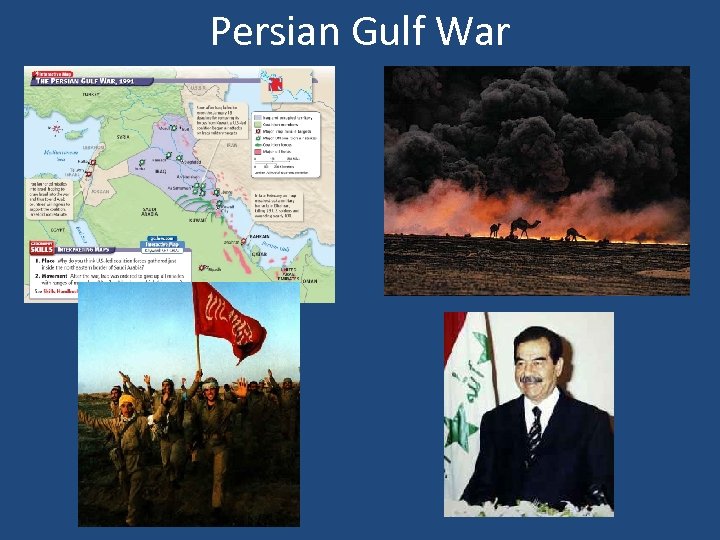 Persian Gulf War
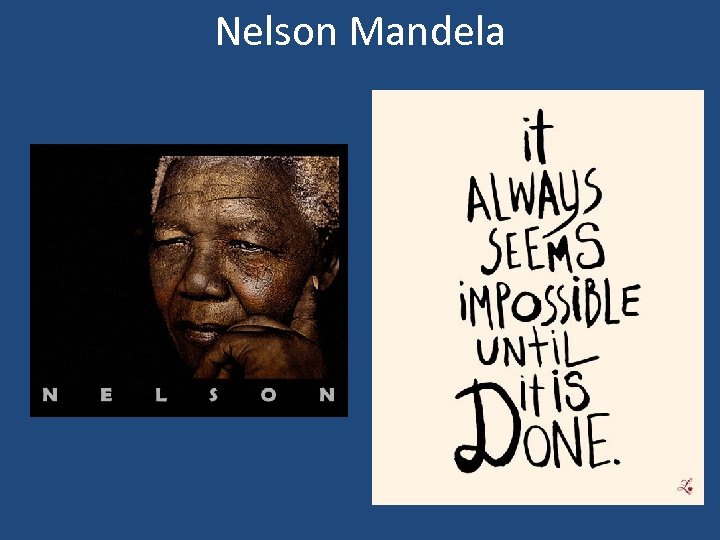 Nelson Mandela