


 Скачать презентацию Chapter 3 sensation and perception psychology fourth edition
PSIKOLOJI CH 3.ppt
- Количество слайдов: 88
 Chapter 3 sensation and perception psychology fourth edition Psychology, Fourth Edition Saundra K. Ciccarelli • J. Noland White Copyright © 2015, 2012, 2008 by Pearson Education, Inc. All rights reserved.
 Learning Objectives 3. 1 3. 2 3. 3 3. 4 3. 5 3. 6 3. 7 3. 8 3. 9 3. 10 3. 11 How does sensation travel through the central nervous system, and why are some sensations ignored? What is light, and how does it travel through the various parts of the eye? How do the eyes see, and how do the eyes see different colors? What is sound, and how does it travel through the various parts of the ear? Why are some people unable to hear, and how can their hearing be improved? How do the senses of taste and smell work, and how are they alike? What allows people to experience the sense of touch, pain, motion, and balance? What are perception and perceptual constancies? What are the Gestalt principles of perception? What is depth perception and what kind of cues are important for it to occur? What are visual illusions and how can they and other factors influence and alter perception? Psychology, Fourth Edition Saundra K. Ciccarelli • J. Noland White Copyright © 2015, 2012, 2008 by Pearson Education, Inc. All rights reserved.
 Sensation LO 3. 1 Sensation and How It Enters the Central Nervous System • Sensation: the activation of receptors in the various sense organs • Sensory receptors: specialized forms of neurons – Stimulated by different kids of energy rather than by neurotransmitters Psychology, Fourth Edition Saundra K. Ciccarelli • J. Noland White Copyright © 2015, 2012, 2008 by Pearson Education, Inc. All rights reserved.
 Sensation LO 3. 1 Sensation and How It Enters the Central Nervous System • Sense organs: – eyes – ears – nose – skin – taste buds • Transduction: turning outside stimuli into neural activity Psychology, Fourth Edition Saundra K. Ciccarelli • J. Noland White Copyright © 2015, 2012, 2008 by Pearson Education, Inc. All rights reserved.
 Sensory Thresholds LO 3. 1 Sensation and How It Enters the Central Nervous System • Just noticeable difference (jnd or the difference threshold): the smallest difference between 2 stimuli that is detectable 50 percent of the time • Absolute threshold: the smallest amount of energy needed for a person to consciously detect a stimulus 50 percent of the time it is present Psychology, Fourth Edition Saundra K. Ciccarelli • J. Noland White Copyright © 2015, 2012, 2008 by Pearson Education, Inc. All rights reserved.
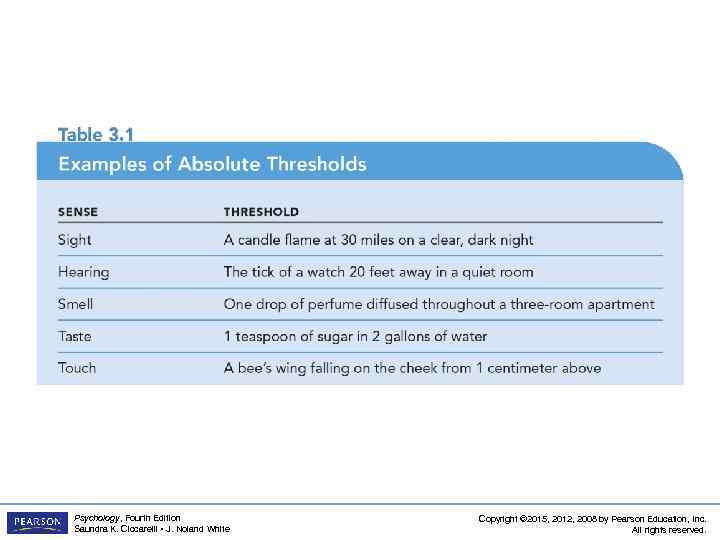 Psychology, Fourth Edition Saundra K. Ciccarelli • J. Noland White Copyright © 2015, 2012, 2008 by Pearson Education, Inc. All rights reserved.
 Subliminal Sensation LO 3. 1 Sensation and How It Enters the Central Nervous System • Subliminal stimuli: stimuli that are below the level of conscious awareness – just strong enough to activate the sensory receptors, but not strong enough for people to be consciously aware of them – limin: “threshold” – sublimin: “below the threshold” Psychology, Fourth Edition Saundra K. Ciccarelli • J. Noland White Copyright © 2015, 2012, 2008 by Pearson Education, Inc. All rights reserved.
 Subliminal Sensation LO 3. 1 Sensation and How It Enters the Central Nervous System • Subliminal perception: the process by which subliminal stimuli act upon the unconscious mind, influencing behavior Psychology, Fourth Edition Saundra K. Ciccarelli • J. Noland White Copyright © 2015, 2012, 2008 by Pearson Education, Inc. All rights reserved.
 Habituation and Sensory Adaptation LO 3. 1 Sensation and How It Enters the Central Nervous System • Habituation: the tendency of the brain to stop attending to constant, unchanging information • Sensory adaptation: the tendency of sensory receptor cells to become less responsive to a stimulus that is unchanging Psychology, Fourth Edition Saundra K. Ciccarelli • J. Noland White Copyright © 2015, 2012, 2008 by Pearson Education, Inc. All rights reserved.
 Habituation and Sensory Adaptation LO 3. 1 Sensation and How It Enters the Central Nervous System • Microsaccades: constant movement of the eyes; tiny little vibrations that people do notice consciously – prevent sensory adaptation to visual stimuli Psychology, Fourth Edition Saundra K. Ciccarelli • J. Noland White Copyright © 2015, 2012, 2008 by Pearson Education, Inc. All rights reserved.
 Perceptual Properties of Light LO 3. 2 What Is Light? • Brightness is determined by the amplitude of the wave—how high or how low the wave actually is – the higher the wave, the brighter the light will be – low waves are dimmer Psychology, Fourth Edition Saundra K. Ciccarelli • J. Noland White Copyright © 2015, 2012, 2008 by Pearson Education, Inc. All rights reserved.
 Perceptual Properties of Light LO 3. 2 What Is Light? • Color, or hue, is determined by the length of the wave – long wavelengths are found at the red end of the visible spectrum (the portion of the whole spectrum of light that is visible to the human eye) – shorter wavelengths are found at the blue end • Saturation: the purity of the color people see – mixing in black or gray would lessen the saturation Psychology, Fourth Edition Saundra K. Ciccarelli • J. Noland White Copyright © 2015, 2012, 2008 by Pearson Education, Inc. All rights reserved.
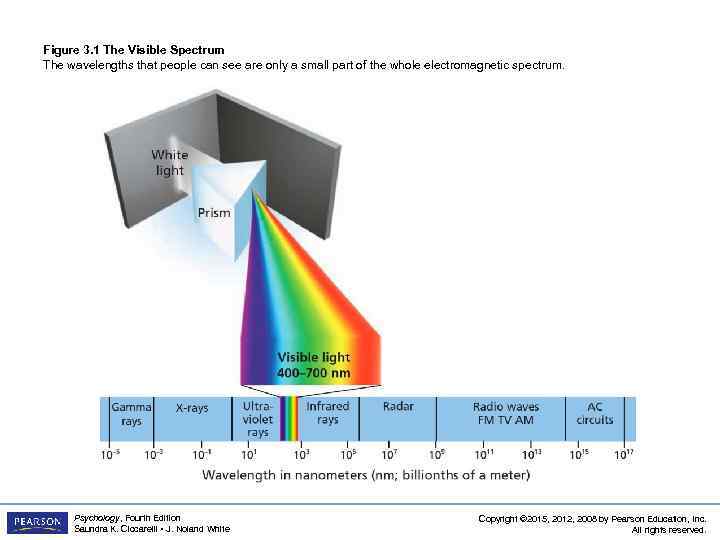 Figure 3. 1 The Visible Spectrum The wavelengths that people can see are only a small part of the whole electromagnetic spectrum. Psychology, Fourth Edition Saundra K. Ciccarelli • J. Noland White Copyright © 2015, 2012, 2008 by Pearson Education, Inc. All rights reserved.
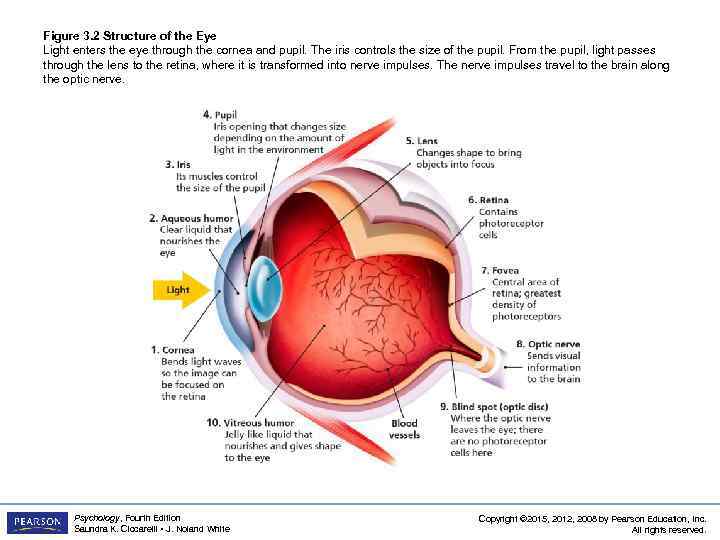 Figure 3. 2 Structure of the Eye Light enters the eye through the cornea and pupil. The iris controls the size of the pupil. From the pupil, light passes through the lens to the retina, where it is transformed into nerve impulses. The nerve impulses travel to the brain along the optic nerve. Psychology, Fourth Edition Saundra K. Ciccarelli • J. Noland White Copyright © 2015, 2012, 2008 by Pearson Education, Inc. All rights reserved.
 Structure of the Eye LO 3. 2 What Is Light? • Cornea: clear membrane that covers the surface of the eye – protects the eye – focuses most of the light coming into the eye – photoreactive keratectomy (PRK) and laserassisted in situ keratomileusis (LASIK): visionimproving techniques that make small incisions in the cornea to change the focus in the eye Psychology, Fourth Edition Saundra K. Ciccarelli • J. Noland White Copyright © 2015, 2012, 2008 by Pearson Education, Inc. All rights reserved.
 Structure of the Eye LO 3. 2 What Is Light? • Aqueous humor: visual layer below cornea – clear, watery fluid that is continually replenished – supplies nourishment to the eye • Pupil: hole through which light from the visual image enters the interior of the eye Psychology, Fourth Edition Saundra K. Ciccarelli • J. Noland White Copyright © 2015, 2012, 2008 by Pearson Education, Inc. All rights reserved.
 Structure of the Eye LO 3. 2 What Is Light? • Iris: round muscle (the colored part of the eye) in which the pupil is located – can change the size of the pupil, letting more or less light into the eye – helps focus the image • Lens: another clear structure behind the iris, suspended by muscles – finishes the focusing process begun by the cornea Psychology, Fourth Edition Saundra K. Ciccarelli • J. Noland White Copyright © 2015, 2012, 2008 by Pearson Education, Inc. All rights reserved.
 Structure of the Eye LO 3. 2 What Is Light? • Visual accommodation: the change in the thickness of the lens as the eye focuses on objects that are far away or close • Vitreous humor: jelly-like fluid that also nourishes the eye and gives it shape Psychology, Fourth Edition Saundra K. Ciccarelli • J. Noland White Copyright © 2015, 2012, 2008 by Pearson Education, Inc. All rights reserved.
 Structure of the Eye LO 3. 2 What Is Light? • Nearsightedness, or myopia – the shape of the eye causes the focal point to fall short of the retina • Farsightedness, or hyperopia – the focus point is behind the retina Psychology, Fourth Edition Saundra K. Ciccarelli • J. Noland White Copyright © 2015, 2012, 2008 by Pearson Education, Inc. All rights reserved.
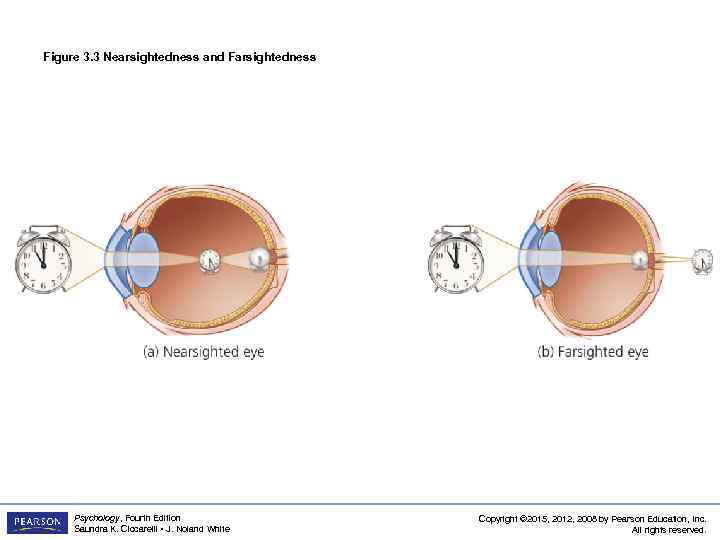 Figure 3. 3 Nearsightedness and Farsightedness Psychology, Fourth Edition Saundra K. Ciccarelli • J. Noland White Copyright © 2015, 2012, 2008 by Pearson Education, Inc. All rights reserved.
 Retina, Rods, and Cones LO 3. 2 What Is Light? • Retina: final stop for light in the eye – contains three layers: § ganglion cells § bipolar cells § photoreceptors that respond to various light waves Psychology, Fourth Edition Saundra K. Ciccarelli • J. Noland White Copyright © 2015, 2012, 2008 by Pearson Education, Inc. All rights reserved.
 Retina, Rods, and Cones LO 3. 2 What Is Light? • Rods: visual sensory receptors found at the back of the retina – responsible for noncolor sensitivity to low levels of light • Cones: visual sensory receptors found at the back of the retina – responsible for color vision and sharpness of vision Psychology, Fourth Edition Saundra K. Ciccarelli • J. Noland White Copyright © 2015, 2012, 2008 by Pearson Education, Inc. All rights reserved.
 Retina, Rods, and Cones LO 3. 2 What Is Light? • Blind spot: area in the retina where the axons of the three layers of retinal cells exit the eye to form the optic nerve; insensitive to light Psychology, Fourth Edition Saundra K. Ciccarelli • J. Noland White Copyright © 2015, 2012, 2008 by Pearson Education, Inc. All rights reserved.
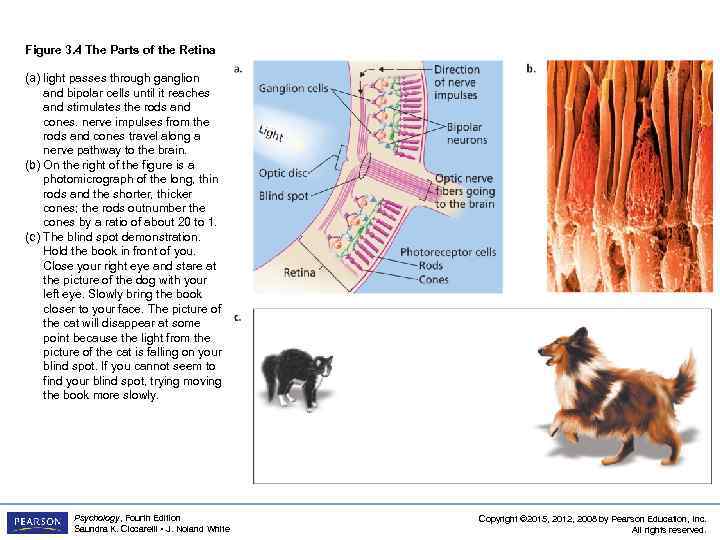 Figure 3. 4 The Parts of the Retina (a) light passes through ganglion and bipolar cells until it reaches and stimulates the rods and cones. nerve impulses from the rods and cones travel along a nerve pathway to the brain. (b) On the right of the figure is a photomicrograph of the long, thin rods and the shorter, thicker cones; the rods outnumber the cones by a ratio of about 20 to 1. (c) The blind spot demonstration. Hold the book in front of you. Close your right eye and stare at the picture of the dog with your left eye. Slowly bring the book closer to your face. The picture of the cat will disappear at some point because the light from the picture of the cat is falling on your blind spot. If you cannot seem to find your blind spot, trying moving the book more slowly. Psychology, Fourth Edition Saundra K. Ciccarelli • J. Noland White Copyright © 2015, 2012, 2008 by Pearson Education, Inc. All rights reserved.
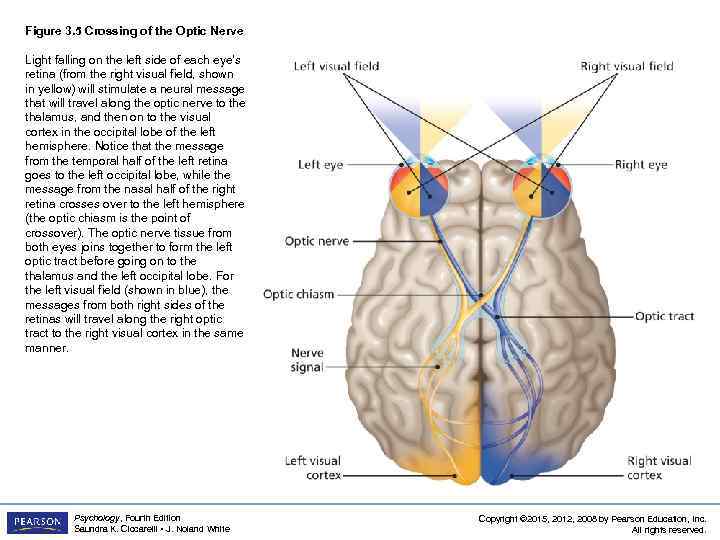 Figure 3. 5 Crossing of the Optic Nerve Light falling on the left side of each eye’s retina (from the right visual field, shown in yellow) will stimulate a neural message that will travel along the optic nerve to the thalamus, and then on to the visual cortex in the occipital lobe of the left hemisphere. Notice that the message from the temporal half of the left retina goes to the left occipital lobe, while the message from the nasal half of the right retina crosses over to the left hemisphere (the optic chiasm is the point of crossover). The optic nerve tissue from both eyes joins together to form the left optic tract before going on to the thalamus and the left occipital lobe. For the left visual field (shown in blue), the messages from both right sides of the retinas will travel along the right optic tract to the right visual cortex in the same manner. Psychology, Fourth Edition Saundra K. Ciccarelli • J. Noland White Copyright © 2015, 2012, 2008 by Pearson Education, Inc. All rights reserved.
 How the Eye Works LO 3. 3 How Eyes See and How Eyes See Color • Dark adaptation: the recovery of the eye’s sensitivity to visual stimuli in darkness after exposure to bright lights – night blindness • Light adaptation: the recovery of the eye’s sensitivity to visual stimuli in light after exposure to darkness Psychology, Fourth Edition Saundra K. Ciccarelli • J. Noland White Copyright © 2015, 2012, 2008 by Pearson Education, Inc. All rights reserved.
 Color Vision LO 3. 3 How Eyes See and How Eyes See Color • Trichromatic theory: theory of color vision that proposes three types of cones: red, blue, and green Psychology, Fourth Edition Saundra K. Ciccarelli • J. Noland White Copyright © 2015, 2012, 2008 by Pearson Education, Inc. All rights reserved.
 Color Vision LO 3. 3 How Eyes See and How Eyes See Color • Opponent-process theory: theory of color vision that proposes four primary colors with cones arranged in pairs: red and green, blue and yellow – afterimages: images that occur when a visual sensation persists for a brief time even after the original stimulus is removed – lateral geniculate nucleus (LGN) of thalamus Psychology, Fourth Edition Saundra K. Ciccarelli • J. Noland White Copyright © 2015, 2012, 2008 by Pearson Education, Inc. All rights reserved.
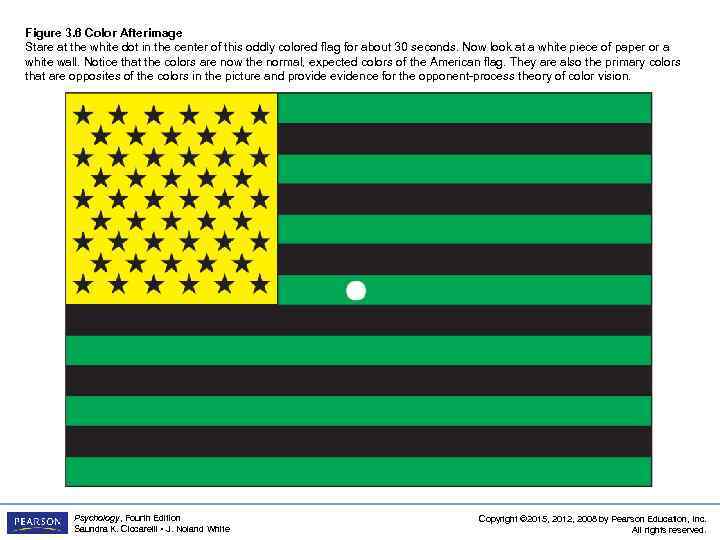 Figure 3. 6 Color Afterimage Stare at the white dot in the center of this oddly colored flag for about 30 seconds. Now look at a white piece of paper or a white wall. Notice that the colors are now the normal, expected colors of the American flag. They are also the primary colors that are opposites of the colors in the picture and provide evidence for the opponent-process theory of color vision. Psychology, Fourth Edition Saundra K. Ciccarelli • J. Noland White Copyright © 2015, 2012, 2008 by Pearson Education, Inc. All rights reserved.
 Color Blindness LO How Eyes See and How Eyes See Color • Monochrome colorblindness: a condition in which a person’s eyes either have no cones or have cones that are not working at all • Red-green colorblindness: either the red or the green cones are not working Psychology, Fourth Edition Saundra K. Ciccarelli • J. Noland White Copyright © 2015, 2012, 2008 by Pearson Education, Inc. All rights reserved.
 Color Blindness LO 3. 3 How Eyes See and How Eyes See Color • Sex-linked inheritance – gene for color-deficient vision is recessive Psychology, Fourth Edition Saundra K. Ciccarelli • J. Noland White Copyright © 2015, 2012, 2008 by Pearson Education, Inc. All rights reserved.
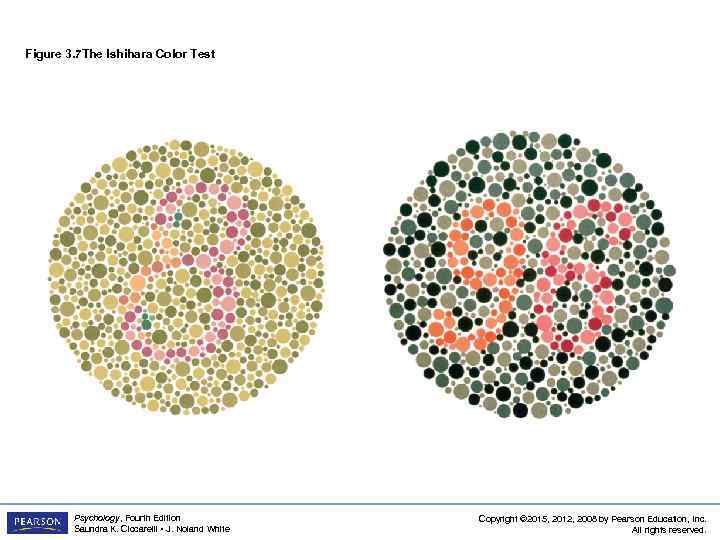 Figure 3. 7 The Ishihara Color Test Psychology, Fourth Edition Saundra K. Ciccarelli • J. Noland White Copyright © 2015, 2012, 2008 by Pearson Education, Inc. All rights reserved.
 Sound LO 3. 4 What Is Sound? • Wavelength: interpreted as frequency or pitch (high, medium, or low) • Amplitude: interpreted as volume (how soft or loud a sound is) • Purity: interpreted as timbre (a richness in the tone of the sound) • Hertz (Hz): cycles or waves per second, a measurement of frequency Psychology, Fourth Edition Saundra K. Ciccarelli • J. Noland White Copyright © 2015, 2012, 2008 by Pearson Education, Inc. All rights reserved.
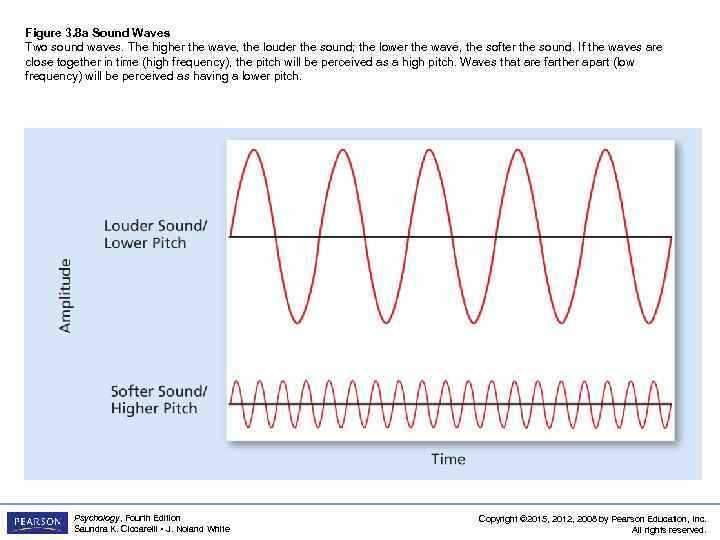 Figure 3. 8 a Sound Waves Two sound waves. The higher the wave, the louder the sound; the lower the wave, the softer the sound. If the waves are close together in time (high frequency), the pitch will be perceived as a high pitch. Waves that are farther apart (low frequency) will be perceived as having a lower pitch. Psychology, Fourth Edition Saundra K. Ciccarelli • J. Noland White Copyright © 2015, 2012, 2008 by Pearson Education, Inc. All rights reserved.
 Structure of the Ear LO 3. 4 What Is Sound? • Auditory canal: short tunnel that runs from the pinna to the eardrum (tympanic membrane) Psychology, Fourth Edition Saundra K. Ciccarelli • J. Noland White Copyright © 2015, 2012, 2008 by Pearson Education, Inc. All rights reserved.
 Structure of the Ear LO 3. 4 What Is Sound? • Eardrum: thin section of skin that tightly covers the opening into the middle part of the ear – when sound waves hit the eardrum, it vibrates and causes three tiny bones in the middle ear to vibrate § hammer § anvil § stirrup Psychology, Fourth Edition Saundra K. Ciccarelli • J. Noland White Copyright © 2015, 2012, 2008 by Pearson Education, Inc. All rights reserved.
 Structure of the Ear LO 3. 4 What Is Sound • Cochlea: snail-shaped structure of the inner ear that is filled with fluid • Organ of Corti: rests in the basilar membrane – contains receptor cells for sense of hearing • Auditory nerve: bundle of axons from the hair cells in the inner ear – receives neural message from the organ of Corti Psychology, Fourth Edition Saundra K. Ciccarelli • J. Noland White Copyright © 2015, 2012, 2008 by Pearson Education, Inc. All rights reserved.
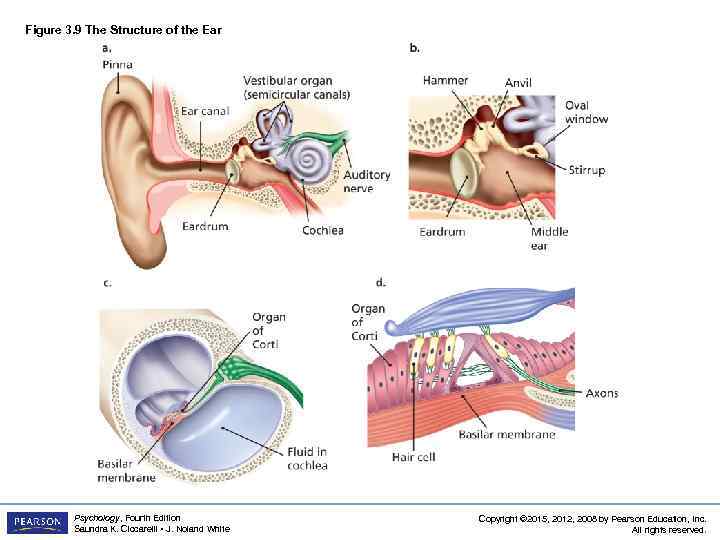 Figure 3. 9 The Structure of the Ear Psychology, Fourth Edition Saundra K. Ciccarelli • J. Noland White Copyright © 2015, 2012, 2008 by Pearson Education, Inc. All rights reserved.
 Theories of Pitch LO 3. 4 What Is Sound? • Pitch: psychological experience of sound that corresponds to the frequency of the sound waves – higher frequencies are perceived as higher pitches • Place theory: theory of pitch that states that different pitches are experienced by the stimulation of hair cells in different locations on the organ of Corti Psychology, Fourth Edition Saundra K. Ciccarelli • J. Noland White Copyright © 2015, 2012, 2008 by Pearson Education, Inc. All rights reserved.
 Theories of Pitch LO 3. 4 What Is Sound? • Frequency theory: theory of pitch that states that pitch is related to the speed of vibrations in the basilar membrane Psychology, Fourth Edition Saundra K. Ciccarelli • J. Noland White Copyright © 2015, 2012, 2008 by Pearson Education, Inc. All rights reserved.
 Theories of Pitch LO 3. 4 What Is Sound? • Volley principle: theory of pitch that states that frequencies from about 400 Hz up to about 4000 Hz cause the hair cells (auditory neurons) to fire in a volley pattern, or take turns in firing Psychology, Fourth Edition Saundra K. Ciccarelli • J. Noland White Copyright © 2015, 2012, 2008 by Pearson Education, Inc. All rights reserved.
 Types of Hearing Impairments LO 3. 5 Hearing Impairment and Improvement • Conduction hearing impairment can result from: – damaged eardrum: would prevent sound waves from being carried into the middle ear properly – damage to the bones of the middle ear: sounds cannot be conducted from the eardrum to the cochlea Psychology, Fourth Edition Saundra K. Ciccarelli • J. Noland White Copyright © 2015, 2012, 2008 by Pearson Education, Inc. All rights reserved.
 Types of Hearing Impairments LO 3. 5 Hearing Impairment and Improvement • Nerve hearing impairment can result from: – damage in the inner ear – damage in the auditory pathways and cortical areas of the brain Psychology, Fourth Edition Saundra K. Ciccarelli • J. Noland White Copyright © 2015, 2012, 2008 by Pearson Education, Inc. All rights reserved.
 Surgery to Help Restore Hearing LO 3. 5 Hearing Impairment and Improvement • Cochlear implant: a microphone implanted just behind the ear that picks up sound from the surrounding environment – speech processor selects and arranges the sound picked up by the microphone – implant is a transmitter and receiver, converting signals into electrical impulses • Collected by the electrode array in the cochlea and then sent to the brain Psychology, Fourth Edition Saundra K. Ciccarelli • J. Noland White Copyright © 2015, 2012, 2008 by Pearson Education, Inc. All rights reserved.
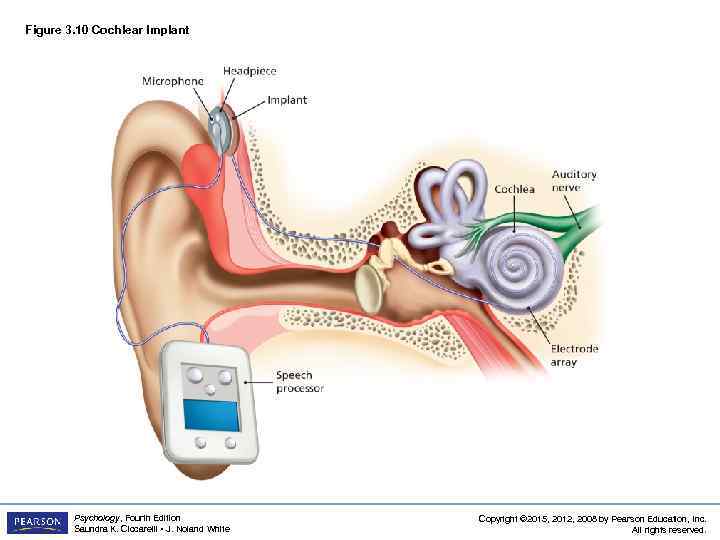 Figure 3. 10 Cochlear Implant Psychology, Fourth Edition Saundra K. Ciccarelli • J. Noland White Copyright © 2015, 2012, 2008 by Pearson Education, Inc. All rights reserved.
 Taste LO 3. 6 How Senses of Taste and Smell Work • Taste buds – taste receptor cells in mouth; responsible for sense of taste • Gustation – the sensation of a taste Psychology, Fourth Edition Saundra K. Ciccarelli • J. Noland White Copyright © 2015, 2012, 2008 by Pearson Education, Inc. All rights reserved.
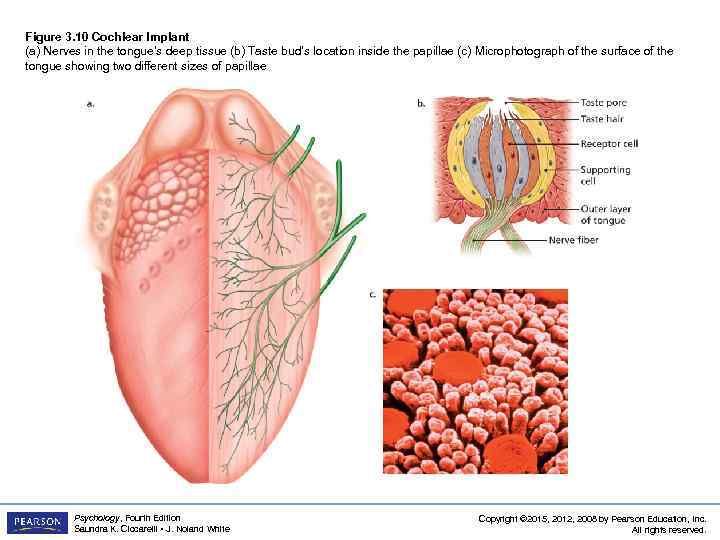 Figure 3. 10 Cochlear Implant (a) Nerves in the tongue’s deep tissue (b) Taste bud’s location inside the papillae (c) Microphotograph of the surface of the tongue showing two different sizes of papillae Psychology, Fourth Edition Saundra K. Ciccarelli • J. Noland White Copyright © 2015, 2012, 2008 by Pearson Education, Inc. All rights reserved.
 Taste LO 3. 6 How Senses of Taste and Smell Work • Five basic tastes – sweet – sour – salty – bitter – “brothy, ” or umami Psychology, Fourth Edition Saundra K. Ciccarelli • J. Noland White Copyright © 2015, 2012, 2008 by Pearson Education, Inc. All rights reserved.
 Smell LO 3. 6 How Senses of Taste and Smell Work • Olfaction (olfactory sense) – sense of smell • Olfactory bulbs – areas of the brain located just above the sinus cavity and just below the frontal lobes that receive information from the olfactory receptor cells • At least 1, 000 olfactory receptors Psychology, Fourth Edition Saundra K. Ciccarelli • J. Noland White Copyright © 2015, 2012, 2008 by Pearson Education, Inc. All rights reserved.
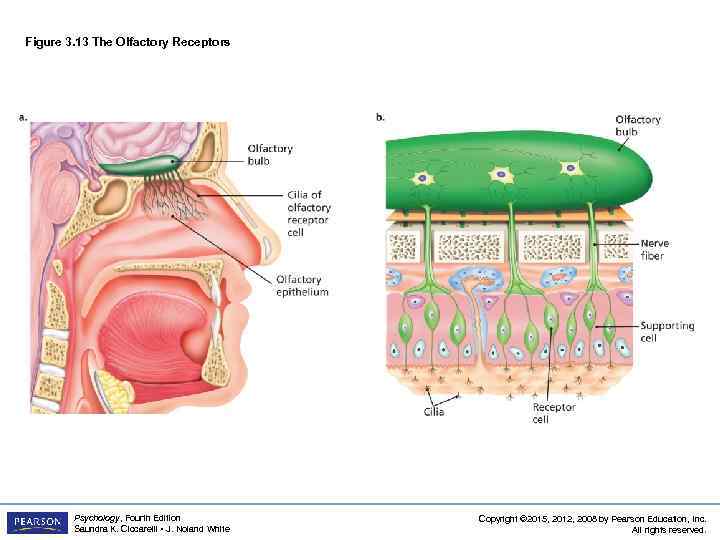 Figure 3. 13 The Olfactory Receptors Psychology, Fourth Edition Saundra K. Ciccarelli • J. Noland White Copyright © 2015, 2012, 2008 by Pearson Education, Inc. All rights reserved.
 Somesthetic Senses LO 3. 7 Sense of Touch, Pain, Motion, and Balance • Somesthetic senses: the body senses consisting of the skin senses, the kinesthetic sense, and the vestibular senses – “soma”: body – “esthetic”: feeling Psychology, Fourth Edition Saundra K. Ciccarelli • J. Noland White Copyright © 2015, 2012, 2008 by Pearson Education, Inc. All rights reserved.
 Somesthetic Senses LO 3. 7 Sense of Touch, Pain, Motion, and Balance • Skin senses: the sensations of touch, pressure, temperature, and pain – sensory receptors in the skin – gate-control theory: pain signals must pass through a “gate” located in the spinal cord Psychology, Fourth Edition Saundra K. Ciccarelli • J. Noland White Copyright © 2015, 2012, 2008 by Pearson Education, Inc. All rights reserved.
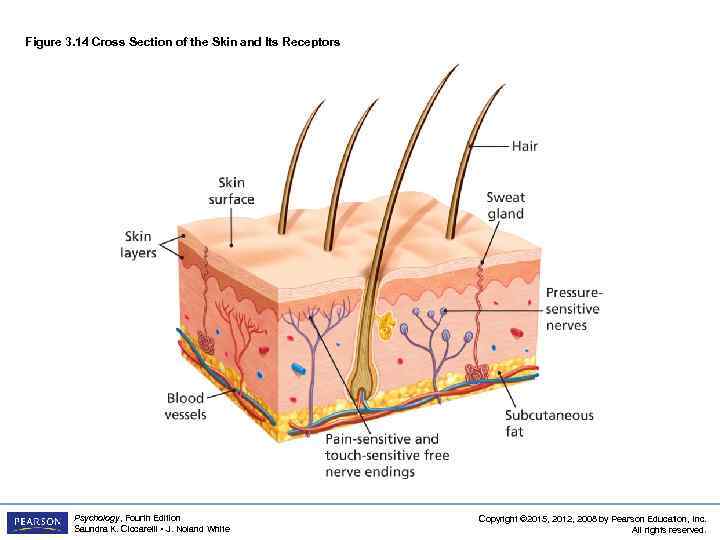 Figure 3. 14 Cross Section of the Skin and Its Receptors Psychology, Fourth Edition Saundra K. Ciccarelli • J. Noland White Copyright © 2015, 2012, 2008 by Pearson Education, Inc. All rights reserved.
 Somesthetic Senses LO 3. 7 Sense of Touch, Pain, Motion, and Balance • Kinesthetic sense: sense of the location of body parts in relation to the ground and each other – proprioceptive receptors (proprioceptors) Psychology, Fourth Edition Saundra K. Ciccarelli • J. Noland White Copyright © 2015, 2012, 2008 by Pearson Education, Inc. All rights reserved.
 Somesthetic Senses LO 3. 7 Sense of Touch, Pain, Motion, and Balance • Vestibular senses: the sensations of movement, balance, and body position • Sensory conflict theory: an explanation of motion sickness in which the information from the eyes conflicts with the information from the vestibular senses – results in dizziness, nausea, and other physical discomforts Psychology, Fourth Edition Saundra K. Ciccarelli • J. Noland White Copyright © 2015, 2012, 2008 by Pearson Education, Inc. All rights reserved.
 Perception and Constancies LO 3. 8 Perception and Perceptual Constancies • Perception – the method by which the sensations experienced at any given moment are interpreted and organized in some meaningful fashion • Size constancy – the tendency to interpret an object as always being the same actual size, regardless of its distance Psychology, Fourth Edition Saundra K. Ciccarelli • J. Noland White Copyright © 2015, 2012, 2008 by Pearson Education, Inc. All rights reserved.
 Perception and Constancies LO 3. 8 Perception and Perceptual Constancies • Shape constancy – the tendency to interpret the shape of an object as being constant, even when its shape changes on the retina • Brightness constancy – the tendency to perceive the apparent brightness of an object as the same even when the light conditions change Psychology, Fourth Edition Saundra K. Ciccarelli • J. Noland White Copyright © 2015, 2012, 2008 by Pearson Education, Inc. All rights reserved.
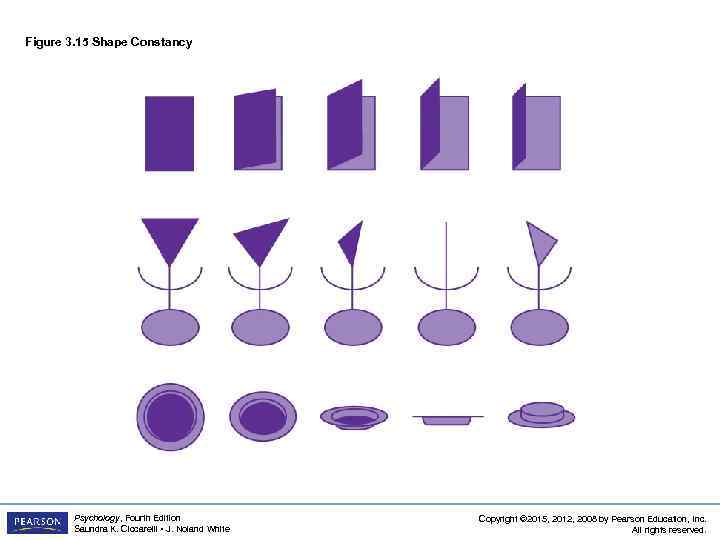 Figure 3. 15 Shape Constancy Psychology, Fourth Edition Saundra K. Ciccarelli • J. Noland White Copyright © 2015, 2012, 2008 by Pearson Education, Inc. All rights reserved.
 Gestalt Principles LO 3. 9 Gestalt Principles of Perception • Figure–ground – the tendency to perceive objects, or figures, as existing on a background • Reversible figures – visual illusions in which the figure and ground can be reversed Psychology, Fourth Edition Saundra K. Ciccarelli • J. Noland White Copyright © 2015, 2012, 2008 by Pearson Education, Inc. All rights reserved.
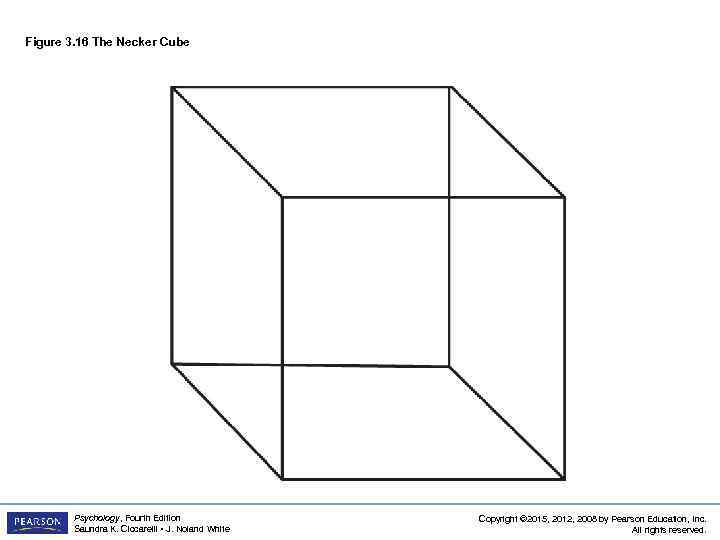 Figure 3. 16 The Necker Cube Psychology, Fourth Edition Saundra K. Ciccarelli • J. Noland White Copyright © 2015, 2012, 2008 by Pearson Education, Inc. All rights reserved.
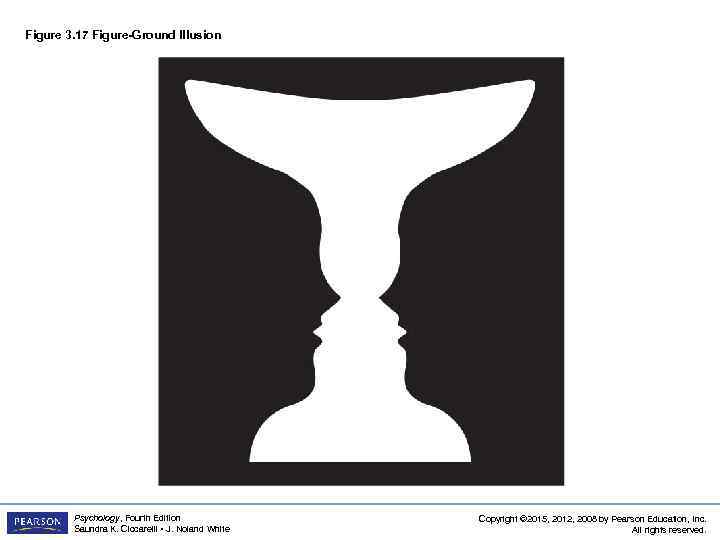 Figure 3. 17 Figure-Ground Illusion Psychology, Fourth Edition Saundra K. Ciccarelli • J. Noland White Copyright © 2015, 2012, 2008 by Pearson Education, Inc. All rights reserved.
 Gestalt Principles LO 3. 9 Gestalt Principles of Perception • Proximity – tendency to perceive objects that are close to each other as part of the same grouping • Similarity – tendency to perceive things that look similar to each other as being part of the same group Psychology, Fourth Edition Saundra K. Ciccarelli • J. Noland White Copyright © 2015, 2012, 2008 by Pearson Education, Inc. All rights reserved.
 Gestalt Principles LO 3. 9 Gestalt Principles of Perception • Closure – tendency to complete figures that are incomplete • Continuity – tendency to perceive things as simply as possible with a continuous pattern rather than with a complex, broken-up pattern Psychology, Fourth Edition Saundra K. Ciccarelli • J. Noland White Copyright © 2015, 2012, 2008 by Pearson Education, Inc. All rights reserved.
 Gestalt Principles LO 3. 9 Gestalt Principles of Perception • Contiguity – tendency to perceive two things that happen close together in time as being related Psychology, Fourth Edition Saundra K. Ciccarelli • J. Noland White Copyright © 2015, 2012, 2008 by Pearson Education, Inc. All rights reserved.
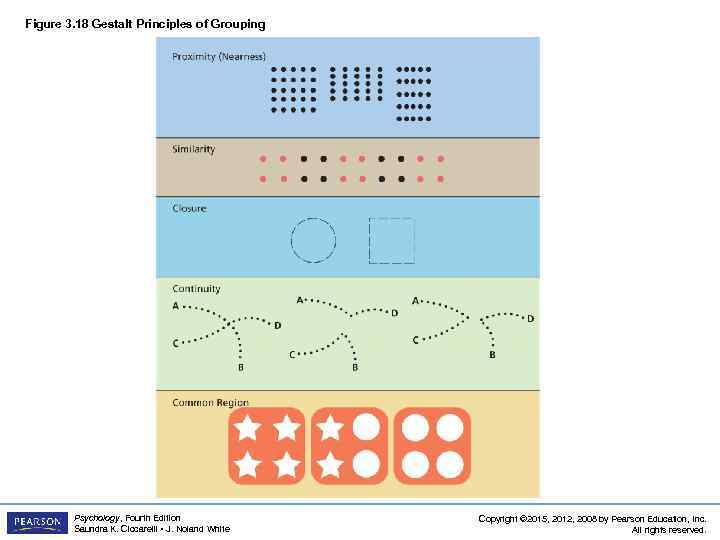 Figure 3. 18 Gestalt Principles of Grouping Psychology, Fourth Edition Saundra K. Ciccarelli • J. Noland White Copyright © 2015, 2012, 2008 by Pearson Education, Inc. All rights reserved.
 Development of Perception LO 3. 10 What Is Depth Perception? • Depth perception: the ability to perceive the world in three dimensions Psychology, Fourth Edition Saundra K. Ciccarelli • J. Noland White Copyright © 2015, 2012, 2008 by Pearson Education, Inc. All rights reserved.
 Monocular Cues LO 3. 10 What Is Depth Perception? • Monocular cues (pictorial depth cues): cues for perceiving depth based on one eye only – linear perspective: the tendency for parallel lines to appear to converge on each other – relative size: perception that occurs when objects that a person expects to be of a certain size appear to be small and are, therefore, assumed to be much farther away Psychology, Fourth Edition Saundra K. Ciccarelli • J. Noland White Copyright © 2015, 2012, 2008 by Pearson Education, Inc. All rights reserved.
 Monocular Cues LO 3. 10 What Is Depth Perception? • Monocular Cues (cont’d) – overlap: the assumption that an object that appears to be blocking part of another object is in front of the second object and closer to the viewer Psychology, Fourth Edition Saundra K. Ciccarelli • J. Noland White Copyright © 2015, 2012, 2008 by Pearson Education, Inc. All rights reserved.
 Monocular Cues LO 3. 10 What Is Depth Perception? • Monocular Cues (cont’d) – aerial (atmospheric) perspective: the haziness that surrounds objects that are farther away from the viewer, causing the distance to be perceived as greater – texture gradient: the tendency for textured surfaces to appear to become smaller and finer as distance from the viewer increases Psychology, Fourth Edition Saundra K. Ciccarelli • J. Noland White Copyright © 2015, 2012, 2008 by Pearson Education, Inc. All rights reserved.
 Monocular Cues LO 3. 10 What Is Depth Perception? • Monocular Cues (cont’d) – motion parallax: the perception of motion of objects in which close objects appear to move more quickly than objects that are farther away – accommodation: as a monocular clue, the brain’s use of information about the changing thickness of the lens of the eye in response to looking at objects that are close or far away Psychology, Fourth Edition Saundra K. Ciccarelli • J. Noland White Copyright © 2015, 2012, 2008 by Pearson Education, Inc. All rights reserved.
 Figure 3. 19 Examples of Pictorial Depth Cues (a) Linear perspective, (b) texture gradient, (c) aerial or atmospheric perspective, (d) relative size Psychology, Fourth Edition Saundra K. Ciccarelli • J. Noland White Copyright © 2015, 2012, 2008 by Pearson Education, Inc. All rights reserved.
 Binocular Cues LO 3. 10 What Is Depth Perception? • Binocular cues: cues for perceiving depth based on both eyes – convergence: the rotation of the two eyes in their sockets to focus on a single object, resulting in greater convergence for closer objects and lesser convergence if objects are distant Psychology, Fourth Edition Saundra K. Ciccarelli • J. Noland White Copyright © 2015, 2012, 2008 by Pearson Education, Inc. All rights reserved.
 Binocular Cues LO 3. 10 What Is Depth Perception? • Binocular Cues (cont’d) – binocular disparity: the difference in images between the two eyes, which is greater for objects that are close and smaller for distant objects Psychology, Fourth Edition Saundra K. Ciccarelli • J. Noland White Copyright © 2015, 2012, 2008 by Pearson Education, Inc. All rights reserved.
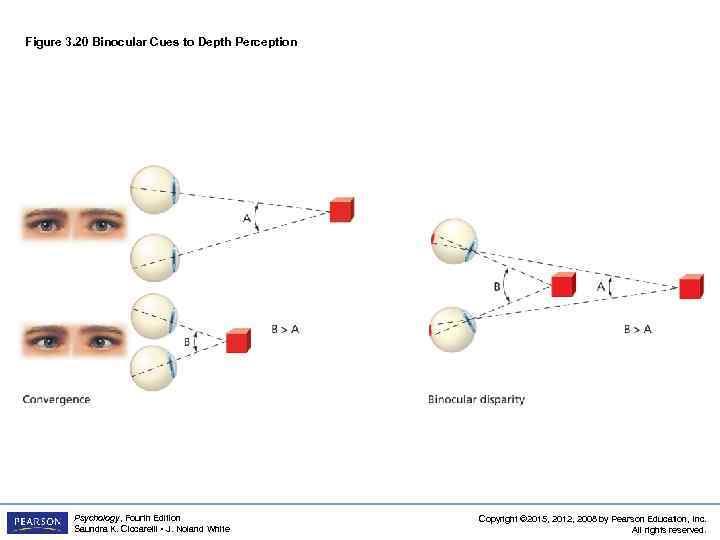 Figure 3. 20 Binocular Cues to Depth Perception Psychology, Fourth Edition Saundra K. Ciccarelli • J. Noland White Copyright © 2015, 2012, 2008 by Pearson Education, Inc. All rights reserved.
 Perceptual Illusions LO 3. 11 How Visual Illusions and Other Factors Influence Perception • Hermann grid: is possibly due to the response of the primary visual cortex • Müller-Lyer illusion: illusion of line length that is distorted by inward-turning or outward-turning corners on the ends of the lines, causing lines of equal length to appear to be different Psychology, Fourth Edition Saundra K. Ciccarelli • J. Noland White Copyright © 2015, 2012, 2008 by Pearson Education, Inc. All rights reserved.
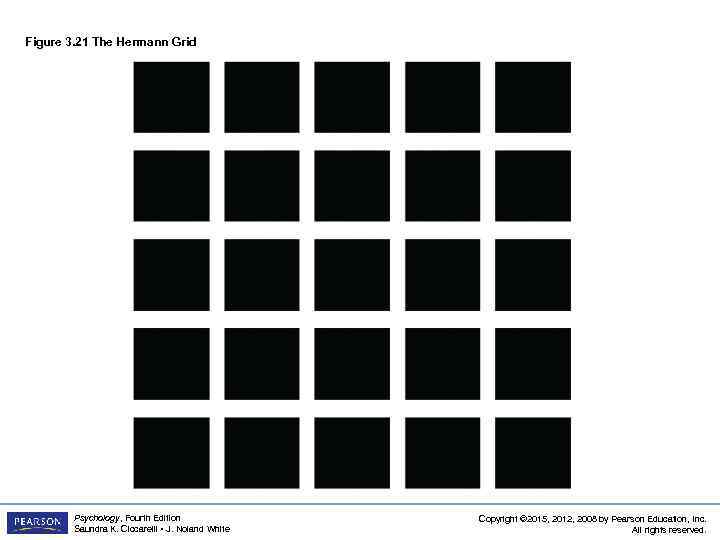 Figure 3. 21 The Hermann Grid Psychology, Fourth Edition Saundra K. Ciccarelli • J. Noland White Copyright © 2015, 2012, 2008 by Pearson Education, Inc. All rights reserved.
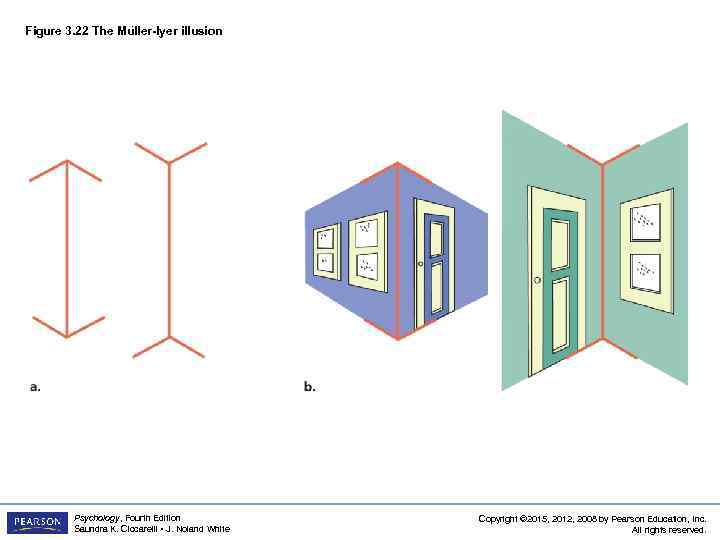 Figure 3. 22 The Mu ller-lyer illusion Psychology, Fourth Edition Saundra K. Ciccarelli • J. Noland White Copyright © 2015, 2012, 2008 by Pearson Education, Inc. All rights reserved.
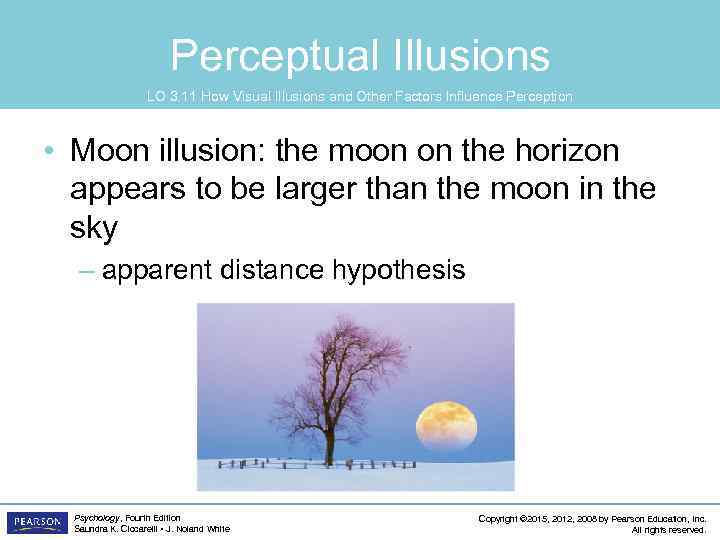 Perceptual Illusions LO 3. 11 How Visual Illusions and Other Factors Influence Perception • Moon illusion: the moon on the horizon appears to be larger than the moon in the sky – apparent distance hypothesis Psychology, Fourth Edition Saundra K. Ciccarelli • J. Noland White Copyright © 2015, 2012, 2008 by Pearson Education, Inc. All rights reserved.
 Perceptual Illusions LO 3. 11 How Visual Illusions and Other Factors Influence Perception • Illusions of motion – autokinetic effect: a small, stationary light in a darkened room will appear to move or drift because there are no surrounding cues to indicate that the light is not moving – stroboscopic motion: seen in motion pictures, in which a rapid series of still pictures will appear to be in motion Psychology, Fourth Edition Saundra K. Ciccarelli • J. Noland White Copyright © 2015, 2012, 2008 by Pearson Education, Inc. All rights reserved.
 Perceptual Illusions LO 3. 11 How Visual Illusions and Other Factors Influence Perception • Illusions of motion – phi phenomenon: lights turned on in a sequence appear to move – rotating snakes: due in part to eye movements – The Enigma: due in part to microsaccades Psychology, Fourth Edition Saundra K. Ciccarelli • J. Noland White Copyright © 2015, 2012, 2008 by Pearson Education, Inc. All rights reserved.
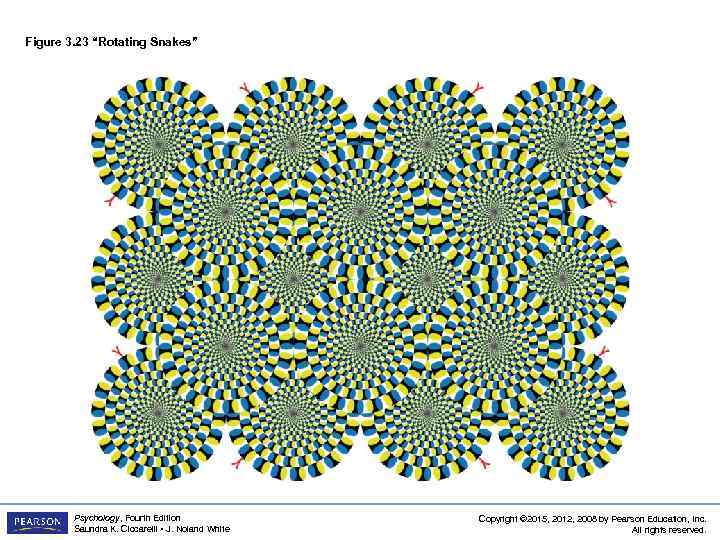 Figure 3. 23 “Rotating Snakes” Psychology, Fourth Edition Saundra K. Ciccarelli • J. Noland White Copyright © 2015, 2012, 2008 by Pearson Education, Inc. All rights reserved.
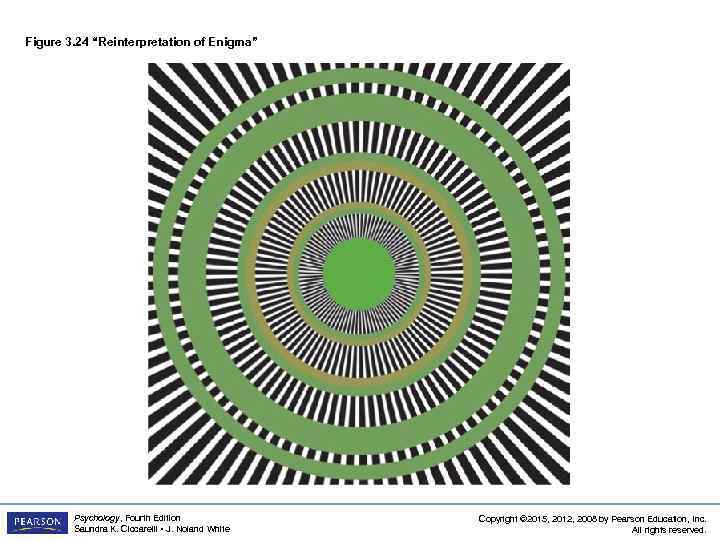 Figure 3. 24 “Reinterpretation of Enigma” Psychology, Fourth Edition Saundra K. Ciccarelli • J. Noland White Copyright © 2015, 2012, 2008 by Pearson Education, Inc. All rights reserved.
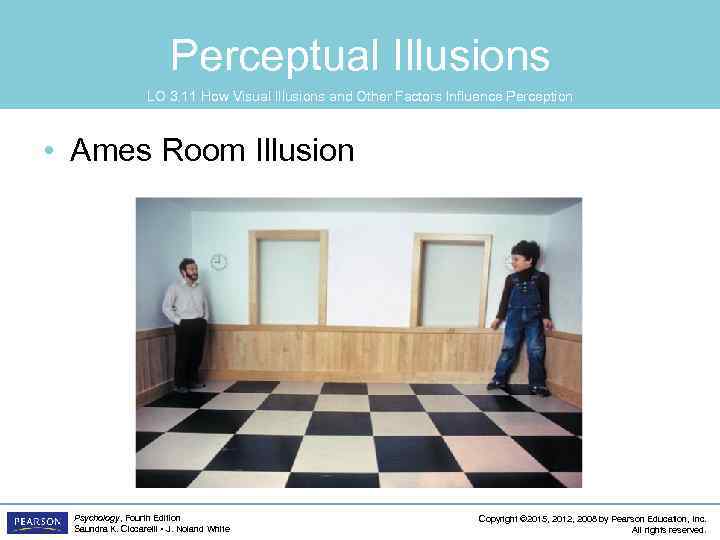 Perceptual Illusions LO 3. 11 How Visual Illusions and Other Factors Influence Perception • Ames Room Illusion Psychology, Fourth Edition Saundra K. Ciccarelli • J. Noland White Copyright © 2015, 2012, 2008 by Pearson Education, Inc. All rights reserved.
 Factors that Influence Perception LO 3. 11 How Visual Illusions and Other Factors Influence Perception • Perceptual set (perceptual expectancy): the tendency to perceive things a certain way because previous experiences or expectations influence those perceptions • Top-down processing: the use of preexisting knowledge to organize individual features into a unified whole Psychology, Fourth Edition Saundra K. Ciccarelli • J. Noland White Copyright © 2015, 2012, 2008 by Pearson Education, Inc. All rights reserved.
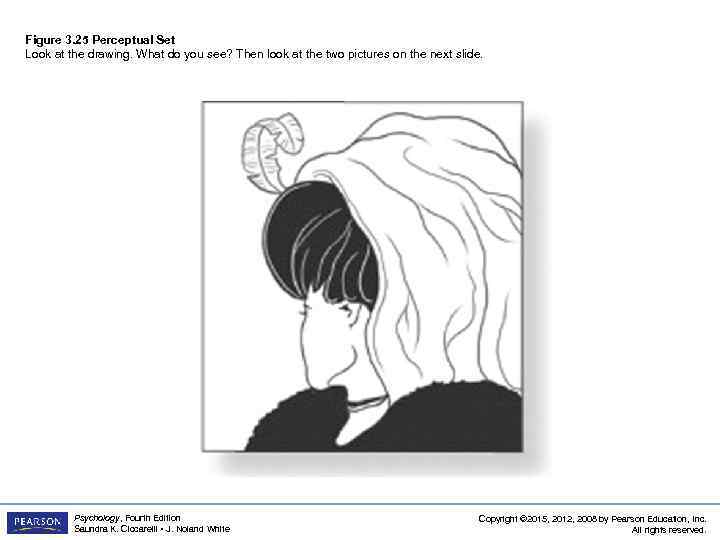 Figure 3. 25 Perceptual Set Look at the drawing. What do you see? Then look at the two pictures on the next slide. Psychology, Fourth Edition Saundra K. Ciccarelli • J. Noland White Copyright © 2015, 2012, 2008 by Pearson Education, Inc. All rights reserved.
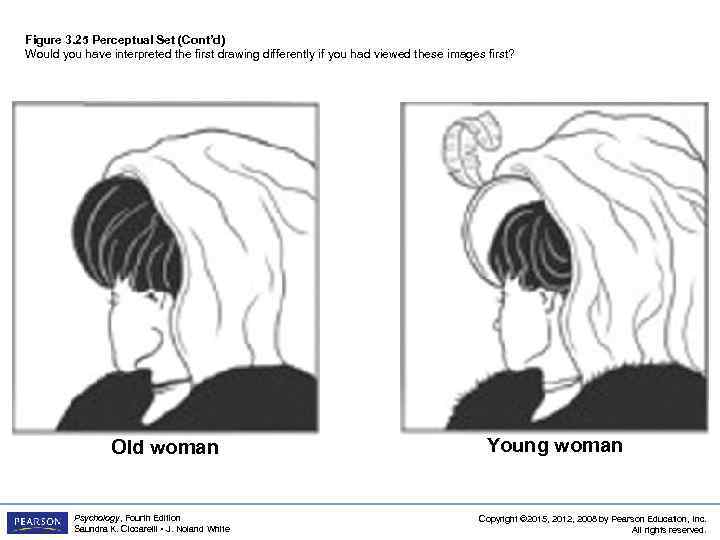 Figure 3. 25 Perceptual Set (Cont’d) Would you have interpreted the first drawing differently if you had viewed these images first? Old woman Psychology, Fourth Edition Saundra K. Ciccarelli • J. Noland White Young woman Copyright © 2015, 2012, 2008 by Pearson Education, Inc. All rights reserved.
 Factors that Influence Perception LO 3. 11 How Visual Illusions and Other Factors Influence Perception • Bottom-up processing: the analysis of the smaller features to build up to a complete perception Psychology, Fourth Edition Saundra K. Ciccarelli • J. Noland White Copyright © 2015, 2012, 2008 by Pearson Education, Inc. All rights reserved.
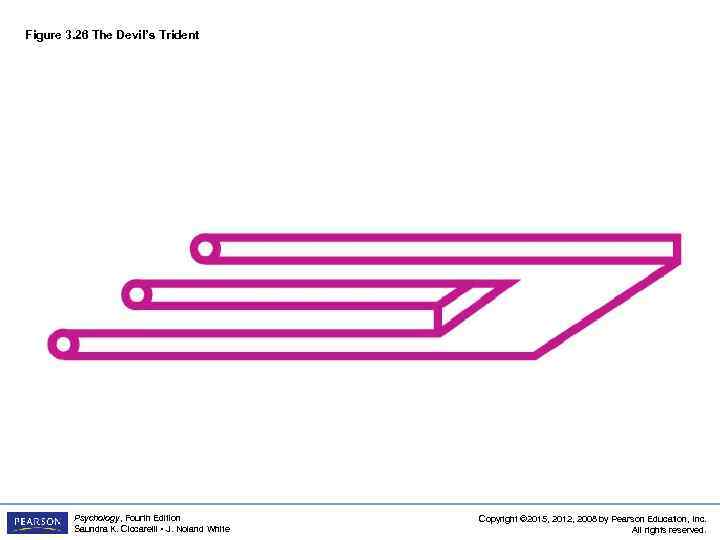 Figure 3. 26 The Devil’s Trident Psychology, Fourth Edition Saundra K. Ciccarelli • J. Noland White Copyright © 2015, 2012, 2008 by Pearson Education, Inc. All rights reserved.