Скачать презентацию Chapter 27 Cold War America Note only
d46a6b6ba7aec400d41f2f2bfda22788.ppt
- Количество слайдов: 95
 Chapter 27 Cold War America *****Note – only print out up to slide 70 (I. D) rest will be done by Monday afternoon*******
 Chapter 28 Reading Questions 1. Explain the record of American prosperity during the 2 decades following WWII. 2. What were the roles of cities and suburbs in American Society? 3. Evaluate JFK’s New Frontier platform? 4. How did LBJ’s Great Society program attempt to fulfill modern liberals’ agenda for reform?
 Results of WWII - Recap • • New Technology United Nations (UN) Nuremburg Trials Jewish refugees, creation of Jewish State in Middle East – Israel • Cold War
![The Cold War [1945 -1991]: An Ideological Struggle Soviet & Eastern Bloc Nations [“Iron](https://present5.com/presentation/d46a6b6ba7aec400d41f2f2bfda22788/image-4.jpg "The Cold War [1945 -1991]: An Ideological Struggle Soviet & Eastern Bloc Nations [“Iron") The Cold War [1945 -1991]: An Ideological Struggle Soviet & Eastern Bloc Nations [“Iron Curtain”] US & the Western Democracies GOAL “Containment” of GOAL spread Communism & the world-wide eventual collapse of Communism METHODOLOGIES: Communist world. the [George Kennan] 1. Espionage [KGB vs. CIA] 2. Arms Race [nuclear escalation] 3. Ideological Competition for the minds and hearts of Third World peoples [Communist govt. & command economy vs. democratic govt. & capitalist economy] “proxy wars” 4. Bi-Polarization of Europe [NATO vs. Warsaw Pact]
The Cold War [1945 -1991]: An Ideological Struggle Soviet & Eastern Bloc Nations [“Iron Curtain”] US & the Western Democracies GOAL “Containment” of GOAL spread Communism & the world-wide eventual collapse of Communism METHODOLOGIES: Communist world. the [George Kennan] 1. Espionage [KGB vs. CIA] 2. Arms Race [nuclear escalation] 3. Ideological Competition for the minds and hearts of Third World peoples [Communist govt. & command economy vs. democratic govt. & capitalist economy] “proxy wars” 4. Bi-Polarization of Europe [NATO vs. Warsaw Pact]
 I. A. The Cold War Abroad Descent into the Cold War • Instability as result of WWII – U. S. and Soviet Union wrestle for influence over areas, will engage in a protracted ideological, political, military and economic struggle for next 45 years • Known as the “Cold War”
 I. A. The Cold War Abroad Descent into the Cold War • United Nations created to solve postwar conflicts • Cracks begin to emerge in Grand Alliance -
 I. A. The Cold War Abroad Descent into the Cold War • Yalta Conference – Did FDR sell out Eastern Europe? • Recognize right of USSR to defend itself, agree to Soviet “sphere of influence” in E. Europe with proviso that elections will be held
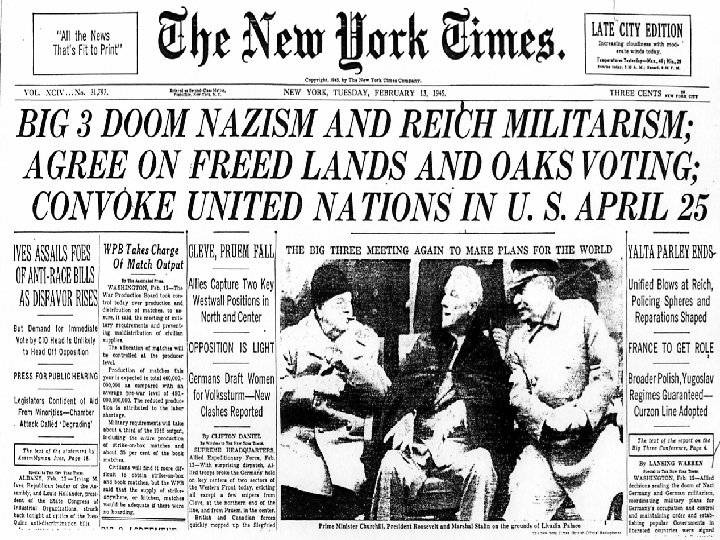
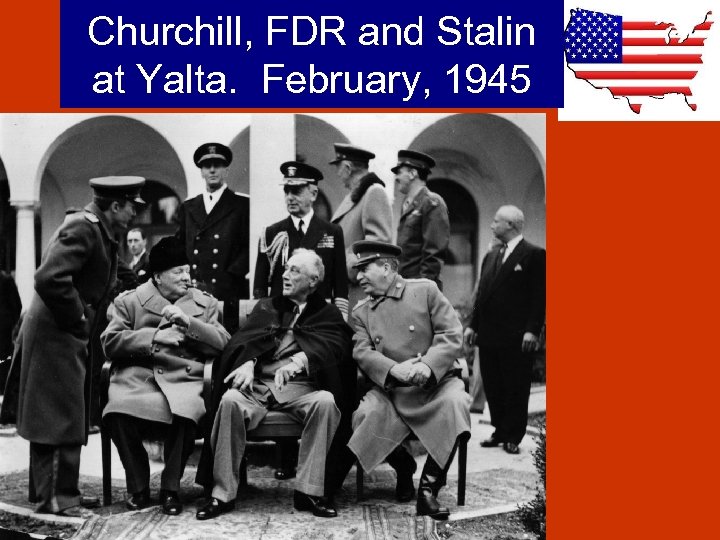 Churchill, FDR and Stalin at Yalta. February, 1945
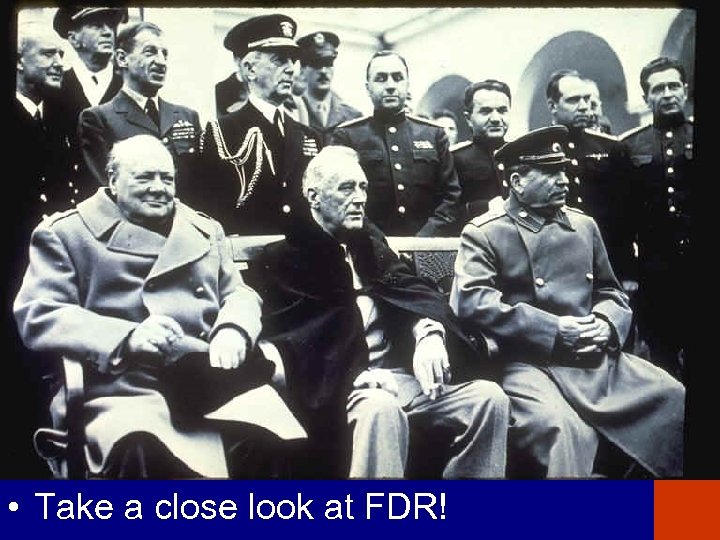 • Take a close look at FDR!
 I. A. The Cold War Abroad Descent into the Cold War • Yalta continued… • In following months, no elections held and Soviet installed governments remain (puppet regimes) • FDR dies April 1945 – Harry Truman is now President
 I. A. The Cold War Abroad Descent into the Cold War • Potsdam Conference • Truman – takes a hard line stance with Stalin, learning lessons of appeasement from Hitler. Allied unity was replaced with distrust between superpowers
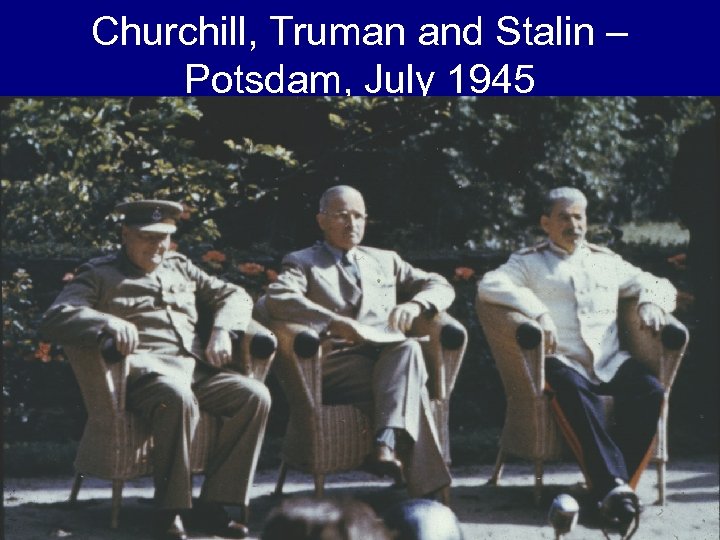 Churchill, Truman and Stalin – Potsdam, July 1945
 I. A. The Cold War Abroad Descent into the Cold War • Potsdam Conference continued… • Fate of Occupied Germany – divided into 4 zones of occupation (as was Berlin) • Germany demilitarized, occupying force allowed to extract reparations
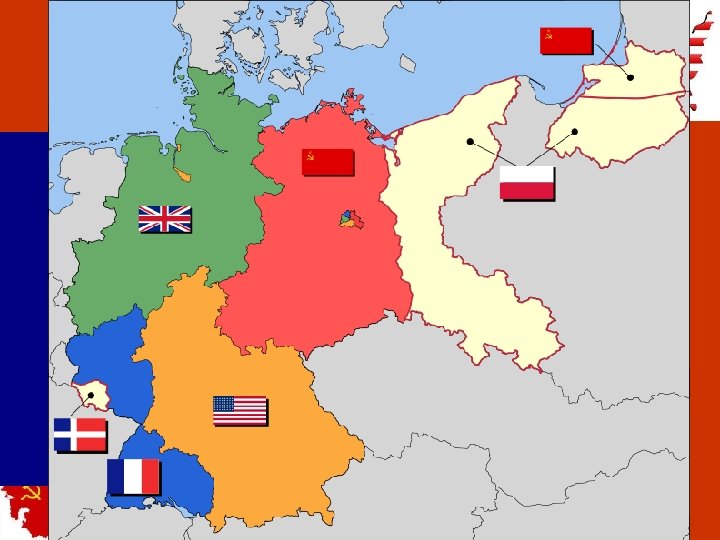
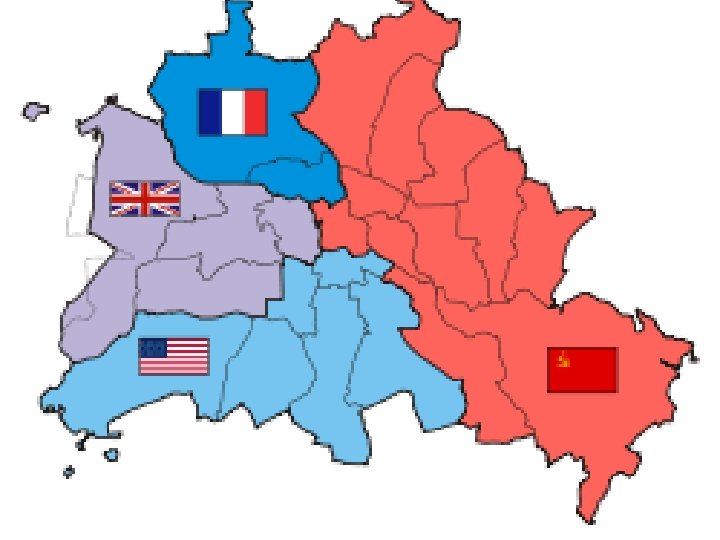
 I. A. The Cold War Abroad Descent into the Cold War • Plans for reunification stalled for fear that united Germany would fall into other powers sphere of influence • Foundations laid for division of Germany
 I. A. The Cold War Abroad Descent into the Cold War • With failure of Baruch Plan (which called for a monopoly on nukes by the U. S. ), nuclear arms race begins between the two superpowers
 I. B. The Cold War Abroad The Truman Doctrine and Containment • U. S. increasingly sees Soviet expansion as a threat to it’s own existence • George F. Kennan – “Long Telegram” from Moscow. Argued Soviets will expand until they meet “unanswerable force” and the U. S. must pursue a policy of “firm containment”
 I. B. The Cold War Abroad The Truman Doctrine and Containment • Truman Doctrine – Large scale military and economic assistance inorder to keep communism from taking over. • Policy of containment crystallized over crisis in Greece (1947) • Communist coup (thought, erroneously, to be directed by Moscow)
 I. B. • • The Cold War Abroad The Truman Doctrine and Containment Truman Doctrine continued… Truman pledges aid to Greece and Turkey to protect American Interests (Middle East) $300 million – Greece, $100 Million, Turkey Marked commitment to Cold War
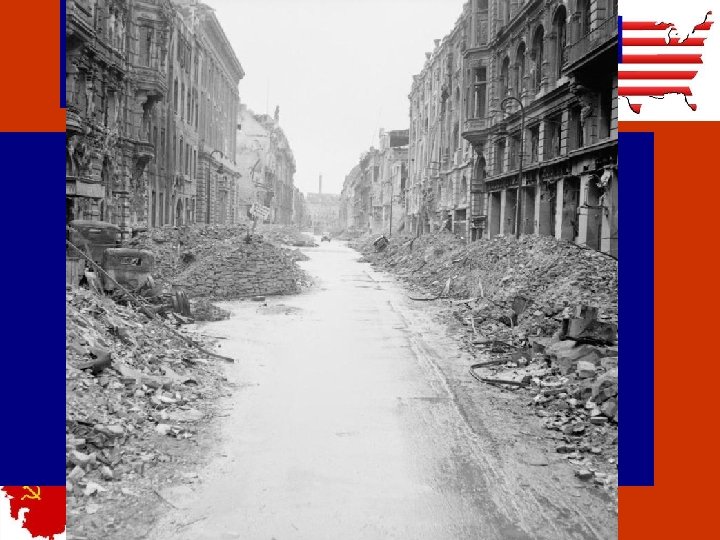
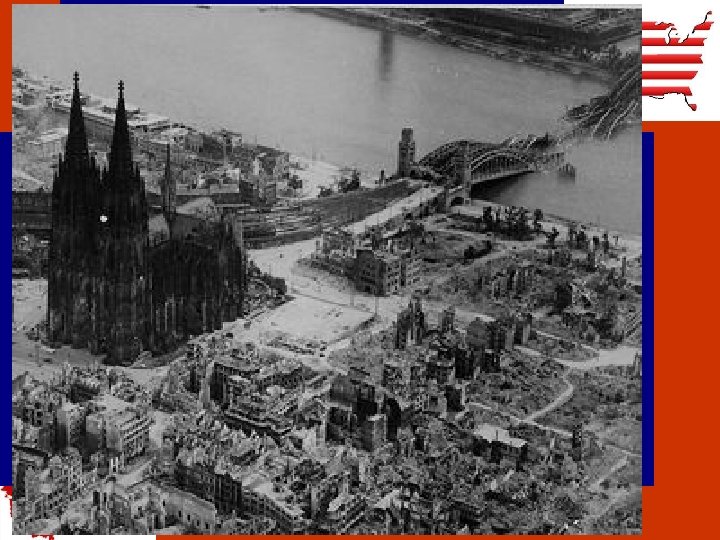
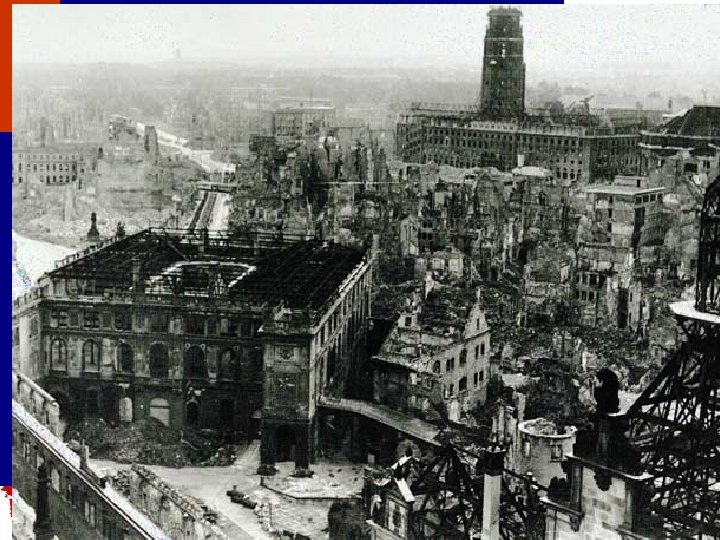
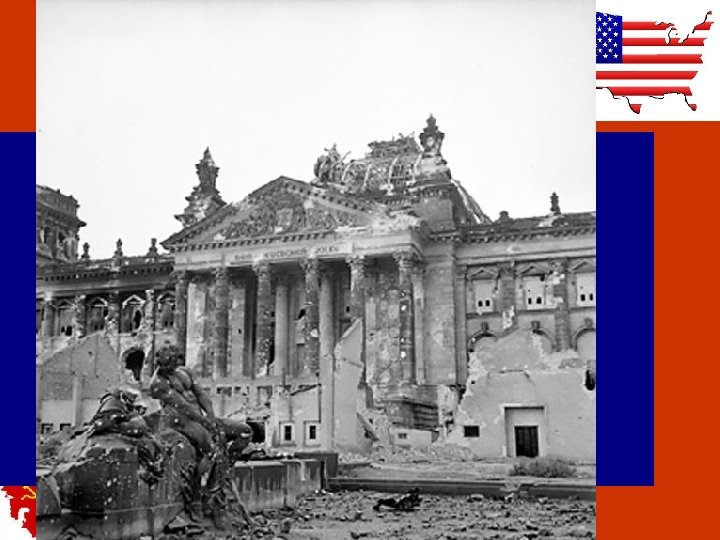
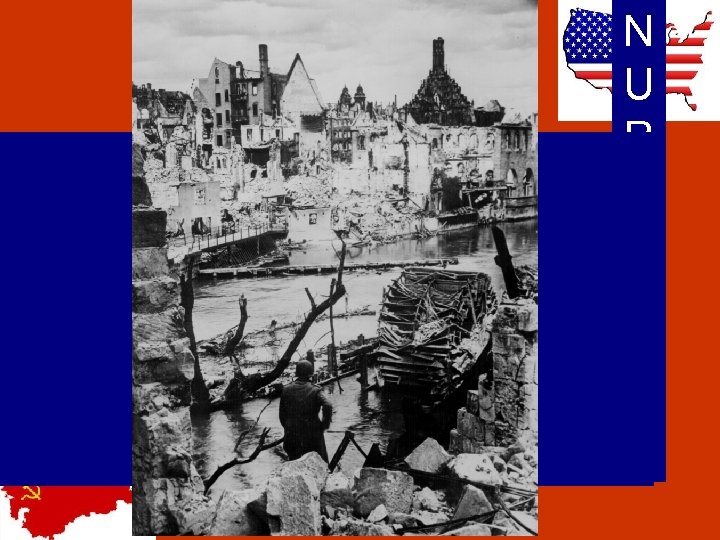 N U R E M B E R G
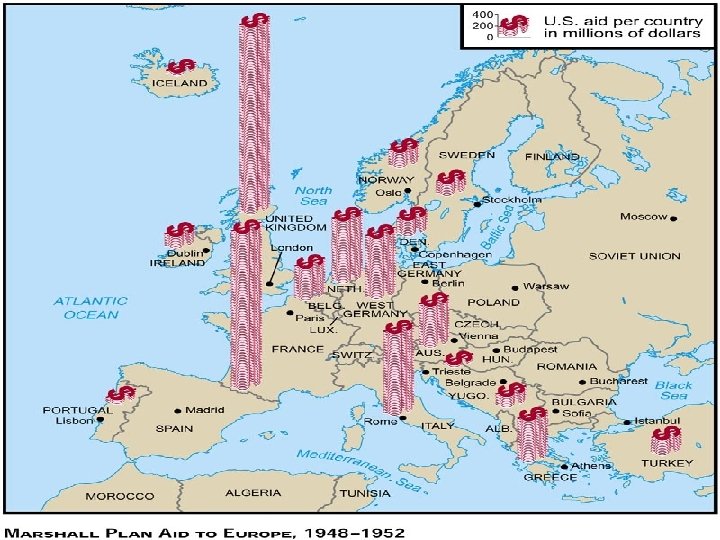
 I. B. The Cold War Abroad The Truman Doctrine and Containment • Marshall Plan – Sect. of State George Marshall proposes plan to provide economic aid to war torn Europe. • Thwart economic calamity which could lead to communism • Required that aid $ be spent on U. S. goods and services
 I. B. • • The Cold War Abroad The Truman Doctrine and Containment Marshall Plan continued. . . Republicans in congress stall until communist coup in Czechoslovakia (1948) helps push legislation through congress (despite isolationist wing of Republican party) Offered to E. Europe, Stalin forbids it Over $13 Billion – success, European economies rebound
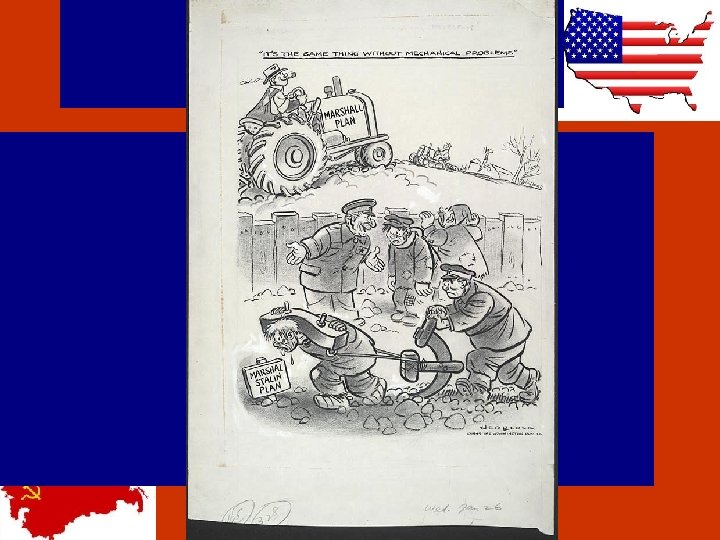
 I. B. The Cold War Abroad The Truman Doctrine and Containment Berlin Airlift • Marshall plan accelerates plans to rebuild and unify Germany • Fuse zones of occupation, initiate currency reform • Revitalization of West Berlin alarms Soviets
 I. B. The Cold War Abroad The Truman Doctrine and Containment Berlin Airlift • Fear strong Germany allied with West • Impose blockade on all road, railway and river traffic into West Berlin (June, ’ 48) • Truman counters with massive Airlift of supplies – Stalin backs down May, ’ 49 • Berlin becomes symbol of communist resistance

 I. B. The Cold War Abroad The Truman Doctrine and Containment NATO • Czech coup and Berlin crisis convince policy makers of need for collective security pact • April ’ 49, U. S. enters into 1 st ever peacetime military alliance • North Atlantic Treaty Organization
 I. B. The Cold War Abroad The Truman Doctrine and Containment NATO • 12 Nations agree “an armed attack against one or more of them in Europe or North America shall be considered an attack against them all. ” • May ’ 49 – All agree to the creation of Federal Republic of Germany (W. Germany)
 I. B. The Cold War Abroad The Truman Doctrine and Containment NATO • Soviet Response – East Germany created (German Democratic Republic) and Council for Mutual Economic Assistance (COMECON) • Warsaw Pact created 1955 (military alliance for E. Europe)
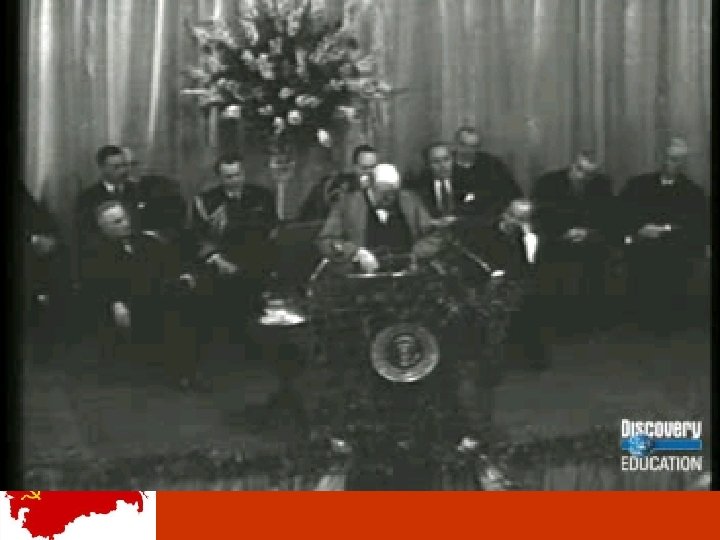
 IRON CURTAIN • “From Stettin in the Baltic to Trieste in the Adriatic an iron curtain has descended across the Continent. ” - Winston Churchill
 Iron Curtain • The term Iron Curtain came to symbolize the imaginary line separating Communist east Europe with noncommunist west Europe.
 I. B. The Cold War Abroad The Truman Doctrine and Containment NSC-68 • U. S. detects radiation in atmosphere Sept, ’ 49 – Soviets have successfully tested a nuclear bomb – Arms race has begun • Major reassessment of foreign policy in order
 I. B. The Cold War Abroad The Truman Doctrine and Containment NSC-68 • National Security Council Issues NSC-68 – Recommends building hydrogen bomb (1000 X more powerful), vast increase in military spending, build up of conventional forces
![National Defense Budget [1940 -1964]](https://present5.com/presentation/d46a6b6ba7aec400d41f2f2bfda22788/image-42.jpg "National Defense Budget [1940 -1964]") National Defense Budget [1940 -1964]
National Defense Budget [1940 -1964]

 I. C. PHILLIPINES • On July 4, 1946 the U. S. grants the Philippines independence • Ferdinand Marcos becomes president in 1965
 I. C. Cold War Abroad Containment in Asia and Korean War Japan • American forces under Gen. Douglas Mac. Arthur help rebuild Japan • Democratic Constitution • Rebuilding economy
 I. C. Cold War Abroad Containment in Asia and Korean War China • Communist forces (Mao Zedong, Zhou Enlai) vs. Nationalist forces (Jiang Jieshi) • Truman Administration reluctantly supports corrupt and inept Nationalists • Despite billions in aid, Nationalists flee to Taiwan as Peoples Republic of China established in 1949
 I. C. Cold War Abroad Containment in Asia and Korean War • American’s view “loss” of China as a major setback • Republican’s blame “Red China” on Truman and new Secretary of State Dean Acheson – Politics of Cold War become enflamed - midterm elections • Charges Truman took eye off ball in Asia, Dems. Gave away E. Europe, Dems sympathetic to communists, appeasers
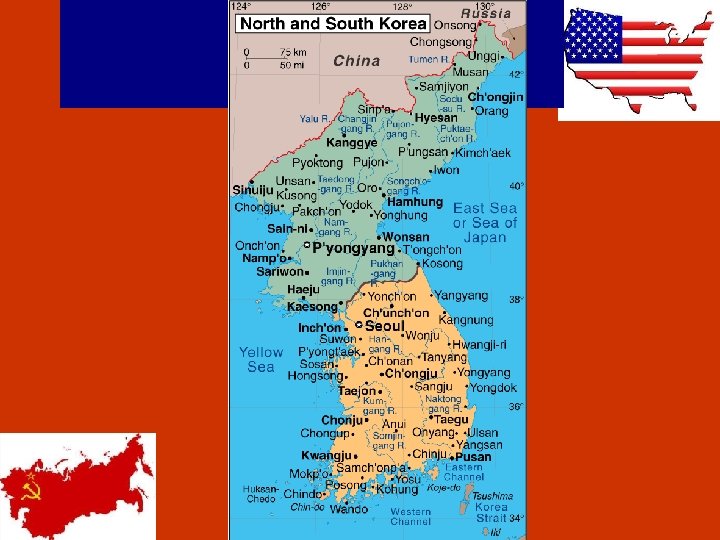
 I. C. • • Cold War Abroad Containment in Asia and Korean War Korea Joint Occupation by Soviet and U. S. forces after WWII Korea divided at 38 th parallel Korea low on American priorities – forces were withdrawn June 25, 1950, N. Korea launches surprise attack to reunify Korea under Kim Il Sung


 I. C. Cold War Abroad Containment in Asia and Korean War Korea • Truman was not going to “lose” Korea • U. N. authorizes “peacekeeping” force and Truman orders U. S. military involvement – before congressional approval • Mac. Arthur chosen to head force
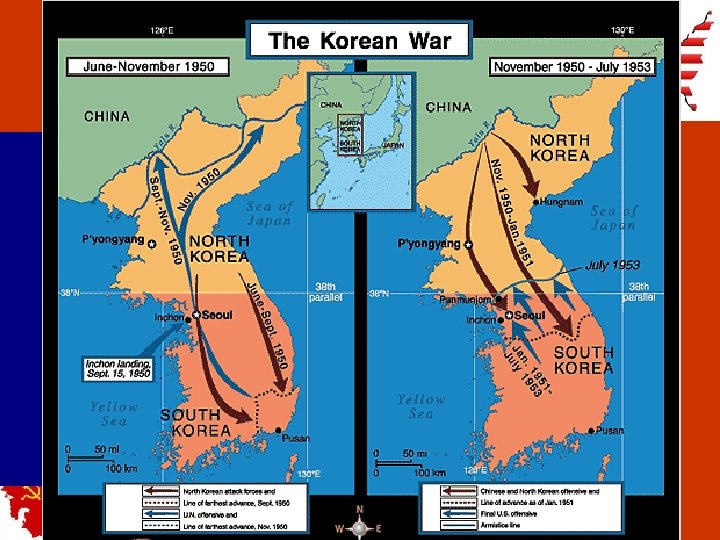
 I. C. Cold War Abroad Containment in Asia and Korean War Korea • Things bleak at first – take control of almost entire Peninsula except Pusan • Sept. ’ 50, Mac. Arthur launches daring surprise amphibious attack at Inchon to recapture Seoul – Success
 I. C. Cold War Abroad Containment in Asia and Korean War Korea • Truman gets U. N. authorization to drive in to N. Korea with goal to reunify • Mac. Arthur assures Truman Chinese will not interfere and the war will be over by Thanksgiving
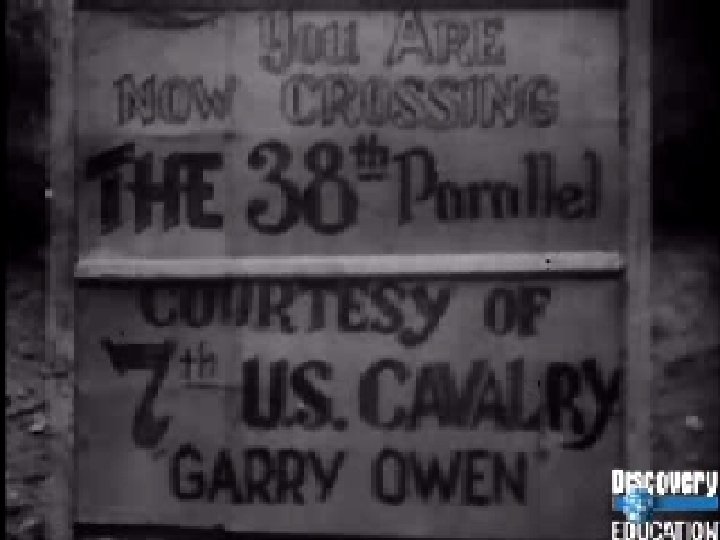
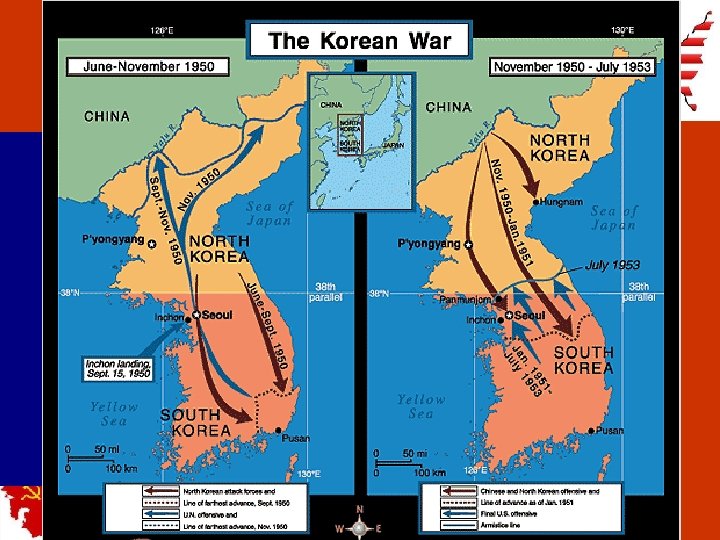
 I. C. • • Cold War Abroad Containment in Asia and Korean War Korea Chinese threaten retaliation Mac. Arthur crosses 38 th Parallel (Oct ’ 50) and Pushes to Chinese border Massive onslaught of Chinese troops force retreat (past Seoul) Allies Counter and push back to 38 th parallel – stalemate sets in!
 I. C. Cold War Abroad Containment in Asia and Korean War Korea • War begins to lose popular support and Truman begins to negotiate for a brokered peace • Mac. Arthur disagrees!!! • Mac travels to Taiwan to urge nationalists to join attack on mainland, pleads to drop A-bomb China
 I. C. Cold War Abroad Containment in Asia and Korean War Korea • Sends inflammatory letter to House Minority Leader (a Republican) declaring “there is no substitute for victory” • Republicans privately gleeful over Truman’s political mess – support Mac. Arthur • Truman fires Mac. For insubordination
 I. A. I. C. • • Cold War Abroad Containment in Asia and Korean War Korea Mac comes home to heroes welcome Invited to deliver address to the U. S. House of Reps - ? ? ? Stalemate drags on two more years at cost of tens of thousands of lives. Settlement agreed to in 1953 by Eisenhower
 I. C. • • Cold War Abroad Containment in Asia and Korean War Korea Results – 36, 000 Americans dead, $54 billion Sets precedent for future undeclared wars “military action” Expands involvement in Asia (help French in Indochina) Should have sent warning about public support
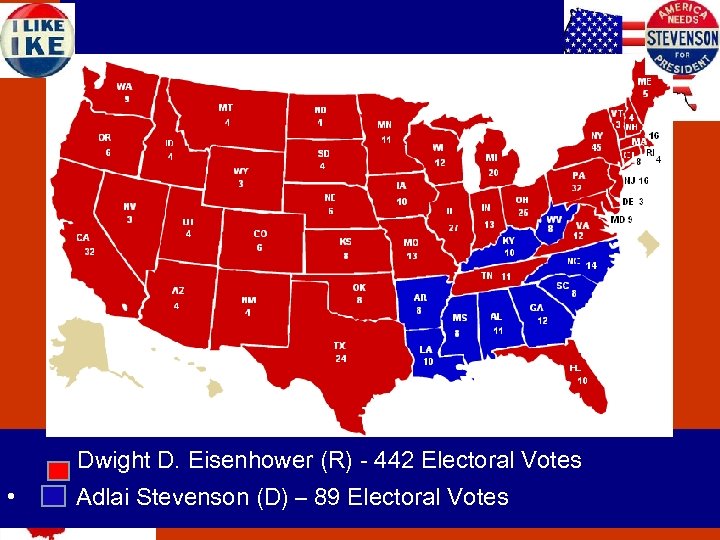 Dwight D. Eisenhower (R) - 442 Electoral Votes • Adlai Stevenson (D) – 89 Electoral Votes
 I. D. . Cold War Abroad Eisenhower and the “new” Look of Foreign Policy • Brings end to Korean War (Prisoner exchange) • Stalin dies March ‘ 53 – Nikita S. Khrushchev emerges – Calls for “peaceful coexistence” • Hungarian revolt put down by Soviet forces – Showed we could not roll back Soviet power in E. Europe
 I. D. Cold War Abroad Eisenhower and the “new” Look of Foreign Policy • Sect. of State John Foster Dulles puts resources into nuclear arsenal as opposed to conventional forces to save $ - commits to Hbomb • Distant Early Warning Line (radar) • Commitment to long range bombing capabilities (ICBM’S) • Escalates arms race
 I. D. Cold War Abroad Eisenhower and the “new” Look of Foreign Policy • Creates SEATO (SE Asia) to complement NATO • Support for non-communist, stable governments – even if repressive • Resorted to “covert” interventions, with help from CIA • Iran, Guatemala
 I. D. Cold War Abroad Eisenhower and the “new” Look of Foreign Policy Middle East • Rise of Cold War coincides with crumbling of colonialism… • Israel – Zionism, Jewish nationalist movement • 1947 – U. N. partitions Palestine into 2 states • Truman immediately recognizes – many arab states do not
 I. D. Cold War Abroad Eisenhower and the “new” Look of Foreign Policy Middle East • Egypt – 1956 Nasser seizes and nationalizes Suez Canal – England, France and Israel attack but pull back
 I. D. Cold War Abroad Eisenhower and the “new” Look of Foreign Policy Eisenhower Doctrine • American forces would assist any Middle Eastern nation against any armed aggression backed by communism • Demonstrates growing importance of ME and Oil
 II. A. Cold War At Home Postwar Domestic Challenges • • Main fear depression would return unfounded Wartime savings GI Bill – provides educational and economic assistance to returning GI’s Economic Policy – Wartime controls not immediately repealed
 II. A. Cold War At Home Postwar Domestic Challenges • • Employment Act (1946) – Feds commit to federal policy of controlling economy Postwar inflation extreme (18%) Postwar Strikes – Labor wants higher wages due to cost of living increases Auto, steel, coal – Truman uses Fed power to get workers back to work
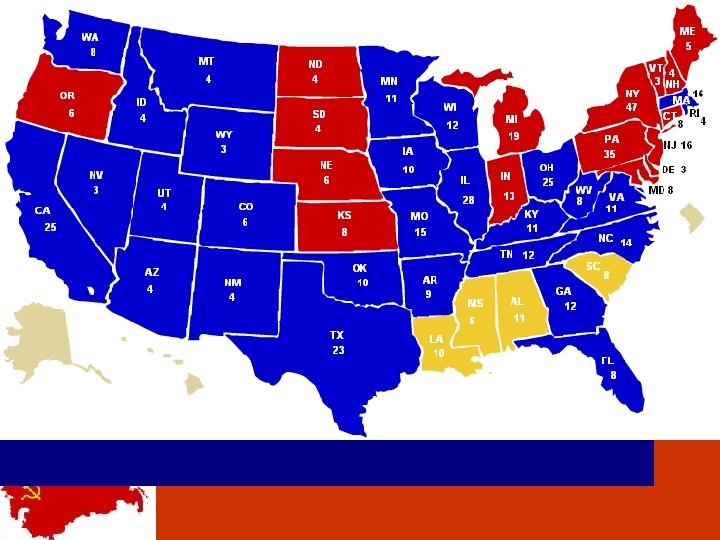
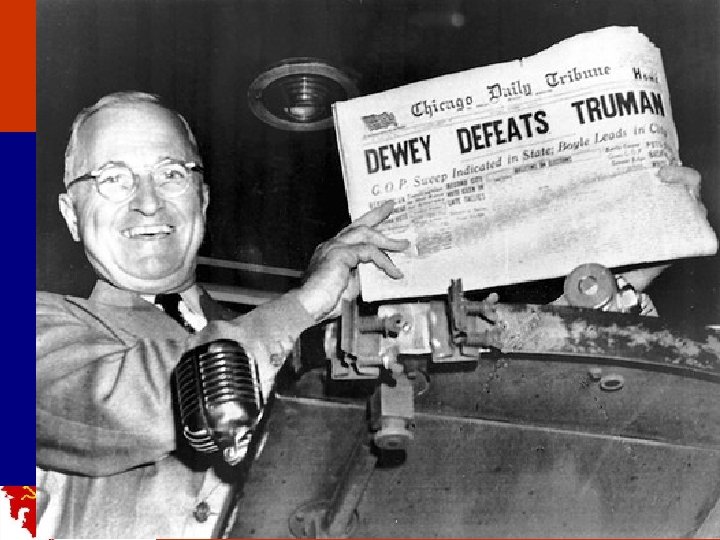
 II. A. Cold War At Home Postwar Domestic Challenges • • Taft-Hartley Act (1947) – Reps. Gain control of both houses – Undo much of the 1935 NLRA – override Truman’s Veto 1948 Election – Most believed Truman faced impossible re-election “Give’m hell, Harry” Wins and takes back both houses!
 II. B. Cold War At Home Fair Deal Liberalism • • • Extension of New Deal - faith in the positive influence of govt. power in insuring the public welfare Civil Rights – growing importance of Black vote to Dems. More moderate than New Dealers Primary role of influence comes through monetary policy
 II. B. Cold War At Home Fair Deal Liberalism • • • Met with congressional opposition Successes Minimum Wage raised Social Security Expanded National Housing Act – Low income housing
 II. B. Cold War At Home Fair Deal Liberalism • • • Met with congressional opposition public Interest groups very influential in blocking “creeping socialism” National Health Insurance defeated
 II. B. Cold War At Home Fair Deal Liberalism • • Successes Minimum Wage raised Social Security Expanded National Housing Act – Low income housing
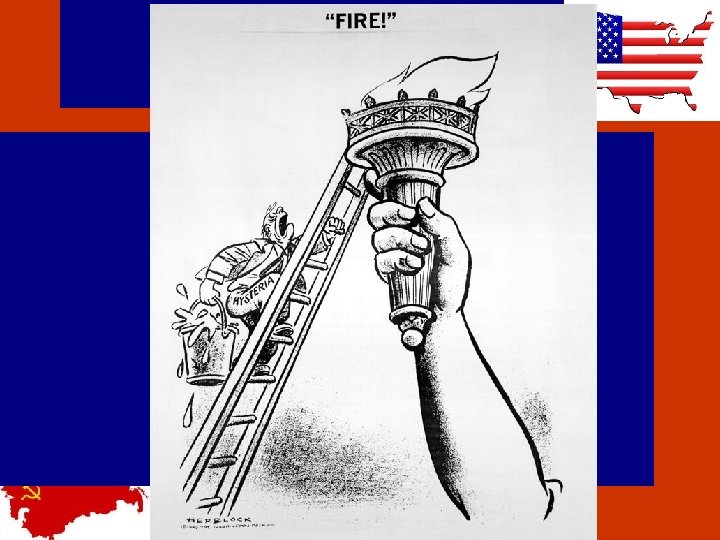
 II. C. • • Cold War At Home The Great Fear of communism at home fueled campaign of domestic repression often dubbed Mc. Cartyism Built on deep historical distrust of radicals, flamed by growing tension with USSR and partisan politics
 II. C. • • Cold War At Home The Great Fear of communism at home fueled campaign of domestic repression often dubbed Mc. Cartyism Built on deep historical distrust of radicals, flamed by growing tension with USSR and partisan politics
 II. C. Cold War At Home HUAC • • House Un-American Activities Committee – 1947 – Truman issues executive order initiating investigation of loyalty of federal employees Other organizations follow with their own anti-subversion campaigns – including loyalty oaths – devastating to political left
 II. C. • Cold War At Home HUAC 1948 – investigates Alger Hiss – FDR aide at Yalta – former communist claimed Hiss was a communist and passed him secret documents – investigation led by congressman Richard Nixon (R)
 II. C. Cold War At Home Rise and Fall of Mc. Carthy • “I have here in my hand a list of the names of 205 men…” • Accused State Department of being inundated with communists who were shaping foreign policy • Next 4 years led the charge against suspected communists
 I. B. • • Cold War At Home Rise and Fall of Mc. Carthy To go against Mc. Carthy was to open oneself up to being “soft” on communism Even Eisenhower refrained from criticism 1951 – Julius and Ethel Rosenberg help fuel his allegations (they were executed for passing atomic secrets to USSR) 1954 U. S. Army Hearings televised – people begin to turn on Mc. Carthy – censured by Senate
 I. B. Cold War At Home Modern Republicanism • • More tolerant of government intervention in economy than Rep. of 1920’s Election of ’ 52 – Ike chooses Richard Nixon as running mate (Checkers Speech) Dems. Damaged by scandal and war Hidden Hand Presidency – mostly worked behind the scenes, staying out of partisan politics

 I. B. Cold War At Home Modern Republicanism • • • Sputnik – soviets launch 1 st satellite Ike responds with U. S. space program (NASA) and education reform *Interstate Highway Act* - MASSIVE government program to build U. S. highway system (26 billion) surpasses New Deal
 II. B. Cold War At Home Modern Republicanism • • Expanded spending for SS, Department of Health, raised minimum wage Size/scope of federal government greater when Ike left office!
 I. D. Impact of the Cold War Nuclear Proliferation (note: civil rights will be done later) • • • Millitary spending accounts for much larger % of GDP Arms race fosters atmosphere of fear Bomb shelters, civil defense drills, “Duck and Cover” MAD – Mutually Assured Destruction Arms limit treaty sidetracked with U-2

 I. D. Impact of the Cold War Nuclear Proliferation • Nuclear fallout becomes concern – AEC conducted radiation experiments on people! • Anti-nuke groups begin to emerge (SANE)
 I. D. Impact of the Cold War Nuclear Proliferation • • Ike Warns of “military industrial complex” due to growing budget, power and importance of defense industry Military spending helped growth of West and South (sun-belt)