


 Скачать презентацию Chapter 25 The Child with a Respiratory Disorder
4f7612f0afd71087ae1caace017d3980.ppt
- Количество слайдов: 21
 Chapter 25 The Child with a Respiratory Disorder
 Procedures that Can Be Done • Throat and nasopharyngeal cultures • Bronchoscopy • Lung biopsy • Arterial blood gas • p. H analysis • Pulse oximetry • Pulmonary function tests • Chest X-ray • CT scan • Radioisotope scan • Bronchogram • Angiography
 Nasopharyngitis • Coryza: (cold) most common infection of resp. tract; caused by virus. – S/s: fever, nasal discharge, red mucous membranes, irritability, sore throat, cough • Allergic rhinitis: sneezing, watery eyes, itching • Persistent nasopharyngitis in older child or teen may be r/t cocaine or other inhaled drug use
 Acute pharyngitis • Inflammation of structures in the throat, common 5 to 15 yo • S/s: fever, malaise, dysphagia, anorexia • In child over 2 yo, strep carries a high fever also – Determined by throat culture – Antibiotic therapy for 10 days
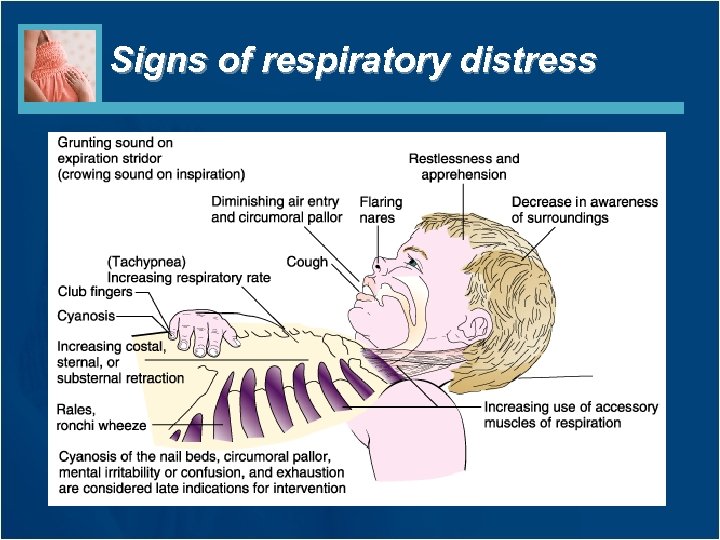 Signs of respiratory distress
 Croup syndromes • Croup is a general term applied to # of dx whose chief symptom is barking cough with inspiratory stridor (harsh, high pitched sound) • When larynx involved, can cause alteration in resp status: airway obstruction, ARF, hypoxia • Benign croup is frightening but rarely lifethreatening • Acute croup: Tx at home includes inhaling moist air, such as by taking child into bathroom where a hot shower is turned on to increase humidity
 Epiglottitis • A swelling of the tissues above the vocal chords, resulting in a narrowing of airway inlet – possibly total obstruction • Is a life-threatening medical emergency • S/s: child sits up, leans forward with mouth open, drools saliva; appears anxious, restless; poss croaking sound on inspiration • Exam of throat reveals large, swollen reddened epiglottis – tongue blade may trigger laryngospasm, resulting in sudden respiratory arrest • Tx: tracheotomy or ET tube, O 2, IV antibiotics
 Respiratory Syncytial Virus • Single most important respiratory pathogen in infancy; most common cause of viral pneumonia among children • Spread by direct contact with respiratory secretions, usually hand to mucous membranes • RSV survives for more than 6 hrs on countertops, tissues & soap bars • Airways become so small and prone to obstruction by thick mucus • Nursing: contact isolation, frequent handwashing; support of infant & family • Nursing diagnosis: ineffective breathing pattern • Tx: Antiviral meds such as Ribavirin (Virazole) for severely ill infants or those at high risk. Does have serious s/e
 Pneumonia • Pneumonia - inflammation of the lungs in which alveoli become filled with exudate , surfactant reduced – S/s: cough, high fever, tachypnea, shallow resp, sternal retractions, nasal flaring, child listless, anorexic, lies on affected side – Diagnosis: x-ray – Treatment: antipyretics, O 2, ^ fluids, antibiotics. Home care: rest, fluids & cough suppressant; no tobacco in environment
 Chronic Respiratory Problems • Asthma – chronic lung disease that results in bronchospasm, increased secretion of mucus and mucosal edema in lungs. Obstruction more severe during expiration • Causes: allergies, seasonal changes, or exertion. – May be gradual or abrupt. • Diagnosis: CXR, Examination of blood shows eosinophilia (allergens) – Exam reveals: coughing, wheezes, rales, use of accessory muscles – Other tests: sputum, skin test, pulmonary function test • Treatment: Meds--terbutaline or aminophyllin; nebulizers; allergy tx. • Condition may worsen to status asthmaticus: life-threatening; ventilation may be necessary. Intensify other treatments • N. I. position pt upright—use of bedside table with pillow maintain airway, monitor meds, educate, oral fluids at room temperature to liquefy secretions and compensate for fluid loss by dyspnea and diaphoresis
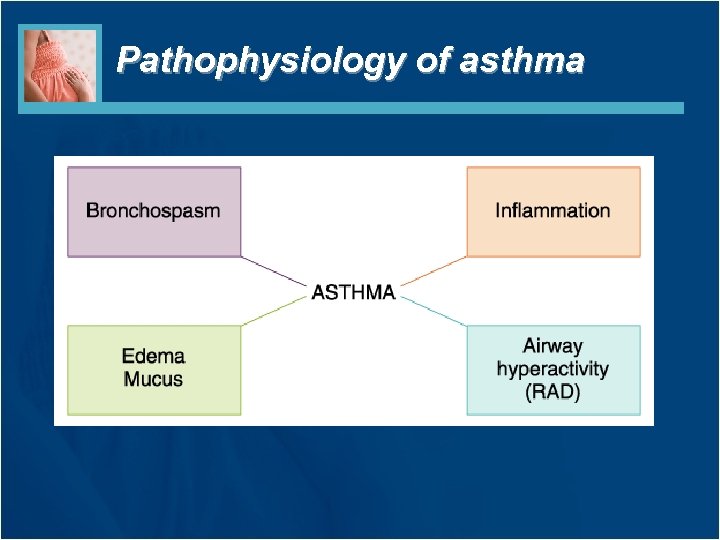 Pathophysiology of asthma
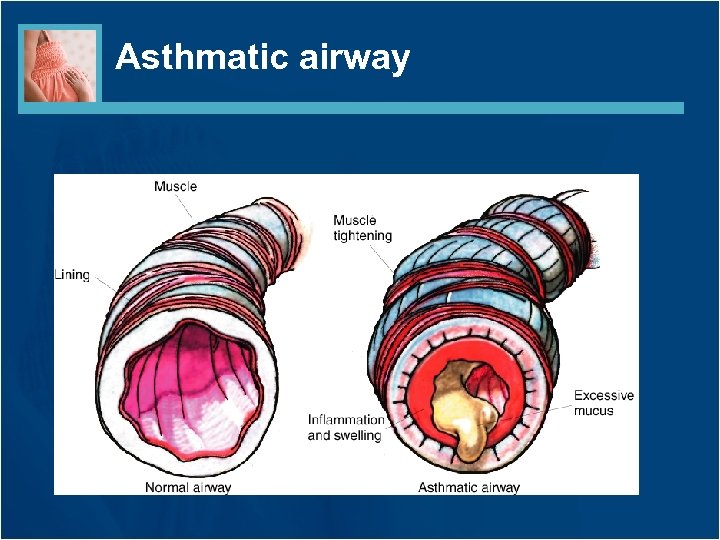 Asthmatic airway
 Asthma Triggers • • House dust Animal dander Wool Feathers Pollen Mold Passive smoking • Strong odors • Certain food • Vigorous physical activity (especially in cold weather) • Rapid changes in temperature • Emotional upset
 Cystic Fibrosis • Hereditary disease of the exocrine glands. Obstructs the pancreatic ducts and bronchi. Emphysema results from over inflation of lung tissue – May be observed as meconium ileus in NB – Diagnosis: history, x-rays, pulmonary function test, and sweat test. – Treatment: antibiotics for infections, expectorants & bronchodilators – diet= high calorie with high protein & carbohydrates. – pancreatic enzymes given with each meal & snack – Goal is to preserve pulmonary functions – exercise used to increase lung capacity. • • • Nursing: education teach compliance of child & family physical support= diet, breathing treatments, tests
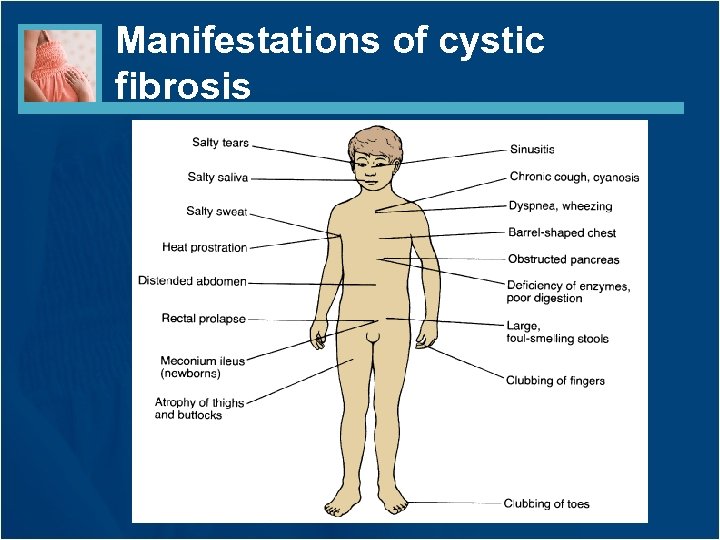 Manifestations of cystic fibrosis
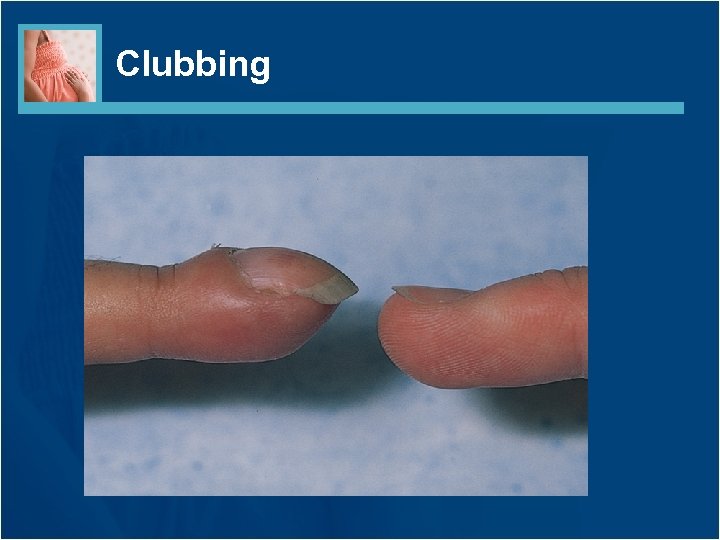 Clubbing
 Bronchopulmonary Dysplasia • A fibrosis, or thickening, of alveolar walls and bronchiolar epithelium caused by oxygen concentration above 40% or by mechanical pressure ventilation given to newborns for prolonged period of time • Swelling of tissues causes edema, respiratory cilia paralyzed by high oxygen concentration, and loss of ability to clear mucus • Respiratory obstruction, mucus plugs, and atelectasis follow
 Sudden Infant Death Syndrome (SIDS) • Clinically defined as the sudden, unexpected death of an apparently healthy infant between 2 weeks and 1 year of age • Clinical features of the disease remain constant – Death occurs during sleep – Infant does not cry or make other sounds of distress
 Sudden Infant Death Syndrome (SIDS) (cont. ) • Thought to be caused by a brainstem abnormality related to cardiorespiratory control • A face-down sleeping position may cause infant to rebreathe expired air – Overheating, irregular • Wrapping the infant respiratory patterns who is placed face – Decreased arousal responses down may increase risk are contributing factors by preventing infant • Increased risk factors include from lifting and turning – Maternal smoking or cocaine the face to the side use that causes hypoxia of the fetus – Preterm birth – Poor postneonatal care
 Nursing Care Related to SIDS • With grieving parents, the nurse must convey some important facts – The infant died of a disease called SIDS; currently the disease cannot be predicted or prevented, and they are not responsible for the child’s death • Parents must be given the opportunity to say goodbye to their child – Parents are catapulted into a totally unexpected bereavement that requires numerous explanations to relatives and friends
 Elsevier items and derived items © 2011, 2007, 2006 by Saunders, an imprint of Elsevier Inc. 21