


 Скачать презентацию Chapter 22 Aggregate Demand Supply Why the
f16a4cac2160a0cbfdac50bb105e4225.ppt
- Количество слайдов: 33
 Chapter 22 Aggregate Demand Supply
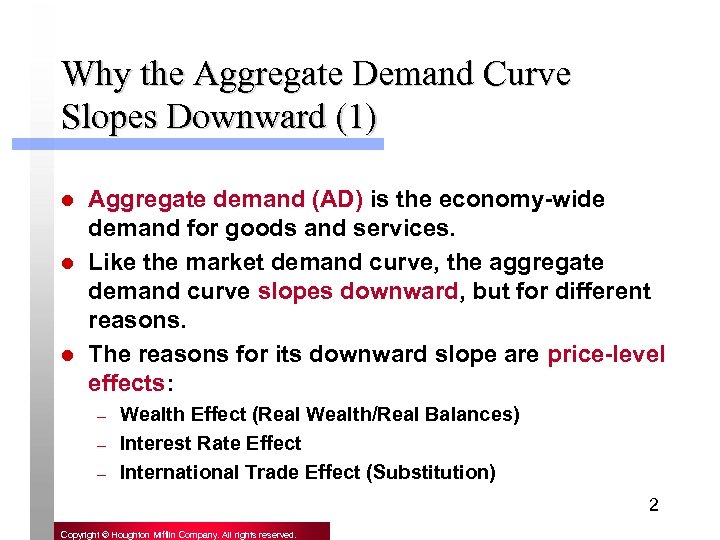 Why the Aggregate Demand Curve Slopes Downward (1) l l l Aggregate demand (AD) is the economy-wide demand for goods and services. Like the market demand curve, the aggregate demand curve slopes downward, but for different reasons. The reasons for its downward slope are price-level effects: – – – Wealth Effect (Real Wealth/Real Balances) Interest Rate Effect International Trade Effect (Substitution) 2 Copyright © Houghton Mifflin Company. All rights reserved.
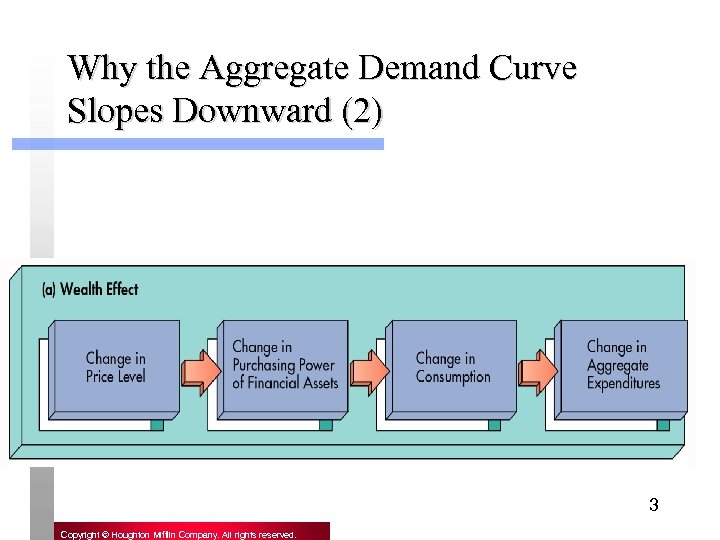 Why the Aggregate Demand Curve Slopes Downward (2) 3 Copyright © Houghton Mifflin Company. All rights reserved.
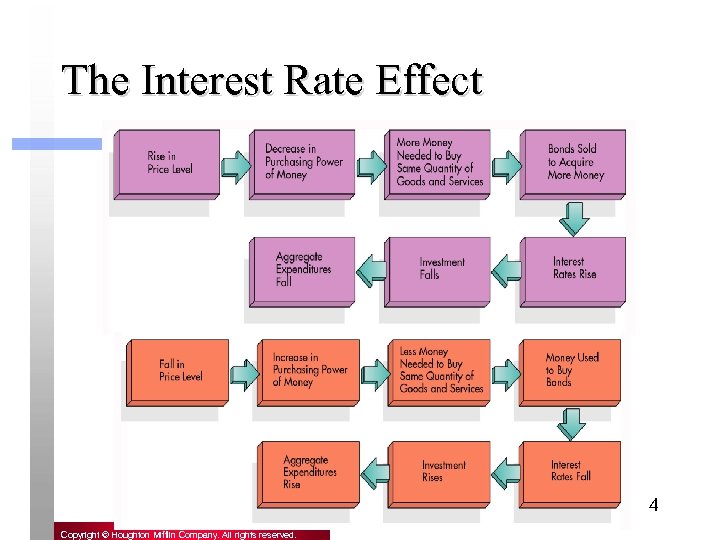 The Interest Rate Effect 4 Copyright © Houghton Mifflin Company. All rights reserved.
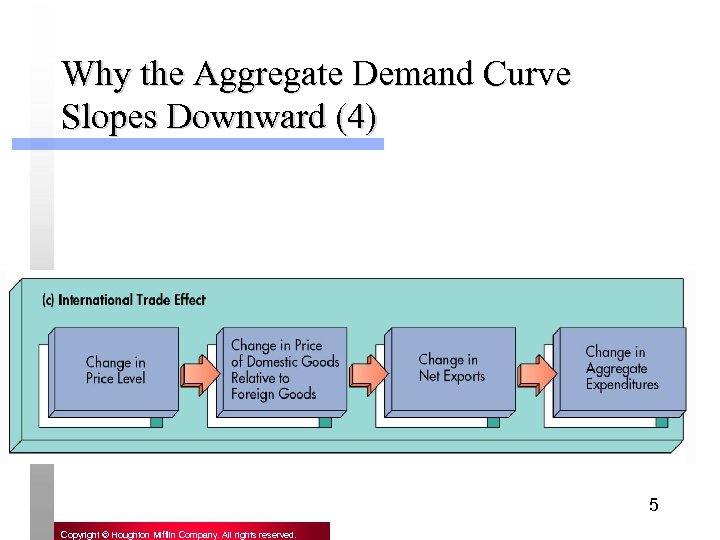 Why the Aggregate Demand Curve Slopes Downward (4) 5 Copyright © Houghton Mifflin Company. All rights reserved.
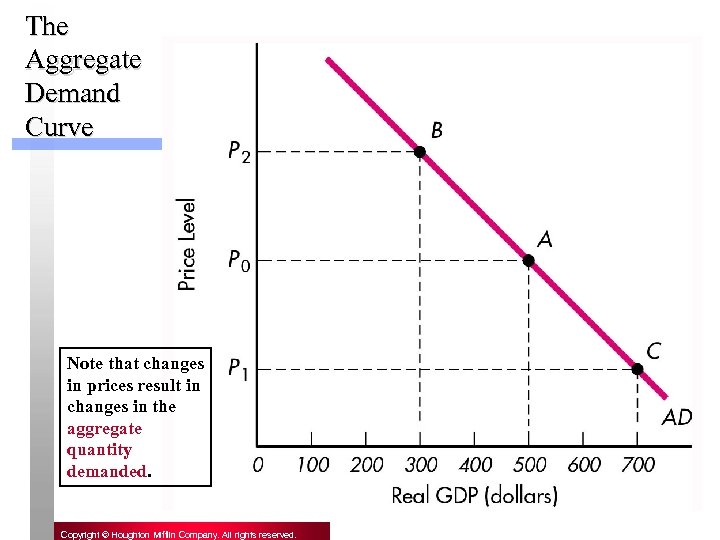 The Aggregate Demand Curve Note that changes in prices result in changes in the aggregate quantity demanded. 6 Copyright © Houghton Mifflin Company. All rights reserved.
 Factors that Affect AD AD = C + I + G + XN l Consumption – – – l Income Wealth Expectations Demographics Taxes Investment – – l l Government Spending Net Exports – – Domestic & Foreign Income Domestic & Foreign Prices Exchange Rates Government Policy Interest Rates Technology Cost of Capital Goods Capacity Utilization 7 Copyright © Houghton Mifflin Company. All rights reserved.
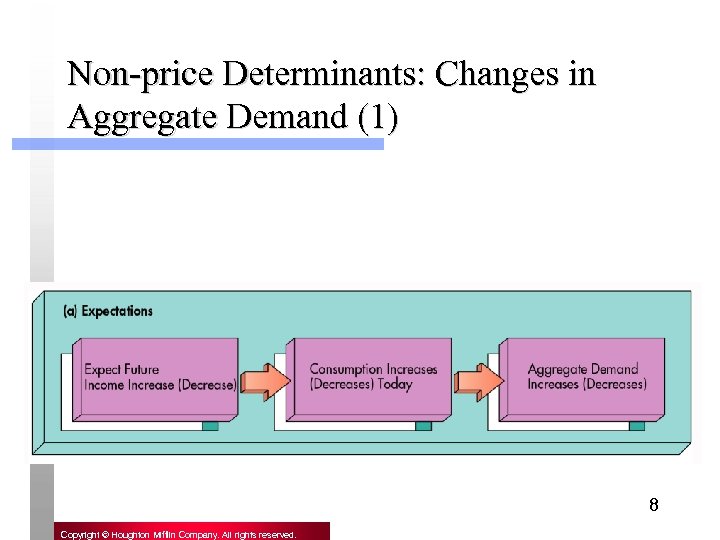 Non-price Determinants: Changes in Aggregate Demand (1) 8 Copyright © Houghton Mifflin Company. All rights reserved.
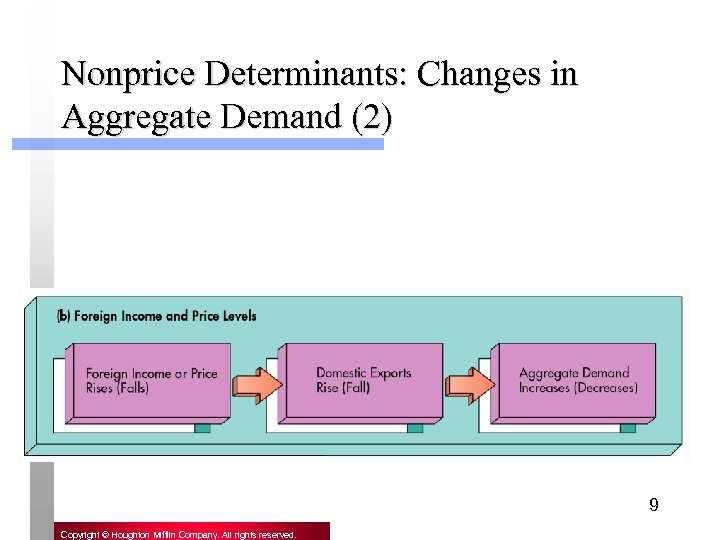 Nonprice Determinants: Changes in Aggregate Demand (2) 9 Copyright © Houghton Mifflin Company. All rights reserved.
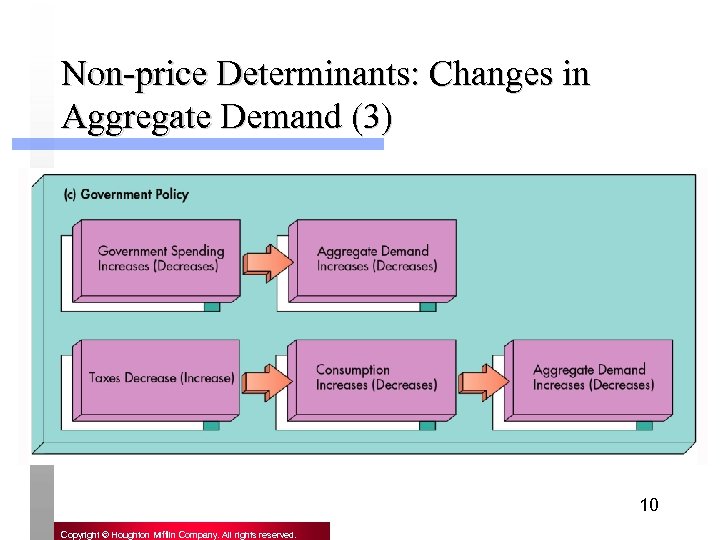 Non-price Determinants: Changes in Aggregate Demand (3) 10 Copyright © Houghton Mifflin Company. All rights reserved.
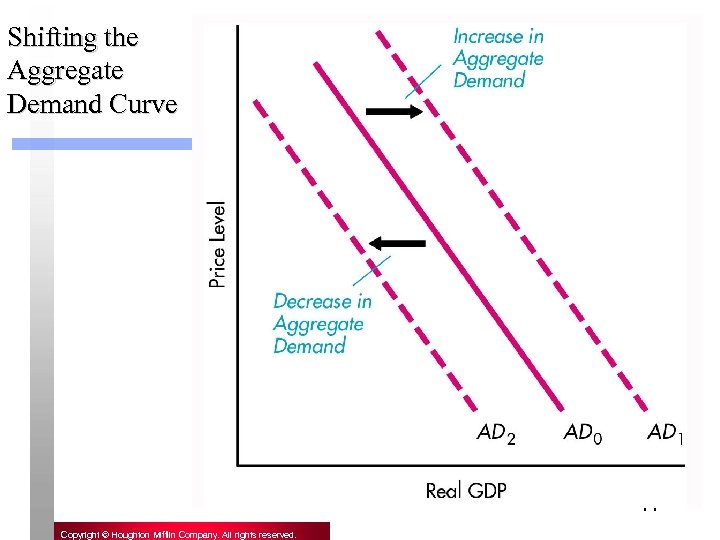 Shifting the Aggregate Demand Curve 11 Copyright © Houghton Mifflin Company. All rights reserved.
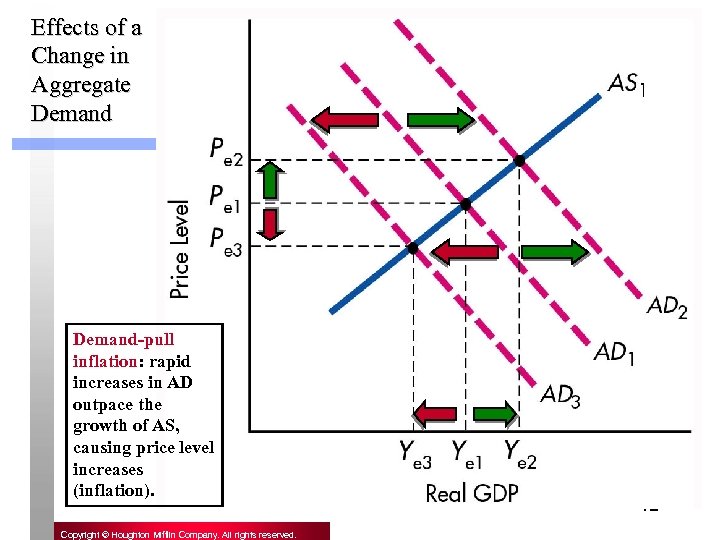 Effects of a Change in Aggregate Demand-pull inflation: rapid increases in AD outpace the growth of AS, causing price level increases (inflation). Copyright © Houghton Mifflin Company. All rights reserved. 12
 Short-run Aggregate Supply l l l Aggregate Supply (AS) is the total of all the firm (market) supply curves. It shows the quantity of real GDP produced at different price levels. Short-run AS slopes upward because an increase in the price level (while production costs and capital are held constant on the short-run), means higher profit margins—firms will want to produce more. 13 Copyright © Houghton Mifflin Company. All rights reserved.
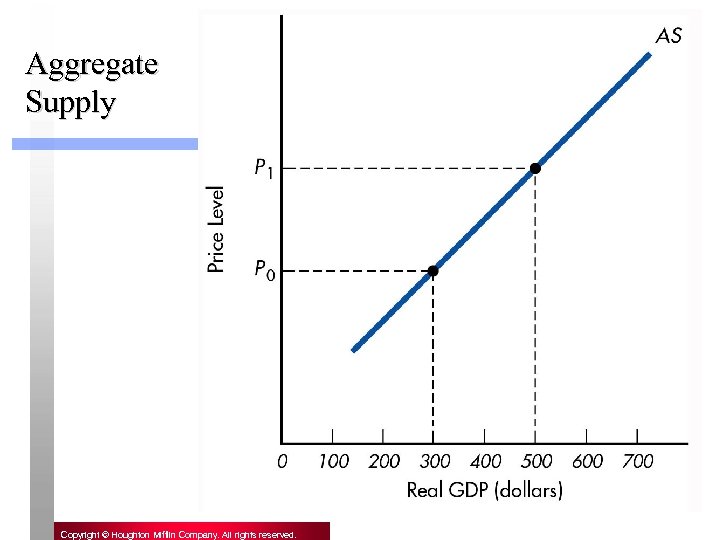 Aggregate Supply 14 Copyright © Houghton Mifflin Company. All rights reserved.
 Shape of Short-run AS (SRAS) l l In the short-run, the capital stock (the number of factories and machines, etc. ) are held constant. Increasing the number of workers increases output, but at a diminishing rate. Diminishing returns manifest as an ever-steeper SRAS curve. In the short-run, some prices do not adjust quickly: – – – Labor Costs (wages) Contracted supplies “Sticky” prices effect the short-run equillibrium 15 Copyright © Houghton Mifflin Company. All rights reserved.
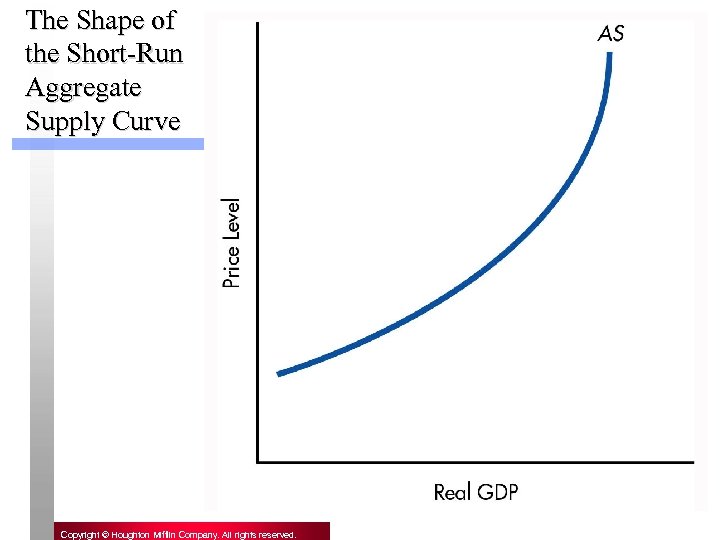 The Shape of the Short-Run Aggregate Supply Curve 16 Copyright © Houghton Mifflin Company. All rights reserved.
 The Shape of Long-run AS (LRAS) l Resource costs are NOT fixed. – l l As prices rise, workers will want higher wages and will eventually get them. The amount of capital is not fixed—firms can build new plants and buy new equipment over the long-run. In the long-run, AS is set by the production possibilities curve—the capacity of the economy, and is not affected by prices, hence is vertical. 17 Copyright © Houghton Mifflin Company. All rights reserved.
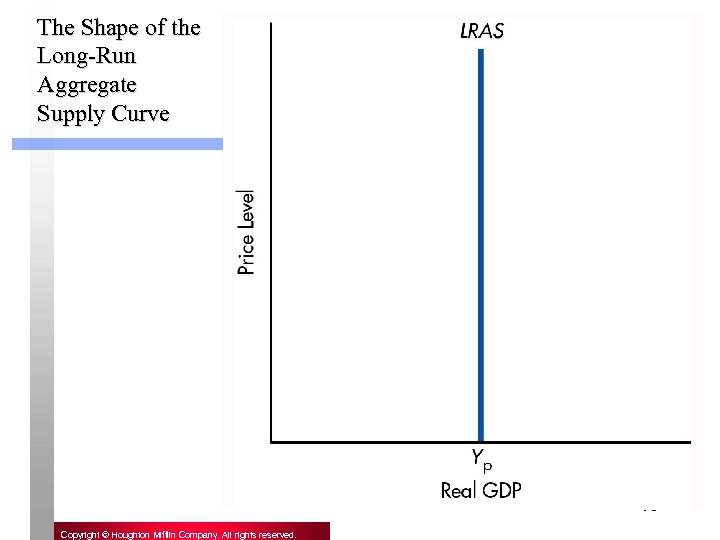 The Shape of the Long-Run Aggregate Supply Curve 18 Copyright © Houghton Mifflin Company. All rights reserved.
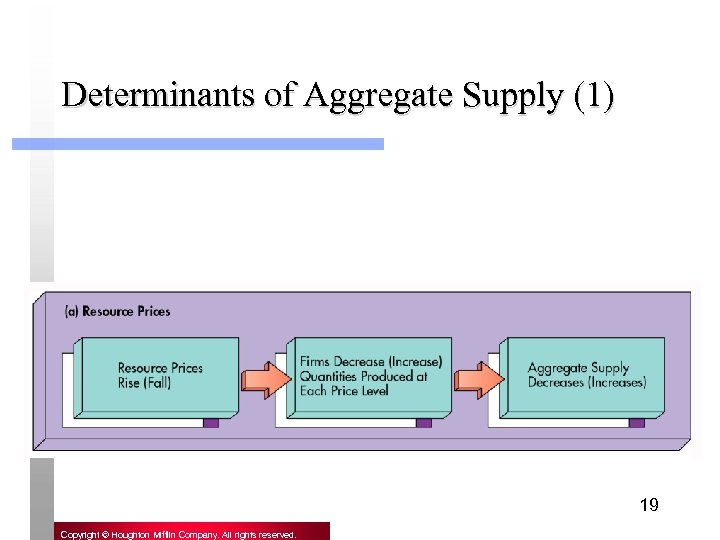 Determinants of Aggregate Supply (1) 19 Copyright © Houghton Mifflin Company. All rights reserved.
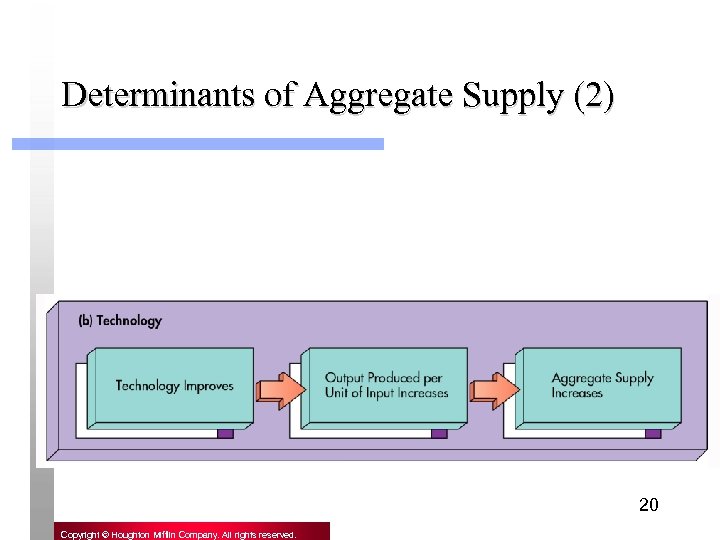 Determinants of Aggregate Supply (2) 20 Copyright © Houghton Mifflin Company. All rights reserved.
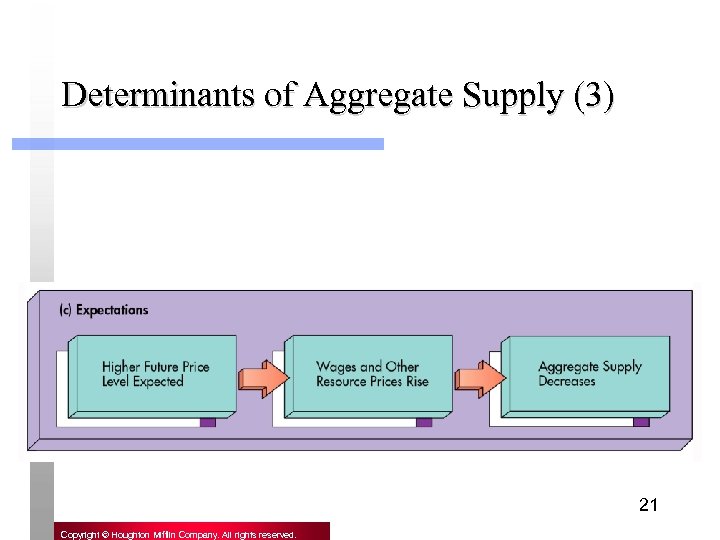 Determinants of Aggregate Supply (3) 21 Copyright © Houghton Mifflin Company. All rights reserved.
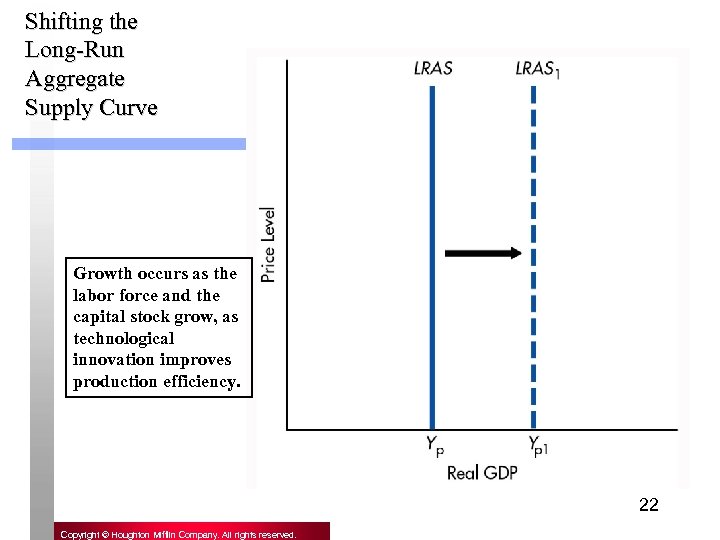 Shifting the Long-Run Aggregate Supply Curve Growth occurs as the labor force and the capital stock grow, as technological innovation improves production efficiency. 22 Copyright © Houghton Mifflin Company. All rights reserved.
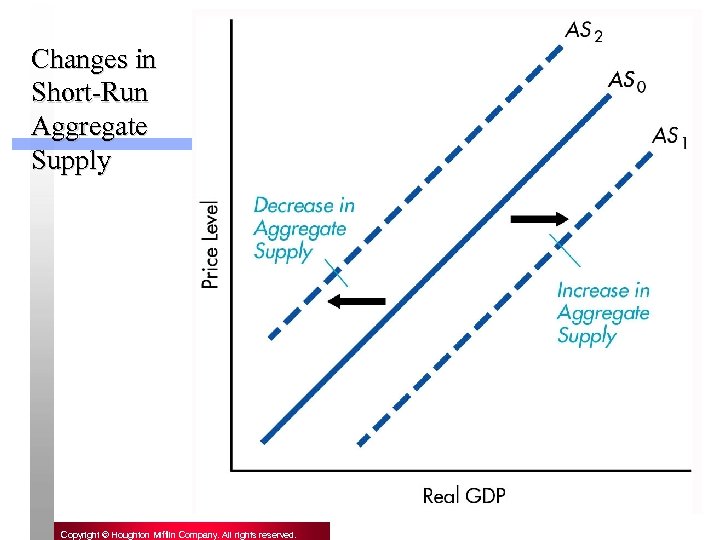 Changes in Short-Run Aggregate Supply 23 Copyright © Houghton Mifflin Company. All rights reserved.
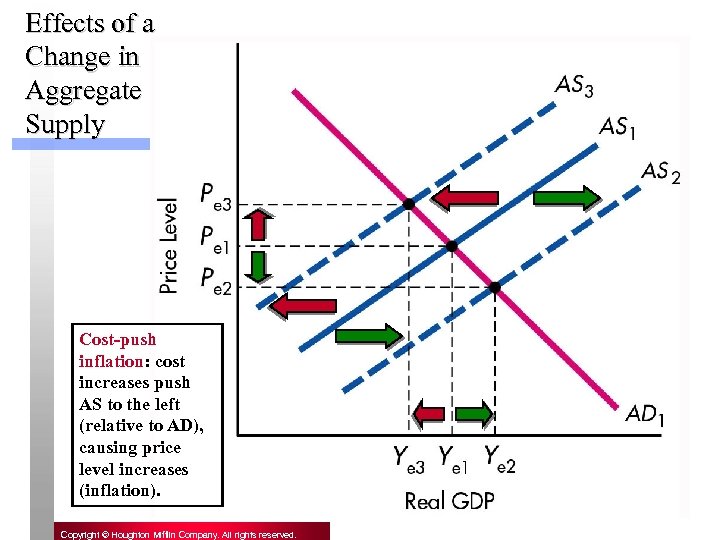 Effects of a Change in Aggregate Supply Cost-push inflation: cost increases push AS to the left (relative to AD), causing price level increases (inflation). Copyright © Houghton Mifflin Company. All rights reserved. 24
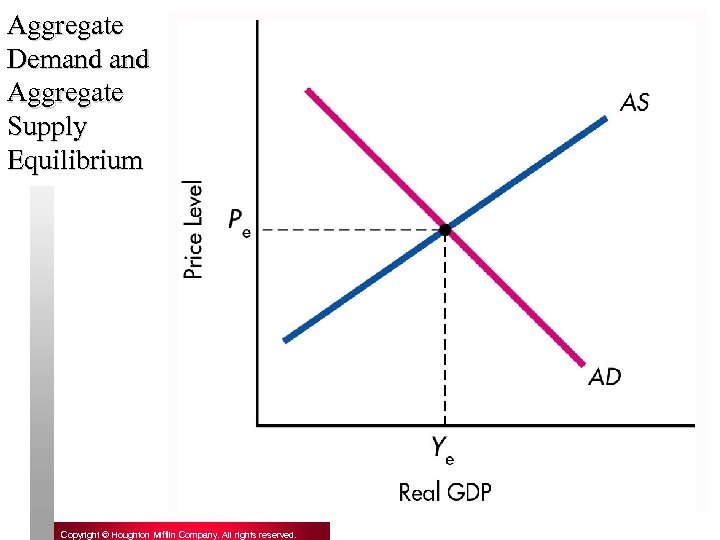 Aggregate Demand Aggregate Supply Equilibrium 25 Copyright © Houghton Mifflin Company. All rights reserved.
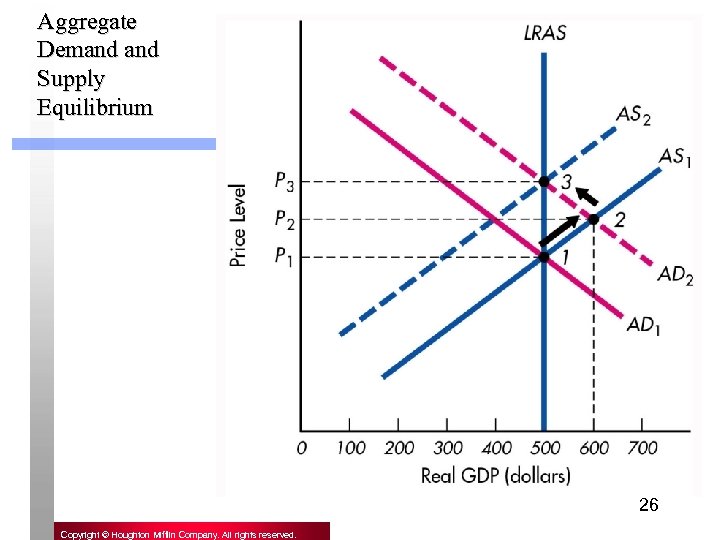 Aggregate Demand Supply Equilibrium 26 Copyright © Houghton Mifflin Company. All rights reserved.
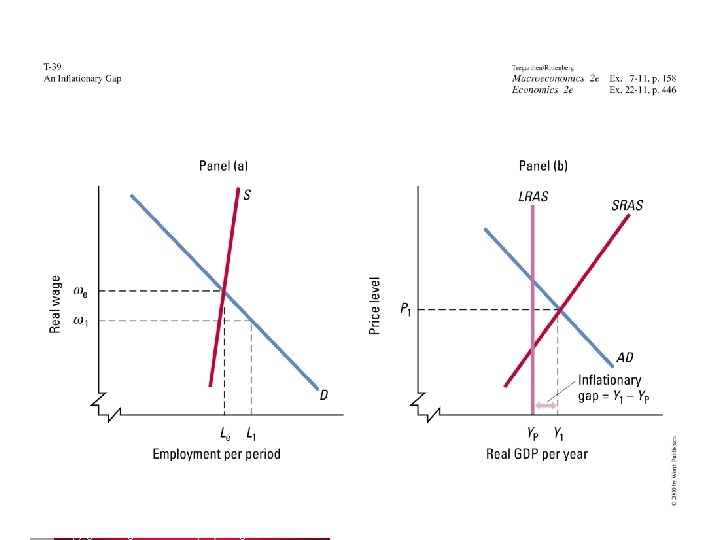 27 Copyright © Houghton Mifflin Company. All rights reserved.
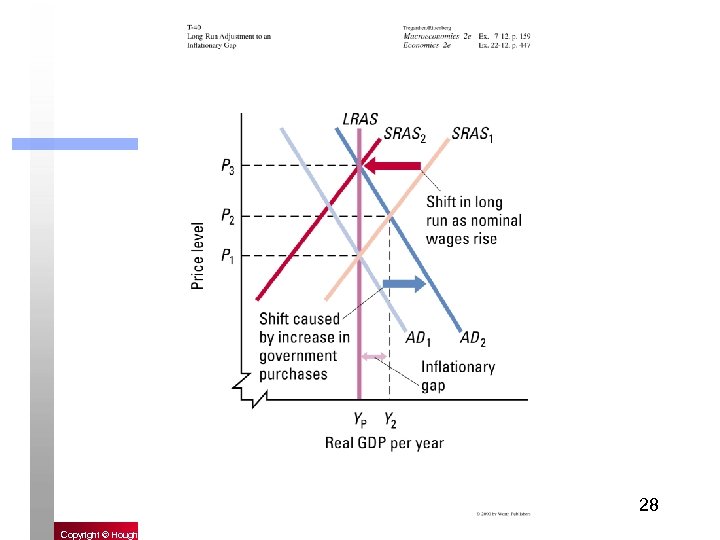 28 Copyright © Houghton Mifflin Company. All rights reserved.
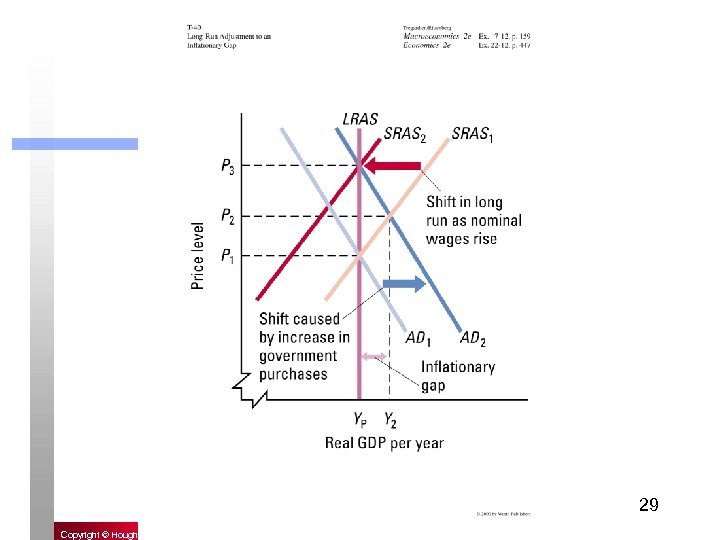 29 Copyright © Houghton Mifflin Company. All rights reserved.
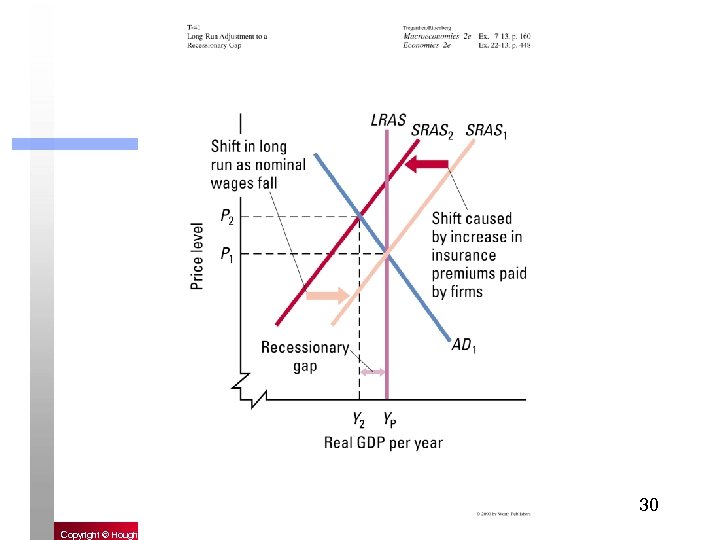 30 Copyright © Houghton Mifflin Company. All rights reserved.
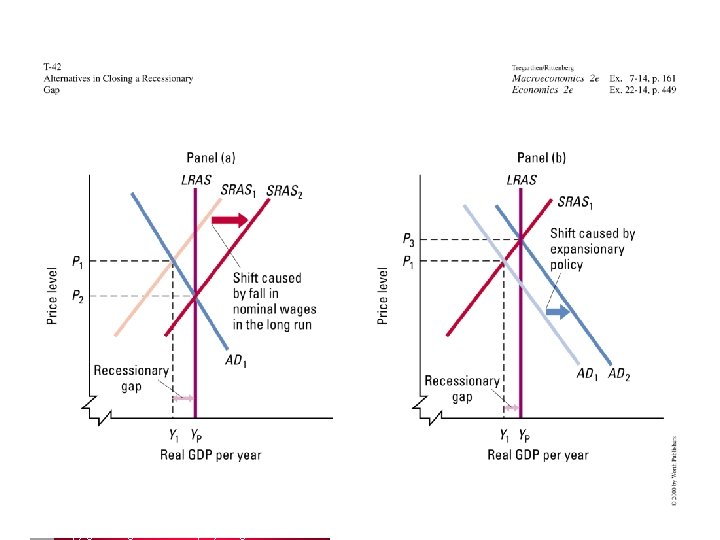 31 Copyright © Houghton Mifflin Company. All rights reserved.
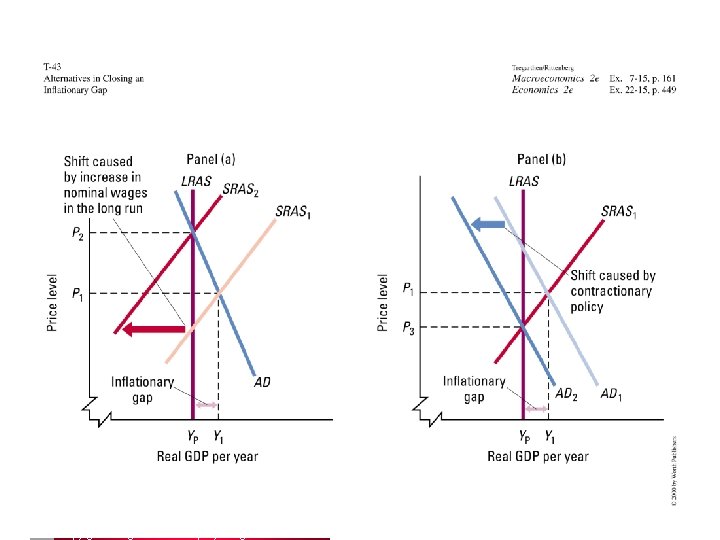 32 Copyright © Houghton Mifflin Company. All rights reserved.
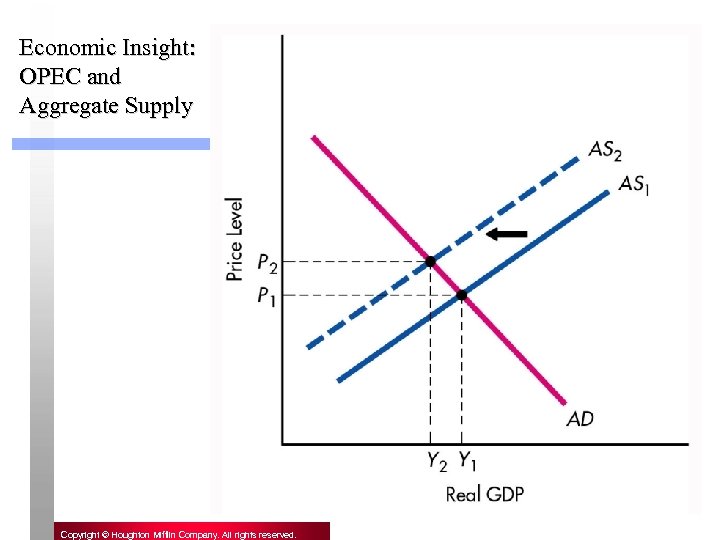 Economic Insight: OPEC and Aggregate Supply 33 Copyright © Houghton Mifflin Company. All rights reserved.