 Скачать презентацию Chapter 21 Global Climate Change Overview o
c3921a79d4c5e181573a5b2fb81a1b14.ppt
- Количество слайдов: 52



Chapter #21 Global Climate Change
Overview o o o Introduction to Climate Change • Causes of Global Climate Change Effects of Climate Change • Melting Ice and Rising Sea Level • Changes in Precipitation Patterns • Effects on Organisms • Effects on Human Health • Effects on Agriculture Dealing with Global Climate Change
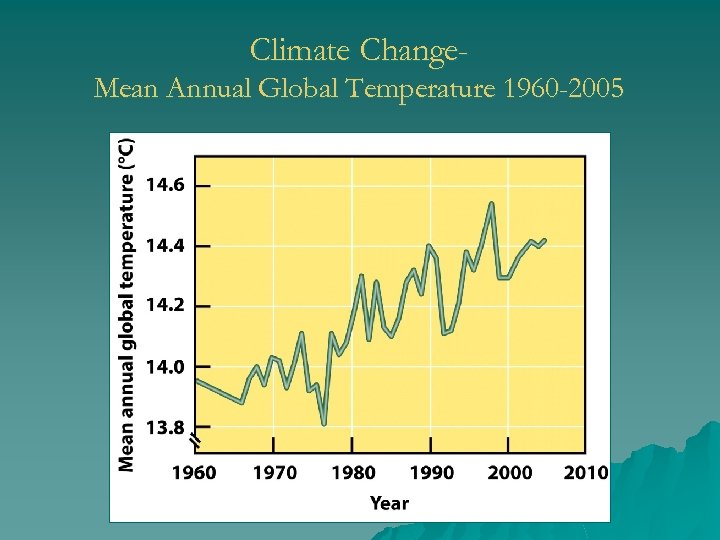
Climate Change. Mean Annual Global Temperature 1960 -2005
Climate Change Terminology o Greenhouse Gas • • o Positive Feedback • o Change in some condition triggers a response that intensifies the changed condition Infrared Radiation • o Gas that absorbs infrared radiation Ex: Carbon dioxide, methane, nitrous oxide, chlorofluorocarbons and tropospheric ozone Radiation that has a wavelength that is longer than that of visible light, but shorter than that of radio waves Greenhouse Effect • Increase of heat in a system where energy enters (often as light), is absorbed as heat, and released sometime later
Climate Change o Evidence for Climate Change • • o 11 of the 12 years between 1995 and 2006 were among the twelve warmest years since the mid-1800 s Phenological spring in N. hemisphere now comes 6 days earlier Warming is not due to natural causes • Human produced greenhouse gases are most plausible explanation
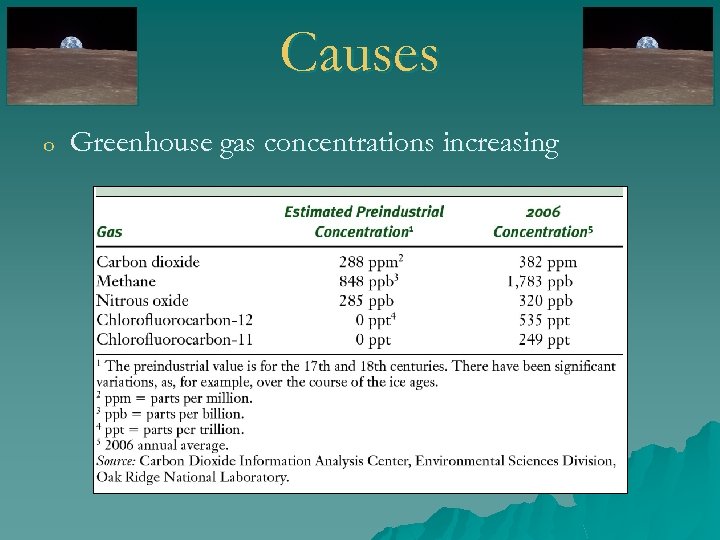
Causes o Greenhouse gas concentrations increasing
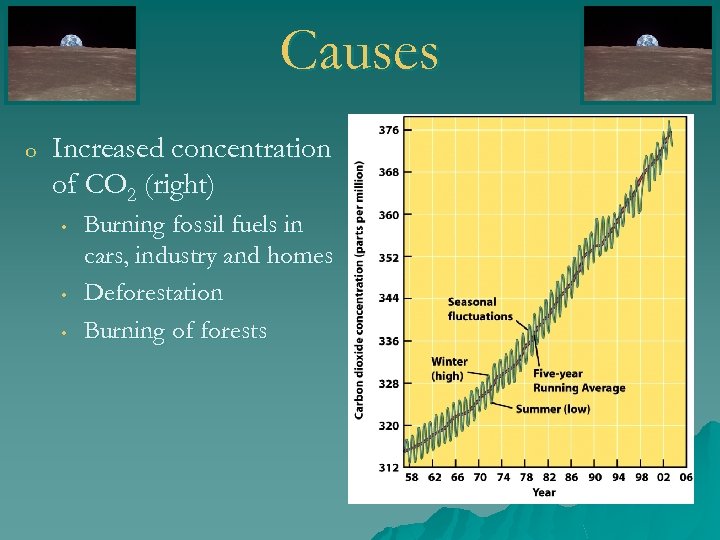
Causes o Increased concentration of CO 2 (right) • • • Burning fossil fuels in cars, industry and homes Deforestation Burning of forests
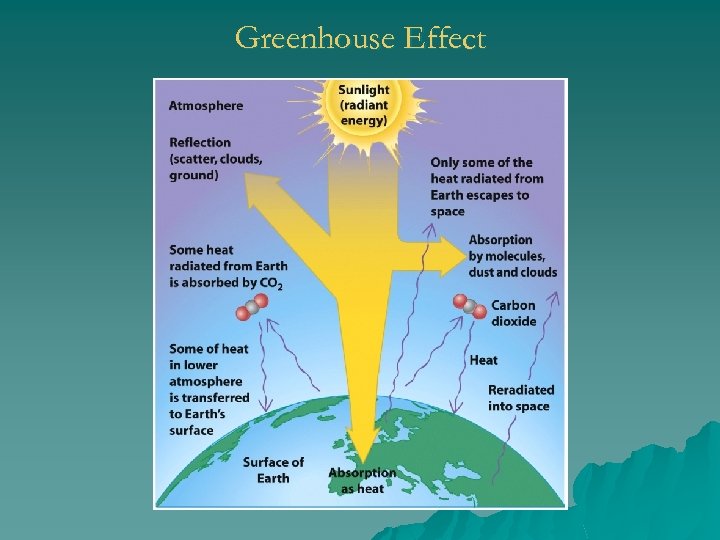
Greenhouse Effect
Other Pollutants Cool the Atmosphere o Atmospheric Aerosols tend to cool the atmosphere • • • o Both human and natural sources Tiny particles that remain in troposphere for weeks or months Contain many chemicals, but often contain sulfur Complicates models of climate change
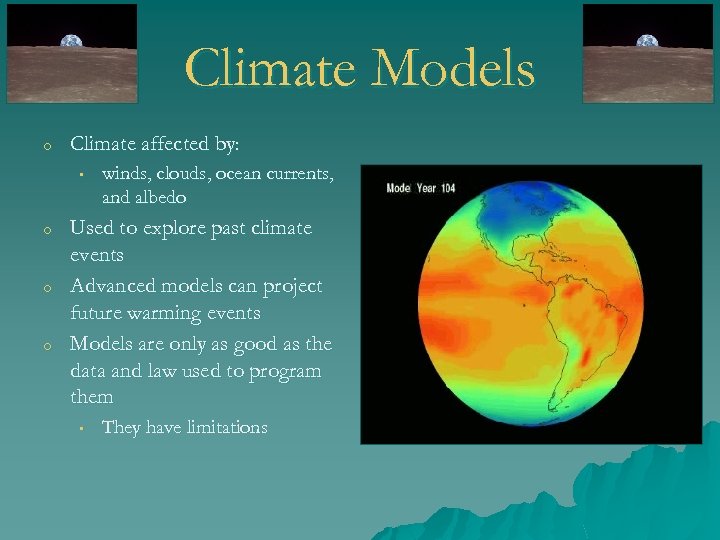
Climate Models o Climate affected by: • o o o winds, clouds, ocean currents, and albedo Used to explore past climate events Advanced models can project future warming events Models are only as good as the data and law used to program them • They have limitations
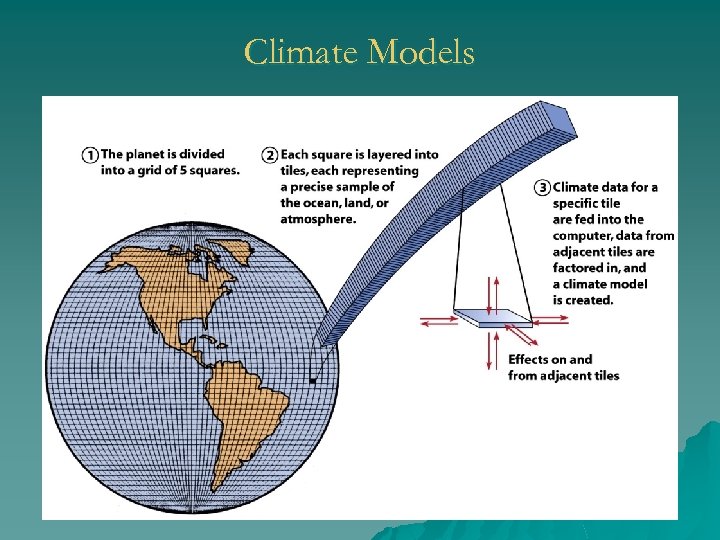
Climate Models
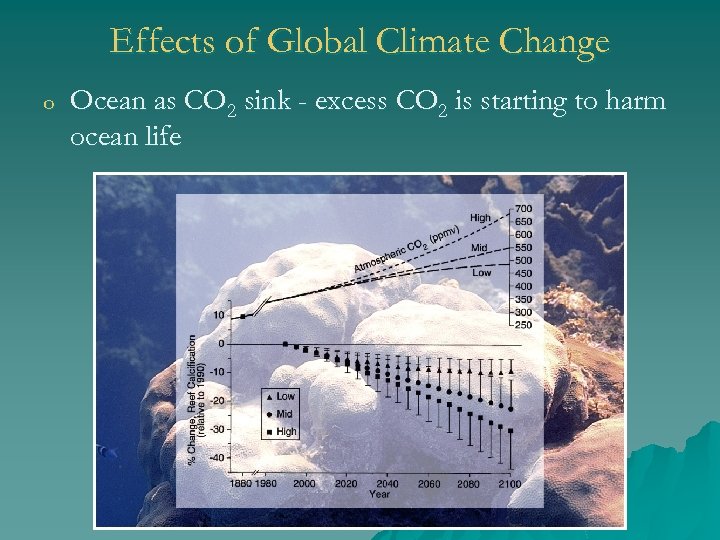
Effects of Global Climate Change o Ocean as CO 2 sink - excess CO 2 is starting to harm ocean life
Effects of Global Climate Change- Melting Ice and Rising Sea Levels o Sea level rise caused in 2 ways • Thermal Expansion • • Melting of land ice • o Water expands as it warms Retreat of glacier and thinning of ice at the poles Melting has positive feedback • Increased melting decreases ice, which decreases albedo leading to further warming
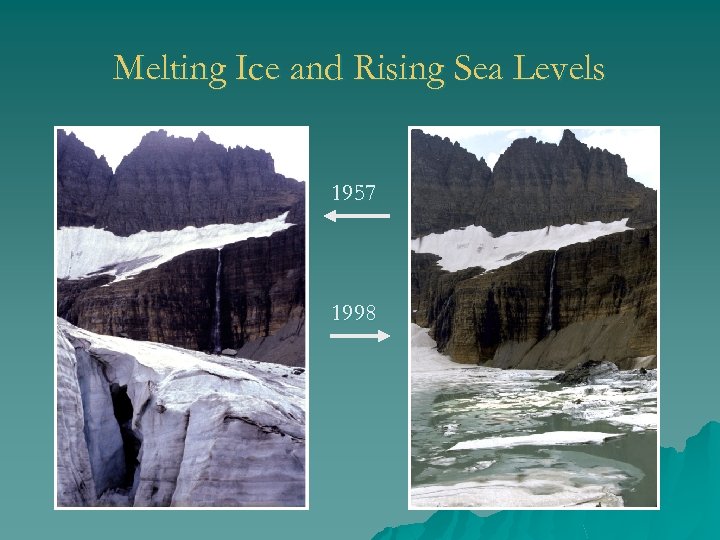
Melting Ice and Rising Sea Levels 1957 1998
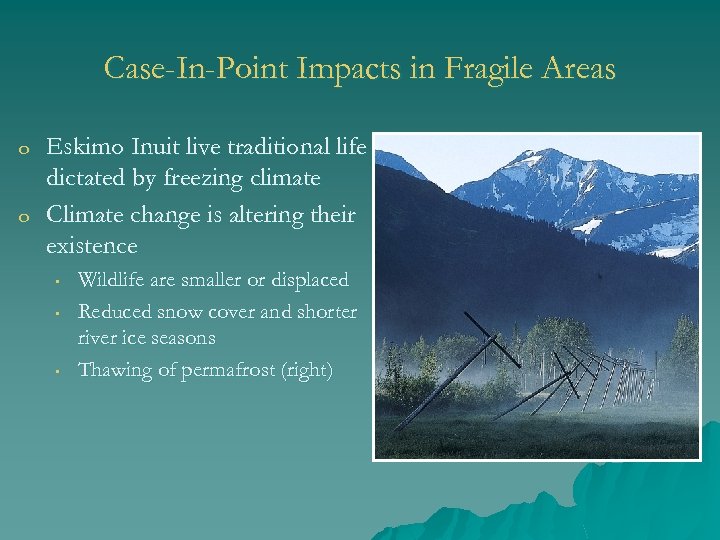
Case-In-Point Impacts in Fragile Areas o o Eskimo Inuit live traditional life dictated by freezing climate Climate change is altering their existence • • • Wildlife are smaller or displaced Reduced snow cover and shorter river ice seasons Thawing of permafrost (right)
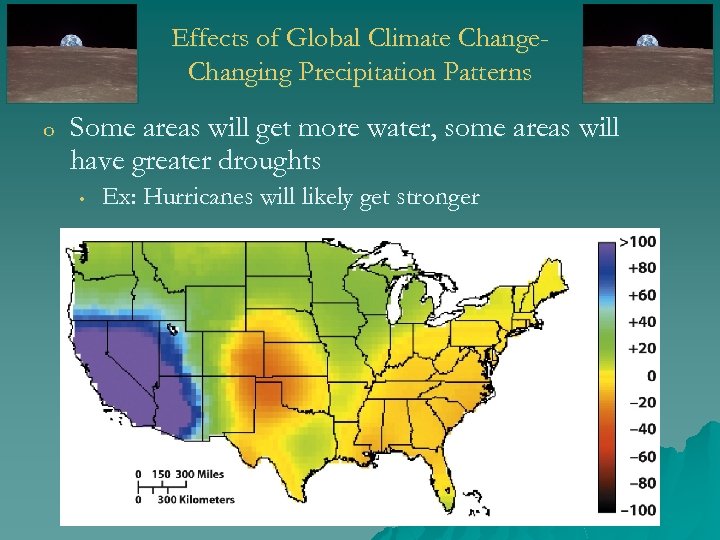
Effects of Global Climate Change. Changing Precipitation Patterns o Some areas will get more water, some areas will have greater droughts • Ex: Hurricanes will likely get stronger
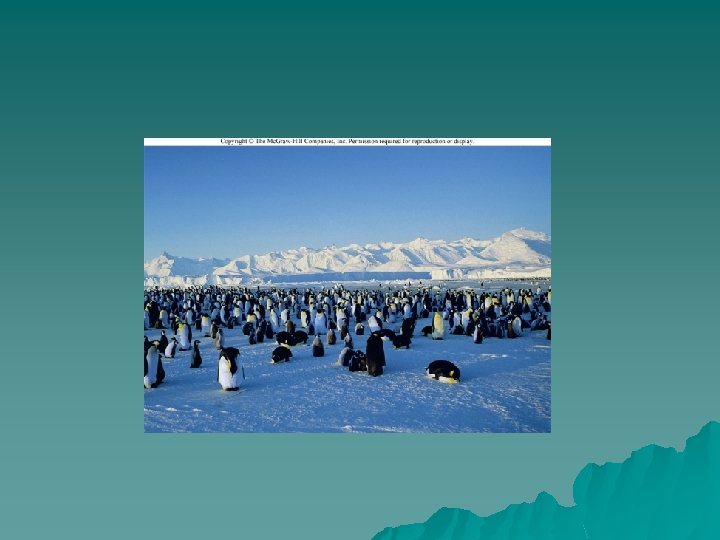
Effects of Global Climate Change. Effects on Organisms o Zooplankton in parts of California Current have decreased by 80% since 1951 • o Decline in krill around Antarctica • o o Effecting entire food chain Caused decrease in penguin populations Species have shifted their geographic range Migrating birds are returning to summer homes earlier • Food is not available at this time
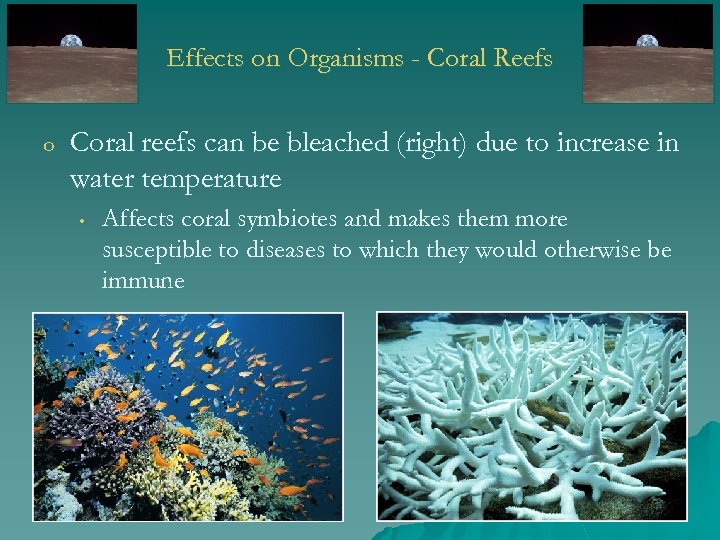
Effects on Organisms - Coral Reefs o Coral reefs can be bleached (right) due to increase in water temperature • Affects coral symbiotes and makes them more susceptible to diseases to which they would otherwise be immune
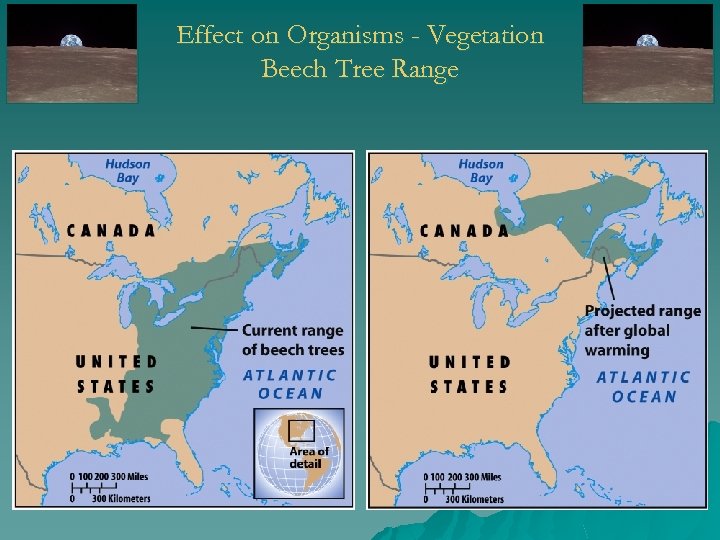
Effect on Organisms - Vegetation Beech Tree Range
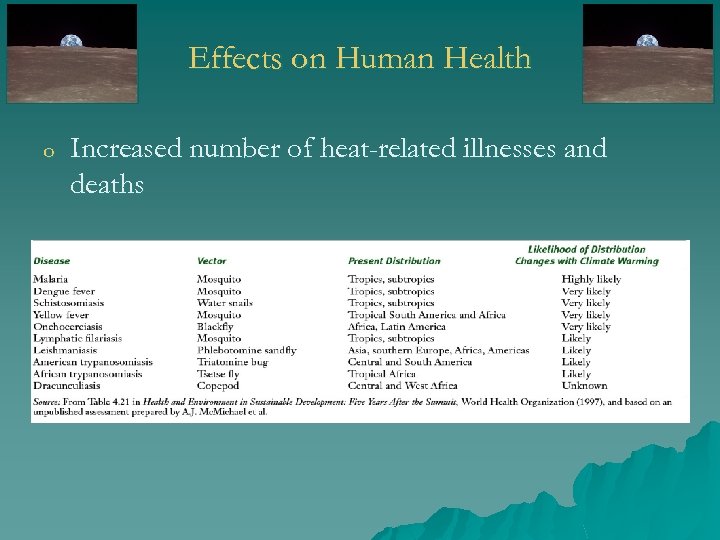
Effects on Human Health o Increased number of heat-related illnesses and deaths
Effects on Agriculture o Difficult to anticipate • o o Productivity will increase in some areas and decrease in others Rise in sea level will inundate flood plains and river valleys (lush farmland) Effect on pests is unknown Warmer temperatures will decrease soil moisture- requiring more irrigation Location (i. e. elevation and altitude) where certain crops can be grown may have to change
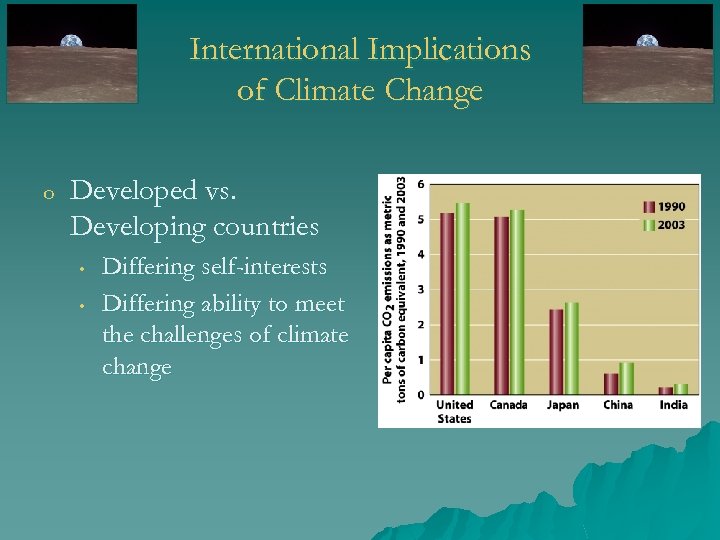
International Implications of Climate Change o Developed vs. Developing countries • • Differing self-interests Differing ability to meet the challenges of climate change
Dealing with Global Climate Change o To avoid the worst of climate change, CO 2 levels must be stabilized at 550 ppm • o 50% higher than current levels Two ways to attempt to manage climate change • Mitigation • • Focuses on limiting greenhouse gas emissions to moderate global climate change Adaptation • Focuses on learning to live with to the environmental changes and societal consequences brought about by global climate change
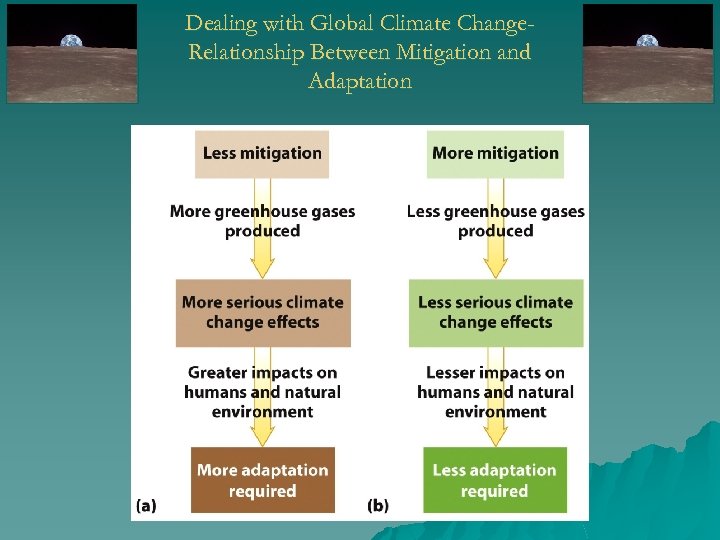
Dealing with Global Climate Change. Relationship Between Mitigation and Adaptation
Dealing with Global Climate Change - Mitigation o o Locate/invent alternative fuels to fossil fuels Increase efficiency of cars and trucks Sequestering carbon before it is emitted Plant and Maintain trees to naturally sequester carbon
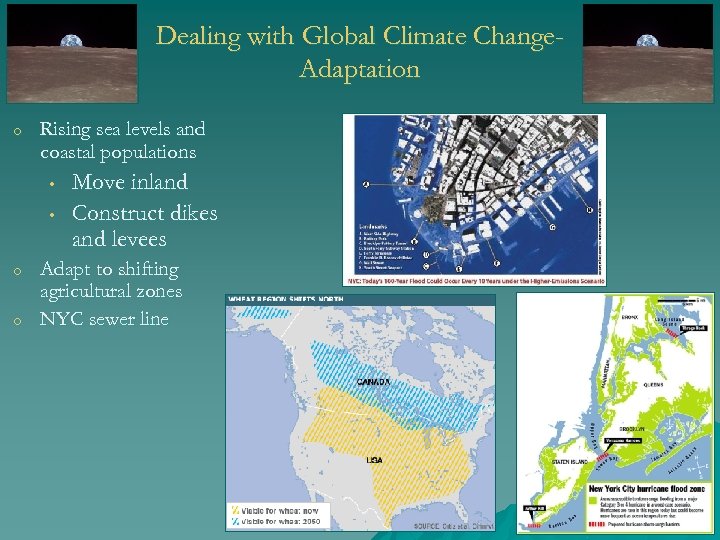
Dealing with Global Climate Change. Adaptation o Rising sea levels and coastal populations • • o o Move inland Construct dikes and levees Adapt to shifting agricultural zones NYC sewer line
“There were rumors of unfathomable things, and because we could not fathom them we failed to believe them, until we had no choice it was too late. ”
Ozone Depletion o o o Stratospheric ozone UV light Chemical processes Environmental effects Solutions
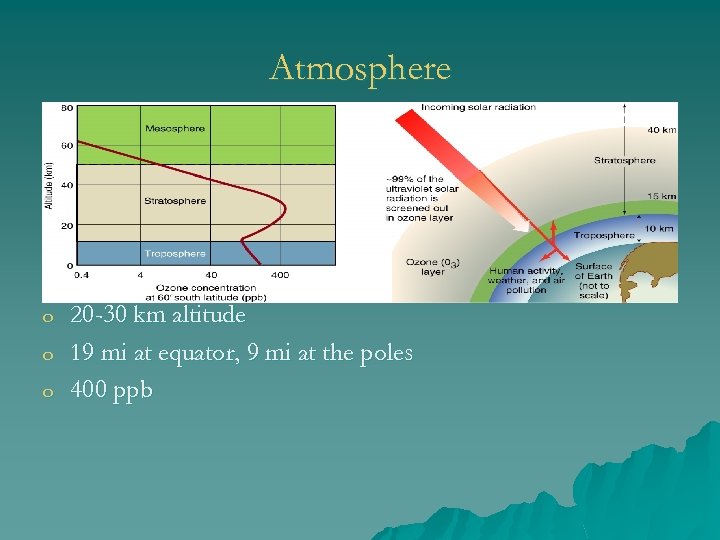
Atmosphere o o Stratospheric ozone 20 -30 km altitude 19 mi at equator, 9 mi at the poles 400 ppb
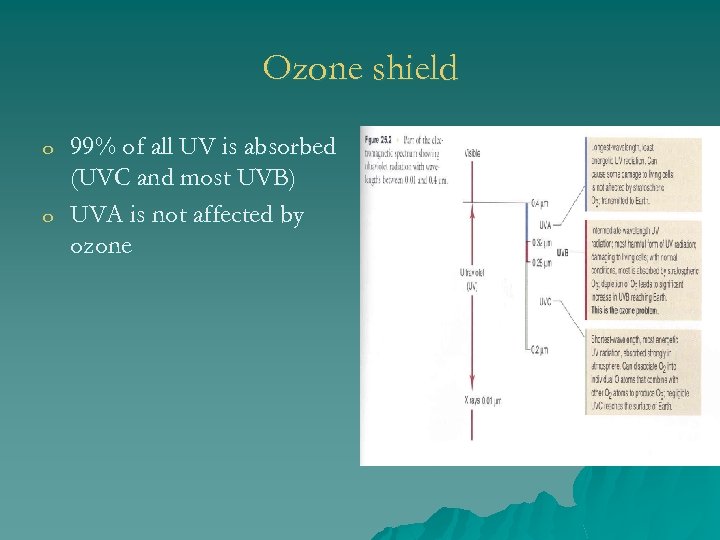
Ozone shield o o 99% of all UV is absorbed (UVC and most UVB) UVA is not affected by ozone
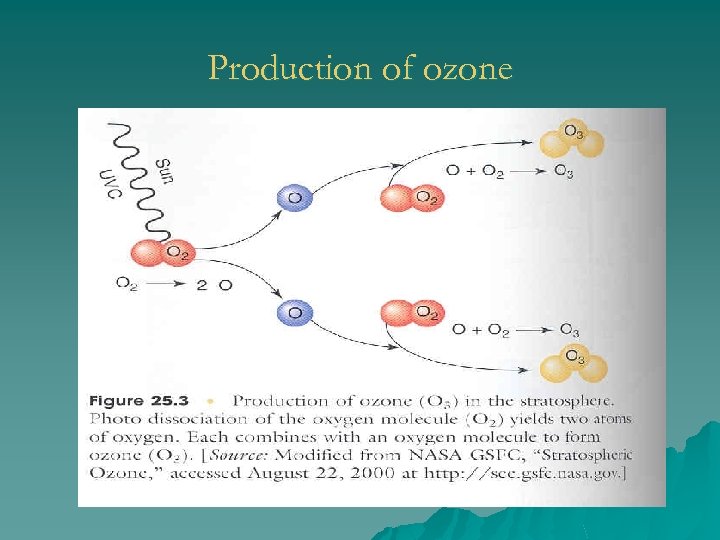
Production of ozone
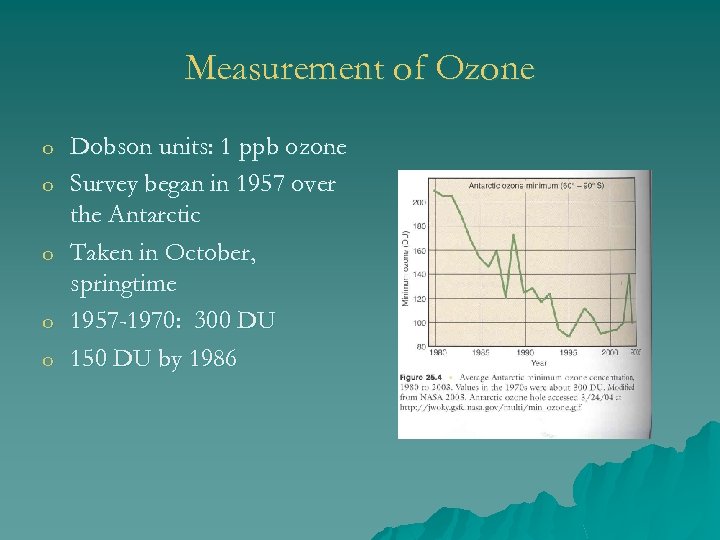
Measurement of Ozone o o o Dobson units: 1 ppb ozone Survey began in 1957 over the Antarctic Taken in October, springtime 1957 -1970: 300 DU 150 DU by 1986
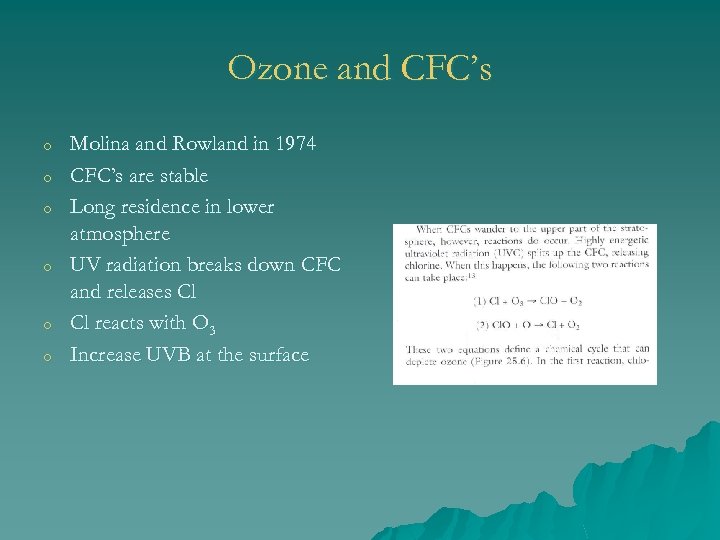
Ozone and CFC’s o o o Molina and Rowland in 1974 CFC’s are stable Long residence in lower atmosphere UV radiation breaks down CFC and releases Cl Cl reacts with O 3 Increase UVB at the surface
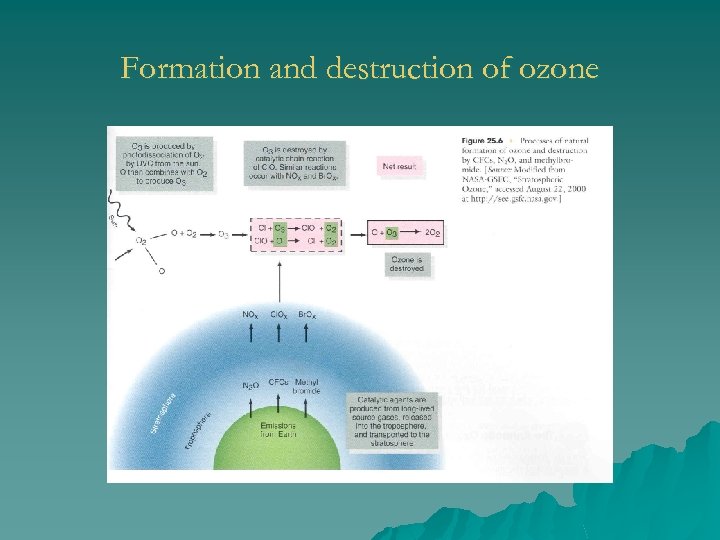
Formation and destruction of ozone
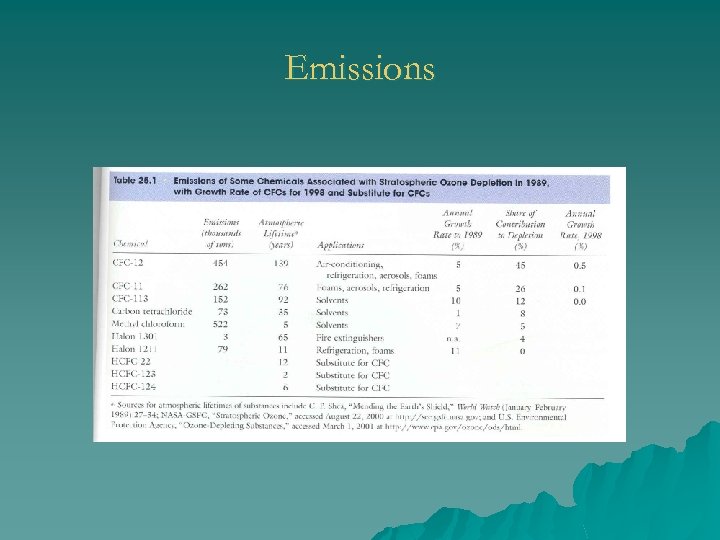
Emissions
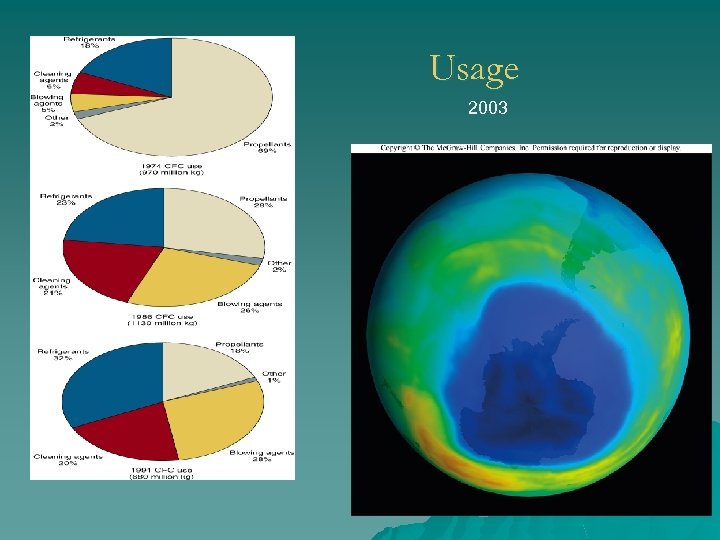
Usage 2003
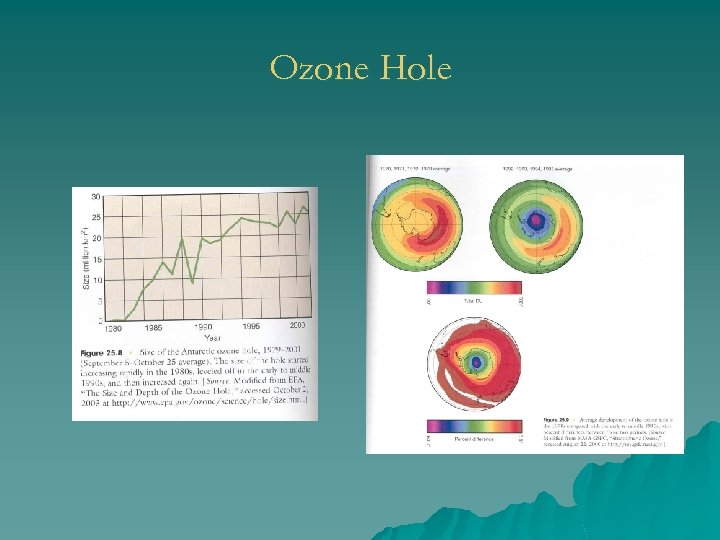
Ozone Hole
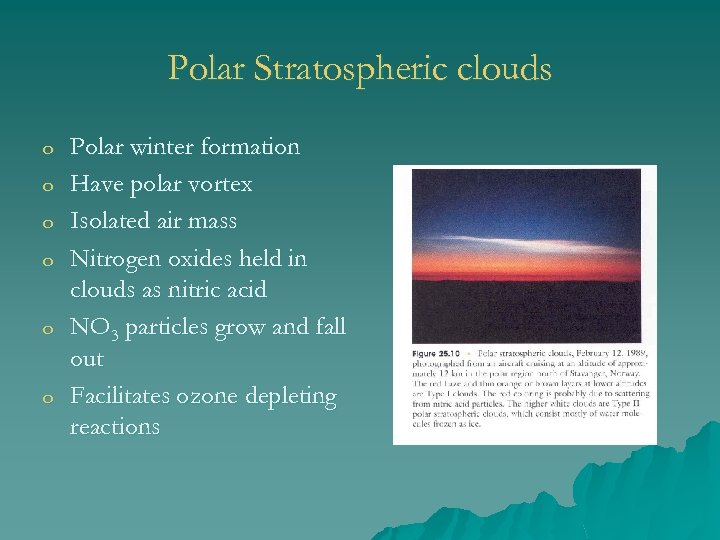
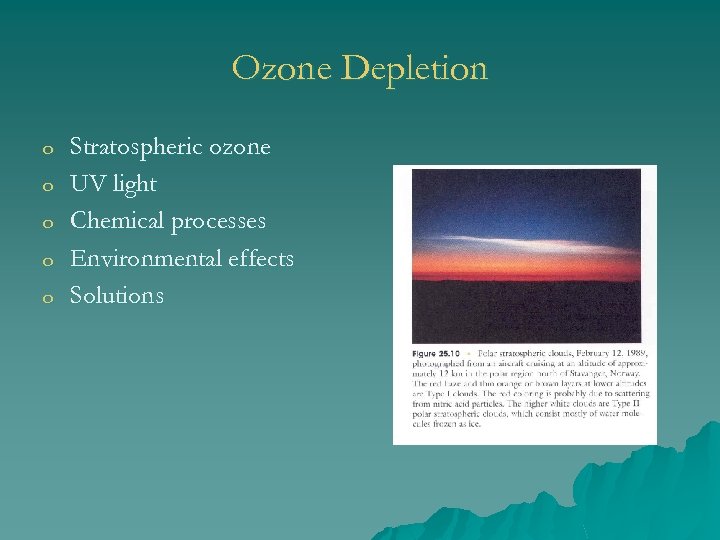
Polar Stratospheric clouds o o o Polar winter formation Have polar vortex Isolated air mass Nitrogen oxides held in clouds as nitric acid NO 3 particles grow and fall out Facilitates ozone depleting reactions
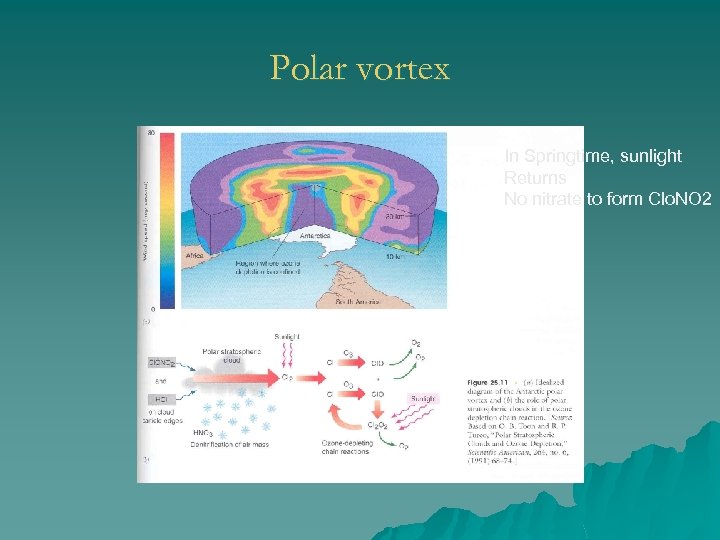
Polar vortex In Springtime, sunlight Returns No nitrate to form Clo. NO 2
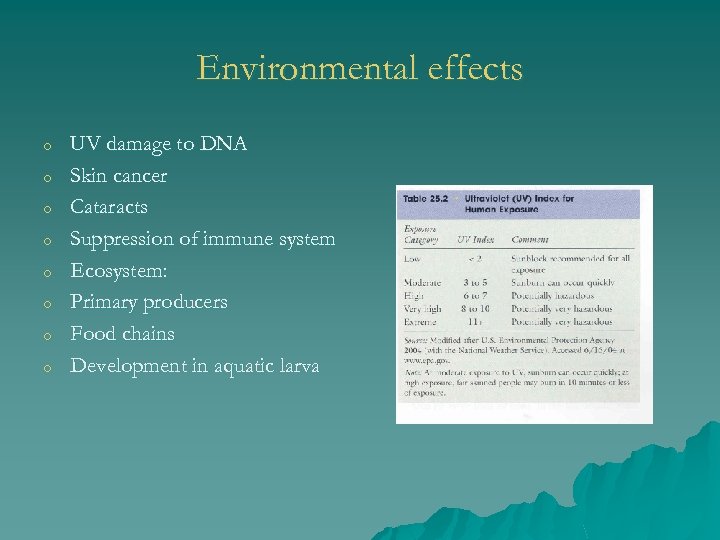
Environmental effects o o o o UV damage to DNA Skin cancer Cataracts Suppression of immune system Ecosystem: Primary producers Food chains Development in aquatic larva
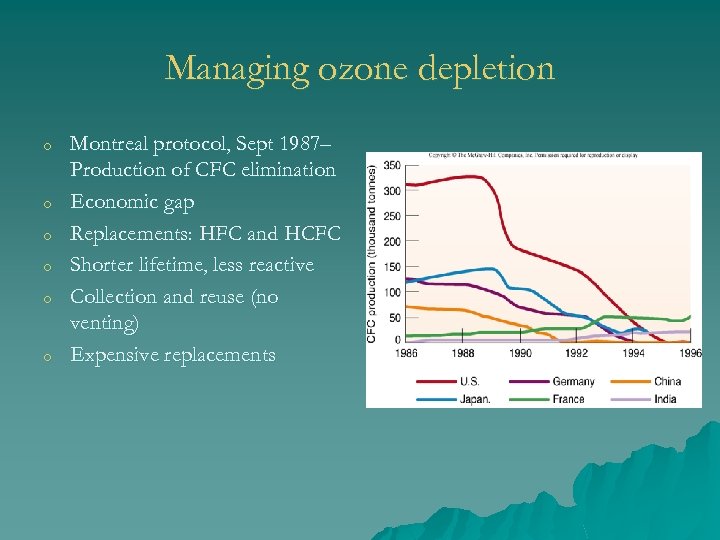
Managing ozone depletion o o o Montreal protocol, Sept 1987– Production of CFC elimination Economic gap Replacements: HFC and HCFC Shorter lifetime, less reactive Collection and reuse (no venting) Expensive replacements
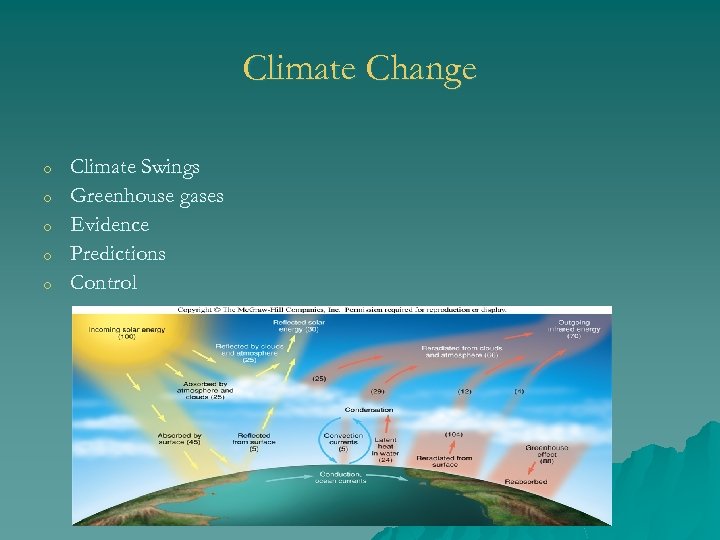
Climate Change o o o Climate Swings Greenhouse gases Evidence Predictions Control
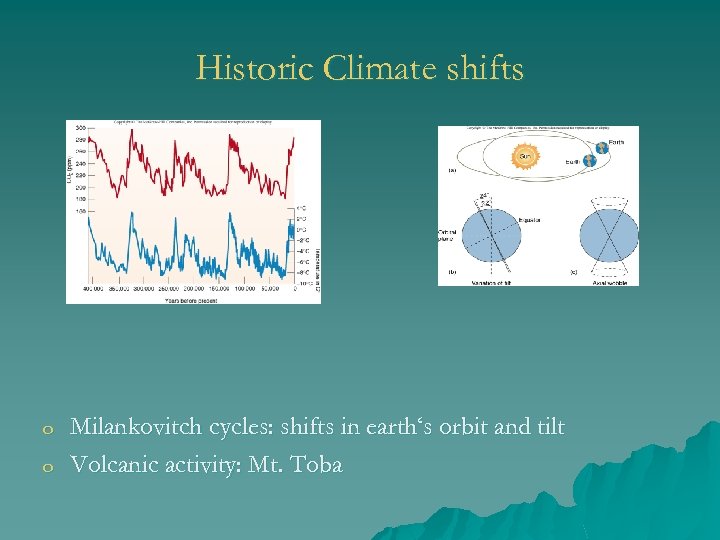
Historic Climate shifts o o Milankovitch cycles: shifts in earth‘s orbit and tilt Volcanic activity: Mt. Toba
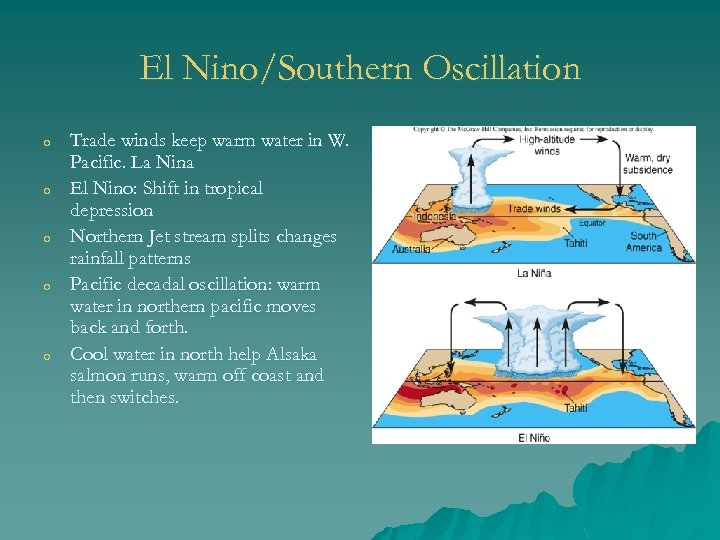
El Nino/Southern Oscillation o o o Trade winds keep warm water in W. Pacific. La Nina El Nino: Shift in tropical depression Northern Jet stream splits changes rainfall patterns Pacific decadal oscillation: warm water in northern pacific moves back and forth. Cool water in north help Alsaka salmon runs, warm off coast and then switches.
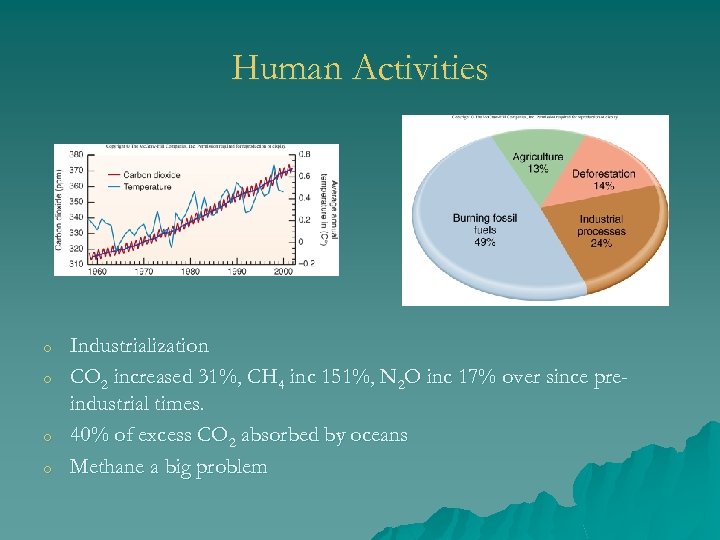
Human Activities o o Industrialization CO 2 increased 31%, CH 4 inc 151%, N 2 O inc 17% over since preindustrial times. 40% of excess CO 2 absorbed by oceans Methane a big problem
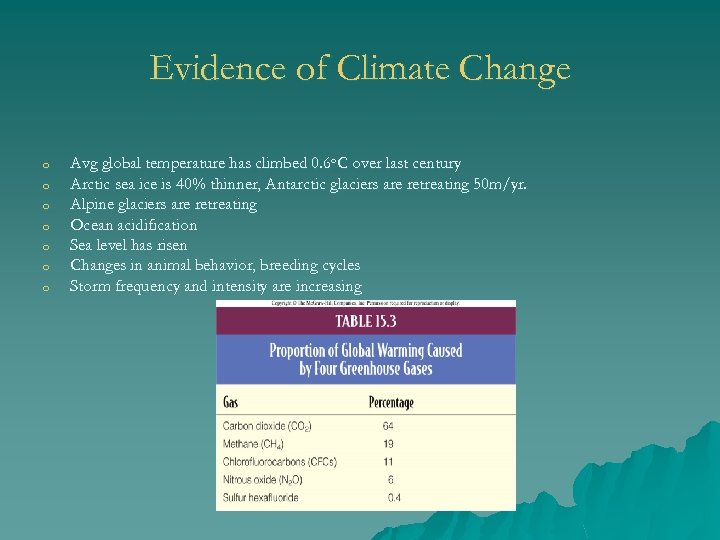
Evidence of Climate Change o o o o Avg global temperature has climbed 0. 6 o. C over last century Arctic sea ice is 40% thinner, Antarctic glaciers are retreating 50 m/yr. Alpine glaciers are retreating Ocean acidification Sea level has risen Changes in animal behavior, breeding cycles Storm frequency and intensity are increasing
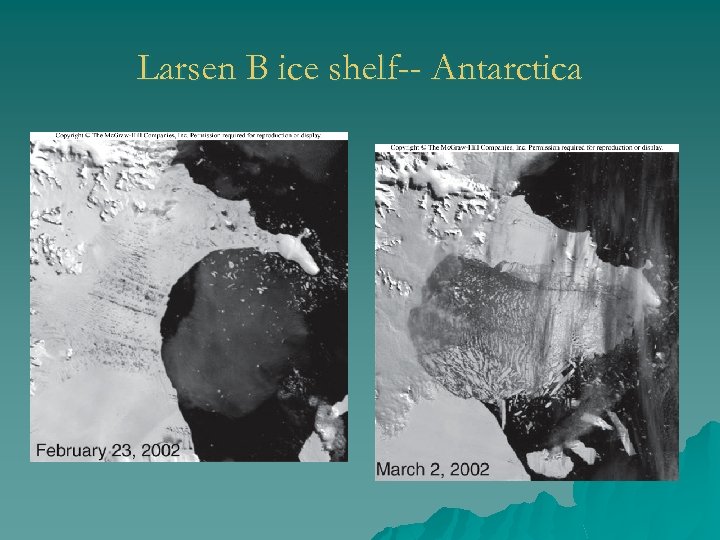
Larsen B ice shelf-- Antarctica
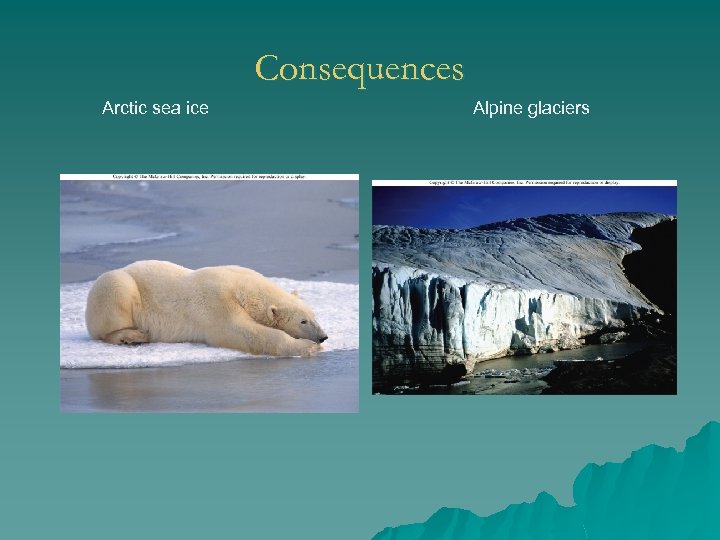
Consequences Arctic sea ice Alpine glaciers
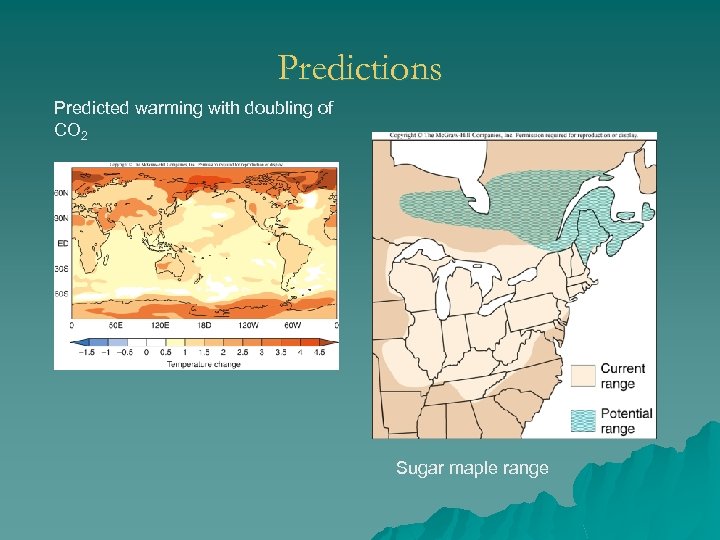
Predictions Predicted warming with doubling of CO 2 Sugar maple range
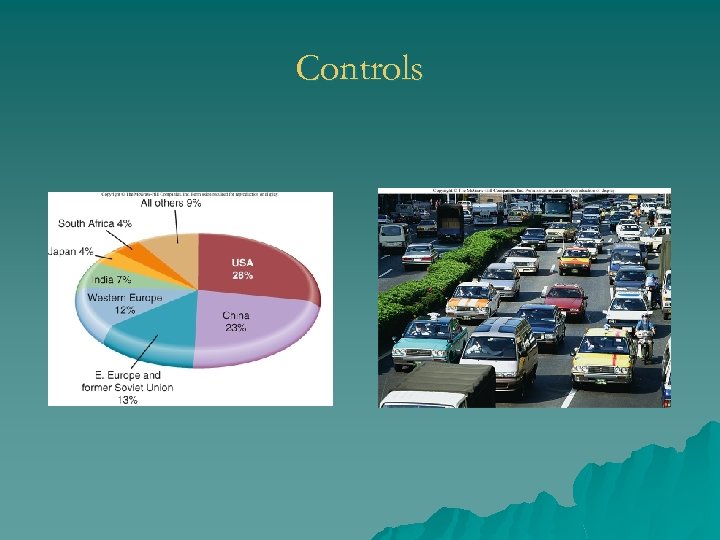
Controls
Reduction of Carbon Emissions o o o Burn less fossil fuel: Turn down your thermostat Plant Trees for shade and CO 2 uptake Insulate your house Replace old appliances Use compact fluorescence light bulbs Use renewable energy
Скачать презентацию Chapter 21 Global Climate Change Overview o
c3921a79d4c5e181573a5b2fb81a1b14.ppt