


 Скачать презентацию Chapter 20 Taxes Inflation and Investment Strategy Mc
0e940ab525e9a8dc7512935e03a40a99.ppt
- Количество слайдов: 39
 Chapter 20 Taxes, Inflation, and Investment Strategy Mc. Graw-Hill/Irwin Copyright © 2010 by The Mc. Graw-Hill Companies, Inc. All rights reserved.
 21. 1 Saving for the Long Run 21 -2
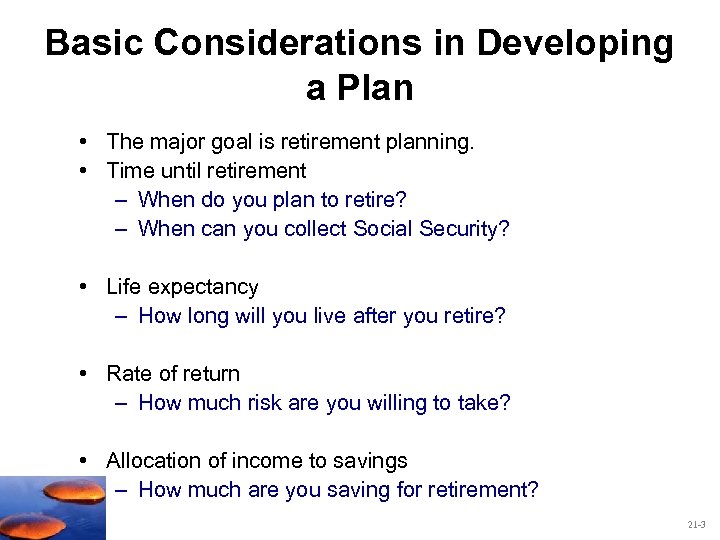 Basic Considerations in Developing a Plan • The major goal is retirement planning. • Time until retirement – When do you plan to retire? – When can you collect Social Security? • Life expectancy – How long will you live after you retire? • Rate of return – How much risk are you willing to take? • Allocation of income to savings – How much are you saving for retirement? 21 -3
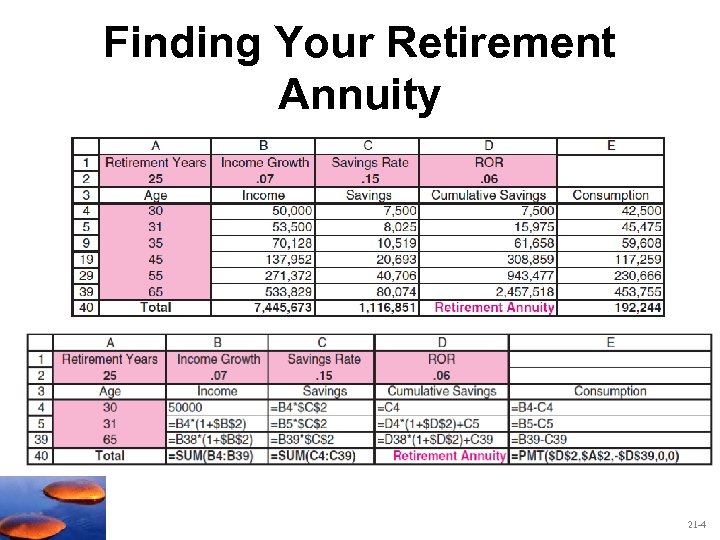 Finding Your Retirement Annuity 21 -4
 21. 2 Accounting For Inflation 21 -5
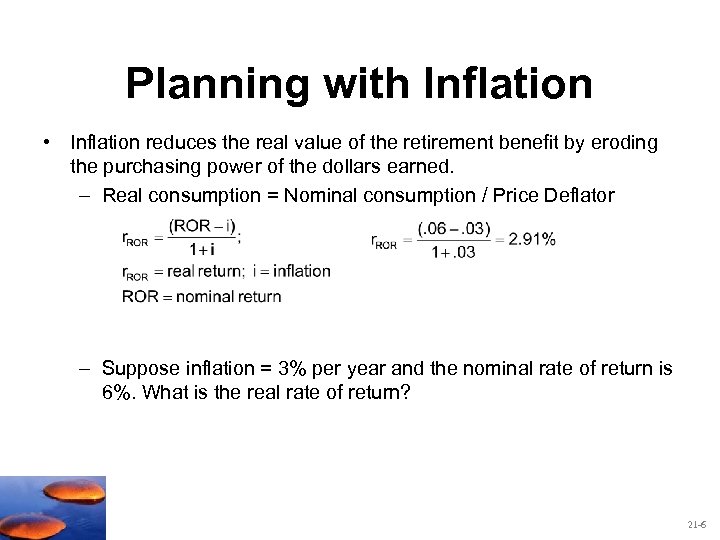 Planning with Inflation • Inflation reduces the real value of the retirement benefit by eroding the purchasing power of the dollars earned. – Real consumption = Nominal consumption / Price Deflator – Suppose inflation = 3% per year and the nominal rate of return is 6%. What is the real rate of return? 21 -6
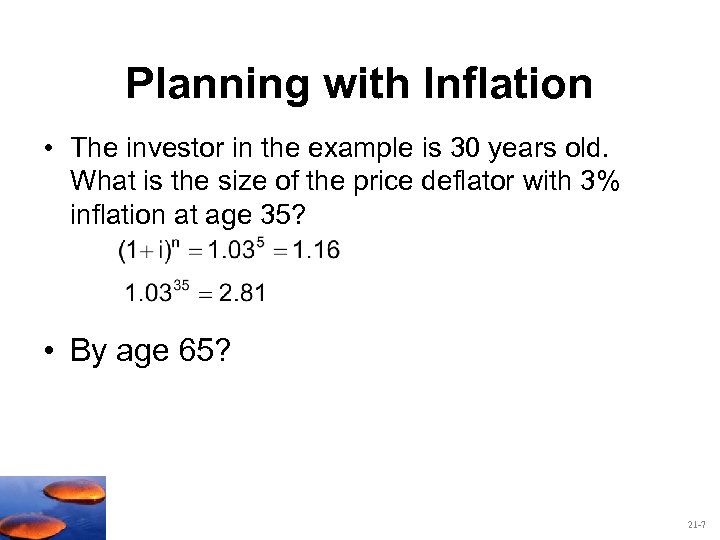 Planning with Inflation • The investor in the example is 30 years old. What is the size of the price deflator with 3% inflation at age 35? • By age 65? 21 -7
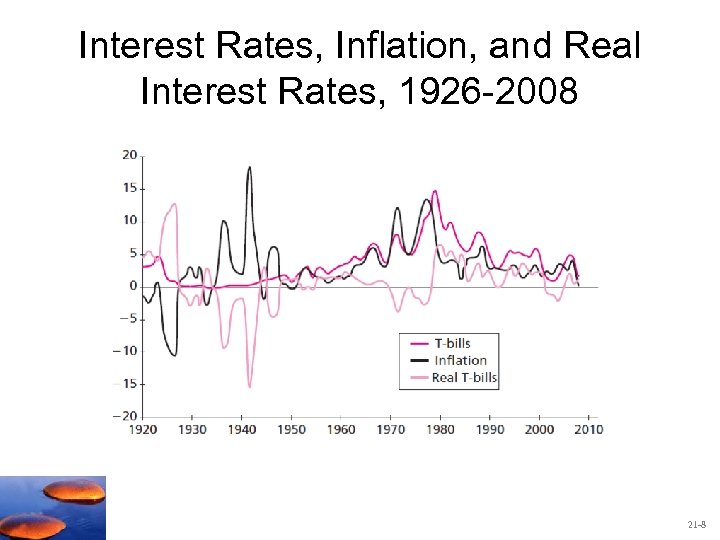 Interest Rates, Inflation, and Real Interest Rates, 1926 -2008 21 -8
 Planning with Inflation • To overcome inflation requires either higher savings or higher rates of return on investment or both • Because taxes are paid out of nominal returns, inflation reduces the after tax rate of return even further. 21 -9
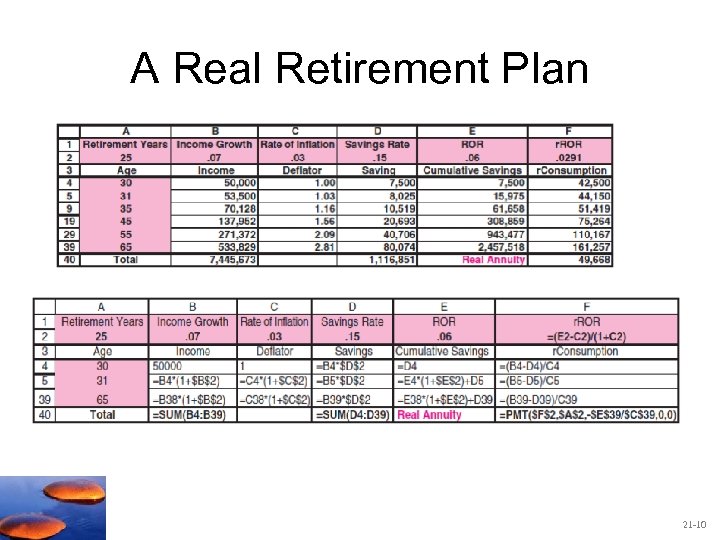 A Real Retirement Plan 21 -10
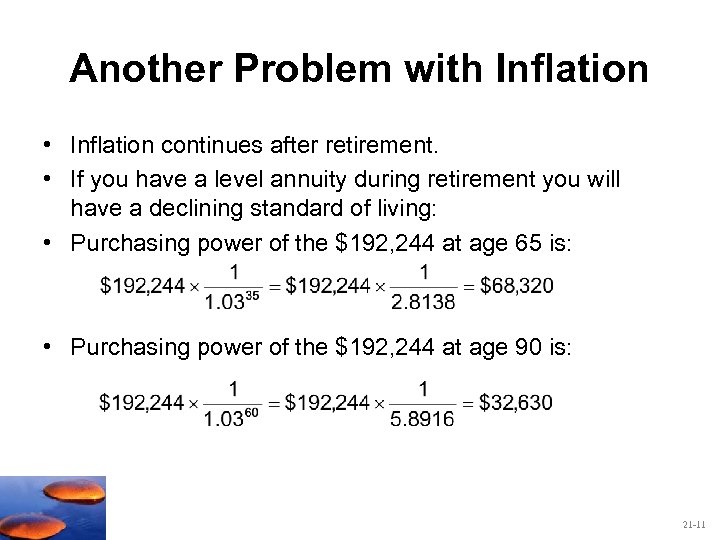 Another Problem with Inflation • Inflation continues after retirement. • If you have a level annuity during retirement you will have a declining standard of living: • Purchasing power of the $192, 244 at age 65 is: • Purchasing power of the $192, 244 at age 90 is: 21 -11
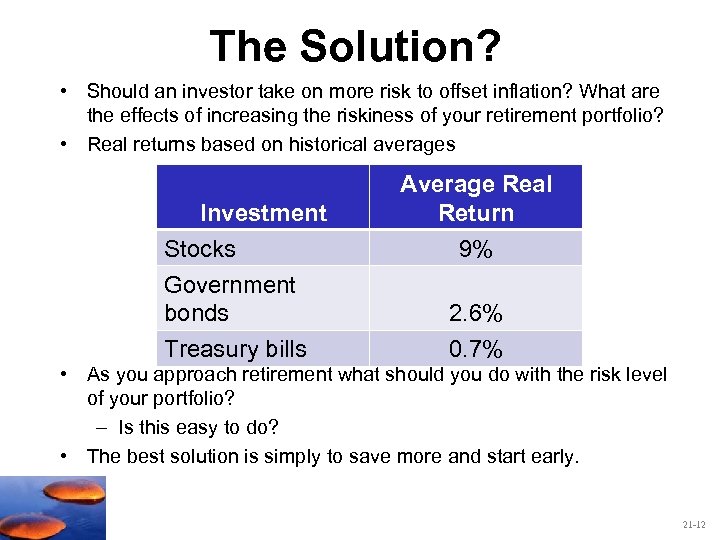 The Solution? • Should an investor take on more risk to offset inflation? What are the effects of increasing the riskiness of your retirement portfolio? • Real returns based on historical averages Investment Stocks Government bonds Treasury bills Average Real Return 9% 2. 6% 0. 7% • As you approach retirement what should you do with the risk level of your portfolio? – Is this easy to do? • The best solution is simply to save more and start early. 21 -12
 21. 3 Accounting For Taxes 21 -13
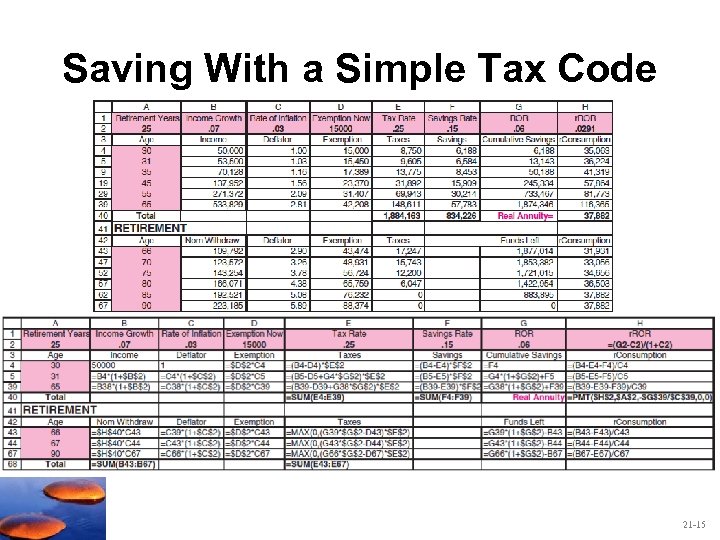
 Planning with Taxes • Taxes further reduces the retirement benefits available • To overcome the impact of taxes requires larger allocations to savings or higher returns on investments • As mentioned, inflation combined with taxes further reduces the benefits available • Flat versus graduated tax rates 21 -14
 Saving With a Simple Tax Code 21 -15
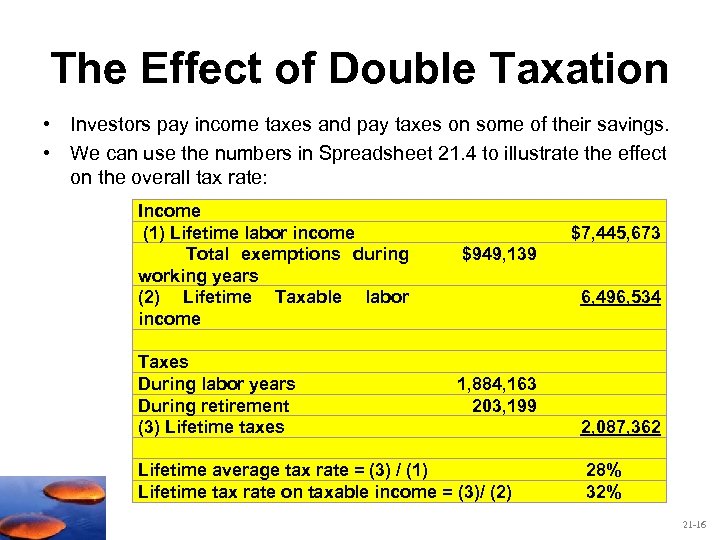 The Effect of Double Taxation • Investors pay income taxes and pay taxes on some of their savings. • We can use the numbers in Spreadsheet 21. 4 to illustrate the effect on the overall tax rate: Income (1) Lifetime labor income Total exemptions during working years (2) Lifetime Taxable labor income Taxes During labor years During retirement (3) Lifetime taxes $7, 445, 673 $949, 139 6, 496, 534 1, 884, 163 203, 199 Lifetime average tax rate = (3) / (1) Lifetime tax rate on taxable income = (3)/ (2) 2, 087, 362 28% 32% 21 -16
 21. 4 The Economics of Tax Shelters 21 -17
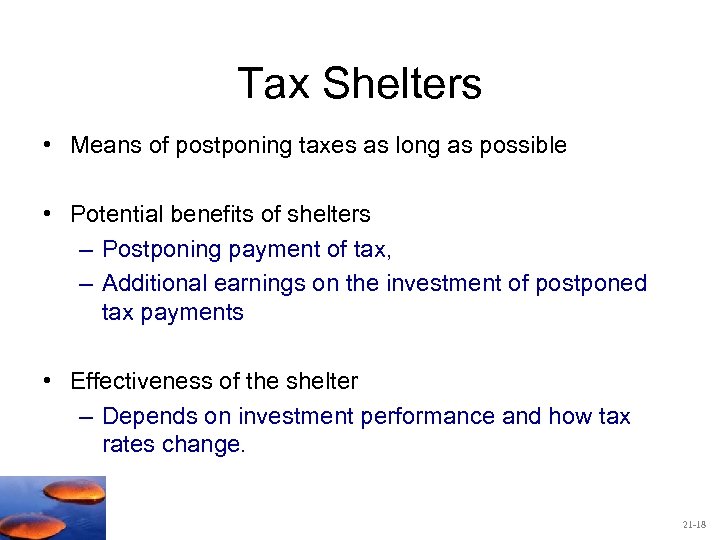 Tax Shelters • Means of postponing taxes as long as possible • Potential benefits of shelters – Postponing payment of tax, – Additional earnings on the investment of postponed tax payments • Effectiveness of the shelter – Depends on investment performance and how tax rates change. 21 -18
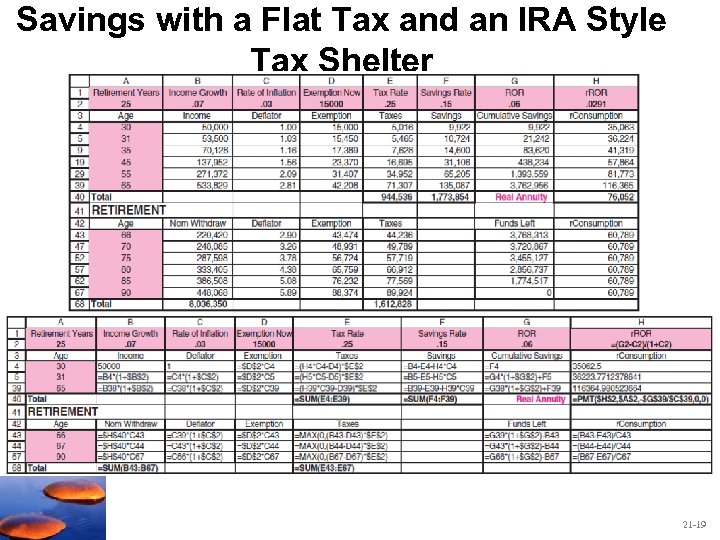 Savings with a Flat Tax and an IRA Style Tax Shelter 21 -19
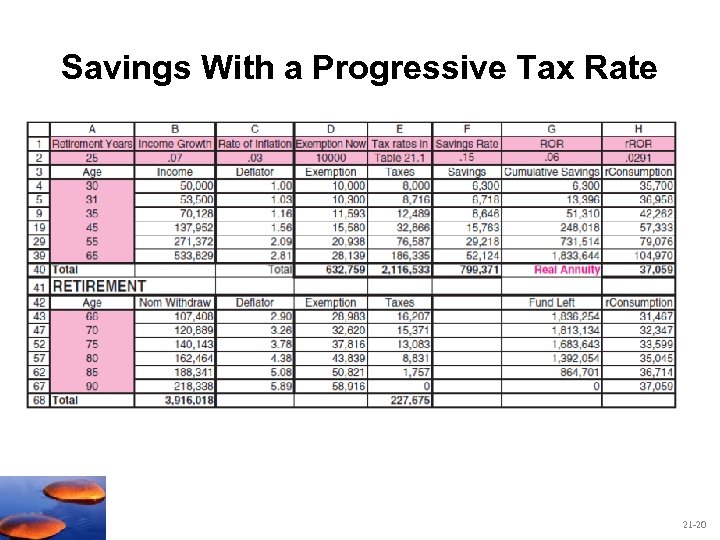 Savings With a Progressive Tax Rate 21 -20
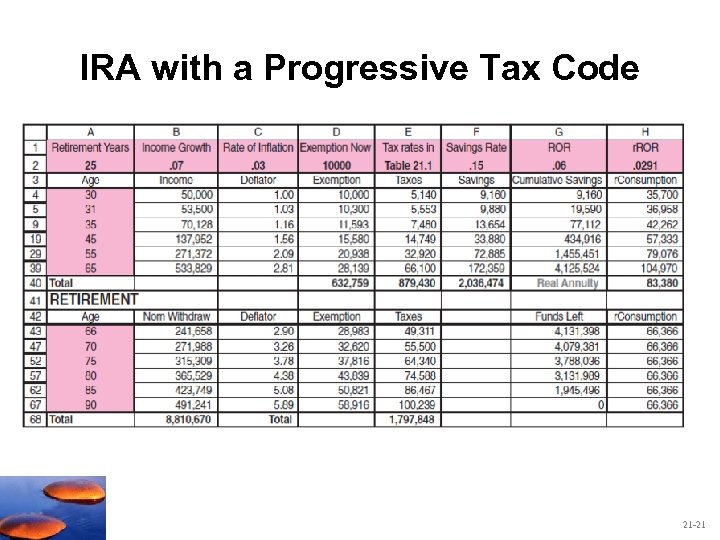 IRA with a Progressive Tax Code 21 -21
 21. 5 A Menu of Tax Shelters 21 -22
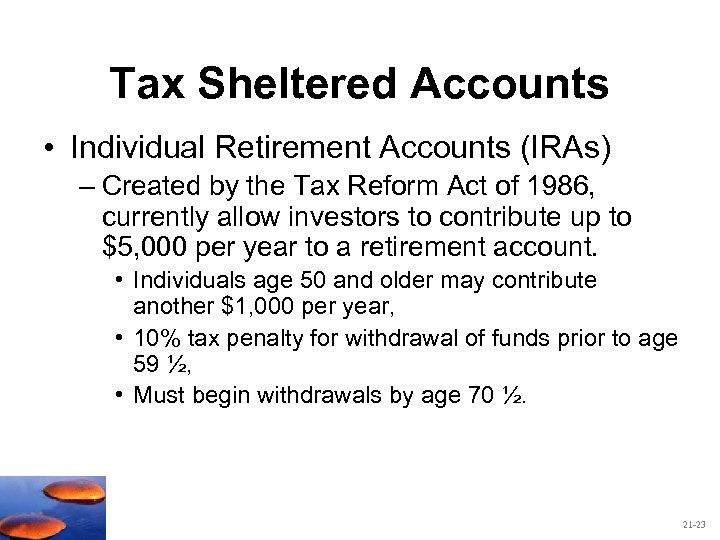 Tax Sheltered Accounts • Individual Retirement Accounts (IRAs) – Created by the Tax Reform Act of 1986, currently allow investors to contribute up to $5, 000 per year to a retirement account. • Individuals age 50 and older may contribute another $1, 000 per year, • 10% tax penalty for withdrawal of funds prior to age 59 ½, • Must begin withdrawals by age 70 ½. 21 -23
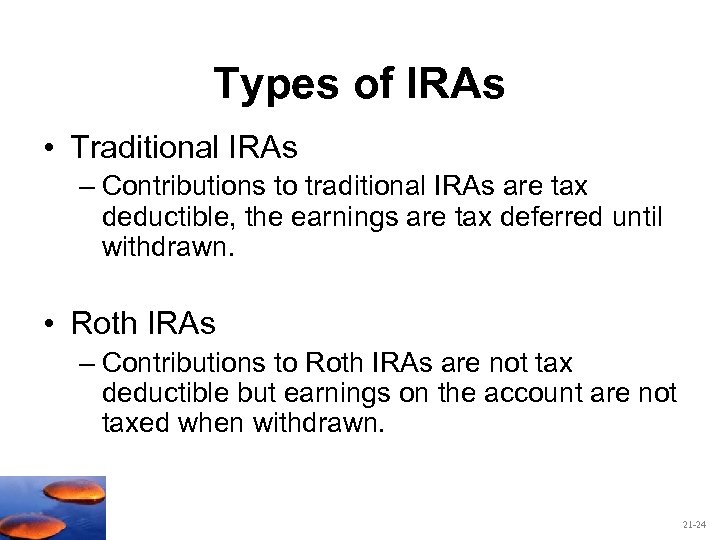 Types of IRAs • Traditional IRAs – Contributions to traditional IRAs are tax deductible, the earnings are tax deferred until withdrawn. • Roth IRAs – Contributions to Roth IRAs are not tax deductible but earnings on the account are not taxed when withdrawn. 21 -24
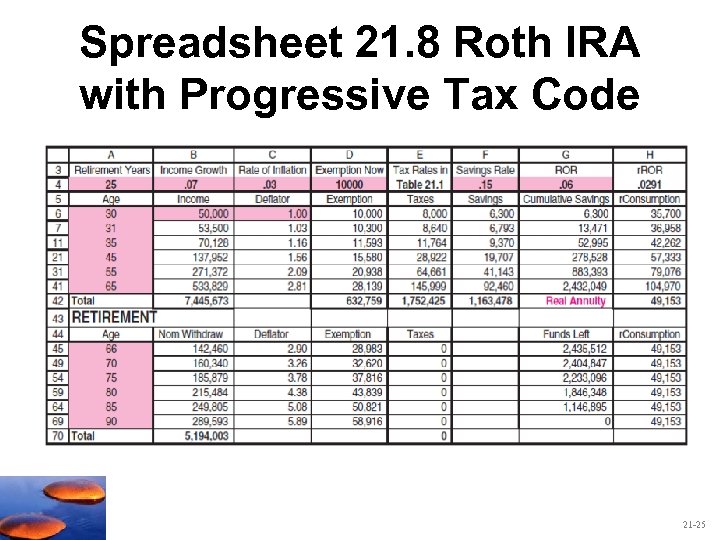 Spreadsheet 21. 8 Roth IRA with Progressive Tax Code 21 -25
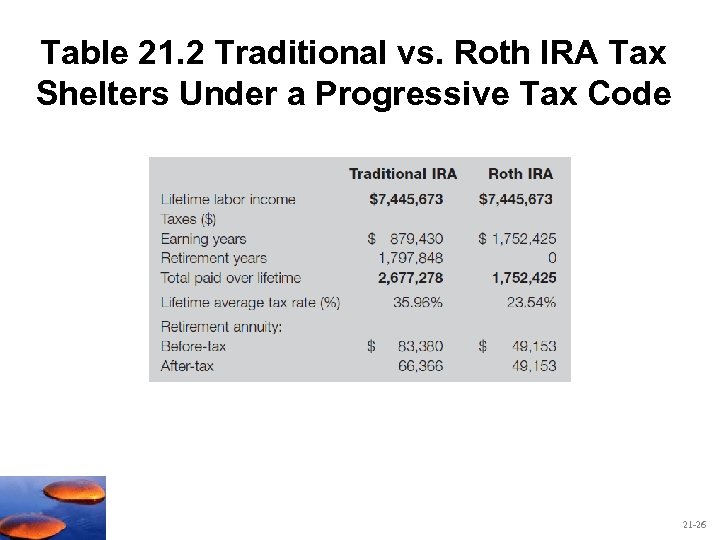 Table 21. 2 Traditional vs. Roth IRA Tax Shelters Under a Progressive Tax Code 21 -26
 Defined Benefit Plans • Defined Benefit Plans – Employer promises to pay a defined or known benefit to employees when they retire. • Typically a percentage of salary based on years of service. • The employer must fund the pension obligation. • Pension Benefit Guaranty Corporation (PBGC) guarantees pension benefits in the event of corporate bankruptcy, but often get an inferior pension plan if administered by the PBGC. 21 -27
 Defined Contribution Plans • 401 k and 403 b Plans are examples – Employee and employer contribute set amounts to an investment plan. The employee’s retirement benefit depends on the investment performance. – Employees are typically given a choice of mutual funds managed by a fund family such as Vanguard or Fidelity. – Because of the employer contributions you want to take advantage of these plans. 21 -28
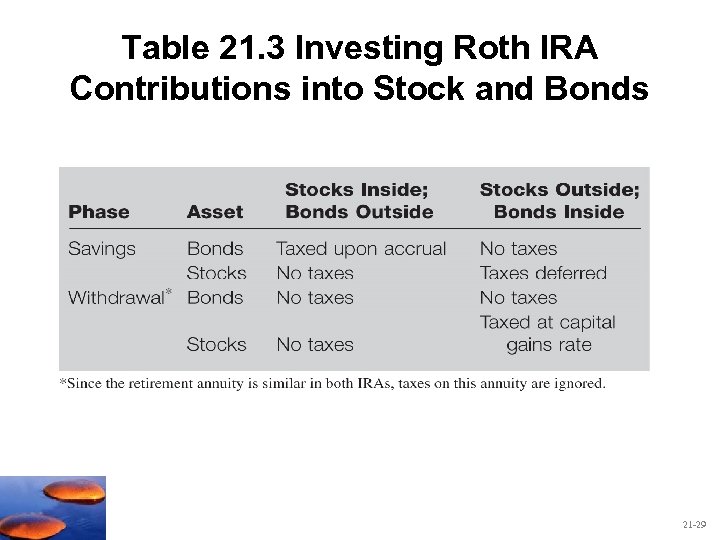 Table 21. 3 Investing Roth IRA Contributions into Stock and Bonds 21 -29
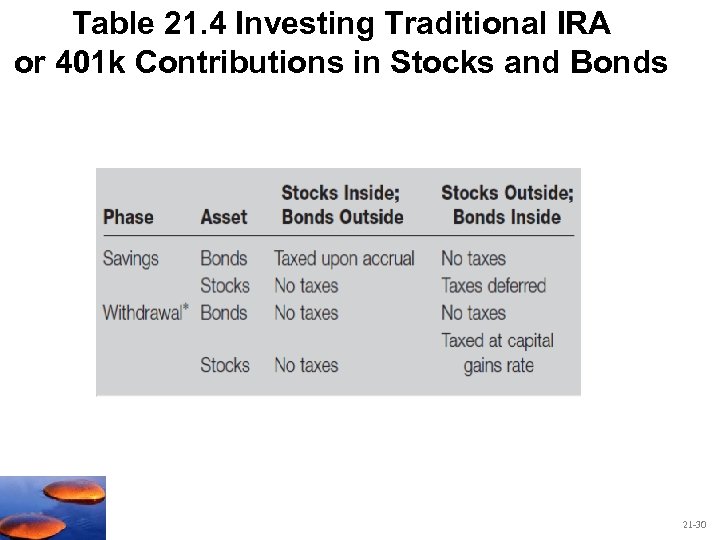 Table 21. 4 Investing Traditional IRA or 401 k Contributions in Stocks and Bonds 21 -30
 21. 6 Social Security 21 -31
 Social Security (SS) • Federal pension plan established to provide minimum retirement benefits to all workers. – It is unfunded although it is in surplus on a current year basis, projected to go in the red around 2016, – You pay 6. 2% of your income to SS, plus 1. 45% toward Medicare; your employer matches your contribution, – SS is a means of redistributing income. In dollar terms taxes are regressive and low income workers receive a relatively larger share of preretirement income upon retirement. 21 -32
 SS, What You Earn • You pay in every working year but only top 35 years of earnings & contributions count for determining benefits. • Lifetime real annuity paid in full if you retire at age 67, you receive a reduced amount if you retire earlier (62) or your receive a larger benefit if you retire later (70) 21 -33
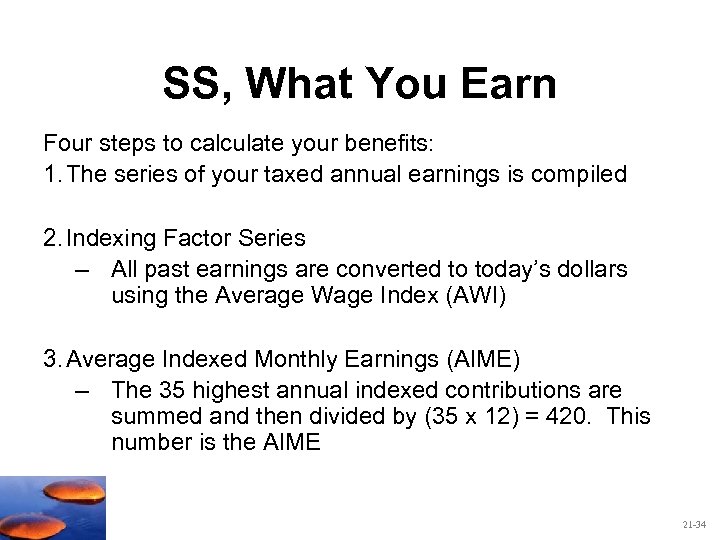 SS, What You Earn Four steps to calculate your benefits: 1. The series of your taxed annual earnings is compiled 2. Indexing Factor Series – All past earnings are converted to today’s dollars using the Average Wage Index (AWI) 3. Average Indexed Monthly Earnings (AIME) – The 35 highest annual indexed contributions are summed and then divided by (35 x 12) = 420. This number is the AIME 21 -34
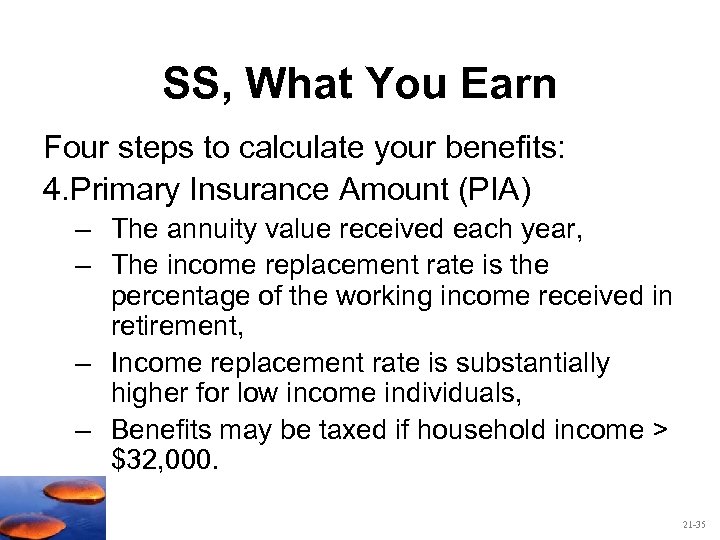 SS, What You Earn Four steps to calculate your benefits: 4. Primary Insurance Amount (PIA) – The annuity value received each year, – The income replacement rate is the percentage of the working income received in retirement, – Income replacement rate is substantially higher for low income individuals, – Benefits may be taxed if household income > $32, 000. 21 -35
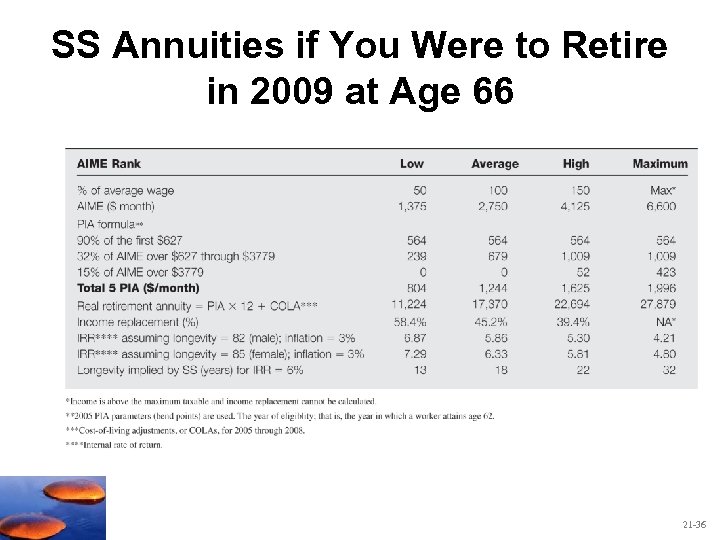 SS Annuities if You Were to Retire in 2009 at Age 66 21 -36
 Additional Considerations • 21. 7 Children’s Education and Large Purchases • 21. 8 Home Ownership: The Rent-verus. Buy Decision • 21. 9 Uncertain Longevity and Other Contingencies • 21. 10 Matrimony, Bequest, and Intergenerational Transfers 21 -37
 Additional Considerations in Planning • Financing a child’s education – Same procedure as funding retirement • Rent or buy decision – You gain no equity in renting, – Equity is a safeguard for tough times, – Don’t try to buy too much house, – Houses are illiquid investments whose value does not always increase. 21 -38
 Additional Considerations in Planning • Uncertain longevity – Life annuity versus fixed term annuity – Payment received on a life annuity is reduced due to adverse selection. • Marriage, bequests and intergenerational transfers – Marriage increases motivation for saving for old age – Dependents increase need to save – Desire for bequests increase need to save – 75% of intergenerational transfers are involuntary (due to earlier than planned demise or under spending in retirement). 21 -39