


 Скачать презентацию Chapter 2 The Constitution n WHO GOVERNS
c04e7e1ad6a69f5aa8b5a431c0faa7e8.ppt
- Количество слайдов: 42
 Chapter 2 The Constitution
 n WHO GOVERNS? 1. What is the difference between a democracy and a republic? 2. What branch of government has the greatest power? n TO WHAT ENDS? 1. Does the Constitution tell us what goals the government should serve? 2. Whose freedom does the Constitution protect? Copyright © 2011 Cengage
 The Problem of Liberty I: A-D n The Colonial Mind • Men will seek power because they are ambitious, greedy and easily corrupted n n The Real Revolution Weaknesses of the Confederation • Articles of Confederation 1781 Copyright © 2011 Cengage
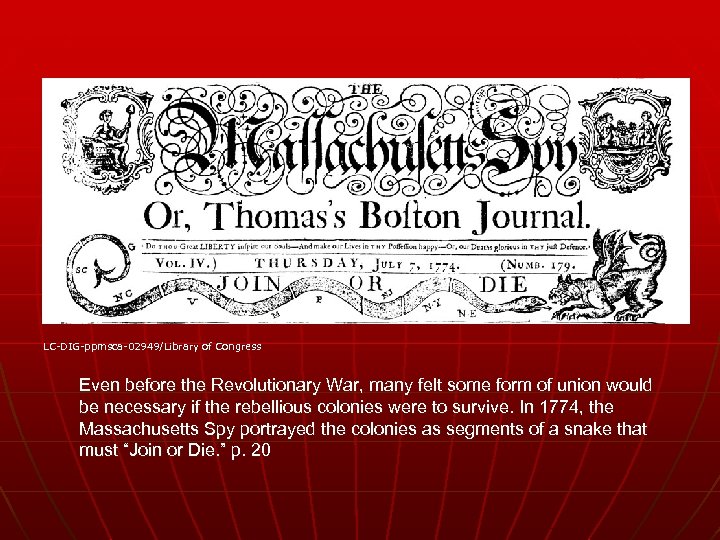 LC-DIG-ppmsca-02949/Library of Congress Even before the Revolutionary War, many felt some form of union would be necessary if the rebellious colonies were to survive. In 1774, the Massachusetts Spy portrayed the colonies as segments of a snake that must “Join or Die. ” p. 20
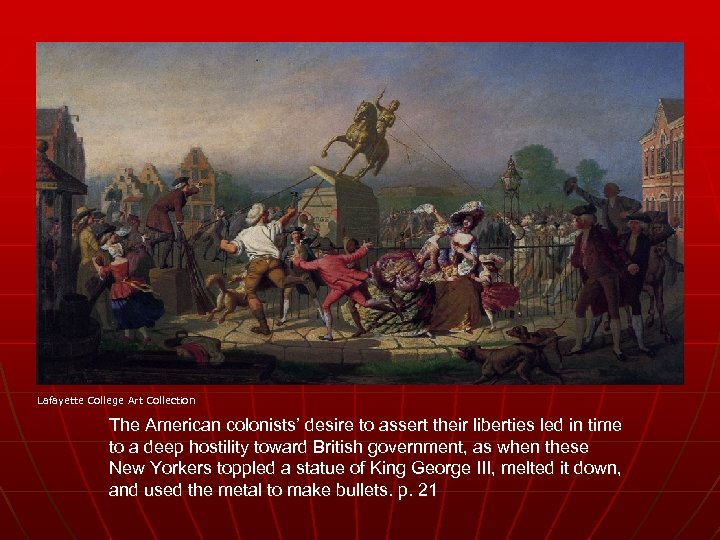 Lafayette College Art Collection The American colonists’ desire to assert their liberties led in time to a deep hostility toward British government, as when these New Yorkers toppled a statue of King George III, melted it down, and used the metal to make bullets. p. 21
 North America in 1787, p. 22 Copyright © 2011 Cengage
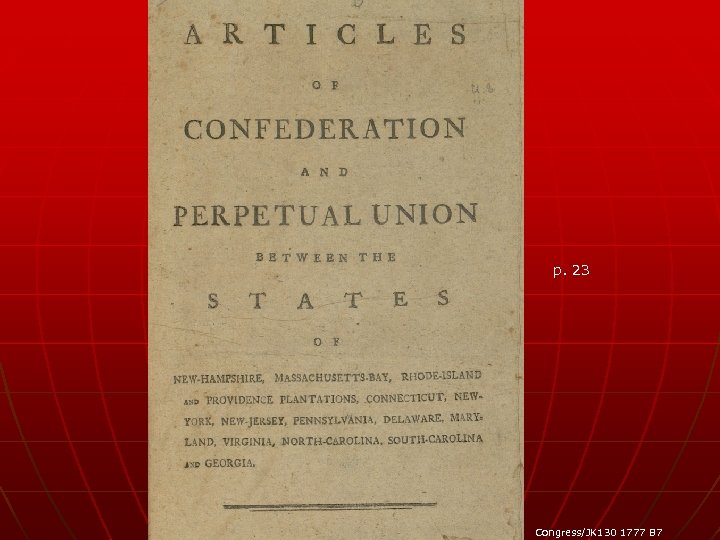 p. 23 Congress/JK 130 1777 B 7
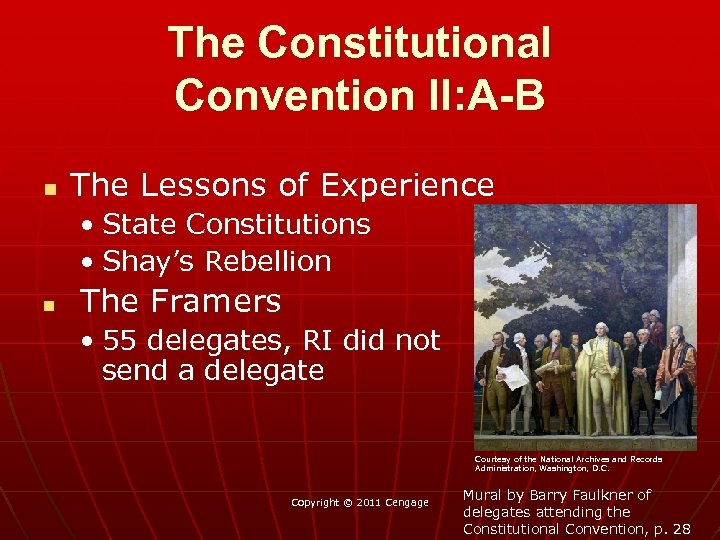 The Constitutional Convention II: A-B n The Lessons of Experience • State Constitutions • Shay’s Rebellion n The Framers • 55 delegates, RI did not send a delegate Courtesy of the National Archives and Records Administration, Washington, D. C. Copyright © 2011 Cengage Mural by Barry Faulkner of delegates attending the Constitutional Convention, p. 28
 Shays’s Rebellion n n Colonies were in debt after the war, central gov’t tried to raise taxes Farmers in western Massachusetts rebelled against tax they could not afford Rebelled against foreclosures, forced judges out of court, freed debtors from jail Showed that national gov’t was weak, needed to seek a stronger national gov’t
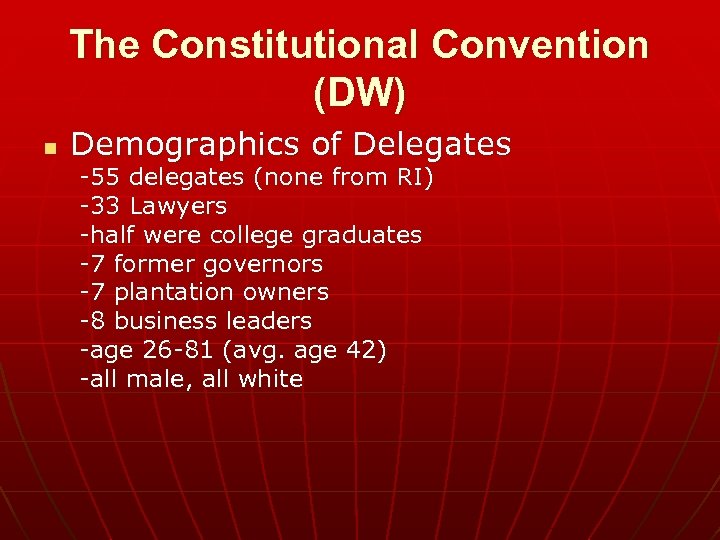 The Constitutional Convention (DW) n Demographics of Delegates -55 delegates (none from RI) -33 Lawyers -half were college graduates -7 former governors -7 plantation owners -8 business leaders -age 26 -81 (avg. age 42) -all male, all white
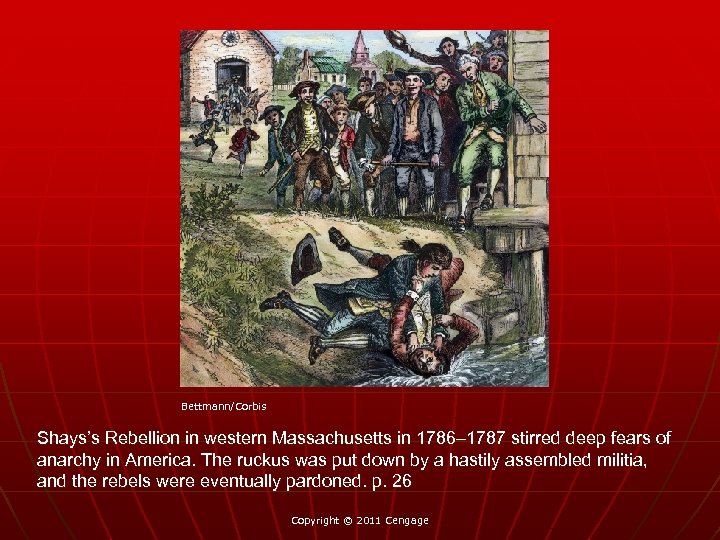 Bettmann/Corbis Shays’s Rebellion in western Massachusetts in 1786– 1787 stirred deep fears of anarchy in America. The ruckus was put down by a hastily assembled militia, and the rebels were eventually pardoned. p. 26 Copyright © 2011 Cengage
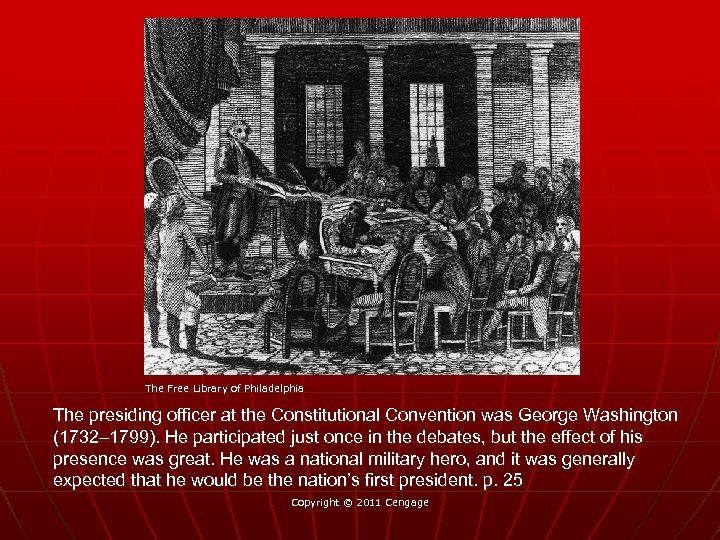 The Free Library of Philadelphia The presiding officer at the Constitutional Convention was George Washington (1732– 1799). He participated just once in the debates, but the effect of his presence was great. He was a national military hero, and it was generally expected that he would be the nation’s first president. p. 25 Copyright © 2011 Cengage
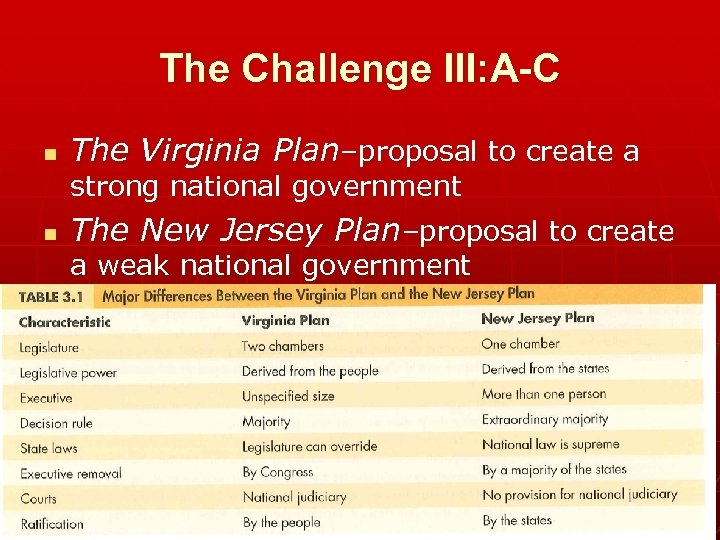 The Challenge III: A-C n The Virginia Plan–proposal to create a strong national government n The New Jersey Plan–proposal to create a weak national government n The Compromise • popularly elected house based on state population • state elected Senate, with two members for each state Copyright © 2011 Cengage
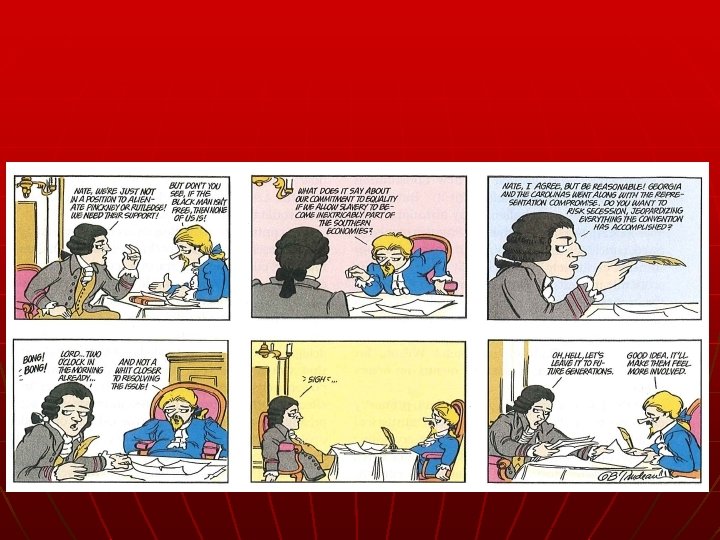
 Three-fifths Compromise n n n Agree to allow the South to count 3/5 the population in each state to balance the power of North and South Once again we see the struggle for power, this time between regions, the North and the South. Unlike today, we also see desire to compromise in order to reach a common goal
 The Constitution and Democracy IV: A-B n n Founders did not intend to create a direct democracy. Popular rule only one element of new government. Copyright © 2011 Cengage
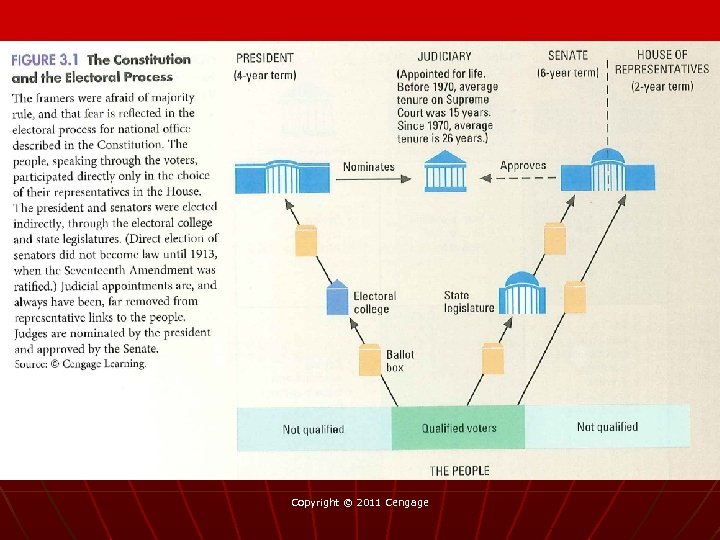 Copyright © 2011 Cengage
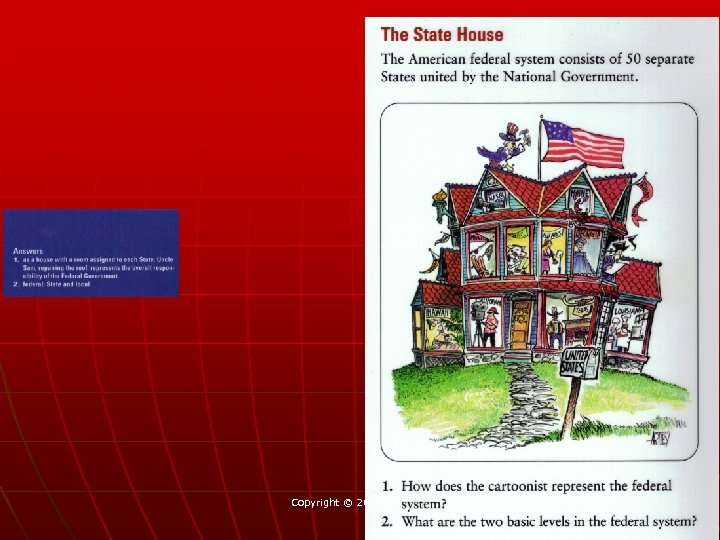
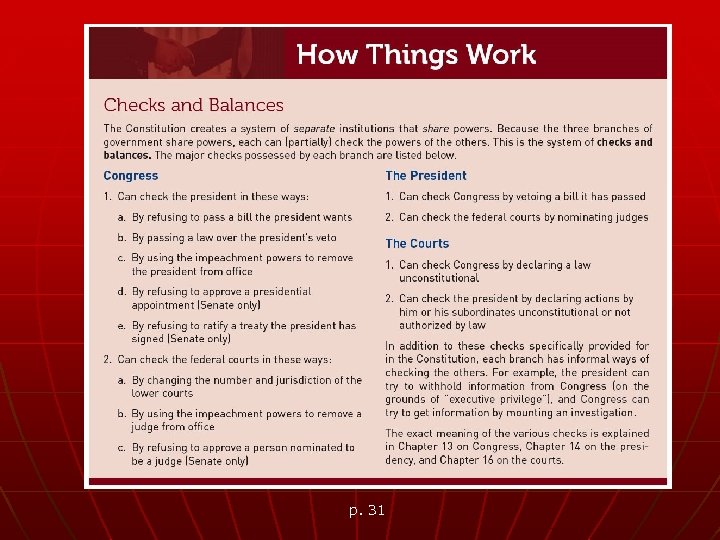
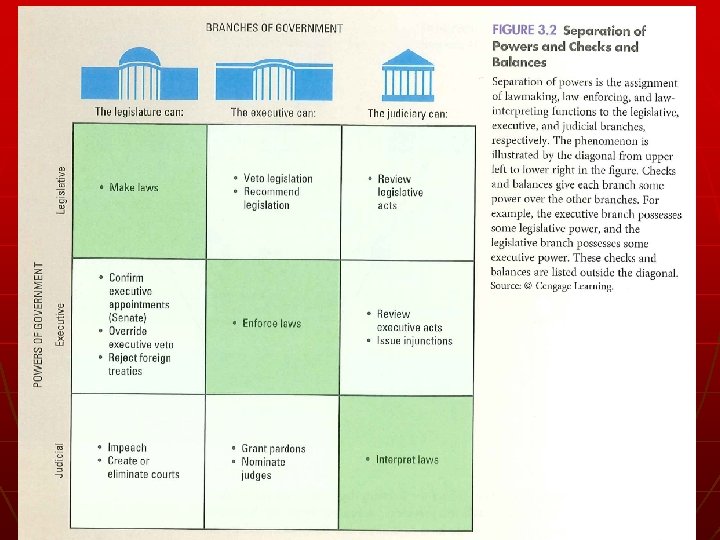
 The Constitution and Democracy IV: C-D n Republican Form of Government • Key Principles Federalism n Enumerated powers n Reserved powers n Concurrent powers n n Government of Human Nature • Separation of powers • Checks and balances Copyright © 2011 Cengage
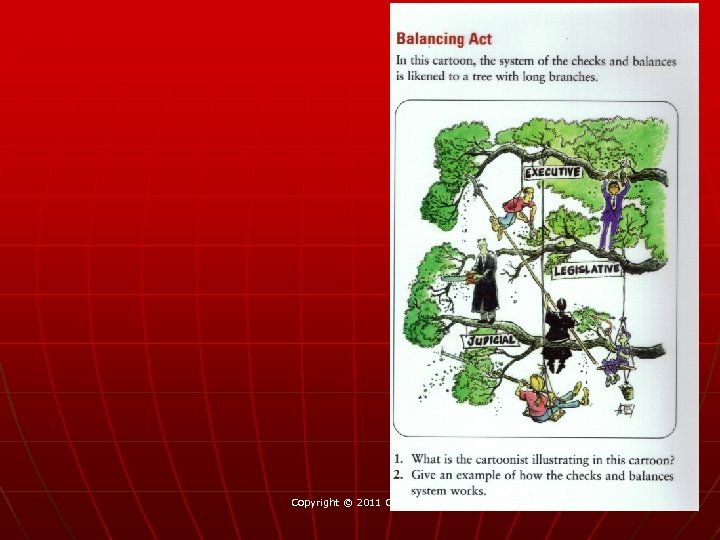
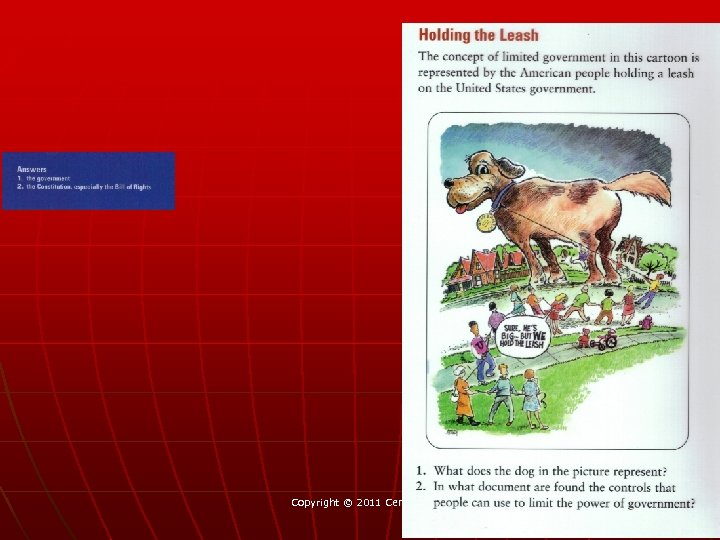
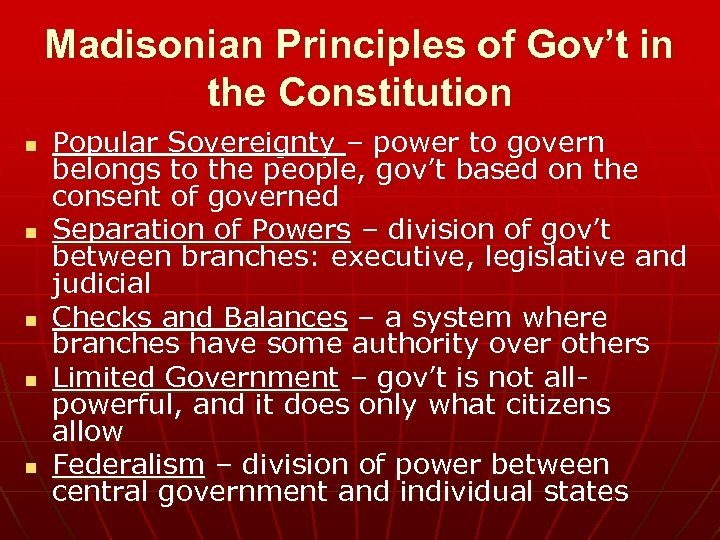 Madisonian Principles of Gov’t in the Constitution n n Popular Sovereignty – power to govern belongs to the people, gov’t based on the consent of governed Separation of Powers – division of gov’t between branches: executive, legislative and judicial Checks and Balances – a system where branches have some authority over others Limited Government – gov’t is not allpowerful, and it does only what citizens allow Federalism – division of power between central government and individual states
 Copyright © 2011 Cengage
 Copyright © 2011 Cengage
 Copyright © 2011 Cengage
 p. 31
p. 31
 Copyright © 2011 Cengage
 The Constitution and Liberty V: A-B n n The primary debate for ratification The Antifederalist View Copyright © 2011 Cengage
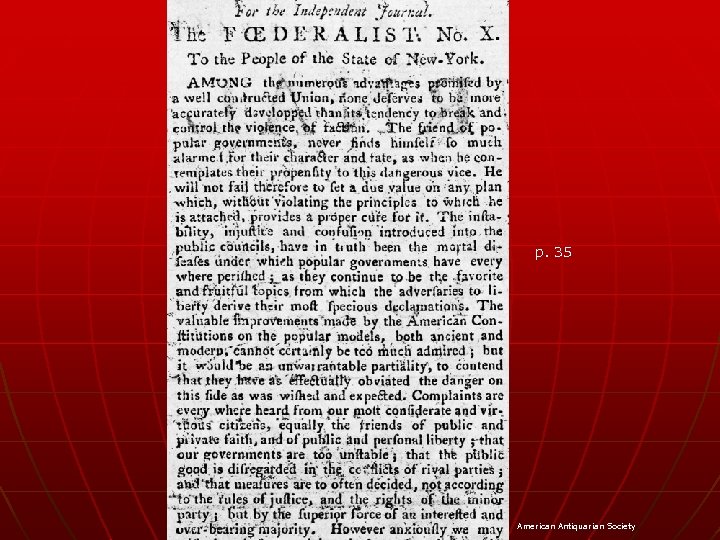 p. 35 American Antiquarian Society
 Fed vs. Anti-Fed n n n Ratification – formal approval Federalist – in favor of adoption of US Constitution creating a federal union and strong central government Anti-Federalist – opposed to ratification in 1787, opposed to strong central government
 Federalist Papers n n n Annoyingly hard to read Best political theory ever written in US Written by Alexander Hamilton, James Madison, and John Jay Publius Convince public for ratification
 Federalist #10 n n Madison addresses biggest fear of gov’t Faction – a group in a legislature or political party acting together in pursuit of some special interest Founding fathers were concerned that our government would be ripped apart Madison defends our national Constitution
 Federalist #10 n n Separation of Powers check the growth of tyranny Each branch of government keeps the other two from gaining too much power A republic guards against irresponsible direct democracy or “common passions” Factions will always exist, but must be managed to not severe from the system.
 Anti-Fed Response n n Central gov’t would threaten liberty Aristocratic tyranny could happen Demanded a guarantee of individual rights and liberty States power was too limited
 The Constitution and Liberty V: C n Need for a Bill of Rights Copyright © 2011 Cengage
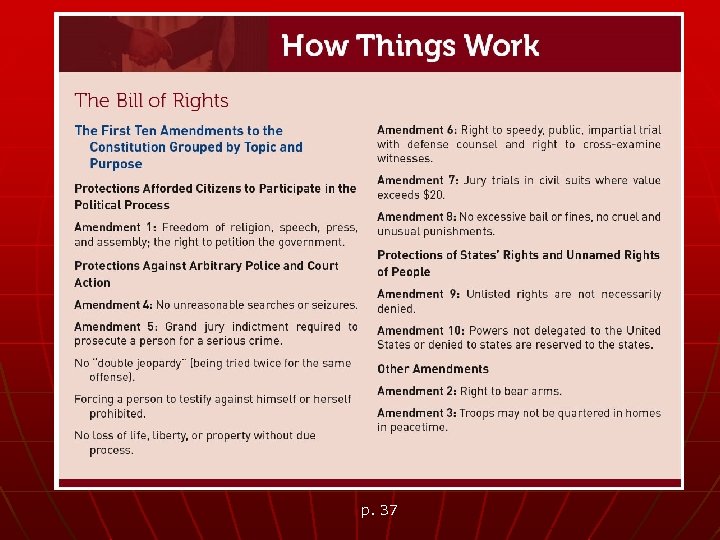 p. 37
p. 37
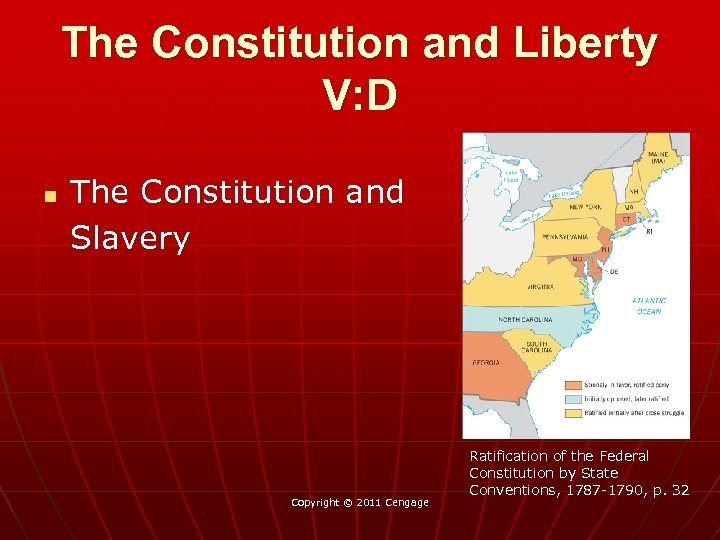 The Constitution and Liberty V: D n The Constitution and Slavery Copyright © 2011 Cengage Ratification of the Federal Constitution by State Conventions, 1787 -1790, p. 32
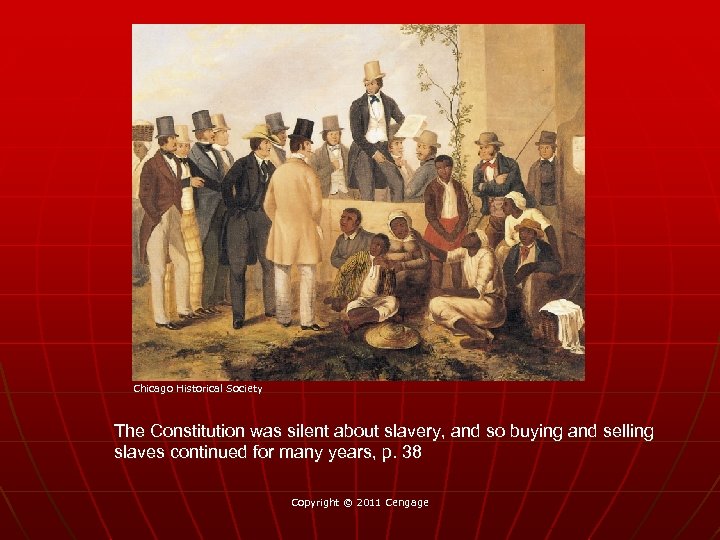 Chicago Historical Society The Constitution was silent about slavery, and so buying and selling slaves continued for many years, p. 38 Copyright © 2011 Cengage
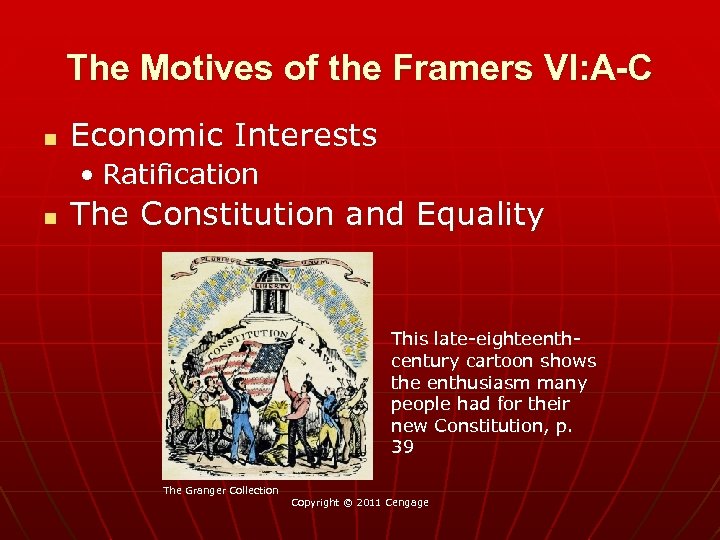 The Motives of the Framers VI: A-C n Economic Interests • Ratification n The Constitution and Equality This late-eighteenthcentury cartoon shows the enthusiasm many people had for their new Constitution, p. 39 The Granger Collection Copyright © 2011 Cengage
 Constitutional Reform: Modern Views n n Reducing the Separation of Powers Making the System Less Democratic • Line-item veto WHO IS RIGHT? Copyright © 2011 Cengage
 Amending the Constitution n n Meant to be difficult Require action from national and state gov
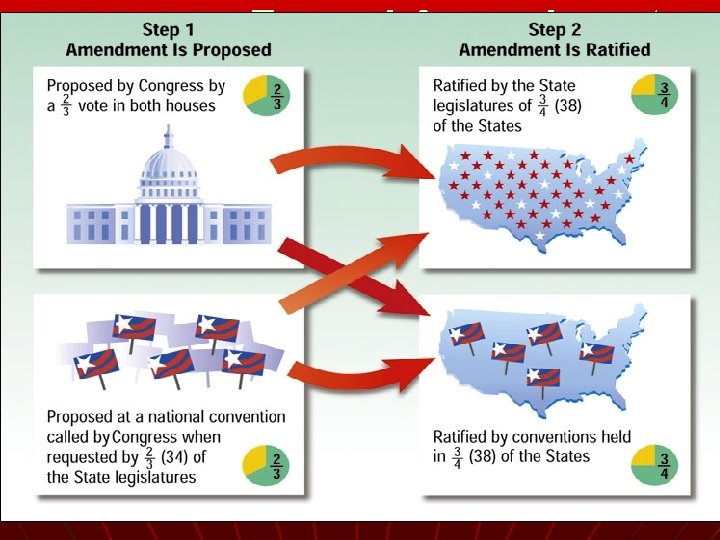 Formal Amendment Process
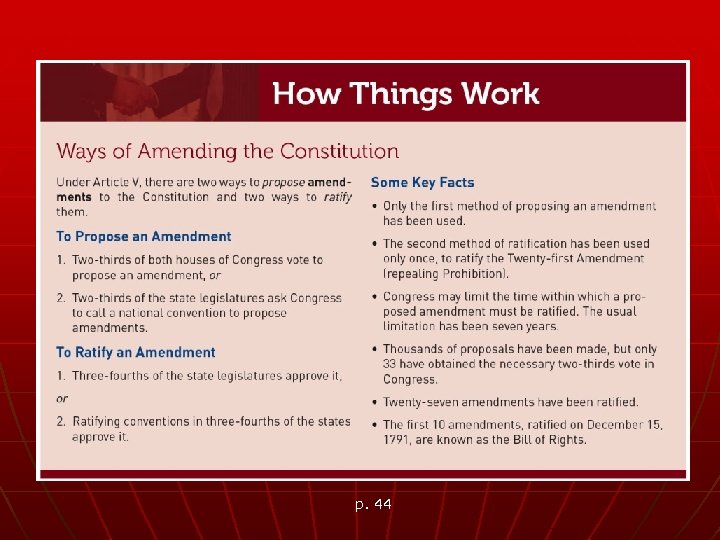 p. 44
p. 44
 Articles of the Constitution