


 Скачать презентацию Chapter 2 Network Models 1 2 3 4
d8da39078747940ee17d6c3235c2cadd.ppt
- Количество слайдов: 29
 Chapter 2. Network Models 1. 2. 3. 4. 5. Layered Tasks The OSI Model Layers in the OSI Model TCP/IP Protocol Suite Addressing
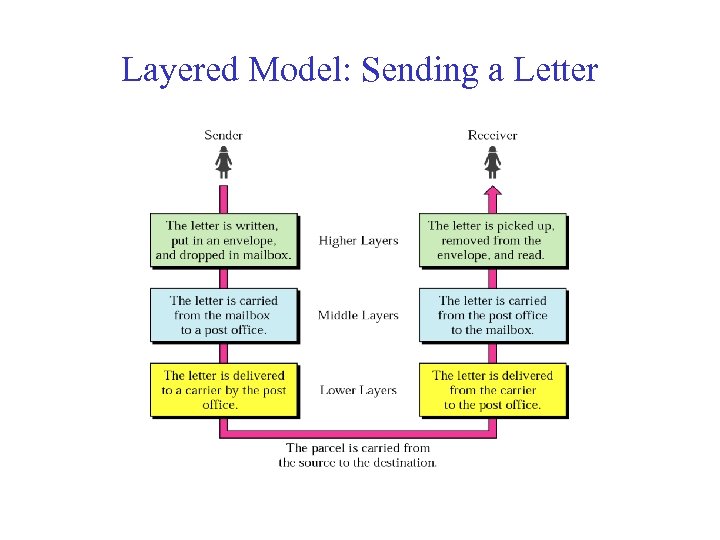 Layered Model: Sending a Letter
 OSI Model • Established in 1947, the International Standards Organization (ISO) is a multinational body dedicated to worldwide agreement on international standards • An ISO standard that covers all aspects of network communications is the Open Systems Interconnection (OSI) model • It was first introduced in the late 1970 s • ISO is the organization, OSI is the model
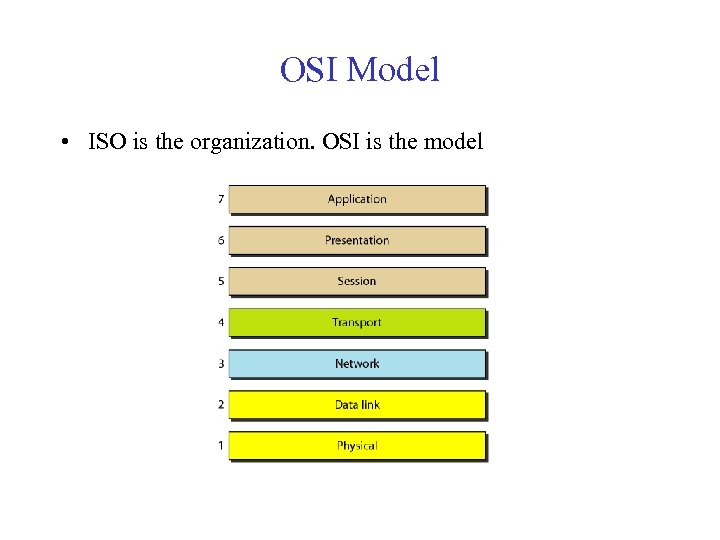 OSI Model • ISO is the organization. OSI is the model
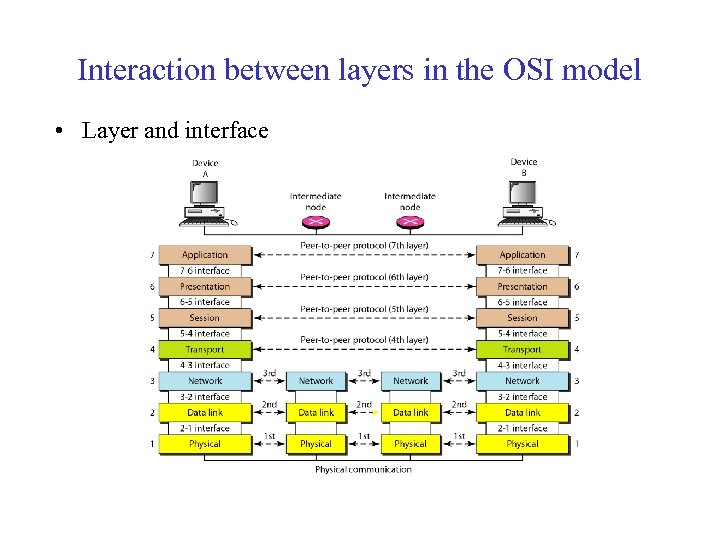 Interaction between layers in the OSI model • Layer and interface
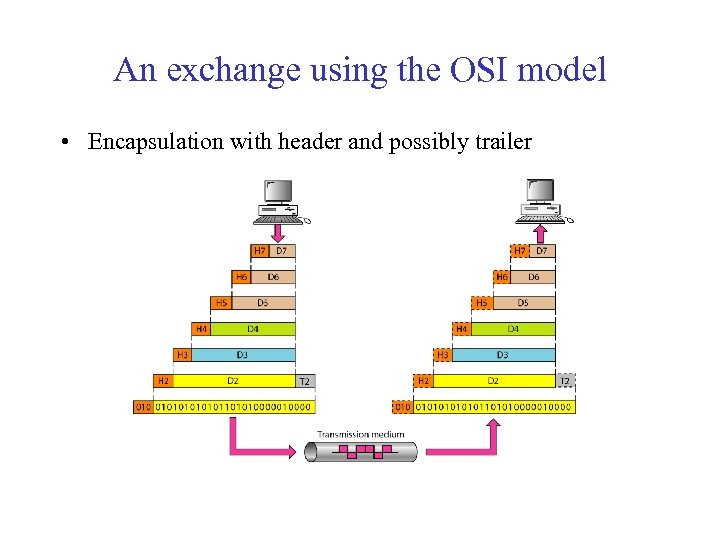 An exchange using the OSI model • Encapsulation with header and possibly trailer
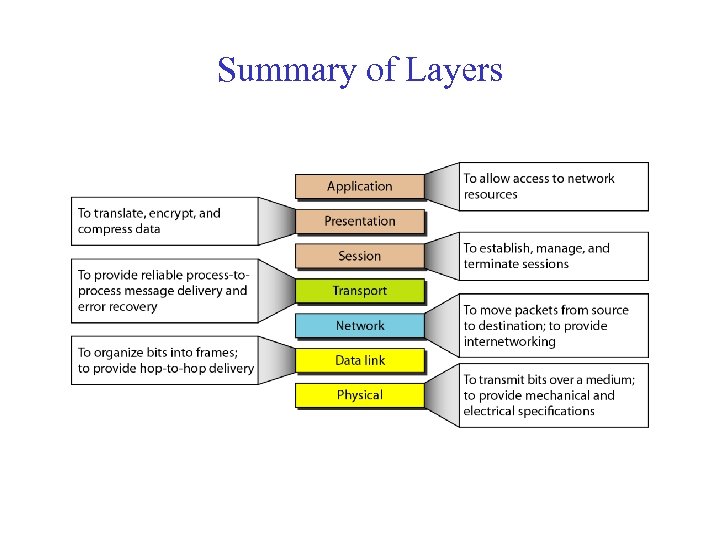
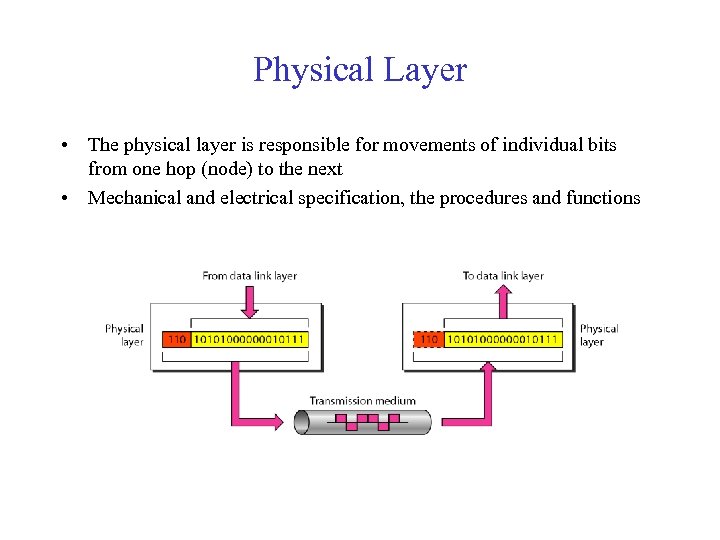 Physical Layer • The physical layer is responsible for movements of individual bits from one hop (node) to the next • Mechanical and electrical specification, the procedures and functions
 Physical Layer: Duties • • Physical characteristics of interfaces and media Representation of bits Data rate Synchronization of bits Line configuration Physical topology Transmission mode
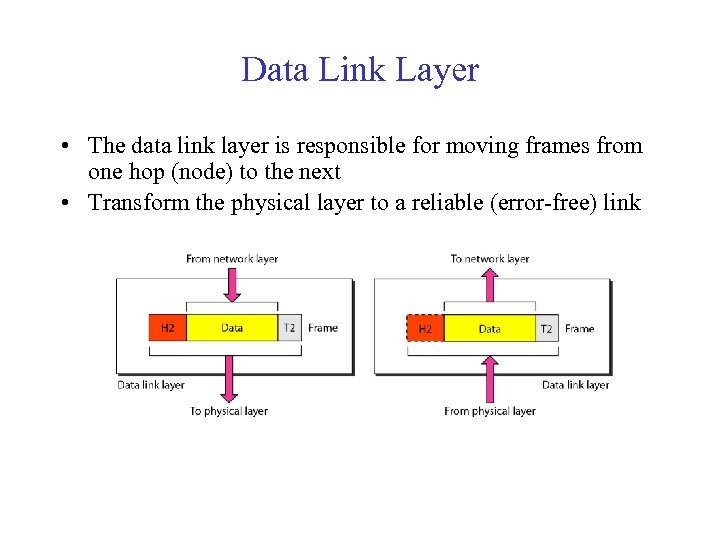 Data Link Layer • The data link layer is responsible for moving frames from one hop (node) to the next • Transform the physical layer to a reliable (error-free) link
 Data Link Layer: Duties • • • Framing Physical addressing Flow control Error control Access control
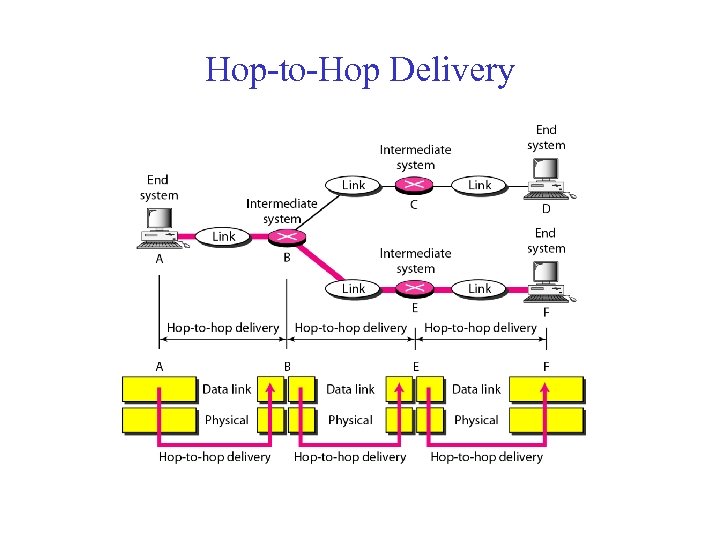 Hop-to-Hop Delivery
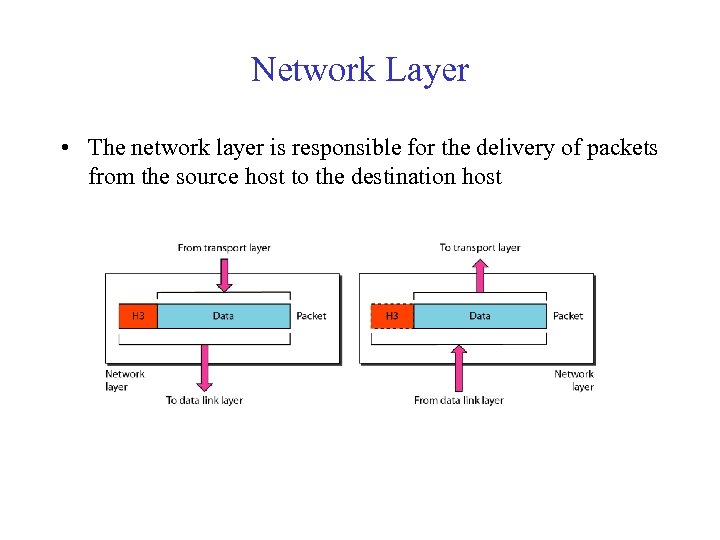 Network Layer • The network layer is responsible for the delivery of packets from the source host to the destination host
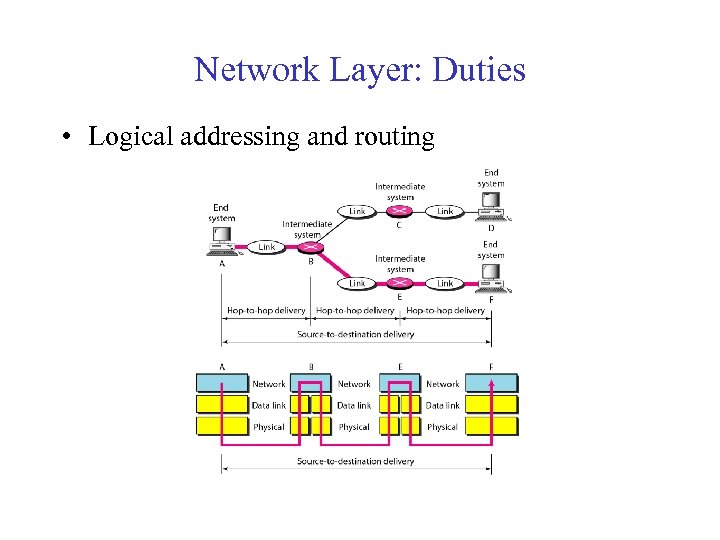 Network Layer: Duties • Logical addressing and routing
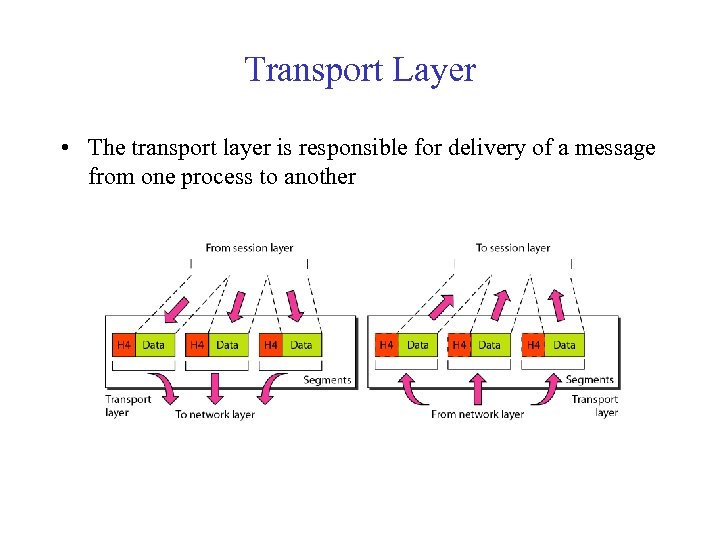 Transport Layer • The transport layer is responsible for delivery of a message from one process to another
 Transport Layer: Duties • • • Service-point (port) addressing Segmentation and reassembly Connection control Flow control Error control
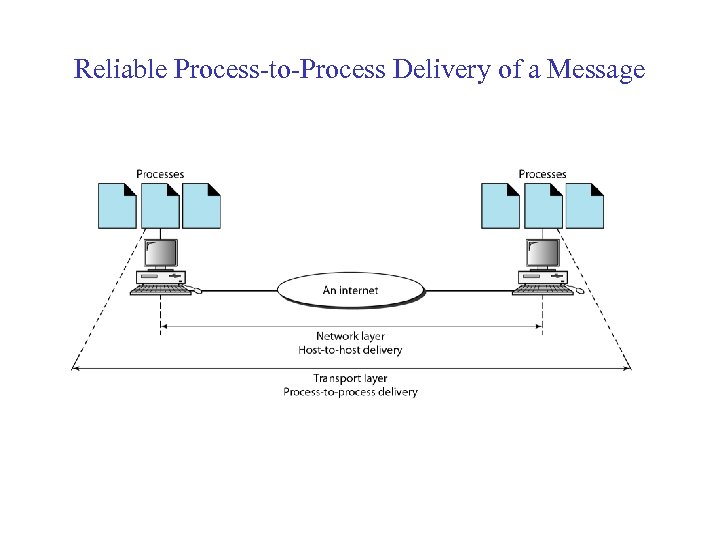 Reliable Process-to-Process Delivery of a Message
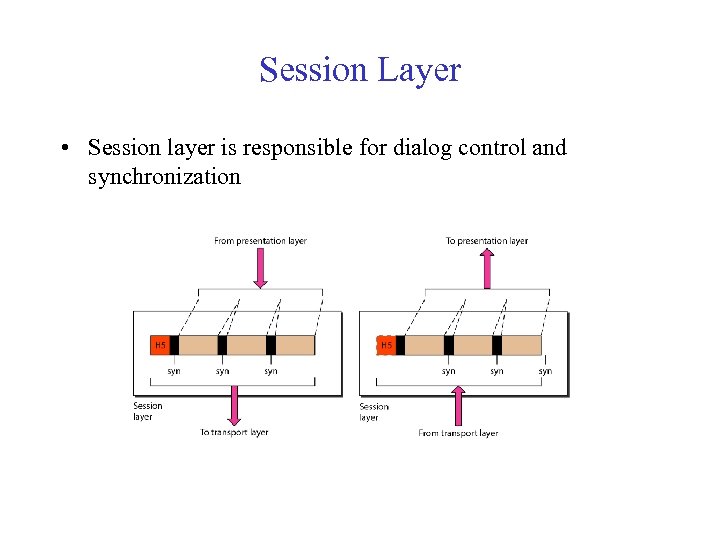 Session Layer • Session layer is responsible for dialog control and synchronization
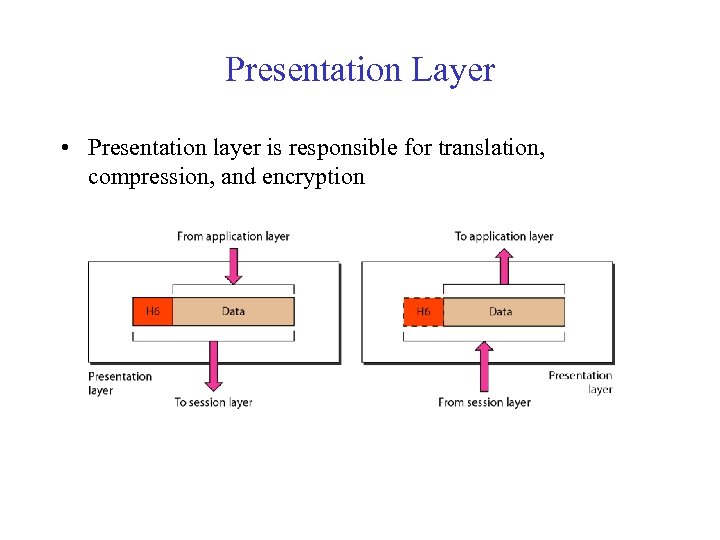 Presentation Layer • Presentation layer is responsible for translation, compression, and encryption
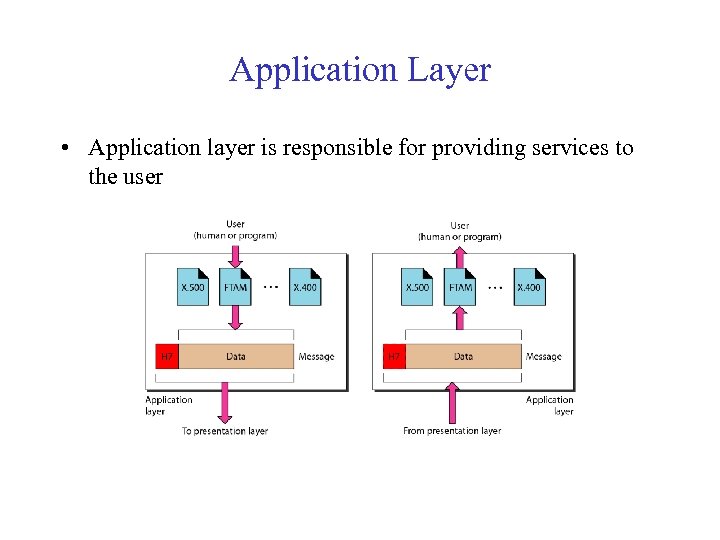 Application Layer • Application layer is responsible for providing services to the user
 Application Layer: Services • • Network virtual terminal Mail services File transfer, access, and management Directory services
 Summary of Layers
 TCP/IP and OSI Model
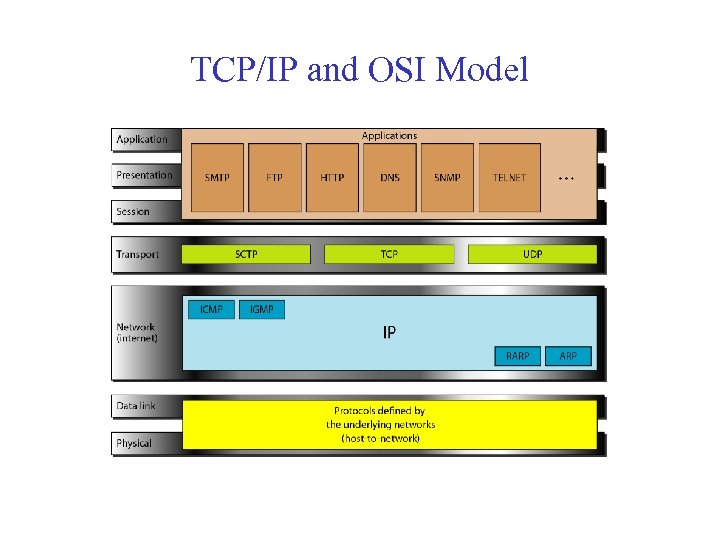
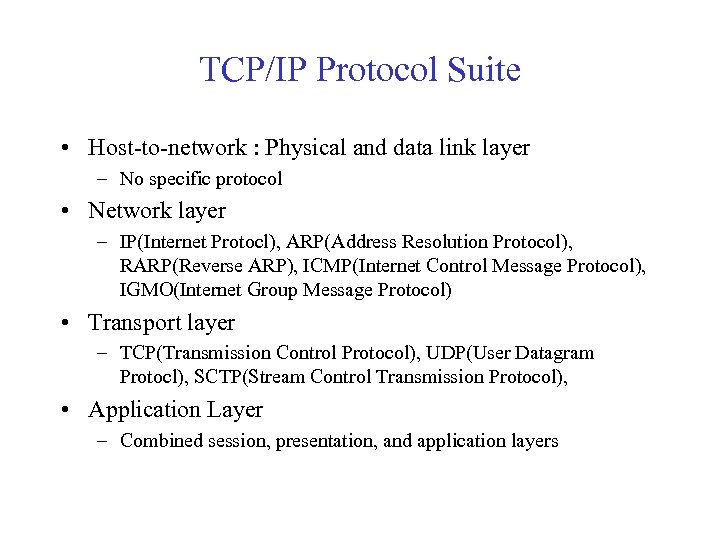 TCP/IP Protocol Suite • Host-to-network : Physical and data link layer – No specific protocol • Network layer – IP(Internet Protocl), ARP(Address Resolution Protocol), RARP(Reverse ARP), ICMP(Internet Control Message Protocol), IGMO(Internet Group Message Protocol) • Transport layer – TCP(Transmission Control Protocol), UDP(User Datagram Protocl), SCTP(Stream Control Transmission Protocol), • Application Layer – Combined session, presentation, and application layers
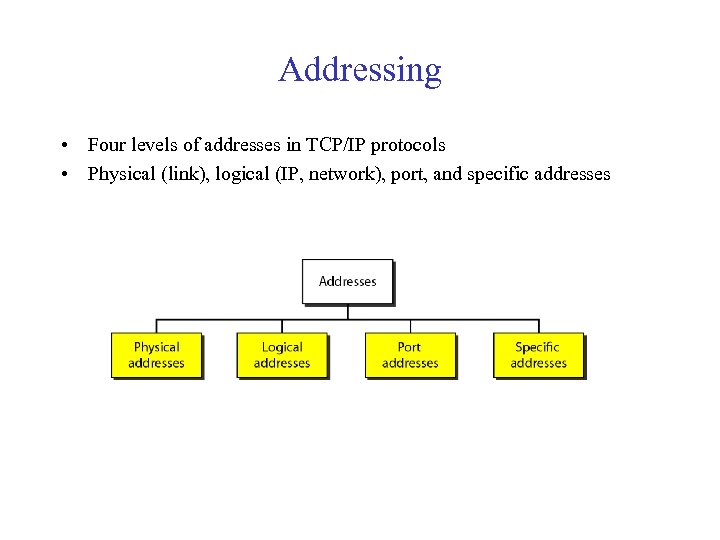 Addressing • Four levels of addresses in TCP/IP protocols • Physical (link), logical (IP, network), port, and specific addresses
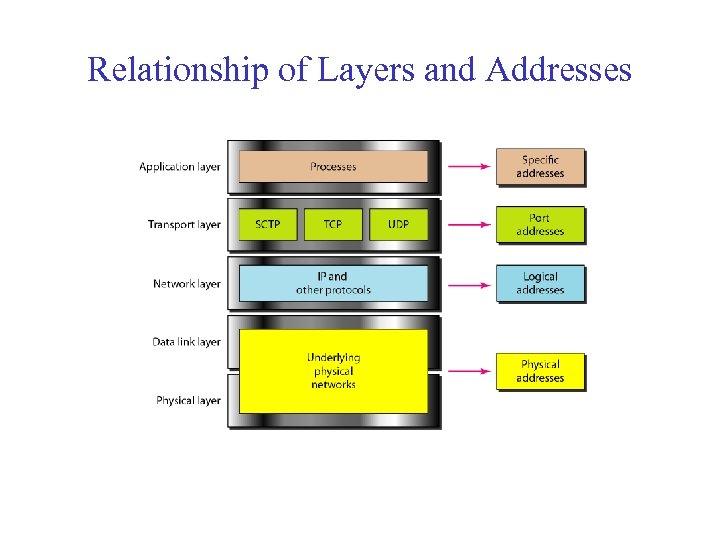 Relationship of Layers and Addresses
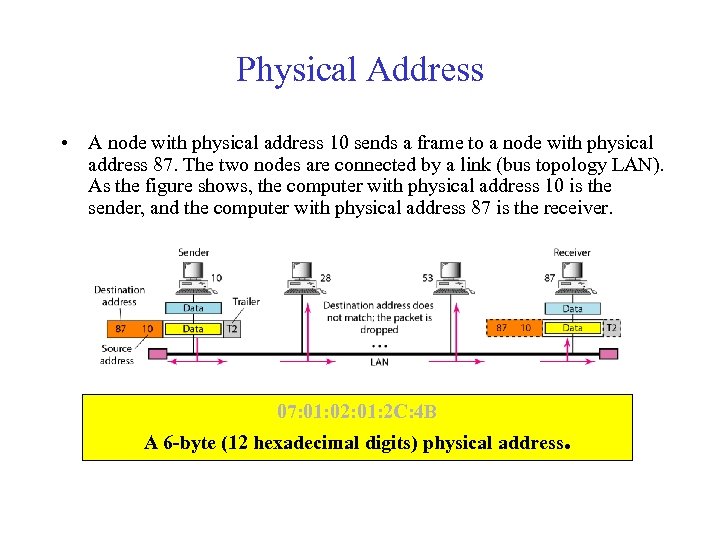 Physical Address • A node with physical address 10 sends a frame to a node with physical address 87. The two nodes are connected by a link (bus topology LAN). As the figure shows, the computer with physical address 10 is the sender, and the computer with physical address 87 is the receiver. 07: 01: 02: 01: 2 C: 4 B A 6 -byte (12 hexadecimal digits) physical address.
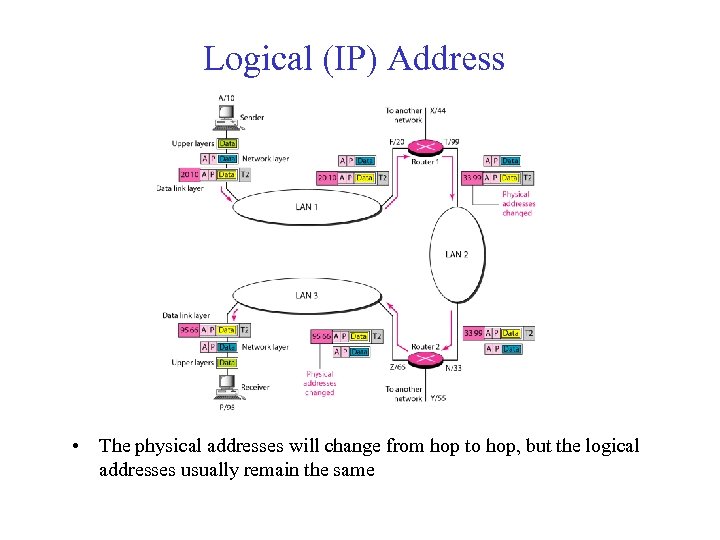 Logical (IP) Address • The physical addresses will change from hop to hop, but the logical addresses usually remain the same
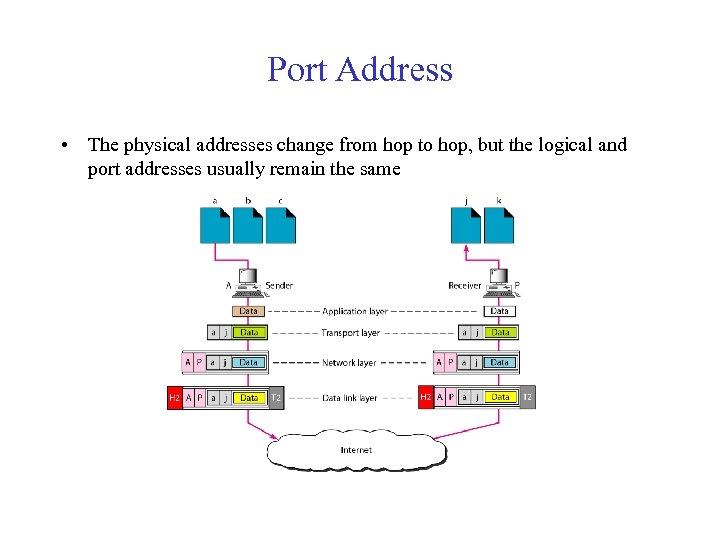 Port Address • The physical addresses change from hop to hop, but the logical and port addresses usually remain the same
 Specific Address • Some application have user-friendly addresses that are designed for that specific address • Example 1: e-mail address: kchung@kw. ac. kr – Defines the recipient of an e-mail • Example 2: URL (Universal Resource Locator) : www. kbs. co. kr – Used to find a document on the WWW