 Скачать презентацию Chapter 2 General Biological Concepts 1 The Art
5472c215cf1bd030aac74051ded05647.ppt
- Количество слайдов: 74



Chapter 2. General Biological Concepts 1. The Art and Science of Plant Breeding 2. Plant Cellular Organization and Genetic Structure 3. Plant Reproductive systems 1
1. The Art and Science of Plant Breeding 1) Specific and permanent alteration in the plants 2) Heritable changes 3) Evolution, domestication, plant breeding 4) Plant breeding as an art 5) Plant breeding as a science 2
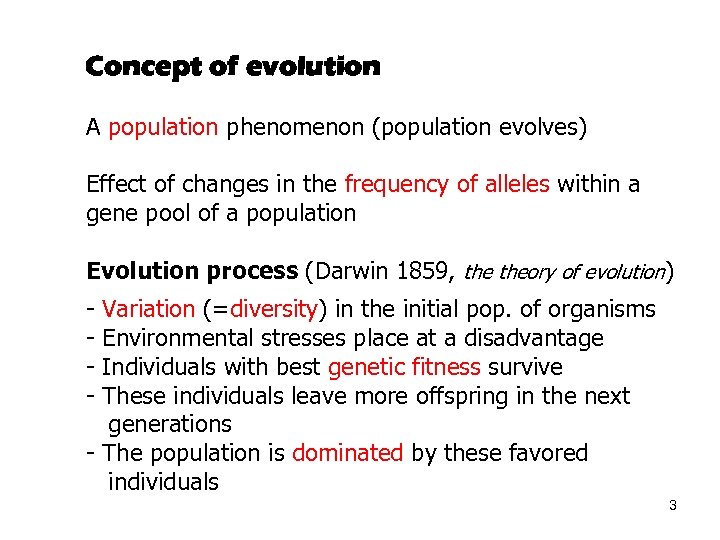
Concept of evolution A population phenomenon (population evolves) Effect of changes in the frequency of alleles within a gene pool of a population Evolution process (Darwin 1859, theory of evolution) - Variation (=diversity) in the initial pop. of organisms Environmental stresses place at a disadvantage Individuals with best genetic fitness survive These individuals leave more offspring in the next generations - The population is dominated by these favored individuals 3
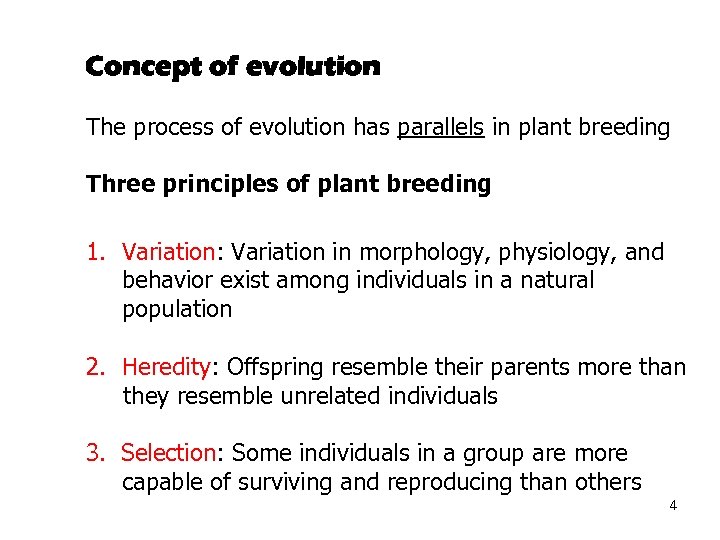
Concept of evolution The process of evolution has parallels in plant breeding Three principles of plant breeding 1. Variation: Variation in morphology, physiology, and behavior exist among individuals in a natural population 2. Heredity: Offspring resemble their parents more than they resemble unrelated individuals 3. Selection: Some individuals in a group are more capable of surviving and reproducing than others 4
Concept of evolution Evolution -> Variation by time (natural mutation, natural hybridization) and natural selection in long time, Plant breeding -> Variation by induced mutation or artificial hybridization and artificial selection in short time Plant breeding = Direct or targeted and accelerated evolution 5
Domestication Process by which genetic changes in wild plants are brought about through a selection process imposed by human The results of domestication are plants that are adapted to supervised cultural conditions, and possessing characteristics that are preferred by producers and consumers. Is domestication of the plant good for plant itself? 6
Domestication Centers of plant domestication = regions of genetic diversity, variability critical to the success of crop improvement = area where a crop plant originated and its wild progenitor occurred from (De Candolle, 1886) Center of diversity = geographical area(s) where it exhibits maximum diversity = eight major centers of diversity (N. Vavilov, 1920 s) = Center of origin of a crop plant (N. Vavilov, 1920 s) 7
Domestication Roll call of domesticated plants 230 crops belonging to 180 genera and 64 families, mainly Gramineae(Poaceae), Leguminoseae (Fabaceae), Cruciferae, and Solanaceae Four general periods of domestication: Ancient (700 -500 BC), Early (5000 -0 BC), Late (AD 01750), Recent (after AD 1750) Changes accompanying domestication Domestication syndrome: changes in morphological and physiological traits occurred by selection during domestication (J. R. Harlan, textbook Table 2. 1) 8
The Art and Science of Plant Breeding • Early domesticators needed: Experience + Intuition for selection • Modern breeders need: Experience + Intuition + Scientific Knowledge • Art and the concept of the “breeder’s eye” Early breeders depended primarily on intuition, skill, and judgment on their work Selection = a process of informed “eye-balling to discriminate among variation (story on “Russet Burbank” potato) 9
The Art and Science of Plant Breeding • Scientific disciplines and technologies of plant breeding Science disciplines directly or closely associated - Plant breeding Genetics Agronomy Cytogenetics Molecular Genetics Botany Plant Physiology Biochemistry Plant Pathology Entomology - Statistics - Tissue culture 10
The Art and Science of Plant Breeding • An operational classification of technologies of plant breeding see textbook, Table 2. 2 (important!) • The plant breeder as a decision-maker Specific decisions made in a breeding project 1) Breeding objectives - economically viable or significantly social benefit - close touch with crop producers and consumers 11
The Art and Science of Plant Breeding 2) Germplasm - parents used in a cross should supply the gene(s) of interest - wildtype, breeding lines, elite germplasm (cultivars) 3) Breeding strategy - choice of the most effective method and technique - different strategy depending on certain situation, crops, traits, etc. 4) Type of cultivar - hybrid, synthetic, blend 12
The Art and Science of Plant Breeding 5) Market - processing or fresh market - uniformity in the plant production 6) Evaluation - plant breeding is a number game - the number of genotypes(plants) to keep or discard - where to evaluate and how long 7) Cultivar Release - climax of a breeding program - stability analysis to select genotype to be released - assigning a name, legal protection, etc 13
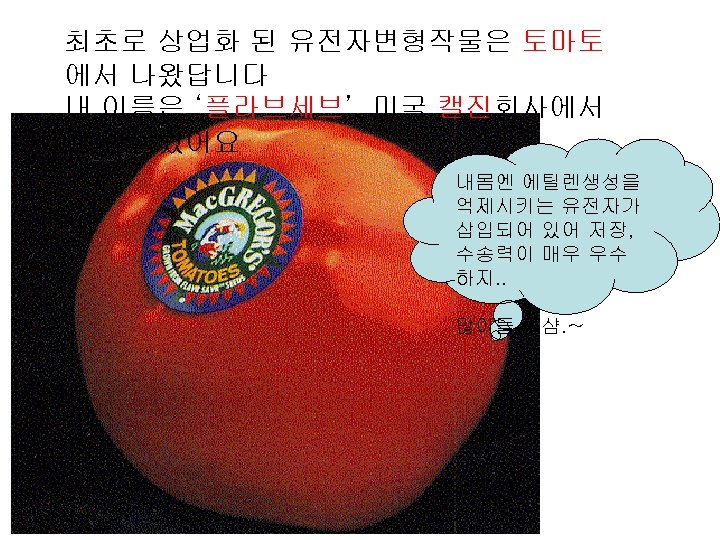
최초로 상업화 된 유전자변형작물은 토마토 에서 나왔답니다 내 이름은 ‘플라브세브’. 미국 캘진회사에서 절 만들었어요 내몸엔 에틸렌생성을 억제시키는 유전자가 삽입되어 있어 저장, 수송력이 매우 우수 하지. . 많이들 즐샴. ~
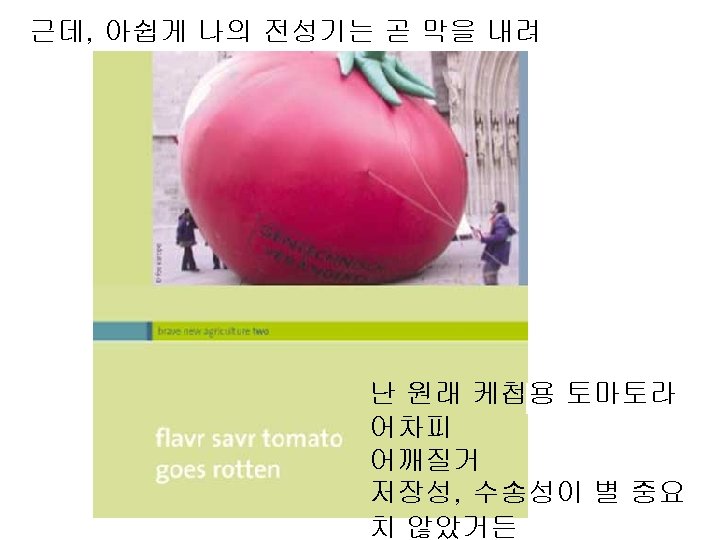
근데, 아쉽게 나의 전성기는 곧 막을 내려 난 원래 케첩용 토마토라 어차피 어깨질거 저장성, 수송성이 별 중요 치 않았거든
The Art and Science of Plant Breeding • Conducting plant breeding Different approaches for different breeding programs based on the reproduction of the plant, the type cultivars to be released, and resources available Basic approaches 1) Conventional approach - traditional/classical breeding - use of tried, proven, older tools - hybridization for creating variability and selection - readily accessible to breeders, easy to conduct 16
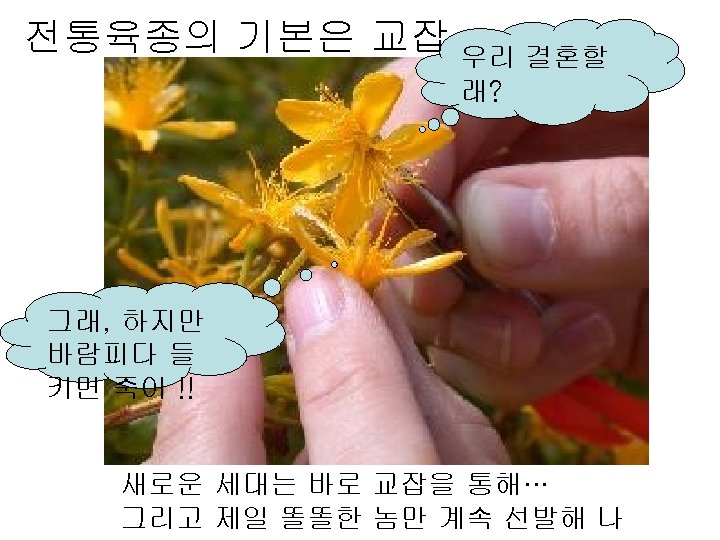
전통육종의 기본은 교잡 우리 결혼할 래? 그래, 하지만 바람피다 들 키면 죽어 !! 새로운 세대는 바로 교잡을 통해… 그리고 제일 똘똘한 놈만 계속 선발해 나
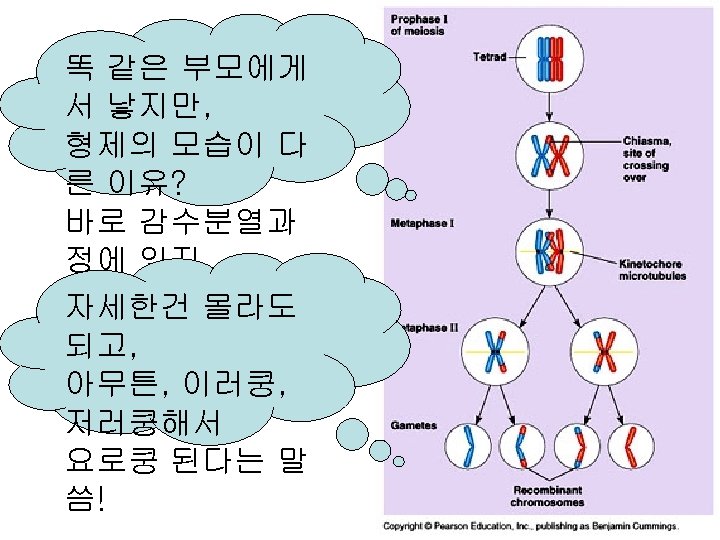
똑 같은 부모에게 서 낳지만, 형제의 모습이 다 른 이유? 바로 감수분열과 정에 있지. . 자세한건 몰라도 되고, 아무튼, 이러쿵, 저러쿵해서 요로쿵 된다는 말 씀!
The Art and Science of Plant Breeding 2) Unconventional approach - use of cutting-edge technology for variability - expensive to conduct - recombinant DNA (r. DNA) technology - gene transfer across natural biological barriers - molecular markers for advanced selection But, remember that “the conventional method remains the workhorse for most parts of the plant breeding industry” 19
자, 코끼리를 냉장고 안에 넣는 방법은? 1. 냉장고 문을 연다 2. 코끼리를 넣는다. 3. 냉장고 문을 닫는다. 그럼, 유전자변형작물을 만드는 방법은? 1. 세균에서 유전자를 꺼낸다 2. 식물세포에 집어넣는다 3. 세포를 완전한 식물체로 키운다…
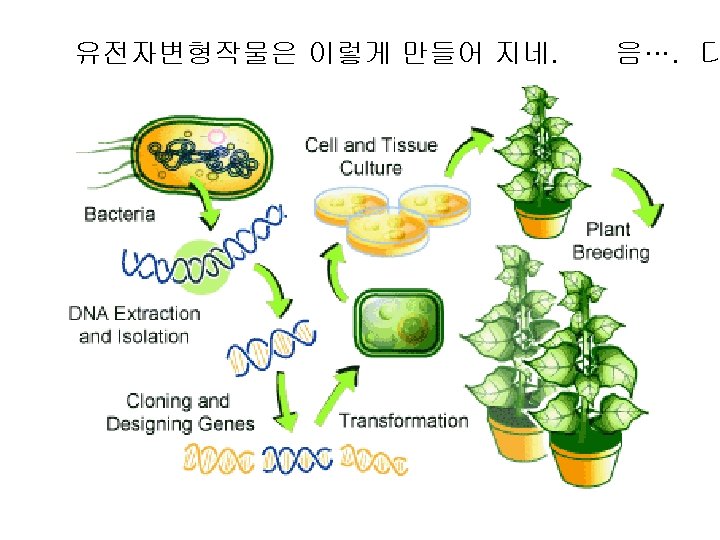
유전자변형작물은 이렇게 만들어 지네. 음…. 디
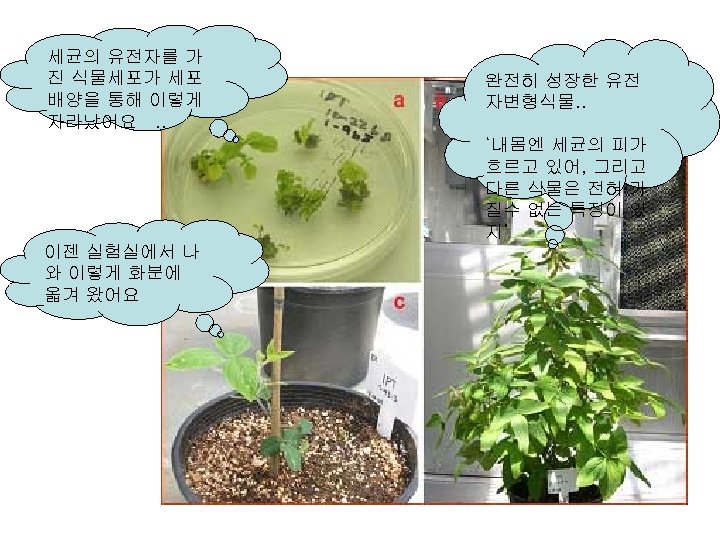
세균의 유전자를 가 진 식물세포가 세포 배양을 통해 이렇게 자라났어요. . 완전히 성장한 유전 자변형식물. . ‘내몸엔 세균의 피가 흐르고 있어, 그리고 다른 식물은 전혀 가 질수 없는 특징이 있 지’ 이젠 실험실에서 나 와 이렇게 화분에 옯겨 왔어요
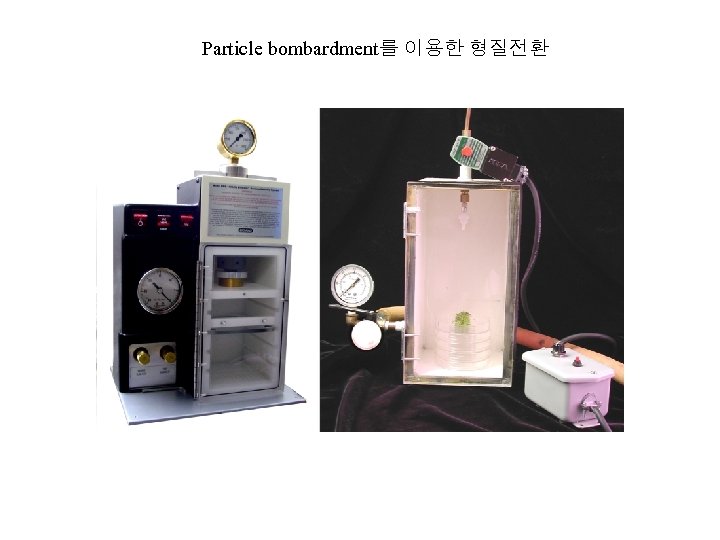
Particle bombardment를 이용한 형질전환
The Art and Science of Plant Breeding • Overview of the basic steps in plant breeding 1) Objectives - high yield, disease resistance, early maturity, lodging resistance (producer’s stand point) - high nutritional quality, enhanced processing quality (consumer’s stand poin) 2) Germplasm - assemble (collect, develop, and organize) the germplasm (plant materials for initiating a breeding program) 24
The Art and Science of Plant Breeding 3) Selection - discriminate among the variability to identify and select individuals with desirable genotype to advance and increase to develop potential new cultivars 4) Evaluation - potential cultivars are evaluated in the field or greenhouse (at different locations, in several years) 5) Certification and cultivar release - seed certification process - increase the experimental seed - obtain approval for release from crop certifying agency 25
2. Plant Cellular Organization and Genetic Structure: an overview 1) Plant cell structure, organization, and division 2) Mendelian concept 3) DNA structure and function 4) Phenotype and genotype 5) Genetic linkage 6) The role of plant structure and processes in breeding 26
Units of organization of living things Cell: fundamental unit of organization of living things (Unicellular vs multicellular) Cellular compartmentalization: membrane-bound nucleus and organelles (eukaryotes) Cell as a selection unit in genetic engineering Plant as selection unit in conventional breeding Genetic engineering Transferring foreign genes -> Selecting cells -> regenerating cells to full plants -> selecting plants (Genetic engineering still requires Conventional breeding tool!) 27
Plant Genome Structure of plant cell and its function (Table 3. 1) Cell = nucleus + extranulear region (cytoplasm) Plant organelles targeted for breeder = nucleus, mitochondria, chloroplast why? because it’s associated with heredity Genome: Gene + Chromosome, the set of chromosomes (or genes) within a gamete of a species (monoploid, haploid) Genome = nuclear genome + organellar genome Organellar genome = chloropast genome + mitochondrial genome 28
Plant Genome Nuclear genome follows Medelian inheritance Organellar genome follows Cytoplasmic inheritance Some extranuclear genes are of special importance to plant breeding, like male sterility gene located in the mitochondria (CMS) Why CMS? ->used to eliminate the need for emasculation (removing anthers before crossing or hybridization) Gens carried in the maternal cytoplasm may influence the hybrid phenotype, called maternal effect 29
Chromosomes and Nuclear Division Chromosome: condensed DNA sequence in linear fashion as a visible strand at the stage of cell division Two kinds of cells depending on chromosome number Gametes (gametic cells) = half set of the chromosome = haploid number (n) Sometic cells = complete set of the chromosome = diploid number (2 n) Homologous chrom. : sometic chrom. arranged in pairs based on size, length, centromere position 30
Chromosomes and Nuclear Division In homologous chrom. one member of each pair is derived from the maternal parent (through egg) and the other from the paternal parent (through the pollen) = biparental inheritance -> as the result, each diploid cell contains two form of each gene (allele) 31
Chromosomes and Nuclear Division Mitosis Occurs only in somatic cell Daughter cell contains the same no. of chromo. as mother cell (karyokinesis) Products are genetically identical (equational division) New cells for growth and maintenance of the plant Meiosis Occurs specialized tissues in flowers Daughter cell contains the haploid no. of chromo. Products are gametes or spores 32
Chromosomes and Nuclear Division Meiosis A meiotic event, Crossing over, occurs resulting in genetic exchange between non-sister chromatids Crossing over -> a major source of genetic variability = responsible for new recombinations genetic materials Genetic linkage? => very important for plant breeder Maintenance of the ploidy level of the species 33
Mendelian Concepts in Plant Breeding Mendel’s law of inheritance Mendel’s contribution => discipline of genetics, principles of inheritance, transmission genetics Result of Mendel’s study => traits are controlled by heritable factors that are from parents to offspring, through the reproductive cell 1. Dominance and Recessivity Between two contrasting traits of the parents, the expressed trait at hybrid(F 1) is dominant and the suppressed trait is recessive 34
Mendelian Concepts in Plant Breeding Mendel’s law of inheritance 2. Law of segregation Two factors that control each trait do not blend but Remain distant throughout the life of the individual and segregate in the formation of gametes Paired factors segregate during the formation of gametes in a random fashion such that each gamete receives one form or the other 35
Mendelian Concepts in Plant Breeding Mendel’s law of inheritance 3. Law of independent assortment Genes (genetic factor) for different characters (traits) are inherited independently of each other When two or more pairs of traits are considered simultaneously, the factors for each pair of traits assort independently to the gametes -Mendel’s pairs of factor => Genes -Each factor of a pair => Allele -Location of the gene on the chromosome => Locus 36
Mendelian Concepts in Plant Breeding Concept of genotype and phenotype Genotype = the totality of the genes of an individual (in practice, a very small subset of genes of interest) Genotype writing: dominant allele -> A, recessive allele -> a homozygous at this locus-> AA or aa heterozygous at this locus -> Aa A plant that has two identical(different) alleles for genes is homozygous (heterozygous) at that locus, and is called a homozygote (heterozygote) 37
Mendelian Concepts in Plant Breeding Concept of genotype and phenotype Phenotype = observable effect of a genotype = the result of the interaction between a genotype and its environment P (Phenotype) = G (Genotype) + E (Environment) 38

Mendelian Concepts in Plant Breeding Predicting genotype and phenotype Statistical probability analysis is applied to determine the outcome of a cross, given the genotype of the parents and gene action Punnett square is used to facilitate the analysis Distinghishing heterozygous and homozygous Individuals In a segregating population where genotypes PP and Pp produce the same phenotype, Testcross or Progeny test is conducted to know the exact genotype of the 39 plant
Mendelian Concepts in Plant Breeding Complex inheritance How lucky was Mendel ? Mendel’s traits = simply inherited traits (simple traits) Complex traits = complex inheritance that cannot predicted by Mendelian ratio (non-Mendelian ratio) Incomplete (partial) dominance: masking of one trait by another is only partial Red-flower (RR) X White-flower (rr) -> Pink flower (Rr) 40
Mendelian Concepts in Plant Breeding Complex inheritance Codominance: both alleles of a heterozygote are expressed to equal degrees. Two alleles code for two equally functional and detectable gene products. Multiple alleles of the same gene: The mode of inheritance by which individuals have access to three or more alleles to be created in a population (ABO blood grop, Self-incompatibility (S) alleles) 41
Mendelian Concepts in Plant Breeding Complex inheritance Multiple genes: The same enzymes can be produced by different genes = isozyme Polygenic inheritance: Mendelian genes = major genes -> easily categorized into several or many non-overlapping groups = discrete variation Polygenes = minor genes -> some traits are controlled by several or many genes that have effects too small to be individually distinguished = non-discrete varation 42
Mendelian Concepts in Plant Breeding Complex inheritance Concept of gene interaction The genetic influence on the phenotype is complex and genes do not necessarily interact directly to influence a Phenotype Þ The cellular function of numerous gene products work together in concert to produce the phenotype Þ Epistasis (interactions involving non-allelic genes) 9: 7, 9: 6: 1, 15: 1, 13: 3, 12: 3; 1 etc (Fig. 3. 8) 43
Mendelian Concepts in Plant Breeding Complex inheritance Pleiotropy A condition that multiple traits are affected by one gene Þ The cellular function of numerous gene products work together in concert to produce the phenotype Þ Epistasis (interactions involving non-allelic genes) 9: 7, 9: 6: 1, 15: 1, 13: 3, 12: 3; 1 etc (Fig. 3. 8) 44
3. Plant Reproductive System 1) Type of plant life cycles and their implication in breeding 2) Basic types of floral morphology 3) Mechanisms of pollination and fertilization 4) Breeding implications of self- and cross-pollination 5) Constraints to pollination and their implication in breeding 6) Genetics and applications of male sterility in breeding 45
Importance of mode of reproduction to plant breeding Why breeders need to understand the mode of plant reproduction? Key reasons…. 1. The genetic structure of plants depends on their mode of reproduction 2. Artificial hybridization is needed to conduct genetic studies to understand the inheritance of trait of interest, and for transfer of genes of interest from one parent to another 46
Importance of mode of reproduction to plant breeding Why breeders need to understand the mode of plant reproduction? Key reasons…. 3. Artificial hybridization requires an effective control of pollination so that only the desired pollen is allowed to be involved in the cross 4. The mode of reproduction determines the procedures for multiplication and maintenance of cultivars developed by plant breeder 47
Overview of reproductive options in plant 1. Hermaphrodity versus unisexuality 2. Self-pollination versus cross-pollination 3. Self-fertilization versus cross-fertilization 4. Sexuality versus asexuality 48
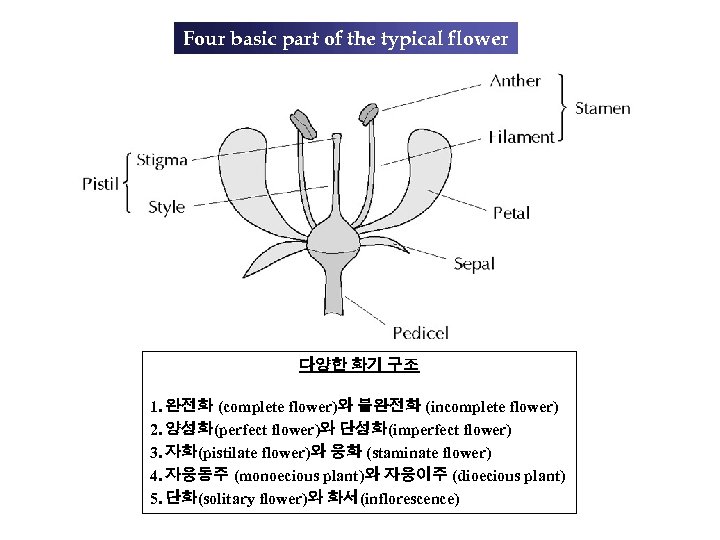
Four basic part of the typical flower 다양한 화기 구조 1. 완전화 (complete flower)와 불완전화 (incomplete flower) 2. 양성화(perfect flower)와 단성화(imperfect flower) 3. 자화(pistilate flower)와 웅화 (staminate flower) 4. 자웅동주 (monoecious plant)와 자웅이주 (dioecious plant) 5. 단화(solitary flower)와 화서(inflorescence)
Overview of reproductive options in plant 1. Hermaphrodity versus unisexuality 50
Overview of reproductive options in plant 2. Self-pollination versus cross-pollination 51
Overview of reproductive options in plant 3. Self-fertilization versus cross-fertilization 52
Overview of reproductive options in plant 4. Sexuality versus asexuality 53
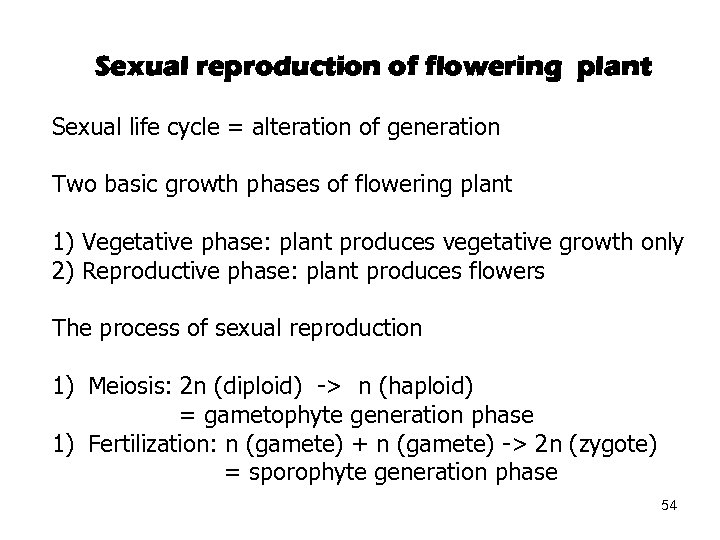
Sexual reproduction of flowering plant Sexual life cycle = alteration of generation Two basic growth phases of flowering plant 1) Vegetative phase: plant produces vegetative growth only 2) Reproductive phase: plant produces flowers The process of sexual reproduction 1) Meiosis: 2 n (diploid) -> n (haploid) = gametophyte generation phase 1) Fertilization: n (gamete) + n (gamete) -> 2 n (zygote) = sporophyte generation phase 54
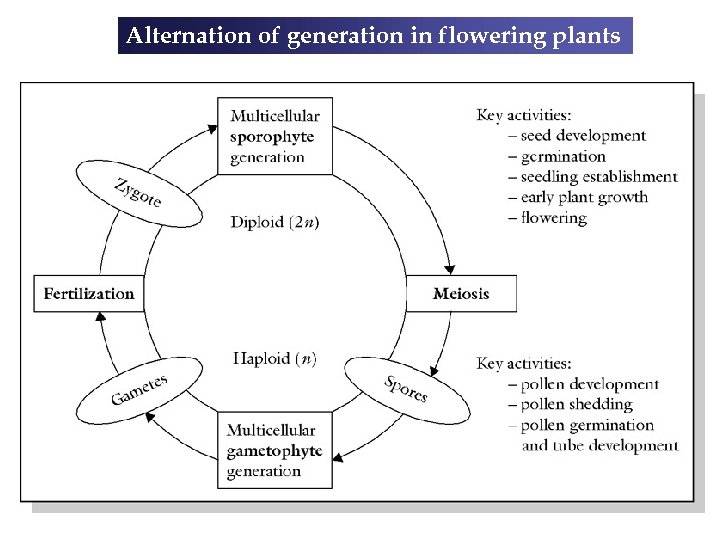
Alternation of generation in flowering plants
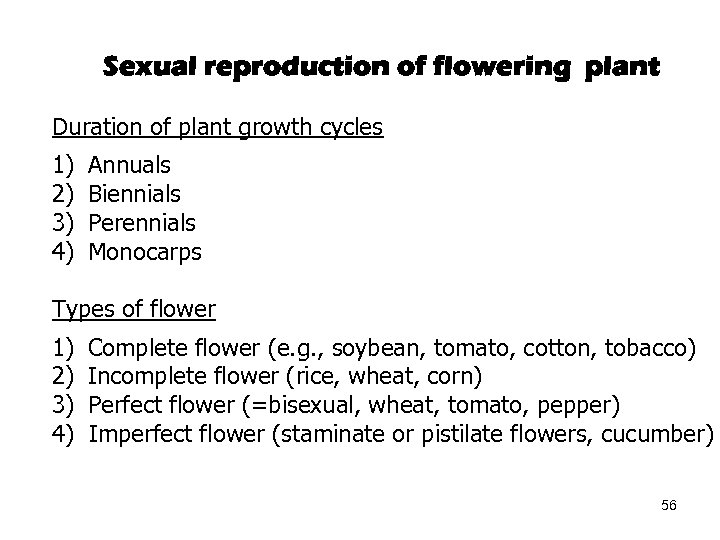
Sexual reproduction of flowering plant Duration of plant growth cycles 1) 2) 3) 4) Annuals Biennials Perennials Monocarps Types of flower 1) 2) 3) 4) Complete flower (e. g. , soybean, tomato, cotton, tobacco) Incomplete flower (rice, wheat, corn) Perfect flower (=bisexual, wheat, tomato, pepper) Imperfect flower (staminate or pistilate flowers, cucumber) 56
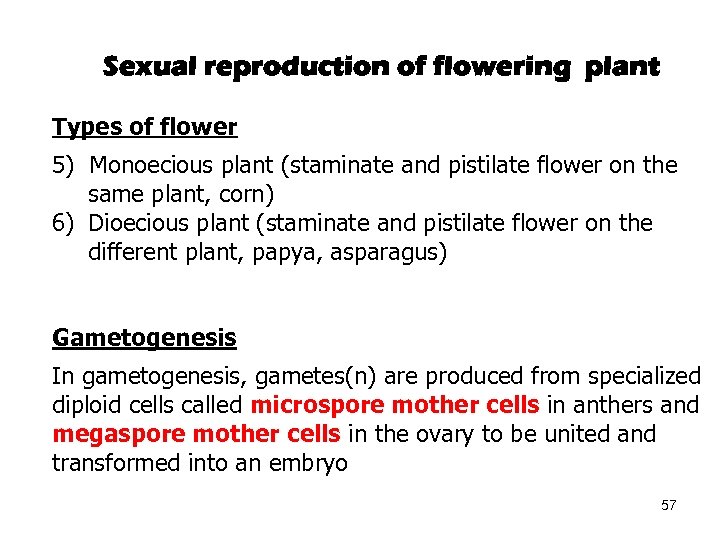
Sexual reproduction of flowering plant Types of flower 5) Monoecious plant (staminate and pistilate flower on the same plant, corn) 6) Dioecious plant (staminate and pistilate flower on the different plant, papya, asparagus) Gametogenesis In gametogenesis, gametes(n) are produced from specialized diploid cells called microspore mother cells in anthers and megaspore mother cells in the ovary to be united and transformed into an embryo 57
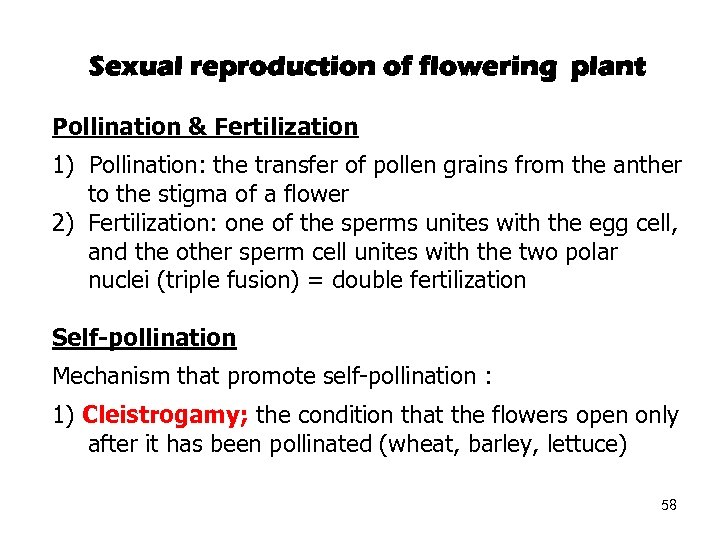
Sexual reproduction of flowering plant Pollination & Fertilization 1) Pollination: the transfer of pollen grains from the anther to the stigma of a flower 2) Fertilization: one of the sperms unites with the egg cell, and the other sperm cell unites with the two polar nuclei (triple fusion) = double fertilization Self-pollination Mechanism that promote self-pollination : 1) Cleistrogamy; the condition that the flowers open only after it has been pollinated (wheat, barley, lettuce) 58
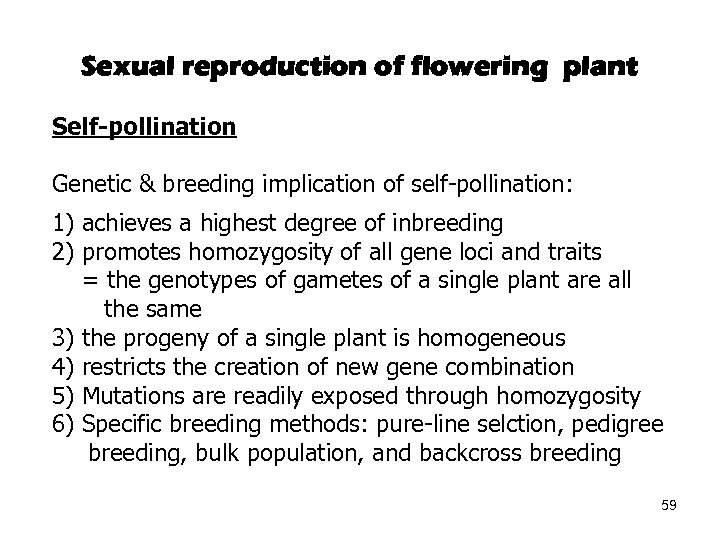
Sexual reproduction of flowering plant Self-pollination Genetic & breeding implication of self-pollination: 1) achieves a highest degree of inbreeding 2) promotes homozygosity of all gene loci and traits = the genotypes of gametes of a single plant are all the same 3) the progeny of a single plant is homogeneous 4) restricts the creation of new gene combination 5) Mutations are readily exposed through homozygosity 6) Specific breeding methods: pure-line selction, pedigree breeding, bulk population, and backcross breeding 59
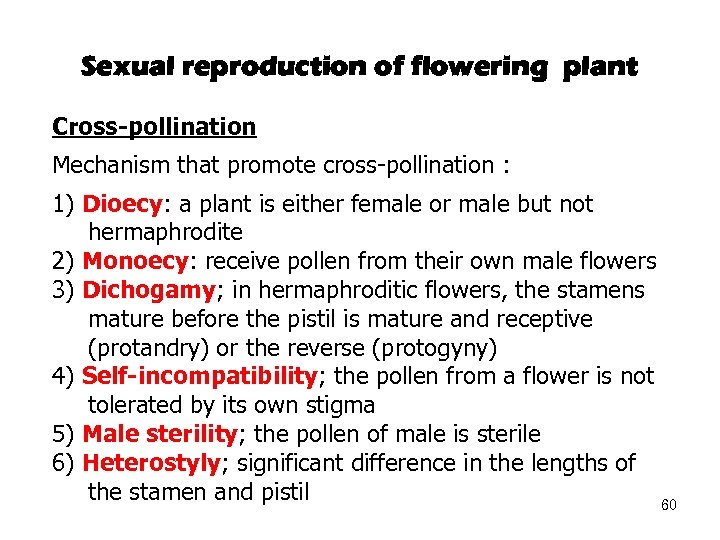
Sexual reproduction of flowering plant Cross-pollination Mechanism that promote cross-pollination : 1) Dioecy: a plant is either female or male but not hermaphrodite 2) Monoecy: receive pollen from their own male flowers 3) Dichogamy; in hermaphroditic flowers, the stamens mature before the pistil is mature and receptive (protandry) or the reverse (protogyny) 4) Self-incompatibility; the pollen from a flower is not tolerated by its own stigma 5) Male sterility; the pollen of male is sterile 6) Heterostyly; significant difference in the lengths of the stamen and pistil 60
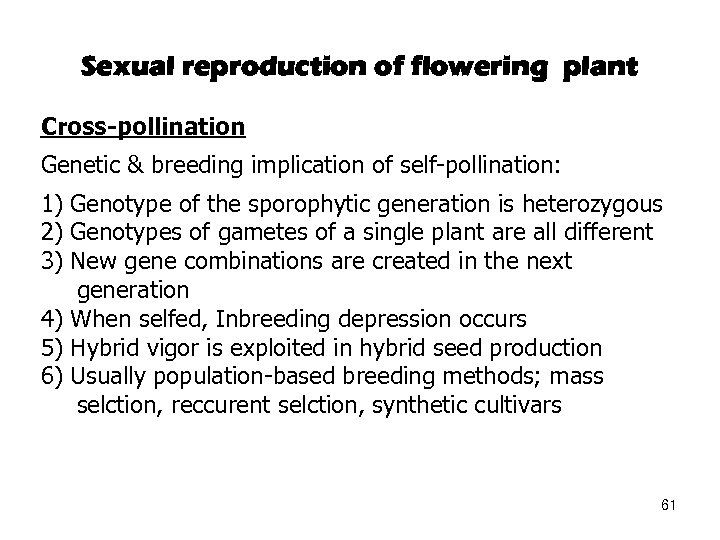
Sexual reproduction of flowering plant Cross-pollination Genetic & breeding implication of self-pollination: 1) Genotype of the sporophytic generation is heterozygous 2) Genotypes of gametes of a single plant are all different 3) New gene combinations are created in the next generation 4) When selfed, Inbreeding depression occurs 5) Hybrid vigor is exploited in hybrid seed production 6) Usually population-based breeding methods; mass selction, reccurent selction, synthetic cultivars 61
Asexual reproduction Vegetative propagation Vegetative = bulbs, corms, rhizomes, stems, buds Mechanism that promote cross-pollination : 1) Flowering and fertility is reduced 2) Numerous plantlets are generated from small piece if vegetative materials by using cutting, grafting, micropropagation (tissue culture) 3) potato, yam, cassava, sugarcane, and many fruit trees 62
Asexual reproduction Vegetative propagation Genetic & breeding implication of vegetative propagation 1) Once a desirable genotype combination has been achieved, clonal cultivas can be released immediately following the cross. 2) Heterosis is fixed (maintained indefinitely) in the hybrid product 3) Clonal crops are perennial outcrossers and intolerant of inbreeding 4) General combining ability (GCA) and specific combining ability (SCA) can be fully exploited with appropriate breeding methods and population size 63
Apomixis Ability to develop seed without fertilization Apomictically produced seeds are clones of the mother plant = apomixis is the asexual production of seed Found from 10% of 400 plant families (Gramineae, Compositae, Rosaeae, and Asteraceae) and 1% of 40, 000 species (citrus, brerries, mango, perennial forage grasses) Facultative apomixis: produce both sexual and apomitic seed Obligate apomixis: produce only apomitic seeds 64
Apomixis Indicators of apomitics 1) Indicator of facultative apomitics: the progeny from a cross in a cross-pollinated species fails to segregate 2) Indicator of obligate apomitics: multiple floral feature, multiple seedlings per seed, the progeny of a cross shows a high number of identical homozygous individuals that resemble the mother plant in addition to the presence of individuals that are clearly different 65
Apomixis Benefits of apomixis: 1) A breeding tool to develop hybrids that can retain their original genetic properties indefinitely with repeated use 2) Breeders can use this tool to fix superior gene combination 3) No need to maintain and increase parental genotypes 4) No need for producers to purchase fresh hybrid seed each year 66
Apomixis Mechanisms of apomixis 1) Apospory 2) Diplospory 3) Adventitious embryo 4) Parthenogenesis 67
Constraints of sexual biology in plant breeding Some constraints are exploited as hybrid breeding tool Methods for controlling cross-pollination(crossing) 1) Mechanical control: removing anthers from bisexual flowers to prevent pollination (emasculation) 2) Chemical control; chemical hybridizing agents (gametocides, male steriliants, pollenocides, androcides) 3) Genetic control; male sterility, self-incompetibility 68
Constraints of sexual biology in plant breeding Self-incompatibility =>a condition in which the pollen from a flower Is not receptive on the stigma of the same flower and hence is incapable of setting seed 1) Heteromorphic incompatibility 2) Homomorphic incompatibility a) Gametophytic incompatibility; the ability of the pollen to function is determined by its own genotype and not the plant that produces it 69
Constraints of sexual biology in plant breeding Male sterility =>a condition in plants whereby the anther or pollen are nonfunction 1) Genetic (nuclear, genic) male sterility 2) Cytoplasmic (mitocondrial gene) male sterility 3) Cytoplasmic-genic sterility 70
Constraints of sexual biology in plant breeding Genetic Male sterility controlled by a single recessive nuclear gene, ms genetically male-sterile types => msms A pure population of genetic male-sterile plants can not be produced Male-sterile genes may be carried along at a high frequency in a self-pollinate crop if seeds from the male -sterile plants only are harvested and used to plant next generation 71
Constraints of sexual biology in plant breeding Cytoplasmic Male sterility (CMS) controlled by cytoplasm (mitochondrial gene) A cytoplasm without sterility gene = normal (N) cytoplasm A cytoplasm that cause male sterility = a sterile (s) cytoplasm or said to have cytoplasmic male sterility (CMS) CMS is transmitted through the egg (female plant= maternal factor) Fertility is restored by dominant fertility-restoring genes transmitted through the pollen gametes The pollen parent may have either CMS or normal 72
Constraints of sexual biology in plant breeding Cytoplasmic Male sterility (CMS) Controlled by cytoplasm (mitochondrial gene) A cytoplasm without sterility gene = normal (N) cytoplasm A cytoplasm that cause male sterility = a sterile (s) cytoplasm or said to have cytoplasmic male sterility (CMS) CMS is transmitted through the egg (female plant= maternal factor) Fertility is restored by dominant fertility-restoring genes transmitted through the pollen gametes The pollen parent may have either CMS or normal cytoplasm 73
Constraints of sexual biology in plant breeding Cytoplasmic-genetic Male sterility (CMS) Fertility is restored by dominant fertility-restoring genes transmitted through the pollen gametes The pollen parent may have either CMS or normal cytoplasm Utilization in a breeding program 1) Eliminate emasculation in hybridization 2) Increase natural cross-pollination in self-pollinated crops 3) Facilitate commercial hybrid seed production 74
Скачать презентацию Chapter 2 General Biological Concepts 1 The Art
5472c215cf1bd030aac74051ded05647.ppt