 Скачать презентацию Chapter 2 Experimenting with Classes and Objects
527dabeb8f2a315607eba822a5ffb4f9.ppt
- Количество слайдов: 28



Chapter 2 Experimenting with Classes and Objects © 2007 · Georges Merx and Ronald J. Norman Slide 1
Agenda • Elements of object orientation – Class and objects – Component reuse – Class hierarchy • Requirements Analysis – Requirements Specification © 2007 · Georges Merx and Ronald J. Norman 2
Introduction (1) • The purpose of information systems is to create value by transforming data from a raw form to a more structured form © 2007 · Georges Merx and Ronald J. Norman 3
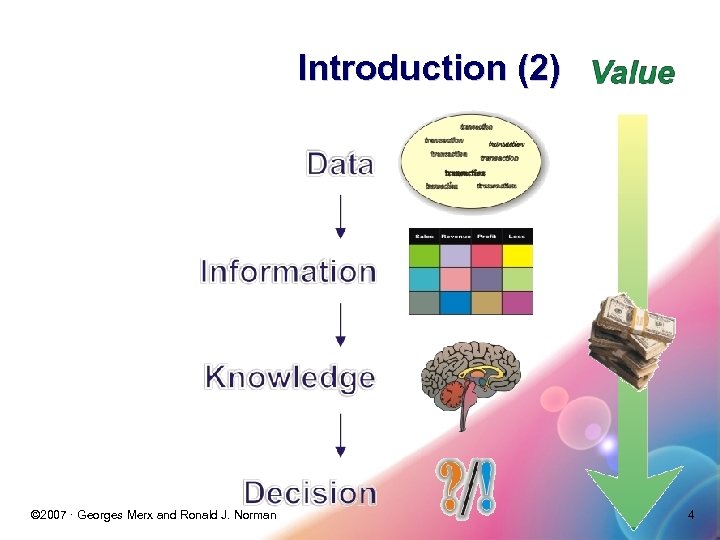
Introduction (2) © 2007 · Georges Merx and Ronald J. Norman 4
Object-Orientation • Definition – Representing in code the concepts of objects: characteristics (called attributes) and behaviors (called methods) – O-O features/benefits/capabilities • • • Abstractions (cohesive) Instantiation Inheritance Polymorphism Encapsulation – Objects can be members of classes • Classes are templates for objects © 2007 · Georges Merx and Ronald J. Norman 5
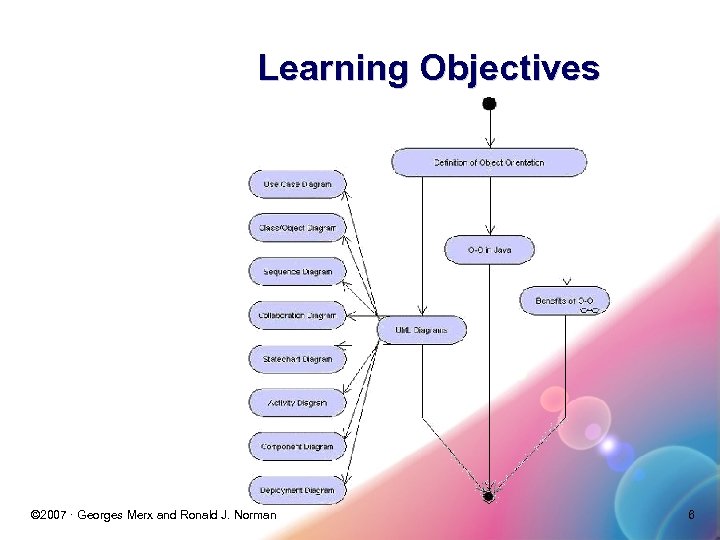
Learning Objectives © 2007 · Georges Merx and Ronald J. Norman 6
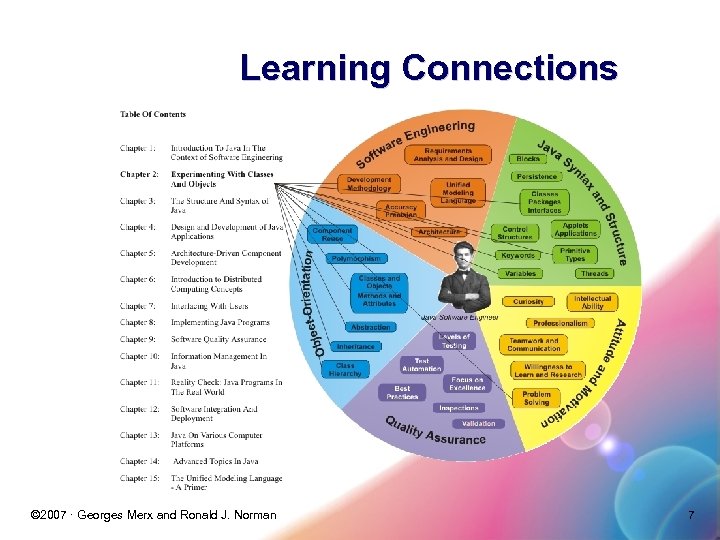
Learning Connections © 2007 · Georges Merx and Ronald J. Norman 7
Use Cases © 2007 · Georges Merx and Ronald J. Norman 8
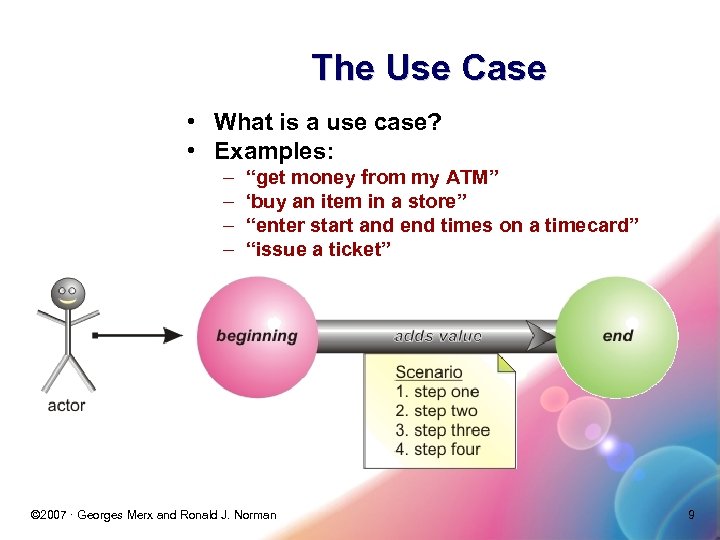
The Use Case • What is a use case? • Examples: – – “get money from my ATM” ‘buy an item in a store” “enter start and end times on a timecard” “issue a ticket” © 2007 · Georges Merx and Ronald J. Norman 9
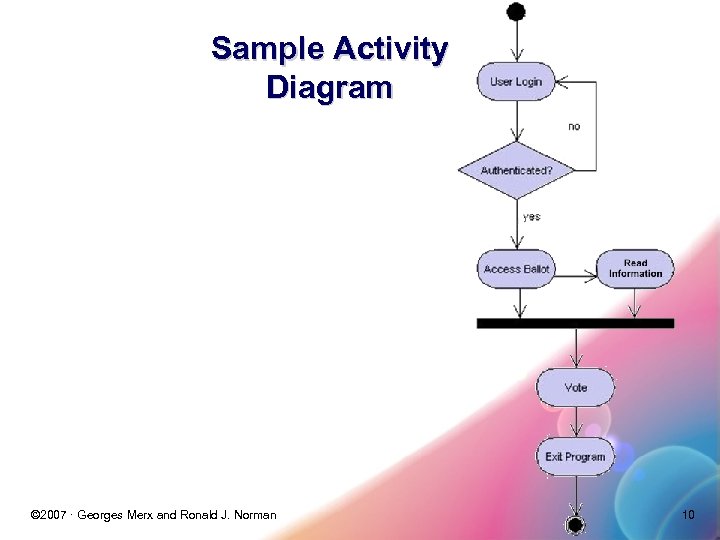
Sample Activity Diagram © 2007 · Georges Merx and Ronald J. Norman 10
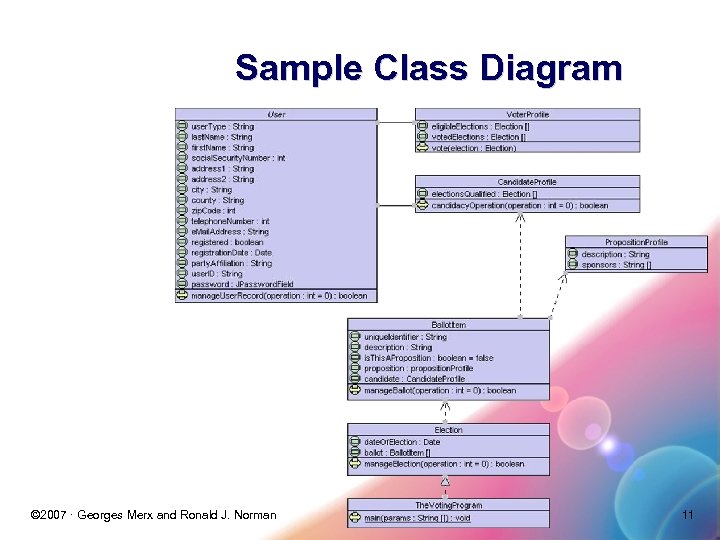
Sample Class Diagram © 2007 · Georges Merx and Ronald J. Norman 11
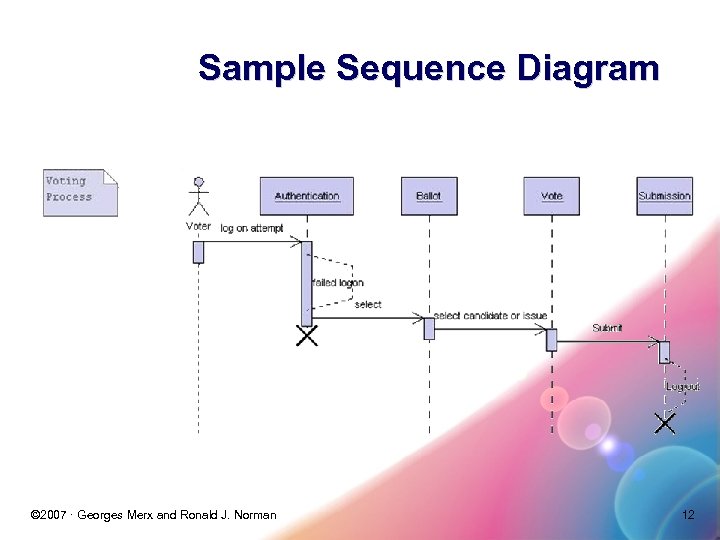
Sample Sequence Diagram © 2007 · Georges Merx and Ronald J. Norman 12
Classes and Objects • Classes/objects contain attributes and methods • Classes are templates for objects (e. g. blueprints) • Objects are said to be members of classes – Objects are also called instances • Objects are instantiated to hold specific data – Class “Vehicle” object “my. Green 1997 Ford. Taurus” © 2007 · Georges Merx and Ronald J. Norman 13
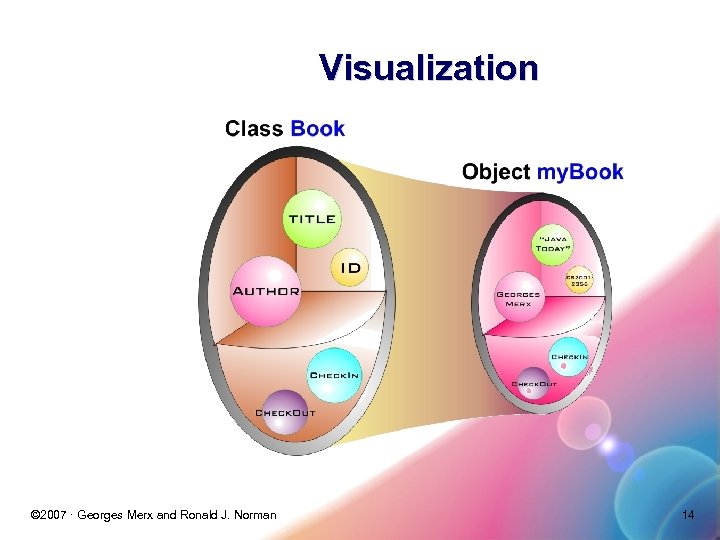
Visualization © 2007 · Georges Merx and Ronald J. Norman 14
Classes • A program can be composed of one or more classes – The main() method provides the program entry point and must exist in a stand-alone program – Attributes are variables declared at the class/object level (outside of methods) – Variables are named locations in (random-access) memory © 2007 · Georges Merx and Ronald J. Norman 15
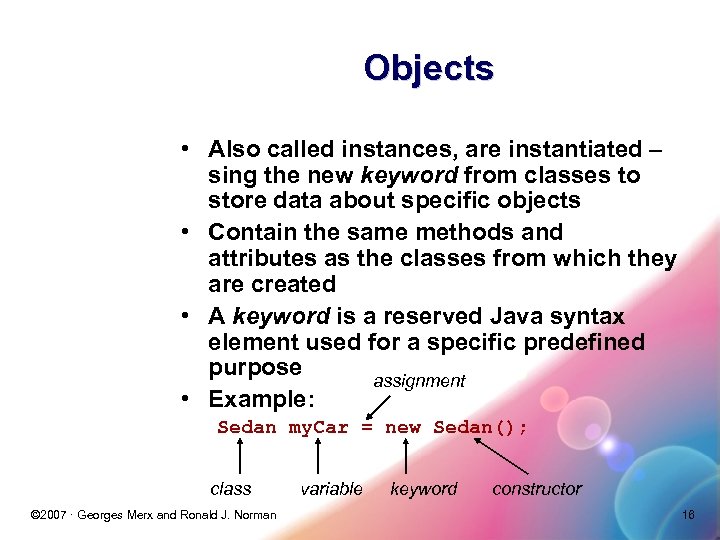
Objects • Also called instances, are instantiated – sing the new keyword from classes to store data about specific objects • Contain the same methods and attributes as the classes from which they are created • A keyword is a reserved Java syntax element used for a specific predefined purpose assignment • Example: Sedan my. Car = new Sedan(); class © 2007 · Georges Merx and Ronald J. Norman variable keyword constructor 16
Constructors • Constructors are methods invoked at object creation time – Usually provide initialization code – Not required • Default constructor created and invoked internally and automatically – No return type – Same name as class © 2007 · Georges Merx and Ronald J. Norman 17
Component Reuse (1) • Extends keyword (introduction) – Class can be the child of a parent class inheritance – Example: class Sedan extends Vehicle • Class hierarchy – Super- and subclasses • • – Also called parent- and child classes Subclasses inherit attributes and methods from parent classes Avoiding overlap between classes component reuse © 2007 · Georges Merx and Ronald J. Norman 18
Component Reuse (2) • Principles of reuse – Componentization, modularity – Separation of concerns • High cohesion, low coupling • Application of design patterns • Design patterns are documented best practices in softwqare design and implementation © 2007 · Georges Merx and Ronald J. Norman 19
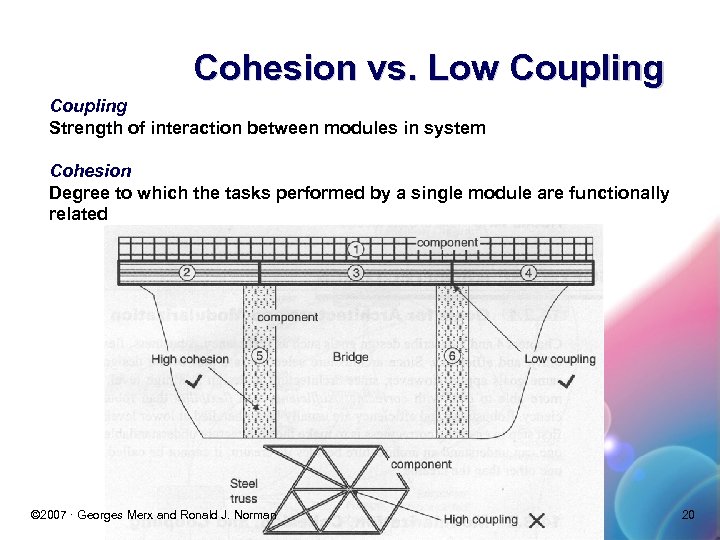
Cohesion vs. Low Coupling Strength of interaction between modules in system Cohesion Degree to which the tasks performed by a single module are functionally related © 2007 · Georges Merx and Ronald J. Norman 20
Terminology • system A is purposeful collection of inter-related components working together to achieve some common objective. A system may include software, mechanical, electrical and electronic hardware and be operated by people. System components are dependent on other system components • component A modular part of a system that encapsulates its contents and whose manifestation is replaceable within its environment. A component defines its behavior in terms of provided and required interfaces. As such, a component serves as a type, whose conformance is defined by these provided and required interfaces (encompassing both their static as well as dynamic semantics). • module A separate and distinct unit of a process, system, or subject area that may be used as a conceptual component of a model or a part in a system. © 2007 · Georges Merx and Ronald J. Norman 21
OO Modularization Techniques • Organizing your code can be done by defining interfaces, abstract classes, and implementation classes • Top level and inner classes • Static and instance attributes • Public, protected, and private attributes • Public, protected and private methods © 2007 · Georges Merx and Ronald J. Norman 22
Position in Process • The Analysis phase addresses the requirements acquisition and analysis activities of a project • Key deliverable: Requirements Specification – – Stakeholder analysis Requirements – human, system Solution environment/architecture Validation © 2007 · Georges Merx and Ronald J. Norman 23
Requirements Analysis • Stakeholder analysis – Understanding all sources of requirements • Humans, systems, applications • Requirements acquisition – Collecting all the requisite information without bias • Requirements analysis – Organization and prioritization – Evaluation and validation – Analysis use cases and classes © 2007 · Georges Merx and Ronald J. Norman 24
Requirements Specification • Formal document to capture project requirements – Should not contain design in formation Design Specification – Developed iteratively (version control) – Complete and detailed enough in each iteration to allow for an unambiguous design effort • Use-case driven • UML diagrams © 2007 · Georges Merx and Ronald J. Norman 25
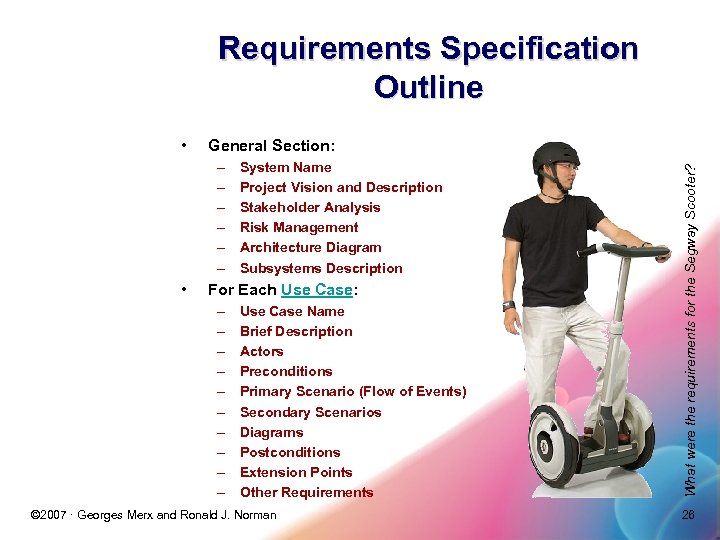
Requirements Specification Outline General Section: – – – • System Name Project Vision and Description Stakeholder Analysis Risk Management Architecture Diagram Subsystems Description For Each Use Case: – – – – – Use Case Name Brief Description Actors Preconditions Primary Scenario (Flow of Events) Secondary Scenarios Diagrams Postconditions Extension Points Other Requirements © 2007 · Georges Merx and Ronald J. Norman What were the requirements for the Segway Scooter? • 26
The Voting Program • Developing a simple application to exercise basic programming skills – Computer-based voting for candidates or propositions • Includes graphical user interface and simple inputprocess-output logic – Improved iteratively across multiple chapters © 2007 · Georges Merx and Ronald J. Norman 27
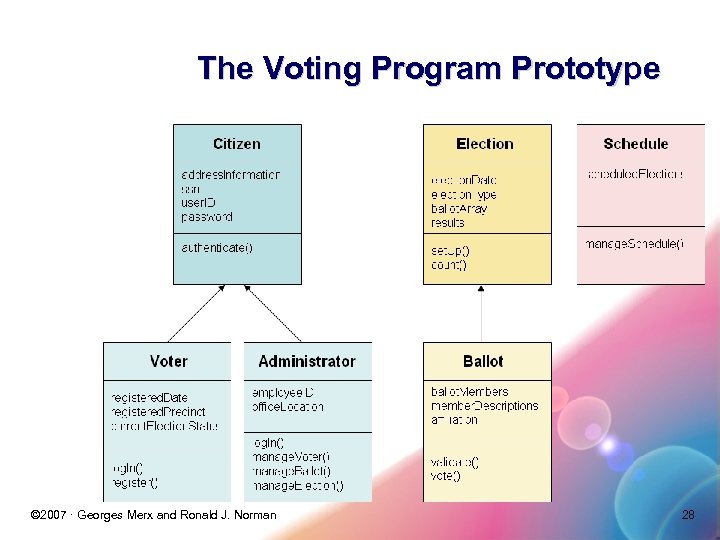
The Voting Program Prototype © 2007 · Georges Merx and Ronald J. Norman 28
Скачать презентацию Chapter 2 Experimenting with Classes and Objects
527dabeb8f2a315607eba822a5ffb4f9.ppt