 Скачать презентацию Chapter 18 International Financial Management International Business 4
3150ccda05603c4abed5ff9cfd1c0c5e.ppt
- Количество слайдов: 33



Chapter 18: International Financial Management International Business, 4 th Edition Griffin & Pustay 18 -1 © 2004 Prentice Hall
Chapter Objectives_1 § Analyze the advantages and disadvantages of the major forms of payment in international trade § Identify the primary types of foreignexchange risk faced by international businesses § Describe the techniques used by firms to manage their working capital 2 © 2004 Prentice Hall
Chapter Objectives_2 § Evaluate the various capital budgeting techniques used for international investments § Discuss the primary sources of investment capital available to international businesses 3 © 2004 Prentice Hall
Financial Issues in International Trade § Which currency to use for the transaction § When and how to check credit § Which form of payment to use § How to arrange financing 4 © 2004 Prentice Hall
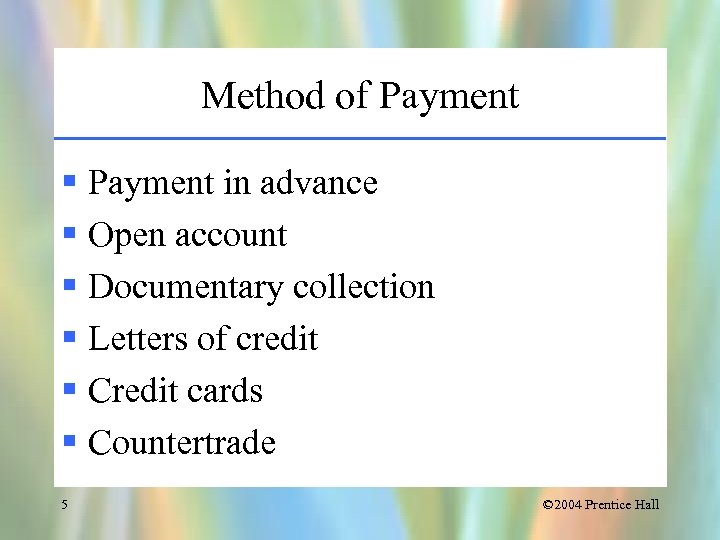
Method of Payment § Payment in advance § Open account § Documentary collection § Letters of credit § Credit cards § Countertrade 5 © 2004 Prentice Hall
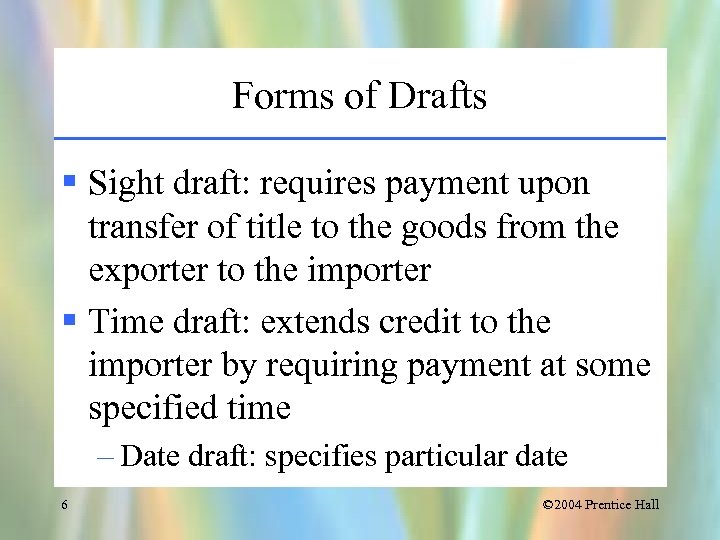
Forms of Drafts § Sight draft: requires payment upon transfer of title to the goods from the exporter to the importer § Time draft: extends credit to the importer by requiring payment at some specified time – Date draft: specifies particular date 6 © 2004 Prentice Hall
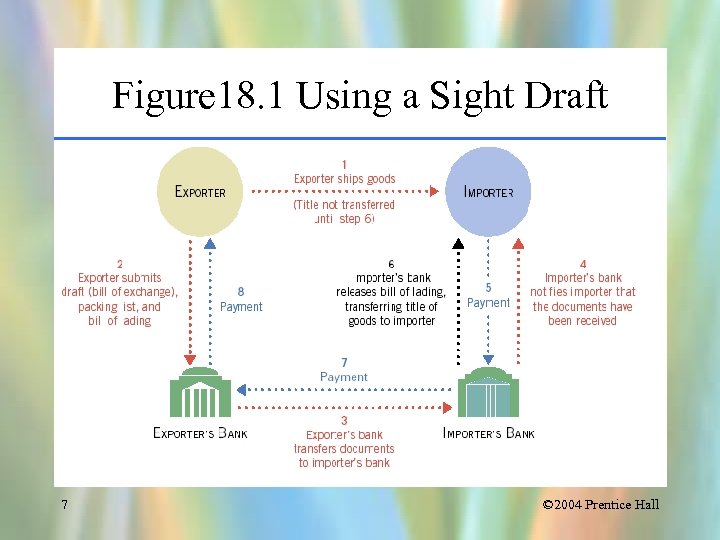
Figure 18. 1 Using a Sight Draft 7 © 2004 Prentice Hall
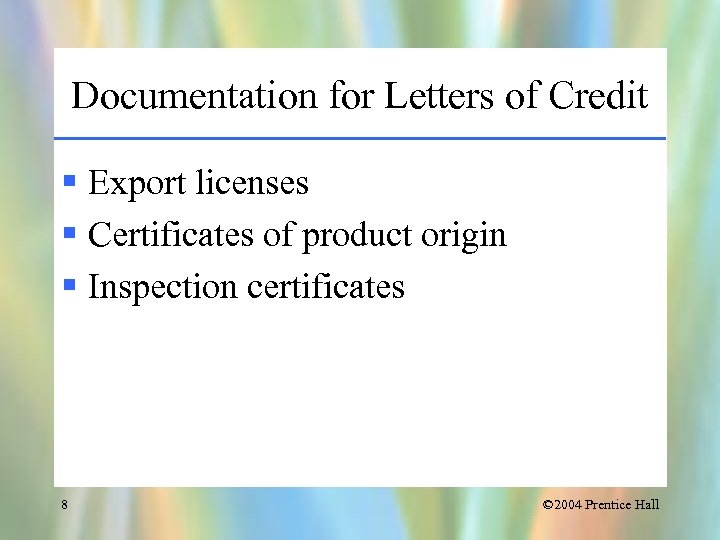
Documentation for Letters of Credit § Export licenses § Certificates of product origin § Inspection certificates 8 © 2004 Prentice Hall
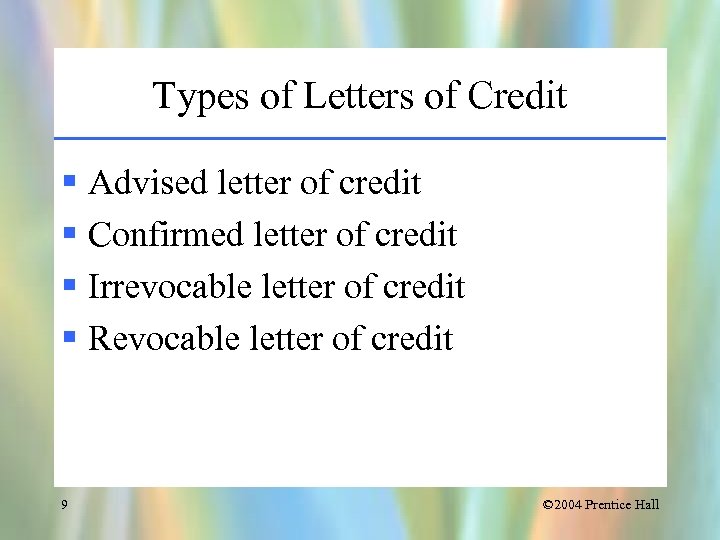
Types of Letters of Credit § Advised letter of credit § Confirmed letter of credit § Irrevocable letter of credit § Revocable letter of credit 9 © 2004 Prentice Hall
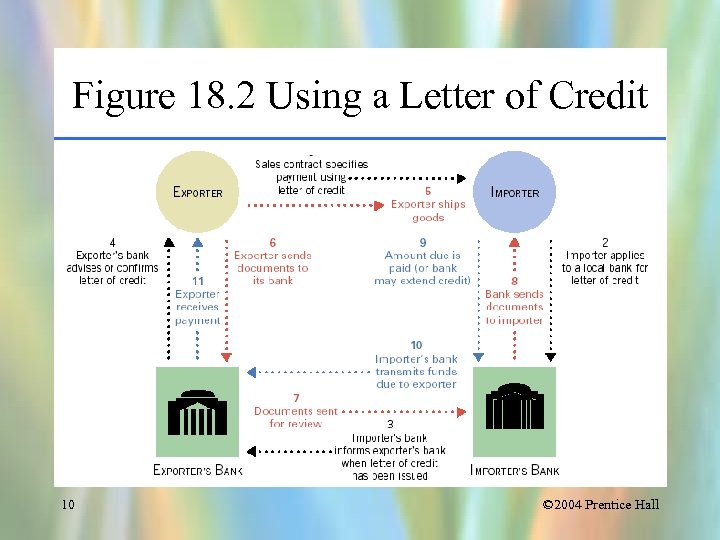
Figure 18. 2 Using a Letter of Credit 10 © 2004 Prentice Hall
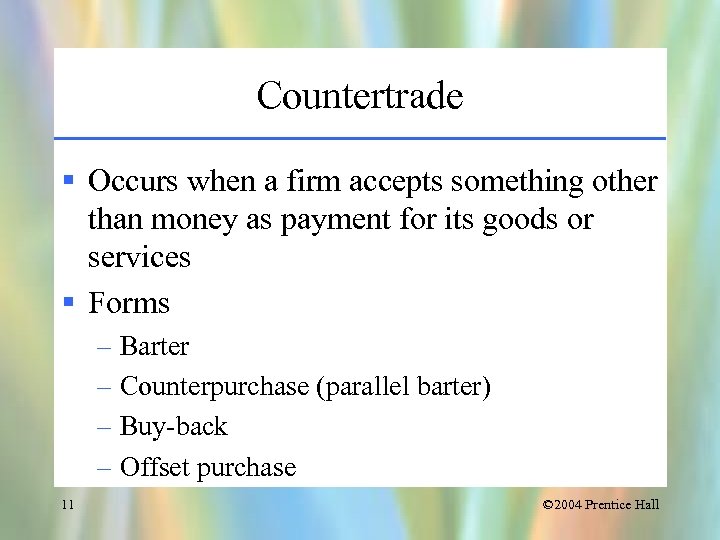
Countertrade § Occurs when a firm accepts something other than money as payment for its goods or services § Forms – Barter – Counterpurchase (parallel barter) – Buy-back – Offset purchase 11 © 2004 Prentice Hall
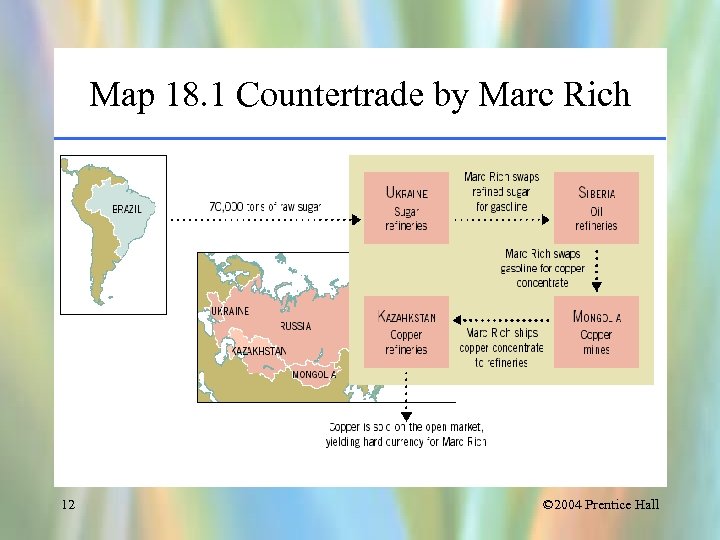
Map 18. 1 Countertrade by Marc Rich 12 © 2004 Prentice Hall
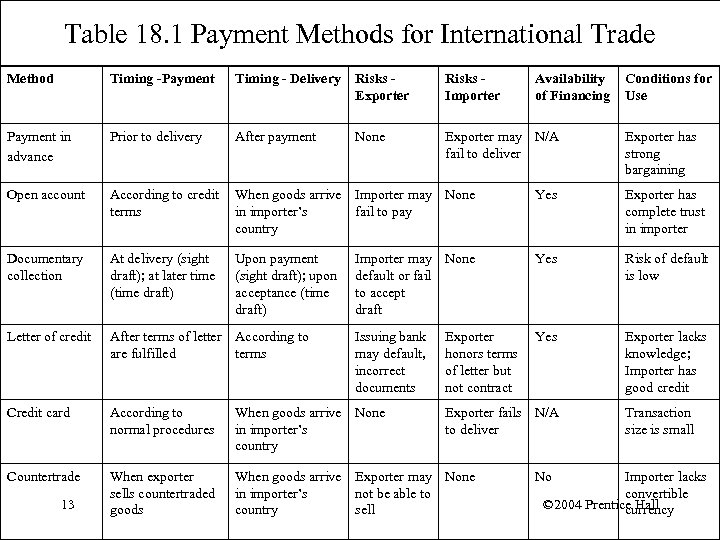
Table 18. 1 Payment Methods for International Trade Method Timing -Payment Timing - Delivery Risks Exporter Risks Importer Payment in advance Prior to delivery After payment None Exporter may N/A fail to deliver Open account According to credit terms When goods arrive Importer may None in importer’s fail to pay country Yes Exporter has complete trust in importer Documentary collection At delivery (sight draft); at later time (time draft) Upon payment (sight draft); upon acceptance (time draft) Importer may None default or fail to accept draft Yes Risk of default is low Letter of credit After terms of letter According to are fulfilled terms Issuing bank may default, incorrect documents Yes Exporter lacks knowledge; Importer has good credit Credit card According to normal procedures When goods arrive None in importer’s country Countertrade When exporter sells countertraded goods When goods arrive Exporter may None in importer’s not be able to country sell 13 Exporter honors terms of letter but not contract Availability of Financing Exporter fails N/A to deliver No Conditions for Use Exporter has strong bargaining Transaction size is small Importer lacks convertible © 2004 Prentice Hall currency

The Itaipu Dam the Parana River between Brazil an Paraguay 14 © 2004 Prentice Hall
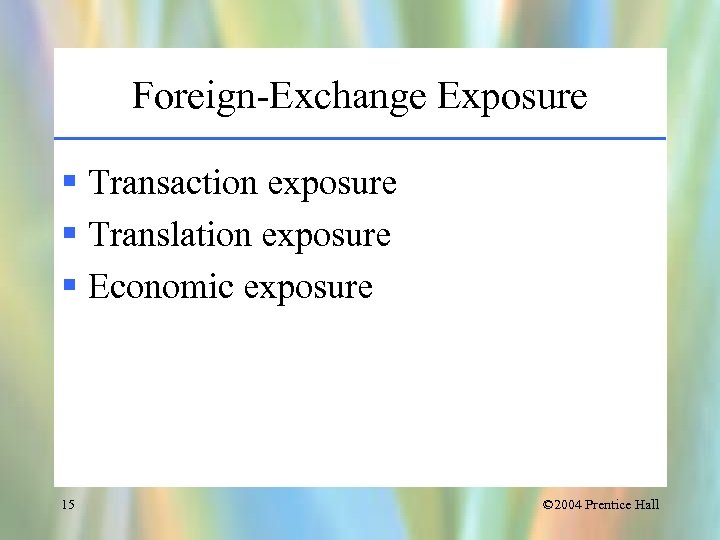
Foreign-Exchange Exposure § Transaction exposure § Translation exposure § Economic exposure 15 © 2004 Prentice Hall
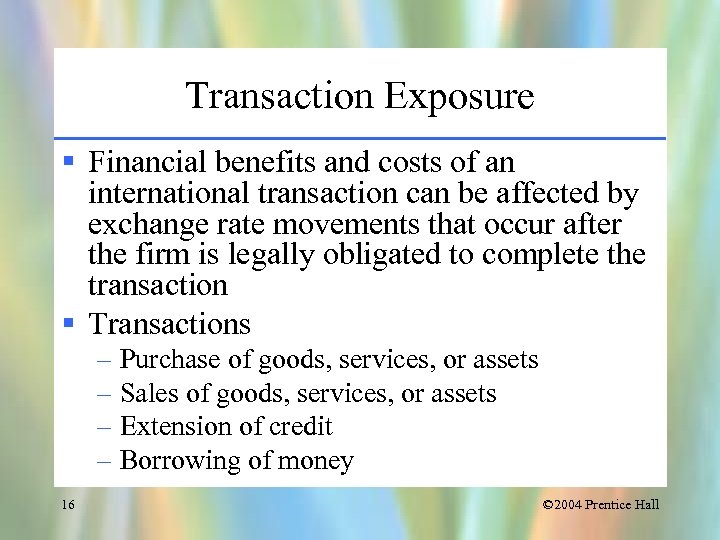
Transaction Exposure § Financial benefits and costs of an international transaction can be affected by exchange rate movements that occur after the firm is legally obligated to complete the transaction § Transactions – Purchase of goods, services, or assets – Sales of goods, services, or assets – Extension of credit – Borrowing of money 16 © 2004 Prentice Hall
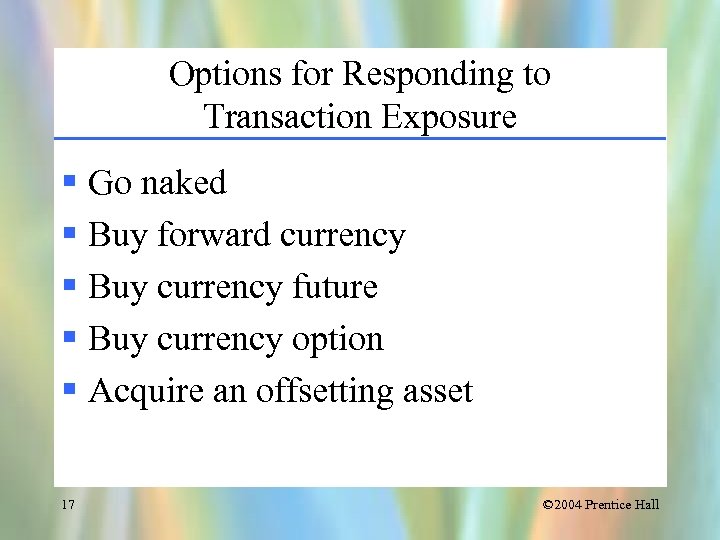
Options for Responding to Transaction Exposure § Go naked § Buy forward currency § Buy currency future § Buy currency option § Acquire an offsetting asset 17 © 2004 Prentice Hall
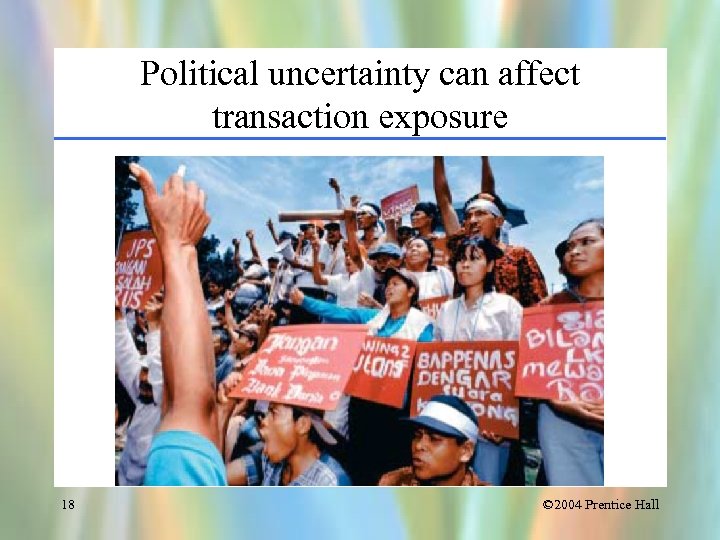
Political uncertainty can affect transaction exposure 18 © 2004 Prentice Hall
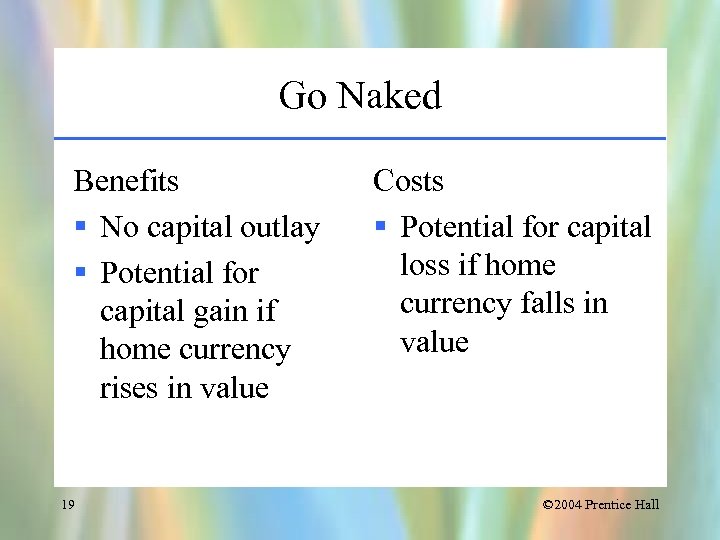
Go Naked Benefits § No capital outlay § Potential for capital gain if home currency rises in value 19 Costs § Potential for capital loss if home currency falls in value © 2004 Prentice Hall
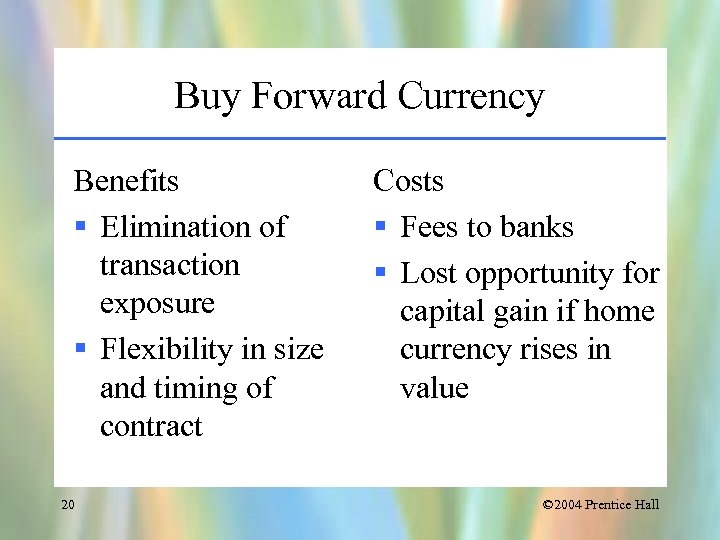
Buy Forward Currency Benefits § Elimination of transaction exposure § Flexibility in size and timing of contract 20 Costs § Fees to banks § Lost opportunity for capital gain if home currency rises in value © 2004 Prentice Hall
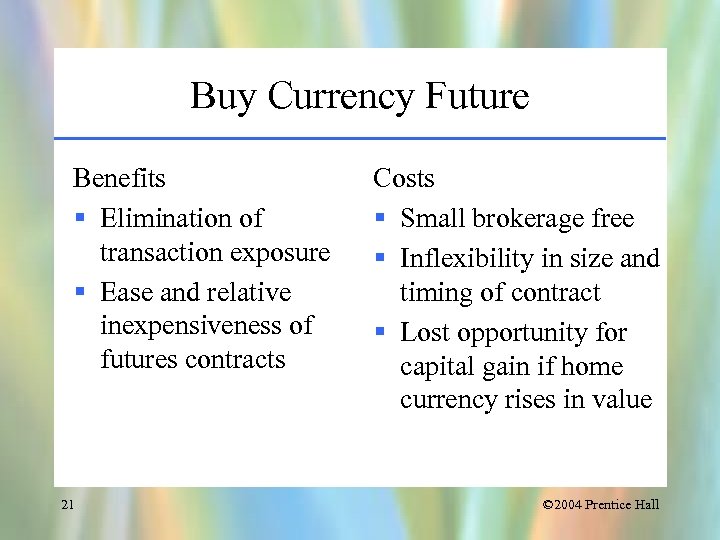
Buy Currency Future Benefits § Elimination of transaction exposure § Ease and relative inexpensiveness of futures contracts 21 Costs § Small brokerage free § Inflexibility in size and timing of contract § Lost opportunity for capital gain if home currency rises in value © 2004 Prentice Hall
Buy Currency Option Benefits Costs § Elimination of § Premium paid up front transaction exposure for option because of its “heads I win; tail I § Potential for capital don’t lose” nature gain if home currency rises in value § Inflexibility in size and timing of option 22 © 2004 Prentice Hall
Acquire Offsetting Asset Benefits § Elimination of transaction exposure 23 Costs § Effort or expense of arranging offsetting transaction § Lost opportunity for capital gain if home currency rises in value © 2004 Prentice Hall
Translation Exposure § Impact on the firm’s consolidated financial statements of fluctuations in exchange rates that change the value of foreign subsidiaries as measured in the parent’s currency § Reduce translation exposure through the use of a balance sheet hedge 24 © 2004 Prentice Hall
Economic Exposure § Impact on the value of a firm’s operations of unanticipated exchange rate changes – Affects all areas of operations § Management of economic exposure involves analyzing likely changes in exchange rates 25 © 2004 Prentice Hall
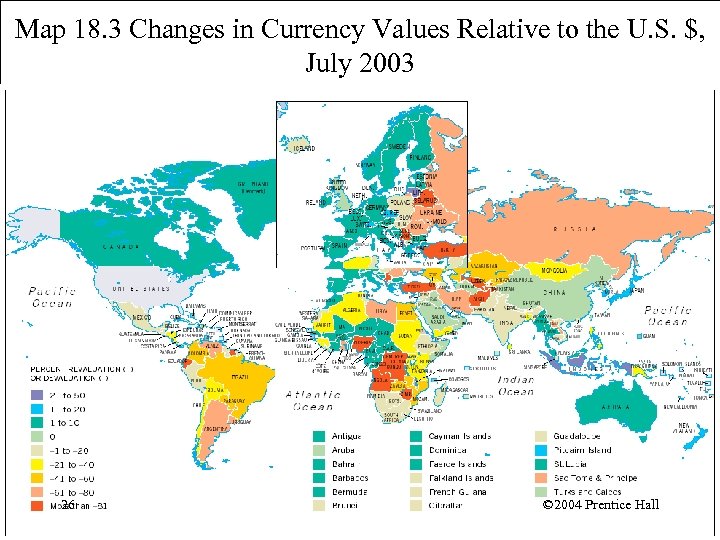
Map 18. 3 Changes in Currency Values Relative to the U. S. $, July 2003 26 © 2004 Prentice Hall
Management of Working Capital § Corporate Financial Goals – Minimizing working-capital balances – Minimizing currency conversion costs – Minimizing foreign-exchange risk 27 © 2004 Prentice Hall
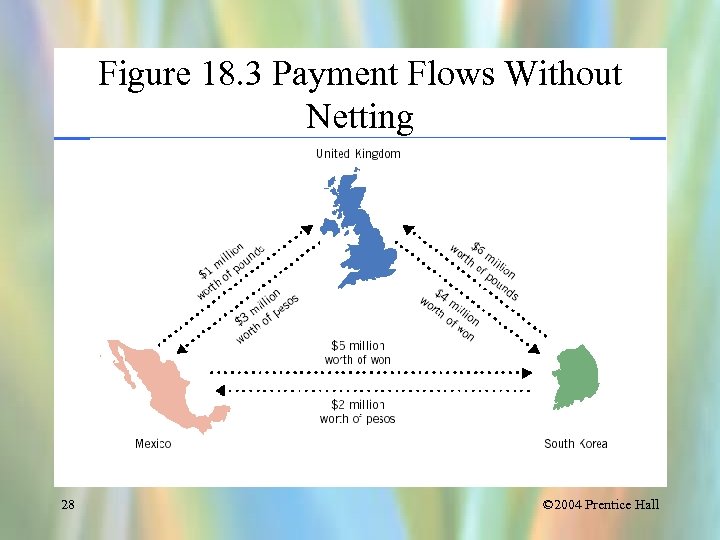
Figure 18. 3 Payment Flows Without Netting 28 © 2004 Prentice Hall
Evaluating Investment Projects § Net Present Value § Internal Rate of Return § Payback period 29 © 2004 Prentice Hall
Net Present Value Approach § A dollar today is worth more than a dollar in the future § Estimate the cash flows the project will generate and then discount them back to the present 30 © 2004 Prentice Hall
Other Factors to Consider When Using Net Present Value Approach § Risk Adjustment § Choice of Currency § Whose Perspective: Parent’s or Project’s? 31 © 2004 Prentice Hall
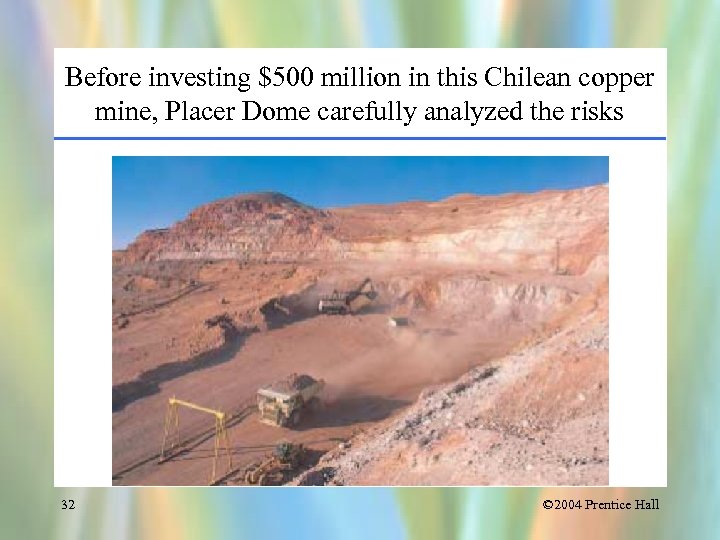
Before investing $500 million in this Chilean copper mine, Placer Dome carefully analyzed the risks 32 © 2004 Prentice Hall
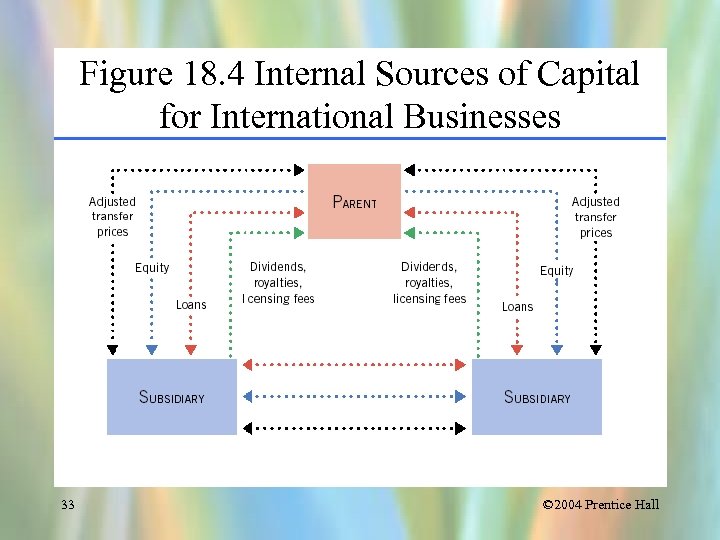
Figure 18. 4 Internal Sources of Capital for International Businesses 33 © 2004 Prentice Hall
Скачать презентацию Chapter 18 International Financial Management International Business 4
3150ccda05603c4abed5ff9cfd1c0c5e.ppt