


 Скачать презентацию CHAPTER 17 LESSON 2 NOTES THE TRIUMPH OF
e90d8943087a93c3c01c4bd1c78cf64d.ppt
- Количество слайдов: 14
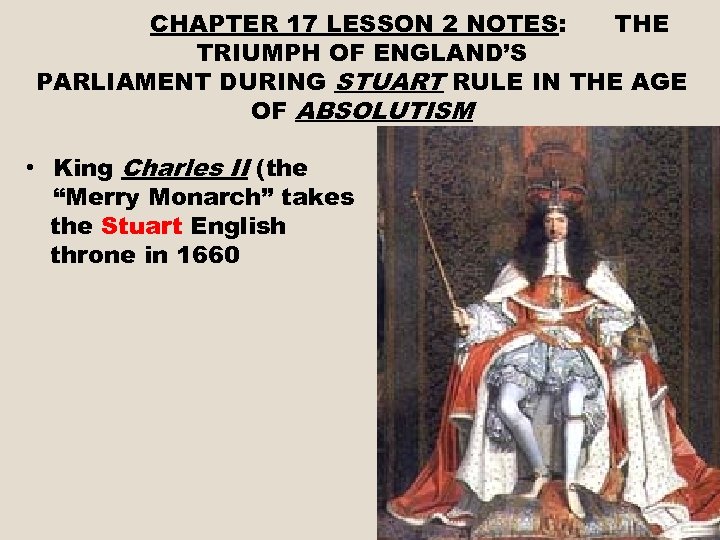 CHAPTER 17 LESSON 2 NOTES: THE TRIUMPH OF ENGLAND’S PARLIAMENT DURING STUART RULE IN THE AGE OF ABSOLUTISM • King Charles II (the “Merry Monarch” takes the Stuart English throne in 1660
 • accepts the Petition of Right that his father had ignored • secretly holds loyalties towards Catholicism
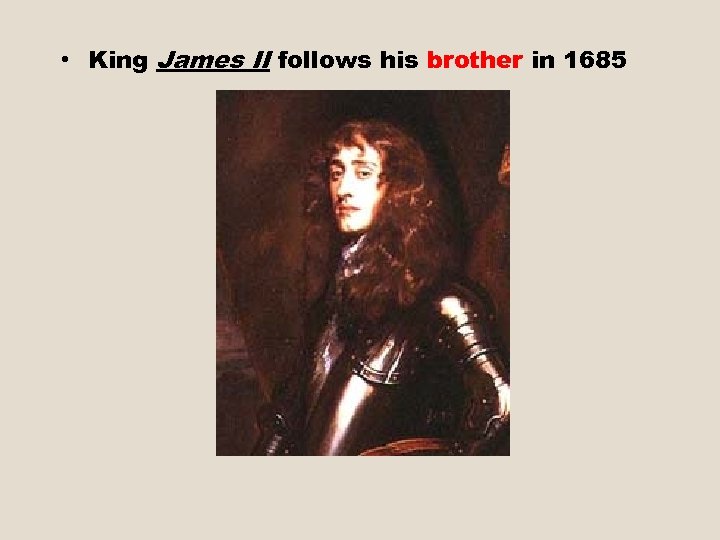 • King James II follows his brother in 1685
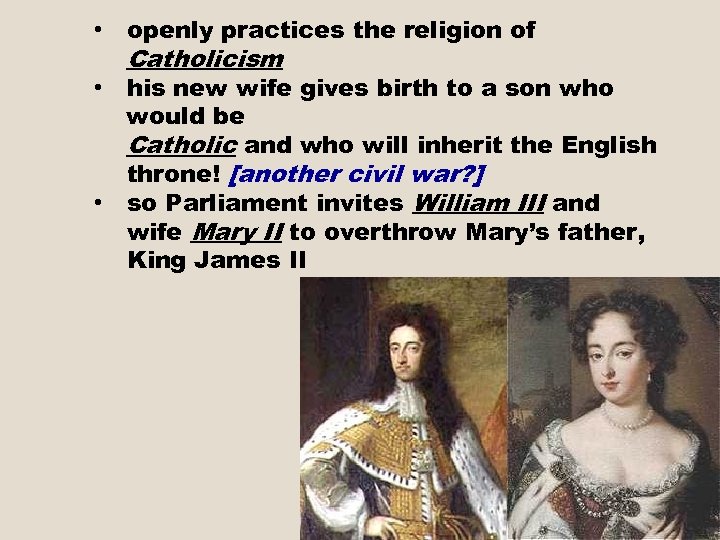 • openly practices the religion of Catholicism • his new wife gives birth to a son who would be Catholic and who will inherit the English throne! [another civil war? ] • so Parliament invites William III and wife Mary II to overthrow Mary’s father, King James II
 • the king flees England without a shot being fired • this event becomes known as the Glorious Revolution because there was no bloodshed
 • William III and Mary II accept Parliament’s demands before coronation • the English Bill of Rights is passed in 1689: • ensures the superiority of Parliament over the monarchy • gives the House of Commons “the power of the purse” (control of the national treasury) • the monarchy could no longer interfere in Parliamentary debates or suspend laws
 • bans any Roman Catholic from sitting on the English throne to prevent future civil wars • guarantees trial by jury • abolished cruel or unusual punishment • affirms Habeas Corpus, a law stating that no person could be held in prison without first being charged without a specific crime
 • the Toleration Act of 1689 grants religious freedom to all non-Anglican Protestants in England • a limited monarchy is created by which the monarchy governs in partnership with Parliament, and not as absolute rulers
 • William III rules alone after the death of his Stuart wife, Mary II • this king is most interested in checking the political motives in Europe of France’s “Sun King, ” Louis XIV • chooses a Cabinet from the House of Commons as advisers so that he does not have to deal with domestic affairs, giving even more power to Parliament • acquires an American colony, New Amsterdam, from the Dutch and renames it “New York”
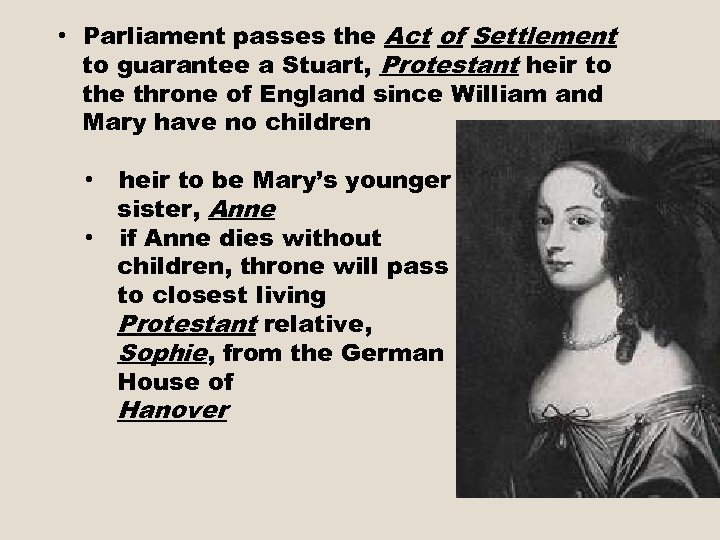 • Parliament passes the Act of Settlement to guarantee a Stuart, Protestant heir to the throne of England since William and Mary have no children heir to be Mary’s younger sister, Anne • if Anne dies without children, throne will pass to closest living Protestant relative, Sophie, from the German House of • Hanover
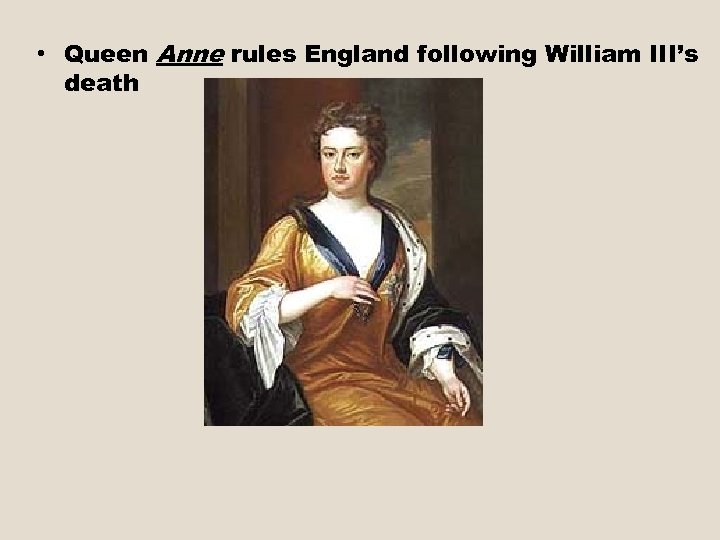 • Queen Anne rules England following William III’s death
 • Parliament passes the Act of Union, merging England Scotland into the United Kingdom of Great Britain • the last British monarch to veto an act of Parliament • Queen Anne dies without children to inherit the British throne [so the next in line is… Sophie, of the House of Hanover… but Sophie dies before Anne does]!
 • The Hanover dynasty follows Queen Anne’s reign in 1714 • German Kings George I and George II speak little or no English • leading cabinet member, Robert Walpole, advises kings as their chief minister • title of chief minister later becomes known as “Prime Minister, ” and is still used in Britain today • King George III loses Britain’s 13 American colonies as a result of the American Revolution (1776 to 1783)
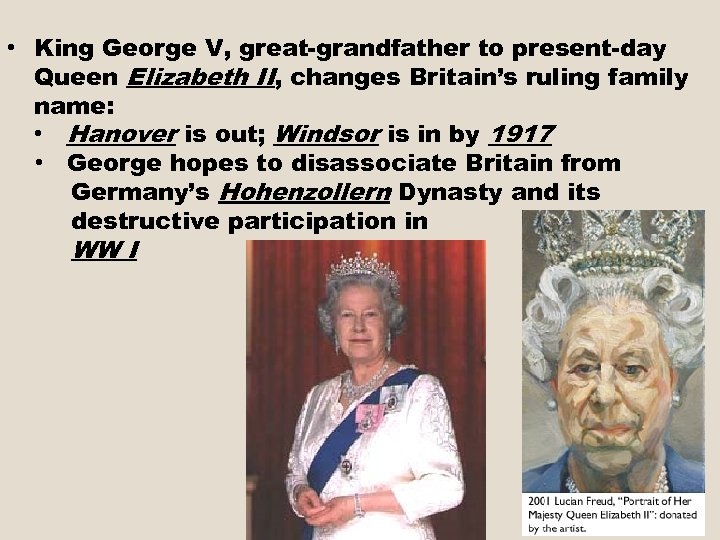 • King George V, great-grandfather to present-day Queen Elizabeth II, changes Britain’s ruling family name: • Hanover is out; Windsor is in by 1917 • George hopes to disassociate Britain from Germany’s Hohenzollern Dynasty and its destructive participation in WW I