


 Скачать презентацию Chapter 15 The Money Supply Process 20 -1
f0f82a238f7f9cc894ee530d40f52766.ppt
- Количество слайдов: 34
 Chapter 15 The Money Supply Process 20 -1 © 2016 Pearson Education Ltd. All rights reserved.
 Preview • This chapter provides an overview of how commercial banks create deposits and describes the basic principles of the money supply creation process 20 -2 © 2016 Pearson Education Ltd. All rights reserved.
 Learning Objectives • List and describe the “three players” that influence the money supply. • Classify the factors affecting the Federal Reserve’s assets and liabilities. • Identify the factors that affect the monetary base and discuss their effects on the Federal Reserve’s balance sheet. • Explain and illustrate the deposit creation process using T-accounts. 20 -3 © 2016 Pearson Education Ltd. All rights reserved.
 Learning Objectives • List the factors that affect the money supply. • Summarize how the “three players” can influence the money supply. • Calculate and interpret changes in the money multiplier. 20 -4 © 2016 Pearson Education Ltd. All rights reserved.
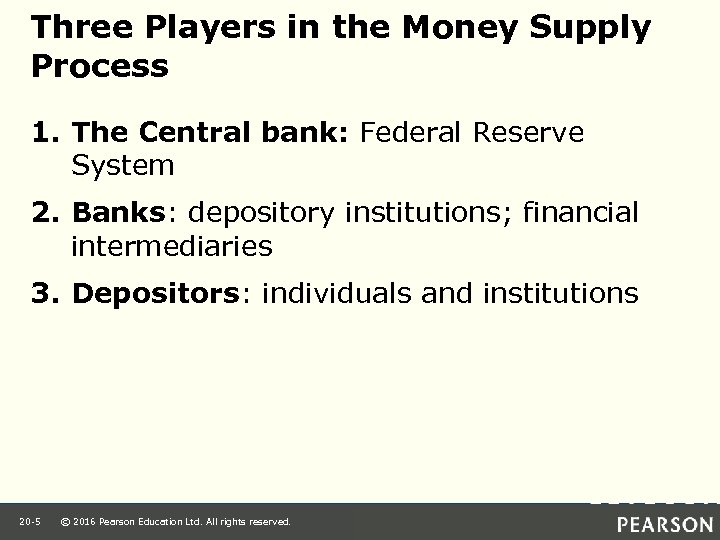 Three Players in the Money Supply Process 1. The Central bank: Federal Reserve System 2. Banks: depository institutions; financial intermediaries 3. Depositors: individuals and institutions 20 -5 © 2016 Pearson Education Ltd. All rights reserved.
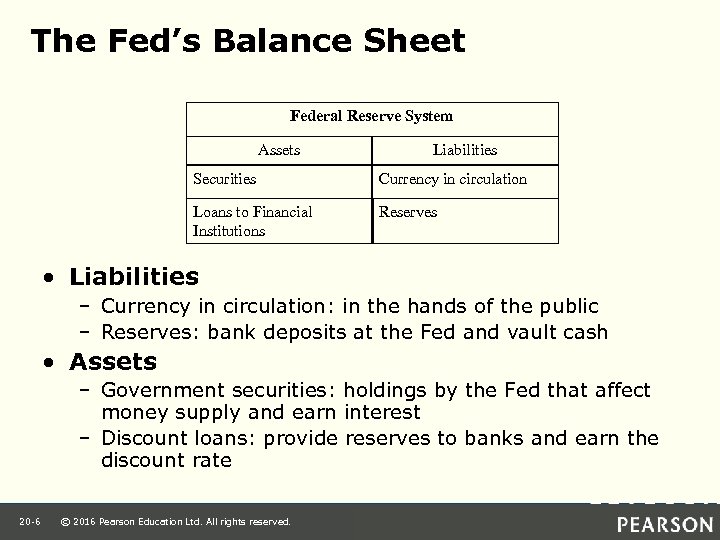 The Fed’s Balance Sheet Federal Reserve System Assets Liabilities Securities Currency in circulation Loans to Financial Institutions Reserves • Liabilities – Currency in circulation: in the hands of the public – Reserves: bank deposits at the Fed and vault cash • Assets – Government securities: holdings by the Fed that affect money supply and earn interest – Discount loans: provide reserves to banks and earn the discount rate 20 -6 © 2016 Pearson Education Ltd. All rights reserved.
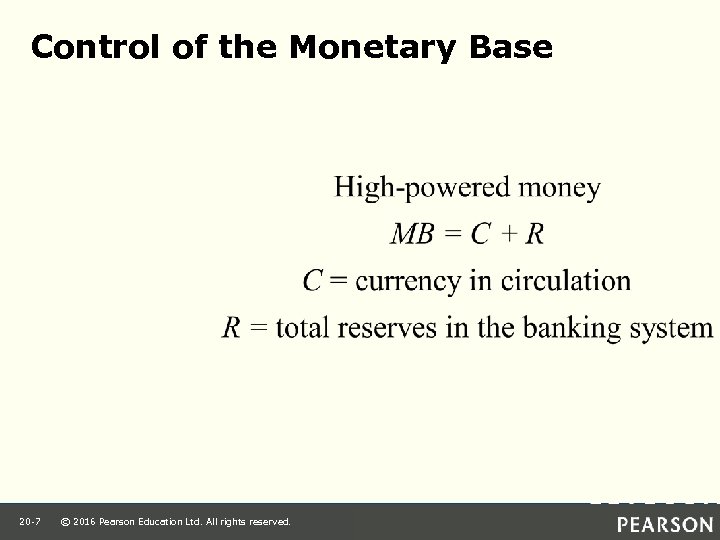 Control of the Monetary Base 20 -7 © 2016 Pearson Education Ltd. All rights reserved.
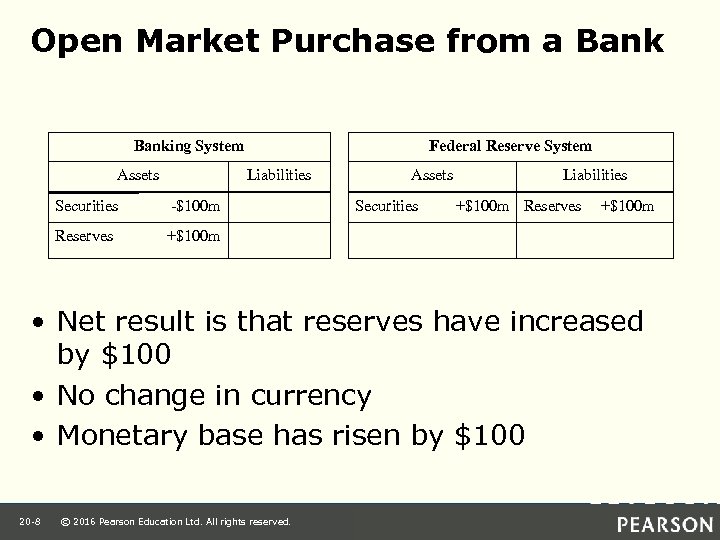 Open Market Purchase from a Banking System Assets Federal Reserve System Liabilities Securities -$100 m Reserves Assets Securities Liabilities +$100 m Reserves +$100 m • Net result is that reserves have increased by $100 • No change in currency • Monetary base has risen by $100 20 -8 © 2016 Pearson Education Ltd. All rights reserved.
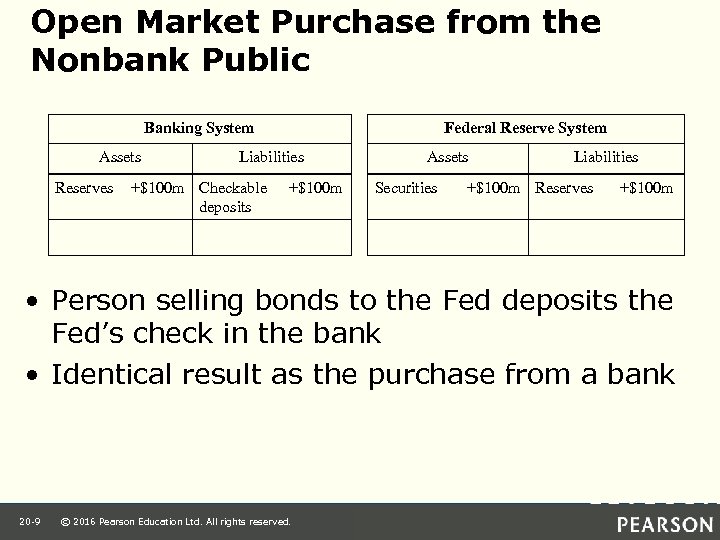 Open Market Purchase from the Nonbank Public Banking System Assets Reserves Federal Reserve System Liabilities +$100 m Checkable deposits +$100 m Assets Securities Liabilities +$100 m Reserves +$100 m • Person selling bonds to the Fed deposits the Fed’s check in the bank • Identical result as the purchase from a bank 20 -9 © 2016 Pearson Education Ltd. All rights reserved.
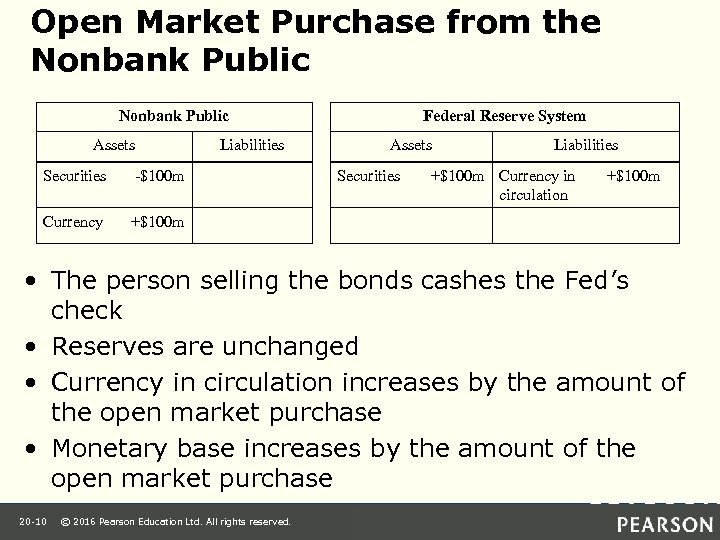 Open Market Purchase from the Nonbank Public Assets Liabilities Securities -$100 m Currency Federal Reserve System Assets Securities Liabilities +$100 m Currency in circulation +$100 m • The person selling the bonds cashes the Fed’s check • Reserves are unchanged • Currency in circulation increases by the amount of the open market purchase • Monetary base increases by the amount of the open market purchase 20 -10 © 2016 Pearson Education Ltd. All rights reserved.
 Open Market Purchase: Summary • The effect of an open market purchase on reserves depends on whether the seller of the bonds keeps the proceeds from the sale in currency or in deposits. • The effect of an open market purchase on the monetary base always increases the monetary base by the amount of the purchase. 20 -11 © 2016 Pearson Education Ltd. All rights reserved.
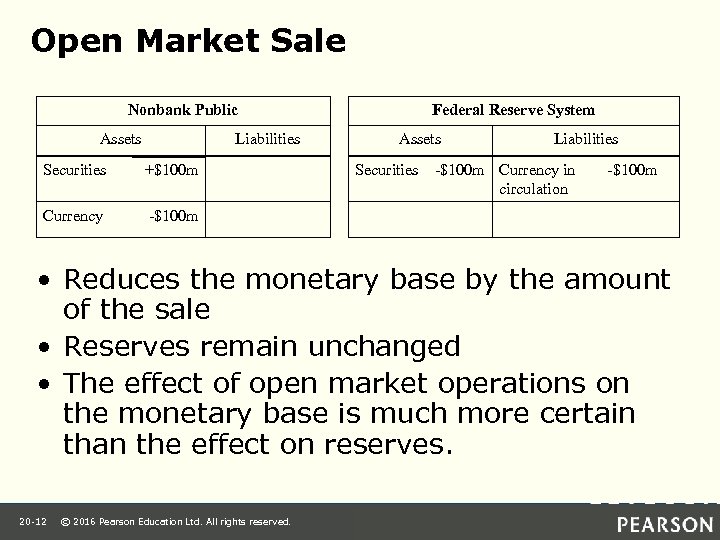 Open Market Sale Nonbank Public Assets Liabilities Securities +$100 m Currency Federal Reserve System Assets Securities Liabilities -$100 m Currency in circulation -$100 m • Reduces the monetary base by the amount of the sale • Reserves remain unchanged • The effect of open market operations on the monetary base is much more certain than the effect on reserves. 20 -12 © 2016 Pearson Education Ltd. All rights reserved.
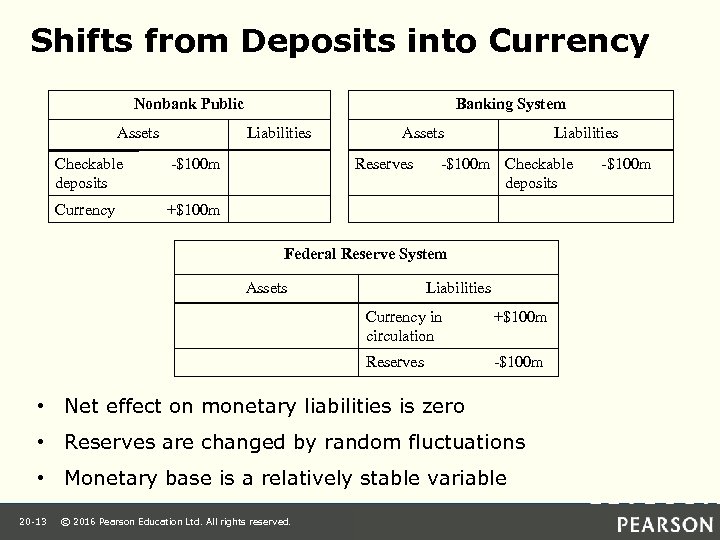 Shifts from Deposits into Currency Nonbank Public Assets Banking System Liabilities Checkable deposits -$100 m Currency Assets Reserves Liabilities -$100 m Checkable deposits +$100 m Federal Reserve System Assets Liabilities Currency in circulation +$100 m Reserves -$100 m • Net effect on monetary liabilities is zero • Reserves are changed by random fluctuations • Monetary base is a relatively stable variable 20 -13 © 2016 Pearson Education Ltd. All rights reserved. -$100 m
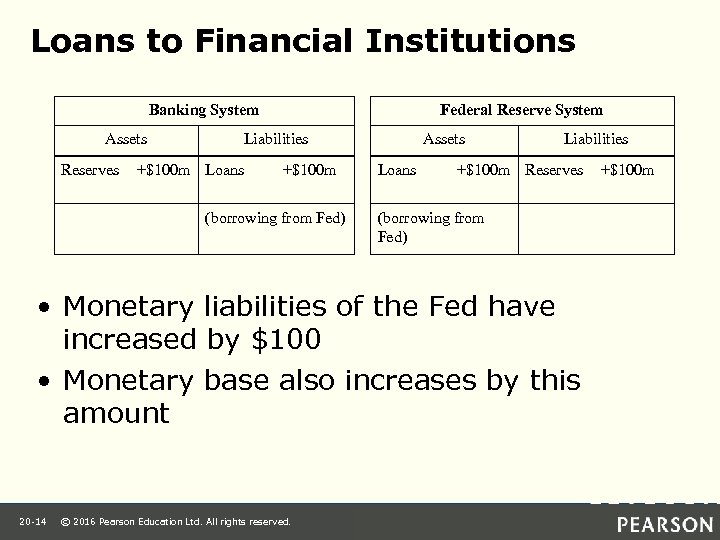 Loans to Financial Institutions Banking System Assets Reserves Federal Reserve System Liabilities +$100 m Loans +$100 m (borrowing from Fed) Assets Loans Liabilities +$100 m Reserves (borrowing from Fed) • Monetary liabilities of the Fed have increased by $100 • Monetary base also increases by this amount 20 -14 © 2016 Pearson Education Ltd. All rights reserved. +$100 m
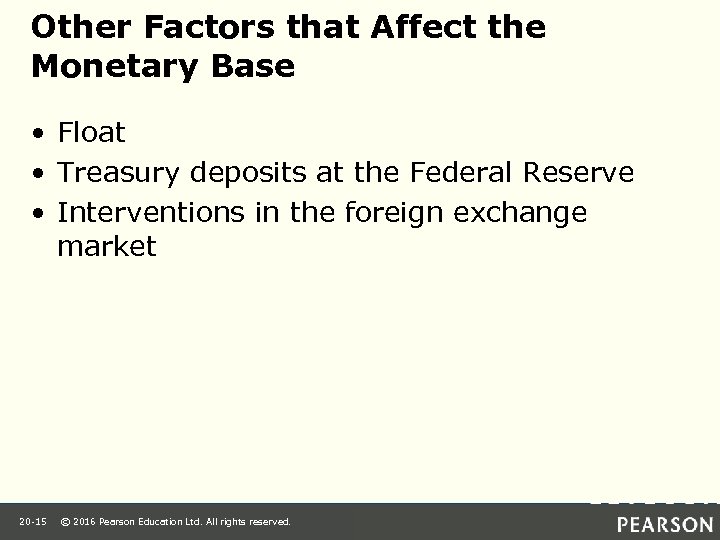 Other Factors that Affect the Monetary Base • Float • Treasury deposits at the Federal Reserve • Interventions in the foreign exchange market 20 -15 © 2016 Pearson Education Ltd. All rights reserved.
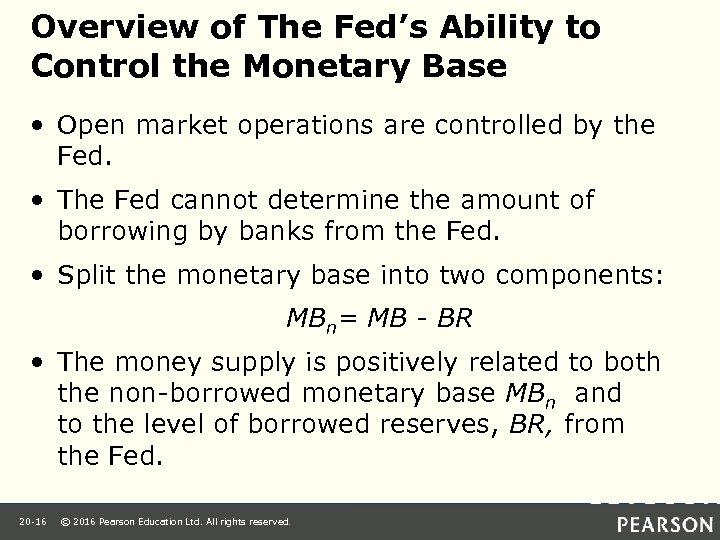 Overview of The Fed’s Ability to Control the Monetary Base • Open market operations are controlled by the Fed. • The Fed cannot determine the amount of borrowing by banks from the Fed. • Split the monetary base into two components: MBn= MB - BR • The money supply is positively related to both the non-borrowed monetary base MBn and to the level of borrowed reserves, BR, from the Fed. 20 -16 © 2016 Pearson Education Ltd. All rights reserved.
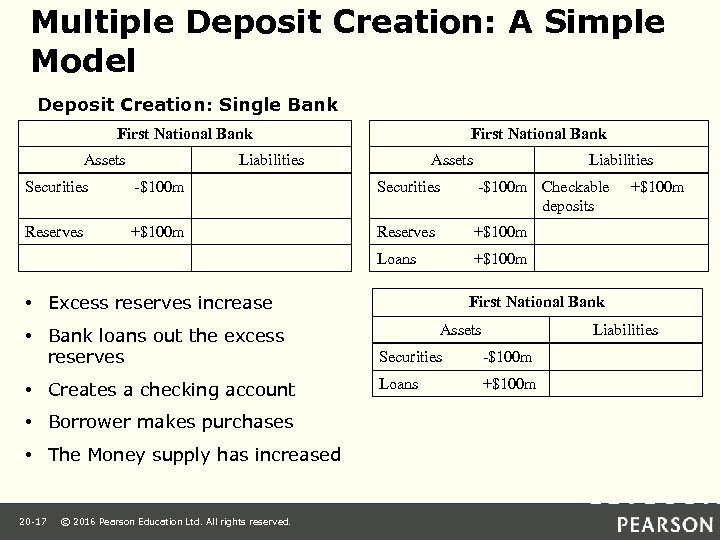 Multiple Deposit Creation: A Simple Model Deposit Creation: Single Bank First National Bank Assets First National Bank Liabilities Assets Liabilities Securities -$100 m Checkable deposits Reserves +$100 m Loans +$100 m • Excess reserves increase First National Bank Assets Liabilities • Bank loans out the excess reserves Securities -$100 m • Creates a checking account Loans +$100 m • Borrower makes purchases • The Money supply has increased 20 -17 © 2016 Pearson Education Ltd. All rights reserved. +$100 m
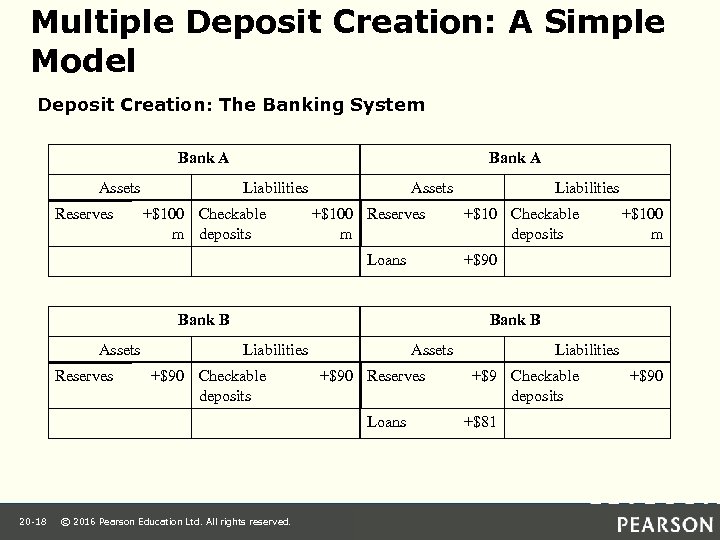 Multiple Deposit Creation: A Simple Model Deposit Creation: The Banking System Bank A Assets Reserves Bank A Liabilities +$100 Checkable m deposits Assets +$100 Reserves m Loans Reserves +$100 m Bank B Liabilities +$90 Checkable deposits Assets +$90 Reserves Loans 20 -18 +$10 Checkable deposits +$90 Bank B Assets Liabilities © 2016 Pearson Education Ltd. All rights reserved. Liabilities +$9 Checkable deposits +$81 +$90
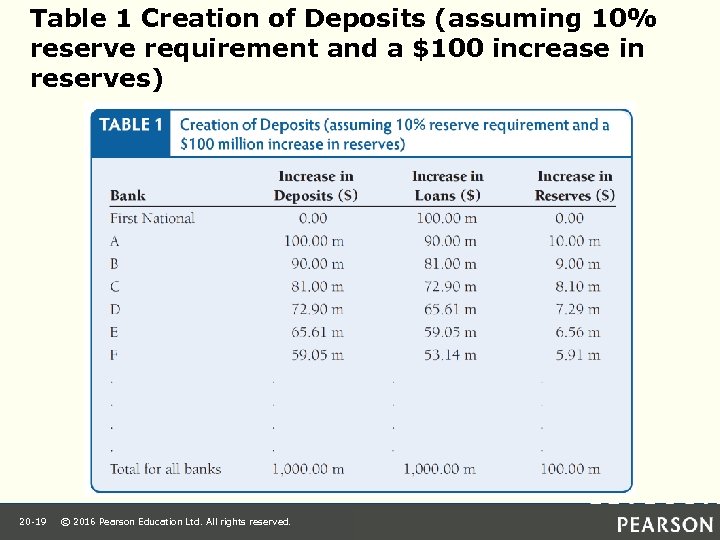 Table 1 Creation of Deposits (assuming 10% reserve requirement and a $100 increase in reserves) 20 -19 © 2016 Pearson Education Ltd. All rights reserved.
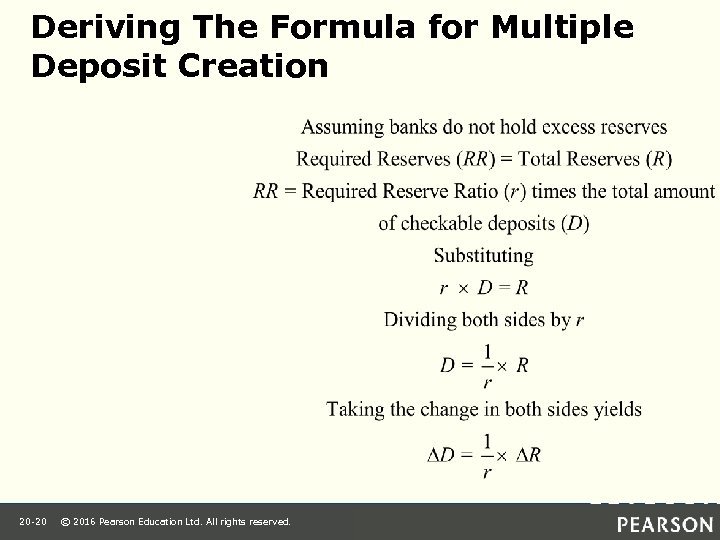 Deriving The Formula for Multiple Deposit Creation 20 -20 © 2016 Pearson Education Ltd. All rights reserved.
 Critique of the Simple Model • Holding cash stops the process – Currency has no multiple deposit expansion • Banks may not use all of their excess reserves to buy securities or make loans. • Depositors’ decisions (how much currency to hold) and bank’s decisions (amount of excess reserves to hold) also cause the money supply to change. 20 -21 © 2016 Pearson Education Ltd. All rights reserved.
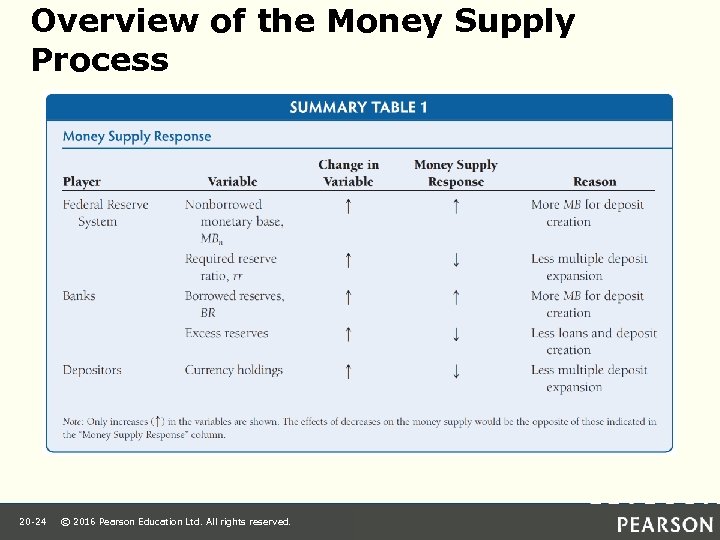
 Factors that Determine the Money Supply • Changes in the nonborrowed monetary base MBn – The money supply is positively related to the non -borrowed monetary base MBn • Changes in borrowed reserves from the Fed – The money supply is positively related to the level of borrowed reserves, BR, from the Fed 20 -22 © 2016 Pearson Education Ltd. All rights reserved.
 Factors that Determine the Money Supply • Changes in the required reserves ratio – The money supply is negatively related to the required reserve ratio. • Changes in currency holdings – The money supply is negatively related to currency holdings. • Changes in excess reserves – The money supply is negatively related to the amount of excess reserves. 20 -23 © 2016 Pearson Education Ltd. All rights reserved.
 Overview of the Money Supply Process 20 -24 © 2016 Pearson Education Ltd. All rights reserved.
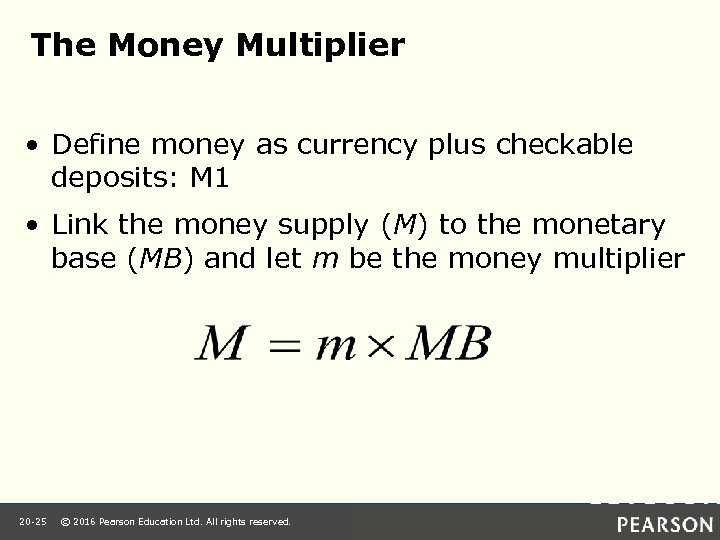 The Money Multiplier • Define money as currency plus checkable deposits: M 1 • Link the money supply (M) to the monetary base (MB) and let m be the money multiplier 20 -25 © 2016 Pearson Education Ltd. All rights reserved.
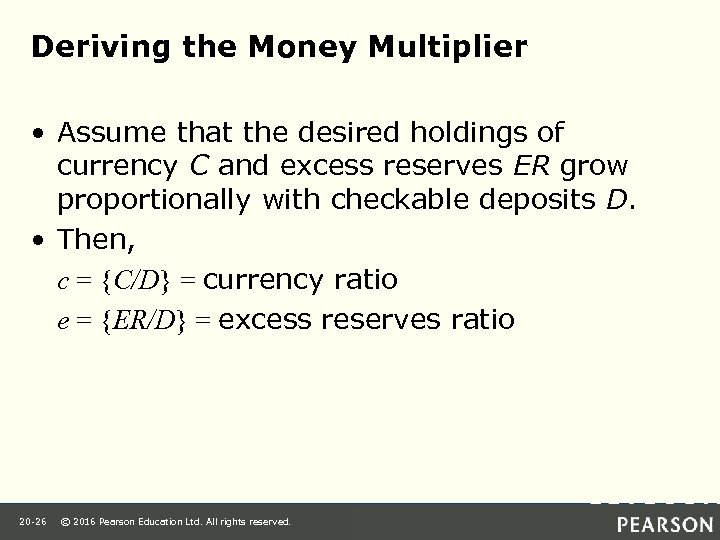 Deriving the Money Multiplier • Assume that the desired holdings of currency C and excess reserves ER grow proportionally with checkable deposits D. • Then, c = {C/D} = currency ratio e = {ER/D} = excess reserves ratio 20 -26 © 2016 Pearson Education Ltd. All rights reserved.
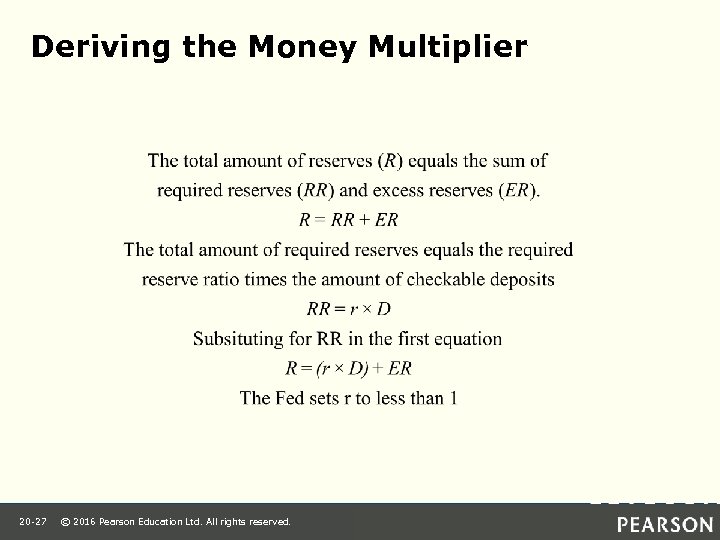 Deriving the Money Multiplier 20 -27 © 2016 Pearson Education Ltd. All rights reserved.
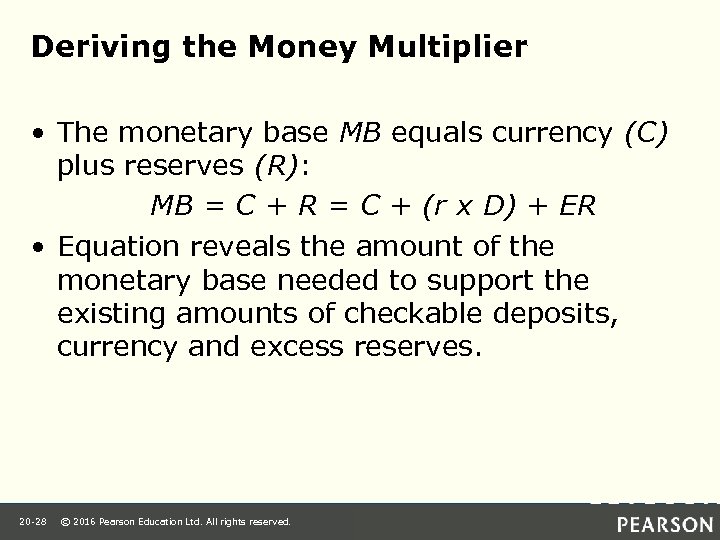 Deriving the Money Multiplier • The monetary base MB equals currency (C) plus reserves (R): MB = C + R = C + (r x D) + ER • Equation reveals the amount of the monetary base needed to support the existing amounts of checkable deposits, currency and excess reserves. 20 -28 © 2016 Pearson Education Ltd. All rights reserved.
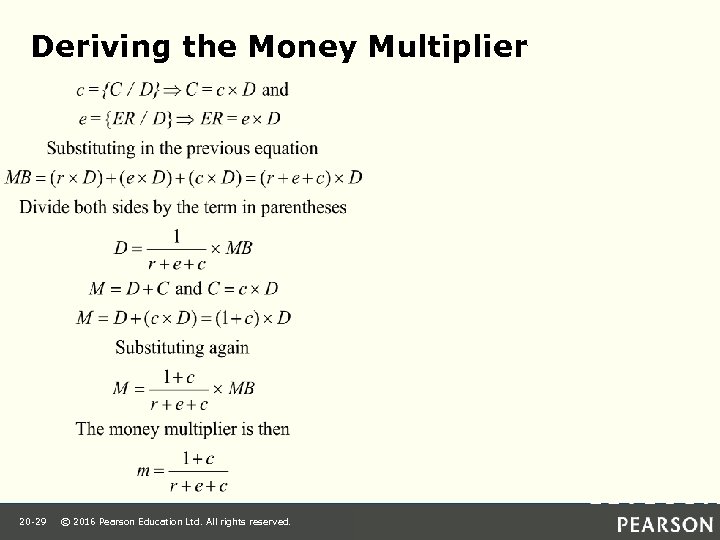 Deriving the Money Multiplier 20 -29 © 2016 Pearson Education Ltd. All rights reserved.
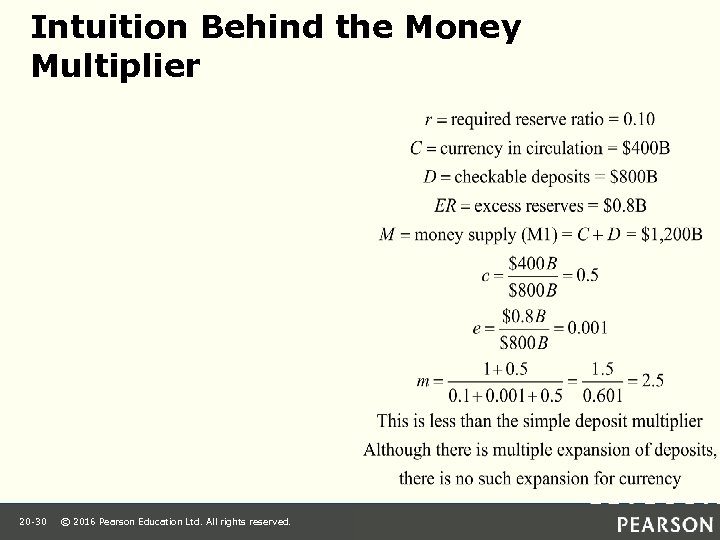 Intuition Behind the Money Multiplier 20 -30 © 2016 Pearson Education Ltd. All rights reserved.
 Quantitative Easing and the Money Supply, 2007 -2014 • When the global financial crisis began in the fall of 2007, the Fed initiated lending programs and large-scale asset-purchase programs in an attempt to bolster the economy. • By June 2014, these purchases of securities had led to a quintupling of the Fed’s balance sheet and a 377% increase in the monetary base. 20 -31 © 2016 Pearson Education Ltd. All rights reserved.
 Quantitative Easing and the Money Supply, 2007 -2014 • These lending and asset-purchase programs resulted in a huge expansion of the monetary base and have been given the name “quantitative easing. ” • This increase in the monetary base did not lead to an equivalent change in the money supply because excess reserves rose dramatically. 20 -32 © 2016 Pearson Education Ltd. All rights reserved.
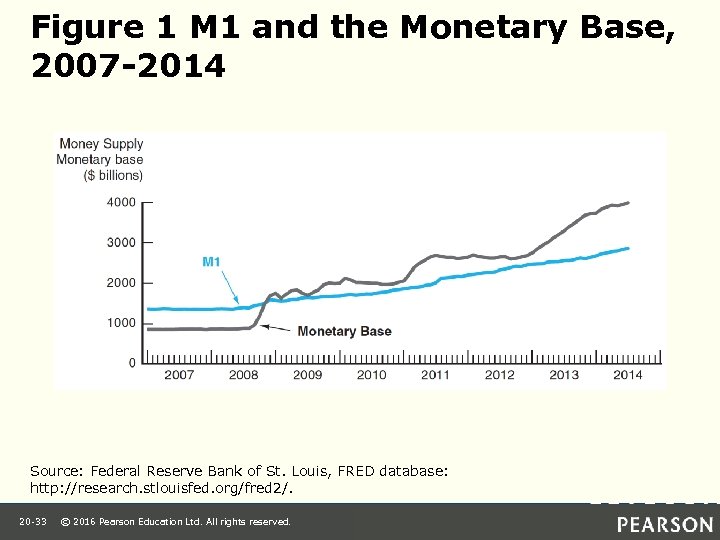 Figure 1 M 1 and the Monetary Base, 2007 -2014 Source: Federal Reserve Bank of St. Louis, FRED database: http: //research. stlouisfed. org/fred 2/. 20 -33 © 2016 Pearson Education Ltd. All rights reserved.
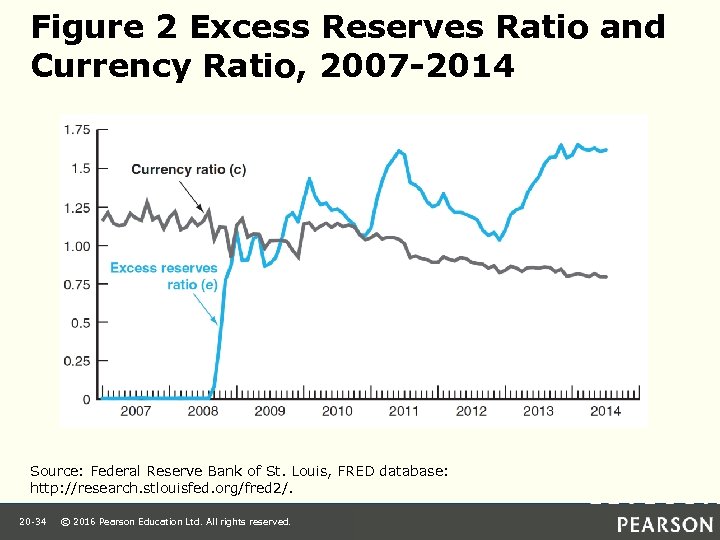 Figure 2 Excess Reserves Ratio and Currency Ratio, 2007 -2014 Source: Federal Reserve Bank of St. Louis, FRED database: http: //research. stlouisfed. org/fred 2/. 20 -34 © 2016 Pearson Education Ltd. All rights reserved.