Скачать презентацию Chapter 15 Marketing and Supply Chain Management
54ac9da5d8856fe3d2680af413b01991.ppt
- Количество слайдов: 20
 Chapter 15 Marketing and Supply Chain Management
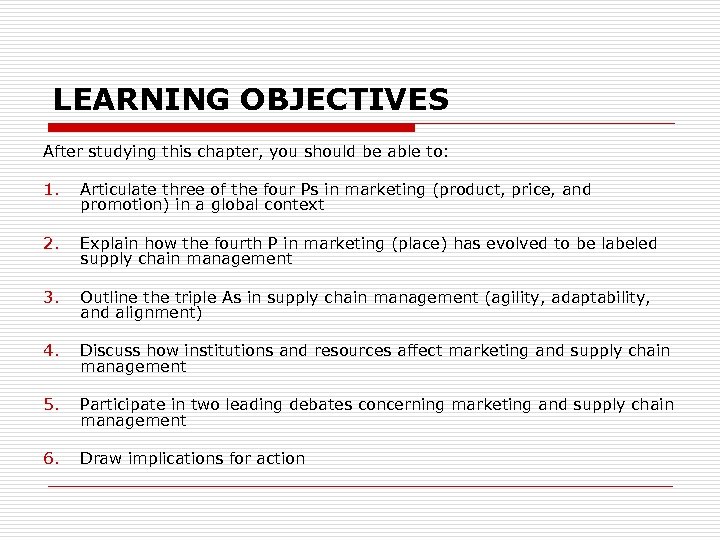 LEARNING OBJECTIVES After studying this chapter, you should be able to: 1. Articulate three of the four Ps in marketing (product, price, and promotion) in a global context 2. Explain how the fourth P in marketing (place) has evolved to be labeled supply chain management 3. Outline the triple As in supply chain management (agility, adaptability, and alignment) 4. Discuss how institutions and resources affect marketing and supply chain management 5. Participate in two leading debates concerning marketing and supply chain management 6. Draw implications for action
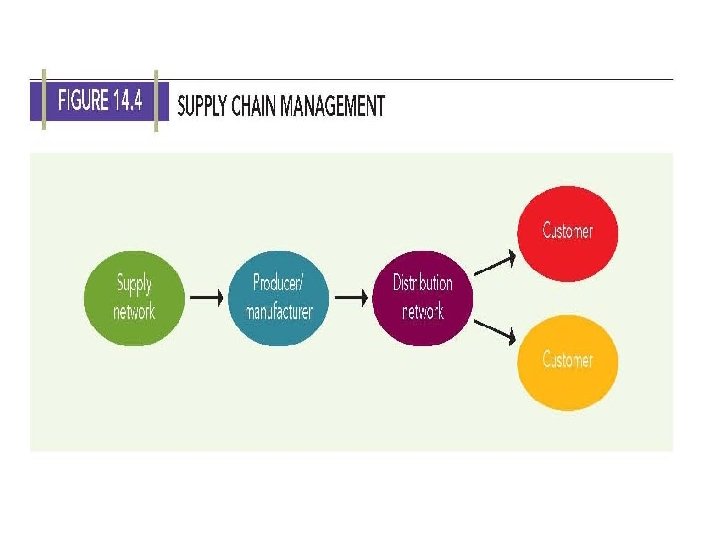
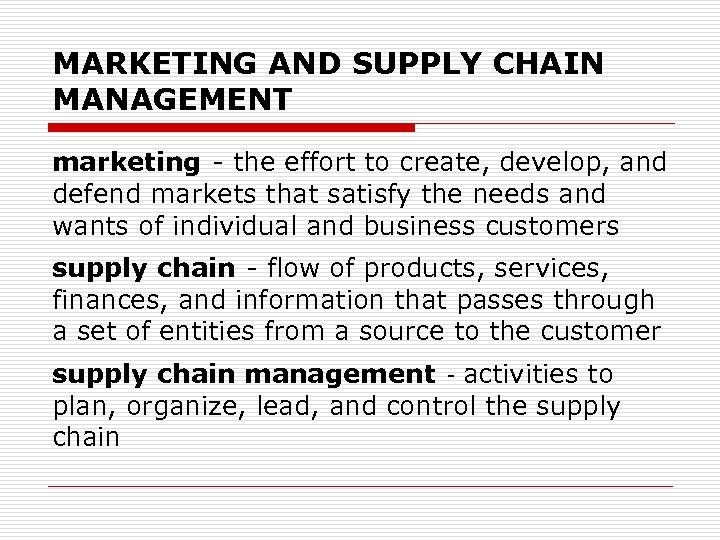 MARKETING AND SUPPLY CHAIN MANAGEMENT marketing - the effort to create, develop, and defend markets that satisfy the needs and wants of individual and business customers supply chain - flow of products, services, finances, and information that passes through a set of entities from a source to the customer supply chain management - activities to plan, organize, lead, and control the supply chain
 TERMS RELATED TO THE FOUR MARKETING Ps product - offerings that customers purchase market segmentation - way to identify consumers who differ from others in purchasing behavior
 THREE OF THE FOUR MARKETING Ps price - expenditures that customers are willing to pay for a product price elasticity - how demand changes when prices change total cost of ownership - direct and indirect costs related to cost of purchase and also all aspects in the further use and maintenance of the equipment, device, or system; a form of full cost accounting
 THREE OF THE FOUR MARKETING Ps promotion - communications that marketers insert into the marketplace: TV, radio, print, and online advertising, as well as coupons, direct mail, billboards, direct marketing (personal selling), and public relations country-of-origin effect - positive or negative perception of firms and products from a certain country
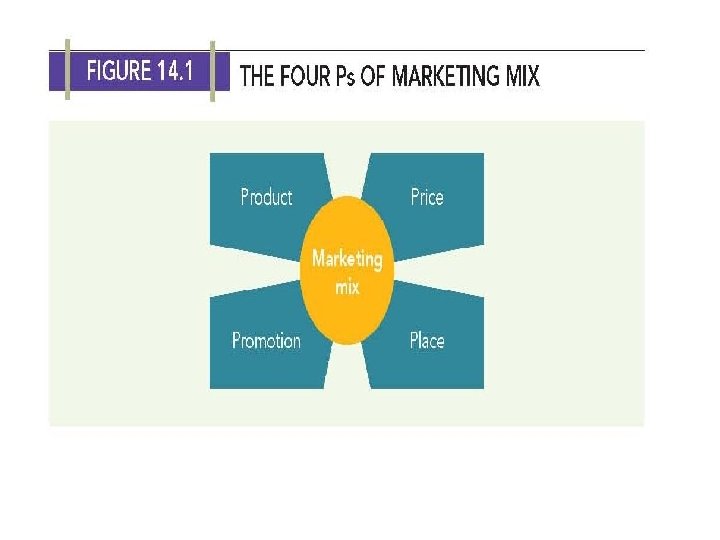
 FROM DISTRIBUTION CHANNEL TO SUPPLY CHAIN MANAGEMENT place - fourth P in the marketing mix - to the location where products and services are provided which includes the online marketplace distribution channel—the set of firms that facilitate the movement of goods from producers to consumers
 TRIPLE As IN SUPPLY CHAIN MANAGEMENT agility - ability to quickly react to unexpected shifts in supply and demand adaptability - ability to change supply chain configurations in response to long-term changes in the environment and technology alignment - way in which the interests of various players involved in the supply chain align make-or-buy decisions - decisions whether to produce in-house or to outsource
 TRIPLE As IN SUPPLY CHAIN MANAGEMENT make-or-buy decisions - decisions whether to produce in-house or to outsource third-party logistics - neutral intermediary in the supply chain
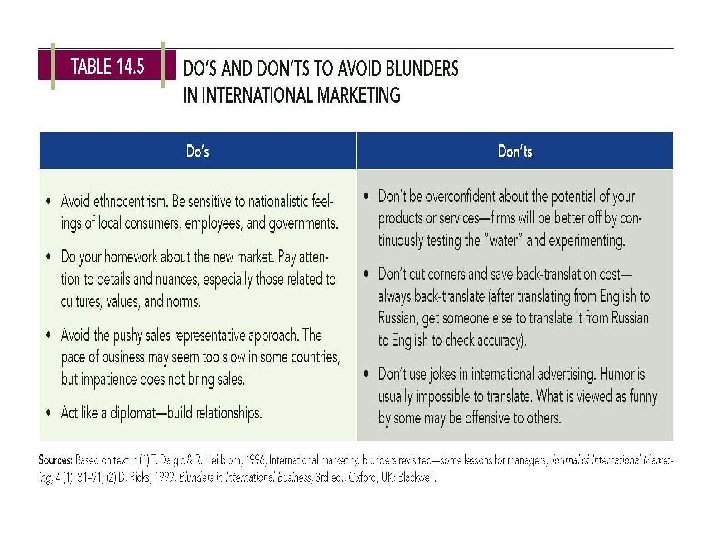
 INSITITUTIONS AND RESOURCES AFFECT MARKETING AND SUPPLY CHAINMANAGEMENT Ømost countries impose restrictions, ranging from taboos in advertising to constraints on the equity level held by foreign retailers and 3 PL providers Ømost marketing blunders happen due to firms’ failure to appreciate the deep underlying differences in cultures, languages, and norms -all part of the informal institutions Ønorm in supply chain management is to source from Asia
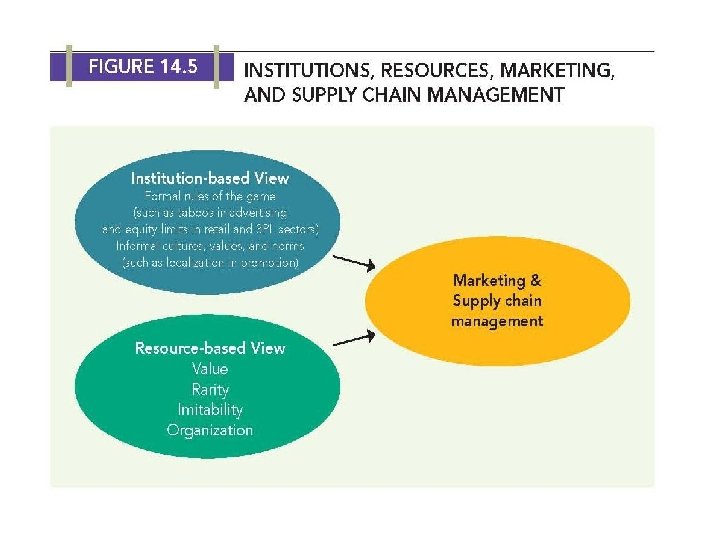
 RESOURCES, MARKETING AND SUPPLY CHAIN MANAGEMENT VRIO criteria Øtraditional media are losing viewers, readers, and thus effectiveness, but marketers do not have a good handle of how advertising on the new online media adds value Ømanagers need to assess the rarity of marketing and supply chain activities – if all firms use Fed. Ex to manage logistics which does add value), these activities, in themselves, are not rare Øhow likely is it for rivals and partners to Øis the firm objectives? imitate? organizationally ready to accomplish
 MANUFACTURING vs. SERVICES Consider contract manufacturing service. Is it manufacturing? Service? Both? Does it matter? Although marketing and supply chain management would be regarded as services historically, this classification may not matter that much. Does Mc. Donald’s manufacture hamburgers? How much difference is there between Mc. Donald’s and Boeing? Both market new products, both make to order (finalize a product based on an order), and both extensively rely on powerful supply chain management systems around the world.
 Market Orientation vs. Relationship Orientation Market orientation refers to a philosophy or way of thinking that places the highest priority on the creation of superior customer value in the marketplace. A market-oriented firm genuinely listens to customer feedback and allocates resources accordingly to meet customer expectations. Relationship orientation, defined as a focus to establish, maintain, and enhance relationships with customers. Marketers have heavily debated whether a market orientation or a relationship orientation is more effective in global markets. Key to the debate is how firms benefit from market or relationship orientation differently around the world.