Скачать презентацию Chapter 14 The Presidency in Action I
5658f1a3a2e9d6117d8e2ae0cbce3e71.ppt
- Количество слайдов: 26

 Chapter 14 The Presidency in Action
 I. Changing View of Presidential Power A. Article II of the Constitution 1. “the most loosely drawn chapter”in the nation’s fundamental law 2. “the executive power” is not defined • has always been an argument between a weak & strong presidency
 II. Growth of presidential power 1. 2. 3. “unity”of the presidency a. office held by one man b. congress made up of two houses influence of each, individual president pressures from nation’s increasingly complex social & econ. life
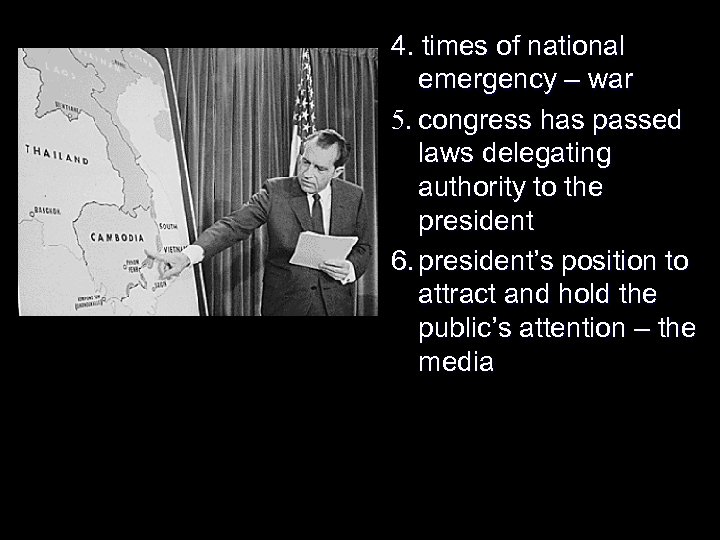 4. times of national emergency – war 5. congress has passed laws delegating authority to the president 6. president’s position to attract and hold the public’s attention – the media
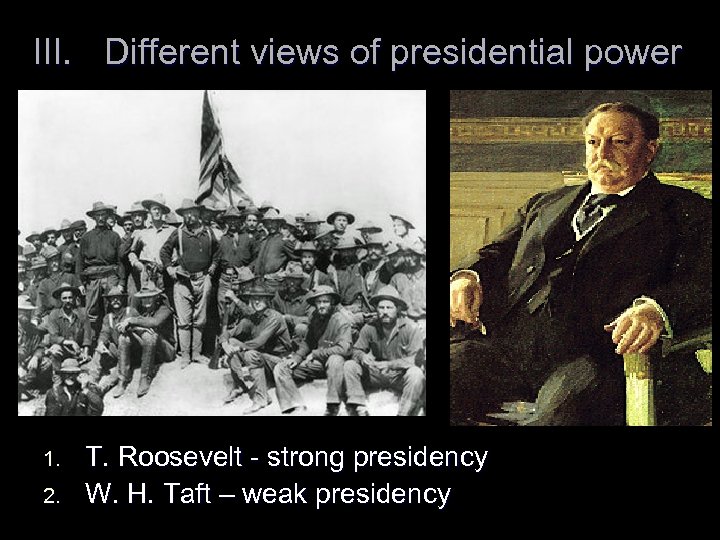 III. Different views of presidential power 1. 2. T. Roosevelt - strong presidency W. H. Taft – weak presidency
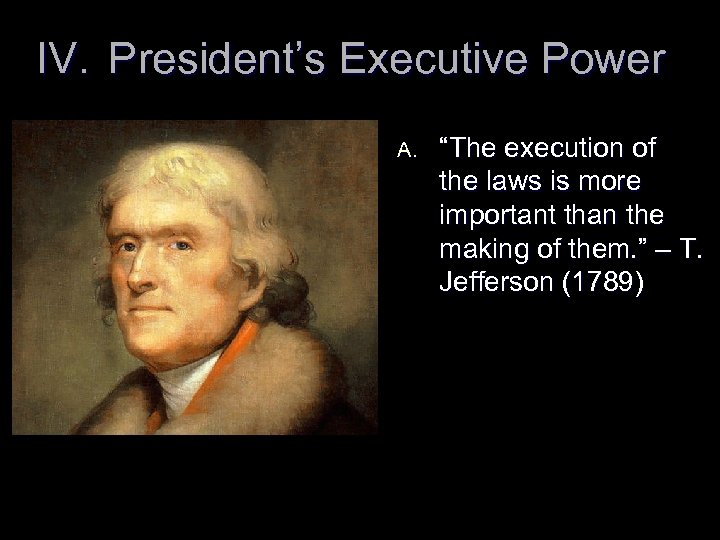 IV. President’s Executive Power A. “The execution of the laws is more important than the making of them. ” – T. Jefferson (1789)
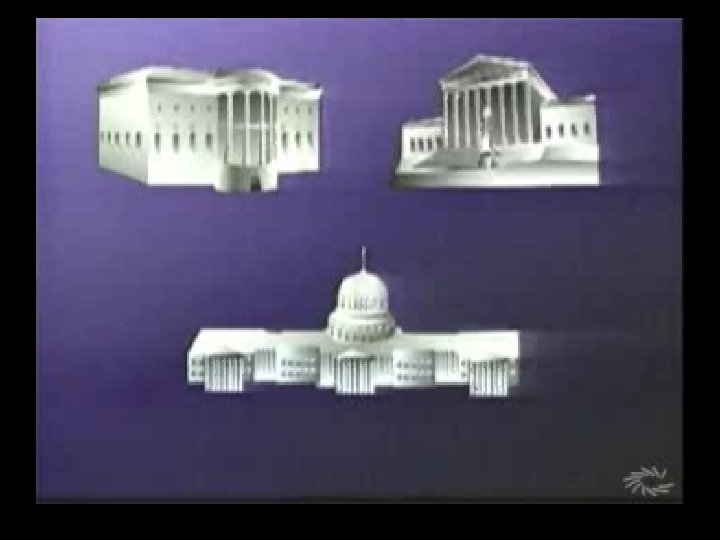
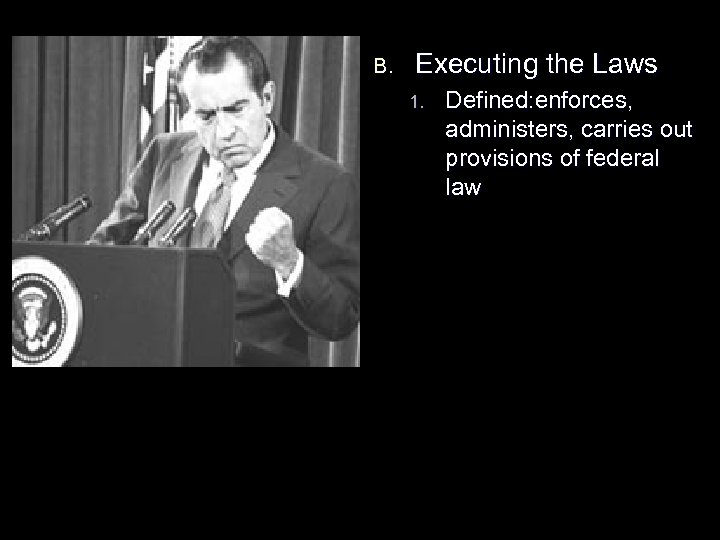 B. Executing the Laws 1. Defined: enforces, administers, carries out provisions of federal law
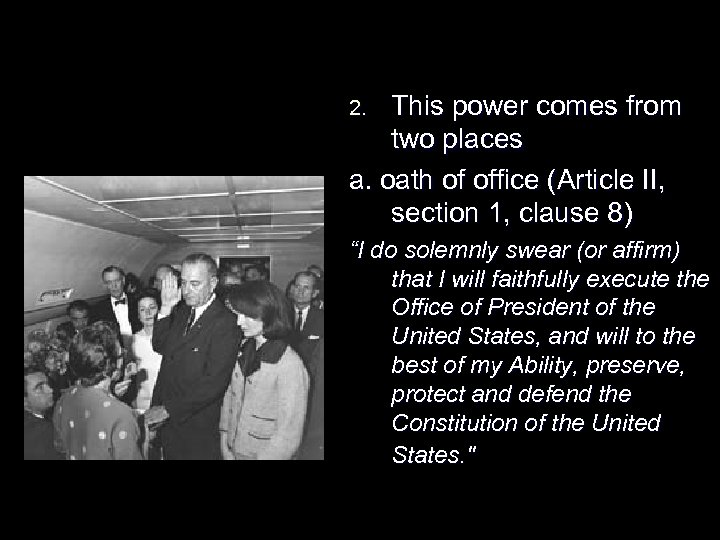 This power comes from two places a. oath of office (Article II, section 1, clause 8) 2. “I do solemnly swear (or affirm) that I will faithfully execute the Office of President of the United States, and will to the best of my Ability, preserve, protect and defend the Constitution of the United States. "
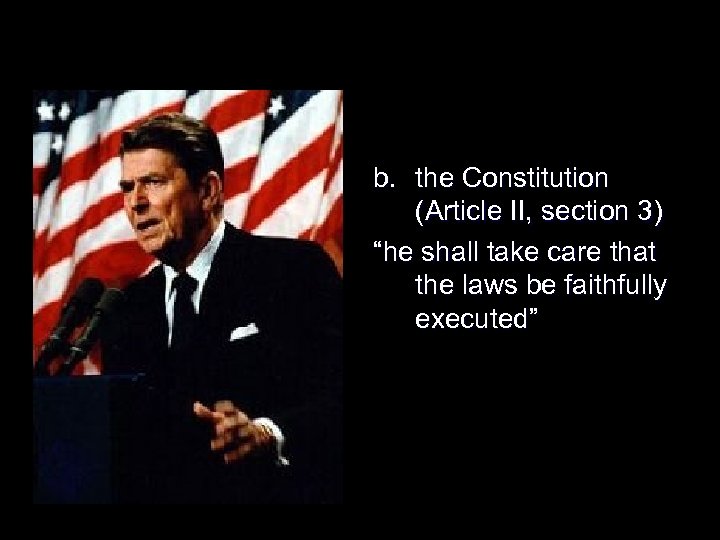 b. the Constitution (Article II, section 3) “he shall take care that the laws be faithfully executed”
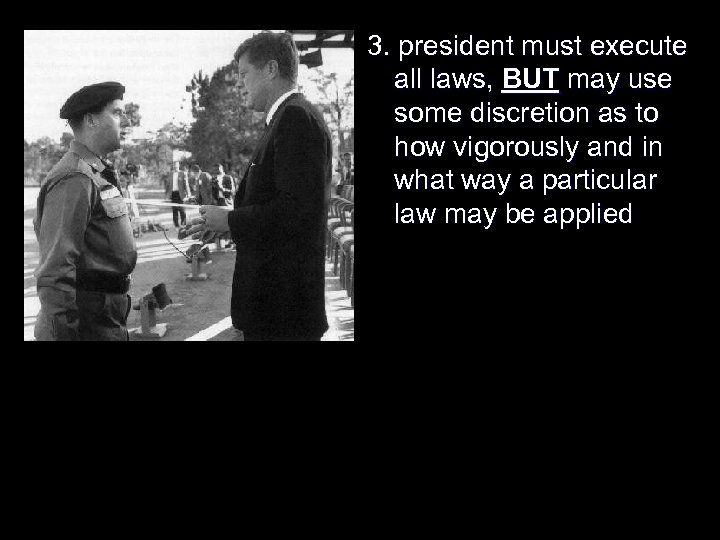 3. president must execute all laws, BUT may use some discretion as to how vigorously and in what way a particular law may be applied
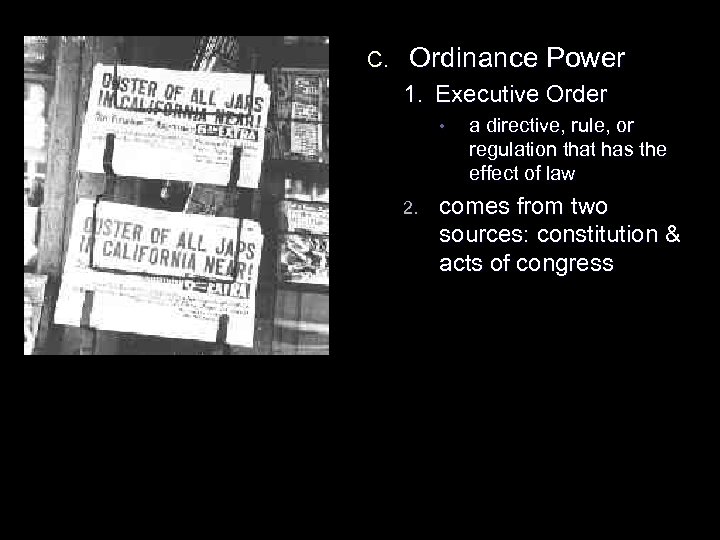 C. Ordinance Power 1. Executive Order • 2. a directive, rule, or regulation that has the effect of law comes from two sources: constitution & acts of congress
 D. Appointing Power “advice and consent of the Senate” E. Removal power Historic debate Not mentioned in the constitution
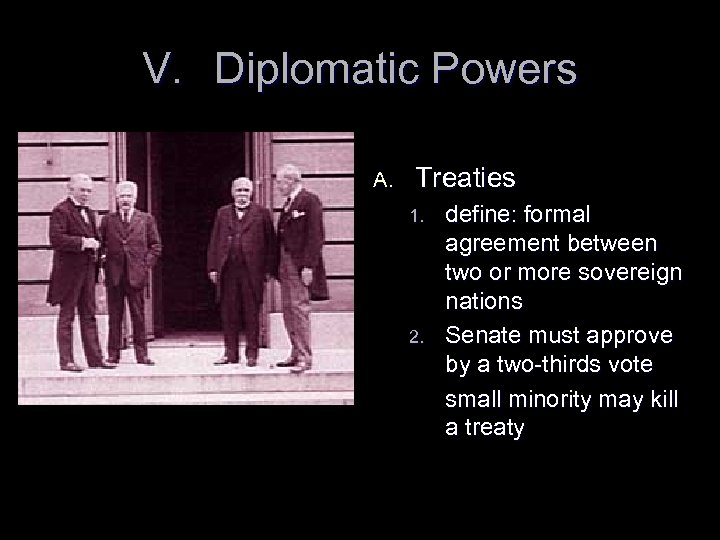 V. Diplomatic Powers A. Treaties 1. 2. define: formal agreement between two or more sovereign nations Senate must approve by a two-thirds vote small minority may kill a treaty
 B. Executive agreements 1. define: agreements between the president and heads of foreign states 2. do NOT require senate approval 3. most are routine (Destroyer deal an exception)
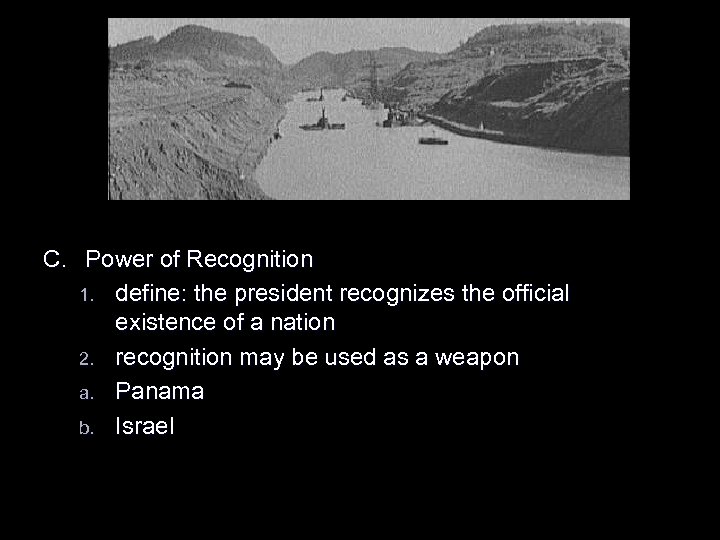 C. Power of Recognition 1. define: the president recognizes the official existence of a nation 2. recognition may be used as a weapon a. Panama b. Israel
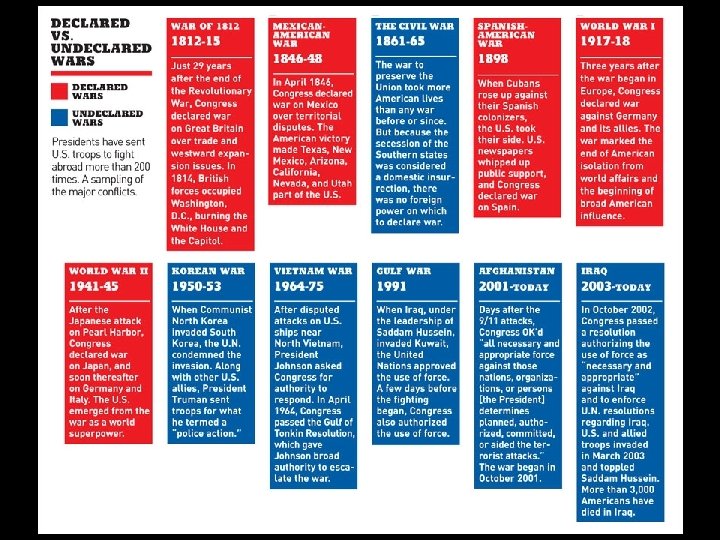
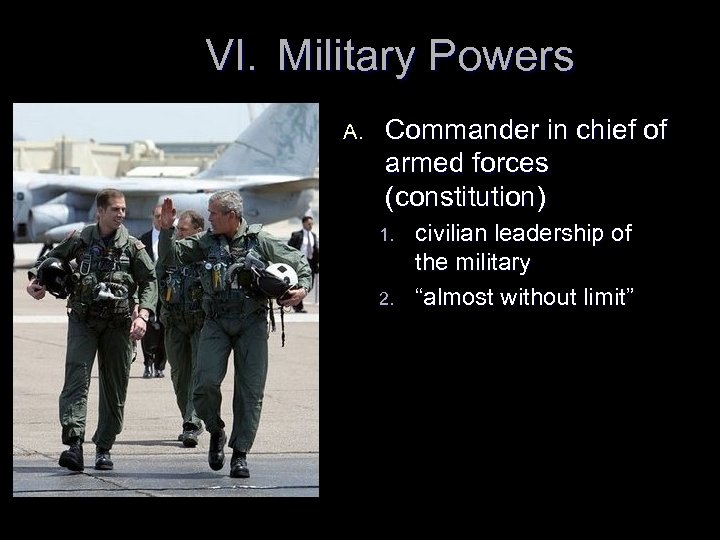 VI. Military Powers A. Commander in chief of armed forces (constitution) 1. 2. civilian leadership of the military “almost without limit”
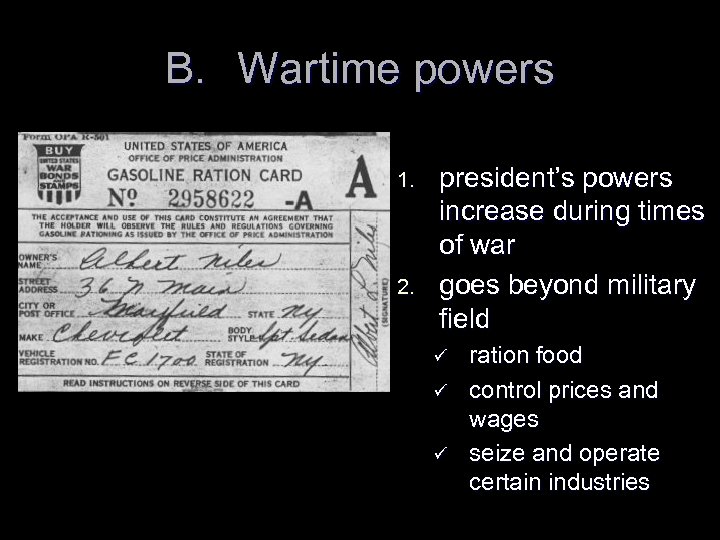 B. Wartime powers 1. 2. president’s powers increase during times of war goes beyond military field ü ü ü ration food control prices and wages seize and operate certain industries
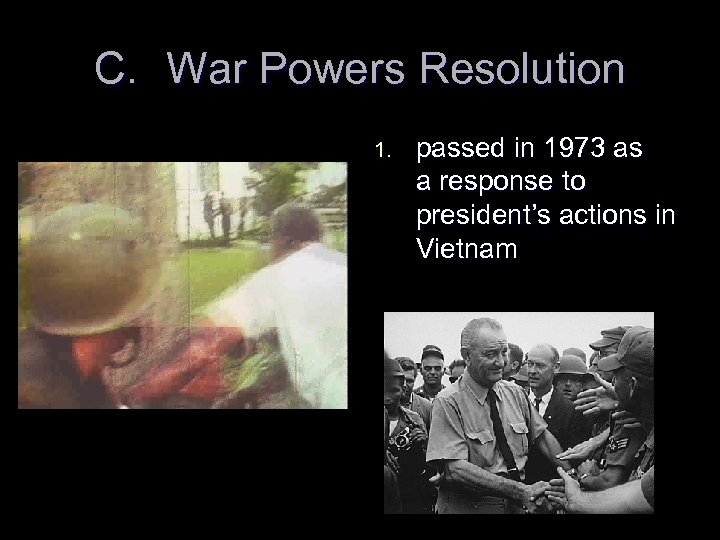 C. War Powers Resolution 1. passed in 1973 as a response to president’s actions in Vietnam
 C. War Powers Resolution 2. ü ü ü provisions: president must report to congress within 48 hours of committing troops must be withdrawn within 60 days unless congress agrees to longer period. The 60 day deadline may be increased another 30 days Congress may bring troops home at any time by a joint resolution
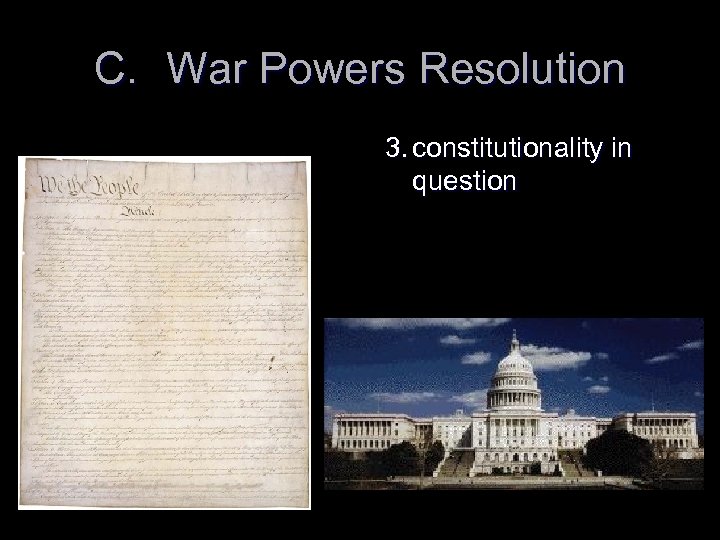 C. War Powers Resolution 3. constitutionality in question