


 Скачать презентацию Chapter 14 The Money Supply Process Players
78e9f58ea39935154f43716b50aeea7d.ppt
- Количество слайдов: 20
 Chapter 14 The Money Supply Process
 Players in the Money Supply Process • Central bank (Federal Reserve System) • Banks (depository institutions; financial intermediaries) • Depositors (individuals and institutions)
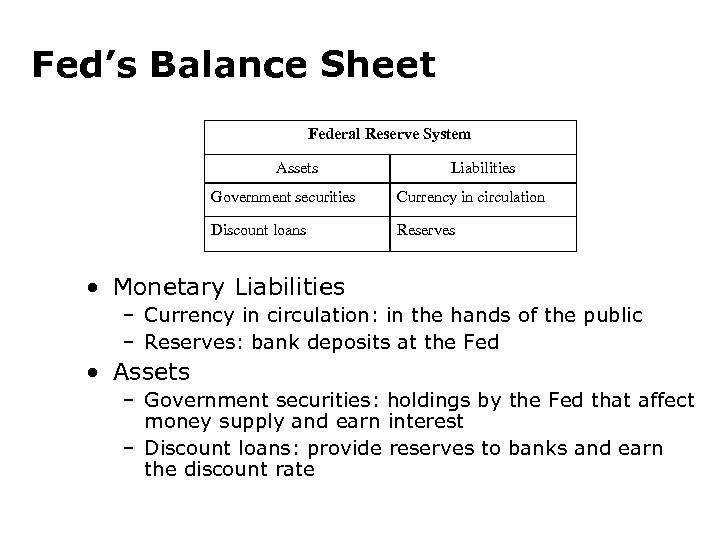 Fed’s Balance Sheet Federal Reserve System Assets Liabilities Government securities Currency in circulation Discount loans Reserves • Monetary Liabilities – Currency in circulation: in the hands of the public – Reserves: bank deposits at the Fed • Assets – Government securities: holdings by the Fed that affect money supply and earn interest – Discount loans: provide reserves to banks and earn the discount rate
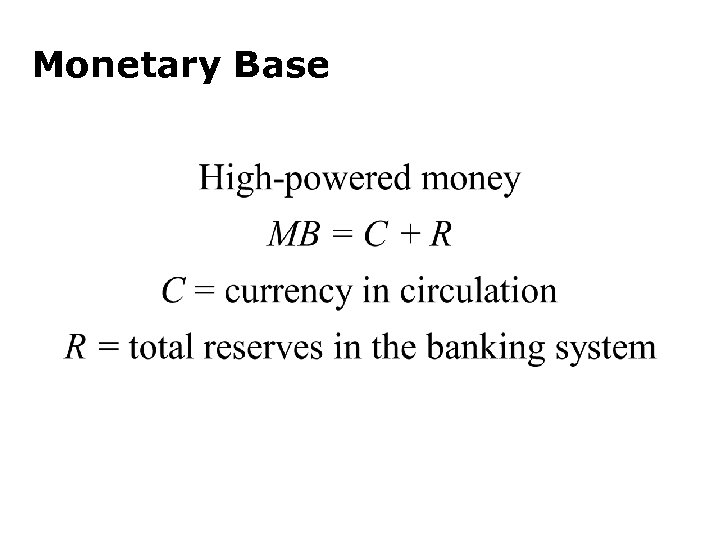 Monetary Base
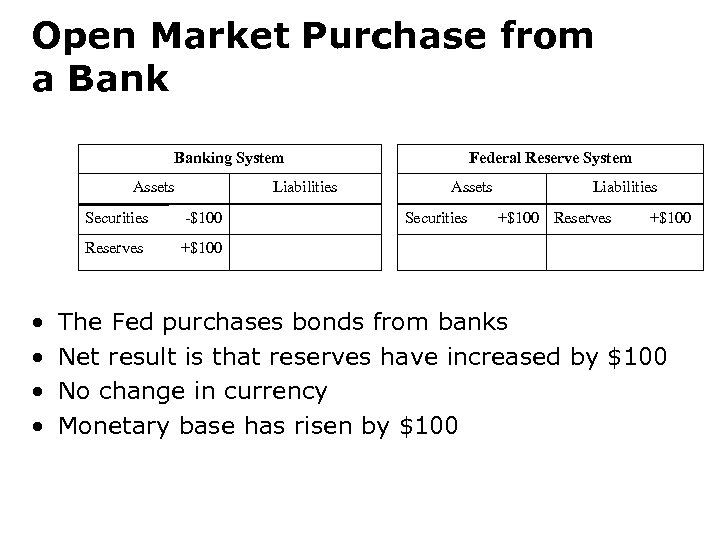 Open Market Purchase from a Banking System Assets Liabilities Securities Reserves • • -$100 Federal Reserve System Assets Securities Liabilities +$100 Reserves +$100 The Fed purchases bonds from banks Net result is that reserves have increased by $100 No change in currency Monetary base has risen by $100
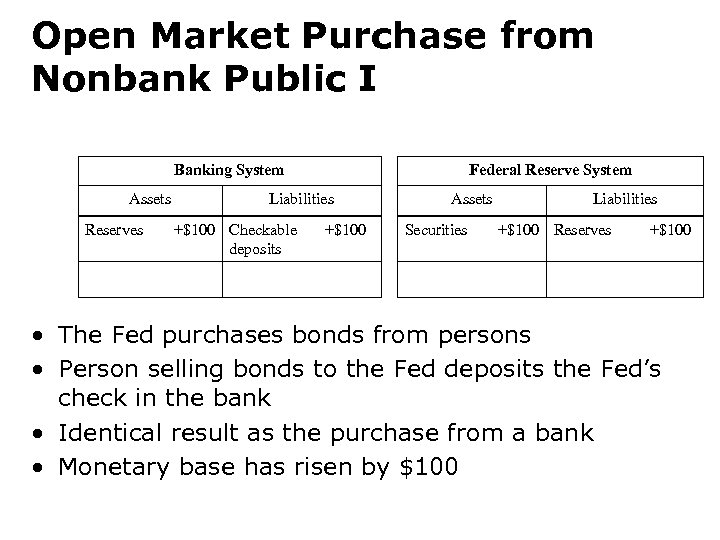 Open Market Purchase from Nonbank Public I Banking System Assets Reserves Federal Reserve System Liabilities +$100 Checkable deposits +$100 Assets Securities Liabilities +$100 Reserves +$100 • The Fed purchases bonds from persons • Person selling bonds to the Fed deposits the Fed’s check in the bank • Identical result as the purchase from a bank • Monetary base has risen by $100
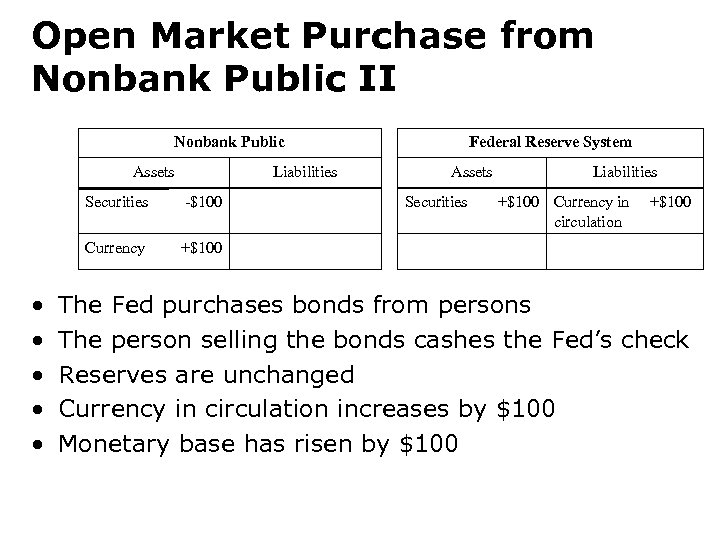 Open Market Purchase from Nonbank Public II Nonbank Public Assets Liabilities Securities Currency • • • -$100 Federal Reserve System Assets Securities Liabilities +$100 Currency in circulation +$100 The Fed purchases bonds from persons The person selling the bonds cashes the Fed’s check Reserves are unchanged Currency in circulation increases by $100 Monetary base has risen by $100
 Open Market Purchase: Summary • The effect of an open market purchase on reserves depends on whether the seller of the bonds keeps the proceeds from the sale in currency or in deposits • The effect of an open market purchase on the monetary base always increases the monetary base by the amount of the purchase
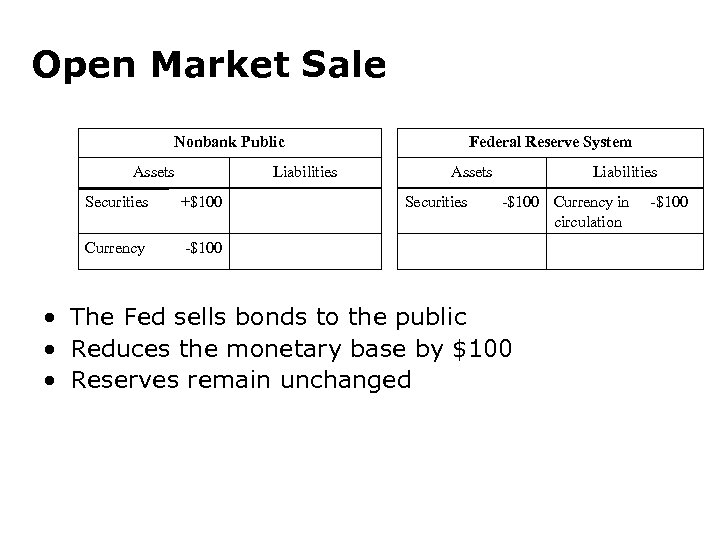 Open Market Sale Nonbank Public Assets Liabilities Securities +$100 Currency Federal Reserve System Assets Securities Liabilities -$100 Currency in circulation -$100 • The Fed sells bonds to the public • Reduces the monetary base by $100 • Reserves remain unchanged -$100
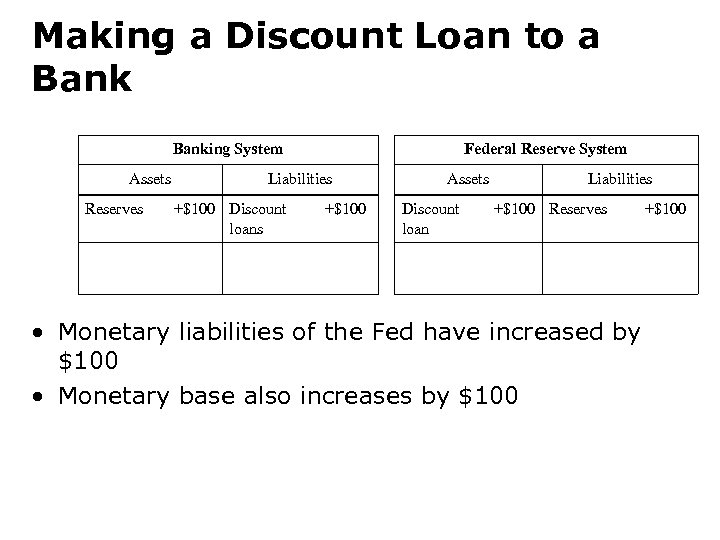 Making a Discount Loan to a Banking System Assets Reserves Federal Reserve System Liabilities +$100 Discount loans +$100 Assets Discount loan Liabilities +$100 Reserves • Monetary liabilities of the Fed have increased by $100 • Monetary base also increases by $100 +$100
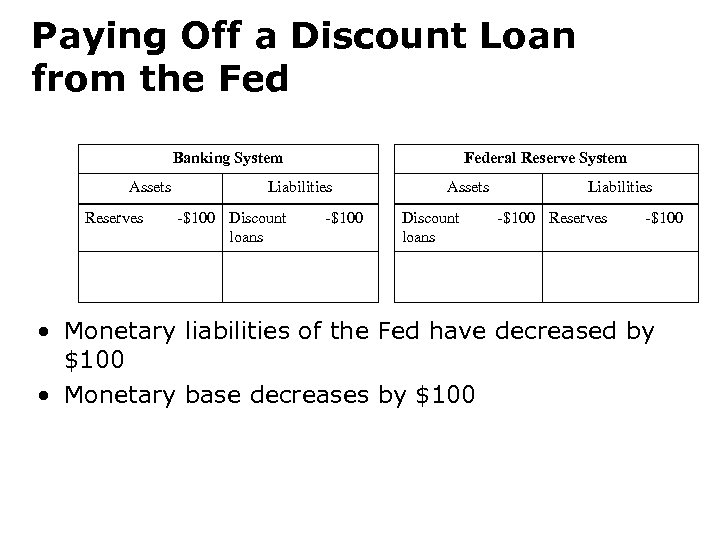 Paying Off a Discount Loan from the Fed Banking System Assets Reserves Federal Reserve System Liabilities -$100 Discount loans -$100 Assets Discount loans Liabilities -$100 Reserves -$100 • Monetary liabilities of the Fed have decreased by $100 • Monetary base decreases by $100
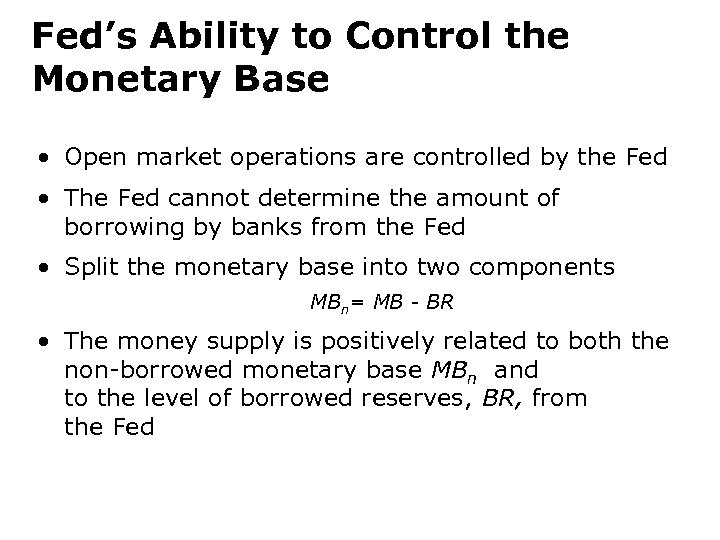 Fed’s Ability to Control the Monetary Base • Open market operations are controlled by the Fed • The Fed cannot determine the amount of borrowing by banks from the Fed • Split the monetary base into two components MBn= MB - BR • The money supply is positively related to both the non-borrowed monetary base MBn and to the level of borrowed reserves, BR, from the Fed
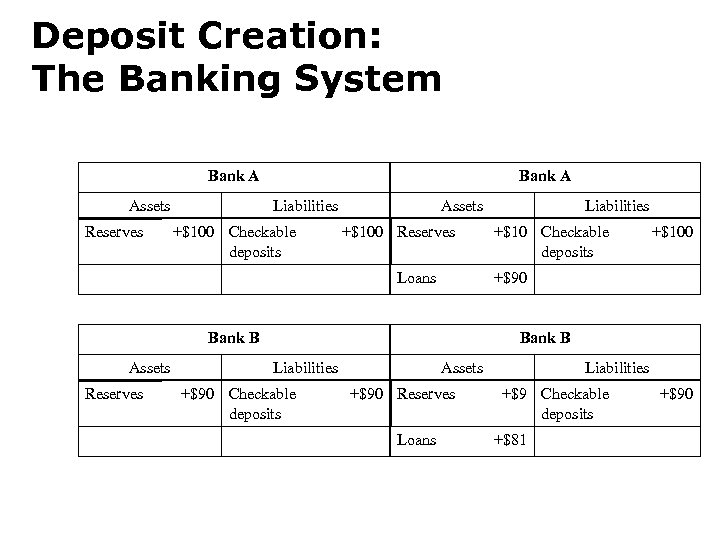 Deposit Creation: The Banking System Bank A Assets Reserves Bank A Liabilities +$100 Checkable deposits Assets +$100 Reserves Loans Reserves +$10 Checkable deposits +$100 +$90 Bank B Assets Liabilities Bank B Liabilities +$90 Checkable deposits Assets +$90 Reserves Loans Liabilities +$9 Checkable deposits +$81 +$90
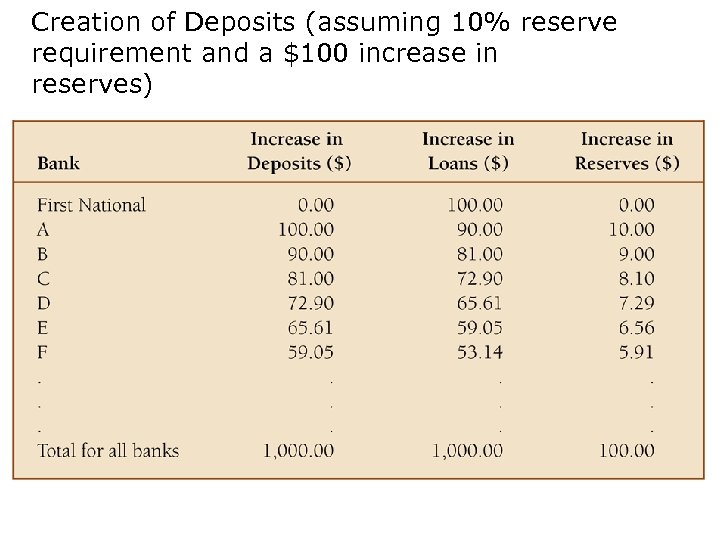 Creation of Deposits (assuming 10% reserve requirement and a $100 increase in reserves)
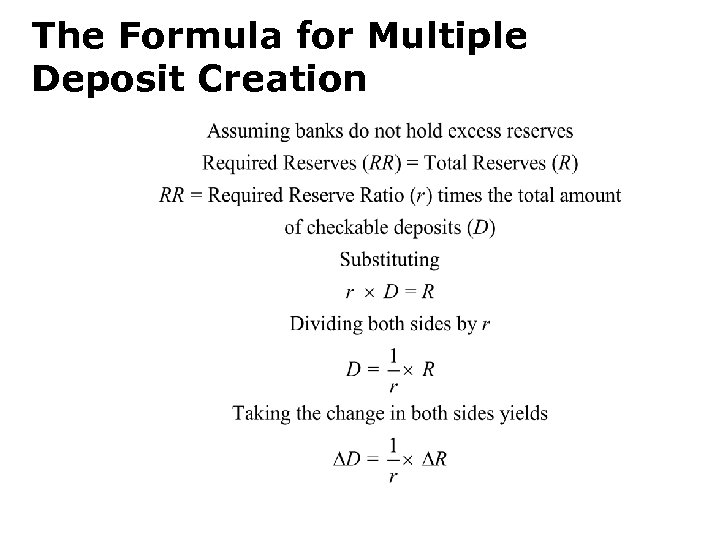 The Formula for Multiple Deposit Creation
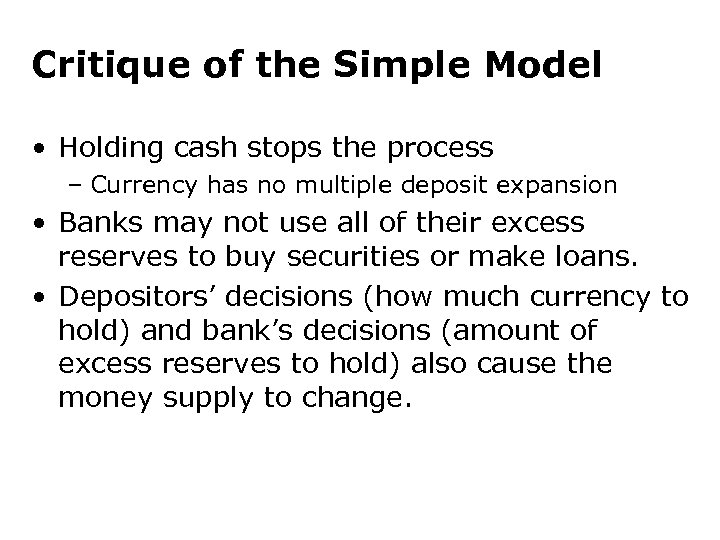 Critique of the Simple Model • Holding cash stops the process – Currency has no multiple deposit expansion • Banks may not use all of their excess reserves to buy securities or make loans. • Depositors’ decisions (how much currency to hold) and bank’s decisions (amount of excess reserves to hold) also cause the money supply to change.
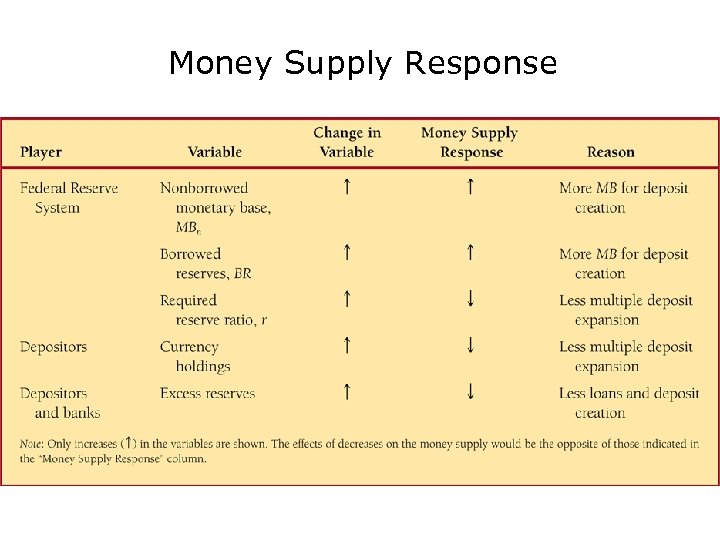 Money Supply Response
 Factors that Determine the Money Supply • Changes in the nonborrowed monetary base MBn – The money supply is positively related to the non -borrowed monetary base MBn • Changes in borrowed reserves from the Fed – The money supply is positively related to the level of borrowed reserves, BR, from the Fed
 Factors that Determine the Money Supply • Changes in the required reserves ratio – The money supply is negatively related to the required reserve ratio. • Changes in currency holdings – The money supply is negatively related to currency holdings. • Changes in excess reserves – The money supply is negatively related to the amount of excess reserves.
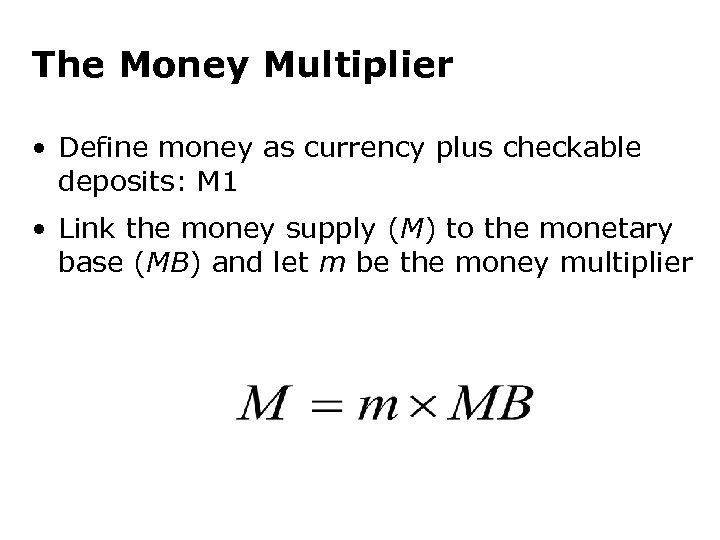 The Money Multiplier • Define money as currency plus checkable deposits: M 1 • Link the money supply (M) to the monetary base (MB) and let m be the money multiplier