


 Скачать презентацию Chapter 14 Foreign Finance Investment and Aid Controversies
520be0ade31693ce40c048b8d64ed53c.ppt
- Количество слайдов: 34
 Chapter 14 Foreign Finance, Investment, and Aid: Controversies and Opportunities Copyright © 2009 Pearson Addison-Wesley. All rights reserved.
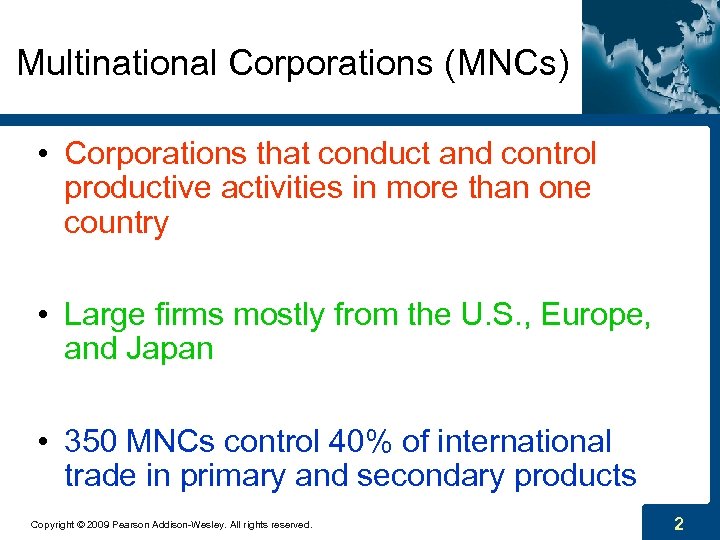 Multinational Corporations (MNCs) • Corporations that conduct and control productive activities in more than one country • Large firms mostly from the U. S. , Europe, and Japan • 350 MNCs control 40% of international trade in primary and secondary products Copyright © 2009 Pearson Addison-Wesley. All rights reserved. 2
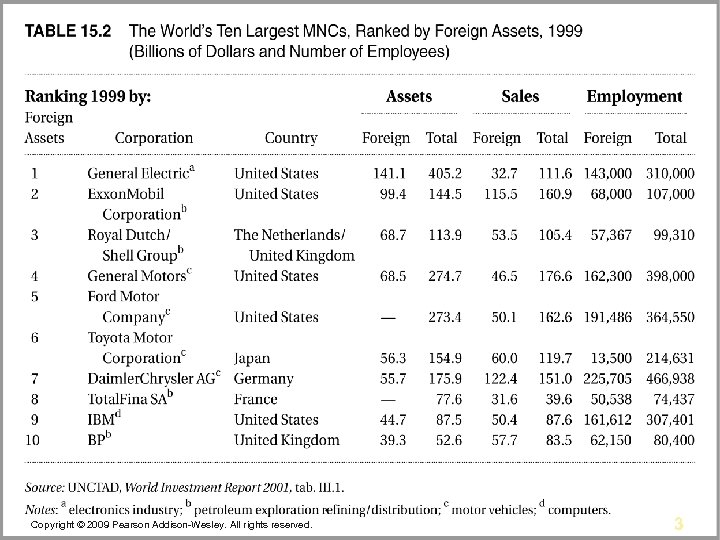 Copyright © 2009 Pearson Addison-Wesley. All rights reserved. 3
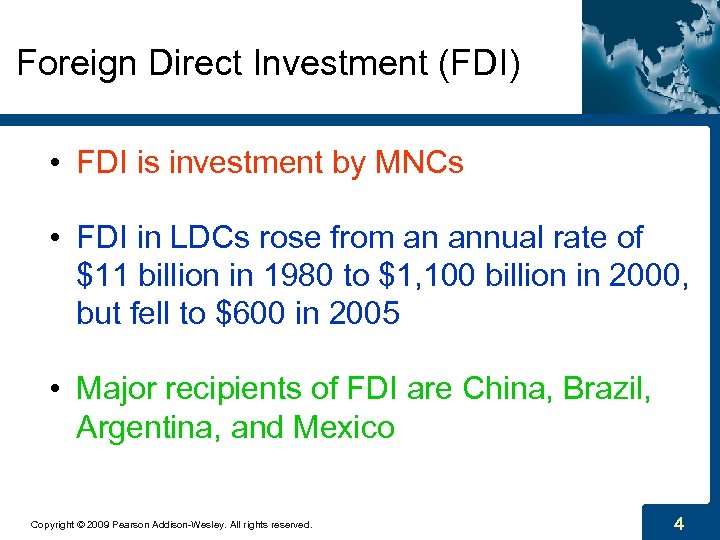 Foreign Direct Investment (FDI) • FDI is investment by MNCs • FDI in LDCs rose from an annual rate of $11 billion in 1980 to $1, 100 billion in 2000, but fell to $600 in 2005 • Major recipients of FDI are China, Brazil, Argentina, and Mexico Copyright © 2009 Pearson Addison-Wesley. All rights reserved. 4
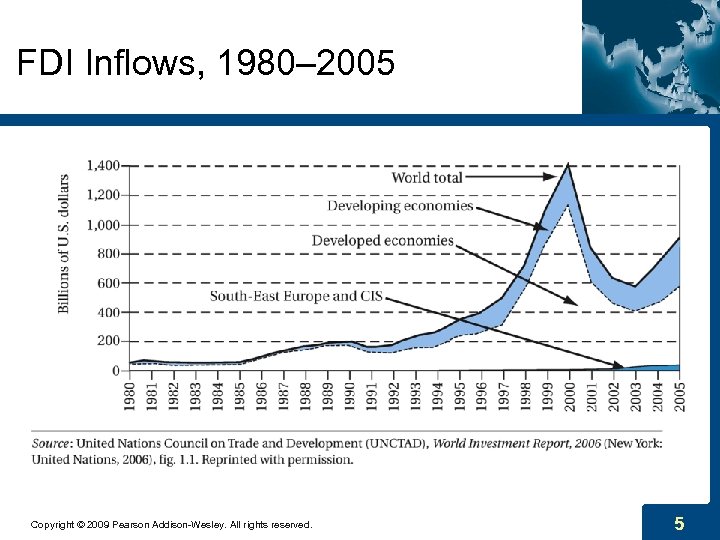 FDI Inflows, 1980– 2005 Copyright © 2009 Pearson Addison-Wesley. All rights reserved. 5
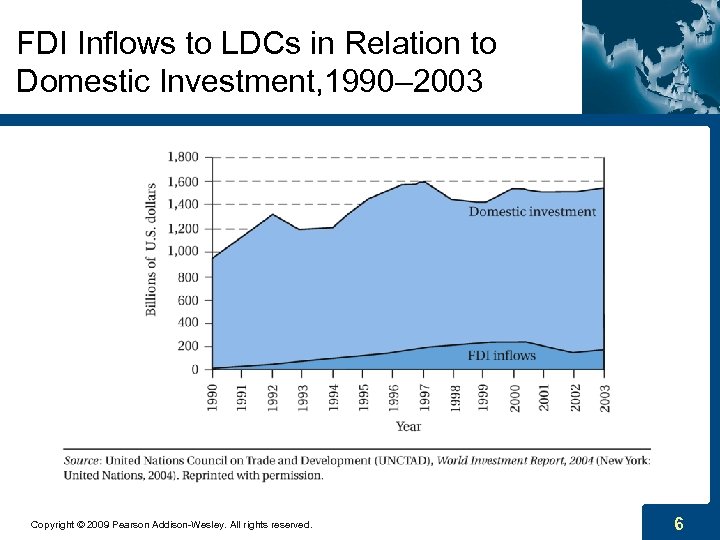 FDI Inflows to LDCs in Relation to Domestic Investment, 1990– 2003 Copyright © 2009 Pearson Addison-Wesley. All rights reserved. 6
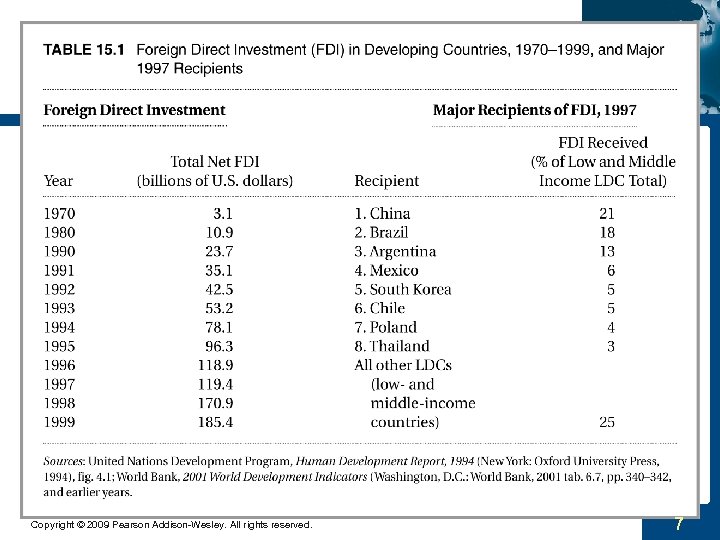 Copyright © 2009 Pearson Addison-Wesley. All rights reserved. 7
 FDI Debate: Pros FDI fills the • Saving gap: causing economic growth • Foreign-exchange gap: improving the BOP • Tax revenue gap: raising funds for public spending • Management gap: improving entrepreneurship • Technology gap: facilitating industrialization Copyright © 2009 Pearson Addison-Wesley. All rights reserved. 8
 FDI Debate: Cons MNCs • Don’t reinvest their profit • Return profits to their headquarters through transfer pricing • Create income for semi-skilled labor with low saving propensities • Deteriorate current account through importation of capital goods and intermediate products Copyright © 2009 Pearson Addison-Wesley. All rights reserved. 9
 FDI Debate: Cons MNCs • Deteriorate capital account through outflow of profits • Receive investment tax credits and are exempt from tariffs • Hinder development of domestic managerial skills • Gain monopoly power • Reinforce dualism, increase income inequality, and induce RU migration • Influence local politics and support “friendly” governments Copyright © 2009 Pearson Addison-Wesley. All rights reserved. 10
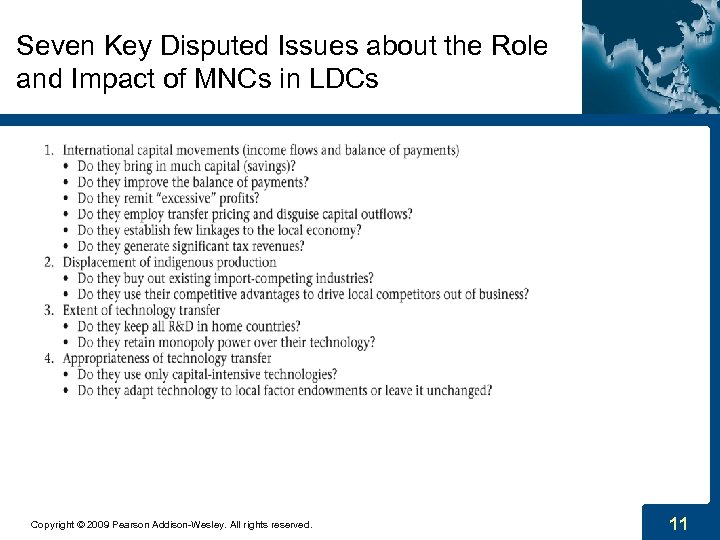 Seven Key Disputed Issues about the Role and Impact of MNCs in LDCs Copyright © 2009 Pearson Addison-Wesley. All rights reserved. 11
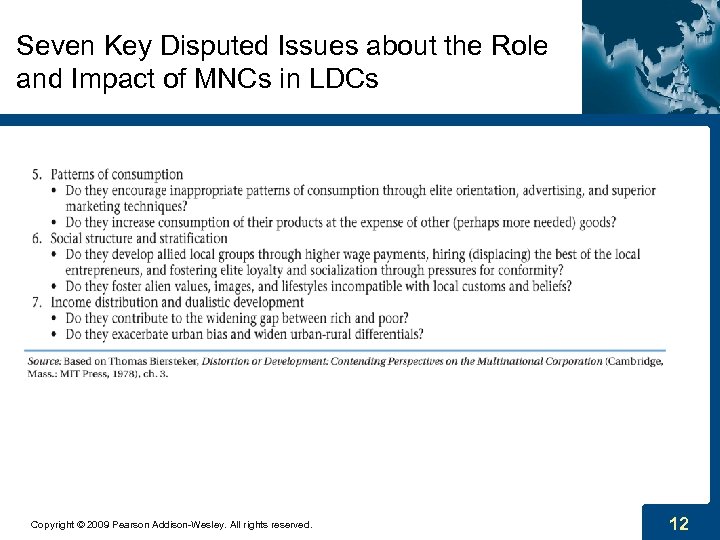 Seven Key Disputed Issues about the Role and Impact of MNCs in LDCs Copyright © 2009 Pearson Addison-Wesley. All rights reserved. 12
 FDI Debate: Pros & Cons Yes, MNCs – Create jobs and income – Transfer managerial skills and technology But, MNCs – Invest in most profitable business venture – Transfer their profits out Copyright © 2009 Pearson Addison-Wesley. All rights reserved. 13
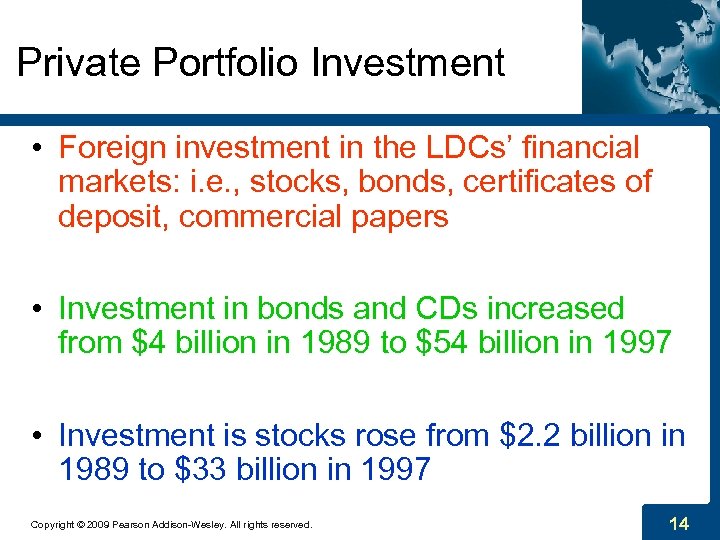 Private Portfolio Investment • Foreign investment in the LDCs’ financial markets: i. e. , stocks, bonds, certificates of deposit, commercial papers • Investment in bonds and CDs increased from $4 billion in 1989 to $54 billion in 1997 • Investment is stocks rose from $2. 2 billion in 1989 to $33 billion in 1997 Copyright © 2009 Pearson Addison-Wesley. All rights reserved. 14
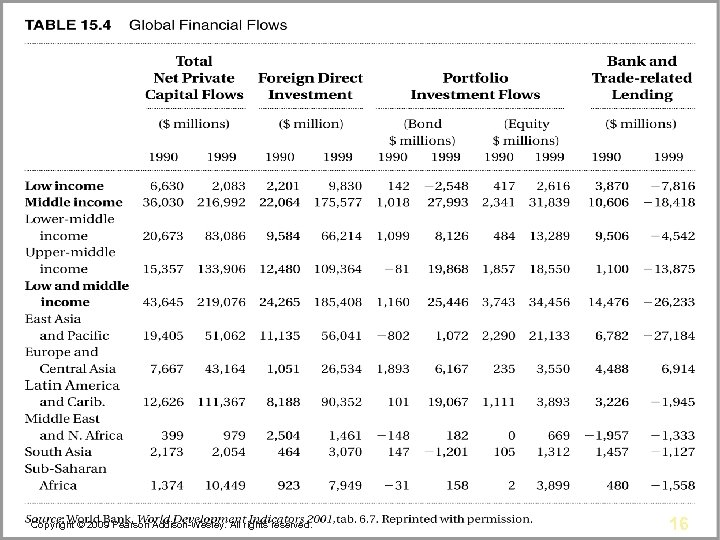
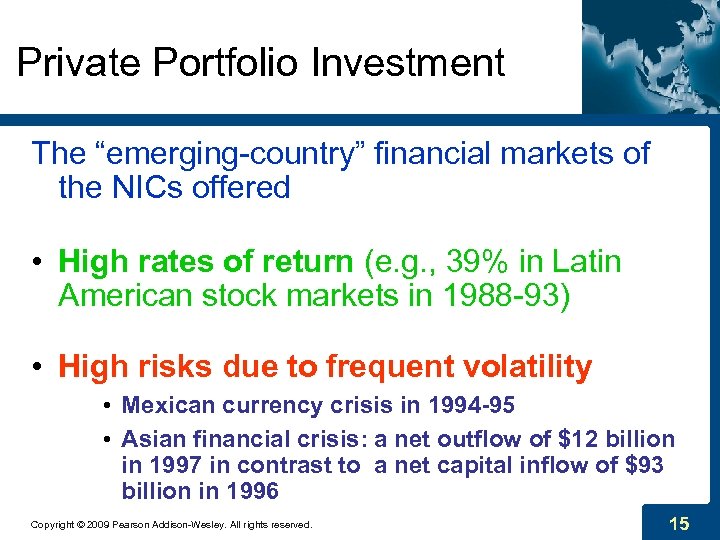 Private Portfolio Investment The “emerging-country” financial markets of the NICs offered • High rates of return (e. g. , 39% in Latin American stock markets in 1988 -93) • High risks due to frequent volatility • Mexican currency crisis in 1994 -95 • Asian financial crisis: a net outflow of $12 billion in 1997 in contrast to a net capital inflow of $93 billion in 1996 Copyright © 2009 Pearson Addison-Wesley. All rights reserved. 15
 Copyright © 2009 Pearson Addison-Wesley. All rights reserved. 16
 The Role and Growth of Remittances • Wages and salaries made in a host country, but sent back to the home country • Wage differences • “Brain Drain” • Uneven flow of remittances Copyright © 2009 Pearson Addison-Wesley. All rights reserved. 17
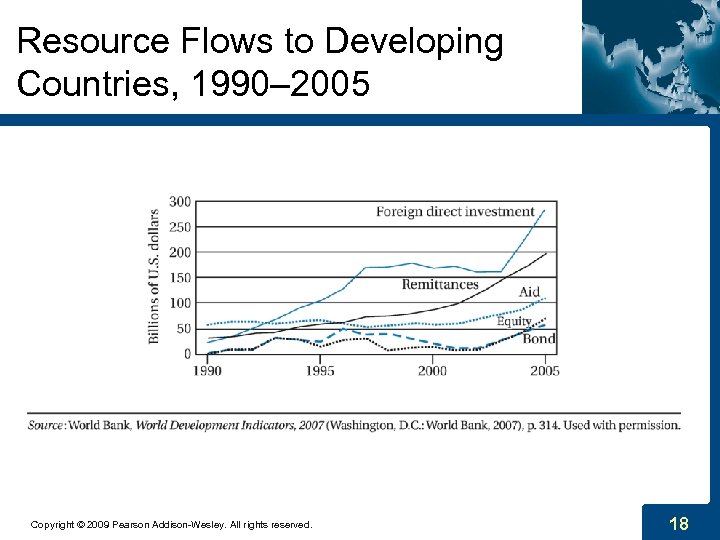 Resource Flows to Developing Countries, 1990– 2005 Copyright © 2009 Pearson Addison-Wesley. All rights reserved. 18
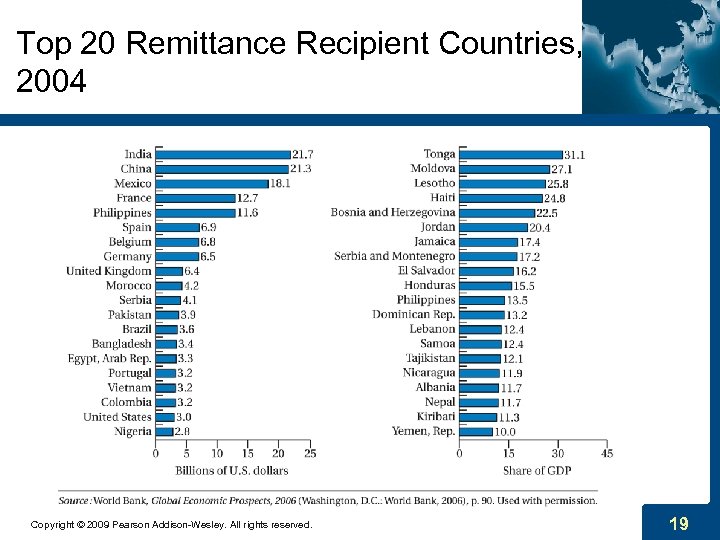 Top 20 Remittance Recipient Countries, 2004 Copyright © 2009 Pearson Addison-Wesley. All rights reserved. 19
 Foreign Aid All governmental resource transfers from one country to another • Expressed in real terms • Exclude military aid • Exclude transfers from private foreign investors • Must be allocated to economic development projects and programs Copyright © 2009 Pearson Addison-Wesley. All rights reserved. 20
 Kinds of Foreign Aid • Official Development Assistance: grants and loans • Tide aid: the donor requires the recipient to use the funds to import products from companies in the donor country • Untied aid: the donor provides assistance for developmental projects and plans Copyright © 2009 Pearson Addison-Wesley. All rights reserved. 21
 Donation of Foreign Aid • In monetary value, the U. S. and Japan are the largest donor • In percentage of GDP, Sweden and Netherlands are the largest donor • In monetary value, FA increased from 1985 to 2005 • In percentage of GDP, FA fell from 0. 35 in 1985 to 0. 23 in 2002, but rose to 0. 33 in 2005 Copyright © 2009 Pearson Addison-Wesley. All rights reserved. 22
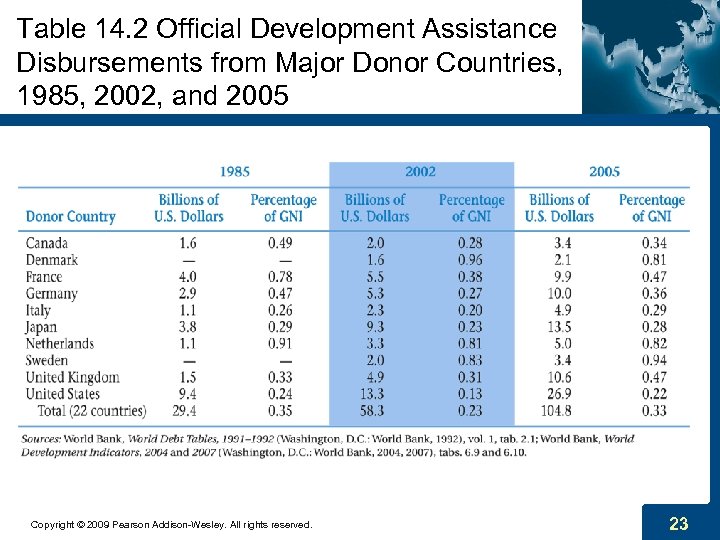 Table 14. 2 Official Development Assistance Disbursements from Major Donor Countries, 1985, 2002, and 2005 Copyright © 2009 Pearson Addison-Wesley. All rights reserved. 23
 Allocation of Foreign Aid • In U. S. $ per capita, the largest recipients are countries in the Middle East & North Africa and Sub-Saharan Africa • In percentage of GNI, the largest recipients are countries in Sub-Saharan Africa and the Middle East & North Africa and Copyright © 2009 Pearson Addison-Wesley. All rights reserved. 24
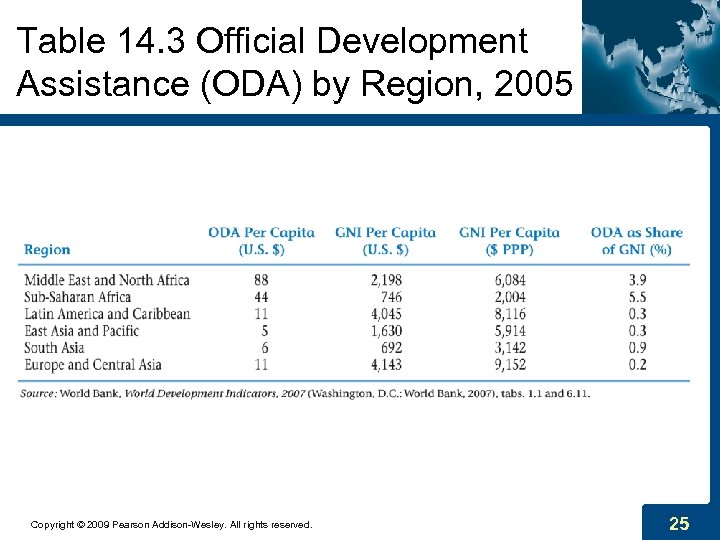 Table 14. 3 Official Development Assistance (ODA) by Region, 2005 Copyright © 2009 Pearson Addison-Wesley. All rights reserved. 25
 Allocation of Foreign Aid • In monetary value some of the largest recipient are China, Israel, Egypt, India, Bangladesh, and Indonesia • In percentage of GNI, some of the largest recipient are Mozambique, Nicaragua, Uganda, Ethiopia, and Bolivia Copyright © 2009 Pearson Addison-Wesley. All rights reserved. 26
 Reasons for FA Donation Economic • Assist with economic development and technology transfer • Help in case of emergency (e. g. , natural disasters) • Assist with economic transition (e. g. , former Soviet republics) Copyright © 2009 Pearson Addison-Wesley. All rights reserved. 27
 Reasons for FA Donation • Economics: FA fills the • Saving gap: causing economic growth • Foreign-exchange gap: improving the BOP • Technology gap: facilitating industrialization given absorptive capacity limitation Copyright © 2009 Pearson Addison-Wesley. All rights reserved. 28
 Reasons for FA Donation Political • Assist “friendly” government to succeed • Promote “national security” by shifting FA from one country or region to another Copyright © 2009 Pearson Addison-Wesley. All rights reserved. 29
 Criticism of the Donor Countries • FA won’t necessarily assist the poor people of the LDCs • FA assists non-democratic and corrupt LDC governments • FA is just a small percentage of GDP of donor countries Copyright © 2009 Pearson Addison-Wesley. All rights reserved. 30
 Criticism of the Donor Countries • FA is mostly in the form of loans rather than grants; FA is mostly tied • FA discourages production, competition, and self-reliance of the recipient nations • FA is abused as an election propaganda in both donor and recipient countries Copyright © 2009 Pearson Addison-Wesley. All rights reserved. 31
 Nongovernmental Organizations • Voluntary organizations that work with and on behalf of mostly grassroots and religious groups • Provide emergency relief, food, and medical supplies for humanitarian reasons • Work directly with people, not governments • Save the Children, CARE, World Vision, etc. Copyright © 2009 Pearson Addison-Wesley. All rights reserved. 32
 New View of FA • Make aid need-based to reduce poverty and overpopulation • Provide more grants and less loans and more untied aid • Promote self-reliant development Copyright © 2009 Pearson Addison-Wesley. All rights reserved. 33
 New View of FA • Provide economic rather than political aid • Help expand strengthen the NGOs • Understand that in the long-term, there can’t be a dual future for the mankind, one for the very rich and one for the very poor, without the proliferation of global or regional conflict Copyright © 2009 Pearson Addison-Wesley. All rights reserved. 34