


 Скачать презентацию Chapter 13 Safety of Food and Water
d9f064d3ea7e15a7e6e9a566a14f6c19.ppt
- Количество слайдов: 48
 Chapter 13 Safety of Food and Water
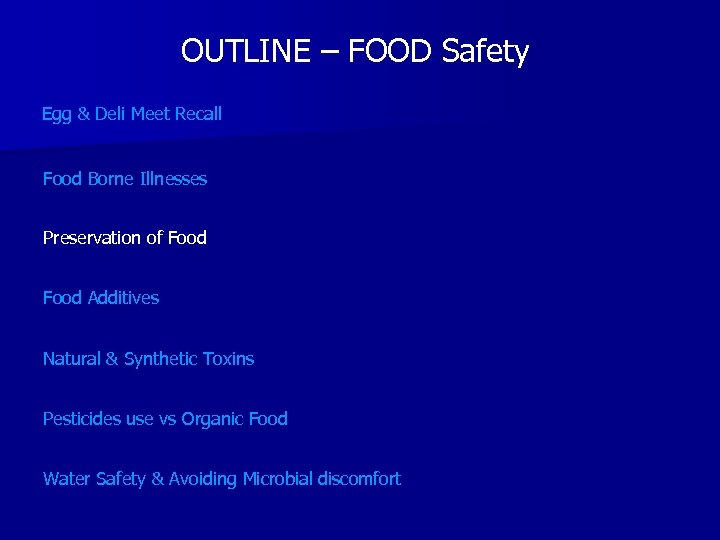
 OUTLINE – FOOD Safety Egg & Deli Meet Recall Food Borne Illnesses Preservation of Food Additives Natural & Synthetic Toxins Pesticides use vs Organic Food Water Safety & Avoiding Microbial discomfort
 Egg & Now Deli Meet Recalls n 500 million eggs! – Voluntary recall – Contaminated with Salmenella – 1, 000 cases of salmonella poisoning linked to eggs from Wright County Egg and Hillandale farms. – U. S. Food and Drug Administration http: //www. cnn. com/video/ http: //today. msnbc. msn. com/id/26184891/vp/38813211#38813215 http: //ac 360. blogs. cnn. com/blog/ n 380 million lbs. Deli Meat recalled – Also Contaminated with bacteria
 Eggs Recall n Compare Safeway vs Free range eggs – Notice thickness of the shell difference § Right off. . § Quality (Caged vs Free Range) – Free range, stronger harder shelled egg ~ Less Salmonella contamination b/c of proximity
 OUTLINE – FOOD Safety Egg & Deli Meet Recall Food Borne Illnesses Preservation of Food Additives Natural & Synthetic Toxins Pesticides use vs Organic Food Water Safety & Avoiding Microbial discomfort
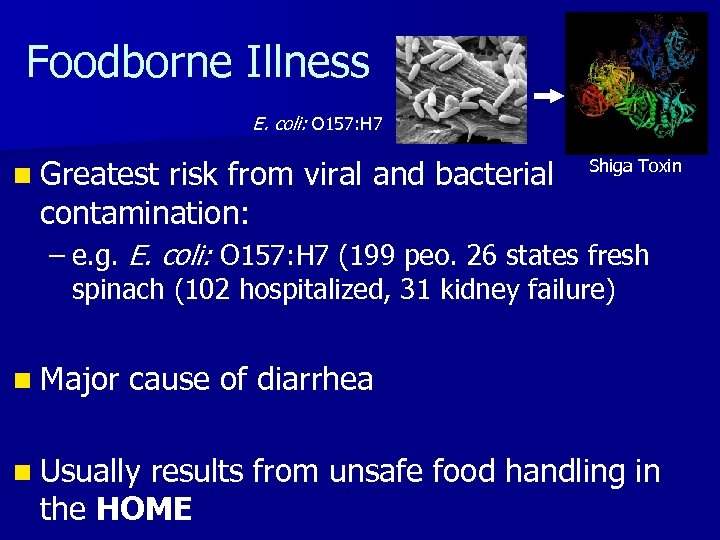 Foodborne Illness E. coli: O 157: H 7 n Greatest risk from viral and bacterial Shiga Toxin contamination: – e. g. E. coli: O 157: H 7 (199 peo. 26 states fresh spinach (102 hospitalized, 31 kidney failure) n Major cause of diarrhea n Usually results from unsafe food handling in the HOME
 Most Susceptible to Foodborne Illness n Infants and children n Older adults n Those with liver disease, diabetes, HIV/AIDS, cancer n Pregnant women n People taking immunosuppressant agents
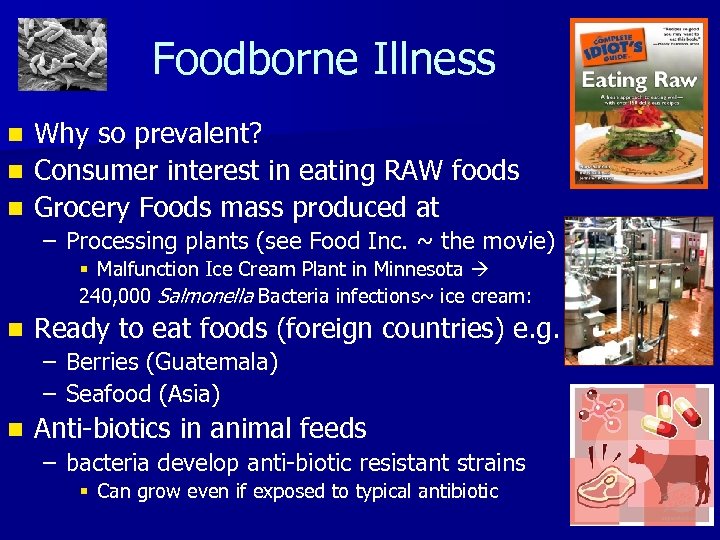 Foodborne Illness Why so prevalent? n Consumer interest in eating RAW foods n Grocery Foods mass produced at n – Processing plants (see Food Inc. ~ the movie) § Malfunction Ice Cream Plant in Minnesota 240, 000 Salmonella Bacteria infections~ ice cream: n Ready to eat foods (foreign countries) e. g. – Berries (Guatemala) – Seafood (Asia) n Anti-biotics in animal feeds – bacteria develop anti-biotic resistant strains § Can grow even if exposed to typical antibiotic
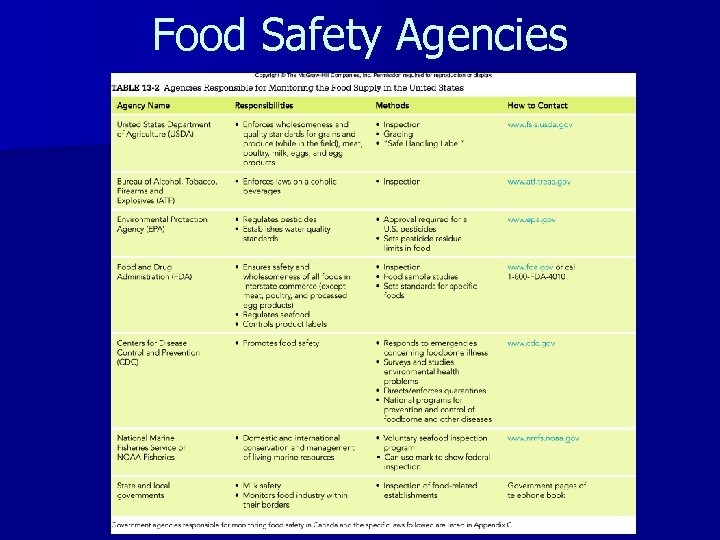 Food Safety Agencies
 OUTLINE – FOOD Safety Egg & Deli Meet Recall Food Borne Illnesses Preservation of Food Additives Natural & Synthetic Toxins Pesticides use vs Organic Food Water Safety & Avoiding Microbial discomfort
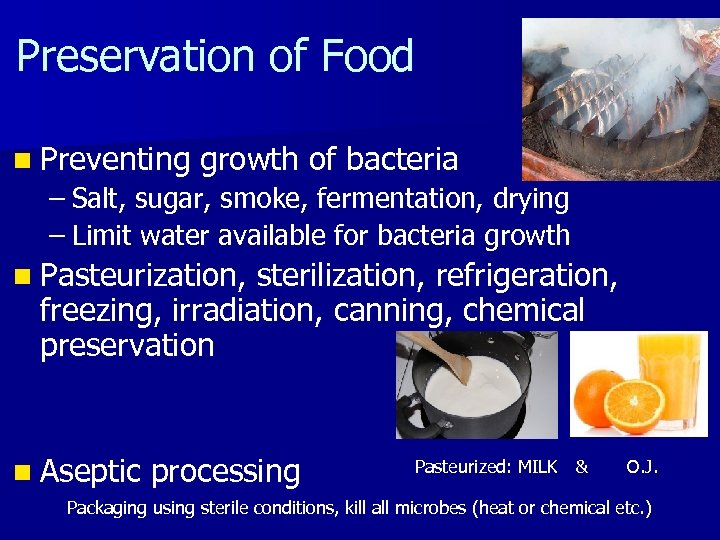 Preservation of Food n Preventing growth of bacteria – Salt, sugar, smoke, fermentation, drying – Limit water available for bacteria growth n Pasteurization, sterilization, refrigeration, freezing, irradiation, canning, chemical preservation n Aseptic processing Pasteurized: MILK & O. J. Packaging using sterile conditions, kill all microbes (heat or chemical etc. )
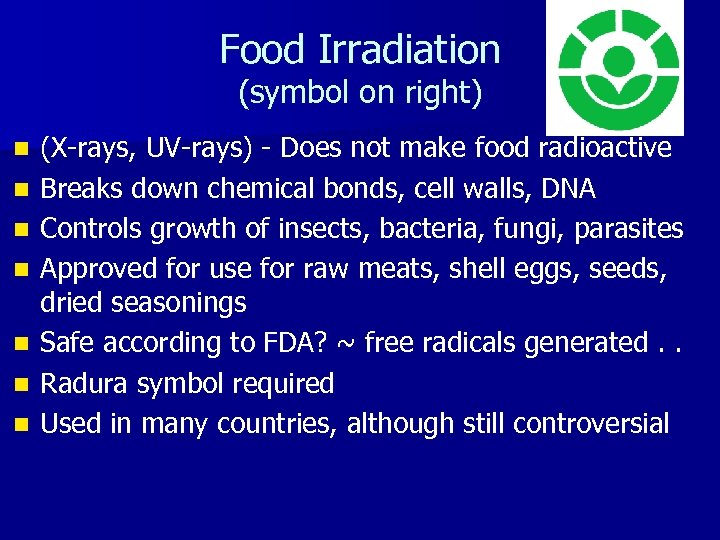 Food Irradiation (symbol on right) n n n n (X-rays, UV-rays) - Does not make food radioactive Breaks down chemical bonds, cell walls, DNA Controls growth of insects, bacteria, fungi, parasites Approved for use for raw meats, shell eggs, seeds, dried seasonings Safe according to FDA? ~ free radicals generated. . Radura symbol required Used in many countries, although still controversial
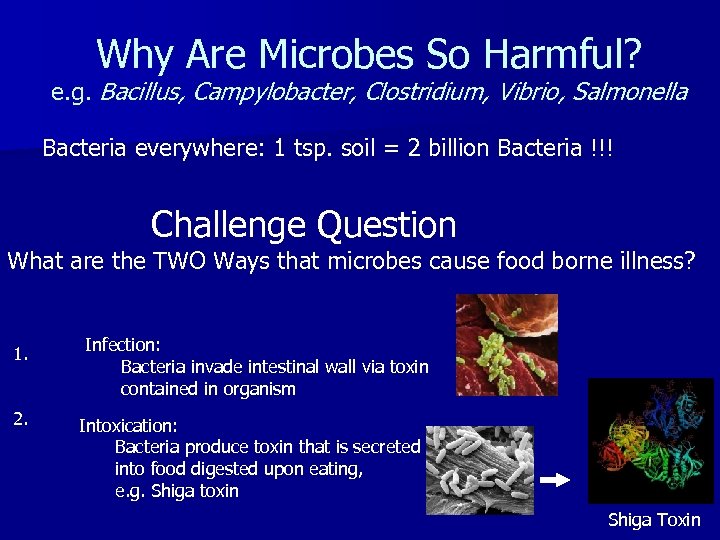 Why Are Microbes So Harmful? e. g. Bacillus, Campylobacter, Clostridium, Vibrio, Salmonella Bacteria everywhere: 1 tsp. soil = 2 billion Bacteria !!! Challenge Question What are the TWO Ways that microbes cause food borne illness? 1. 2. Infection: Bacteria invade intestinal wall via toxin contained in organism Intoxication: Bacteria produce toxin that is secreted into food digested upon eating, e. g. Shiga toxin Shiga Toxin
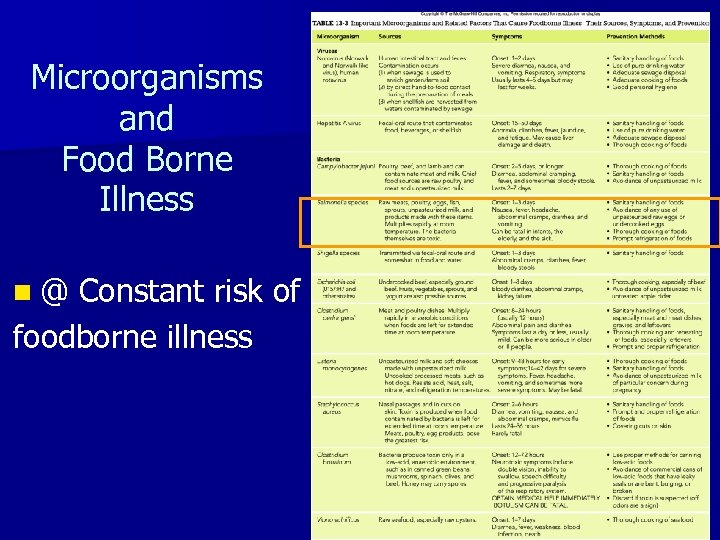 Microorganisms and Food Borne Illness n @ Constant risk of foodborne illness
 Animation Microbial Growth vs Temp. & Temperature vs Spoilage
 OUTLINE – FOOD Safety Egg & Deli Meet Recall Food Borne Illnesses Preservation of Food Additives Natural & Synthetic Toxins Pesticides use vs Organic Food Water Safety & Avoiding Microbial discomfort
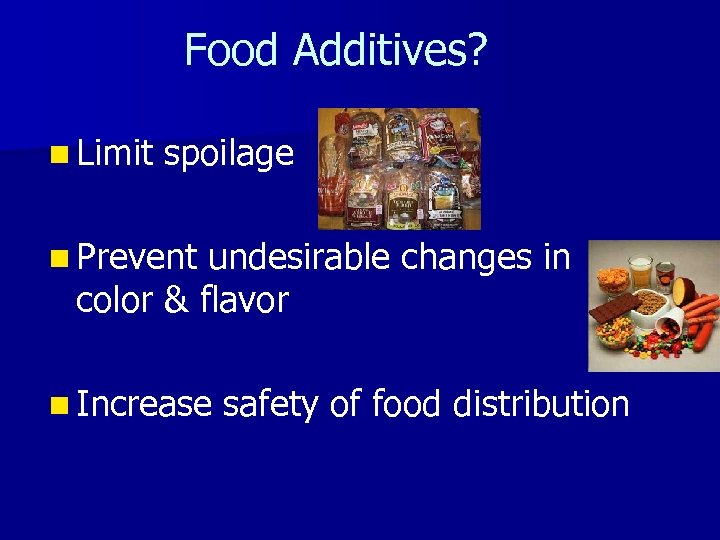 Food Additives? n Limit spoilage n Prevent undesirable changes in color & flavor n Increase safety of food distribution
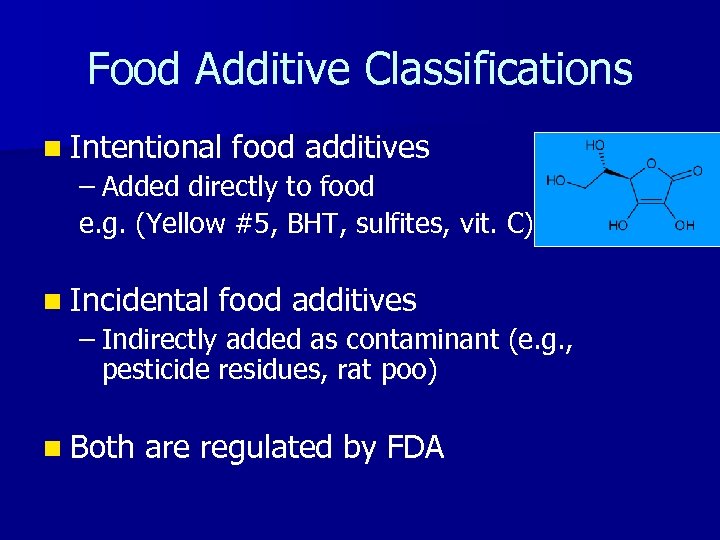 Food Additive Classifications n Intentional food additives – Added directly to food e. g. (Yellow #5, BHT, sulfites, vit. C) n Incidental food additives – Indirectly added as contaminant (e. g. , pesticide residues, rat poo) n Both are regulated by FDA
 Confirming your knowledge n What 4 compounds constitute 98% of all additives used in food processing (by weight)? n 1. Sugar n 2. salt n 3. corn syrup n 4. citric acid
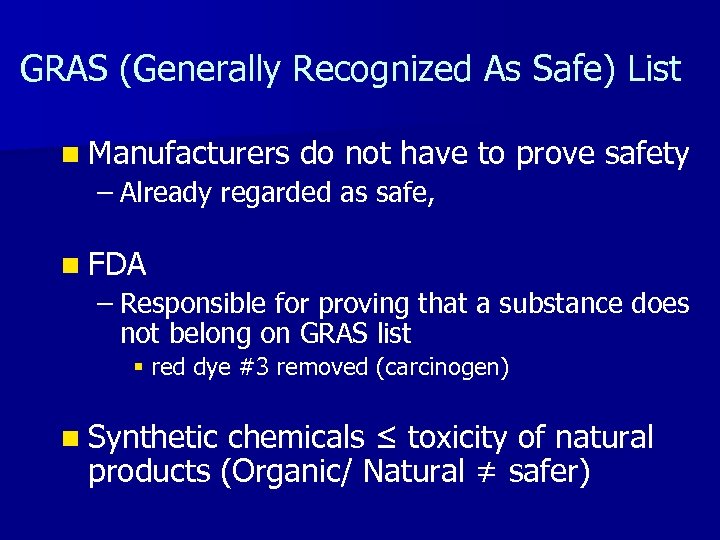 GRAS (Generally Recognized As Safe) List n Manufacturers do not have to prove safety – Already regarded as safe, n FDA – Responsible for proving that a substance does not belong on GRAS list § red dye #3 removed (carcinogen) n Synthetic chemicals ≤ toxicity of natural products (Organic/ Natural ≠ safer)
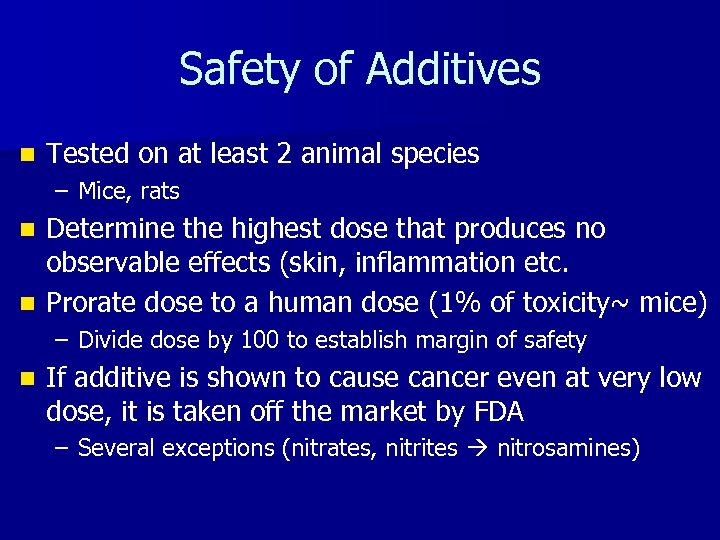 Safety of Additives n Tested on at least 2 animal species – Mice, rats Determine the highest dose that produces no observable effects (skin, inflammation etc. n Prorate dose to a human dose (1% of toxicity~ mice) n – Divide dose by 100 to establish margin of safety n If additive is shown to cause cancer even at very low dose, it is taken off the market by FDA – Several exceptions (nitrates, nitrites nitrosamines)
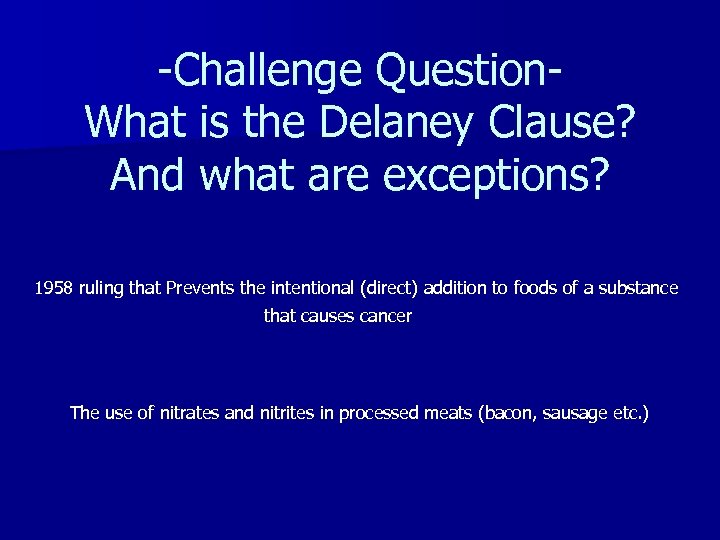 -Challenge Question. What is the Delaney Clause? And what are exceptions? 1958 ruling that Prevents the intentional (direct) addition to foods of a substance that causes cancer The use of nitrates and nitrites in processed meats (bacon, sausage etc. )
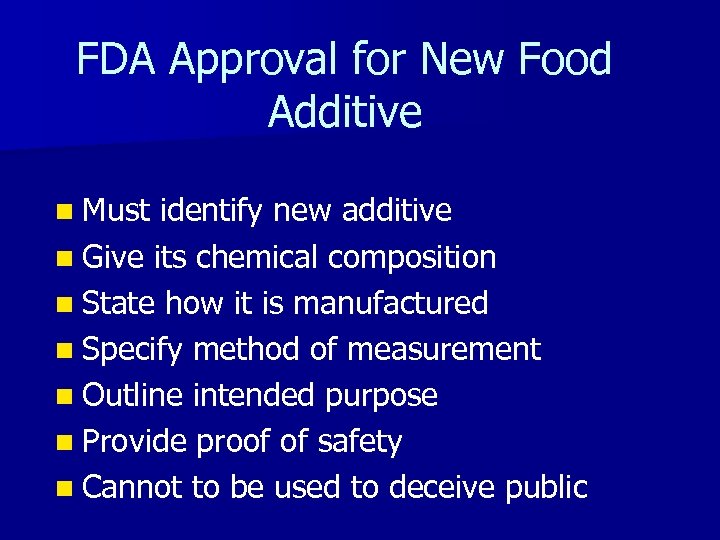 FDA Approval for New Food Additive n Must identify new additive n Give its chemical composition n State how it is manufactured n Specify method of measurement n Outline intended purpose n Provide proof of safety n Cannot to be used to deceive public
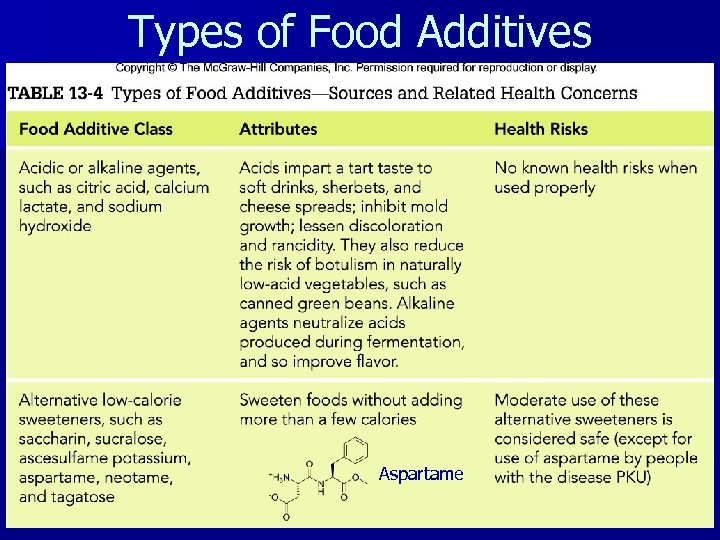 Types of Food Additives Aspartame
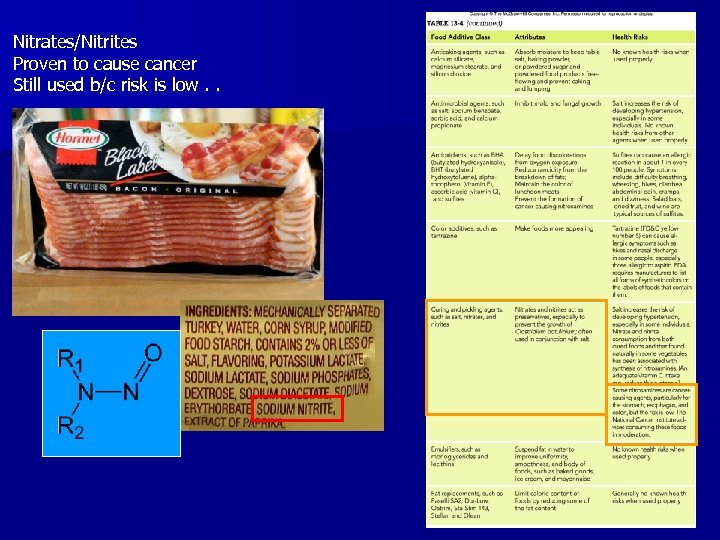 Nitrates/Nitrites Proven to cause cancer Still used b/c risk is low. .
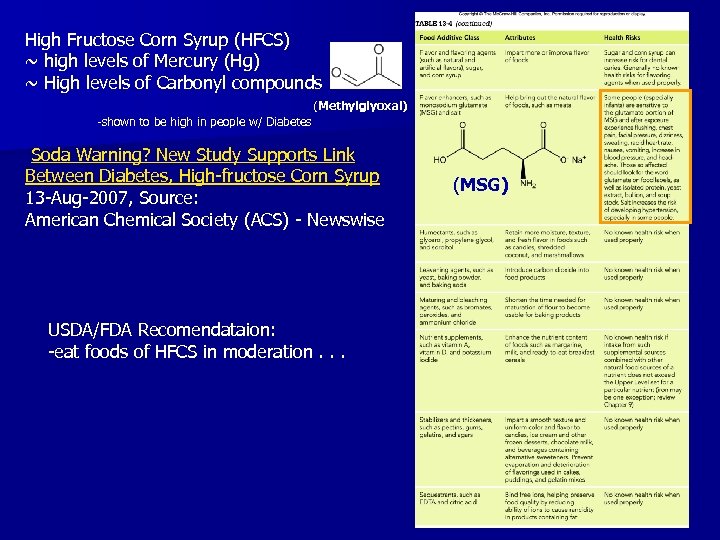 High Fructose Corn Syrup (HFCS) ~ high levels of Mercury (Hg) ~ High levels of Carbonyl compounds (Methylglyoxal) -shown to be high in people w/ Diabetes Soda Warning? New Study Supports Link Between Diabetes, High-fructose Corn Syrup 13 -Aug-2007, Source: American Chemical Society (ACS) - Newswise USDA/FDA Recomendataion: -eat foods of HFCS in moderation. . . (MSG)
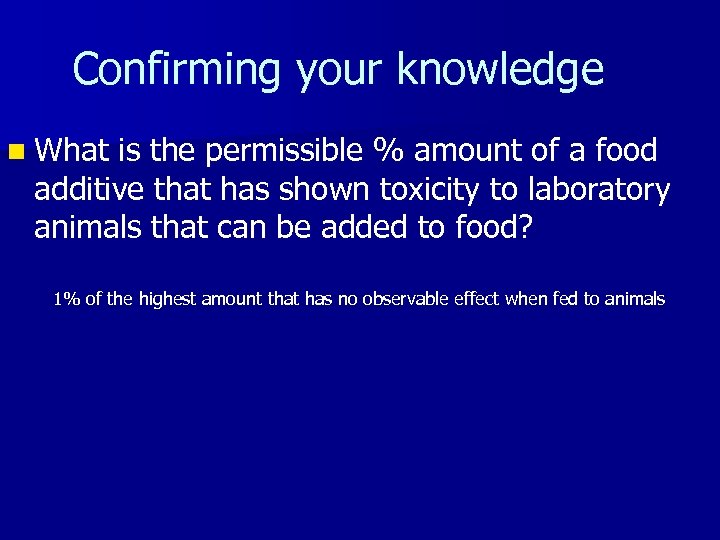 Confirming your knowledge n What is the permissible % amount of a food additive that has shown toxicity to laboratory animals that can be added to food? 1% of the highest amount that has no observable effect when fed to animals
 OUTLINE – FOOD Safety Egg & Deli Meet Recall Food Borne Illnesses Preservation of Food Additives Natural & Synthetic Toxins Pesticides use vs Organic Food Water Safety & Avoiding Microbial discomfort
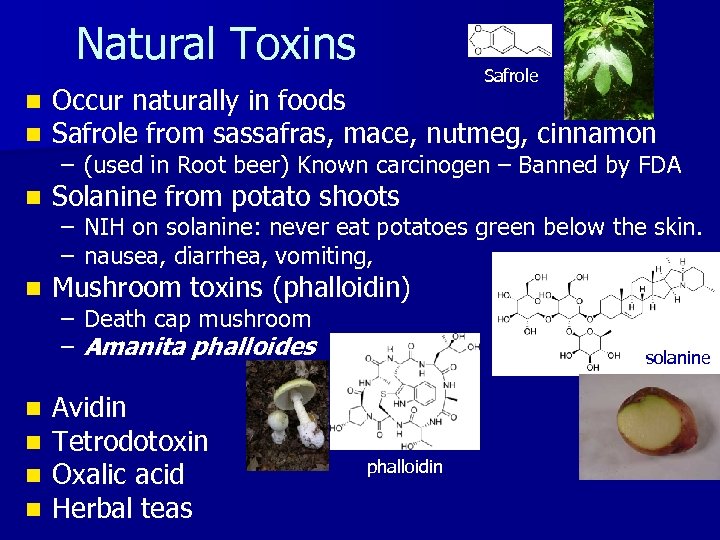 Natural Toxins Safrole n n Occur naturally in foods Safrole from sassafras, mace, nutmeg, cinnamon n Solanine from potato shoots n Mushroom toxins (phalloidin) n n – (used in Root beer) Known carcinogen – Banned by FDA – NIH on solanine: never eat potatoes green below the skin. – nausea, diarrhea, vomiting, – Death cap mushroom – Amanita phalloides Avidin Tetrodotoxin Oxalic acid Herbal teas solanine phalloidin
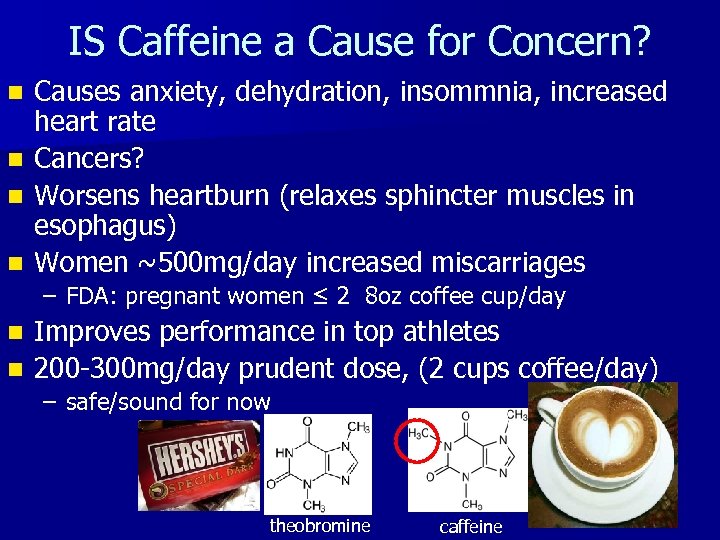 IS Caffeine a Cause for Concern? n n Causes anxiety, dehydration, insommnia, increased heart rate Cancers? Worsens heartburn (relaxes sphincter muscles in esophagus) Women ~500 mg/day increased miscarriages – FDA: pregnant women ≤ 2 8 oz coffee cup/day Improves performance in top athletes n 200 -300 mg/day prudent dose, (2 cups coffee/day) n – safe/sound for now theobromine caffeine
 STOPPED
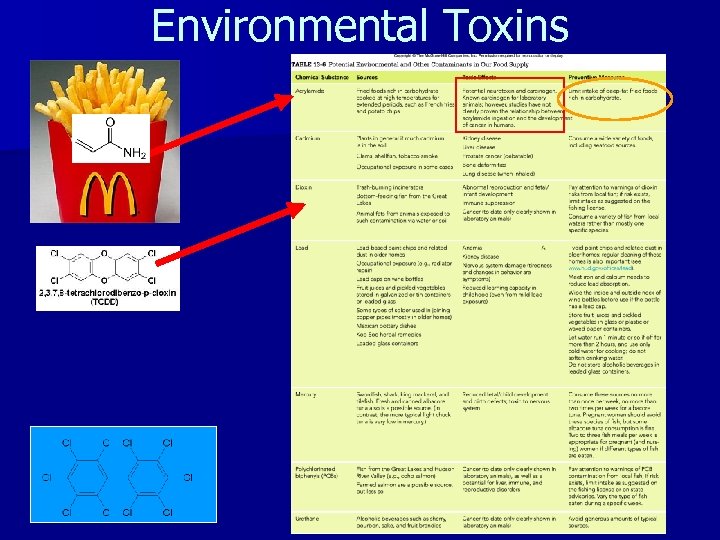 Environmental Toxins
 OUTLINE – FOOD Safety Egg & Deli Meet Recall Food Borne Illnesses Preservation of Food Additives Natural & Synthetic Toxins Pesticides use vs Organic Food Water Safety & Avoiding Microbial discomfort
 Pesticides vs Organic n Most health authorities believe benefits Outweigh risks (pesticide usage) n Most toxicity due to chronic vs acute cases – extremely small exposure levels avg. human n Growing evidence (contamination, destruction of wildlife habitats) – N. Americans should reduce pesticide use – (USDA + farmers working towards)
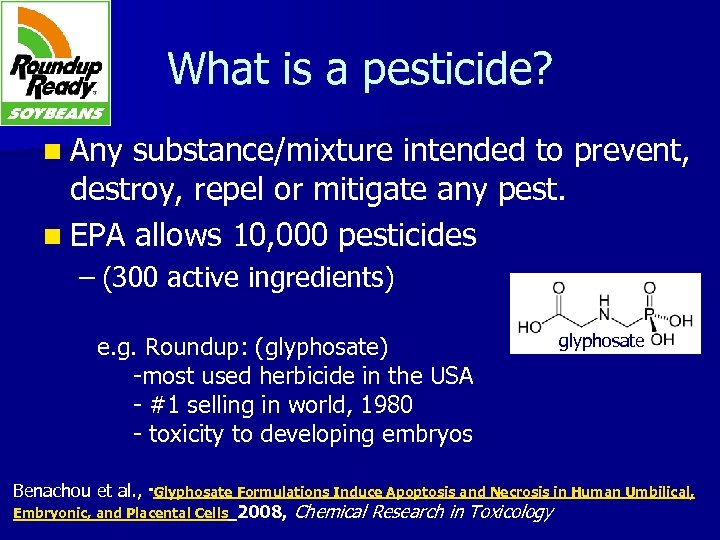 What is a pesticide? n Any substance/mixture intended to prevent, destroy, repel or mitigate any pest. n EPA allows 10, 000 pesticides – (300 active ingredients) e. g. Roundup: (glyphosate) -most used herbicide in the USA - #1 selling in world, 1980 - toxicity to developing embryos glyphosate Benachou et al. , "Glyphosate Formulations Induce Apoptosis and Necrosis in Human Umbilical, Embryonic, and Placental Cells 2008, Chemical Research in Toxicology
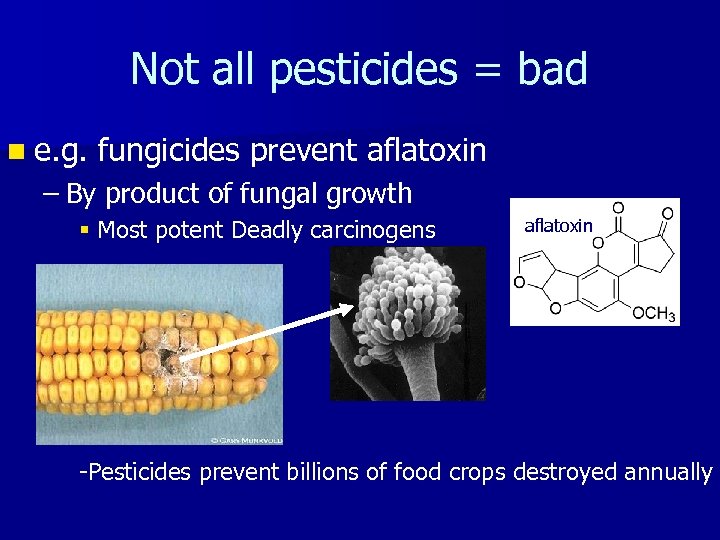 Not all pesticides = bad n e. g. fungicides prevent aflatoxin – By product of fungal growth § Most potent Deadly carcinogens aflatoxin -Pesticides prevent billions of food crops destroyed annually
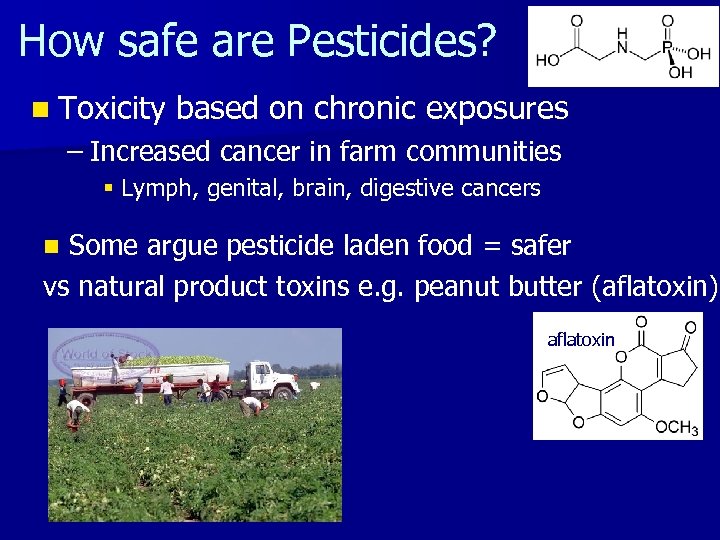 How safe are Pesticides? n Toxicity based on chronic exposures – Increased cancer in farm communities § Lymph, genital, brain, digestive cancers n Some argue pesticide laden food = safer vs natural product toxins e. g. peanut butter (aflatoxin) aflatoxin
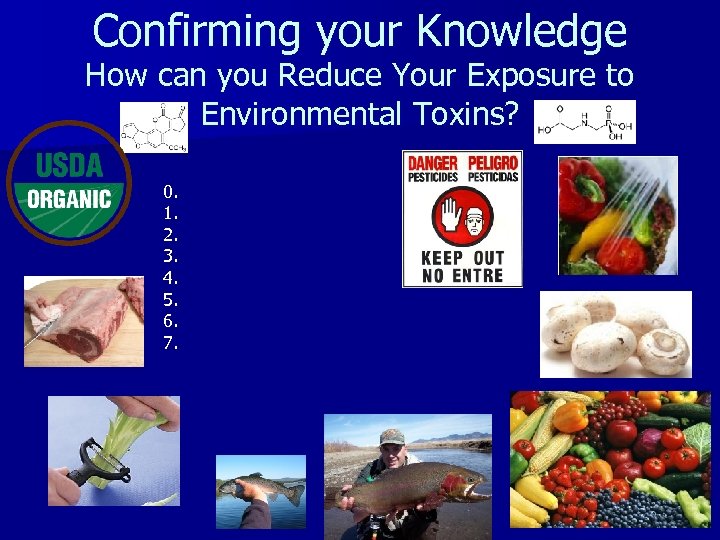 Confirming your Knowledge How can you Reduce Your Exposure to Environmental Toxins? 0. 1. 2. 3. 4. 5. 6. 7.
 OUTLINE – FOOD Safety Egg & Deli Meet Recall Food Borne Illnesses Preservation of Food Additives Natural & Synthetic Toxins Pesticides use vs Organic Food Water Safety & Avoiding Microbial discomfort
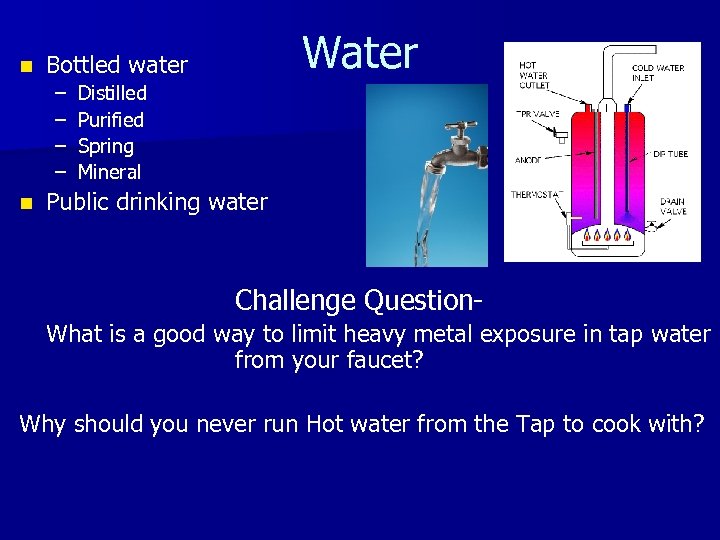 n – – n Water Bottled water Distilled Purified Spring Mineral Public drinking water Challenge Question. What is a good way to limit heavy metal exposure in tap water from your faucet? Why should you never run Hot water from the Tap to cook with?
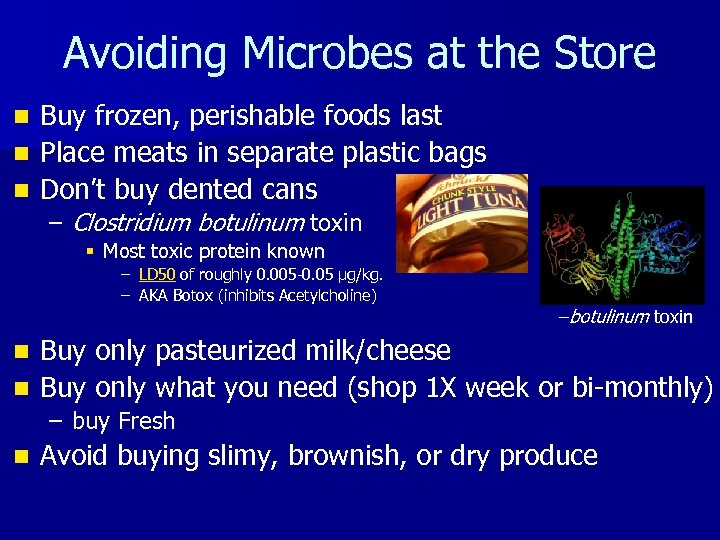 Avoiding Microbes at the Store Buy frozen, perishable foods last n Place meats in separate plastic bags n Don’t buy dented cans n – Clostridium botulinum toxin § Most toxic protein known – LD 50 of roughly 0. 005 -0. 05 µg/kg. – AKA Botox (inhibits Acetylcholine) –botulinum toxin Buy only pasteurized milk/cheese n Buy only what you need (shop 1 X week or bi-monthly) n – buy Fresh n Avoid buying slimy, brownish, or dry produce
 Avoiding Microbes At Home n n n n Wash hands thoroughly Keep counters, cutting boards, equipment clean and sanitized (dishwasher, or bleach it weekly) Prepare raw meat separately Thaw foods in refrigerator/cold running water/ microwave Avoid coughing and sneezing over food Wash fruits/vegetables thoroughly Remove mold or discard food Use refrigerated meat in 1 -2 days; – frozen in 3 -4 months
 Avoiding Microbes When Cooking n Thoroughly cook meat, fish, poultry, eggs n Check for doneness with thermometer n Cook sprouts until steaming n Cook stuffing separately n Eat food right away n Store leftovers within 1 -2 hours (bacteria growth) n Serve cooked meat on clean plates n Avoid partially cooking food
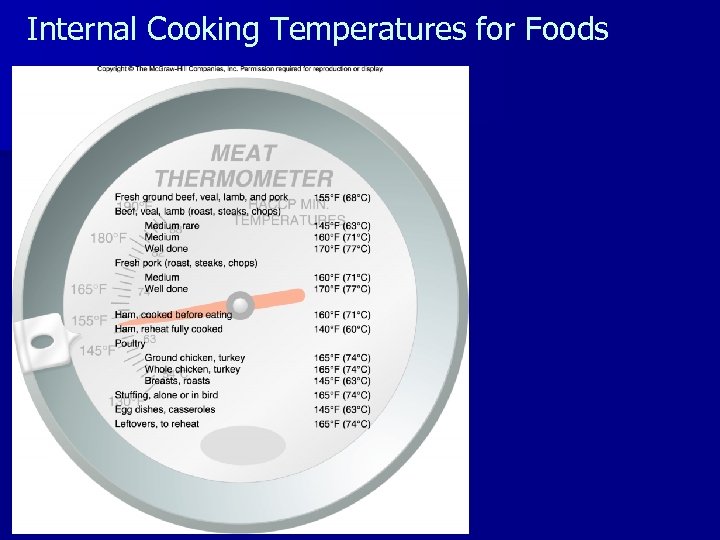 Internal Cooking Temperatures for Foods
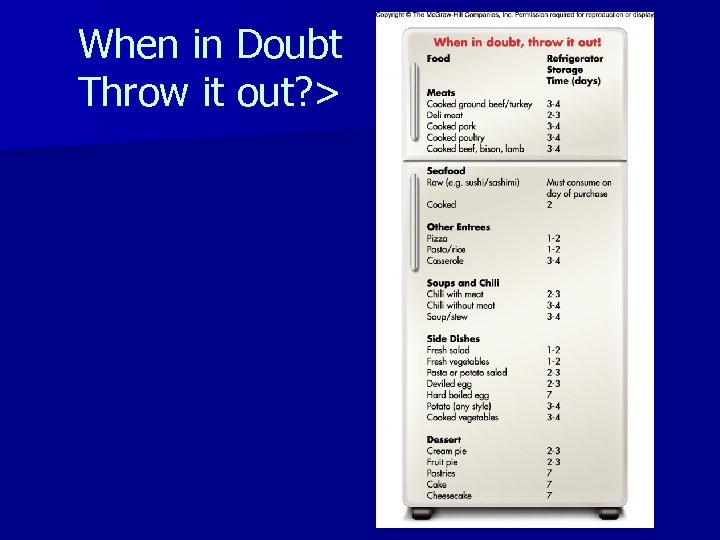 When in Doubt Throw it out? >
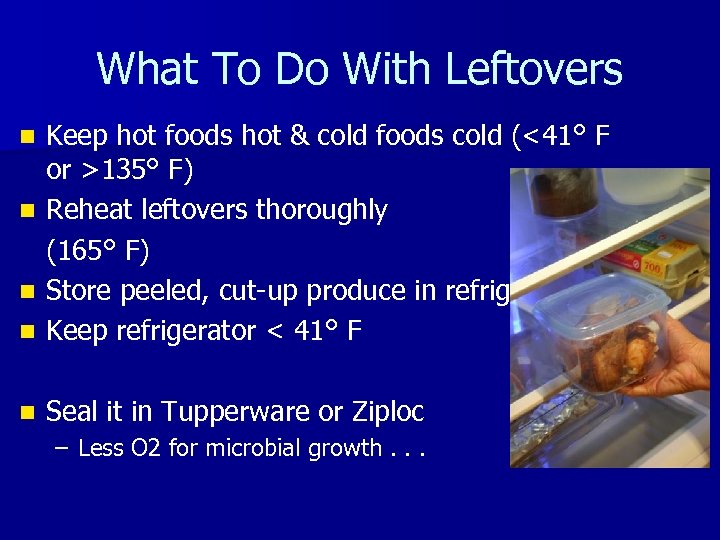 What To Do With Leftovers n Keep hot foods hot & cold foods cold (<41° F or >135° F) Reheat leftovers thoroughly (165° F) Store peeled, cut-up produce in refrigerator Keep refrigerator < 41° F n Seal it in Tupperware or Ziploc n n n – Less O 2 for microbial growth. . .
 Assignments Diet Analysis 2 due Thursday (100 pts. ) n Evaluations Friday n n Practice Final Online w/ answers n Final Exam this Friday (Chapters 6, 8, 9, 10, 13, 16) – Challenge & Confirming Your Knowledge Qs (the above) – Old Final - know all Qs and answers