Скачать презентацию Chapter 13 Collections Collections A collection
919bbd5a3a49f6d0fab326ec70d237f4.ppt
- Количество слайдов: 29
 Chapter 13 Collections
 Collections • A collection is an object that helps us organize and manage other objects – – – – the concept of a collection separating the interface from the implementation dynamic data structures linked lists queues and stacks trees and graphs generics
 Outline Collections and Data Structures Dynamic Representations Linear Structures (Queues & Stacks) Non-Linear Structures (Trees & Graphs) The Java Collections API
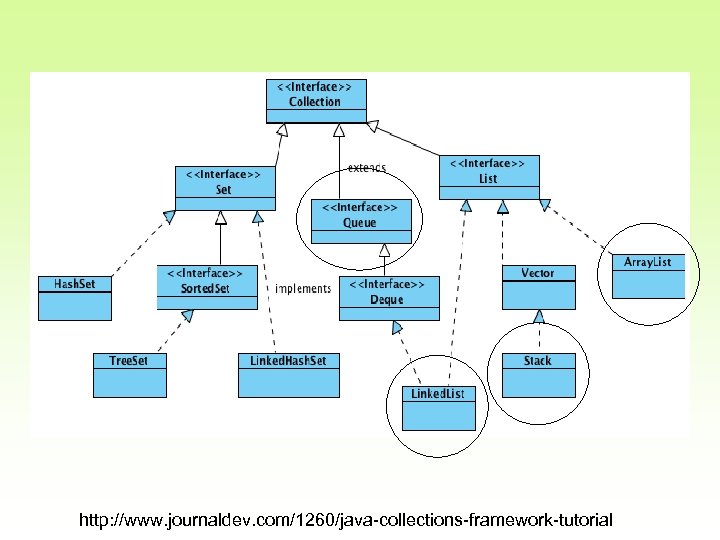 http: //www. journaldev. com/1260/java-collections-framework-tutorial
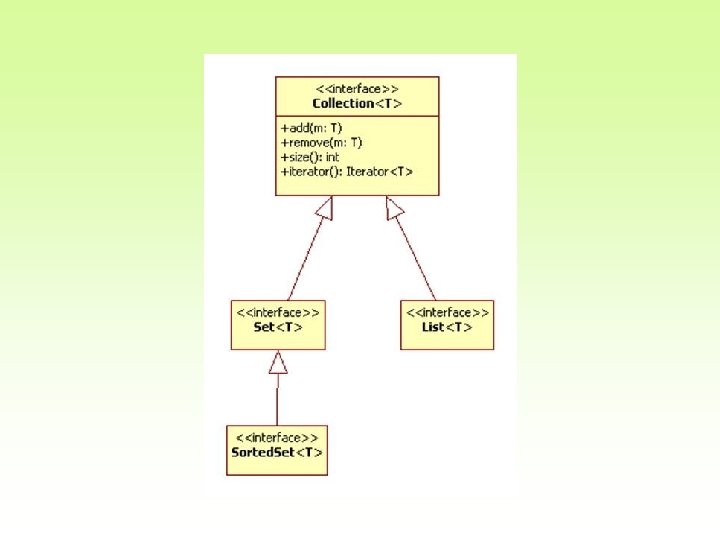
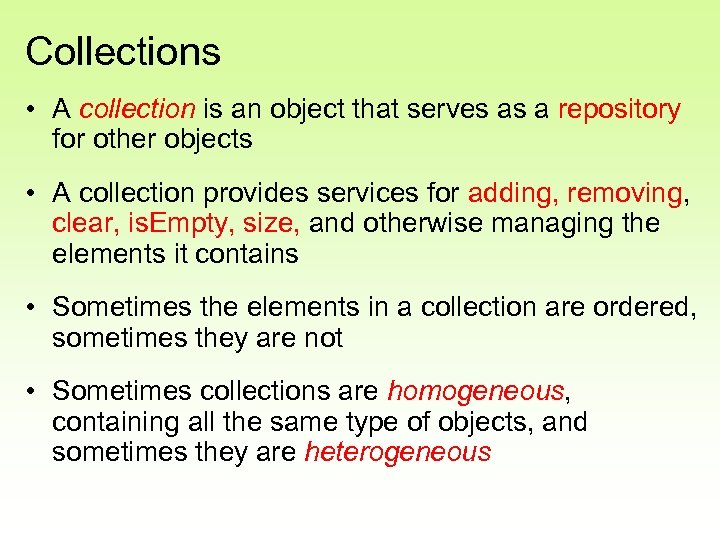 Collections • A collection is an object that serves as a repository for other objects • A collection provides services for adding, removing, clear, is. Empty, size, and otherwise managing the elements it contains • Sometimes the elements in a collection are ordered, sometimes they are not • Sometimes collections are homogeneous, containing all the same type of objects, and sometimes they are heterogeneous
 Abstraction • Collections can be implemented in many different ways • Collections should be abstractions • That is, they should hide unneeded details • We want to separate the interface of the structure from its underlying implementation • This helps manage complexity and makes it possible to change the implementation without changing the interface
 Abstract Data Types • An abstract data type (ADT) is an organized collection of information and a set of operations used to manage that information • The set of operations defines the interface to the ADT • In one sense, as long as the ADT fulfills the promises of the interface, it doesn't matter how the ADT is implemented • Objects are a good programming mechanism to create ADTs because their internal details are encapsulated
 Outline Collections and Data Structures Dynamic Representations Linear Structures (Queues & Stacks) Non-Linear Structures (Trees & Graphs) The Java Collections API
 Dynamic Structures • A static data structure has a fixed size • This meaning is different from the meaning of the static modifier • Arrays are static; once you define the number of elements it can hold, the size doesn’t change • A dynamic data structure grows and shrinks at execution time as required by its contents • A dynamic data structure is implemented using object references as links int[] an. Array= new int[10];
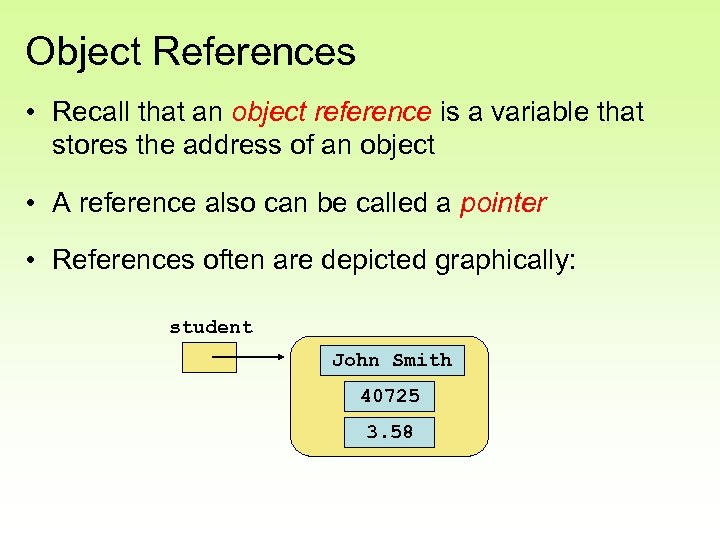 Object References • Recall that an object reference is a variable that stores the address of an object • A reference also can be called a pointer • References often are depicted graphically: student John Smith 40725 3. 58
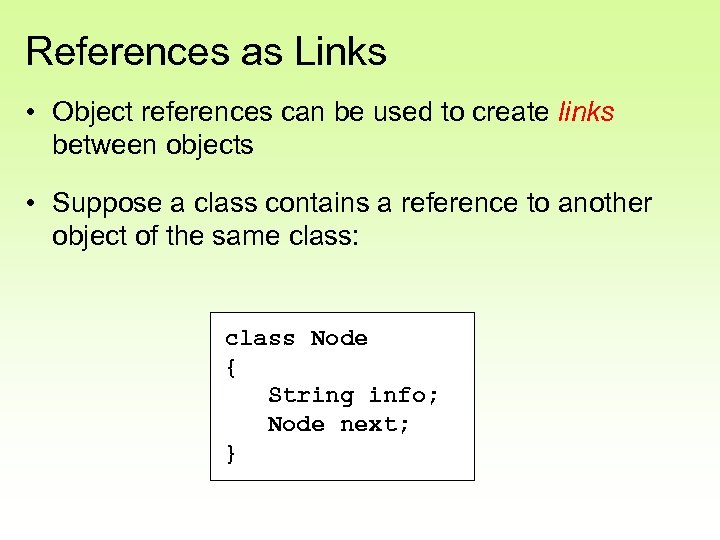 References as Links • Object references can be used to create links between objects • Suppose a class contains a reference to another object of the same class: class Node { String info; Node next; }
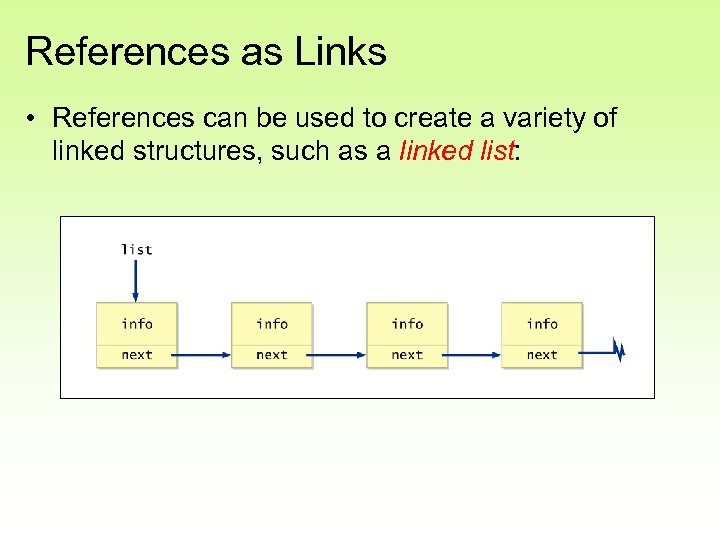 References as Links • References can be used to create a variety of linked structures, such as a linked list:
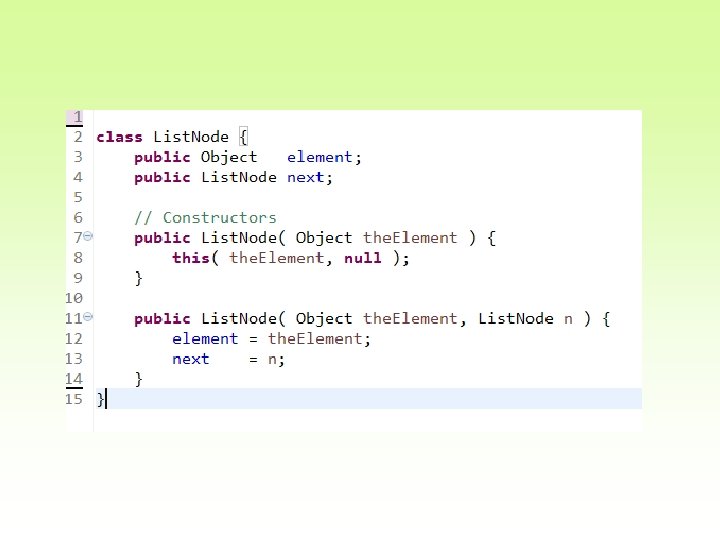
 Intermediate Nodes • The objects being stored should not be concerned with the details of the data structure in which they may be stored • For example, the Student class should not have to store a link to the next Student object in the list • Instead, use a separate node class with two parts: – a reference to an independent object – a link to the next node in the list • The internal representation becomes a linked list of nodes
 Magazine Collection • Let’s explore an example of a collection of Magazine objects, managed by the Magazine. List class, which has a private inner class called Magazine. Node • See Magazine. Rack. java • See Magazine. List. java • See Magazine. java
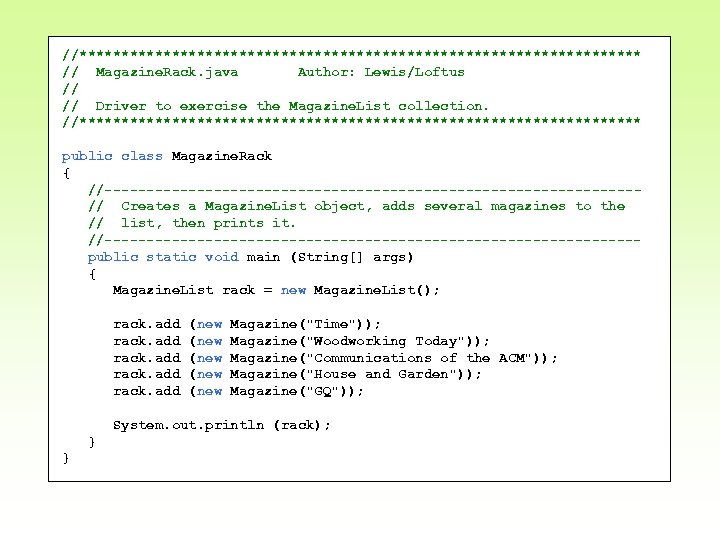 //********************************** // Magazine. Rack. java Author: Lewis/Loftus // // Driver to exercise the Magazine. List collection. //********************************** public class Magazine. Rack { //--------------------------------// Creates a Magazine. List object, adds several magazines to the // list, then prints it. //--------------------------------public static void main (String[] args) { Magazine. List rack = new Magazine. List(); rack. add (new (new Magazine("Time")); Magazine("Woodworking Today")); Magazine("Communications of the ACM")); Magazine("House and Garden")); Magazine("GQ")); System. out. println (rack); } }
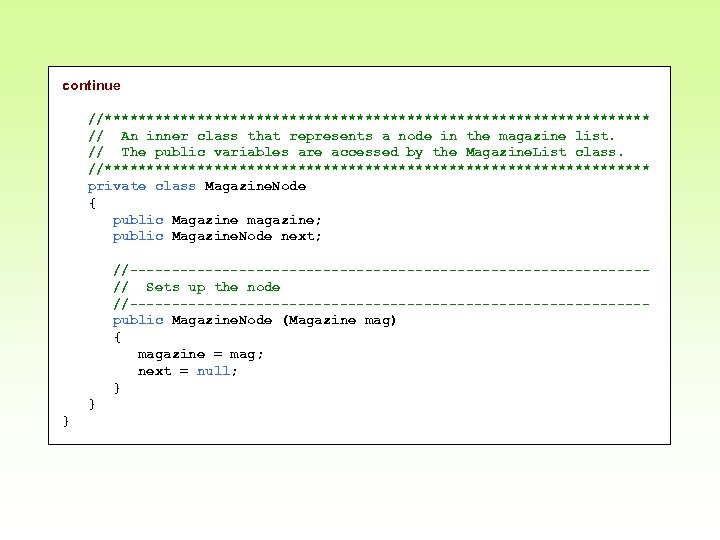 continue //********************************* // An inner class that represents a node in the magazine list. // The public variables are accessed by the Magazine. List class. //********************************* private class Magazine. Node { public Magazine magazine; public Magazine. Node next; //-------------------------------// Sets up the node //-------------------------------public Magazine. Node (Magazine mag) { magazine = mag; next = null; } } }
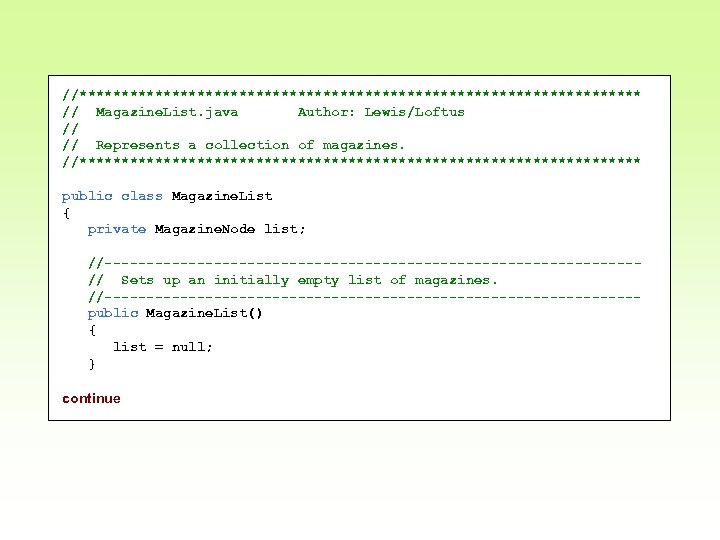 //********************************** // Magazine. List. java Author: Lewis/Loftus // // Represents a collection of magazines. //********************************** public class Magazine. List { private Magazine. Node list; //--------------------------------// Sets up an initially empty list of magazines. //--------------------------------public Magazine. List() { list = null; } continue
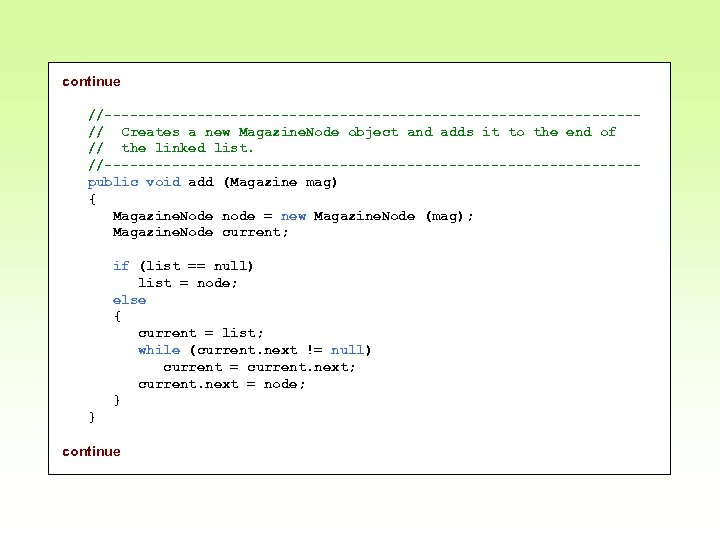 continue //--------------------------------// Creates a new Magazine. Node object and adds it to the end of // the linked list. //--------------------------------public void add (Magazine mag) { Magazine. Node node = new Magazine. Node (mag); Magazine. Node current; if (list == null) list = node; else { current = list; while (current. next != null) current = current. next; current. next = node; } } continue
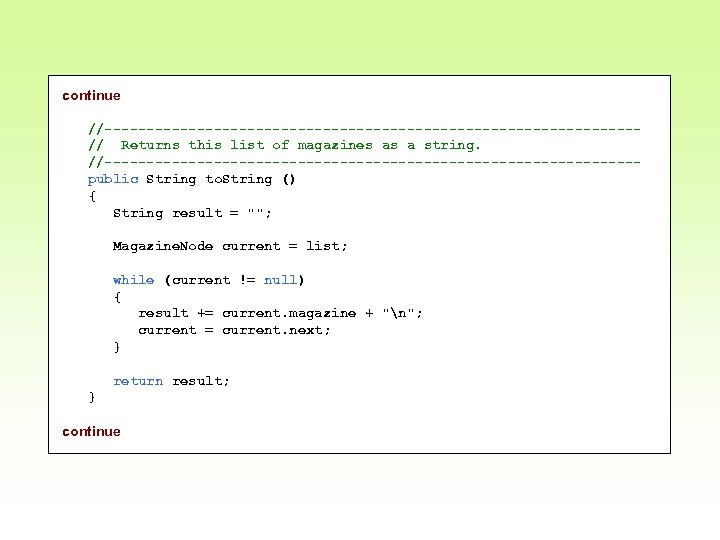 continue //--------------------------------// Returns this list of magazines as a string. //--------------------------------public String to. String () { String result = ""; Magazine. Node current = list; while (current != null) { result += current. magazine + "n"; current = current. next; } return result; } continue
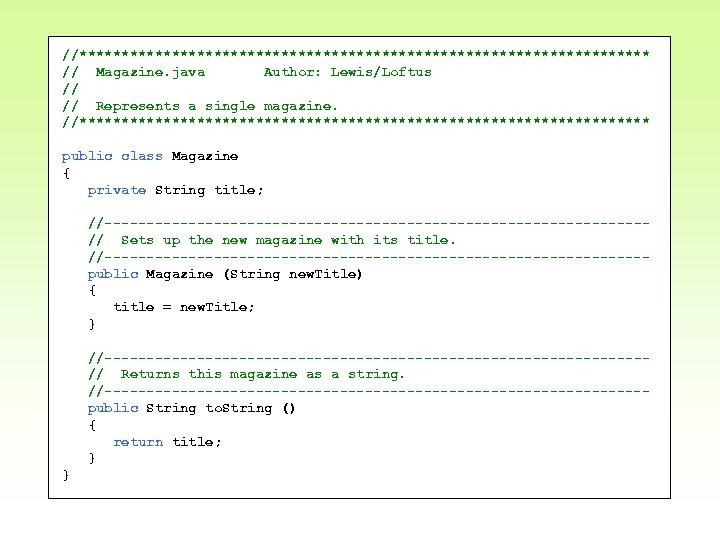 //********************************** // Magazine. java Author: Lewis/Loftus // // Represents a single magazine. //********************************** public class Magazine { private String title; //--------------------------------// Sets up the new magazine with its title. //--------------------------------public Magazine (String new. Title) { title = new. Title; } //--------------------------------// Returns this magazine as a string. //--------------------------------public String to. String () { return title; } }
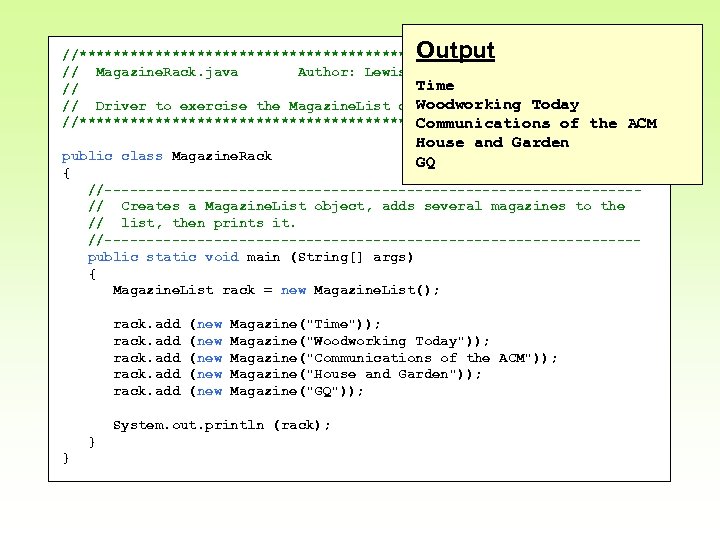 Output //********************************** // Magazine. Rack. java Author: Lewis/Loftus Time // Woodworking Today // Driver to exercise the Magazine. List collection. //********************************** Communications of the ACM House and Garden public class Magazine. Rack GQ { //--------------------------------// Creates a Magazine. List object, adds several magazines to the // list, then prints it. //--------------------------------public static void main (String[] args) { Magazine. List rack = new Magazine. List(); rack. add (new (new Magazine("Time")); Magazine("Woodworking Today")); Magazine("Communications of the ACM")); Magazine("House and Garden")); Magazine("GQ")); System. out. println (rack); } }
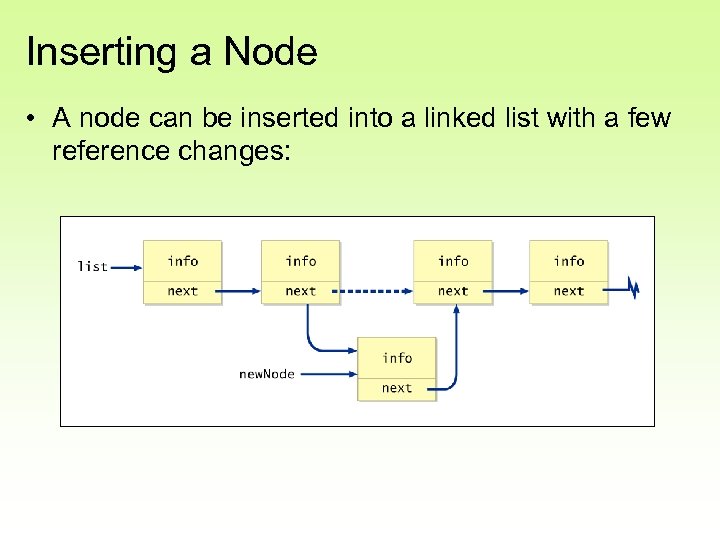 Inserting a Node • A node can be inserted into a linked list with a few reference changes:
 Quick Check Write code that inserts new. Node after the node pointed to by current.
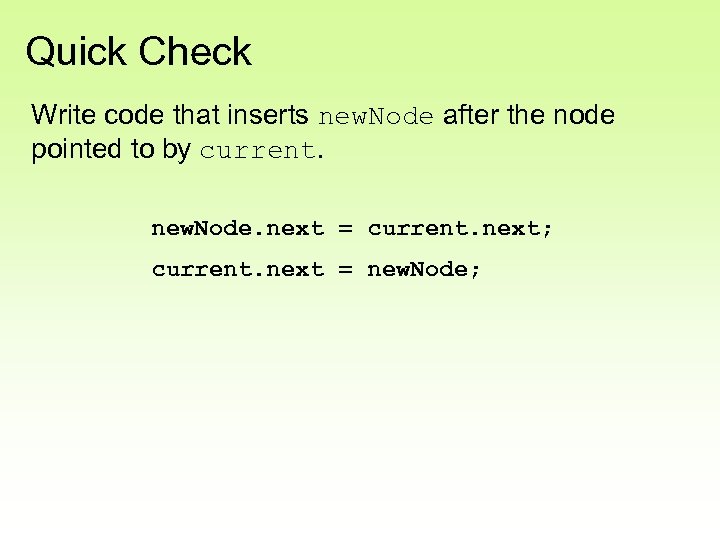 Quick Check Write code that inserts new. Node after the node pointed to by current. new. Node. next = current. next; current. next = new. Node;
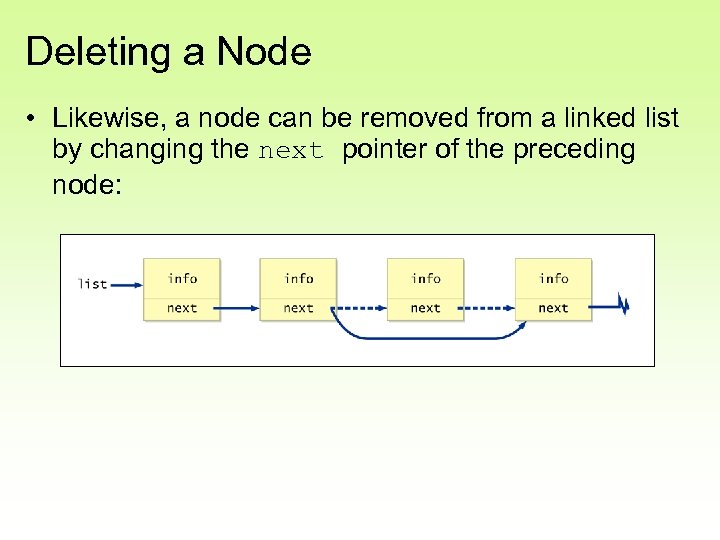 Deleting a Node • Likewise, a node can be removed from a linked list by changing the next pointer of the preceding node:
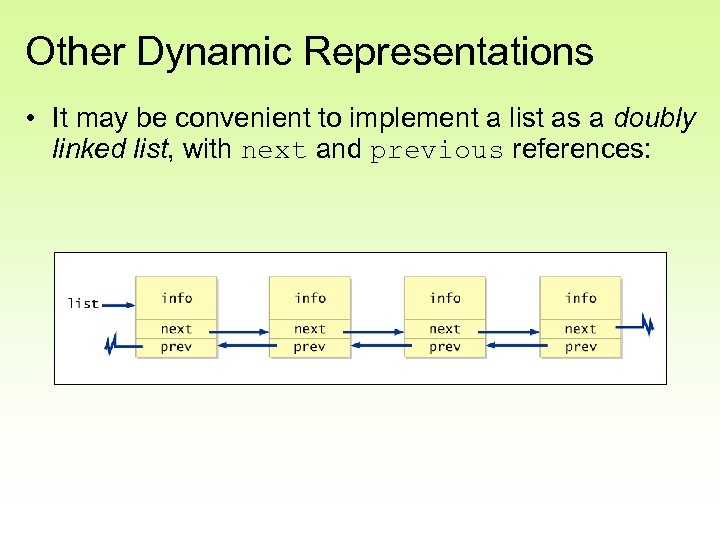 Other Dynamic Representations • It may be convenient to implement a list as a doubly linked list, with next and previous references:
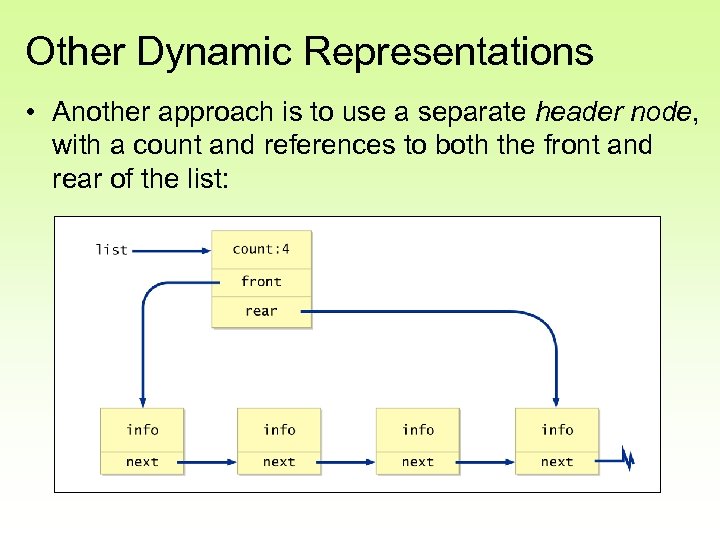 Other Dynamic Representations • Another approach is to use a separate header node, with a count and references to both the front and rear of the list: