


 Скачать презентацию Chapter 13 Atmosphere and Hydrosphere 13 -1
737ed1821e794f6c36bf2e40678e523f.ppt
- Количество слайдов: 86
 Chapter 13 Atmosphere and Hydrosphere 13 -1
 Chapter 13 Outline: Main Ideas The atmosphere Composition and structure Weather Characterizing atmospheric effects Climate Types of climate Changes in climate The hydrosphere Earth’s oceans 13 -2
 The Amazing Earth Of all the qualities about Earth that make it different from the other planets in our solar system Perhaps the most important is the 13 -3
 What Is the Atmosphere? A VERY THIN layer of gas that surrounds the planet Protects us Blocks out dangerous UV rays from the sun Provides temperature regulation for the planet Provides the gases that living organisms need for life And much more 13 -4
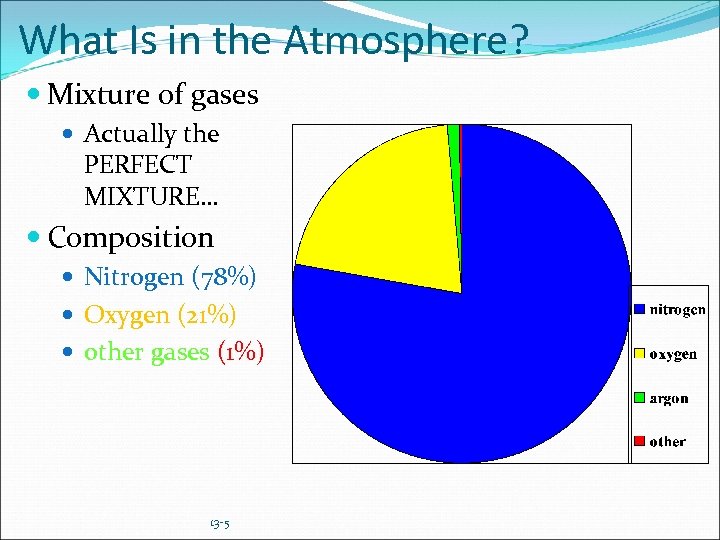 What Is in the Atmosphere? Mixture of gases Actually the PERFECT MIXTURE… Composition Nitrogen (78%) Oxygen (21%) other gases (1%) 13 -5
 Life’s Essentials Oxygen is essential to life Some of the oxygen has changed over time Formation of ozone Ozone layer is important It is the Ozone layer that filters out harmful ultraviolet radiation 13 -6
 Atmosphere Structure The atmosphere is divided into four main layers Depending on how temperature changes with height. Most “weather” occurs in the first layer. It is thickest (most dense) near the surface and thins out with height until it eventually merges with space. 13 -7
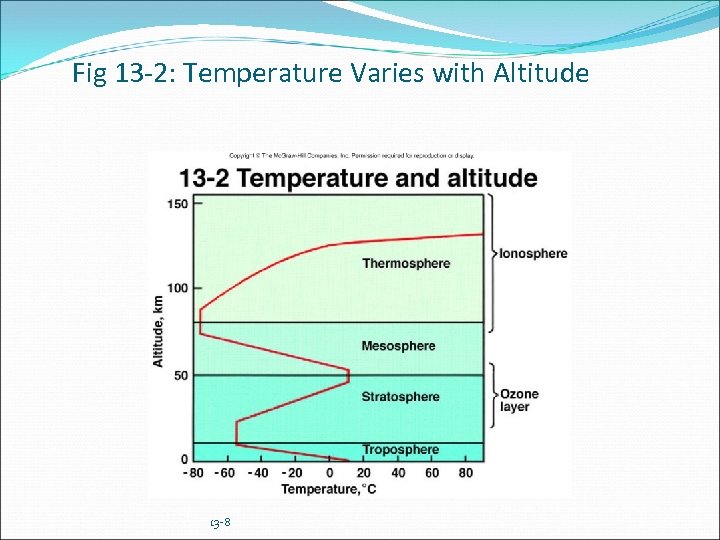 Fig 13 -2: Temperature Varies with Altitude 13 -8
 Atmosphere Layers 1) The troposphere first layer above the surface contains half of the Earth’s atmosphere 2) The stratosphere jets fly in the stratosphere because it is very stable ozone layer absorbs harmful rays from the Sun here 3) The mesosphere meteors burn up in the mesosphere 4) The thermosphere layer with auroras where the space shuttle orbits 13 -9
 The Troposphere The troposphere is the lowest region of the Earth’s atmosphere Masses of air are very well mixed together Temperature decreases with altitude Air is heated from the ground up Surface of the Earth absorbs energy and heats up faster than the air Heat is mixed through the troposphere because on average the atmosphere in this layer is slightly unstable 13 -10
 The Stratosphere Layer above the troposphere Temperature increases with altitude (as opposed to the troposphere, where it gets colder with altitude) Increasing temperature in the stratosphere Caused by the presence of a layer of ozone near an altitude of 25 kilometers Ozone molecules absorb high-energy UV rays from the sun, which warm the atmosphere at that level 13 -11
 Stratosphere Details The “terrestrial stratosphere” Region between the tropopause: the end of the troposphere, and the level at which the maximum warming due to the presence of ozone takes place (at an altitude of about 50 kilometers. ) In the stratosphere: THE OZONE LAYER 13 -12
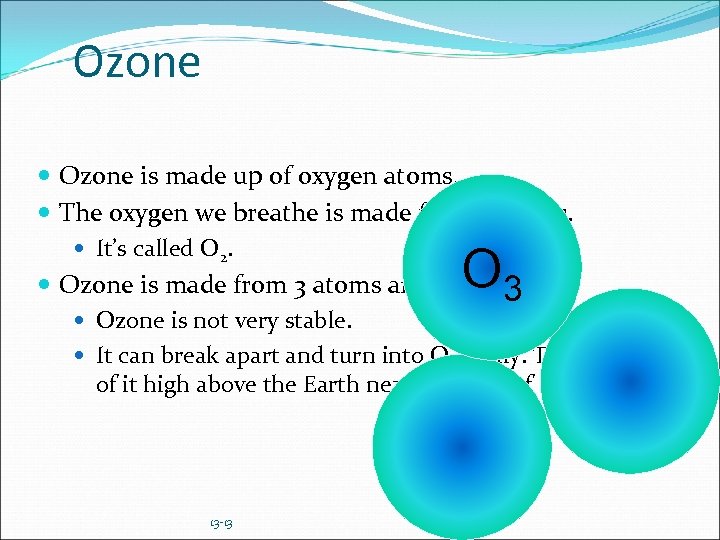 Ozone is made up of oxygen atoms. The oxygen we breathe is made from 2 atoms. It’s called O 2. Ozone is made from 3 atoms and is called O 3. 3 2 Ozone is not very stable. It can break apart and turn into O 2 easily. There is lots of it high above the Earth near the edge of outer space. O 13 -13
 Where Is the “Ozone Layer? ” There is not an actual “layer” Rather, the ozone molecules in the stratosphere become most dense at around 20 km above the surface of the earth Ozone is also present in the lower atmosphere This phenomenon is commonly called SMOG 13 -14
 Variations in Density of the Ozone Layer Ozone molecule density are constantly formed and destroyed in the stratosphere The total amount, however, remains relatively stable. Variations in the amount of ozone Can be caused by “sunspots” solar activity → variations in the intensity of some types of radiation stemming from the sun. Variations with the seasons And, the ozone even exhibits variations with LATITUDE 13 -15
 Ozone Variation Records of the variations The variation of OZONE by NATURAL processes is well-documented Records spanning several decades that detail normal ozone levels during these natural cycles. Each natural reduction in ozone levels has been followed by a recovery. Recently, some scientific studies have shown evidence that the ozone shield is being depleted well beyond changes due to natural processes. 13 -16
 Harmful Ozone Chemicals Chlorofluorocarbons (CFCs) CFCs were thought of as miracle substances when they were discovered Stable, nonflammable, low in toxicity, and inexpensive to produce Used as refrigerants, solvents, foam blowing agents CFCs have atmospheric lifetimes long enough to allow them to be transported by winds into the stratosphere. They release chlorine or bromine when they finally break down 13 -17
 CFCs in the Ozone Layer The CFCs are so stable that only exposure to strong UV radiation breaks them down. When that happens, the CFC molecule releases atomic chlorine. A SINGLE chlorine atom can destroy over 100, 000 ozone molecules. The net effect is that ozone is destroyed faster than it is naturally created. 13 -18
 The Antarctic “Hole” Has been observed during the Antarctic Spring since the early 1980 s NOTE: it is not a LITERAL “HOLE” The ozone “hole” is actually a large area of the stratosphere with extremely low amounts of ozone. Ozone levels fall by over 60% during the worst years. 13 -19
 The Consequences of Reduced Ozone Less protection from ultraviolet light Higher skin cancer rates Higher cataract rates Increased crop damage Danger to all living organisms 13 -20
 The Mesosphere Layer above the Stratosphere Air masses are relatively mixed together The temperature decreases with altitude Temperatures reach the lowest average value of around – 75°C in the mesosphere. Meteors usually burn up in the mesosphere during entry to Earth’s atmosphere. 13 -21
 Extent of Mesosphere The mesosphere extends from the top of the stratosphere (the stratopause – located at about 50 kilometers) to an altitude of about 80 kilometers. Air density in the mesosphere is approximately 1000 times smaller than density at sea level 13 -22
 The Thermosphere The thermosphere is the layer of the atmosphere which is first exposed to the Sun’s radiation In this layer, the air density is so thin that a small increase in energy can cause a large increase in temperature Temperature in thermosphere is very dependent on solar activity 13 -23
 Temperature in the Thermosphere When the Sun is active, temperatures can reach up to 1, 500°C or higher! This high number is deceiving…recall that temperature is average kinetic energy PER PARTICLE. Since density of air molecules is so small, an object in thermosphere (if shaded from direct sunlight) would not be warmed by these few high energy molecules 13 -24
 In the Thermosphere The ionosphere is located in thermosphere Technically, the ionosphere is not another atmospheric layer The ionosphere represents less than 0. 1% of the total mass of the Earth’s atmosphere. Even so, it is extremely important! The upper atmosphere is ionized by solar radiation. Under normal conditions free electrons and ions tend to recombine and a balance is established between electron and ion production and loss. 13 -25
 The Important Ionosphere Different regions of the ionosphere make long distance radio communication possible Reflecting the radio waves back to Earth The ionosphere is home to auroras and the mega-ampere currents that heat the atmosphere at high latitudes during geomagnetically active times. During sun storms, depletions and enhancements of ionization may occur Aeronomy is a term of recent origin which is applied to study of the processes, both physical and chemical, of the ionosphere. 13 -26
 An important gas in the atmosphere is water vapor The water in the atmosphere is a result of evaporation of water from the Earth’s surface The largest source: the oceans which cover approximately 70% of the earth’s surface Humidity is the term for the amount of water vapor contained by the air Atmospheric Moisture 13 -27
 Saturation When air contains the maximum amount of moisture, it is said to be SATURATED Humid (or saturated) air is very uncomfortable, since the rate of evaporation is slowed by the high levels of water already in the air This does not allow the bodies natural cooling process, perspiration, to work efficiently 13 -28
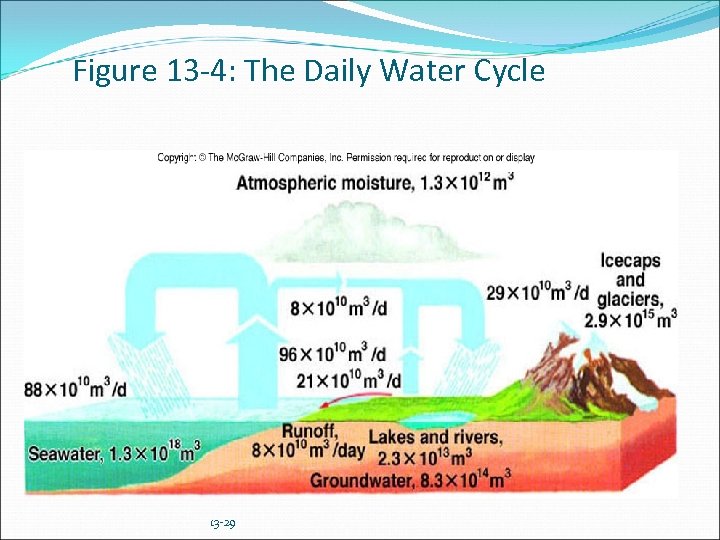 Figure 13 -4: The Daily Water Cycle 13 -29
 Atmospheric Balance Precipitation is the term for any form of water that falls to the Earth’s surface. Rain, snow, sleet, and freezing rain Helps maintain the atmospheric balance Evaporation puts moisture IN the atmosphere, while various forms of precipitation take moisture OUT of the atmosphere 13 -30
 A Continuous Cycle Water vapor in the atmosphere undergoes the process of CONDENSATION A PHASE CHANGE FROM GAS TO LIQUID to form liquid water droplets The droplets coalesce to form larger droplets, fall to earth Water on earth is taken back up into the atmosphere through evaporation processes 13 -31
 Humidity – Different Measurements ABSOLUTE HUMIDITY Usually expressed as grams of water vapor per cubic meter volume of air) is a measure of the actual amount of water vapor (moisture) in the air, regardless of the air's temperature. For example A maximum of about 30 grams of water vapor can exist in a cubic meter volume of air with a temperature in the middle 80 s. 13 -32
 Humidity – Different Measurements (more common) RELATIVE HUMIDITY (RH) Expressed as a percent RH is a measure of water vapor to the temperature of the air. It is a measure of the actual amount of water vapor in the air compared with the total amount of vapor possible at a particular temperature. 13 -33
 Relative Humidity Warm air can possess more water vapor (moisture) than cold air So, with the same amount of absolute humidity, air will have a HIGHER relative humidity if the air is cooler, and a LOWER relative humidity if the air is warmer. What we “feel” outside is the actual amount of moisture (absolute humidity) in the air. 13 -34
 Another Way to Characterize Humidity DEW POINT TEMPERATURE Used to evaluate atmospheric moisture, especially in the spring and summer The dew point temperature is the temperature to which the air must be cooled in order for that air to be saturated. Dew point temperatures range from 50 to 70 50’s: usually comfortable to most people 60’s: are somewhat uncomfortable, most people will say it “feels humid” 70’s are usually quite uncomfortable, most will complain that it feels very humid 13 -35
 Comparable Quantities Dew point gives a quick idea of moisture content in the air Relative humidity does not since the humidity is relative to the air temperature. Relative humidity cannot be determined from knowing the dew point alone, the actual air temperature must also be known. If the air is totally saturated at a particular level (e. g. , the surface), then the dew point temperature is the same as the actual air temperature, and the relative humidity is 100 percent. 13 -36
 Dew Point, Relative Humidity and Precipitation If the relative humidity is 100 percent (i. e. , dew point temperature and actual air temperature are the same), this does NOT necessarily mean that precipitation will occur. It simply means that the maximum amount of moisture is in the air at the particular temperature The result FOG (at the surface) CLOUDS (aloft) Precipitation occurs only under specific conditions 13 -37
 Clouds form when the temperature of the air drops below its dew point (the saturation point) Water droplets form Clouds form in the atmosphere when the air cools as it rises upward from the surface of the earth Eventually the temperature of the rising air can drop to the saturation point for the level of moisture in the air 13 -38
 Cooling Rate As warm, moist air travels upward, the pressure of the air decreases causing it to expand The expansion of the gas causes cooling The temperature drops by just over 0. 6 C for every 100 m increase in elevation 13 -39
 Cloud Formation 1. 2. 3. Three major processes contribute to cloud formation Warm moist air traveling across the surface is directed upward by a large geographic structure, such as a mountain Convection currents – air masses are heated by the earth’s surface; the warm air rises A warm moist air mast is thrust upward by a more dense cold air mass 13 -40
 Precipitation The release of moisture from a cloud formation happens when the cloud is cooled suddenly Causes small water droplets to join forming larger water droplets Precipitation is the general term for all forms of atmospheric moisture Rain, sleet, snow, hail Silver iodide has been used with limited success in an attempt to cause a cloud to precipitate 13 -41
 The Study of the Weather The science of weather is called METEOROLOGY The term “weather” refers to the state of temperature, humidity, pressure, cloud formation, or precipitation at any given time The term “climate” describes the summary of weather conditions for a specific region over a fairly long time period. 13 -42
 Earth’s Temperature Regulation The earth, like all objects, is constantly radiating energy Also, the earth, like all objects is continuously absorbing radiation The atmosphere is responsible for maintaining the balance in these processes so that the average temperature of the earth is nearly constant The atmosphere traps much of Earth’s radiated heat so that our planet stays “warm” 13 -43
 Greenhouse Effect This is the name given to the insulating effect of the Earth’s atmosphere The atmosphere traps warmth “inside, ” much like the walls of a green house 13 -44
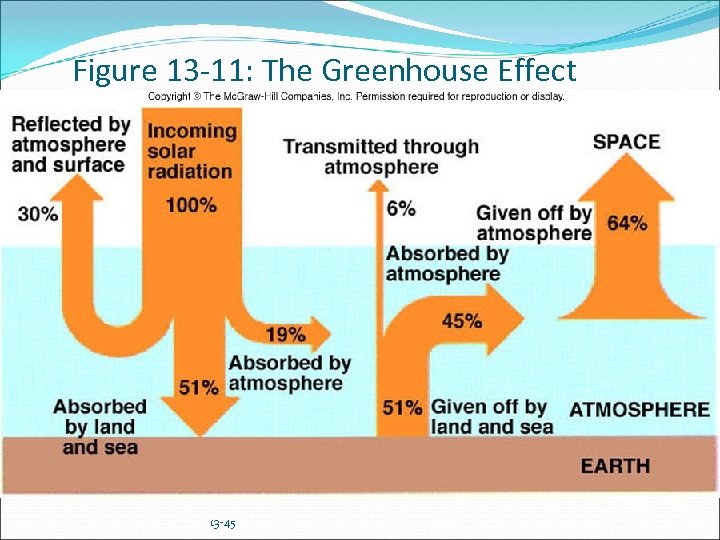 Figure 13 -11: The Greenhouse Effect 13 -45
 The Energy that Fuels the Weather The source of energy that drives all atmospheric process is solar radiation Light from the sun! Various parts of the earth are warmed by the sun more efficiently than others Equatorial regions are subject to more direct rays of sunlight than polar regions 13 -46
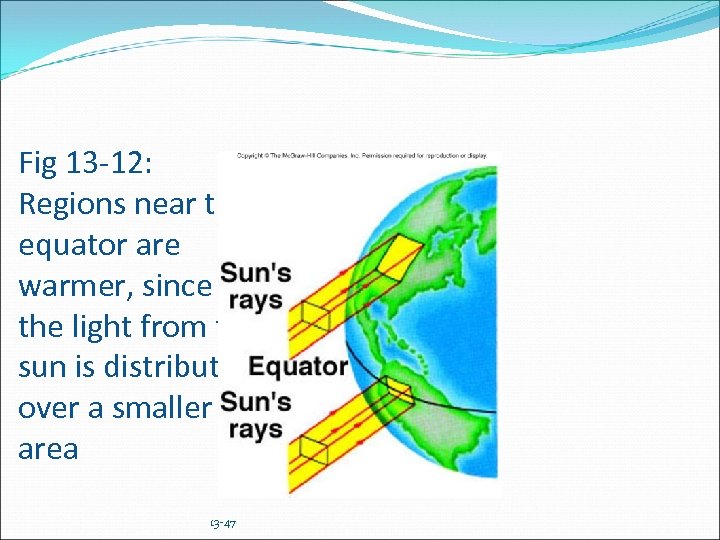 Fig 13 -12: Regions near the equator are warmer, since the light from the sun is distributed over a smaller area 13 -47
 The Seasons Most regions on Earth experience four major seasonal weather patterns These seasons are caused by the tilt of the earth’s axis This is contrary to a COMMON MISCONCEPTION that the seasons are caused by the elliptical nature of the earth’s orbit around the sun Sometimes the earth is closer to sun…. But that is not responsible for seasonal changes! 13 -48
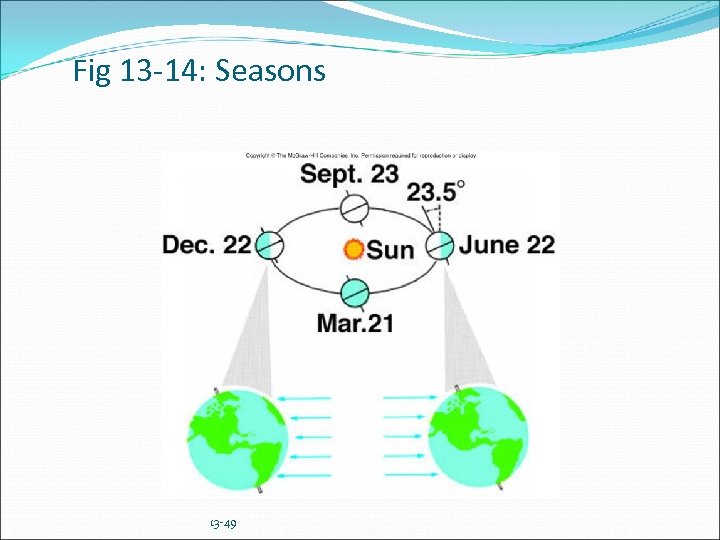 Fig 13 -14: Seasons 13 -49
 Winds Wind is really just moving air CONVECTION CURRENT is the term given to the stirring of the air, driven by differences in temperature from one place to another Warm air rises, and cool air comes in to take its place The upward rising warm air is called the CONVECTION CURRENT 13 -50
 But Remember, TEMPERATURE is related to PRESSURE Different heating patterns mean different pressures in the atmosphere. This is a cause for wind Air moves from regions of high pressure to regions of low pressure The greater the pressure difference, the faster the air mass moves from one place to another 13 -51
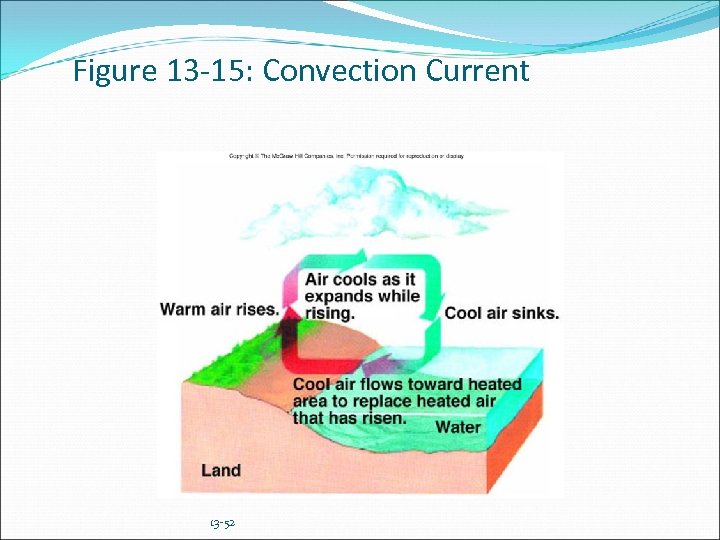 Figure 13 -15: Convection Current 13 -52
 The Earth’s Spin and the Wind The Earth spins This causes winds try to move to the right (east) in the northern hemisphere And to the left (west) in the southern hemisphere. This is called the Coriolis Effect responsible for many PATTERNS observed in the way the winds blow around the planet. 13 -53
 Wind Patterns Only motion of air along the equator is unaffected by the Coriolis effect One pattern is called “prevailing winds” A series of belts around the globe that produce steadily blowing winds near the surface Other wind patterns “Trade winds” Steady winds that flow toward the equator “Jet streams” Narrow zones of very strong winds in upper troposphere. Wind Patterns 13 -54
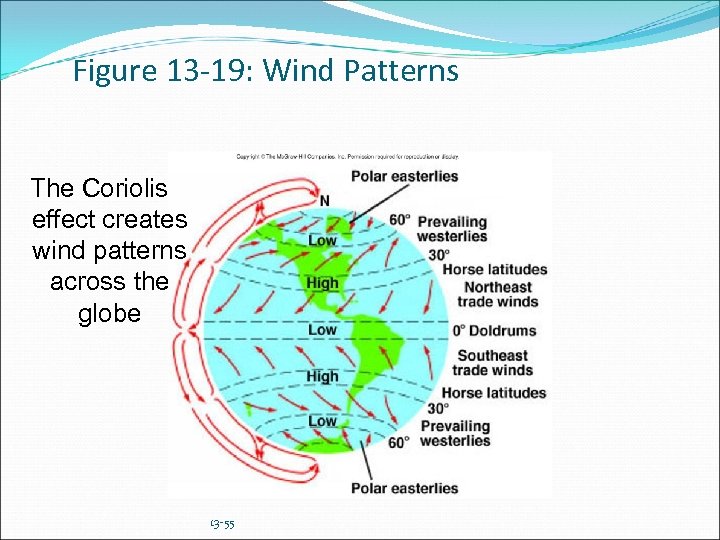 Figure 13 -19: Wind Patterns The Coriolis effect creates wind patterns across the globe 13 -55
 An Important Wind Pattern One of the most important wind patterns for the United States is the westerly flow of the JET STREAM These narrow bands of high speed air lie near the top of the troposphere Wind speeds can reach up to 500 km/h The exact location of the jet streams changes constantly, and has a significant effect on the weather 13 -56
 Middle Latitude Weather Systems The weather conditions in the middle latitudes of the Earth vary more than for other locations on the planet This includes the weather of the continental United States The basis for the unpredictable weather is the presence of enormous AIR MASSES The air mass can be hot, cold, dry, moist, depending on its origin Huge air masses produce huge weather systems 13 -57
 Cyclone and Anticyclone CYCLONE A large circulating air mass that is centered on a region of low pressure Air is spinning around, rushing toward the center, creating an upward spiraling vortex ANTICYCLONE A large circulating air mass that is centered on a region of high pressure Air is spinning away from the high pressure center, creating a downward spinning vortex 13 -58
 A Special Class of Cyclones A tornado is a very narrow, high energy cyclone Tornadoes generally only occur during severe thunderstorms DISTINGUISHING CHARACTERISTIC: Very high energy density Tornadoes are short-lived, and generally confined to a small geographic region 13 -59
 Origins The origin of middle latitude cyclonic activity lies at the POLAR FRONT This is the boundary between the cold polar air and the neighboring warm moist air WARM FRONT: the eastern side of a warm air wedge COLD FRONT: the western side of a warm air wedge 13 -60
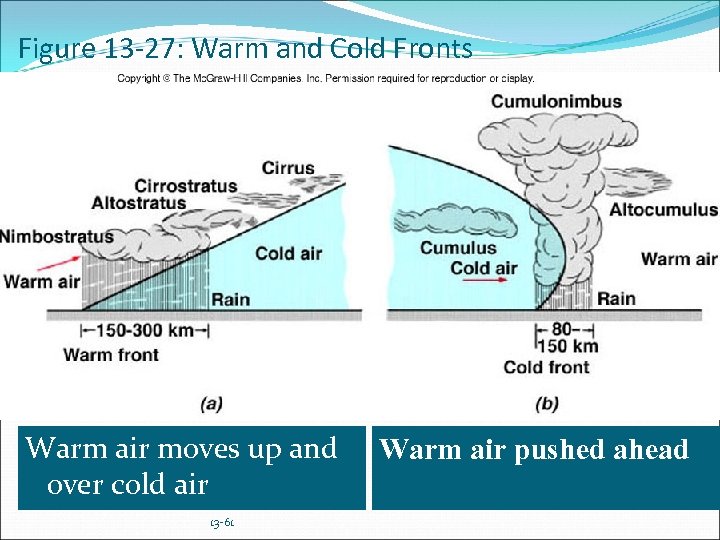 Figure 13 -27: Warm and Cold Fronts Warm air moves up and over cold air 13 -61 Warm air pushed ahead
 The Earth’s Climates Tropical climate: the equatorial belts of the doldrums Arid climate: the horse latitudes; hot and dry Middle latitude climates are varied widely across the globe Generally, the temperatures are moderate 13 -62
 Evidence for a Changing Climate Climatic changes are not seen on a short time scale There are marked fluctuations in climate conditions over long time periods Most dramatic example: the Ice Age Global event Most recent: about 21, 000 years ago Gradually the frigid conditions warmed, and the large ice formations are limited to polar regions 13 -63
 Recent Trends in Climate Change There is recent evidence that the Earth’s climate is on an overall warming trend Observations have lead to this conclusion Rising sea levels Increased melting of polar ice caps Average surface temperatures have increase by approximately 0. 6 C since 1900 These changes are relatively fast when compared to the long time scales of other climate fluctuations 13 -64
 Origins for Climate Change It is widely believed that the most promising explanation for the climate changes on Earth are the periodic changes that occur in the angle of tilt of the Earth’s axis Other possible causes include fluctuations in the actual energy produced by our Sun 13 -65
 Water on Planet Earth Over 70% of the surface of earth is covered by bodies of water Most of this water is contained in the world’s oceans Each ocean is contained by a large depression, or basin, in the surface The basin is surrounded by a slowly sloping region called the CONTINENTAL SHELF The width of the continental shelf ranges from less than 1 km to well over 1000 km 13 -66
 The Ocean Basin Beyond the continental slope, there lies a quickly sloping region called the CONTINENTAL SLOPE Drops approximately 2 km Beyond the continental slope lies the ABYSSAL PLAIN of the ocean floor Average ocean basin depth: 3. 7 km Compare to average land mass height of 0. 8 km 13 -67
 The Motion in the Oceans Like the air in the atmosphere, the water in the oceans is continuously being stirred by the variations in temperature and pressure from place to place The oceans have a tremendous effect on the climate They act as heat reservoirs – the temperature of the water does not change rapidly The surface currents which parallel the major wind patterns 13 -68
 Major Ocean Currents The Gulf Stream Located on the western side of the North Atlantic Whirl This is a warm current that flows into the Gulf of Mexico and straight along the eastern coast of the U. S. until it reaches the latitude where New Jersey is located Others The Labrador current: this cold flow moves southward along the east coast of North America, turning at New York The California Current: this southward – flowing current moves along the west coast of the U. S. 13 -69
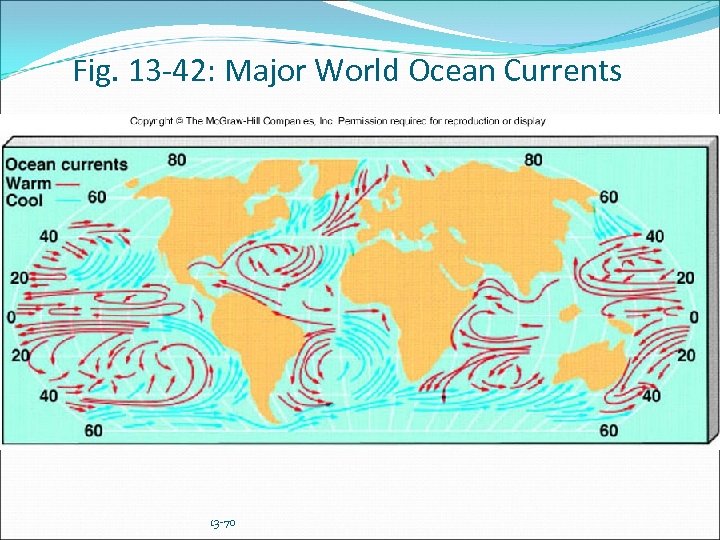 Fig. 13 -42: Major World Ocean Currents 13 -70
 The Atmosphere and Hydrosphere: Summary The atmosphere is the blanket of air surrounding our planet Four major layers: troposphere, stratosphere (containing ozone layer), mesosphere, thermosphere (containing ionosphere) Air can contain a maximum amount of water vapor, at which it is said to be saturated The relative humidity is a ration between the actual water vapor and the maximum possible at a given temperature Clouds are formed from tiny droplets of condensed water 13 -71
 The Atmosphere and Hydrosphere: Summary(2) Incoming solar radiation (insolation) provides energy for weather Heating of the atmosphere is called the greenhouse effect Seasons occur due to the tilt of the earth’s axis Convection currents keep the atmosphere well mixed and happen due to uneven heating in the atmosphere The Coriolis effect is a result of the earths rotation and causes a series of wind patterns around the globe 13 -72
 The Atmosphere and Hydrosphere: Summary(3) Cyclone: weather system centered on a low pressure region; Anticyclone: weather system centered on a high pressure region A front is the boundary between a warm air mass and a cold air mass; the type of front is determined by the behavior of the air masses as they collide Climate: average weather conditions 13 -73
 IN-LECTURE QUIZ QUESTIONS CHAPTER 13 13 -74
 In-Lecture Quiz Chapter 13 Which layer of the atmosphere contains the most mass? A. The troposphere B. The stratosphere C. The mesosphere D. The thermosphere 13 -75
 In-Lecture Quiz Chapter 13 Of the following, which layer of the atmosphere is the furthest from the surface? A. The troposphere B. The stratosphere C. The mesosphere D. The thermosphere 13 -76
 In-Lecture Quiz Chapter 13 Why is the OZONE layer important? A. Because that’s where all the oxygen is stored B. Because it keeps a cap on the atmosphere and keeps in from dissipating C. Because this is the layer that absorbs harmful UV radiation from the sun 13 -77
 In-Lecture Quiz Chapter 13 The relative humidity tells you the percentage of water in the air. A. True B. False 13 -78
 In-Lecture Quiz Chapter 13 When the relative humidity is equal to 100%, it must be raining. A. B. True False 13 -79
 In-Lecture Quiz Chapter 13 The warmer the air mass, A. the more water vapor the air can hold. B. the less water vapor the air can hold. 13 -80
 In-Lecture Quiz Chapter 13 The dew point temperature is A. B. C. the temperature at which it rains. the temperature to which an air mass must be cooled for the saturation point to be reached. the temperature at which all water vapor in the air becomes liquid and is quickly released from the air. 13 -81
 In-Lecture Quiz Chapter 13 The Greenhouse effect is caused by human activity. A. True B. False 13 -82
 In-Lecture Quiz Chapter 13 An anticylone is a weather system that is centered around a high pressure region. B. a weather system that is centered around low pressure region. C. a weather system that causes low pressure. D. a weather system that causes high pressure. A. 13 -83
 In-Lecture Quiz Chapter 13 The approximate percentage of the earth’s surface that is covered by water is 10%. B. 30%. C. 50%. D. 70%. A. 13 -84
 In-Lecture Quiz Chapter 13 The equatorial regions of the earth are warmer because they are closer to the sun. B. the sunlight is more direct and is distributed over a smaller area. C. the sun shines longer each day in these regions. D. None of the above. A. 13 -85
 In-Lecture Quiz Chapter 13 One of the chief contributors to the depletion of the ozone layer is carbon dioxide molecules. B. chlorofluorocarbon molecules. C. oxygen molecules. D. nitrogen molecules. A. 13 -86