


 Скачать презентацию Chapter 12 Electronic Commerce Systems What is
171c0574b50e032618bab2823a928bcd.ppt
- Количество слайдов: 24
 Chapter 12 Electronic Commerce Systems
 What is E-Commerce? The electronic processing and transmission of business data • electronic buying and selling of goods and services • on-line delivery of digital products • electronic funds transfer (EFT) • electronic trading of stocks • direct consumer marketing • electronic data interchange (EDI) • the Internet revolution
 Benefits of E-Commerce • Access to a worldwide customer and/or supplier base • Reductions in inventory investment and carrying costs • Rapid creation of business partnerships to fill emerging market niches • Reductions in retail prices through lower marketing costs • Reductions in procurement costs • Better customer service
 The Internet Business Model • Information level – using the Internet to display and make accessible information about the company, its products, services, and business policies • Transaction level – using the Internet to accept orders from customers and/or to place them with their suppliers • Distribution level – using the Internet to sell and deliver digital products to customers
 Areas of General Concern • Data Security: are stored and transmitted data adequately protected? • Business Policies: are policies publicly stated and consistently followed? • Privacy: how confidential are customer and trading partner data? • Business Process Integrity: how accurately, completely, and consistently does the company processes its transactions?
 Internet Risks to Consumers • How serious is the risk? – National Consumer League: Internet fraud rose by 600% between 1997 and 1998 – SEC: e-mail complaints alleging fraud rose from 12 per day in 1997 to 200 -300 per day in 1999 • Major areas of concern: – Theft of credit card numbers – Theft of passwords – Consumer privacy--cookies
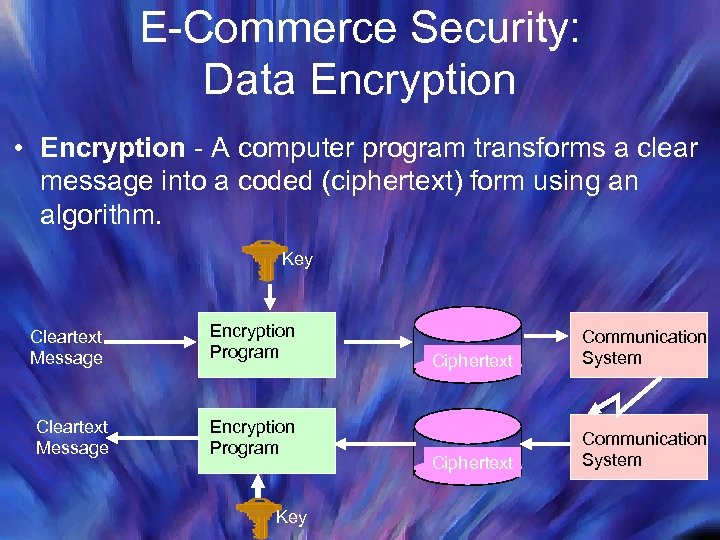 E-Commerce Security: Data Encryption • Encryption - A computer program transforms a clear message into a coded (ciphertext) form using an algorithm. Key Cleartext Message Encryption Program Key Ciphertext Communication System
 E-Commerce Security: Digital Authentication • Digital signature: electronic authentication technique that ensures that the transmitted message originated with the authorized sender and that it was not tampered with after the signature was applied • Digital certificate: like an electronic identification card that is used in conjunction with a public key encryption system to verify the authenticity of the message sender
 E-Commerce Security: Firewalls • Firewalls: software and hardware that provide security by channeling all network connections through a control gateway • Network level firewalls – – low cost/low security access control uses a screening router to its destination does not explicitly authenticate outside users penetrate the system using an IP spoofing technique • Application level firewalls – high level/high cost customizable network security – allows routine services and e-mail to pass through – performs sophisticated functions such as logging or user authentication for specific tasks
 Assurance • “Trusted” third-party organizations offer seals of assurance that businesses can display on their Web site home pages: – BBB – TRUSTe – Veri-Sign, Inc – ICSA – AICPA/CICA Web. Trust – AICPA/CICA Sys. Trust
 Implications for Accounting • Continuous process auditing – auditors review transactions at frequent intervals or as they occur – intelligent control agents: heuristics that search electronic transactions for anomalies • Electronic audit trails – electronic transactions generated without human intervention – no paper audit trail
 Implications for Accounting • Confidentiality of data – open system designs allow mission-critical information to be at the risk to intruders • Authentication – in e-commerce systems, determining the identity of the customer is not a simple task • Nonrepudiation – repudiation can lead to uncollected revenues or legal action – use digital signatures and digital certificates
 Implications for Accounting • Certification authority (CA) licensing – trusted 3 rd party vouches for identity • Data integrity – determine whether data has been intercepted and altered • Access controls – prevent unauthorized access to data • Changing legal environment – provide client with estimate of legal exposure
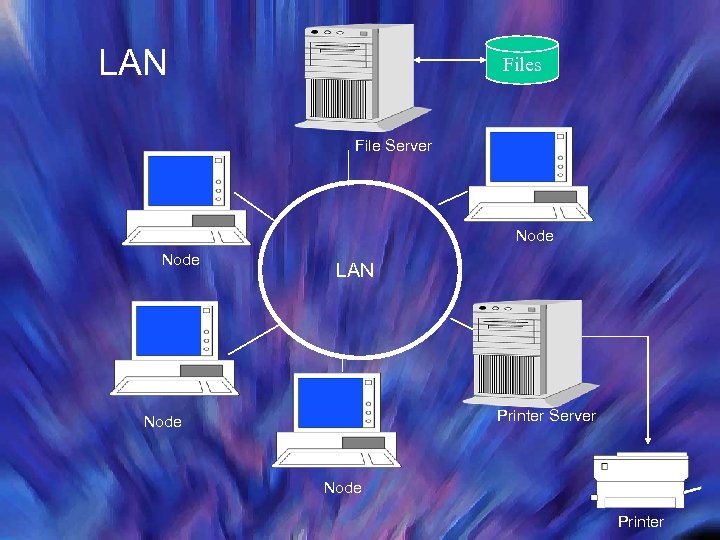 LAN Files File Server Node LAN Printer Server Node Printer
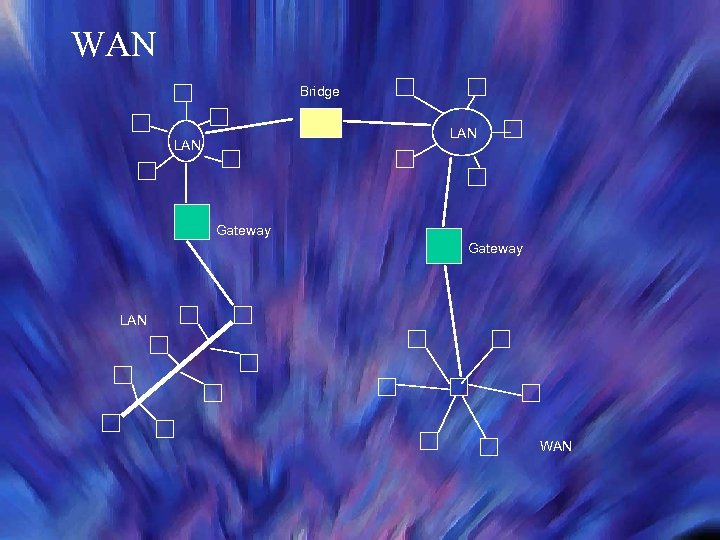 WAN Bridge LAN Gateway LAN WAN
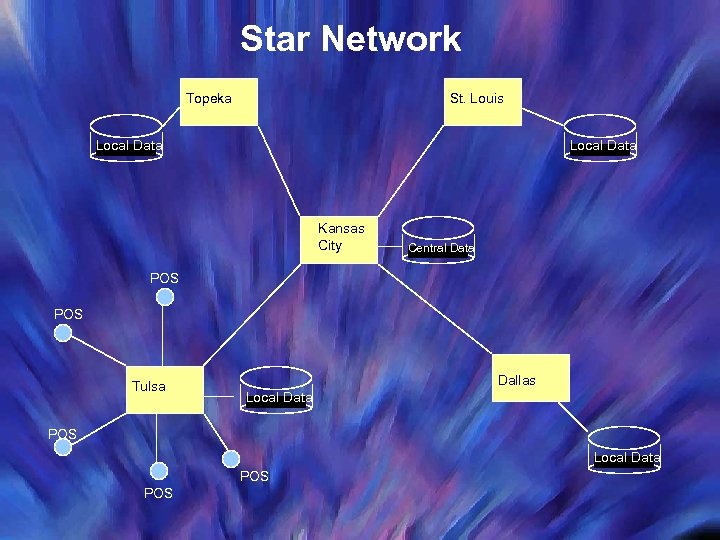 Star Network Topeka St. Louis Local Data Kansas City Central Data POS Tulsa Dallas Local Data POS POS
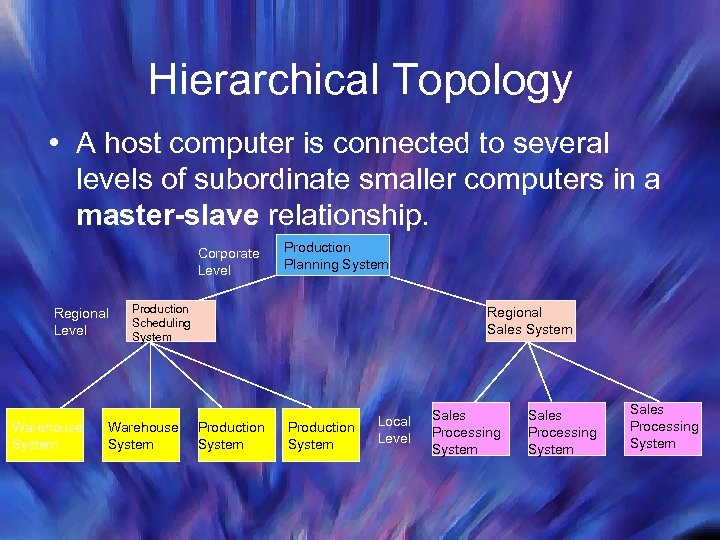 Hierarchical Topology • A host computer is connected to several levels of subordinate smaller computers in a master-slave relationship. Corporate Level Regional Level Warehouse System Production Planning System Production Scheduling System Warehouse System Regional Sales System Production System Local Level Sales Processing System
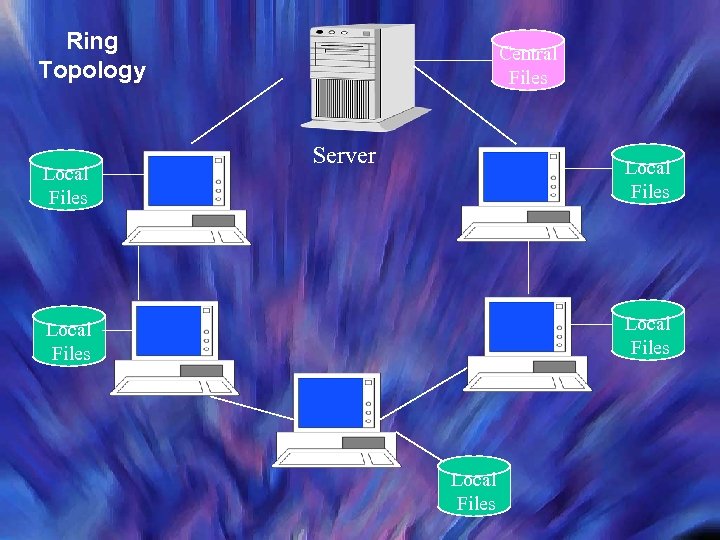 Ring Topology Local Files Central Files Server Local Files
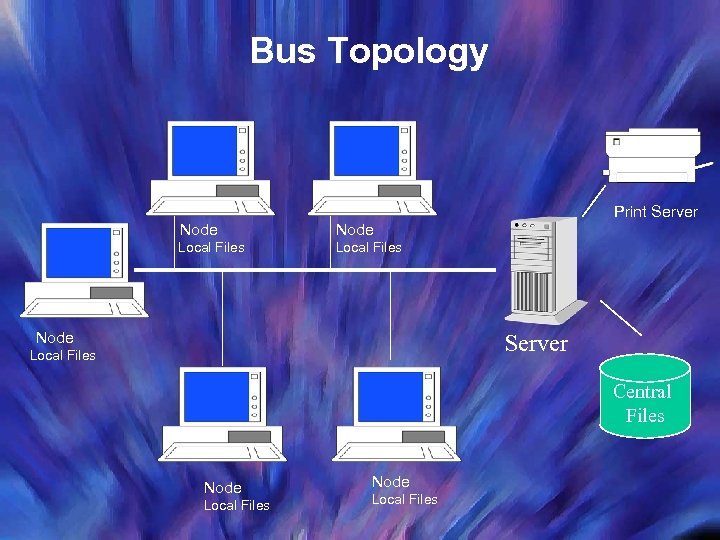 Bus Topology Node Local Files Print Server Local Files Node Server Local Files Central Files Node Local Files
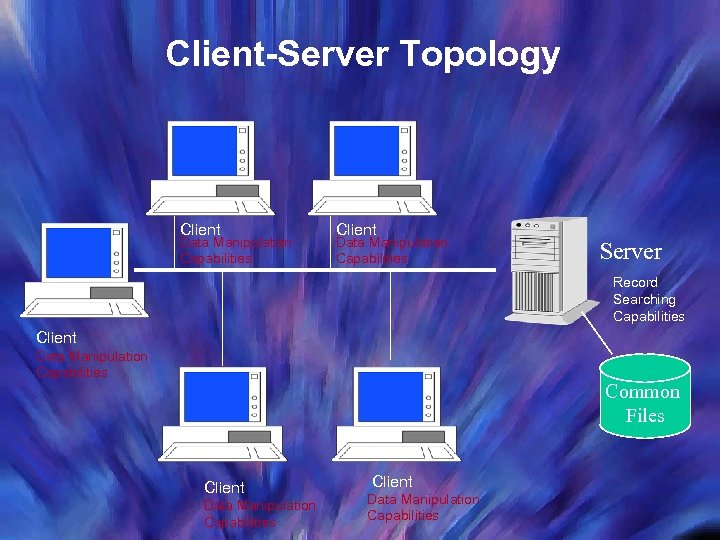 Client-Server Topology Client Data Manipulation Capabilities Server Record Searching Capabilities Client Data Manipulation Capabilities Common Files Client Data Manipulation Capabilities
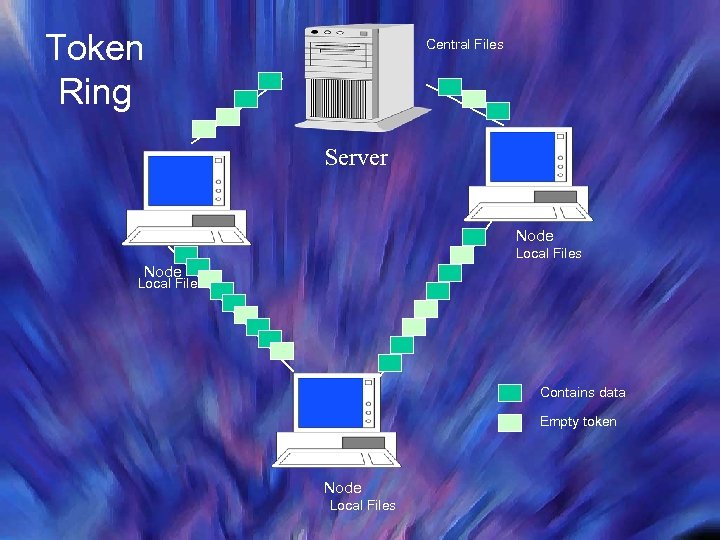 Token Ring Central Files Server Node Local Files Contains data Empty token Node Local Files
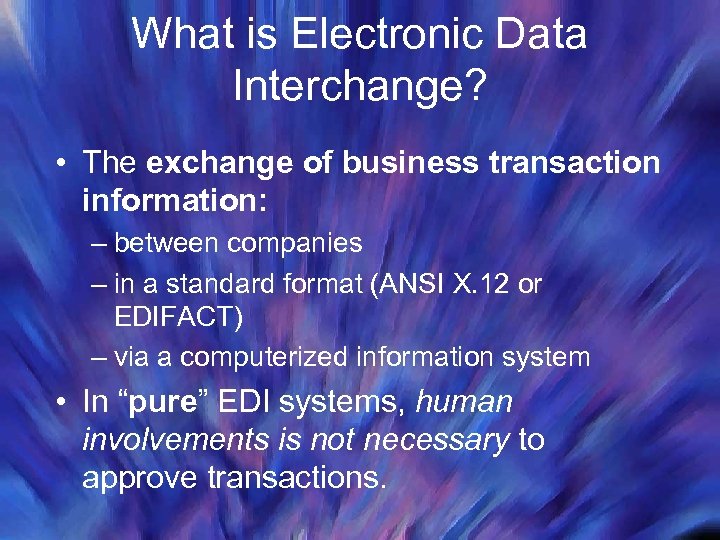 What is Electronic Data Interchange? • The exchange of business transaction information: – between companies – in a standard format (ANSI X. 12 or EDIFACT) – via a computerized information system • In “pure” EDI systems, human involvements is not necessary to approve transactions.
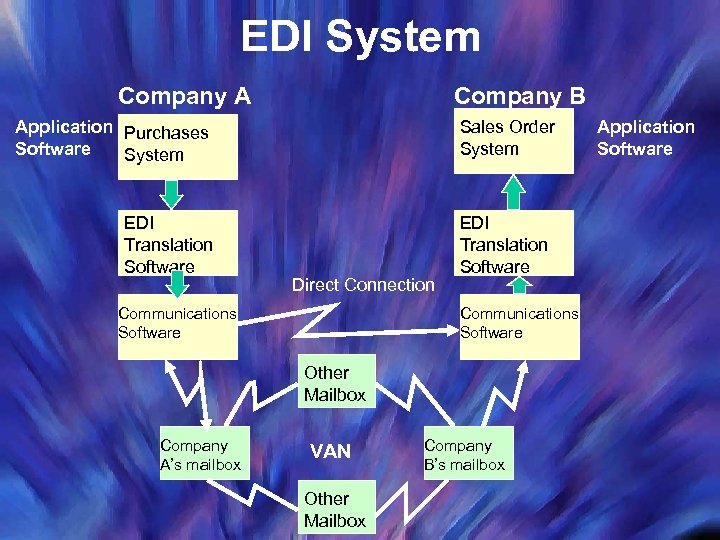 EDI System Company B Company A Application Purchases Software System EDI Translation Software Sales Order System Direct Connection EDI Translation Software Communications Software Other Mailbox Company A’s mailbox VAN Other Mailbox Company B’s mailbox Application Software
 Advantages of EDI • • Reduction or elimination of data entry Reduction of errors Reduction of paper processing and postage • Reduction of inventories (via JIT systems)