


 Скачать презентацию Chapter 11 Using Magazines Kleppner s Advertising Procedure 18
36d56784816b3720d336ca5af0c03951.ppt
- Количество слайдов: 36
 Chapter 11 Using Magazines Kleppner’s Advertising Procedure, 18 e Lane * King * Reichart Copyright © 2011 Pearson Education, Inc. publishing as Prentice Hall 11 -
 Learning Objectives_1 • Describe the history and development of the American magazine. • Discuss the usefulness of magazines in national media plans. • List the characteristics of consumer and trade publications. • Explain how magazine space is sold to advertisers. Copyright © 2011 Pearson Education, Inc. publishing as Prentice Hall 11 -2
 Learning Objectives_2 • Describe the role of magazines as a targeted advertising medium. • Explain how magazine audiences are measured. • List the characteristics of business publications. • Describe the role of the agri-business press. Copyright © 2011 Pearson Education, Inc. publishing as Prentice Hall 11 -3
 Pros of Magazines • The number and range of specialized magazines provide advertisers access to reach narrowly targeted audiences. • Magazines provide strong visuals to enhance brand awareness. • Regional and demographic editions enhance targeting. • Magazines are portable and have a high passalong rate. Copyright © 2011 Pearson Education, Inc. publishing as Prentice Hall 11 -4
 Cons of Magazines • Magazine growth has not kept up with • • increases in ad rates. Expensive cost per contact. Ads may account for as much as 50% of magazine content. Long deadlines limit immediacy of message. A single vehicle cannot stand alone. Copyright © 2011 Pearson Education, Inc. publishing as Prentice Hall 11 -5
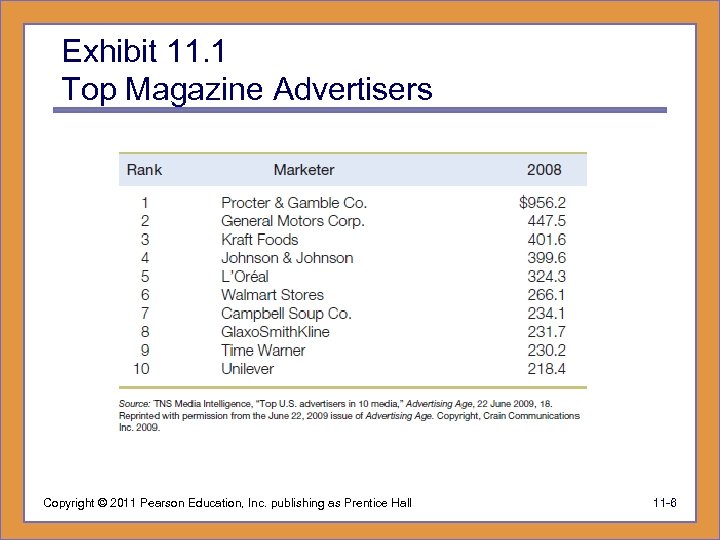 Exhibit 11. 1 Top Magazine Advertisers Copyright © 2011 Pearson Education, Inc. publishing as Prentice Hall 11 -6
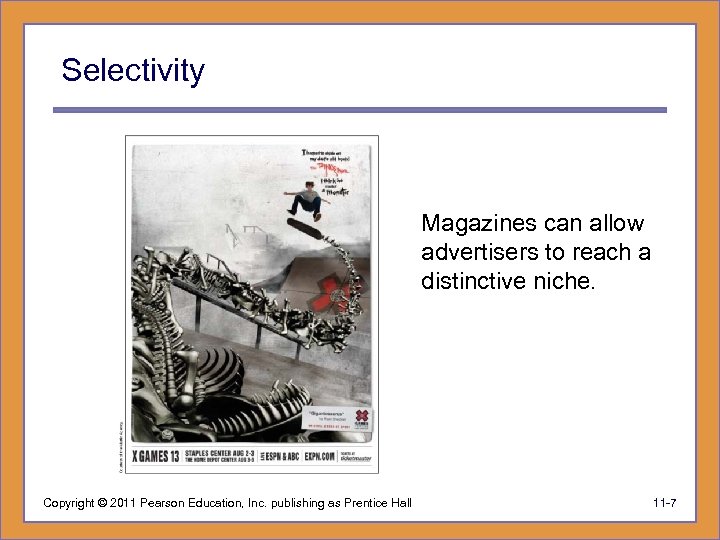 Selectivity Magazines can allow advertisers to reach a distinctive niche. Copyright © 2011 Pearson Education, Inc. publishing as Prentice Hall 11 -7
 Cost Concerns Marketing costs Postage and distribution costs Concentration of advertisers Increases in discounting Copyright © 2011 Pearson Education, Inc. publishing as Prentice Hall 11 -8
 Cross-Media Buys • A cross-media buy refers to packaging of several media or vehicles to be sold to advertisers in order to gain a synergistic communication effect and efficiencies in purchasing time or space. Copyright © 2011 Pearson Education, Inc. publishing as Prentice Hall 11 -9
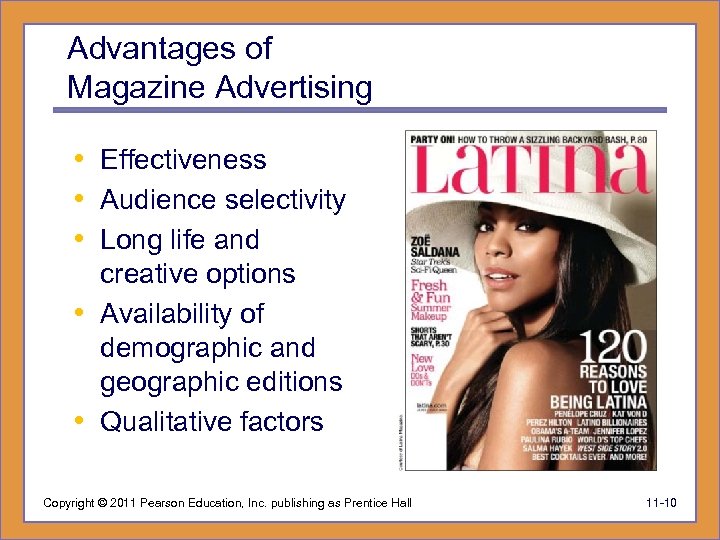 Advantages of Magazine Advertising • Effectiveness • Audience selectivity • Long life and creative options • Availability of demographic and geographic editions • Qualitative factors Copyright © 2011 Pearson Education, Inc. publishing as Prentice Hall 11 -10
 Magazine Advertising Effectiveness • Readers do these things after exposure to magazine ads – Consider purchasing advertised product – Gather more information about product – Visit advertiser’s website – Purchase product – Visit store, dealer, or other location – Save ad for future reference – Recommend product to a friend Copyright © 2011 Pearson Education, Inc. publishing as Prentice Hall 11 -11
 Disadvantages of Magazine Advertising • High cost – Magazines are the most expensive medium on a CPM basis • Long closing dates – A magazine ad may run 8 -10 weeks after an advertiser submits it – Fast-close advertising allows advertisers to submit closer to publication dates Copyright © 2011 Pearson Education, Inc. publishing as Prentice Hall 11 -12
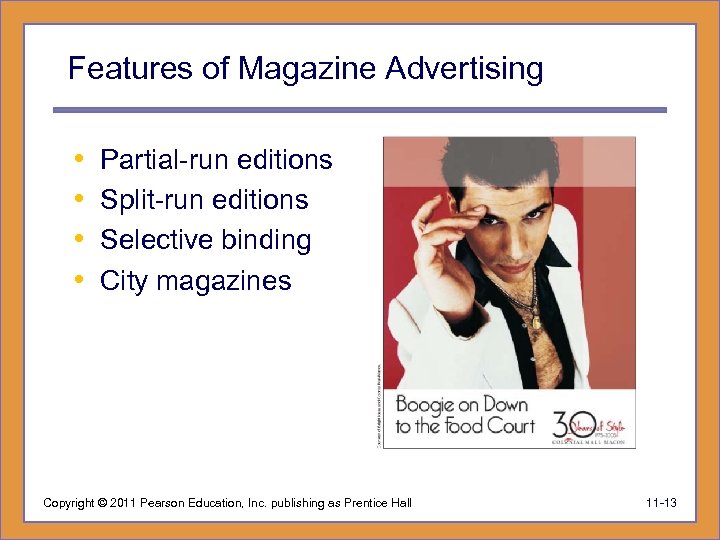 Features of Magazine Advertising • • Partial-run editions Split-run editions Selective binding City magazines Copyright © 2011 Pearson Education, Inc. publishing as Prentice Hall 11 -13
 Pros and Cons of Partial-Run Editions Advantages • Products advertised only in areas where sold • Localization possible • Enhances relationship between national advertisers and retailers Disadvantages • CPM levels are usually much higher than fullrun • Close dates are earlier • Newsstand distribution may be limited • Restrictions on options Copyright © 2011 Pearson Education, Inc. publishing as Prentice Hall 11 -14
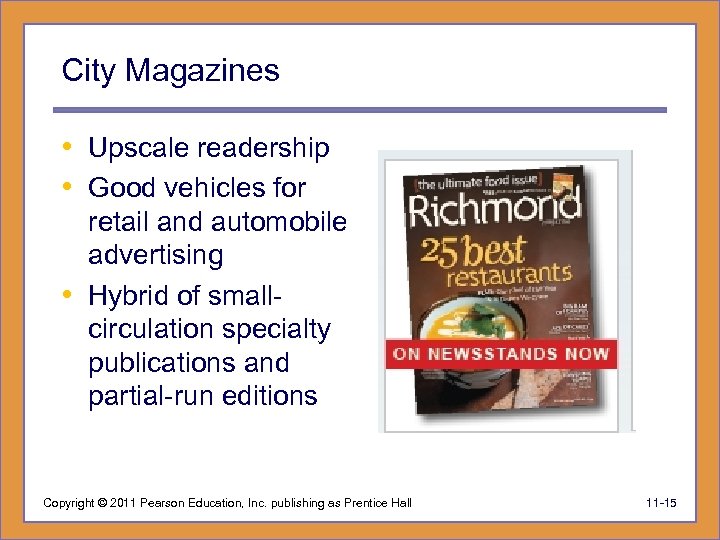 City Magazines • Upscale readership • Good vehicles for retail and automobile advertising • Hybrid of smallcirculation specialty publications and partial-run editions Copyright © 2011 Pearson Education, Inc. publishing as Prentice Hall 11 -15
 Decisions to Make • What size ad should be used? • Where in the magazine should the ad be placed? • What colors (and how many) should be used? • What format will enhance readership and recall? Copyright © 2011 Pearson Education, Inc. publishing as Prentice Hall 11 -16
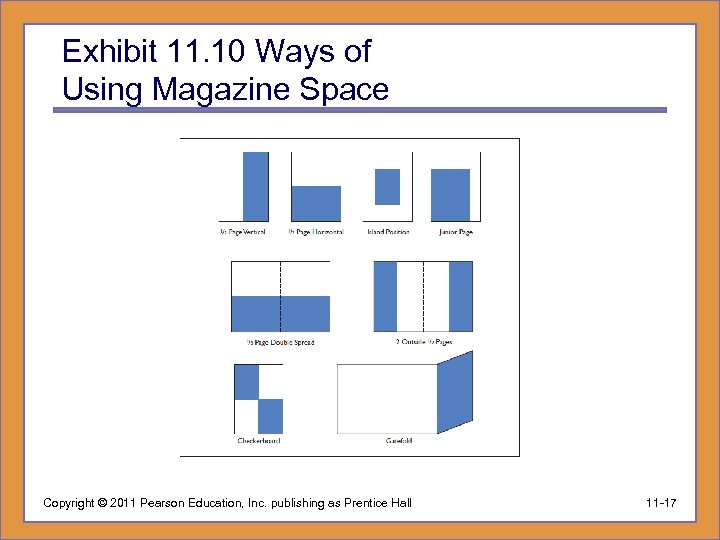 Exhibit 11. 10 Ways of Using Magazine Space Copyright © 2011 Pearson Education, Inc. publishing as Prentice Hall 11 -17
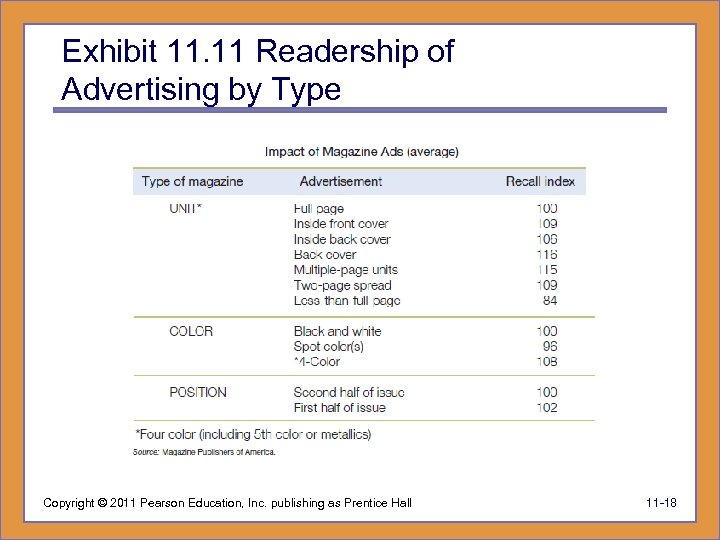 Exhibit 11. 11 Readership of Advertising by Type Copyright © 2011 Pearson Education, Inc. publishing as Prentice Hall 11 -18
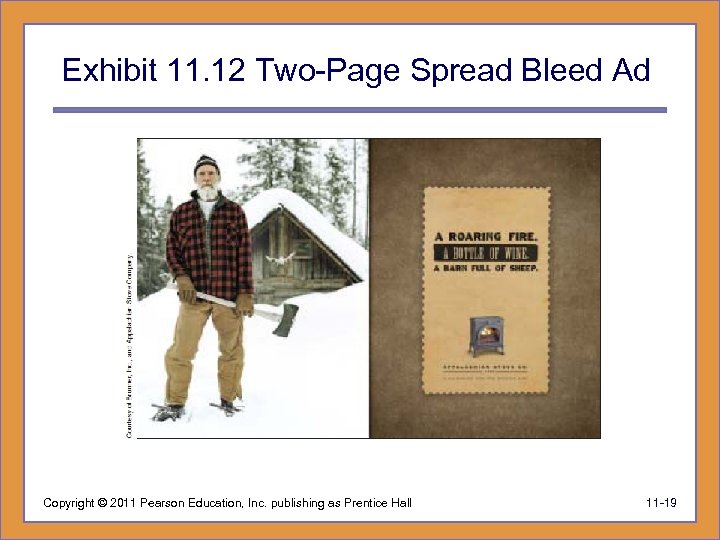 Exhibit 11. 12 Two-Page Spread Bleed Ad Copyright © 2011 Pearson Education, Inc. publishing as Prentice Hall 11 -19
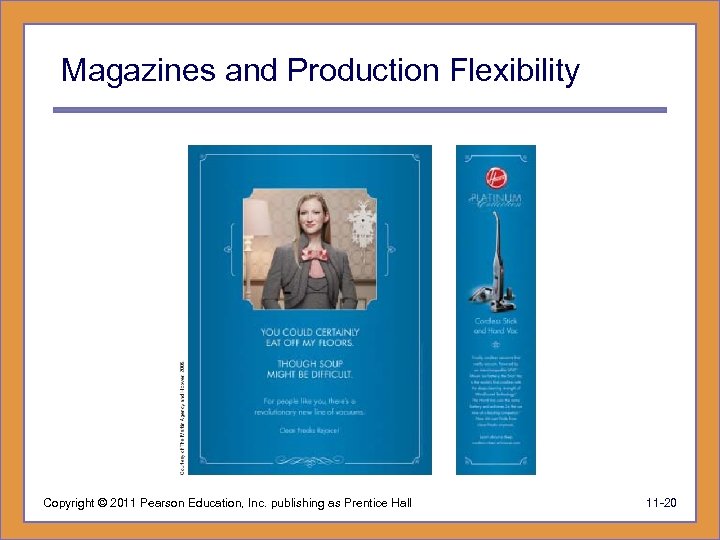 Magazines and Production Flexibility Copyright © 2011 Pearson Education, Inc. publishing as Prentice Hall 11 -20
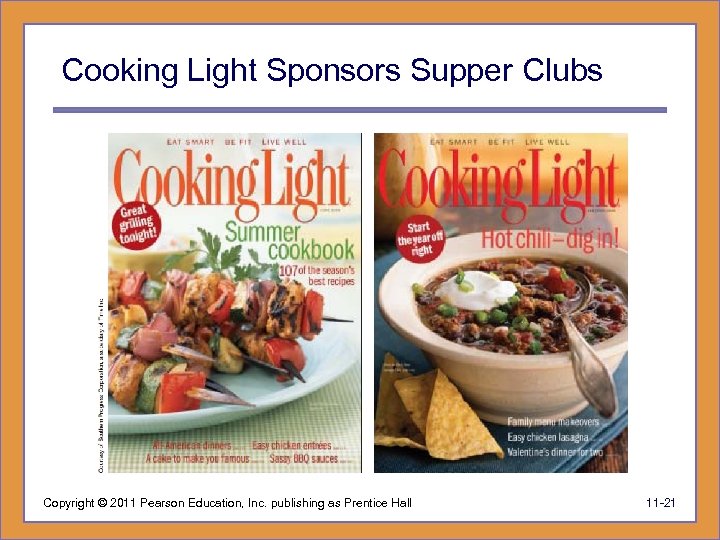 Cooking Light Sponsors Supper Clubs Copyright © 2011 Pearson Education, Inc. publishing as Prentice Hall 11 -21
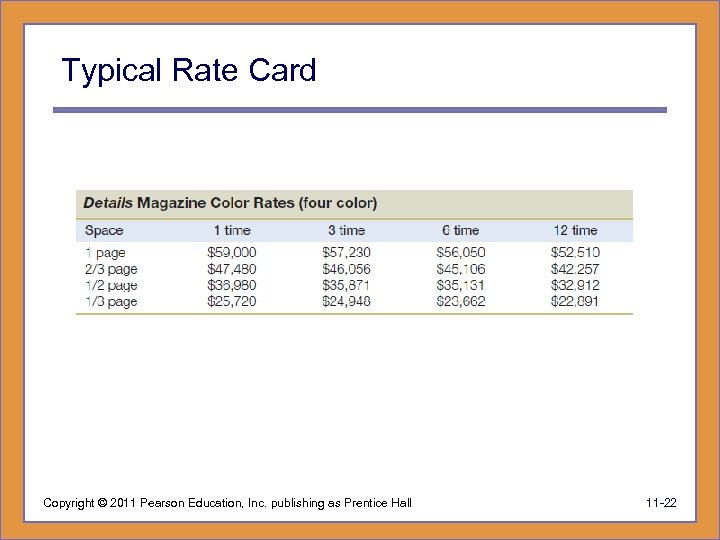 Typical Rate Card Copyright © 2011 Pearson Education, Inc. publishing as Prentice Hall 11 -22
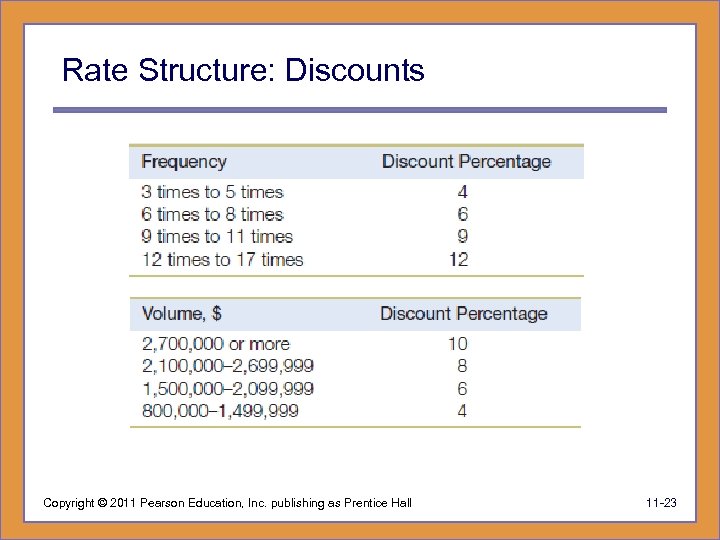 Rate Structure: Discounts Copyright © 2011 Pearson Education, Inc. publishing as Prentice Hall 11 -23
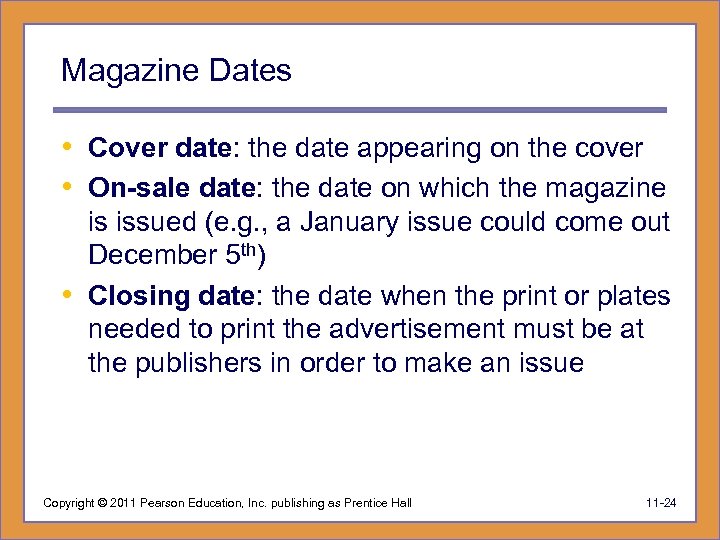 Magazine Dates • Cover date: the date appearing on the cover • On-sale date: the date on which the magazine is issued (e. g. , a January issue could come out December 5 th) • Closing date: the date when the print or plates needed to print the advertisement must be at the publishers in order to make an issue Copyright © 2011 Pearson Education, Inc. publishing as Prentice Hall 11 -24
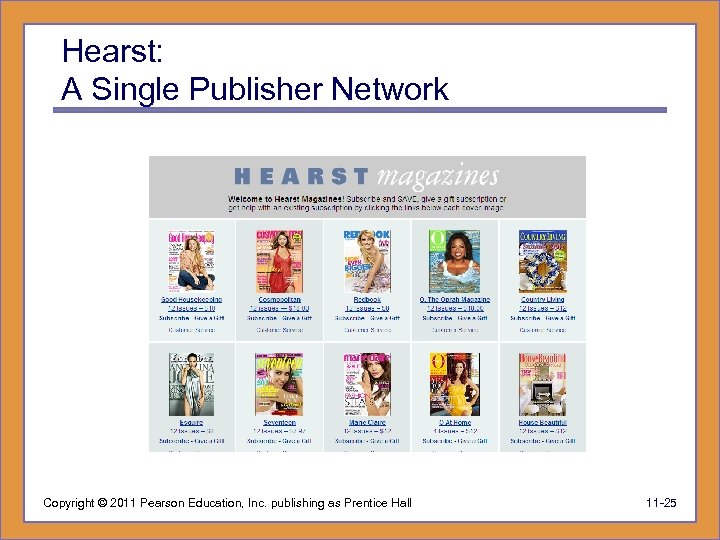 Hearst: A Single Publisher Network Copyright © 2011 Pearson Education, Inc. publishing as Prentice Hall 11 -25
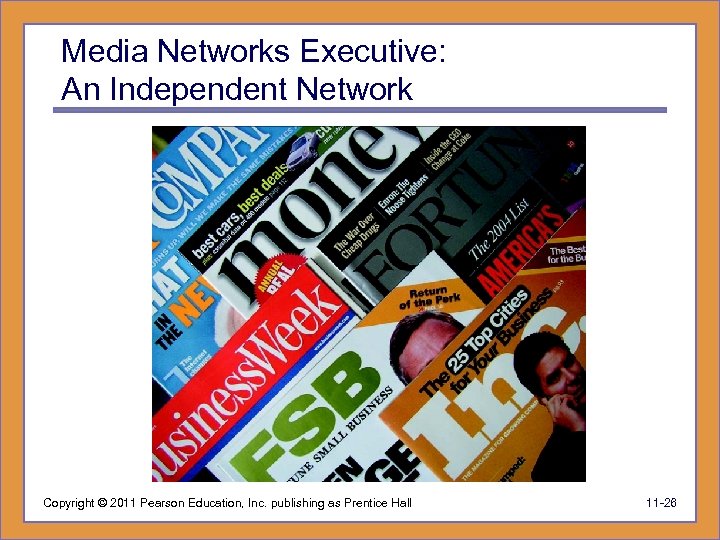 Media Networks Executive: An Independent Network Copyright © 2011 Pearson Education, Inc. publishing as Prentice Hall 11 -26
 Magazine Circulation • Paid circulation, also known as the rate base, is the circulation on which advertising rates are based. • Readership usually combines paid circulation and pass-along readers. Copyright © 2011 Pearson Education, Inc. publishing as Prentice Hall 11 -27
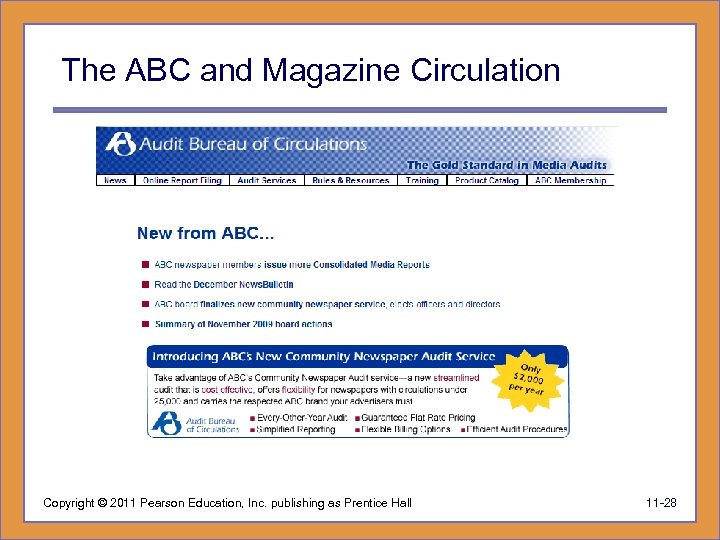 The ABC and Magazine Circulation Copyright © 2011 Pearson Education, Inc. publishing as Prentice Hall 11 -28
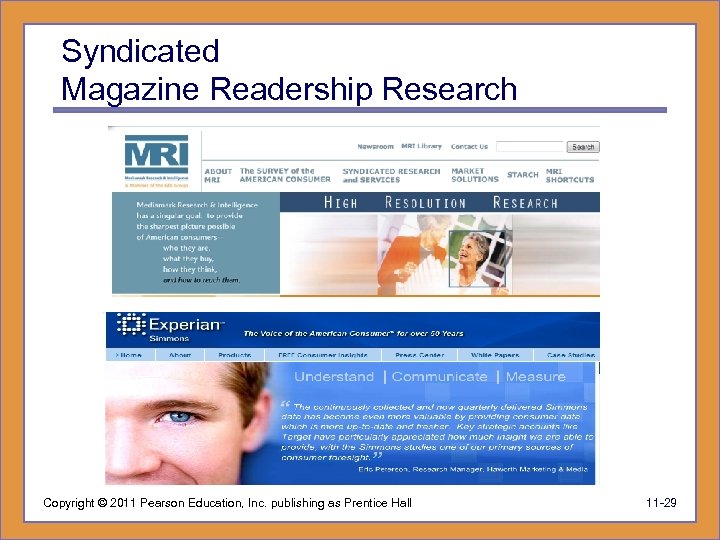 Syndicated Magazine Readership Research Copyright © 2011 Pearson Education, Inc. publishing as Prentice Hall 11 -29
 Communicating the Business-to-Business Message • Appeal to prospects in terms of job interests • • and demands Sell benefits to the buyer Support and facilitate the sales function Avoid puffery Set clear, measurable objectives Copyright © 2011 Pearson Education, Inc. publishing as Prentice Hall 11 -30
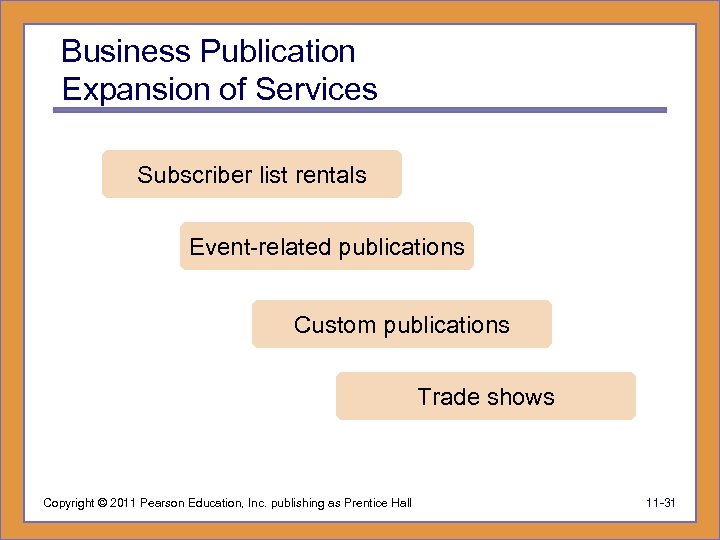 Business Publication Expansion of Services Subscriber list rentals Event-related publications Custom publications Trade shows Copyright © 2011 Pearson Education, Inc. publishing as Prentice Hall 11 -31
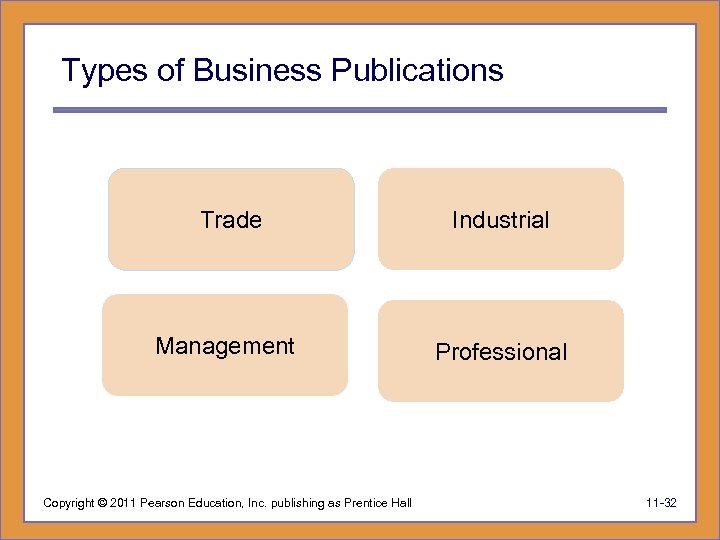 Types of Business Publications Trade Industrial Management Professional Copyright © 2011 Pearson Education, Inc. publishing as Prentice Hall 11 -32
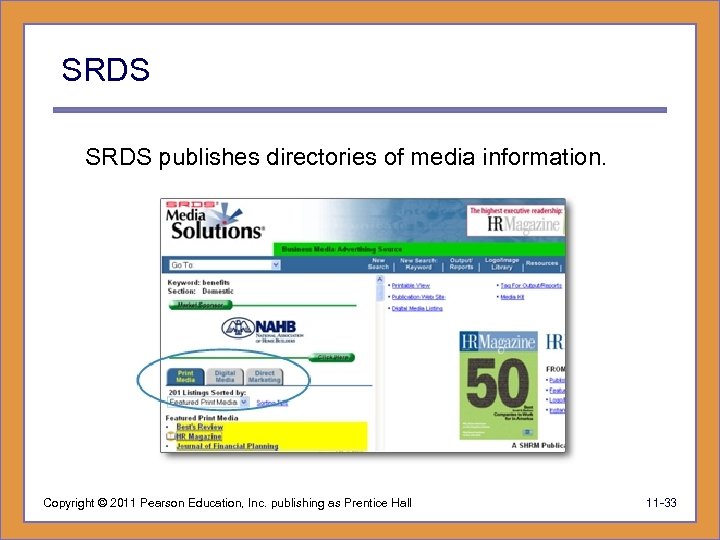 SRDS publishes directories of media information. Copyright © 2011 Pearson Education, Inc. publishing as Prentice Hall 11 -33
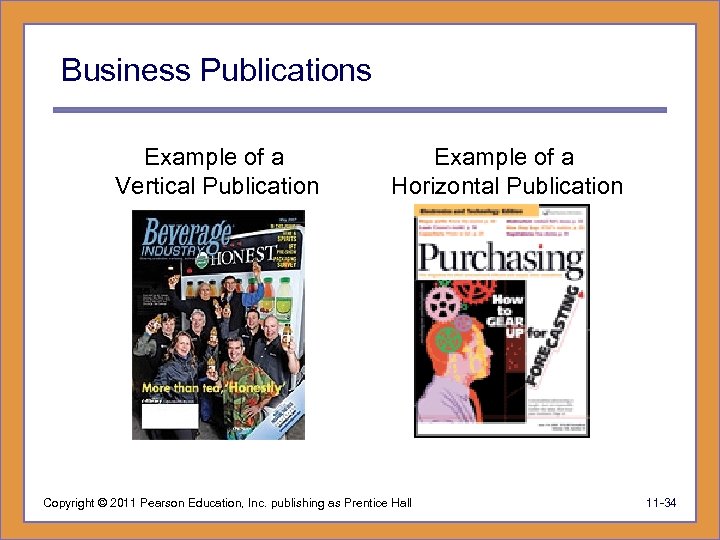 Business Publications Example of a Vertical Publication Example of a Horizontal Publication Copyright © 2011 Pearson Education, Inc. publishing as Prentice Hall 11 -34
 Farm Press General Farm Magazines Regional Farm Magazines Vocational Farm Magazines Copyright © 2011 Pearson Education, Inc. publishing as Prentice Hall 11 -35
 For Discussion • Why would an advertiser want to use both television and magazines? • What are some qualitative features of importance to magazine advertisers? Copyright © 2011 Pearson Education, Inc. publishing as Prentice Hall 11 -36