


 Скачать презентацию Chapter 11 The Fate of High-Mass Stars
8d9cf8e8bf45a06dd571d353f15ad99d.ppt
- Количество слайдов: 37
 Chapter 11 The Fate of High-Mass Stars
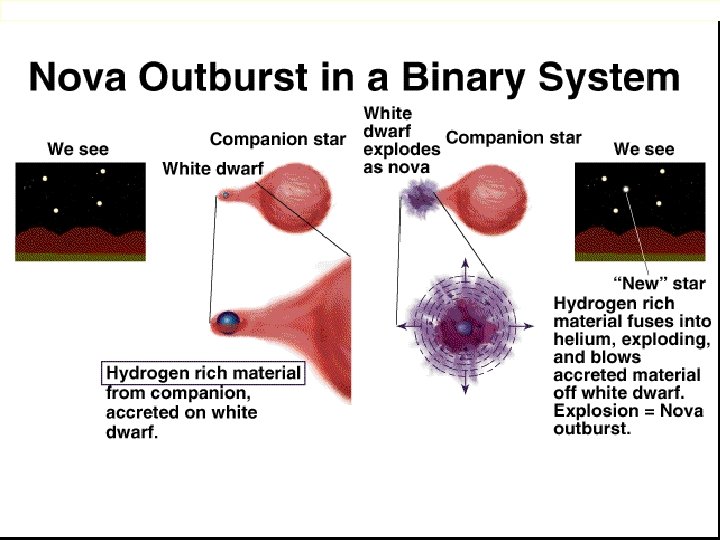
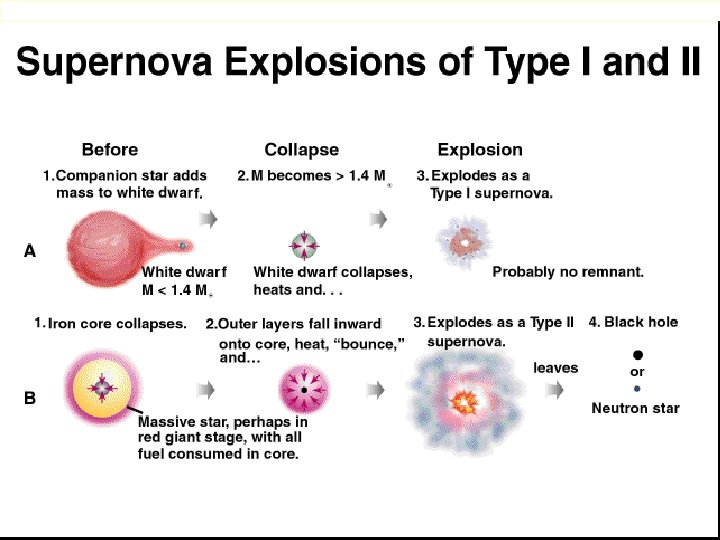
 11. 1 Supernovas • Nova - means “a new star” but are actually stellar explosions • Supernova - a stellar explosion that marks the end of a star’s evolution • Type I Supernovas - occur in binary systems in which one is a white dwarf
 • Type II Supernovas - occur when a massive star’s iron core collapses
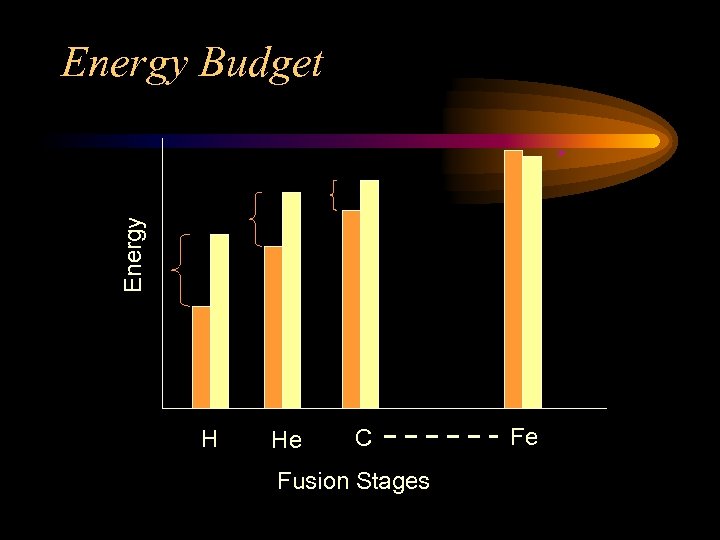 Energy Budget H He C Fusion Stages Fe
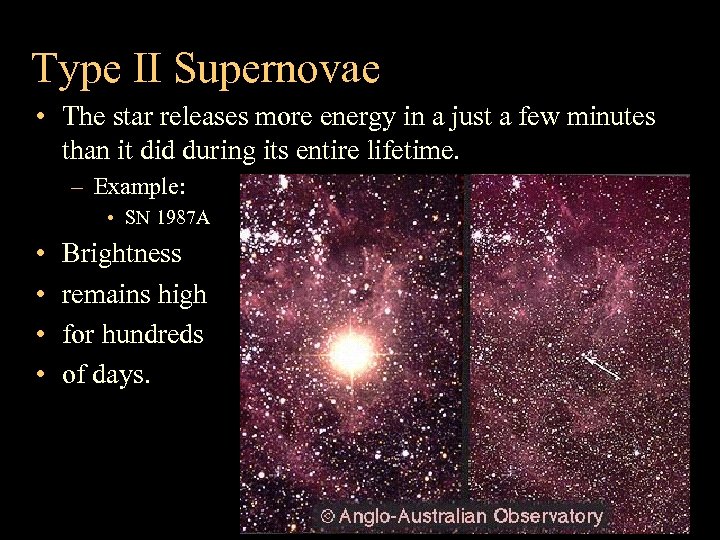 Type II Supernovae • The star releases more energy in a just a few minutes than it did during its entire lifetime. – Example: • SN 1987 A • • Brightness remains high for hundreds of days.
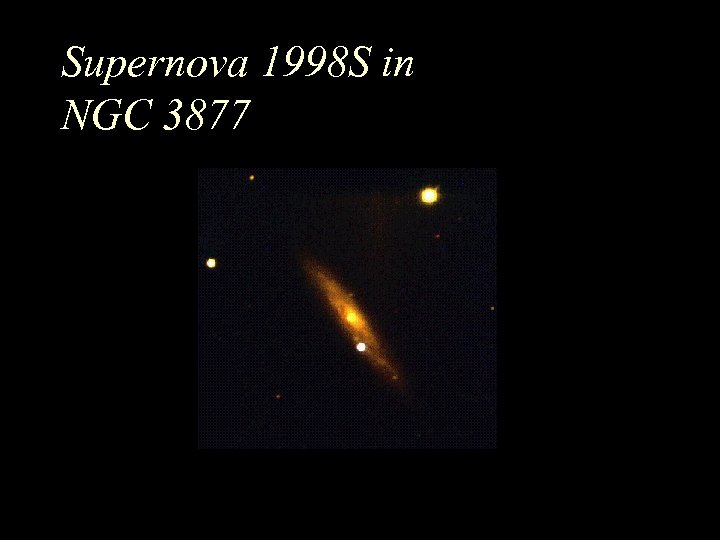 Supernova 1998 S in NGC 3877
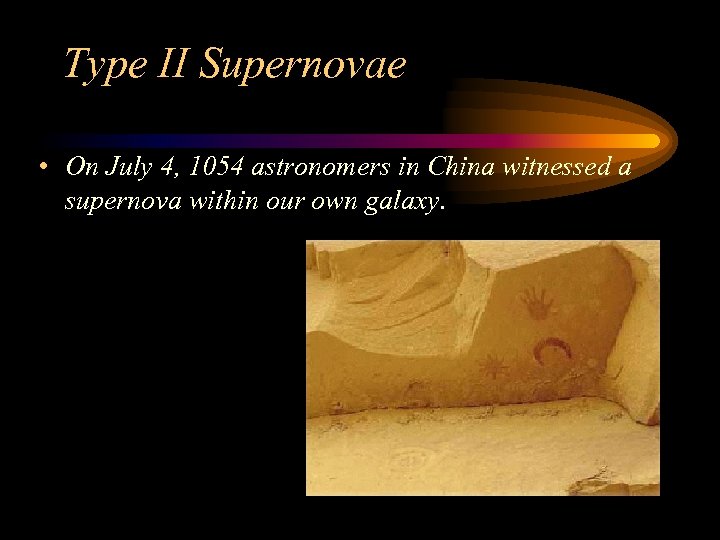 Type II Supernovae • On July 4, 1054 astronomers in China witnessed a supernova within our own galaxy.
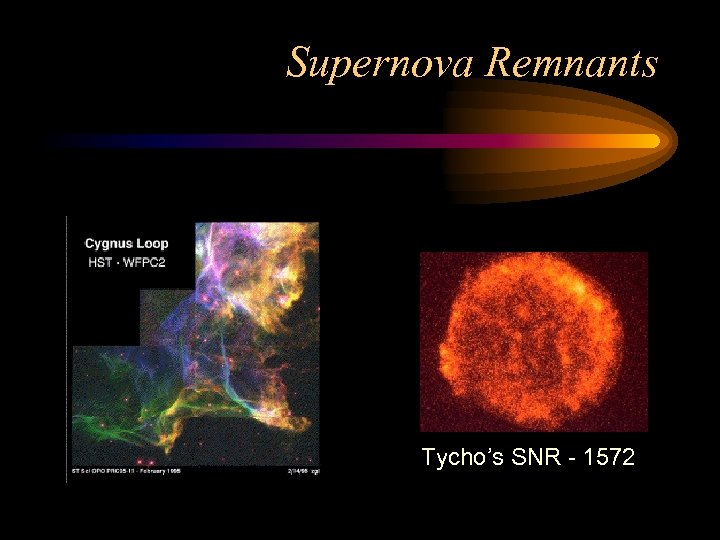
 Type II Supernovae • After the explosion of a massive star, a huge glowing cloud of stellar debris - a supernova remnant - steadily expands. • Example: Crab Nebula
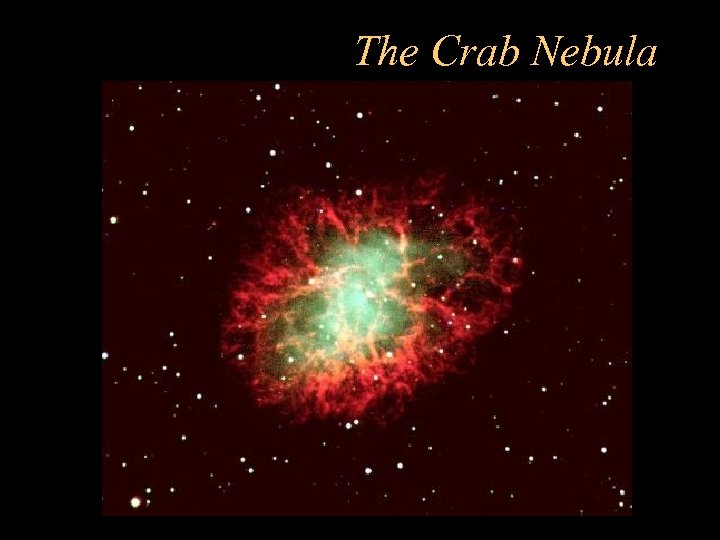 The Crab Nebula
 Type II Supernovae • After a supernova the exposed core is seen as a neutron star - or if the star is more than 3 solar masses the core becomes a black hole.
 Energy Output for Type I and Type II • Type II Supernovae • • 1053 ergs total Of this 1051 ergs shows up at KE of the ejected shell and 1050 ergs as light. Most of the rest is in the escaping neutrinos! • Type I supernovae are more energetic.
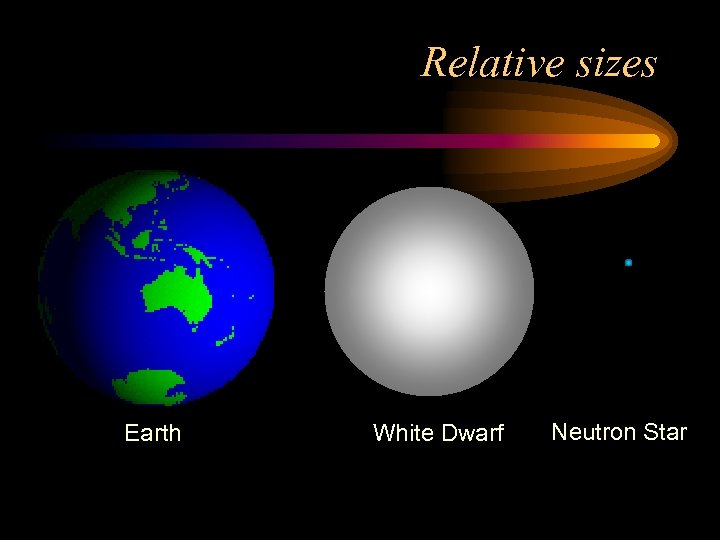 Relative sizes Earth White Dwarf Neutron Star
 Neutron Stars • . . . are stellar remnants for medium-mass stars. • . . . are found in the centers of some type II supernova remnants. • . . . have diameters of about 6 miles. • . . . have masses greater than the Chandrasekhar mass.
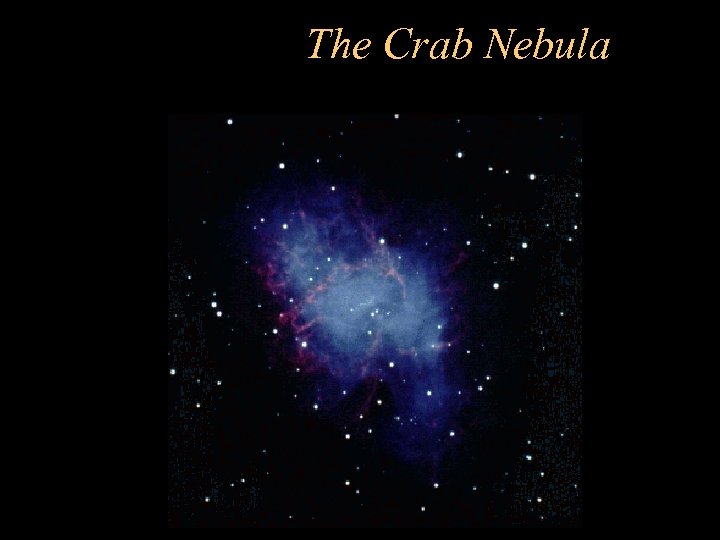 The Crab Nebula
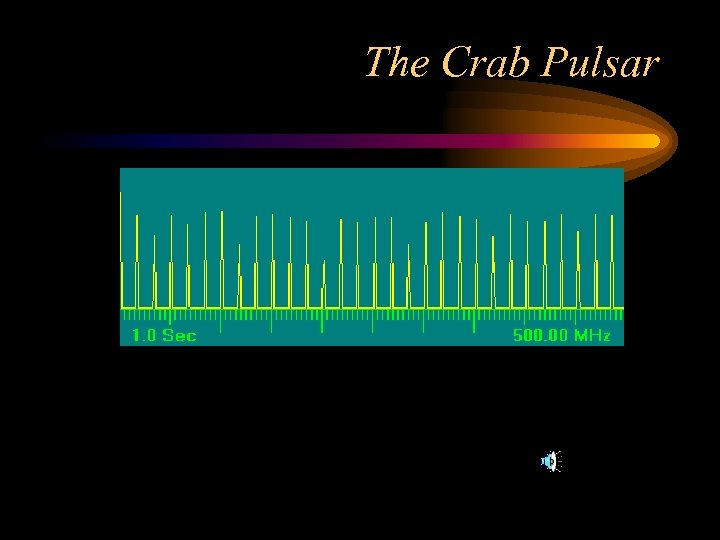 The Crab Pulsar
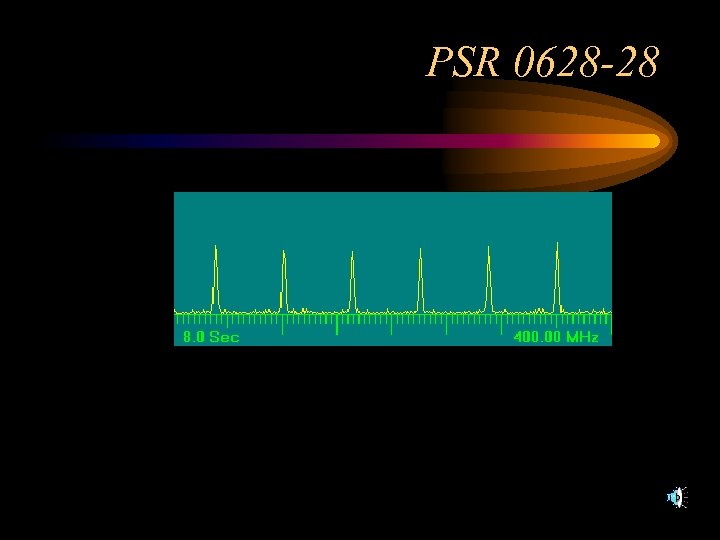 PSR 0628 -28
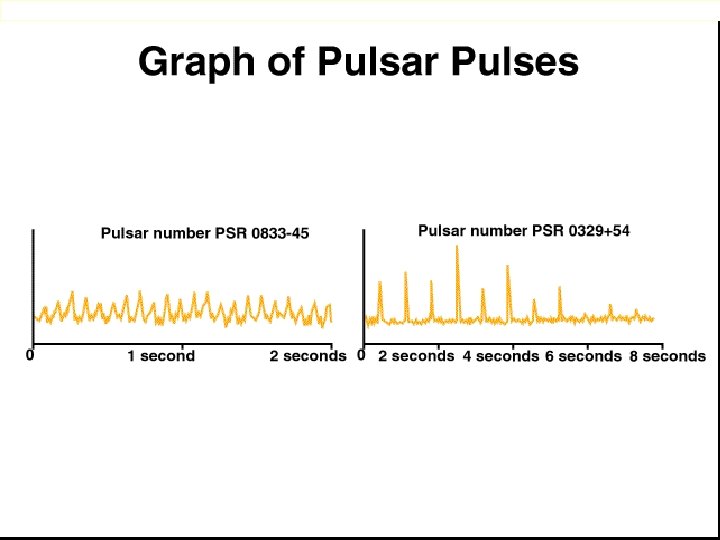
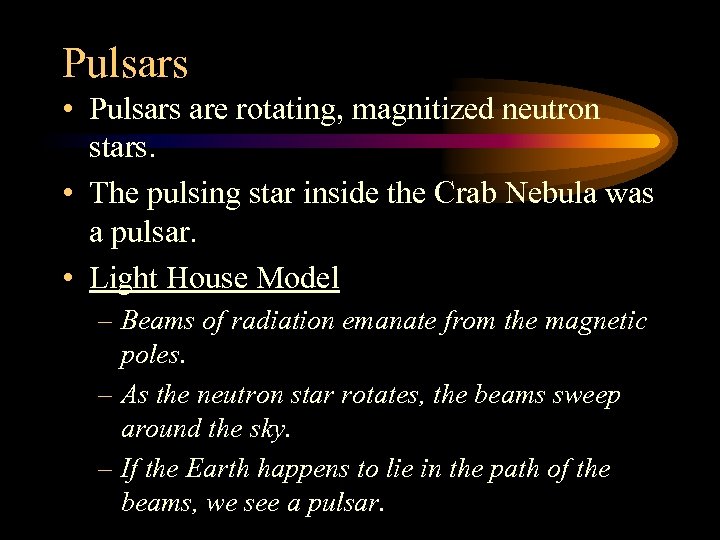 Pulsars • Pulsars are rotating, magnitized neutron stars. • The pulsing star inside the Crab Nebula was a pulsar. • Light House Model – Beams of radiation emanate from the magnetic poles. – As the neutron star rotates, the beams sweep around the sky. – If the Earth happens to lie in the path of the beams, we see a pulsar.
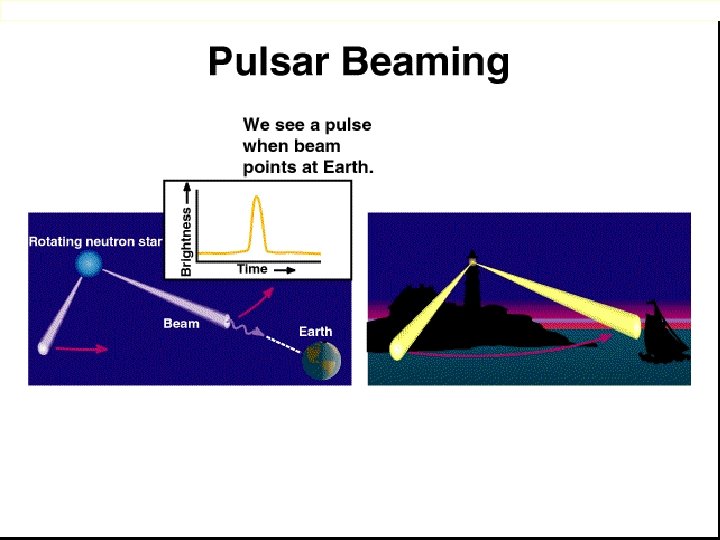
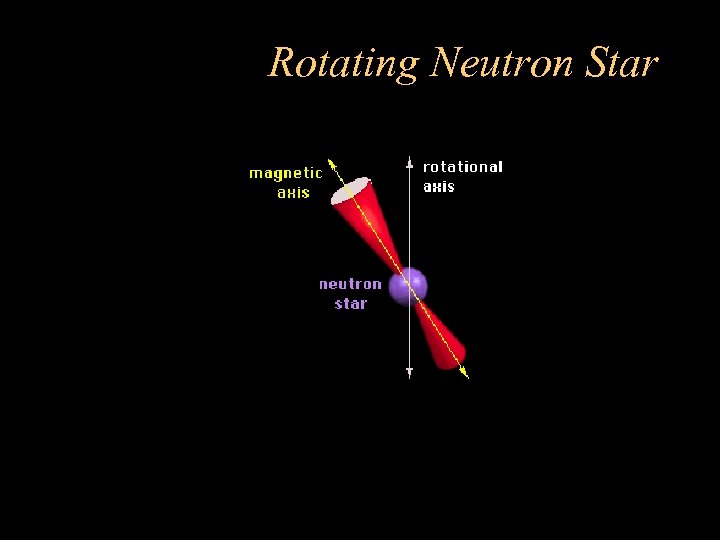 Rotating Neutron Star
 Pulsars • The first pulsars observed was originally thought to be a signal from extraterrestrials. • This was later shown to be unlikely after many other pulsars were found all over the sky. • Also, it was found that each pulse had a total power output equal to that of all the resources of Earth.
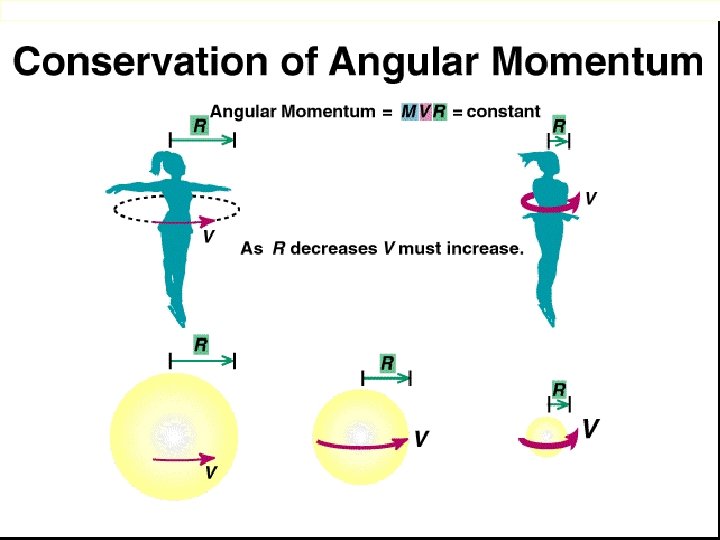
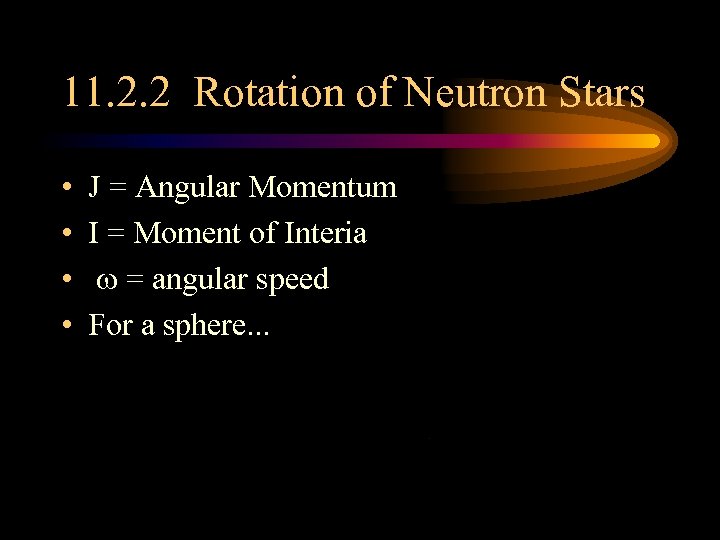
 Rotation Rates of Pulsars • The neutron stars that appear to us as pulsars rotate about once every second. • Before a star collapses to a neutron star it probably rotates about once every 25 days. • Why is there such a big difference in rotation rates? • Answer: Conservation of Angular Momentum
 11. 2. 2 Rotation of Neutron Stars • • J = Angular Momentum I = Moment of Interia w = angular speed For a sphere. . .
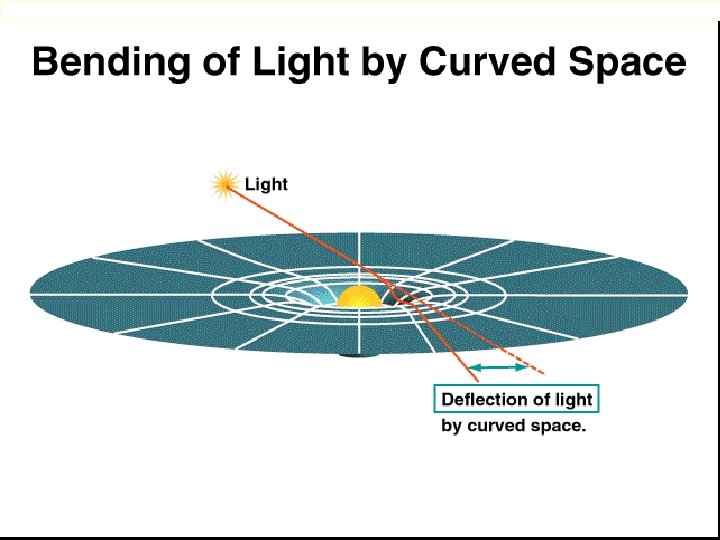
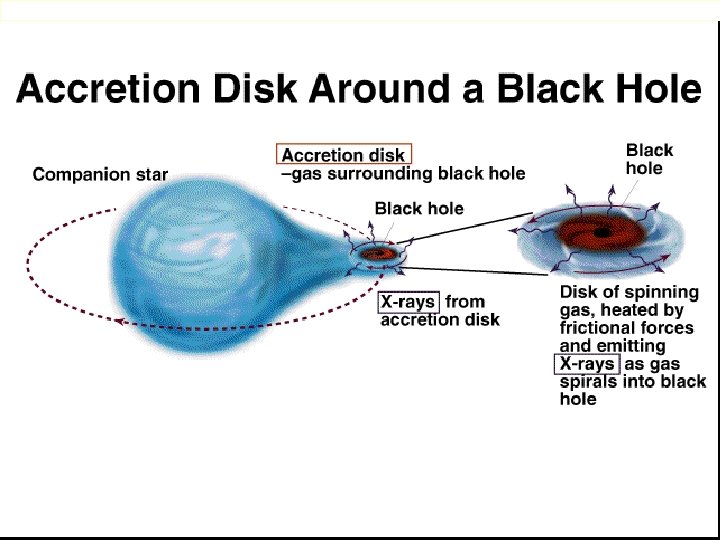
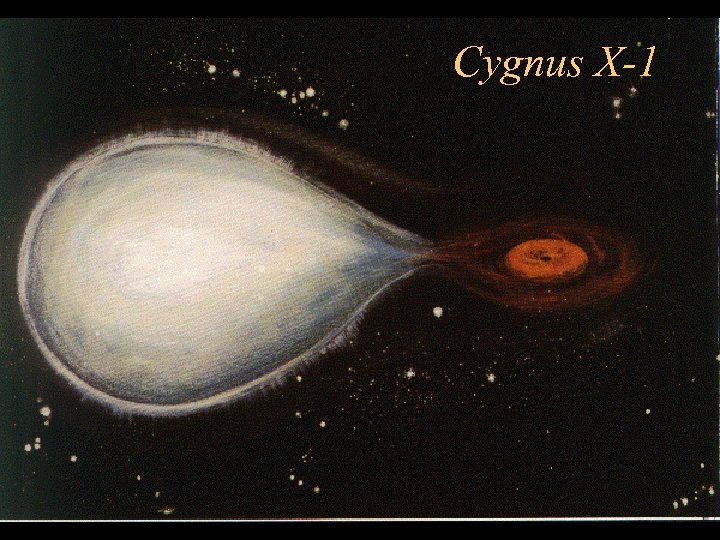
 Black Holes • . . . are stellar remnants for high-mass stars. – i. e. those greater than 3 solar masses • …have a gravitational attraction that is so strong that light cannot escape from it. • …are found in some binary star systems and there may be super-massive black holes in the centers of some galaxies.
 Cygnus X-1
 End of Chapter 11
 Supernova Remnants Tycho’s SNR - 1572
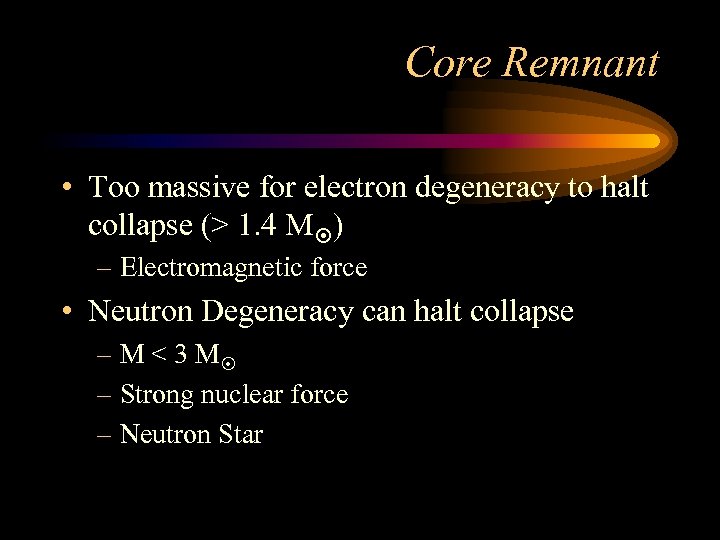 Core Remnant • Too massive for electron degeneracy to halt collapse (> 1. 4 M ) – Electromagnetic force • Neutron Degeneracy can halt collapse – M < 3 M – Strong nuclear force – Neutron Star
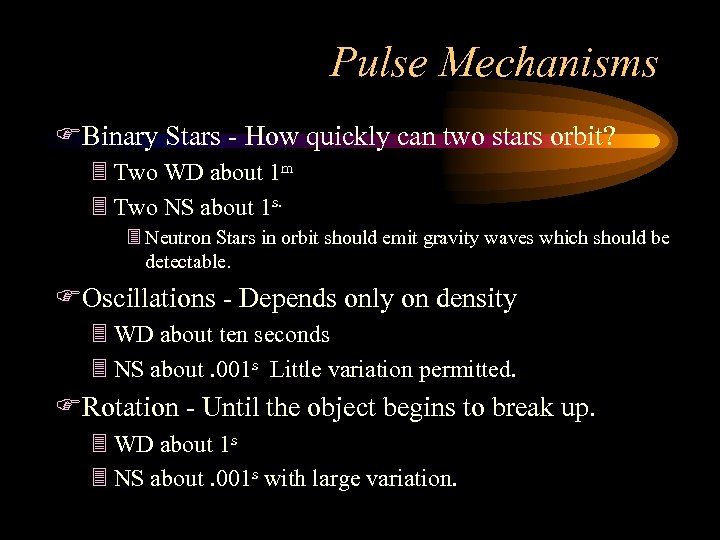 Pulse Mechanisms FBinary Stars - How quickly can two stars orbit? 3 Two WD about 1 m 3 Two NS about 1 s. 3 Neutron Stars in orbit should emit gravity waves which should be detectable. FOscillations - Depends only on density 3 WD about ten seconds 3 NS about. 001 s Little variation permitted. FRotation - Until the object begins to break up. 3 WD about 1 s 3 NS about. 001 s with large variation.
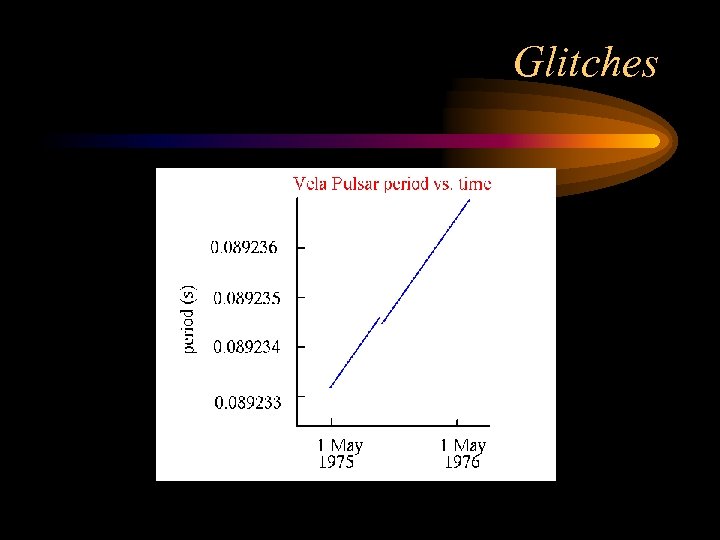 Glitches
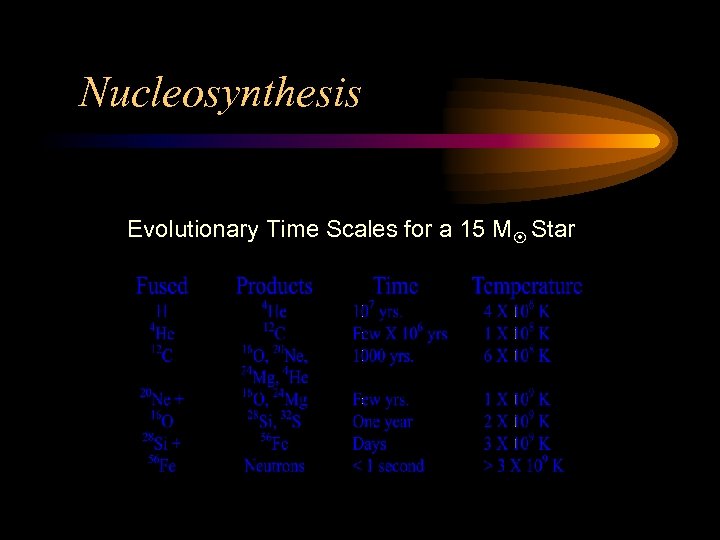 Nucleosynthesis Evolutionary Time Scales for a 15 M Star
 SS 433