


 Скачать презентацию Chapter 11 Project Procurement Management Copyright Course Technology
ae5e218f6730f1640c5a36a7f3d4f5cb.ppt
- Количество слайдов: 26
 Chapter 11: Project Procurement Management Copyright Course Technology 2001 1
 Importance of Project Procurement Management • Procurement means acquiring goods and/or services from an outside source • Other terms include purchasing and outsourcing • Experts predict that by the year 2003 the worldwide information technology outsourcing market will grow to over $110 billion Copyright Course Technology 2001 2
 Why Outsource? • To reduce both fixed and recurrent costs • To allow the client organization to focus on its core business • To access skills and technologies • To provide flexibility • To increase accountability Copyright Course Technology 2001 3
 Project Procurement Management Processes • Procurement planning: determining what to procure and when • Solicitation planning: documenting product requirements and identifying potential sources • Solicitation: obtaining quotations, bids, offers, or proposals as appropriate • Source selection: choosing from among potential vendors • Contract administration: managing the relationship with the vendor • Contract close-out: completion and settlement of the contract Copyright Course Technology 2001 4
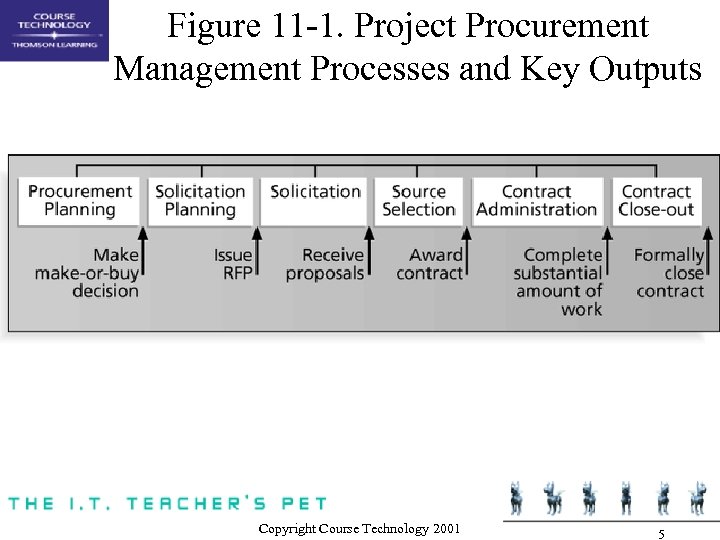 Figure 11 -1. Project Procurement Management Processes and Key Outputs Copyright Course Technology 2001 5
 Procurement Planning • Procurement planning involves identifying which project needs can be best met by using products or services outside the organization. It includes deciding – – – whether to procure how to procure what to procure how much to procure when to procure Copyright Course Technology 2001 6
 Collaborative Procurement • Several organizations, even competitors, have found that it makes sense to collaborate on procurement for some projects • Kodak worked with several competitors to develop the Advantix Advanced Photo System (see What Went Right? ) Copyright Course Technology 2001 7
 Procurement Planning Tools and Techniques • Make-or-buy analysis: determining whether a particular product or service should be made or performed inside the organization or purchased from someone else. Often involves financial analysis • Experts, both internal and external, can provide valuable inputs in procurement decisions Copyright Course Technology 2001 8
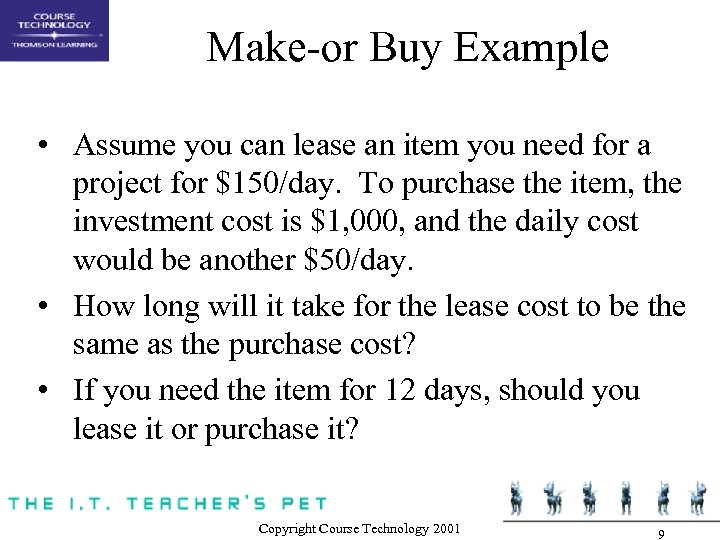 Make-or Buy Example • Assume you can lease an item you need for a project for $150/day. To purchase the item, the investment cost is $1, 000, and the daily cost would be another $50/day. • How long will it take for the lease cost to be the same as the purchase cost? • If you need the item for 12 days, should you lease it or purchase it? Copyright Course Technology 2001 9
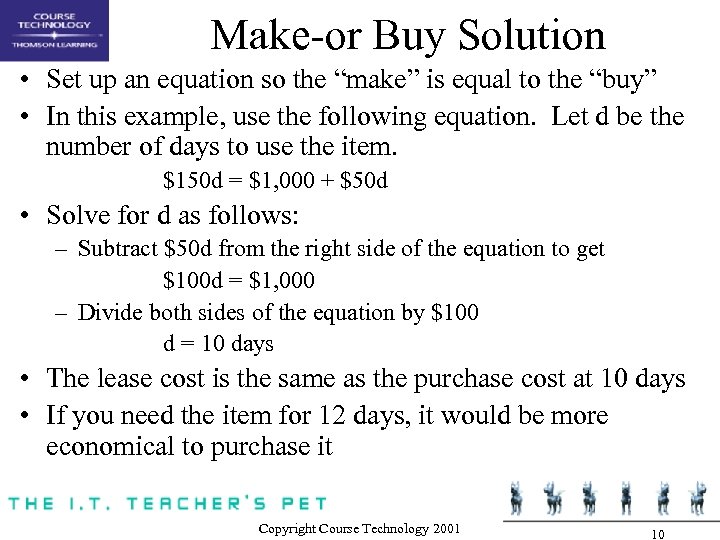 Make-or Buy Solution • Set up an equation so the “make” is equal to the “buy” • In this example, use the following equation. Let d be the number of days to use the item. $150 d = $1, 000 + $50 d • Solve for d as follows: – Subtract $50 d from the right side of the equation to get $100 d = $1, 000 – Divide both sides of the equation by $100 d = 10 days • The lease cost is the same as the purchase cost at 10 days • If you need the item for 12 days, it would be more economical to purchase it Copyright Course Technology 2001 10
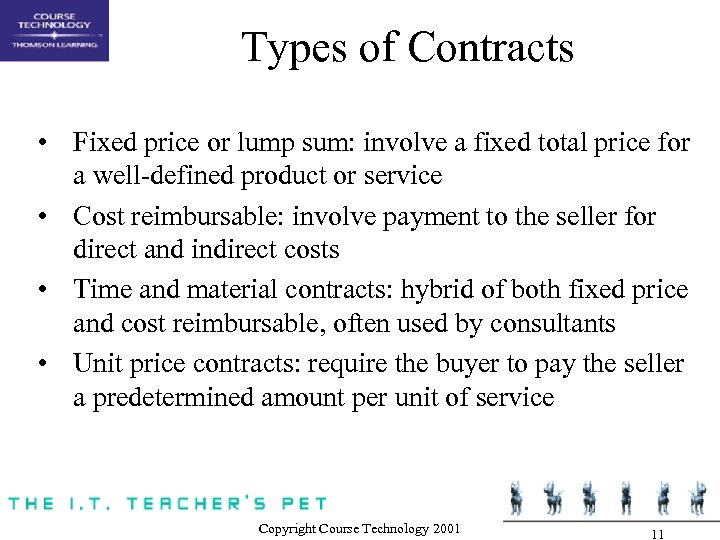 Types of Contracts • Fixed price or lump sum: involve a fixed total price for a well-defined product or service • Cost reimbursable: involve payment to the seller for direct and indirect costs • Time and material contracts: hybrid of both fixed price and cost reimbursable, often used by consultants • Unit price contracts: require the buyer to pay the seller a predetermined amount per unit of service Copyright Course Technology 2001 11
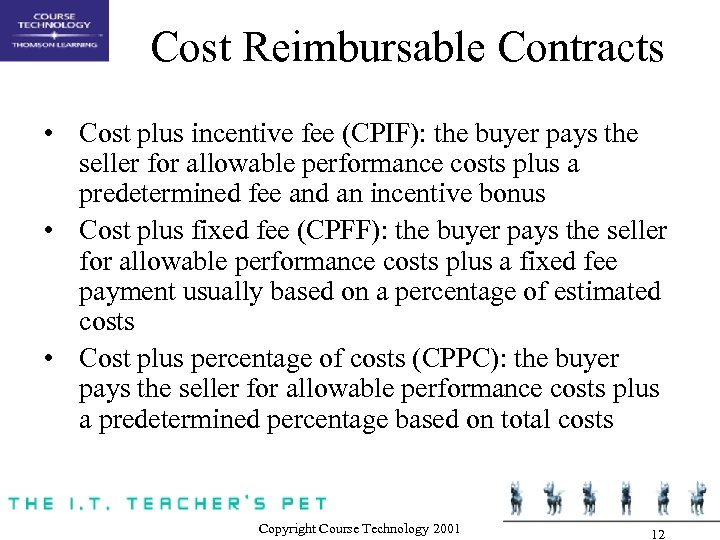 Cost Reimbursable Contracts • Cost plus incentive fee (CPIF): the buyer pays the seller for allowable performance costs plus a predetermined fee and an incentive bonus • Cost plus fixed fee (CPFF): the buyer pays the seller for allowable performance costs plus a fixed fee payment usually based on a percentage of estimated costs • Cost plus percentage of costs (CPPC): the buyer pays the seller for allowable performance costs plus a predetermined percentage based on total costs Copyright Course Technology 2001 12
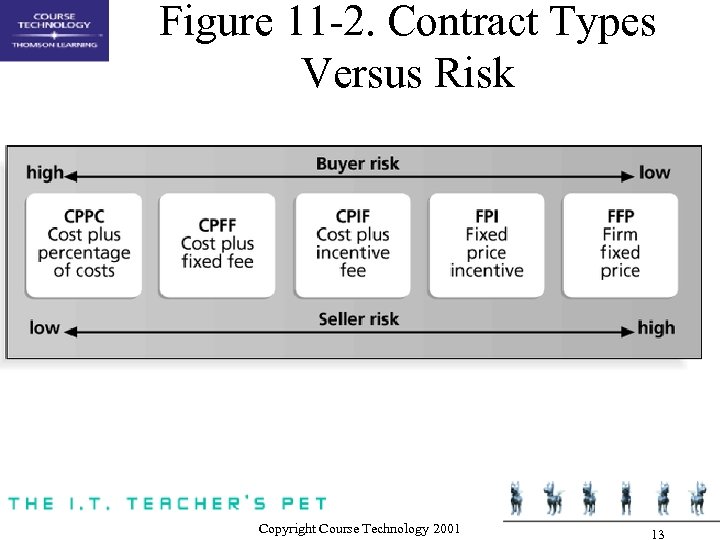 Figure 11 -2. Contract Types Versus Risk Copyright Course Technology 2001 13
 Statement of Work (SOW) • A statement of work is a description of the work required for the procurement • Many contracts, mutually binding agreements, include SOWs • A good SOW gives bidders a better understanding of the buyer’s expectations Copyright Course Technology 2001 14
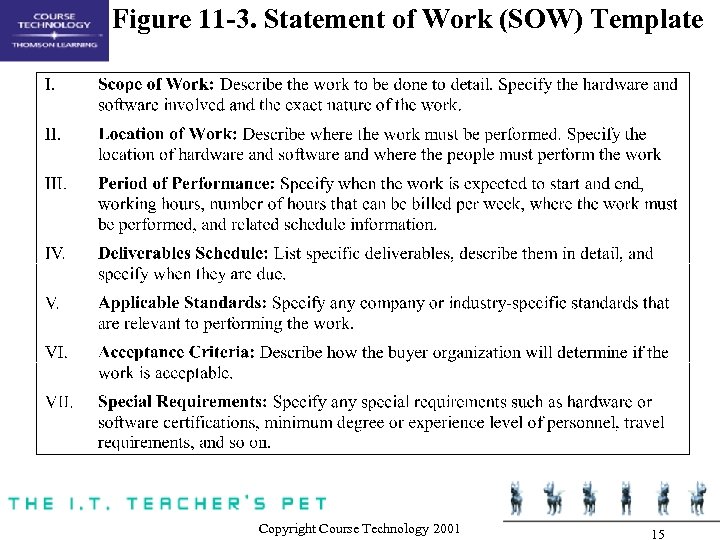 Figure 11 -3. Statement of Work (SOW) Template Copyright Course Technology 2001 15
 Solicitation Planning • Solicitation planning involves preparing several documents: – Request for Proposals: used to solicit proposals from prospective sellers where there are several ways to meet the sellers’ needs – Requests for Quotes: used to solicit quotes for welldefined procurements – Invitations for bid or negotiation and initial contractor responses are also part of solicitation planning Copyright Course Technology 2001 16
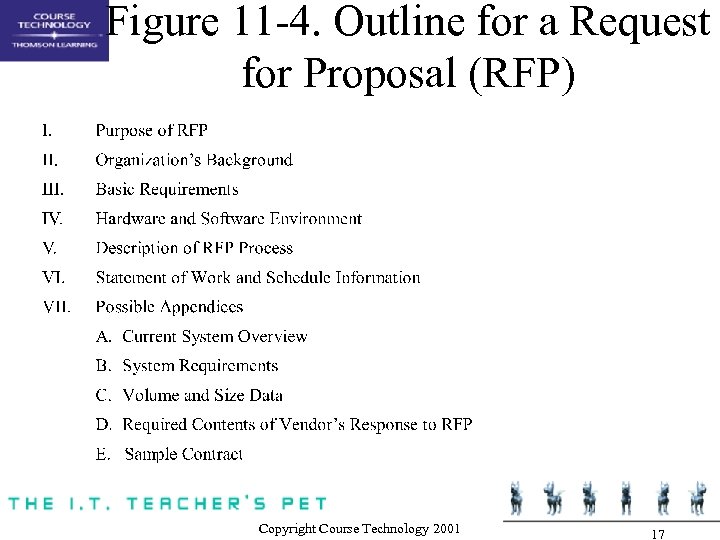 Figure 11 -4. Outline for a Request for Proposal (RFP) Copyright Course Technology 2001 17
 Solicitation • Solicitation involves obtaining proposals or bids from prospective sellers • Organizations can advertise to procure goods and services in several ways – approaching the preferred vendor – approaching several potential vendors – advertising to anyone interested • A bidders’ conference can help clarify the buyer’s expectations Copyright Course Technology 2001 18
 Source Selection • Source selection involves – – evaluating bidders’ proposals choosing the best one negotiating the contract awarding the contract • It is helpful to prepare formal evaluation procedures for selecting vendors • Buyers often create a “short list” Copyright Course Technology 2001 19
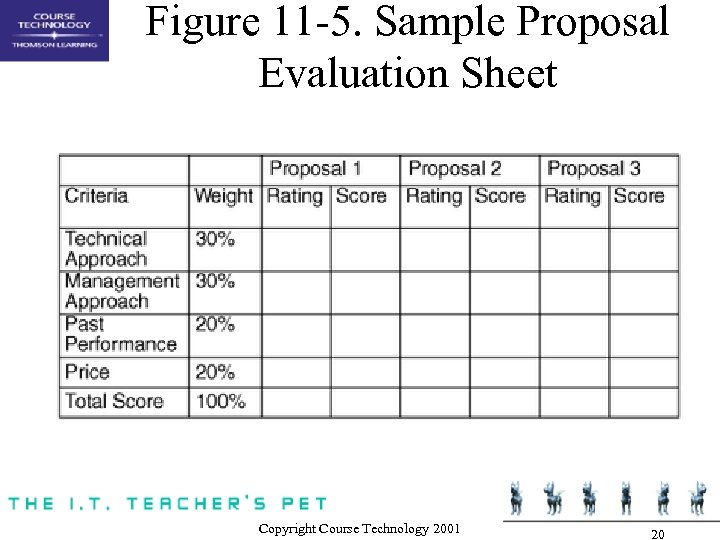 Figure 11 -5. Sample Proposal Evaluation Sheet Copyright Course Technology 2001 20
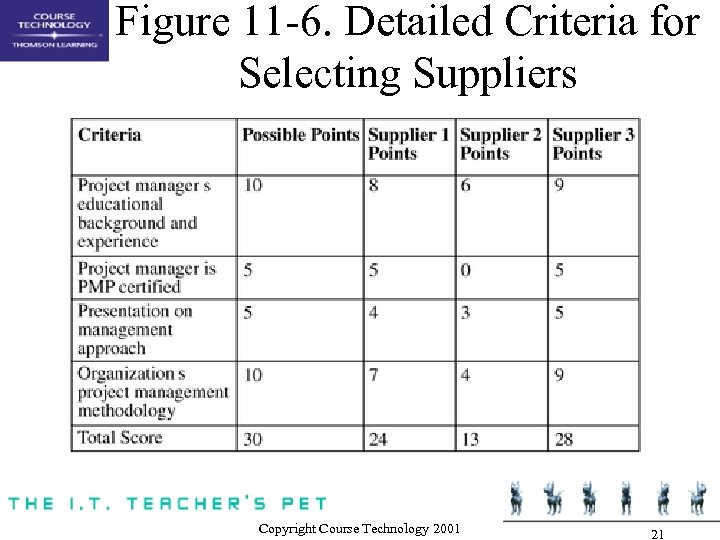 Figure 11 -6. Detailed Criteria for Selecting Suppliers Copyright Course Technology 2001 21
 Be Careful in Selecting Suppliers and Writing Their Contracts • Many dot-com companies were created to meet potential market needs, but many went out of business, mainly due to poor business planning, lack of senior management operations experience, lack of leadership, and lack of visions. Check the stability of suppliers • Even well-known suppliers can impede project success. Be sure to write and manage contracts well with all suppliers (see What Went Wrong? ) Copyright Course Technology 2001 22
 Contract Administration • Contract administration ensures that the seller’s performance meets contractual requirements • Contracts are legal relationships, so it is important that legal and contracting professionals be involved in writing and administering contracts • Many project managers ignore contractual issues, which can result in serious problems Copyright Course Technology 2001 23
 Suggestions on Change Control for Contracts • Changes to any part of the project need to be reviewed, approved, and documented by the same people in the same way that the original part of the plan was approved • Evaluation of any change should include an impact analysis. How will the change affect the scope, time, cost, and quality of the goods or services being provided? • Changes must be documented in writing. Project team members should also document all important meetings and telephone calls Copyright Course Technology 2001 24
 Contract Close-out • Contract close-out includes – product verification to determine if all work was completed correctly and satisfactorily – administrative activities to update records to reflect final results – archiving information for future use • Procurement audits identify lessons learned in the procurement process Copyright Course Technology 2001 25
 Using Software to Assist in Project Procurement Management • • Word processing software helps in writing proposals and contracts, spreadsheets help in evaluating suppliers, databases help track suppliers, and presentation software aids in presenting procurement-related information In the late 1990 s and early 2000 s, many companies started using e-procurement software to do many procurement functions electronically Companies such as Commerce One, Ariba, Concur Technologies, SAS, and Baan provide corporate procurement services over the Internet Organizations also use other Internet tools to help find information on suppliers or auction goods and services Copyright Course Technology 2001 26